
Juan Ruiz
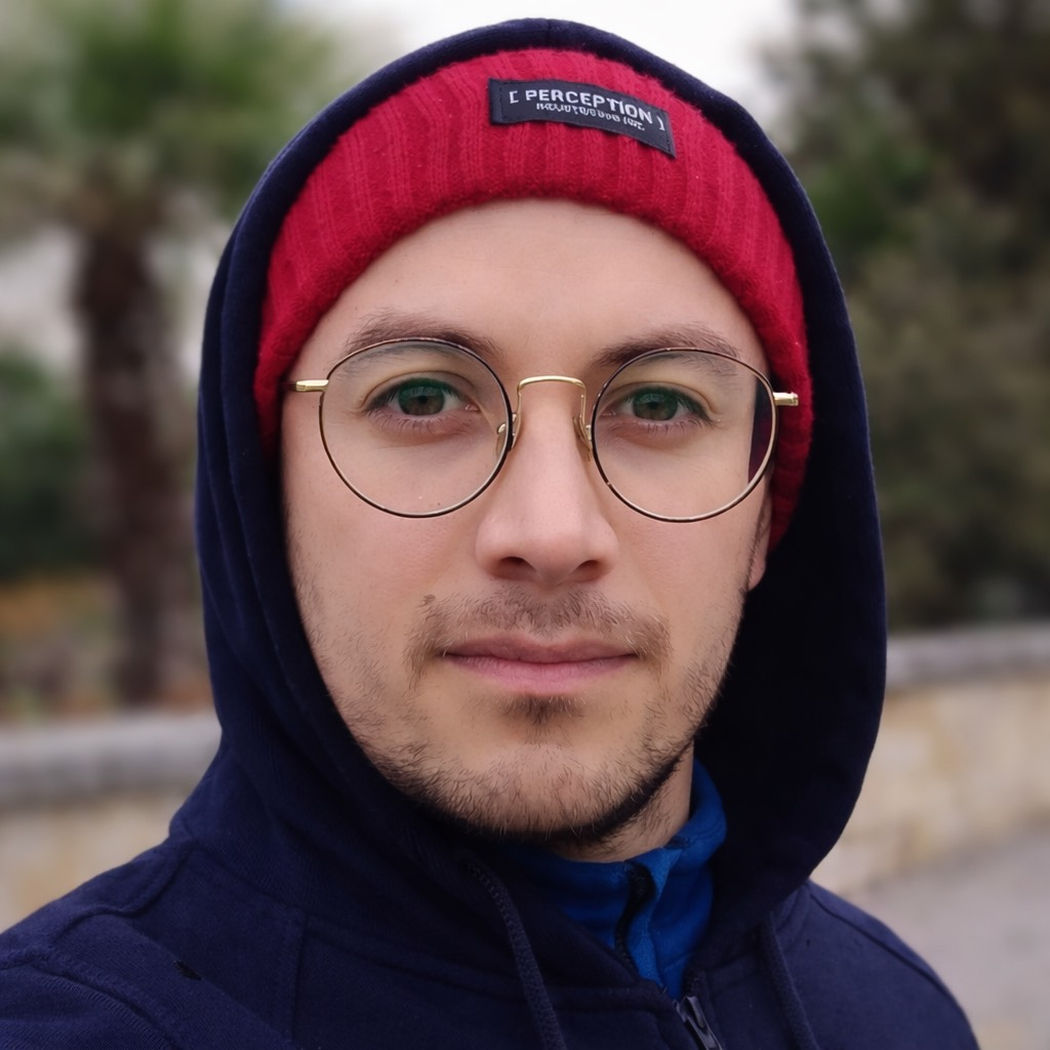
You describe painting as a form of refuge and breathing during the COVID-19 pandemic. How did that period transform your relationship with art on a deeper level?
During that time, painting stopped being just something I enjoyed and became something I truly needed. In the middle of isolation and so much uncertainty, it felt like the world was getting smaller, but when I sat down to paint, that space opened up again.
I began to use the canvas as a place where I could breathe without rushing, where the news, the fears, and even the clock no longer existed. Every brushstroke became a way of organizing what I was carrying inside, even when I didn’t have the words to explain it.
On a deeper level, that period taught me that art is not only about the final result, but about the process itself. It’s not just about creating something “beautiful,” but about being present with myself while I create. Since then, my relationship with painting has become more honest. I no longer paint only to show something—I paint to understand myself, to keep myself company, and to remind myself that even in the hardest moments, I can always create a space of my own where I can feel calm.
Being a healthcare professional, how does your everyday contact with vulnerability, pain, and resilience influence your artistic vision?
Being a healthcare professional has given me a very particular way of looking at people. Being in daily contact with vulnerability, pain, and at the same time resilience, has taught me that behind every face there is a story that is almost never visible at first glance.
That directly shapes the way I create. When I paint, I’m not only interested in capturing an expression or an appearance, but in trying to convey something deeper: the emotional weight, the quiet strength, or even the fragility that we all carry inside.
It has also made me more aware of the value of time and presence. In a clinical setting, sometimes a small gesture can mean a lot, and in art something similar happens—a detail, a gaze, or a well-placed light can completely change the way a piece is read.
In that sense, my artistic vision has become more human and empathetic. I don’t just paint what I see, I paint what I feel and perceive from people, with the intention that whoever looks at the work can recognize themselves, even if only a little, in it.
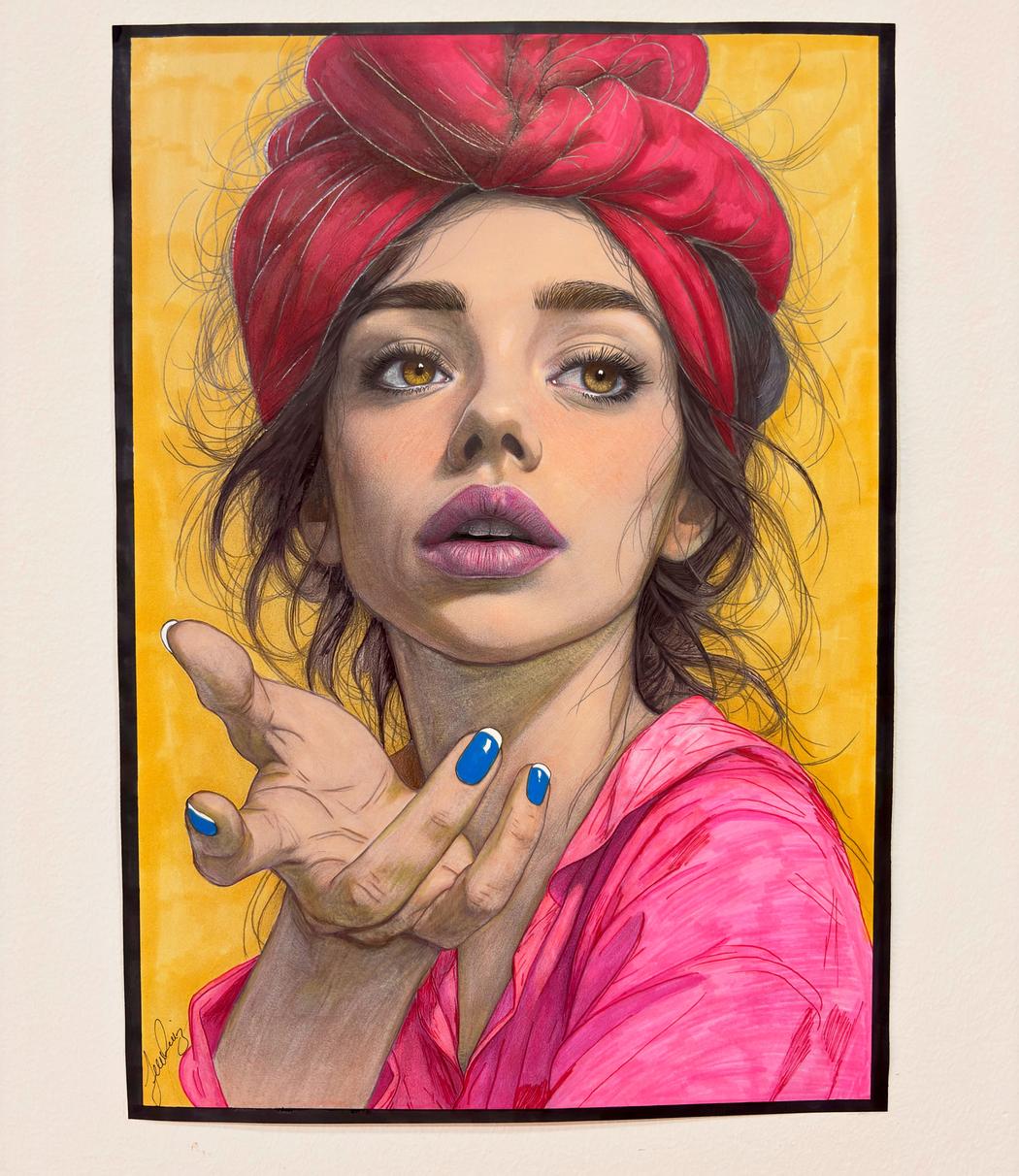
The female face is the central subject of your work. What does it symbolize for you beyond beauty?
For me, the female face goes far beyond an idea of aesthetic beauty. I see it as an emotional territory, a space where strength, vulnerability, history, and identity intersect. Each face I paint is, in a way, a reflection of many women at once, but also of human experiences that we all share.
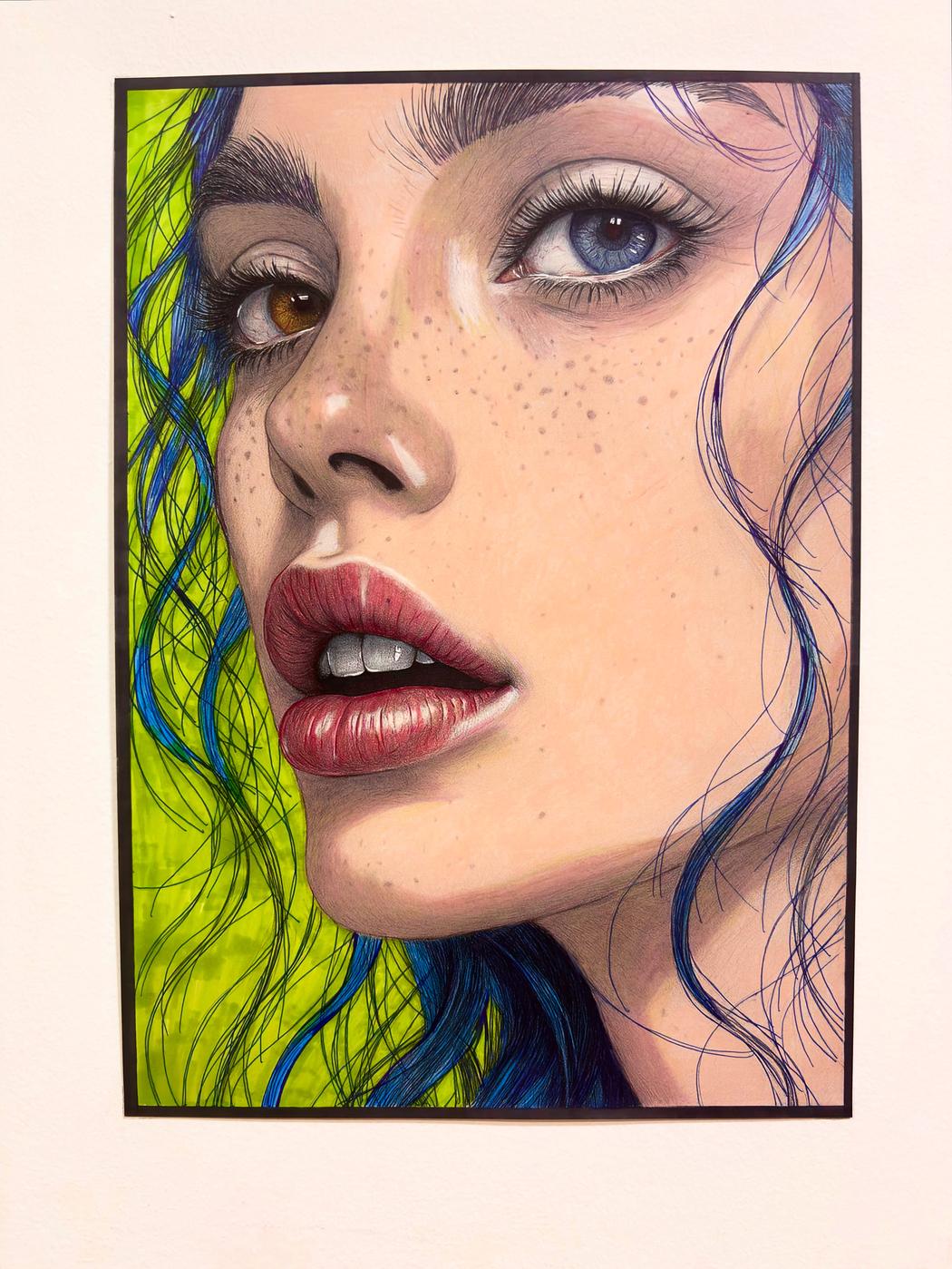
I’m especially drawn to the duality that exists in a gaze—it can be gentle and firm at the same time, open and protective, fragile and powerful. In the female face, I find a way to speak about resilience, sensitivity, and transformation without using words.
Rather than representing an ideal, I try to capture a presence. Something that makes the viewer feel that the face is not only being seen, but is also looking back, telling a quiet story that invites them to pause and feel.
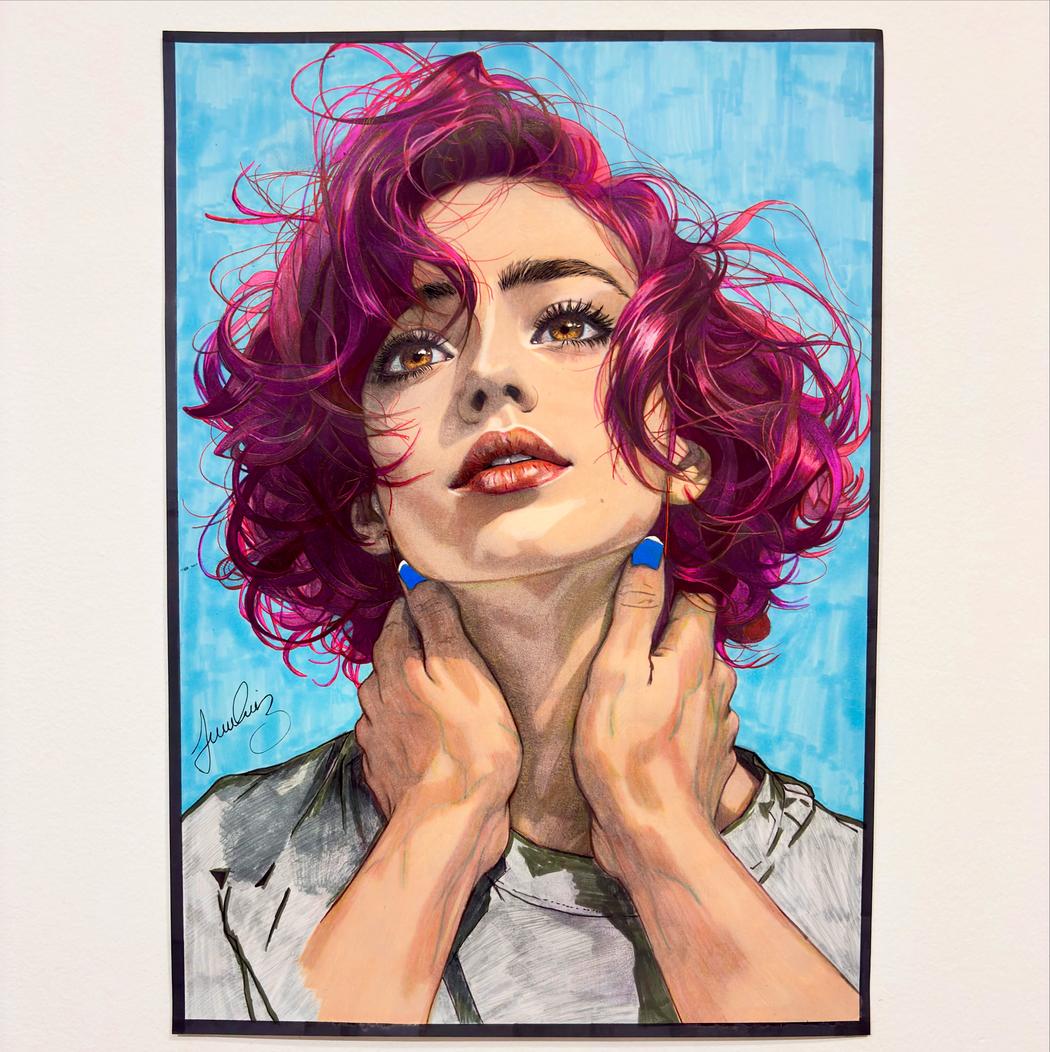
Your portraits feel emotionally intense and intimate. How do you approach capturing emotions that are not immediately visible?
I believe everything begins before I ever touch the brush. I spend a lot of time observing, not just the image or the model, but what that person transmits to me. I pay attention to small gestures—the tension in a look, the way someone holds their face, or tilts their head. That’s often where the emotions that aren’t obvious tend to hide.
The best inspiration for my portraits comes from the women I live alongside every day, both in my personal life and in my work. Each one of them is, in her own way, my muse. Their stories, their strength, their silences, and the way they face the world stay with me and appear, consciously or unconsciously, in every face I paint.
When I begin working on the canvas, I do it slowly and very intentionally. Each layer is an opportunity to adjust not only the form or the color, but also the feeling I want to leave in the piece. Sometimes I step back and ask myself whether what I’m seeing feels “alive” or just technically correct.
I also put a lot of myself into the process. I paint from my own emotions, my memories, and my quiet moments. I believe that honesty filters into the portrait and allows the viewer to connect with something that can’t really be pointed at, but can definitely be felt.
Eyes play a crucial role in your paintings. What do you believe eyes can reveal that words cannot?
I believe the eyes are where truth stays when words are no longer enough. In a single gaze, you can find things that even the person themselves may not know how to express—tiredness, hope, fear, tenderness, or determination.
For me, the eyes become a kind of silent bridge between the person I portray and the one who looks at the work. They don’t explain anything directly, but they invite feeling, imagining, and completing the story through the viewer’s own experience.
When I paint eyes, I’m not only trying to make them look “good” or realistic, but to make them feel present, as if they had an inner pulse. I want the person who looks at them to feel that the gaze recognizes them, questions them, or keeps them company, even though not a single word has been spoken.
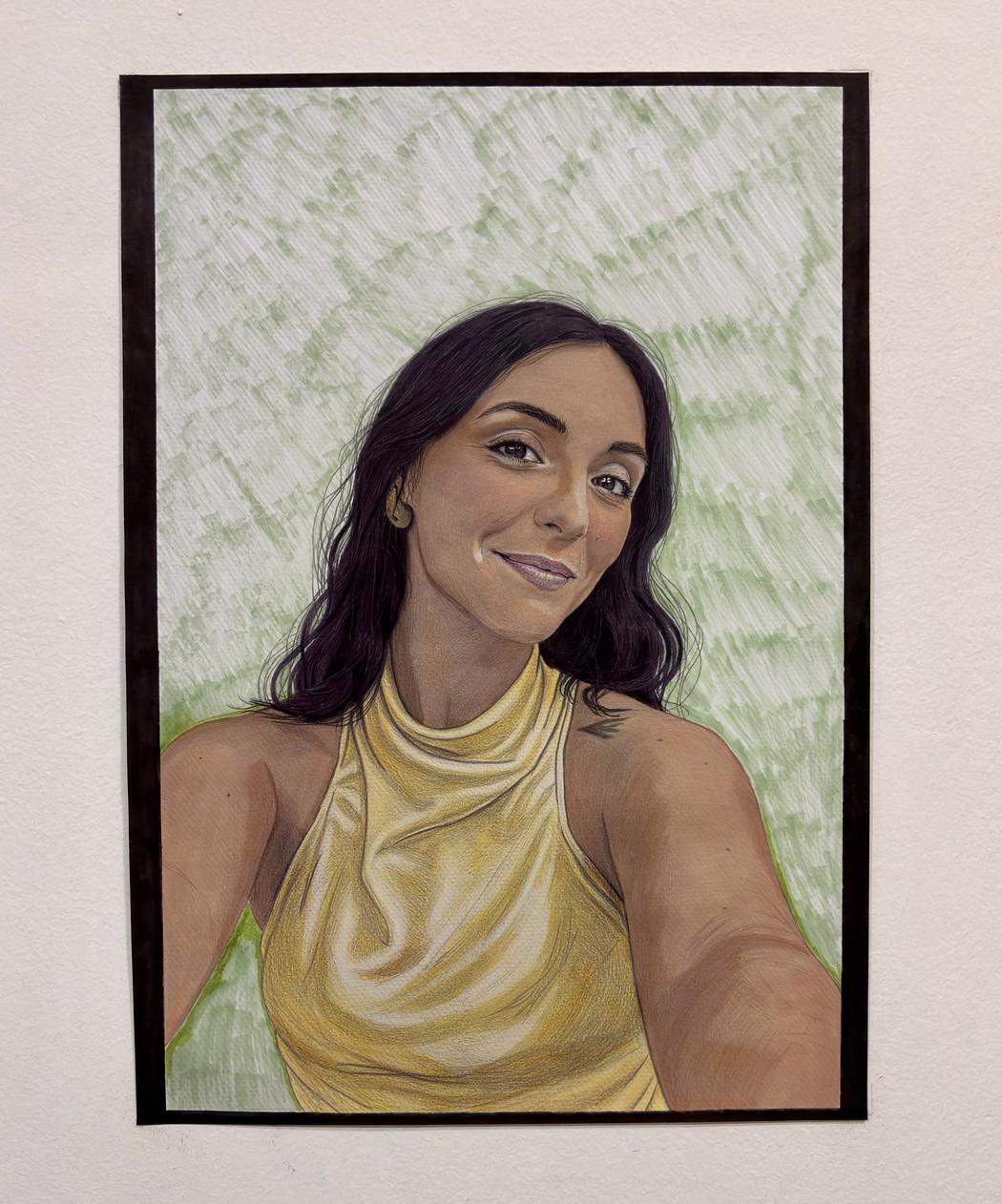
Do your portraits represent specific individuals, or are they more universal reflections of shared human emotions?
I have worked for more than 20 years alongside wonderful women—brave, resilient, with beautiful souls—who give everything they have so that they and their loved ones can reach their dreams. Day after day, they teach me that they are among the greatest beings we can have on this planet, and that their strength and humanity deserve to be honored.
My portraits begin with real people, with specific faces, but they don’t stay there. For me, each painting becomes a starting point for something more universal, a space where that particular face can turn into a mirror in which others can see themselves reflected.
That’s why, when I paint, I’m not only trying to represent an individual, but to capture an emotion, a state of the soul, something that all of us, in one way or another, have felt: waiting, strength, doubt, calm, or hope. Every brushstroke I make is a tribute to each of those women and to the stories they have shared with me through their presence.
I like the idea that whoever looks at the work can think, “I don’t know who this person is, but I know how they feel.” That’s where, for me, the real connection happens.
What emotions do you hope remain with the viewer after encountering your work?
I hope that, after encountering my work, the viewer feels that the painting is alive at every moment. As if it were not just a still image, but a presence that breathes, that observes, and that keeps them company.
I would love that when they take my work into the space where they choose to display it, that place becomes filled with the best sensations, emotions, and positive energy that each of my pieces carries. That it’s not just a painting on a wall, but a presence that transforms the atmosphere and makes it feel warmer and more human.
I also hope there is an emotional echo left behind—a blend of calm, tenderness, and strength. Something that doesn’t fade when they step away from the work, but continues to accompany them, like a quiet energy that invites them to keep feeling.
Leave a Reply
You must be logged in to post a comment.