
Fatima M Khan
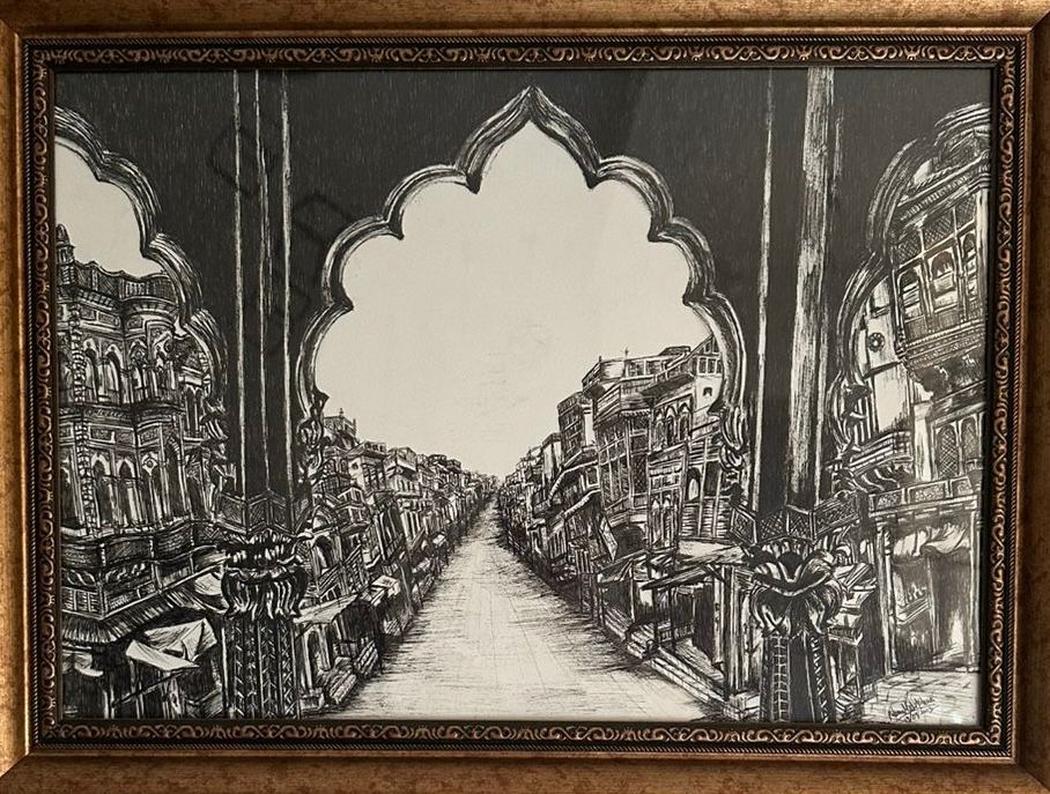
Your Reflection / Puddle Series centers on fleeting reflections of architecture. What first drew you to puddles and glass as carriers of memory rather than solid architectural forms themselves?
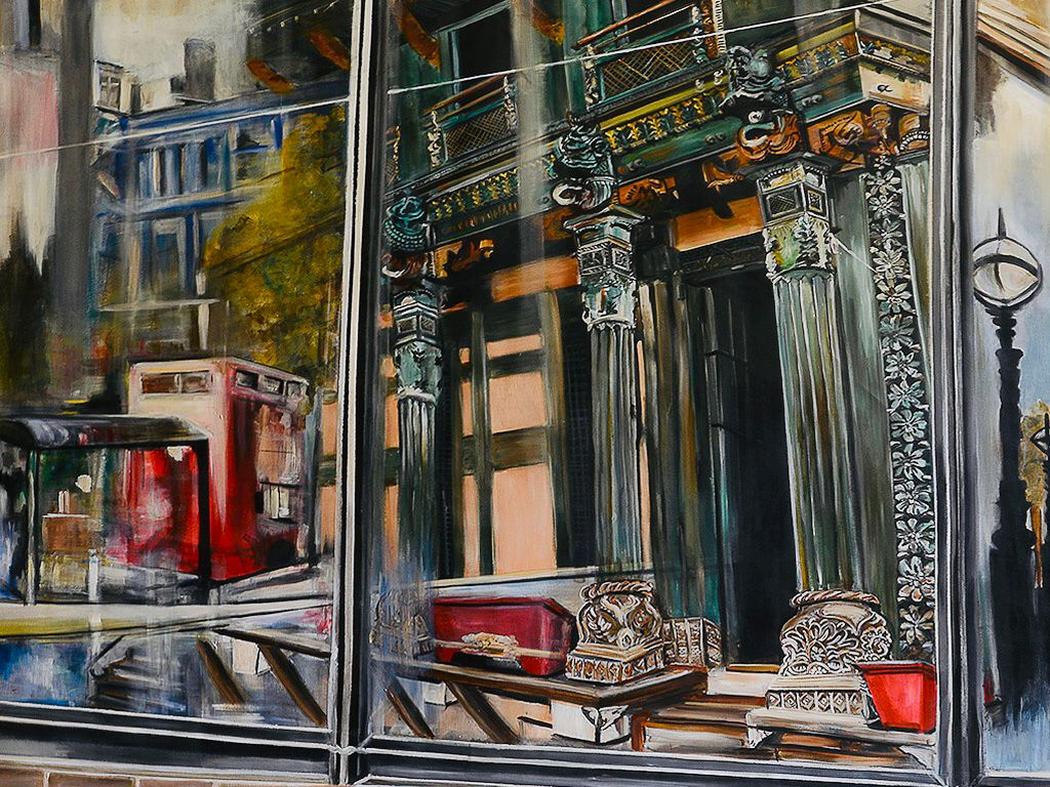
While living in London, I became acutely aware of how rain transformed the city. Puddles on pavements and reflections in glass façades appeared daily, quietly mirroring historic and contemporary architecture. These temporary surfaces began to feel more truthful to me than solid structures themselves. Their fleeting nature became a metaphor for architectural memory forms that exist briefly before disappearing, much like buildings that slowly vanish over time due to neglect and the lack of conservation in their countries of origin.
Hyper-realism often emphasizes permanence and precision. How do you reconcile this meticulous technique with themes of impermanence, erosion, and disappearance?
Hyper-realism allows me to slow down what is inherently fleeting. By rendering reflections with precision and care, I give permanence to moments that would otherwise disappear instantly. The tension between meticulous technique and fragile subject matter mirrors the contradiction at the heart of my work, using permanence to preserve what is already vanishing.
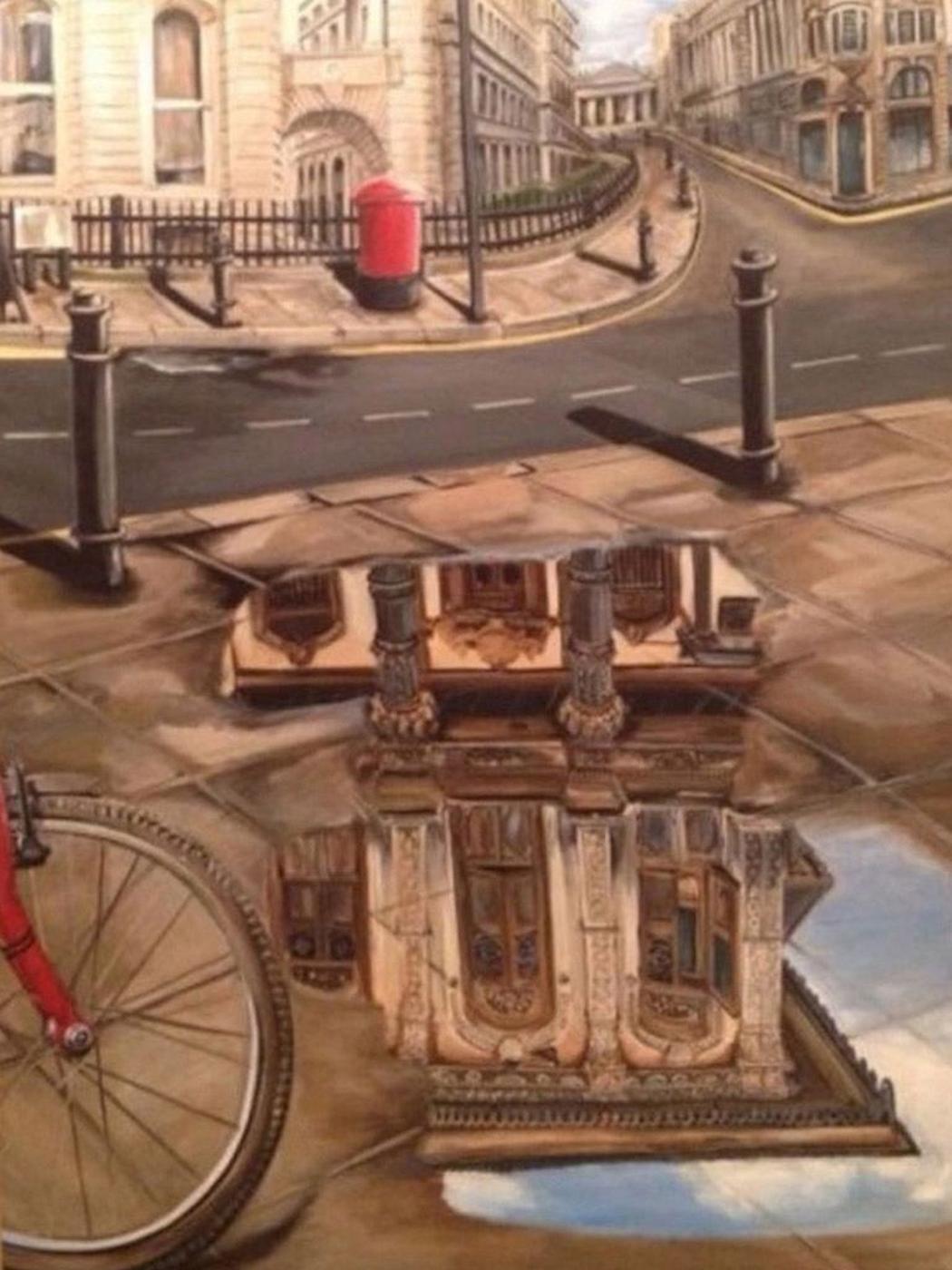
Many of your reflected buildings carry historical weight. How do you select architectural subjects, and do they relate to places of personal significance for you?
I am from Pakistan, and many of the reflected buildings in my work belong to Pakistan, India, and Bangladesh. Having encountered countless such structures while living in Pakistan, I later selected specific buildings through my research—those in which architectural beauty still emerges beneath eroded façades. These buildings carry both historical weight and personal familiarity, functioning as quiet witnesses to a shared cultural memory.
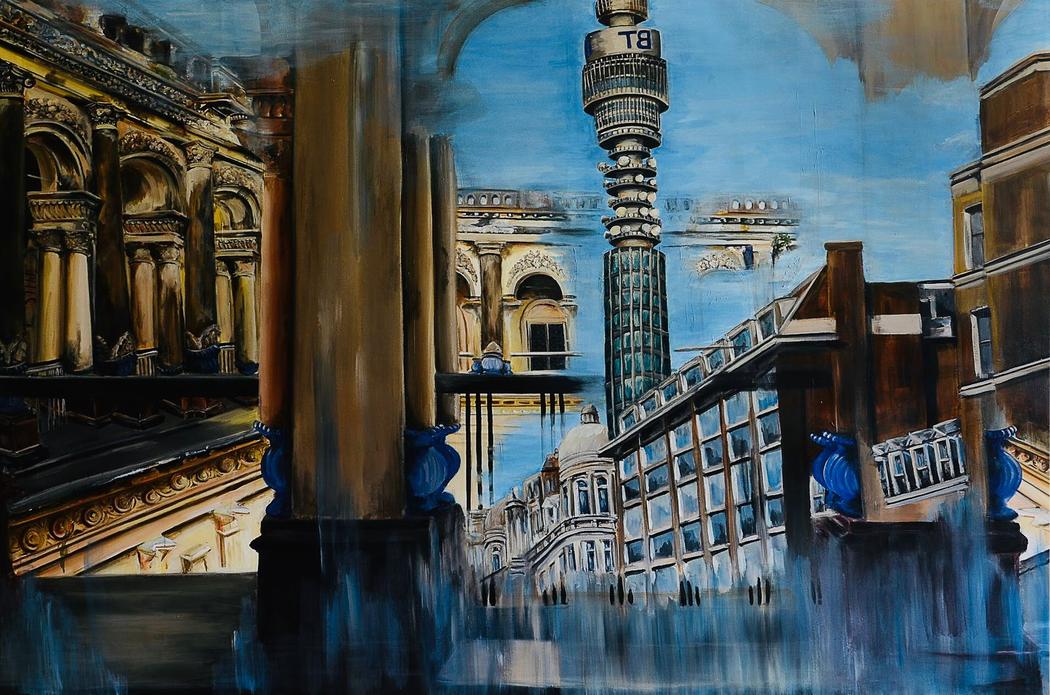
In your work, reflections appear fragile and easily disturbed. Do you see the viewer as an active participant who metaphorically “disturbs” the image by observing it?
Yes. I intentionally exclude human figures from the series so the viewer can inhabit the image themselves. The fragility of the reflections invites the act of looking to become a form of disturbance, positioning the viewer as an active presence within the work rather than a detached observer.
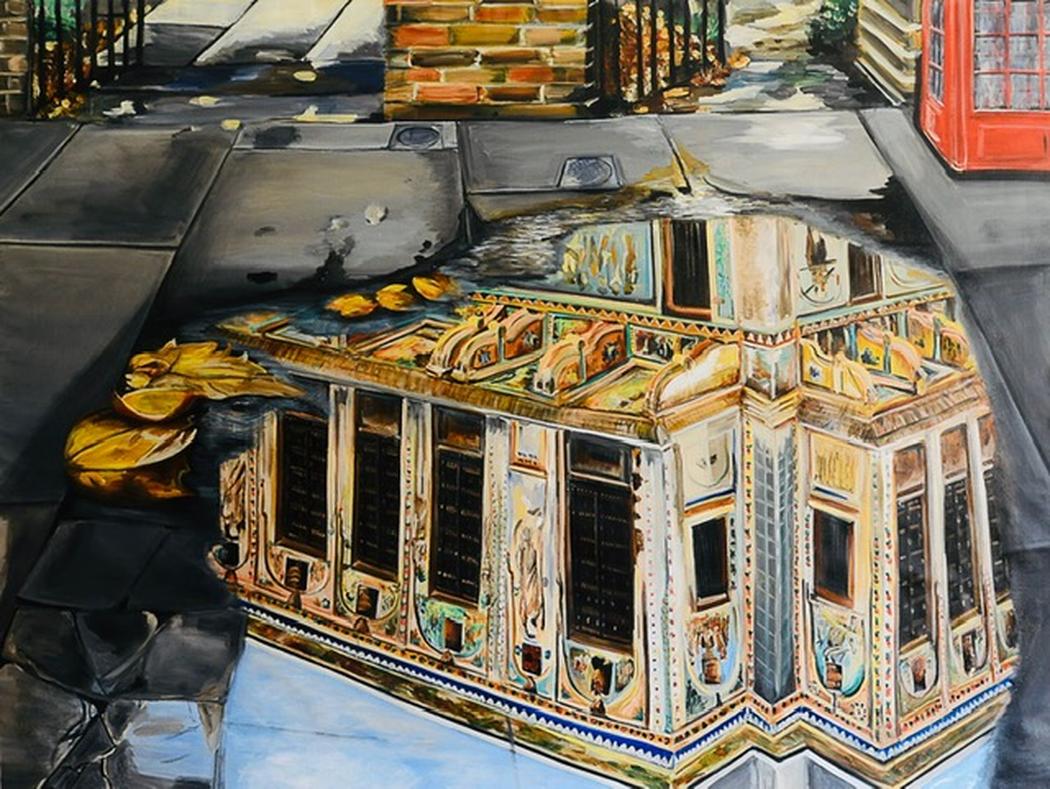
Your paintings often blur boundaries between past and present. Do you consider your work more as documentation, preservation, or quiet critique of contemporary urban life?
I consider the work an act of preservation rather than critique. It is driven by admiration for cities such as London, where historic architecture has been carefully retained and woven into contemporary urban life. By holding these moments in reflection, the paintings acknowledge the past as a living presence—one that can coexist with modernity when conservation is valued.
Your work has moved from intimate studio practice to large-scale public display in cities like London and New York. How does public space change the way your work is read?
When the work enters public space, it shifts from a private act of looking to a shared experience. Displayed in cities such as London and New York, the images gain a heightened sense of reality, placing the past visibly within the present. In these contexts, where historic architecture has been preserved, the work creates a quiet contrast between past and present, allowing reflection to function as a bridge between the two.
Many viewers describe a sense of stillness and pause in your paintings. Is creating that moment of contemplation an intentional part of your practice?
Yes, it is intentional. While the paintings invite stillness and slow the viewer down, they also acknowledge the passage of time. Puddles dry, reflections in glass shift throughout the day; buses, people, clouds move, and by night the image transforms again. The work holds this tension between pause and movement, reminding the viewer that even in moments of quiet contemplation, time continues to pass.
Leave a Reply
You must be logged in to post a comment.