
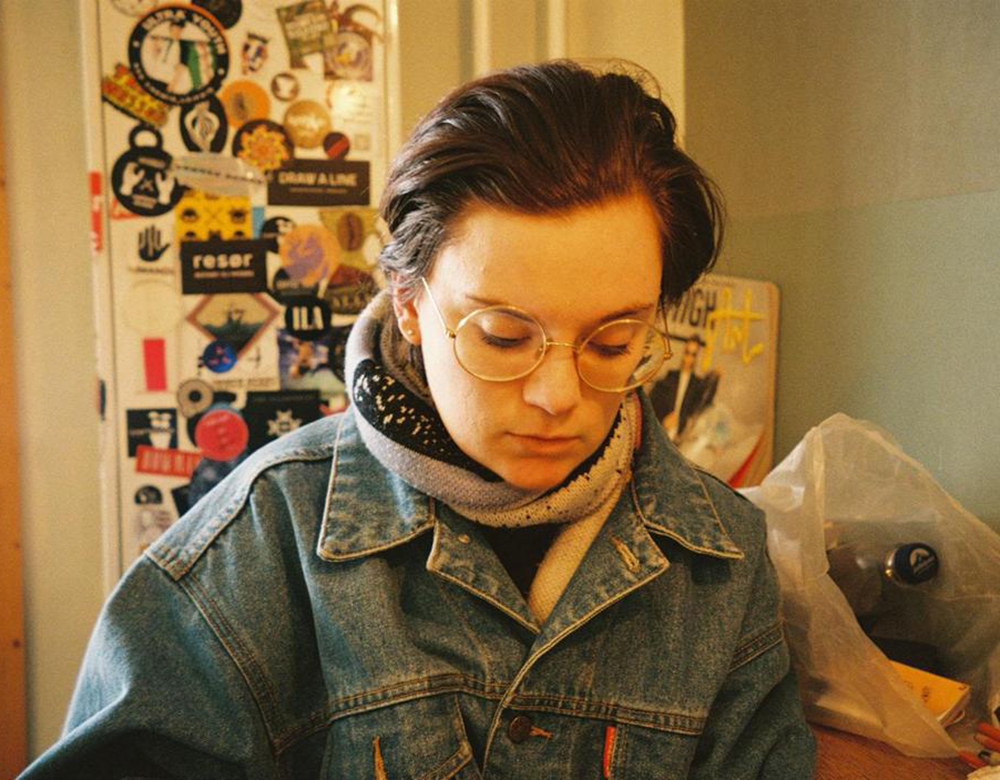
Rebecca Microsaint
What first drew you to oil painting, and how did you develop your practice as a self-taught artist?
How one tells a story is the story. I knew I had some things to say, but I needed to try my hand at as many media as possible to make sure these things were said. When I started expressing myself a few years ago, I first wrote prose, then transitioned to comics, and then axed the words altogether when I painted some blue hands and feet and realized that a painting has the power to invoke a story rather than tell it word for word. I experimented with watercolour and acrylic but I fell in love with oil for the colour potential and slow dry time. My first oil portrait was so freaky for its complete misunderstanding of colour and value, but I remember thinking how lucky I was I have a whole lifetime to figure it out. So, while there are other media to try, I’m still stuck on oil.
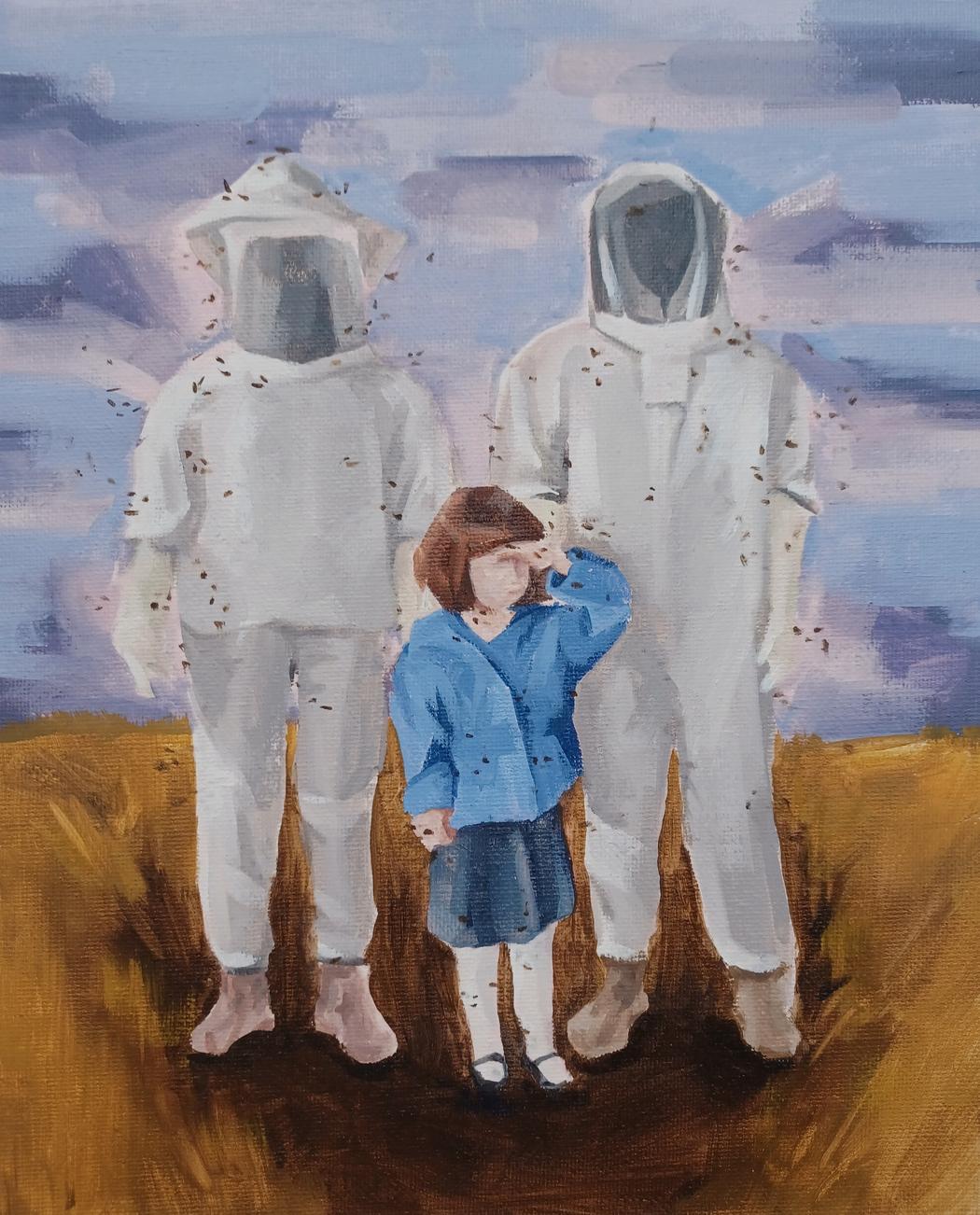 Rebecca Microsaint | Beekeepers | 2026
How did living in Berlin influence your work, and has returning to Canada changed your perspective?
Berlin is such a great city for a visual artist – it’s not immediately beautiful, but it waits for you to see it in the right light and then all its history and culture is new and you wonder why you didn’t come sooner. However, being from where I’m from, the most significant thing this period did for my art was just let me be away. Letting my life in Canada exist only in memory or image for a few years gave me a lot of perspective. Who knows – now that I’m back I’ll probably get similar perspective on my experiences in Berlin and paint them too.
What did your residencies in Germany and Iceland bring to your practice? Is there a particular experience that still shapes your paintings?
Work ethic and community. In Iceland I worked in an old warehouse with other artists of all practices – there was a jewelry maker, an electronic musician, and a photographer. We were often all working in silence (the musician had headphones), but there was an unspoken accountability among us.
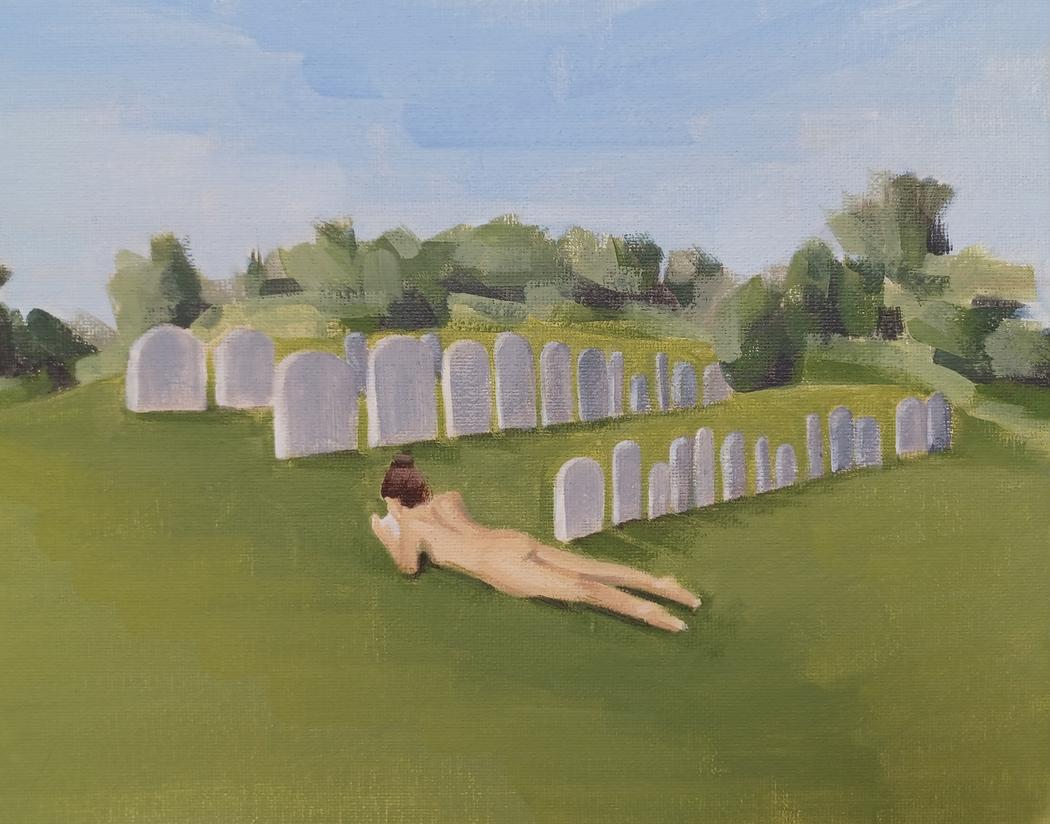 Rebecca Microsaint | Cemetery | 2026
You prefer to work on a small scale because it allows you to travel. What creative possibilities does this intimate format offer?
Big worlds are hiding in small spaces – working small makes me ask myself which elements really must be in the painting, and which are just visual fluff. Small things are also cute and anticlimactic, which I love.
What prompted your shift from realism toward a more conceptual approach to painting?
This shift happened recently. There was an old cemetery nearby where I was staying and I thought it was cute. I painted it and without really thinking, just added a girl on the grass. I don’t know where she came from, maybe she is the ghost of one of the people buried there, but I loved how she fit right into place.
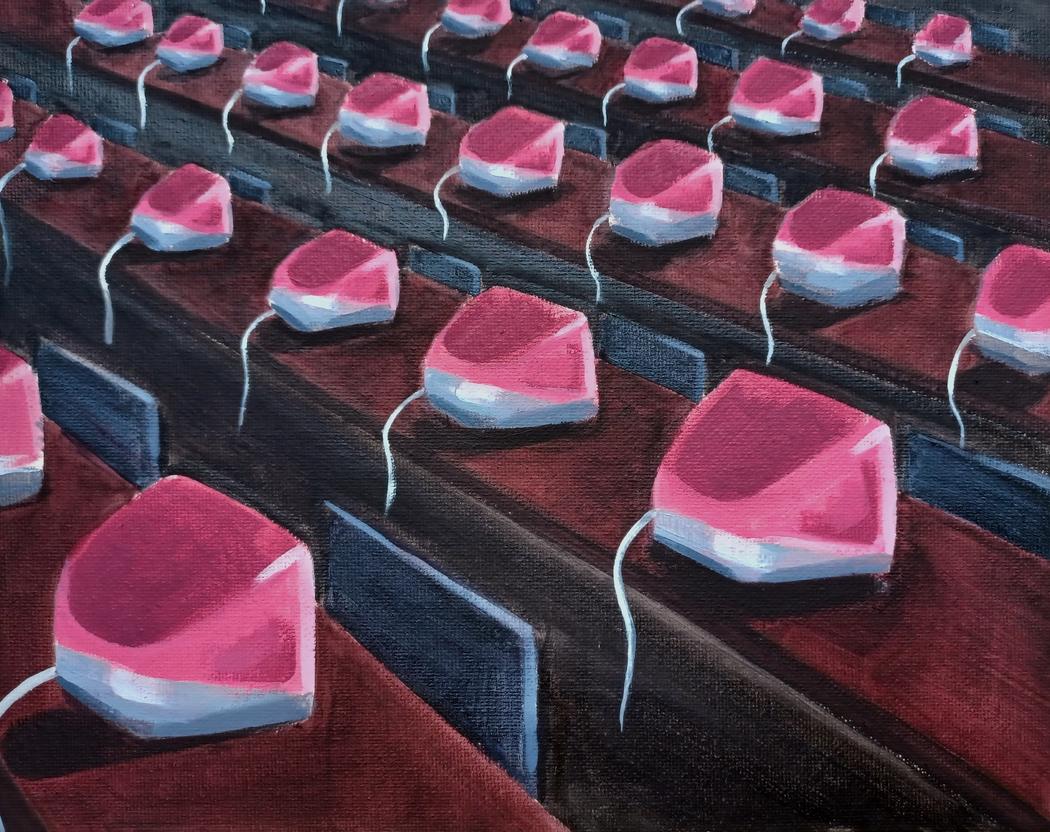 Rebecca Microsaint | Computer Lab At Night | 2026
When looking through old photographs, what makes you choose a particular image as the starting point for a painting?
Definitely not the photo quality – I’ve had to work off some janky photos from decades ago it’s made me realize I need to study anatomy a lot more to be able to fill in the blanks. The photos are always different, but I’m interested in a person or object in the corner who deserves to be in the centre.
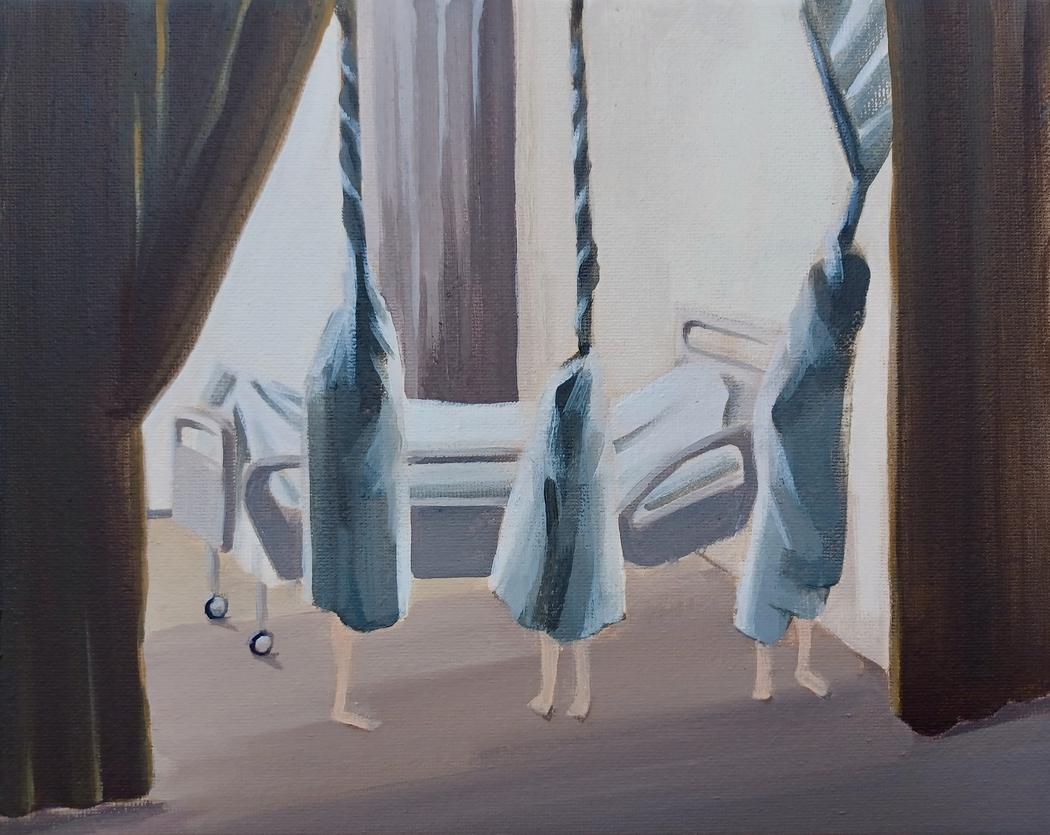 Rebecca Microsaint | Curtains | 2026
You say that the more surreal your painting becomes, the more real it feels. Could you tell us more about what “real” means to you in this context?
Real means alive according to the inner experience. At best, a photo comes alive according to the facts. There’s a person, there’s her smile, there’s the sun. But painting in some element from a different world altogether adds a new dimension and taps into what I know I’m asking myself all the time as I figure out how to exist. Am I really smiling? Do I have any clue why the fuck I’m here today?