
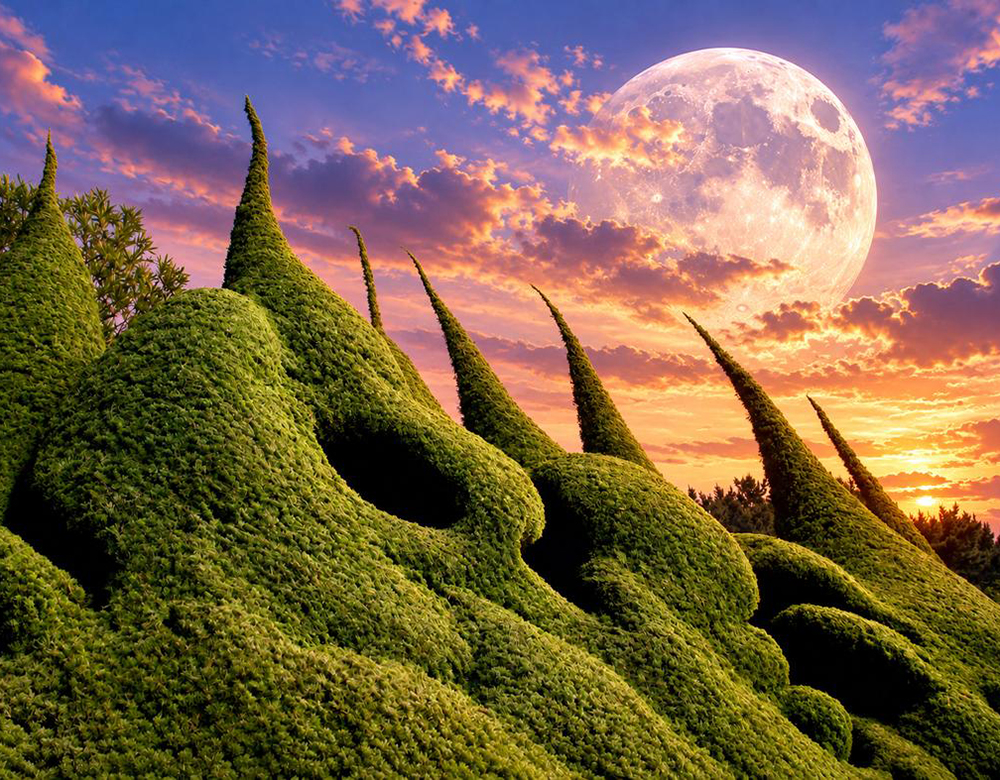
Kyung Lim Lee
Your practice brings together photography, fashion, design, and generative AI. How has your background in fashion design shaped the way you compose images and tell visual stories?
Fashion design has taught me to see how shape, color, materials, and space work together. In clothing design, the silhouette, details, and fabric textures come together to create an overall impression. I take the same approach when composing images, considering how each element contributes to the whole. I pay close attention to what to highlight, where to leave open space, and how to guide the viewer’s eye.
This way of seeing also influences how I tell stories. I want to convey the mood of a scene through color and shape. My background in fashion design shapes how I look at scenes in photographs, and I use generative AI to reimagine them. This process brings the different parts of my work together.
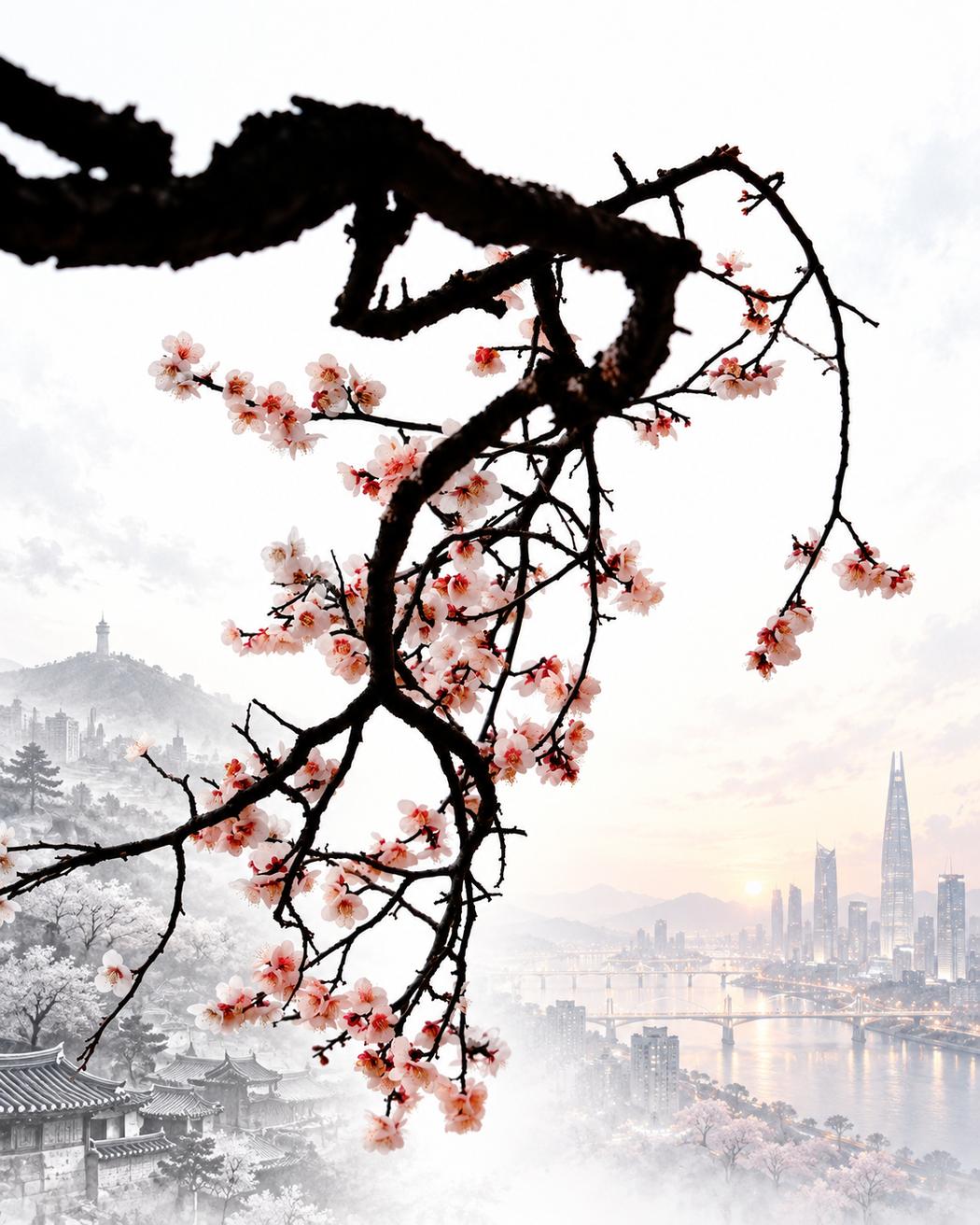 Kyung Lim Lee | Blooming Time Korea 1945~2050 | 2026
What first drew you to generative AI, and what did it allow you to express that you had struggled to achieve through conventional photography?
I became interested in generative AI because I wanted to bring memories and imagination into the scenes I saw around me. For me, a photograph captures how a place looks at a particular moment, along with a sense of its history and the feelings I associate with it. I wanted to explore how these different layers of time could come together in a single image.
Generative AI allows me to bring together different places, seasons, real-world forms, and imagined scenes that would be difficult to capture in a single shot. It also lets me experiment with these elements in different ways. It has expanded my creative possibilities, especially when imagining scenes where traditional landscapes and modern cities exist together, or where flowers give familiar places a new feel. What appeals to me is the chance to build on what I observe through photography and give visual form to scenes that do not yet exist.
Could you walk us through the creation of Blooming Time Korea, from the initial idea to the final image? What roles did photography and AI play at different stages?
This work began with a question: “How can Korean culture and memory continue to bloom in today’s landscape?” I first looked through photographs I had taken over time. I considered the character and mood of the places I wanted to show and how tradition and modern life came together in those places. Studying the shapes, textures, and light in these photographs helped me develop a clearer direction for the work.
Next, I thought about how flowers, branches, traditional landscapes, and modern cities could come together, and used AI to explore different compositions. I reviewed the generated images to see whether they reflected my original idea, whether the space and lighting felt natural, and whether the cultural elements were presented appropriately. I made changes where needed and compared the results to complete the final artwork.
Throughout this process, my own photographs formed the basis of the scene, while AI helped me explore different versions of it. I believe it is the artist’s role to decide which images to choose and how to refine them.
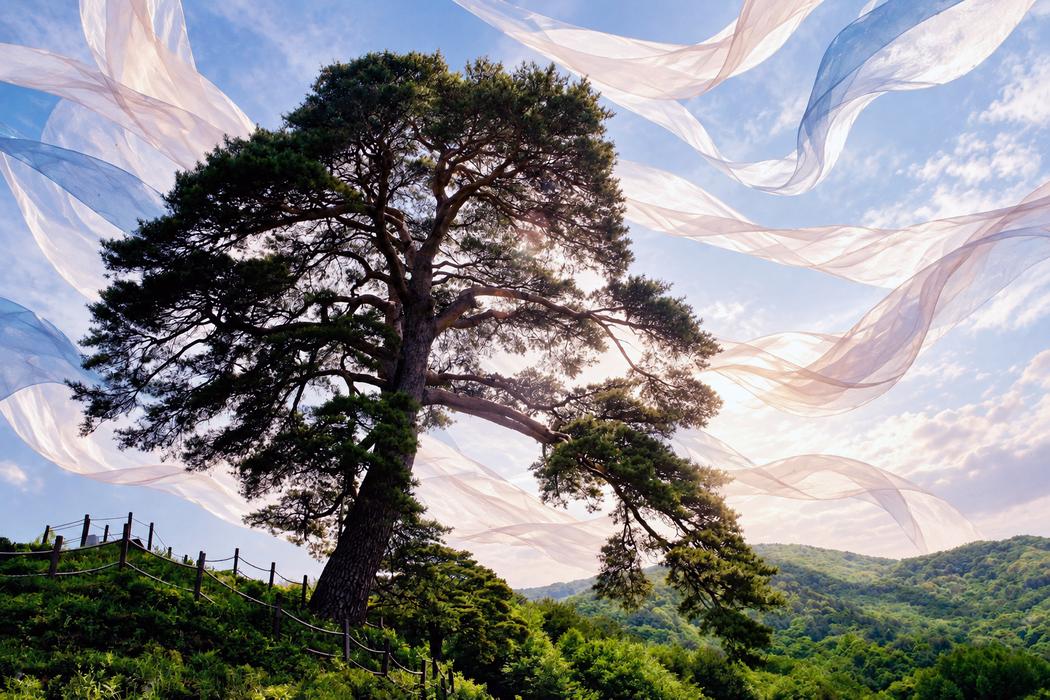 Kyung Lim Lee | Breath Of A Thousand Years | 2026
When reinterpreting Korean cultural heritage, how do you decide which elements to preserve faithfully and which to transform through imagination?
I begin by looking at the features that make a subject recognizable. I try to understand the meaning of elements connected to cultural identity, such as the outlines and proportions of buildings and the way patterns are arranged. Understanding the origins and cultural context of these forms is the starting point for my reinterpretation.
I use my imagination mainly to explore the settings in which these elements appear and how they relate to one another. Changing the season, scale, or surrounding landscape can allow familiar subjects to evoke new feelings and tell new stories. What matters most to me is whether their cultural roots remain recognizable after these changes and whether the changes add to the meaning of the work.
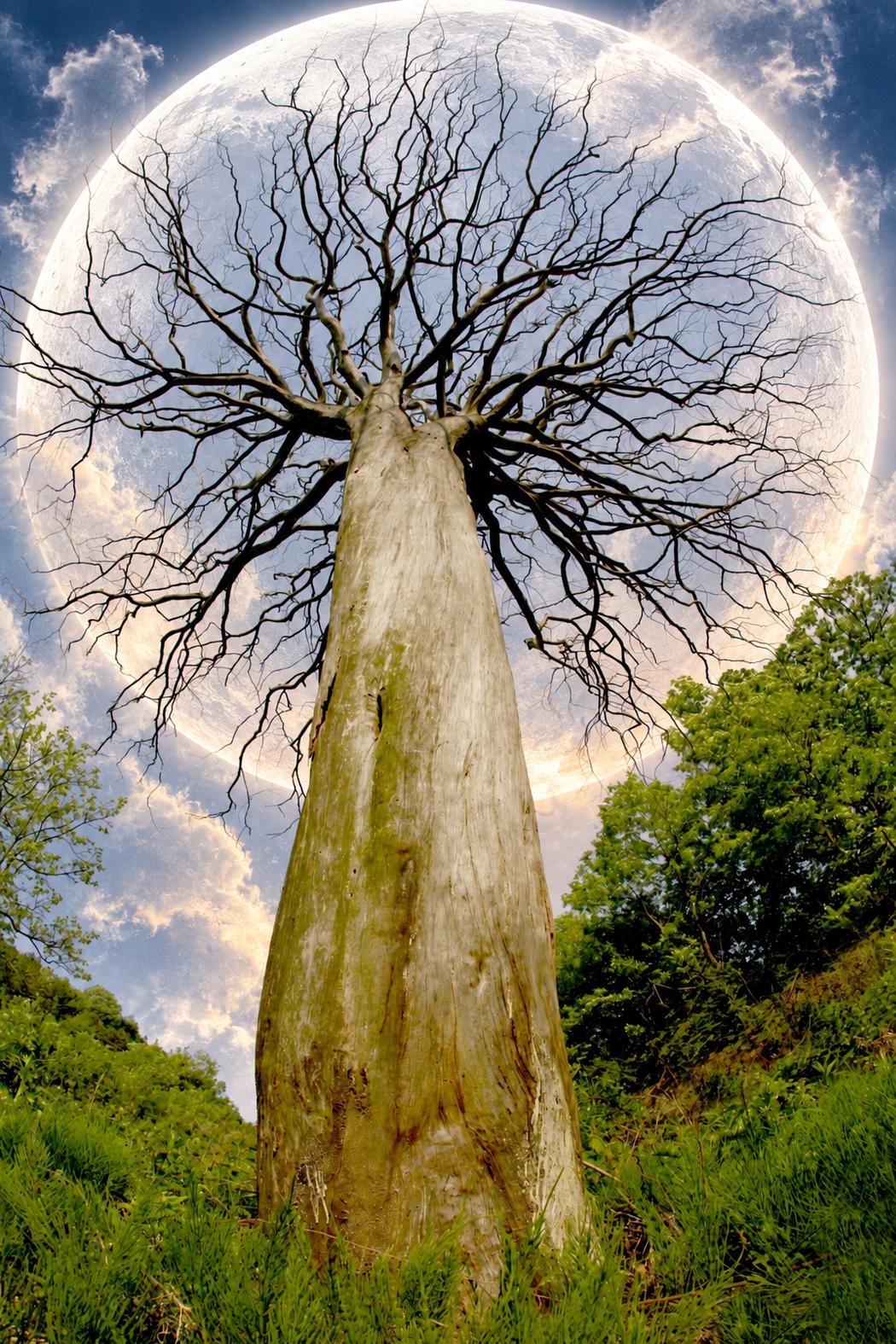 Kyung Lim Lee | Lacebark Pine | 2026
In Blooming Time Korea, blossoming branches, traditional landscapes, and the contemporary city coexist. How did you bring these different elements into a shared sense of place and time?
When bringing different elements together, I pay close attention to light, color, and scale. For the elements to feel like parts of a single landscape, the lighting needs to be consistent and the colors need to work together across the image. I also consider the balance between shapes and open space so that the viewer’s eye can move naturally through the scene.
In this work, the flowering branches helped connect the different elements. I used the flow of the branches to guide the viewer’s eye between traditional landscapes and urban structures. In this way, I wanted to create a space where elements from different periods could exist together. The landscape I want to create combines the features of real places with memories and a sense of the present.
You describe “blooming” as the continuing vitality of Korean culture and memory. How do you translate this idea into visual choices such as colour, rhythm, and composition?
For me, “blooming” is a process in which something that already exists emerges again under new conditions. I believe culture and memory gain new life as the ways we understand and express them change over time.
I used color to connect the flowers with the surrounding landscape and bring the whole image to life. I created rhythm through the repetition of flowers, the way the branches extend, and the spaces between elements. This repetition and variation reflect how culture lives on while gradually changing. By connecting traditional and modern elements in the composition, I wanted to convey the feeling that Korean culture and memory continue to grow in our lives today.
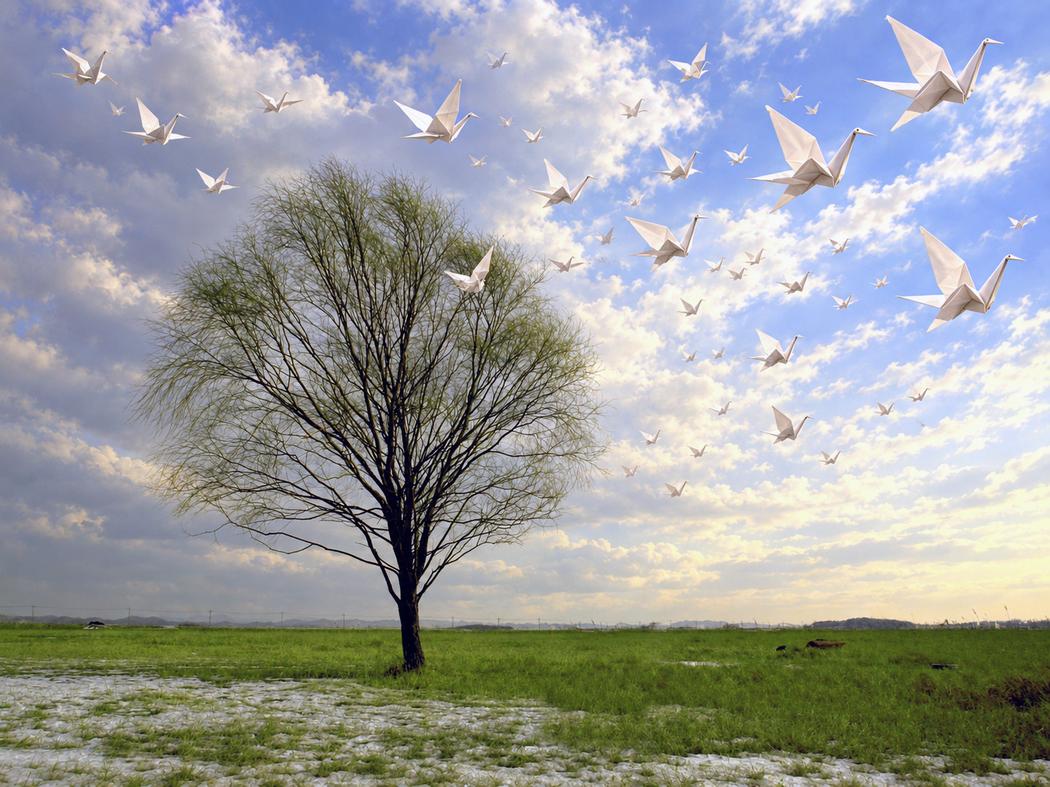 Kyung Lim Lee | Paper Cranes In Flight | 2026
How does teaching fashion design influence your artistic experimentation, and what questions do your students raise that make you reconsider your own approach to technology?
In fashion design education, being able to explain why you chose certain shapes and colors is just as important as being able to create images. When I ask students to reflect on their creative process, I ask myself the same questions about my own work. Whenever I use a new tool, I consider how it relates to what I want to express.
I would like to explore two questions with students: “If AI has created much of the image, where does the artist’s own perspective come through?” and “Why did you choose this image from the many that AI generated?” These questions remind me how important observation, interpretation, and choice are in the creative process.
For me, teaching and creating art are inseparable, with each shaping the other. My students’ creative ideas help me take a fresh look at the standards I have come to accept. The trial and error in my own creative work also provides real examples that we can discuss and learn from in class. I believe that sharing these experiences and reflecting on them together can help students develop their ideas and strengthen their ability to express them.