Elena Lipartiia
How did you first turn to photography, and when did exploring inner emotional states become central to your practice?
Photography has always filled me with a sense of wonder and childlike delight. This inspired me to explore the world in a way that was unconventional for me. Difficulties in interacting with others eventually led me to use photography as a tool for exploring my own mental states.
You describe your approach as intuitive. What makes you stop and take a photograph, and how much do you understand about its meaning at that moment?
My attention may be drawn to the slightest movement or a particular line. I never know in advance what it will be. In these moments, I experience an intense concentration of attention and a complete absorption in the process. An understanding of the image’s meaning comes after the shoot, when the distance between myself and the subject grows.
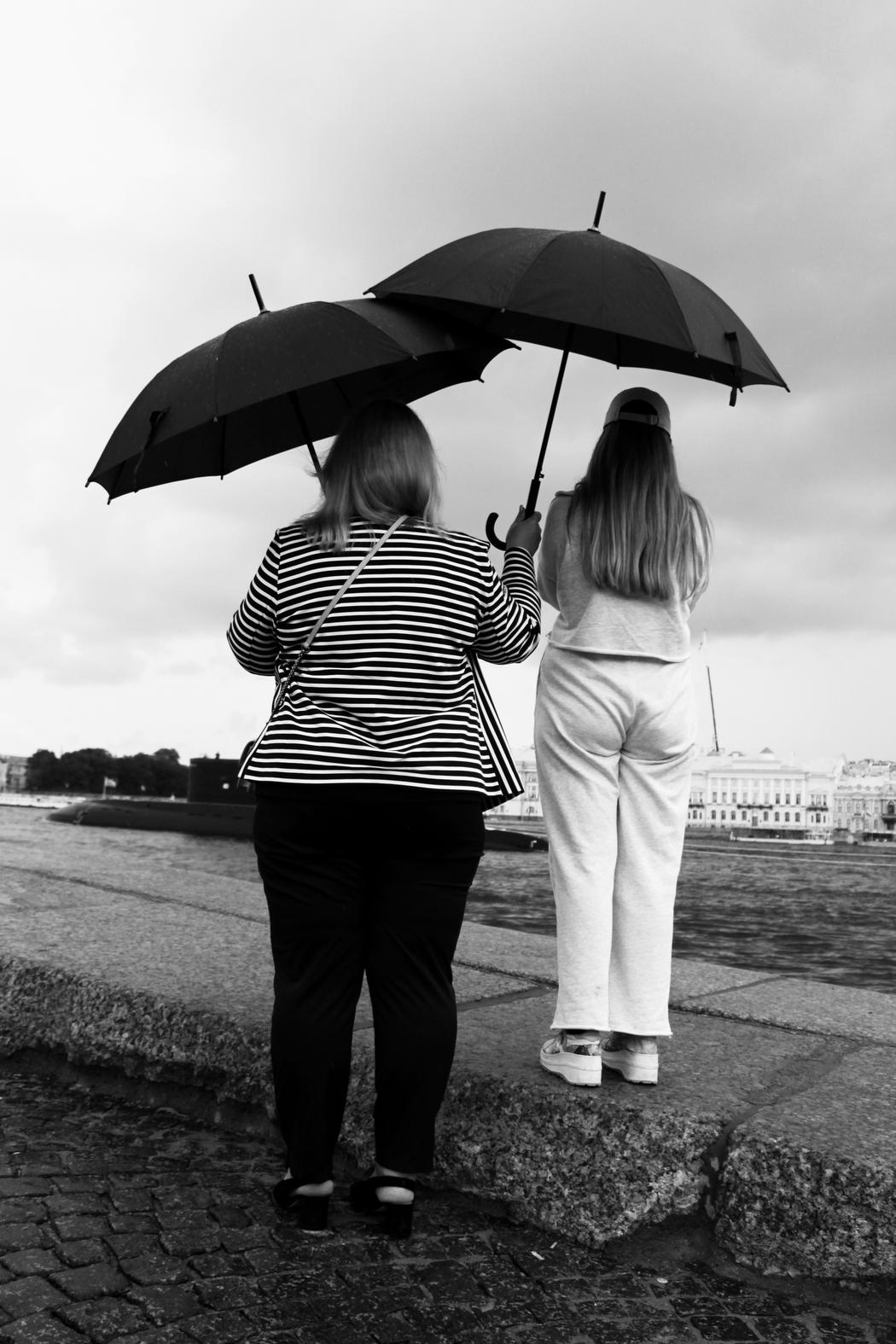 Elena Lipartiia | Forecasters | 2026
Your practice sits at the intersection of conceptual and emotional photography. How do ideas and feelings influence one another as you develop your work?
In the process, an idea may transform and become more complex, but it always serves as a point of reference for initially confused emotions. An understanding of these emotions, and their recognition as distinct feelings, comes later, with the emergence of a photograph or a series of photographs. This becomes the outcome of that interaction
What does black-and-white photography allow you to express, particularly in relation to melancholy and the atmosphere of urban life?
Black-and-white photography is inherently contradictory for me. It allows me to delve deeper into my inner states, to define more clearly the fragile boundaries of the psyche, to distance myself from the noise of the city, and to intensify a sense of melancholy. At the same time, it often produces an image that feels rather categorical, as solid as granite, stripped of fluidity and fluctuation.
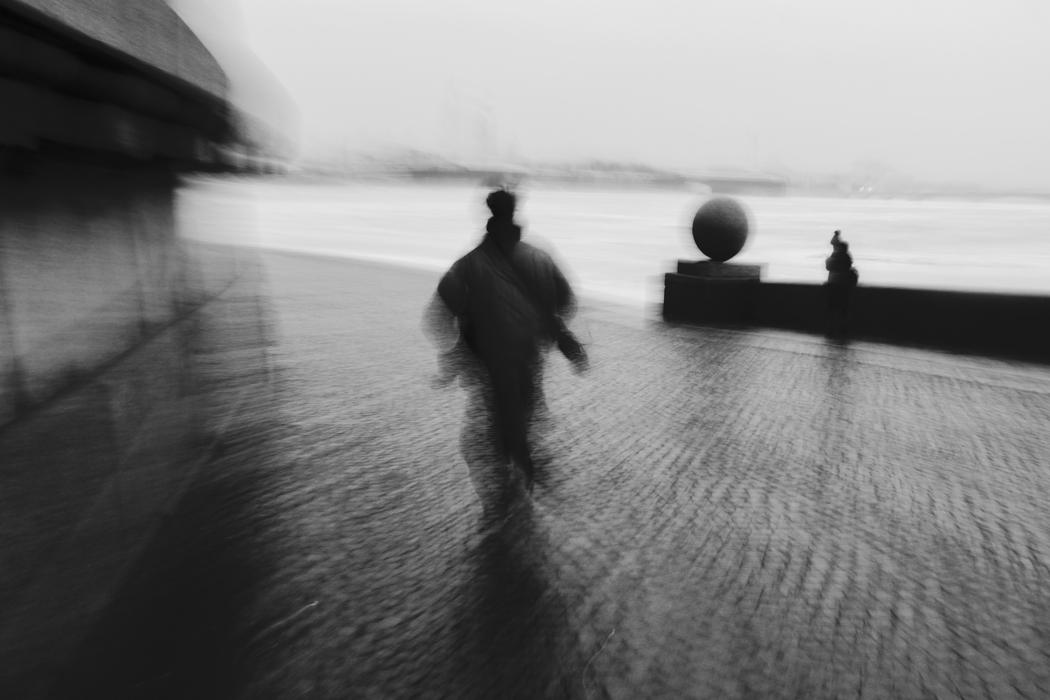 Elena Lipartiia | In Circles | 2025
In the blurred street image, the figure and surroundings seem to lose their stability. What interests you about making a familiar scene difficult to read?
This approach stems from a loss of inner balance, a loss of control over reality, and an inability to clearly assess my own state of mind.
Your photographs were made during different periods of your life. What connections emerge when you bring them together, and how do you decide their sequence?
The photographs reflect a spectrum of personal experience, ranging from meditative calm to paranoid thoughts. Together, they trace my journey from a state of gentle attraction towards one in which emotion becomes stronger than rational thought, shifting the artistic focus towards the realm of the human psyche.
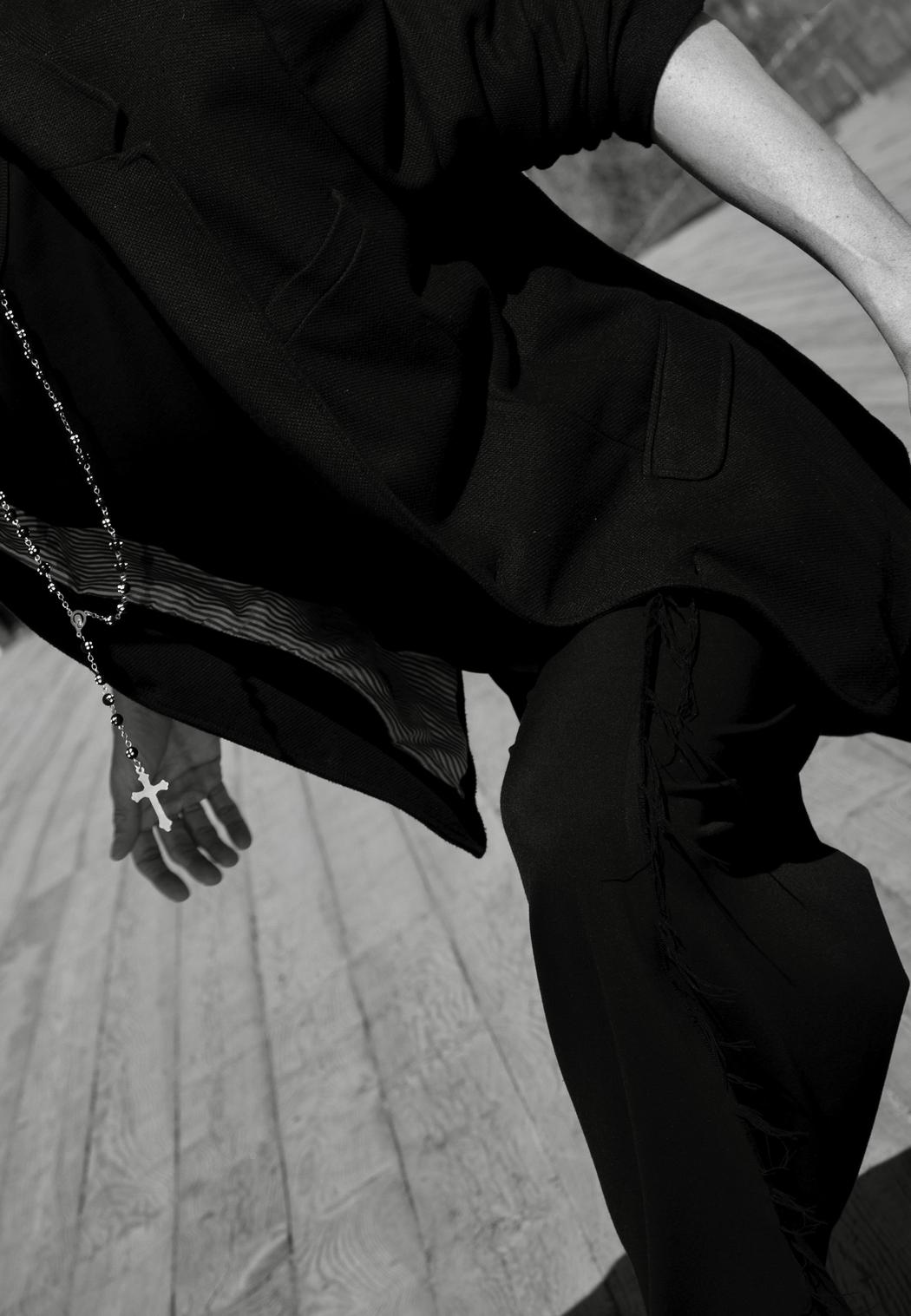 Elena Lipartiia | Pass | 2026
How do you choose titles for your photographs? What relationship would you like a title to establish between the image and the viewer?
I choose a title not so much as an explanation of the image, but rather as a note on something that cannot be directly seen within the photograph.
I would like the act of reflection to initiate an inner dialogue within the viewer, a conversation with themselves.