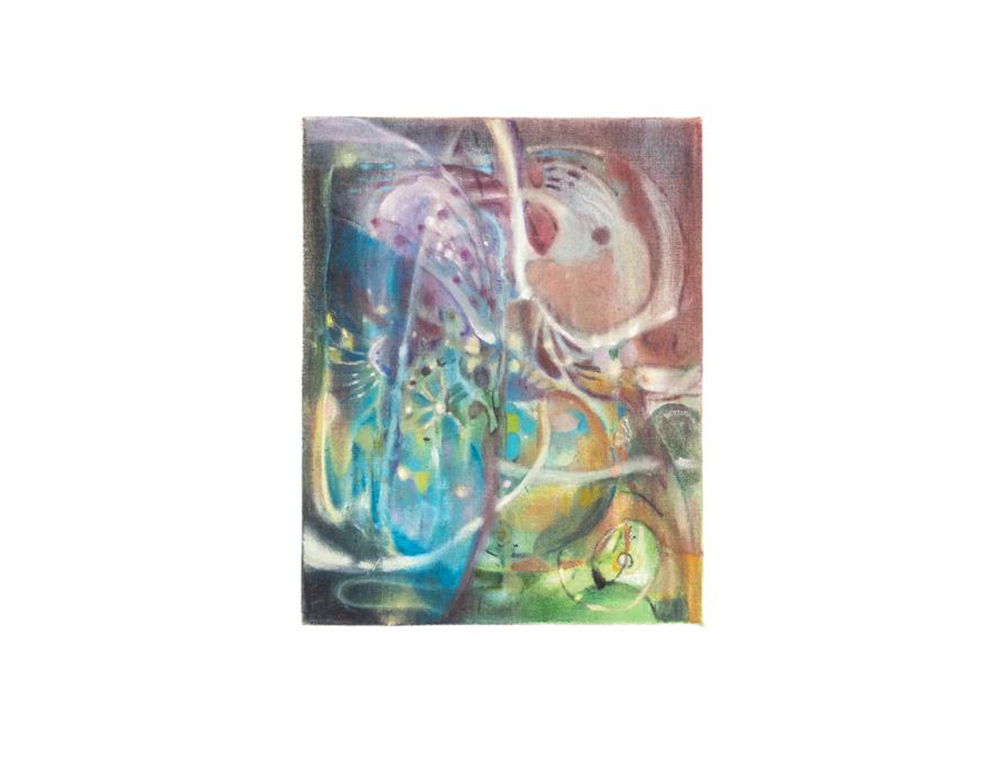
Na Young Lee
Was there a particular experience that first made you question the relationship between what we can see and what we accept as real?
I grew up in an environment strongly influenced by science. My father studied electronic engineering, founded a technology company, and developed several patents. Through his influence, I became interested in science from an early age, believing that almost everything in the world could eventually be explained through logic and evidence.
However, certain personal experiences began to challenge that certainty.
In my early twenties, I was hospitalised with a severe illness and a high fever. During a brief moment of altered consciousness, I experienced what felt like my entire life unfolding before me in extraordinary detail. Memories, conversations, and forgotten moments appeared with remarkable clarity. What felt like an extended experience may have lasted only seconds in reality.
That experience left me questioning the relationship between consciousness, memory, and our perception of time. Other experiences involving dreams and intuition have continued to deepen my curiosity.
I began to recognise how naturally we trust what we can see and understand, often accepting it as the whole of reality. Yet my experiences have led me to consider the possibility that existence extends beyond the limits of human perception.
I don’t see this as a rejection of science. Rather, I am interested in the questions that remain open, even when we approach the world through logic and evidence. Through painting, I hope to create a space where viewers can question what they accept as real and consider what might lie beyond what is immediately visible.
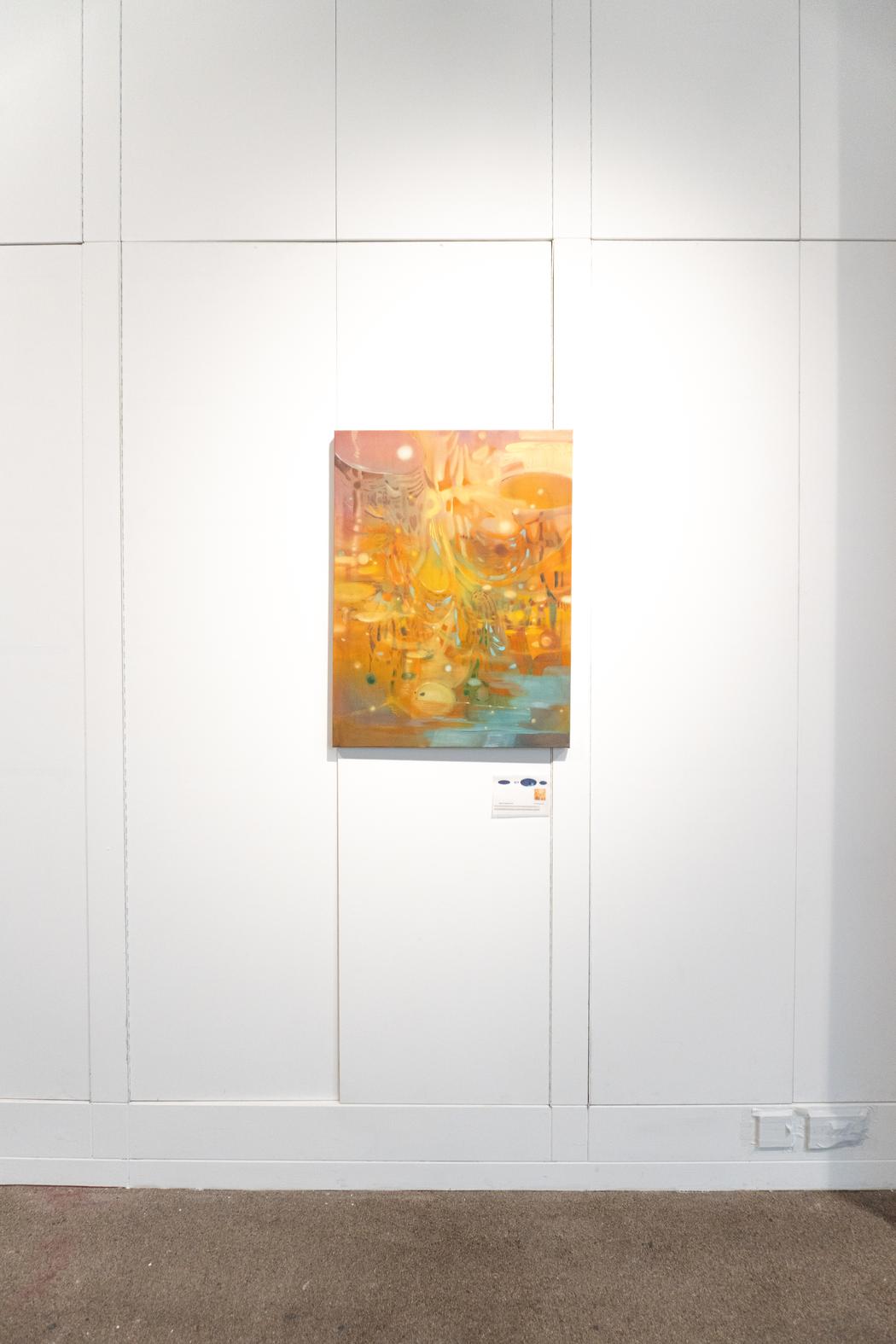 Na Young Lee | At The Hour Of The Shimmering Sunset | 2026
Your statement describes a tension between scientific rationality and phenomena that resist explanation. What does painting allow you to explore within that tension that analytical thinking alone cannot?
Scientific thinking has taught me to look for explanations, but painting allows me to remain within a question without needing to resolve it. Rather than trying to define the unknown, I can explore it through a process that is itself unpredictable.
One of the things I find most fascinating about painting is the way something unexpected can emerge from a decision that initially seems quite ordinary. I might introduce a colour, change the direction of a brushstroke, or remove part of the surface, and suddenly encounter something I could never have imagined in advance.
I am particularly interested in the moment when an act of removal becomes an act of discovery. Sometimes, when I wipe away a layer of paint, an earlier colour or form reappears. It was always there, but I had lost sight of it. Something can remain present even when it is no longer visible to us.
I am also drawn to what surrounds a subject rather than the subject itself. Instead of depicting an object directly, I sometimes imagine its shadow or the space around it as the central presence. This shift in attention allows me to reconsider the relationship between what is immediately visible and what might otherwise be overlooked.
Chance plays an important role in this process, but it is always accompanied by deliberate choices. I decide which unexpected forms to preserve, which to develop, and which to let disappear. The painting develops through an ongoing exchange between intention and accident.
Analytical thinking often moves towards a conclusion. Painting allows me to investigate a question through direct experience, where the outcome is not entirely determined in advance. I am interested in what becomes possible when thought and material respond to one another.
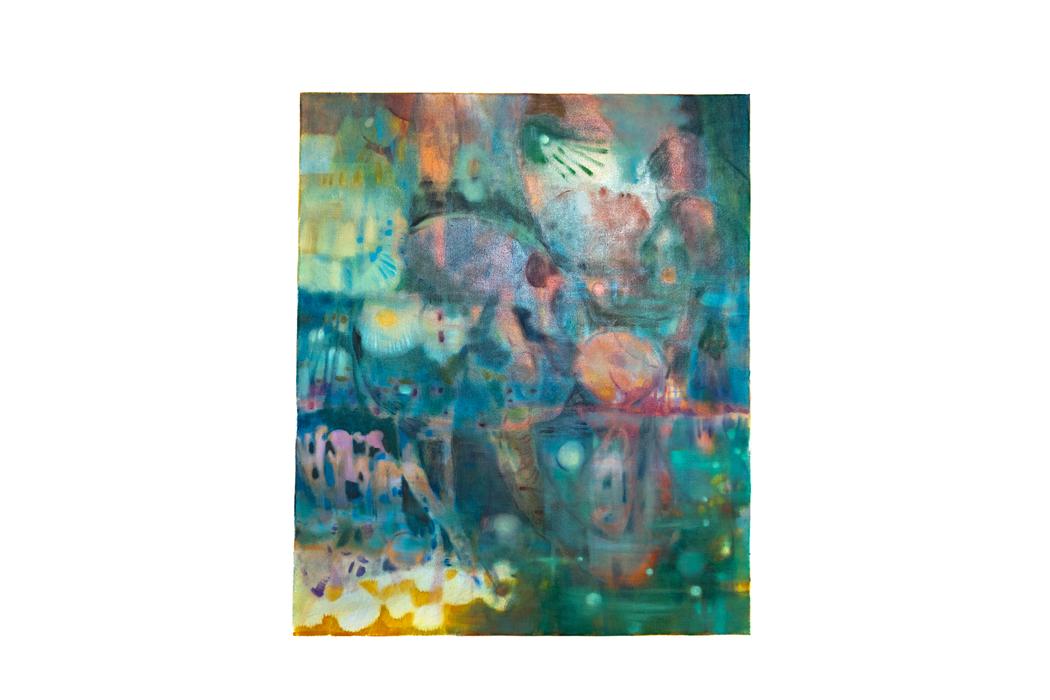 Na Young Lee | Between The Seen And The Unseen | 2026
How did your MA at Chelsea College of Arts influence your practice, particularly your approach to uncertainty and the limits of knowledge?
My time at University of the Arts London, Chelsea College of Art was important to me, although I don’t think I fully understood its influence while I was studying there. Some of the most meaningful questions I encountered during my MA only began to make sense after I graduated.
I remember presenting a project that began with Schrödinger’s cat. Before I could even move beyond the first slide, one of my tutors asked me, “Why?” Why was I introducing this concept, and what did it really have to do with my work?
I was completely caught off guard. I had been fascinated by the theory, but I had never properly questioned why it mattered to me personally. At the time, I couldn’t find an answer, and I eventually moved on to a different subject.
Looking back, I realise that the question was more important than I understood. My interest was never simply in scientific theories themselves, but in the questions they raised about what we can know, perceive, or confidently define.
Chelsea also exposed me to a wide range of perspectives through long group critiques with artists from different cultural backgrounds. My individual tutorials were particularly valuable, especially when tutors challenged me to be more selective and question the necessity of my decisions. I often wanted to explore too many ideas at once, and their direct criticism helped me recognise the importance of making clearer choices.
During my MA, and even shortly after graduating, I often found it difficult to articulate the full scope of what I wanted to investigate. Since then, my understanding has continued to develop through painting, exhibitions, conversations with other artists and viewers, and opportunities to reflect on my work in writing.
I now have a clearer sense of the direction I want to pursue, while recognising that an artistic practice is continually evolving. I have become more comfortable allowing questions to develop over time rather than seeking immediate answers.
In that sense, Chelsea did not give me a definitive understanding of my practice. It gave me questions that continue to shape it.
When you begin a painting, how does an abstract question about the unseen become a visual starting point? Do you begin with an image, a particular sensation, or an encounter with the materials?
My philosophical interests provide an underlying direction, but I approach the canvas through colour, material, and visual intuition rather than beginning with a predetermined image.
I usually start by choosing at least two colours and blending the boundaries between them to create a gradual transition. Even when I use the same colours and consistency of paint, the resulting depth and atmosphere can be unexpectedly different. These subtle variations often suggest the beginnings of a composition.
As I begin to develop forms, I draw on imagined spaces and fragments of imagery rather than direct visual references. I might think of a world beneath the surface of water, a scene from a dream, or ambiguous organic structures that could resemble branches, veins, or parts of the human body without becoming any one of them.
I am particularly drawn to forms that seem almost to touch or connect. I am interested in the invisible relationships between things — subtle interactions, a kind of chemistry, or forces that we cannot directly see but might somehow sense. Through painting, I explore how these relationships might be suggested visually without becoming literal representations.
I sometimes develop a form by imagining its shadow rather than the object itself. This allows me to reverse the usual relationship between subject and background, giving importance to something that might otherwise remain secondary.
Towards the end of a painting, I often search for places where light might be hidden within the imagined space. Using a round brush, I introduce small highlights, almost as though I am uncovering light that was already there but had not yet become visible. A subtle point of light can transform the relationship between forms and alter the atmosphere of the entire space.
Rather than translating a philosophical idea directly into an image, I allow meaning to take shape through the interaction between intention, imagination, and the material itself. The painting develops through this exchange, often revealing possibilities beyond the image I initially had in mind.
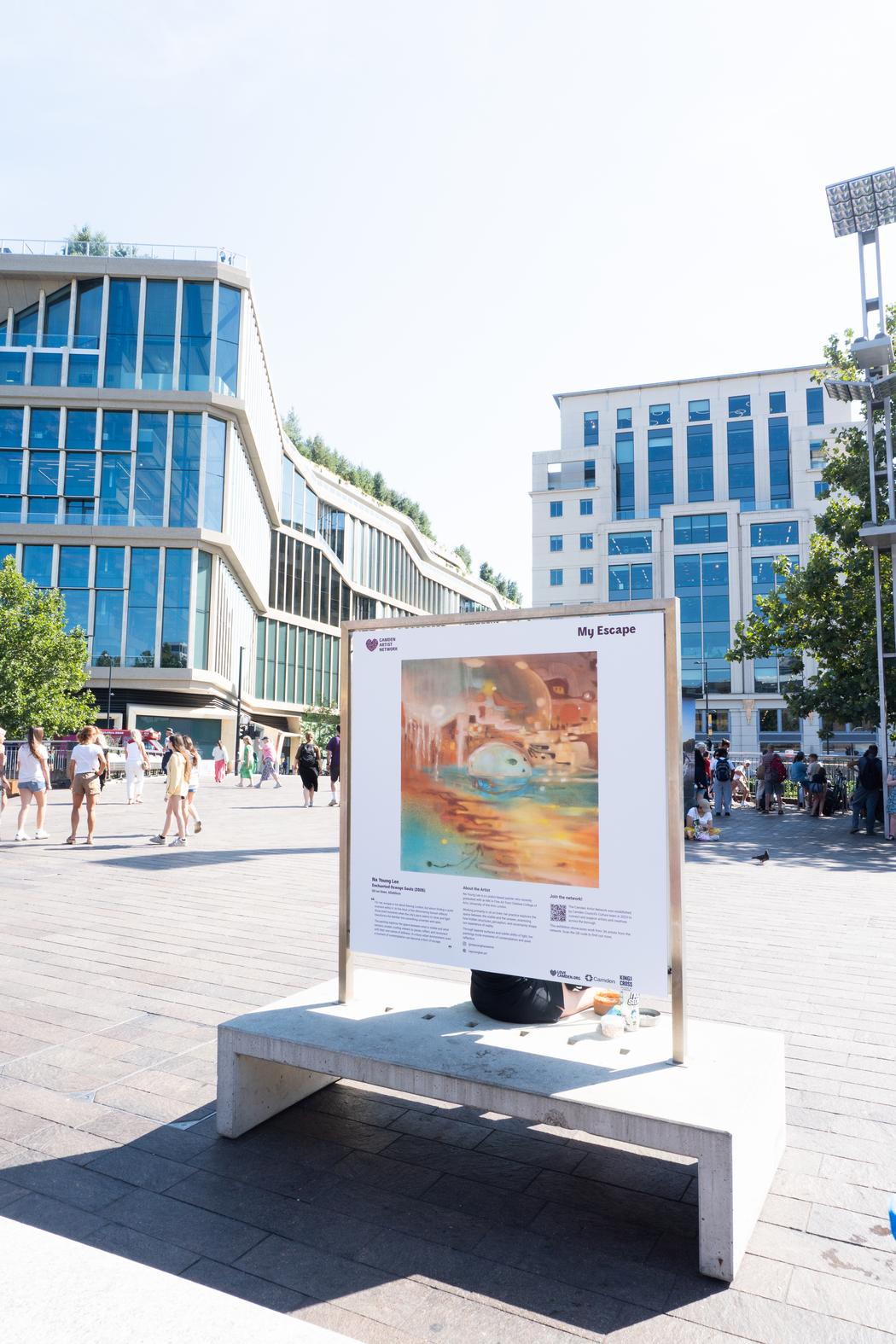 Na Young Lee | Enchanted Orange Souls
What qualities of oil paint are essential to your practice, especially when creating forms that seem to emerge, recede, and change over time?
What fascinates me about oil painting is that a painting never feels entirely fixed in time.
Oil paint dries slowly, which allows me to work wet-on-wet, introducing colours into a surface that is still changing. Sometimes pigments blend in ways I could never have anticipated, producing subtle colours that seem to exist somewhere between the ones I originally chose. Not every accident is beautiful. Colours can become muddy or lose their clarity, but I enjoy searching within that unpredictability for something I could not have created deliberately.
I also work with thin layers of paint, building up depth and then occasionally wiping sections away with a cloth. What I love is that the paint rarely disappears completely. A faint veil of colour remains, while fragments of earlier layers begin to show through. The surface holds traces of its own history. Something can be covered, altered, or almost erased without entirely ceasing to exist.
There is also something about the way oil paintings settle with time that I find beautiful. I sometimes think of it as a kind of maturation, almost like wine. As the paint dries, the colours and surface seem to find a different balance. I love the richness of oil paint, its subtle sheen and depth, and the way a finished surface can feel almost alive.
But beyond these physical qualities, I am interested in another kind of change: the one that happens through looking.
I experience this with my own paintings. A form that once seemed central may become less important the longer I look, while something I barely noticed begins to emerge. Sometimes I return to a painting on another day and see an entirely different relationship between its forms and colours. Nothing has necessarily changed on the canvas, yet my experience of it has.
I hope my paintings offer viewers that same possibility. I don’t want everything to reveal itself at once. I want there to be something left to discover, even after someone has spent time with a work.
How do you respond when a painting develops in an unexpected direction? What helps you decide whether to follow that change or return to your original intentions?
Some of my favourite moments in painting happen when something beautiful appears almost effortlessly. It might be a subtle gradient that forms as two colours blend, or a faint trace that becomes visible after I wipe away a layer of paint. I am especially drawn to moments when the result feels natural and slightly mysterious, as though it has emerged without being forced.
When that happens, I try not to interfere too much. Sometimes all a faint area needs is a small highlight or a subtle adjustment. If an unexpected form begins to resemble something I find interesting, I might develop the surrounding areas in response to it, allowing the composition to grow from that discovery rather than following what I originally imagined.
On the other hand, I often become dissatisfied with areas where I have worked too hard. When I concentrate excessively on small details, the painting can begin to feel cramped or overly controlled. Even if I have spent a long time developing a particular section, I am willing to paint over it.
Sometimes I wipe those areas back, partly because I am curious about what might be revealed underneath. Something I had covered or forgotten might turn out to be more interesting than what I was trying to create. I repeat this process until I find a balance that feels right.
Knowing when to stop is perhaps one of the most difficult parts of painting. I usually reach a point where the overall composition feels balanced and I no longer want to interfere with it. But that feeling is not always easy to trust. Ultimately, I try to recognise when I have given the painting everything I can, and when the atmosphere and ideas I wanted to convey have found their place within it.
I don’t believe that adding more necessarily makes a painting better. Sometimes the most important decision is simply to leave it alone.
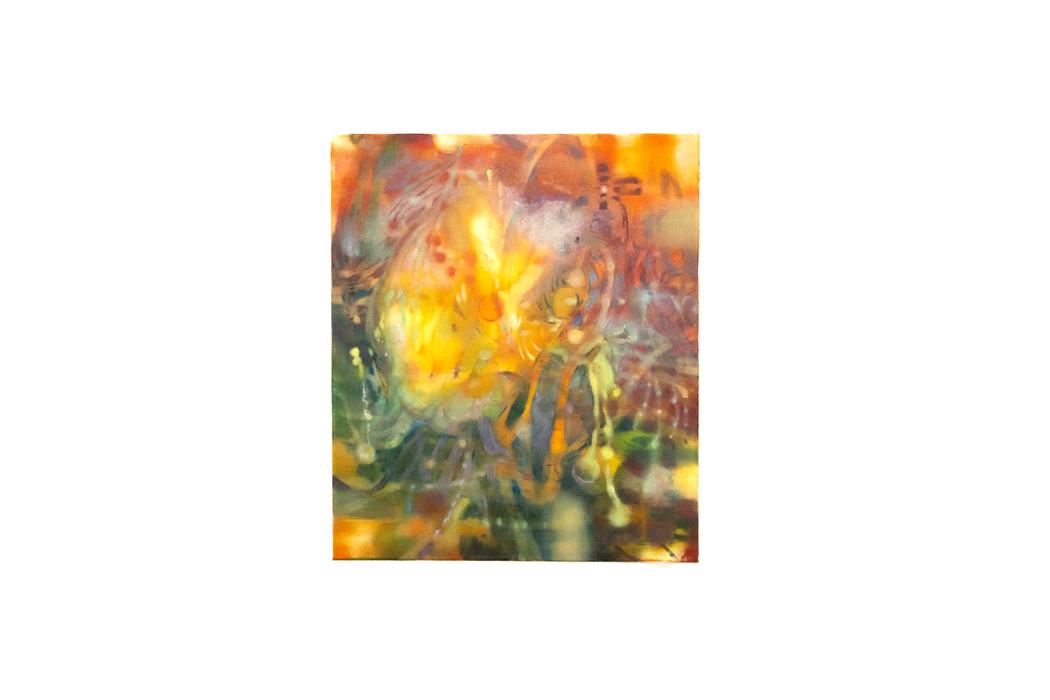 Na Young Lee | Hidden
Has a viewer’s interpretation ever drawn your attention to something in a painting that you had not consciously recognised? How did that encounter affect your understanding of the work?
Over time, I have noticed an interesting pattern in the way people respond to my paintings.
Their first reaction is usually intuitive. They talk about the atmosphere, the emotions, or the movement they sense before trying to identify anything specific. I place a great deal of importance on this first impression. I want a painting to communicate something within those first few moments, even before the viewer knows exactly what they are looking at.
Then, as they spend more time with the work, they begin to recognise forms and create their own stories. What I might have imagined as a tree branch could become, in someone else’s eyes, a table prepared for a wedding feast in a fairy tale. I find these interpretations delightful because they reveal possibilities I had never considered.
As the conversation develops, some viewers begin to focus on the painting itself — the brushstrokes, the layers, and how particular effects were achieved. I enjoy observing these different stages of attention, from an immediate emotional response to storytelling and, eventually, a closer examination of the painting’s physical construction.
I remember an exhibition where a curator later shared a recording of viewers discussing my paintings for around thirty minutes. They were identifying different forms, debating how things might be connected, and suggesting interpretations I had never imagined, including the idea that certain elements represented the passage of history.
What made me happiest was realising that my paintings could hold people’s attention and inspire such a long conversation without me having to explain anything. I felt genuinely proud that they were so engaged with the work. It was almost as though I had placed a question mark in front of them, and they had begun proposing their own answers. I loved listening to that exchange.
That experience reinforced something I value deeply about painting. I don’t necessarily want viewers to arrive at the interpretation I had in mind. I would rather give them something that sparks their own imagination, curiosity, or even disagreement.
There is something wonderful about watching a painting take on a life of its own through the conversations it creates.