
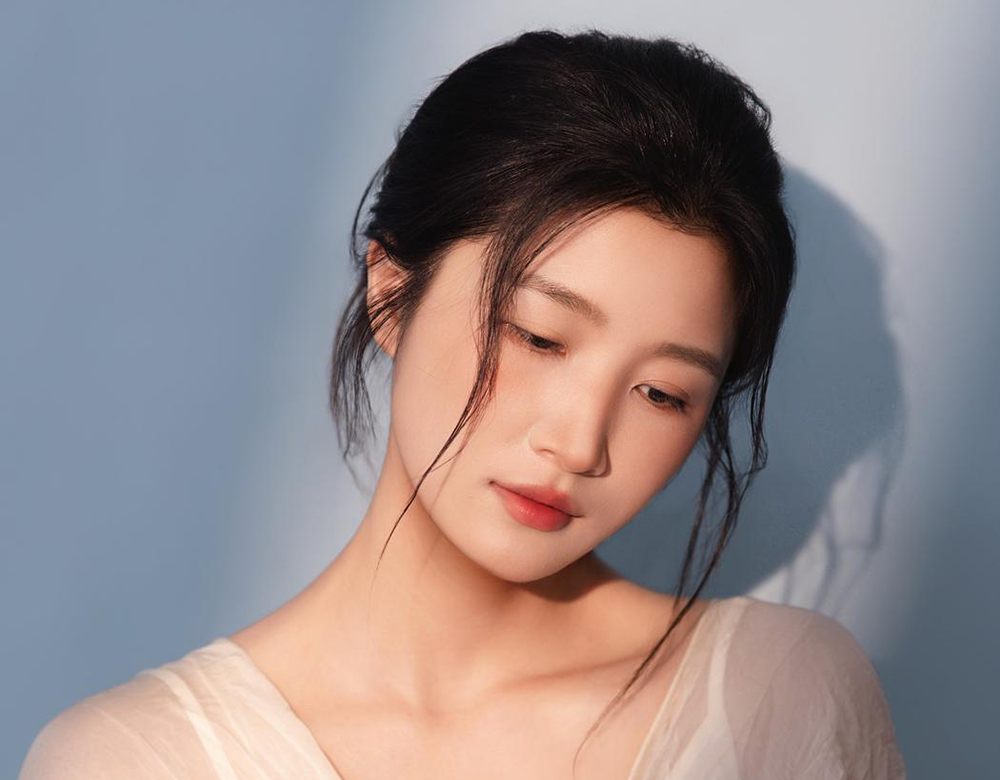
Wang Ya
Your creative philosophy can be expressed as “Perceive Nature, Feel Life, and Deconstruct Inner States.” How did this philosophy develop, and how does it guide your decisions in the studio?
My creative philosophy did not emerge as a complete formulation from the beginning. It gradually took shape through long-term observation of nature and daily life, as well as through an ongoing awareness of my own emotions.
I often begin with a specific visual experience: the changing light in a natural landscape, an unexpected colour relationship in an urban space, the way mountain flowers and plants grow, or the emotional impact of an ordinary moment. However, I am not satisfied with simply depicting these subjects faithfully. I am more interested in how visual experience is transformed into memory, emotion and inner feeling when we encounter nature and life.
In the studio, this philosophy directly informs my decisions. I first ask myself: What does this painting really need to express? Is it a particular kind of light, an atmosphere, a memory, or a psychological state that is difficult to put into words? If the image depends too heavily on a recognisable subject, I may reduce its narrative specificity. If it becomes too abstract and loses an emotional point of entry, I will retain traces of nature or reality. For me, painting is both observation and transformation: it must respect lived experience while allowing the work to develop its own emotional space.
You work with both oil and acrylic paint, combining their very different physical properties. What can each medium express for you, and how do you decide which one should dominate a particular painting?
I do not see oil and acrylic as two media that must be separated or made to compete with one another. They have different physical properties, and that difference is an essential part of my practice.
Oil paint is dense, slow, rich and full of a sense of time. It is suited to building the underlying structure, spatial depth and material texture of a painting, and it can convey a feeling of accumulation, continuity and weight. Acrylic, by contrast, is more transparent, light, immediate and luminous. It allows me to preserve direct gestures, create flowing colour relationships and capture an immediate visual response.
I usually decide which medium should take the leading role according to the emotional needs of the work. If a painting requires stronger spatial depth, structure or a sense of sedimentation, oil may form its primary foundation. If the work emphasises light, transparency, speed and the breathing quality of colour, acrylic may become more prominent. This relationship is not absolute, however, nor is it simply a matter of placing one material beneath the other. I want the media to influence and transform one another within the painting.
Through layering, working with both wet and dry paint, colour overlay and the modulation of brushwork, I create a dialogue between the density of oil and the luminosity of acrylic. I do not want the two media to look completely identical in the end. On the contrary, I hope viewers can sense the difference between them and the visual tension that this difference produces.
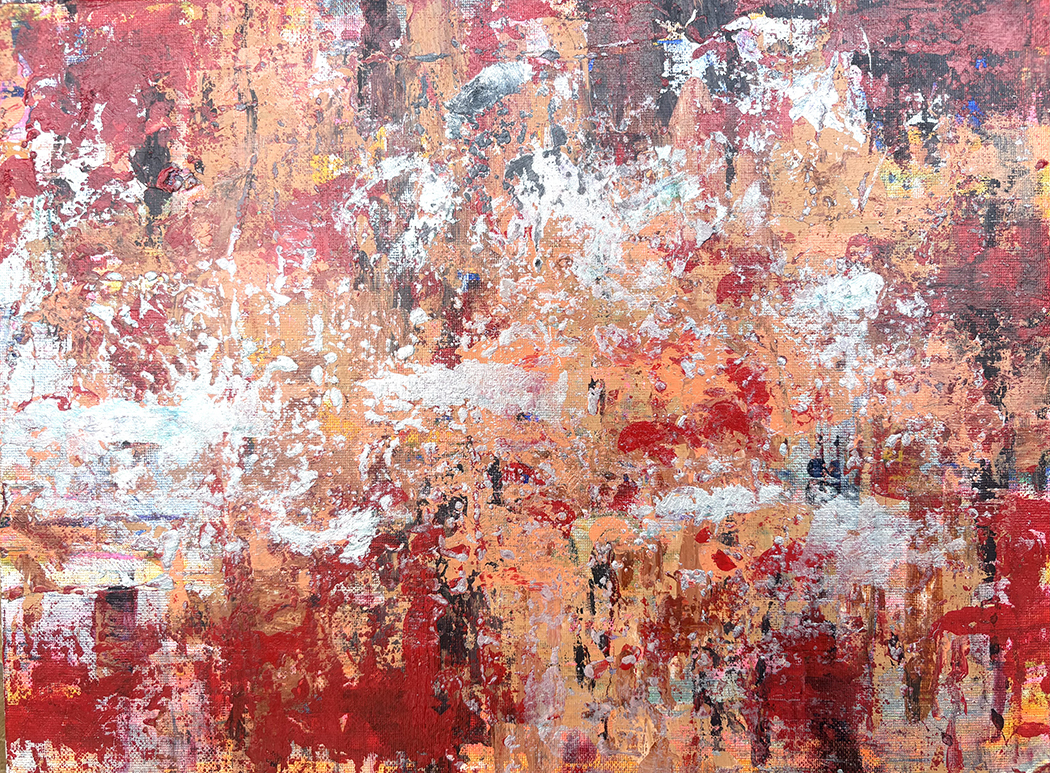 Wang Ya | Blaze Glowу | 2026
Your work often moves between recognisable landscape and abstraction. Why are you interested in this boundary, and how do you decide how much of the original subject to retain?
I am interested in the boundary between figuration and abstraction because lived experience is not fixed or singular. When we look at a mountain, a sky or a beam of light, we perceive not only its external form, but also distance, temperature, time, memory, and the responses of our bodies and emotions.
Figuration can give viewers a point of entry into a painting, allowing them to sense nature, light or a familiar fragment of reality. But if the image is too complete, it can also limit the viewer’s experience. I therefore want the work to retain a degree of recognisability without closing off its meaning.
I usually begin by preserving the core elements that carry the viewing experience: a spatial relationship, the direction of light, a colour atmosphere or a natural form. As the painting develops, I gradually weaken those parts that are overly explanatory or definite, allowing form to become colour, rhythm and texture. When I feel that the original subject is no longer the sole centre of the image, but has begun to transform into an emotional or psychological state, the painting is often approaching the direction I want.
For me, this is not a choice between figuration and abstraction. It is about allowing both to remain in continual tension. A work may enable viewers to recognise dusk, flowers, mountains or radiance, but these elements do not remain merely at the level of representation.
In your paintings, light and colour seem to function not only as visual elements but also as carriers of memory and emotion. How do your personal experiences influence your choice of colour?
For me, colour is structural; it is not merely a decorative element attached to form. It can express temperature, distance, rhythm and space, as well as convey an emotional pressure that is difficult to articulate in words.
My experience of colour often comes from observing life. Natural landscapes, urban light and shadow, the moment of dusk, mountain plants, or an unexpected colour relationship in an everyday environment can all become starting points. Sometimes a colour reminds me of a particular time, kind of weather or personal experience. Once it enters the painting, however, it gradually moves away from the original subject and develops into an independent visual relationship.
I do not treat colour as a fixed symbol for “happiness,” “sadness” or “tranquillity.” The same colour can produce entirely different emotions in different combinations. A warm colour may convey energy, or the lingering warmth of memory; a cool colour may create a sense of distance, or an atmosphere of quiet and openness.
I am therefore more attentive to relationships between colours than to the meaning of any single colour. I observe their values, temperatures, transparencies and rhythms, and continually adjust them according to the overall state of the painting. Personal experience affects my sensitivity to colour, but I hope that, after being transformed through painting, it can become an open emotional space that viewers can also enter.
Texture plays an important role in your work, from semi-transparent veils of colour to dense, tactile passages. How do you construct these surfaces, and what do you hope viewers discover when they look closely?
I generally construct the surface through multiple layers. Different layers may involve different media, different degrees of wetness or dryness, and different pressures of the brush. Some areas retain dense paint, giving the image a sense of accumulation and tactile weight. Other passages use thinner, more transparent layers, allowing underlying colours and light to emerge.
Oil helps me establish thickness, structure and spatial depth, while acrylic can heighten transparency, fluidity and luminosity. Between these two media, I continually adjust the relationship between covering and revealing, concealment and exposure. Some marks are covered by subsequent colours but do not disappear completely; they remain faintly present in the deeper layers of the painting.
When viewers look closely, I hope they discover that the painting was not completed all at once, but contains traces of time and decision. At close range, they may notice the direction of the brushwork, the relationships between colour layers and the accidental changes created by the movement of paint. From a distance, these details gather again into light, space or emotion.
I do not want texture to be merely a visual effect. For me, the surface is part of the work itself. It records how the materials have acted, as well as how I have worked between control and response.
Some people describe your paintings as both gentle and powerful, both expressive and orderly. Do you consciously pursue these contrasts, or do they arise naturally from your personality and working process?
These contrasts are both something I pursue consciously and something that arises naturally from my way of working.
I want the painting to have a certain order, because composition, space and colour relationships require an underlying structure. At the same time, I do not want that structure to become completely closed. I therefore leave room for the paint, the brushwork and unexpected changes to act. One layer of colour may alter the colour beneath it; an unplanned gesture may create a new rhythm; the natural flow of the paint may open up an unforeseen space.
I describe this method as “chance within structure.” Structure gives the work direction, but it should not predetermine every result. Excessive control can drain the painting of vitality, while complete surrender to chance can make it diffuse. I prefer to negotiate between the two.
“Gentleness” comes largely from the way I handle colour, light and detail; “strength” comes from the tension of the brushwork and the movement within the image. “Expressiveness” comes from the flow of material and emotion, while “order” comes from composition and sustained judgement. These qualities are not mutually exclusive; together they form the character of my painting.
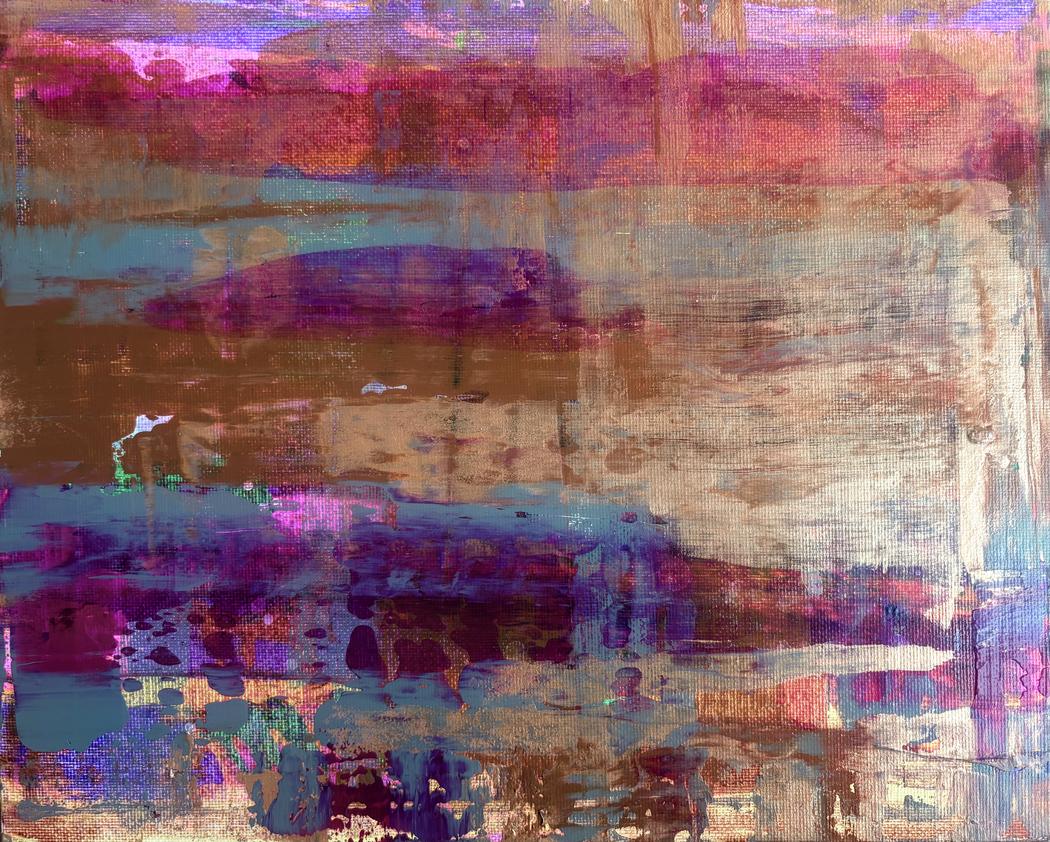 Wang Ya | Dusk Superpositionу | 2026
How have international exhibitions, professional jury work and cultural exchange influenced your understanding of your artistic identity and the cross-cultural potential of your painting?
International exhibitions and cultural exchange have made me more aware that an artist’s identity is grounded both in personal experience and cultural background, and in the ability of the work to enter into dialogue with different ways of seeing.
I have participated in the Monaco International Art Fair, received recognition from associated Monaco art awards, won the Gold Prize at the “MEDUSA, LA GORGONE” International Art Award Exhibition, and was invited to participate in the 162nd Salon des Artistes Français in Paris, where I received a Nomination Award. In 2026, I also became an international member of Italy’s NOMYA International Art Association.
These experiences have shown me that viewers from different cultural backgrounds may have different habits of looking, yet they can still connect with a painting through light, colour, space, texture and emotion. Although my paintings originate in observations of nature, urban light and shadow, and personal experience, I do not want them to be understood only as a geographically specific visual expression. I am more interested in using material and perception to reach shared human feelings.
Serving as a jury advisor for the 14th Canadian Youth Art Competition and as a judge for the 2025 Art Bloom East National Digital Fine Arts Exhibition has also encouraged me to reconsider art from a perspective beyond that of the artist. I have become more attentive to how a work establishes its own language, how it balances form and thought, and what enables it to create a genuine connection with viewers.
Cross-cultural communication does not mean erasing the personal background of a work. It means allowing the work to retain its own experience while offering an open point of entry for viewers. For me, a painting can become a meeting place for different cultures and different life experiences.