Edina Seleskovic
Your practice moves between sculpture, public art, installation, and new technologies. What draws you to working across disciplines rather than within a single medium?
Strangely enough, I have never been interested in defining myself through a single medium. I am mostly interested in ideas. Those ideas come to me with a medium that allows them to be communicated, to be heard. Sometimes it is sculpture, sometimes a drawing or an installation, and sometimes technology that can open a completely new way to create the work or experience it. The medium is never the destination. It is the language that brings an idea to life.
For me, the exciting moment happens when these disciplines begin to meet, especially when I try to connect those that seem incompatible. The magic starts when art stops being simply an object and becomes an experience, a emotion, the beginning of a conversation.
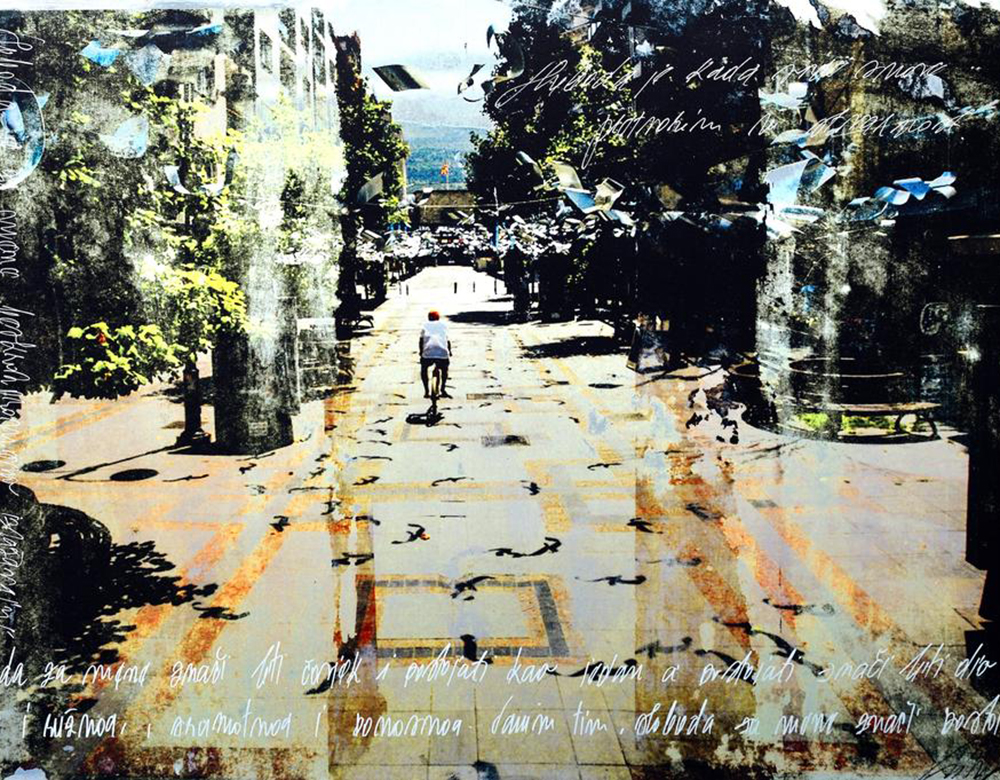
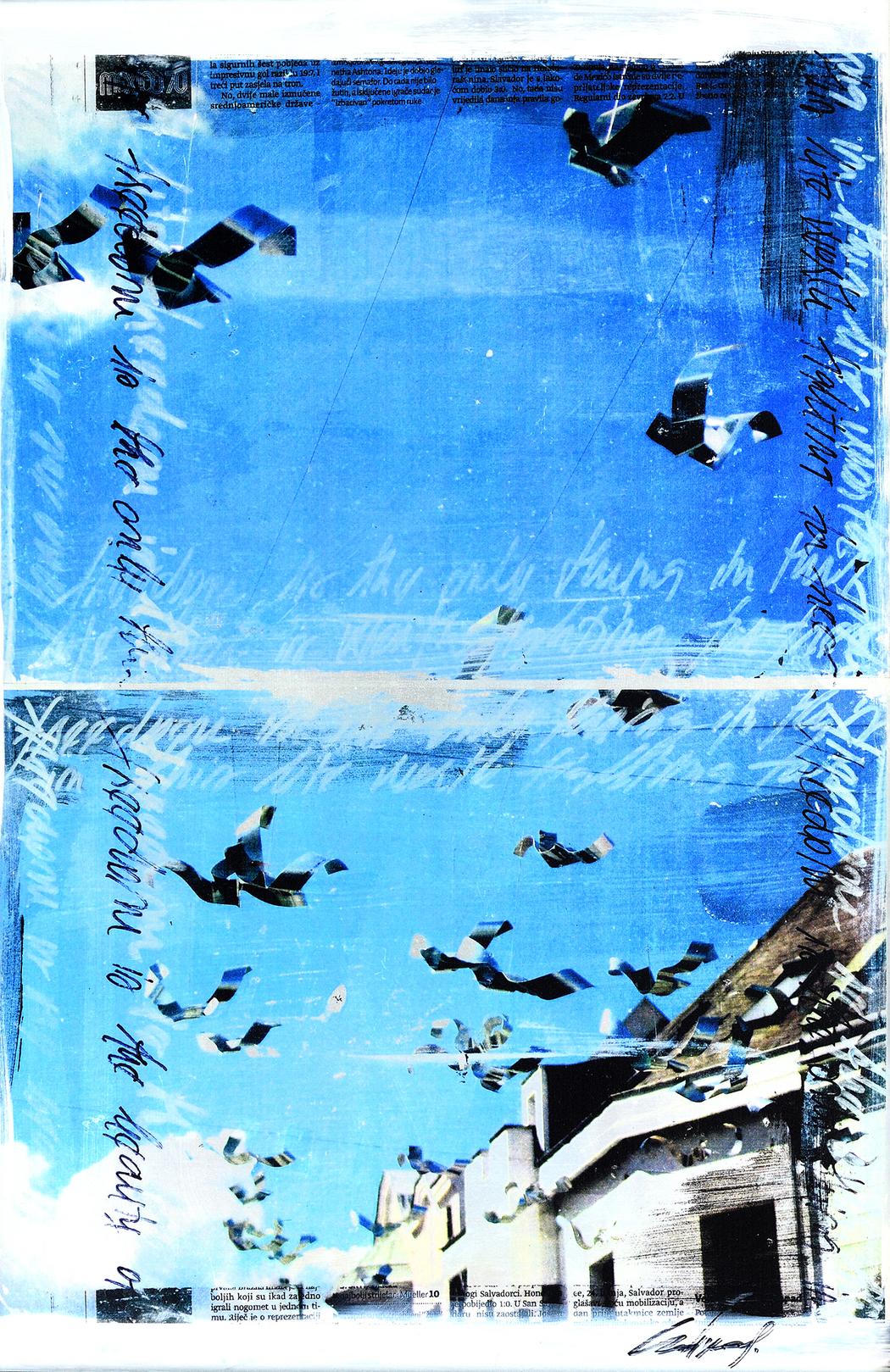
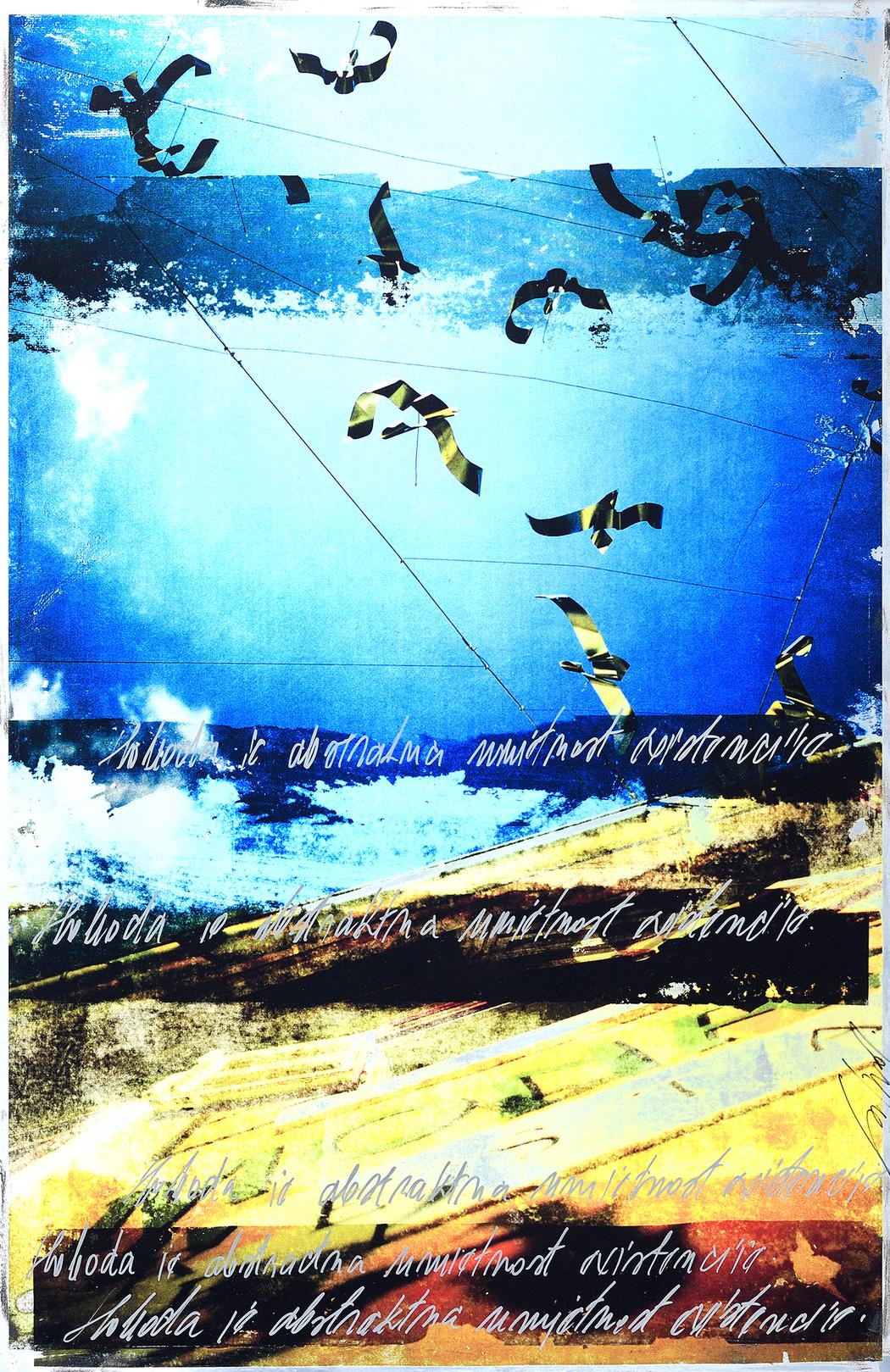
The Think Freedom Skies works combine urban and natural landscapes, fragments of text, and images of birds. What does freedom mean to you within this series?
Perhaps the most important thing I have learned through Think Freedom is that freedom means something different to every person. For a decade, I have asked young people in 27 cities across the world one very simple question: What does freedom mean to you? I have received thousands of answers, written in different languages, that speak volumes. These conversations changed my role as an artist. I stopped being the author of the installation and became an instigator, an initiator of conversation and creation.
Think Freedom Skies is now the space where those conversations can continue to live, a space where we can question what freedom means to one another. I guess for me, freedom begins with the possibility of asking that question.
 Edina Seleskovic | Think Freedom Skies
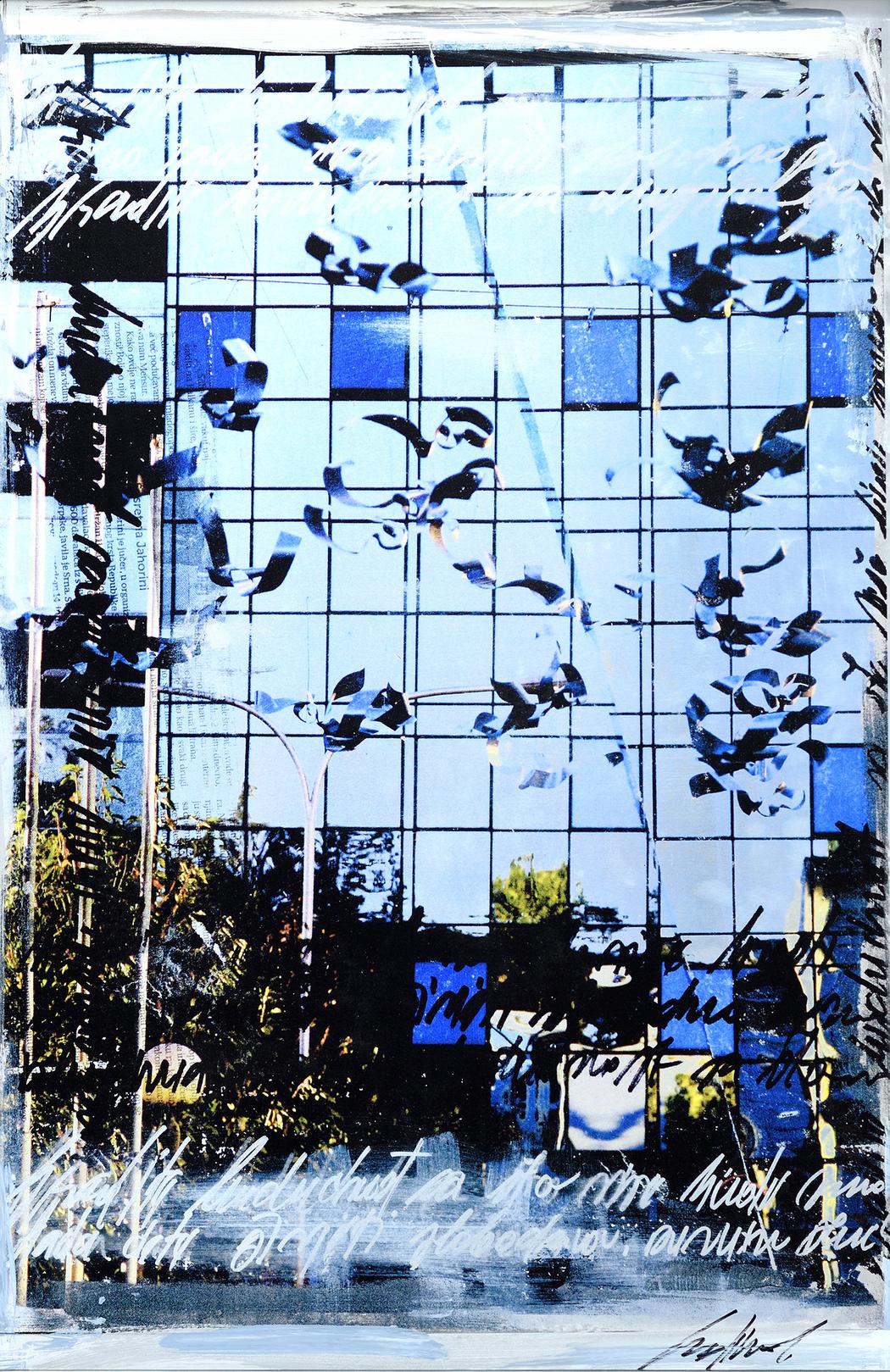
How do you use handwritten text in these works—as a personal voice, a collective message, or something else?
The handwriting is mine, but the thoughts come from the thousands of messages young people have shared with me throughout Think Freedom journey.
These are not just marks – they are a process of contemplating those thoughts as I write them, spending time with them again and again. Layered, words and thoughts begin to overlap. Some remain readable, while others become fragments or almost disappear. This reflects how ideas live within us—some stay clear, others change, and some become part of something larger. In that sense, the handwriting becomes a visual language, as it carries many voices within it.
Finally, it reveals how personal the Think Freedom journey has become and how deeply I treasure the ideas that young people have entrusted to me over the years.
Your public installations often invite dialogue between communities. How do you create space for genuine participation rather than simply presenting art in a public setting?
I don’t think putting a sculpture in a public square automatically makes it public art. For me, the public has to become part of the life of the work. With Think Freedom, I don’t arrive in a city with a finished statement. I arrive with a question. That difference is fundamental. The installation becomes a meeting point, a shared speace where people can pause, respond, disagree, write, talk or simply think.
New technologies have been a great vessel for extending that conversation. They have allowed me to erase some of the boundaries between the work and the audience, between the physical and the virtual, and even between one city and another. Through augmented reality and digital interaction, the audience can enter the work rather than simply face it. For me, technology can not stand on its own. It becomes meaningful when the digital and physical can complement each other in a symbiotic relationship.
Having lived and worked between Bosnia and Herzegovina and the United States, how have these places shaped your visual language and understanding of cultural identity?
I left Bosnia and Herzegovina for the United States in 1991. When the Bosnian War began, I was stranded in the US. However, my displacement became an important part of my artistic life, and the US became my second home. New York, in particular, taught me to think beyond boundaries—to experiment, collaborate, and understand that identity does not have to be singular.
At the same time, Bosnia and Herzegovina has always remained part of the way I see the world. Returning after 20 years brought a different understanding of belonging—or perhaps not needing to belong—and of the responsibility culture can have within a society.
Living between these places taught me that identity is not something fixed. We carry places with us, but we also change through every place we encounter. That has deeply shaped my work. I hope that we will all learn how to cherish our cultural identities while moving forward and building connections between us… realizing that our human identity must come first.
 Edina Seleskovic | Think Freedom Skies
Could you share a moment from one of your public projects when the audience’s response changed or expanded your original vision?
There have been so many incredible moments over the years that I could tell you about, but the one that fundamentally changed my practice actually began with censorship.
I was invited by the mayor of Sarajevo to design a postage stamp for the Centennial of the Sarajevo Assassination. Hoping to look toward the future, I created an image of a bird of freedom flying over Sarajevo. Incredibly, due to political quarrels, the stamp was banned. I went through a series of emotions, but initially I was shocked that such a simple image could become threatening. However, that experience changed the way I understood the role of art. My work began to move beyond exhibiting and put me on an art mission—using art to ask questions, create dialogue, and connect people. In many ways, that moment planted the seed for all my socially engaged practice.
You have worked with institutions ranging from NASA to cultural organisations and local communities. What makes an institutional collaboration meaningful for you?
A meaningful collaboration begins when an institution is willing to enter a conversation rather than simply attach its name to a project. I am interested in partnerships where different worlds meet—artists, scientists, young people, cultural institutions, businesses, communities—and each brings something the others don’t have. That is where unexpected ideas emerge.
I don’t believe collaboration should make art safer or more predictable. Ideally, it should do the opposite: give an idea possibilities that neither partner could achieve independently. The best institutions I have worked with understood that their role was not simply to support the final object, but to participate in creating the conditions for experimentation, curiosity, and genuine exchange.
 Edina Seleskovic | Think Freedom Skies
What role does Sarajevo play in your current work, including the development of Planet Sarajevo?
Sarajevo has increasingly become both a subject of my work and a place where I test my ideas about what culture can do.
Planet Sarajevo grew from a question very similar to the one behind much of my artistic practice: How do you inspire an entire city to look at itself and the world through a different lens? How do you make people proud again? Sarajevo endured a horrific siege. But Sarajevo is not a victim… it is a survivor. It has extraordinary stories, some almost hard to believe. It has incredible creativity and cultural energy, and we wanted to create a place and an experience where stories, art, archives, sound, and new technologies allow people to discover the city, to understand it, and to let it inspire that greatness again. Planet Sarajevo is that place.
Sarajevo continues to challenge me because it contains contradictions: resilience and fragility, nostalgia and reinvention, East and West, extraordinary creativity and complicated histories. I don’t see those contradictions as something to resolve. I see them as motivation.