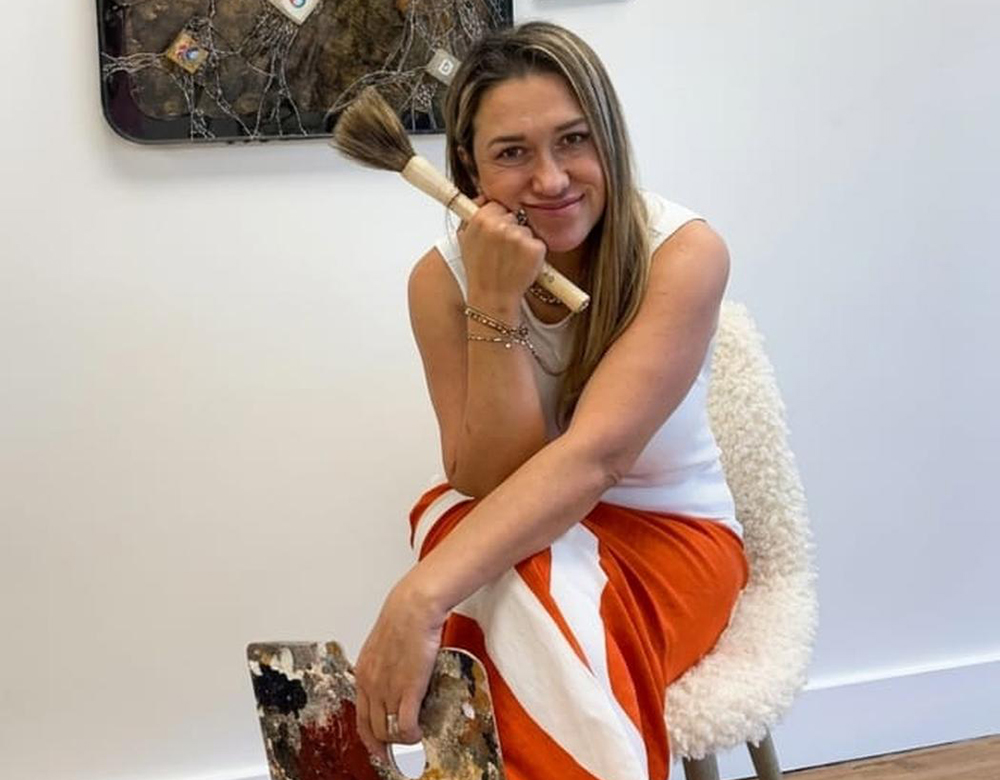
Franchesca Ocampo Swartzberg
Your practice is built around the concept of Neo-Virtualism. How would you define this term in your own words?
Neo-Virtualism is my way of defining a contemporary artistic language that lives between the digital and the natural world. We are in an era where so much of life is shifting into virtual spaces, and I use my practice to reflect on that transition, while questioning how much of our connection to nature, emotion, and physical reality is being lost in the process.
My work combines painting, sculpture, found objects, and augmented reality to create a dialogue between these two realities, not to reject technology, but to seek balance.
Visually, the work is intentionally difficult to categorize. It is contemporary, yet it carries traces of surrealism without being fully surreal; it has elements of realism without being strictly realistic; it can feel expressive, but it does not belong to pure expressionism. It exists in the space between all of these definitions.
Because it does not fit into any established artistic movement, I created the term Neo-Virtualism to describe this intersection. For me, it is both a visual language and a conceptual framework, an exploration of how we can remain connected to our humanity while fully engaging with the virtual age.
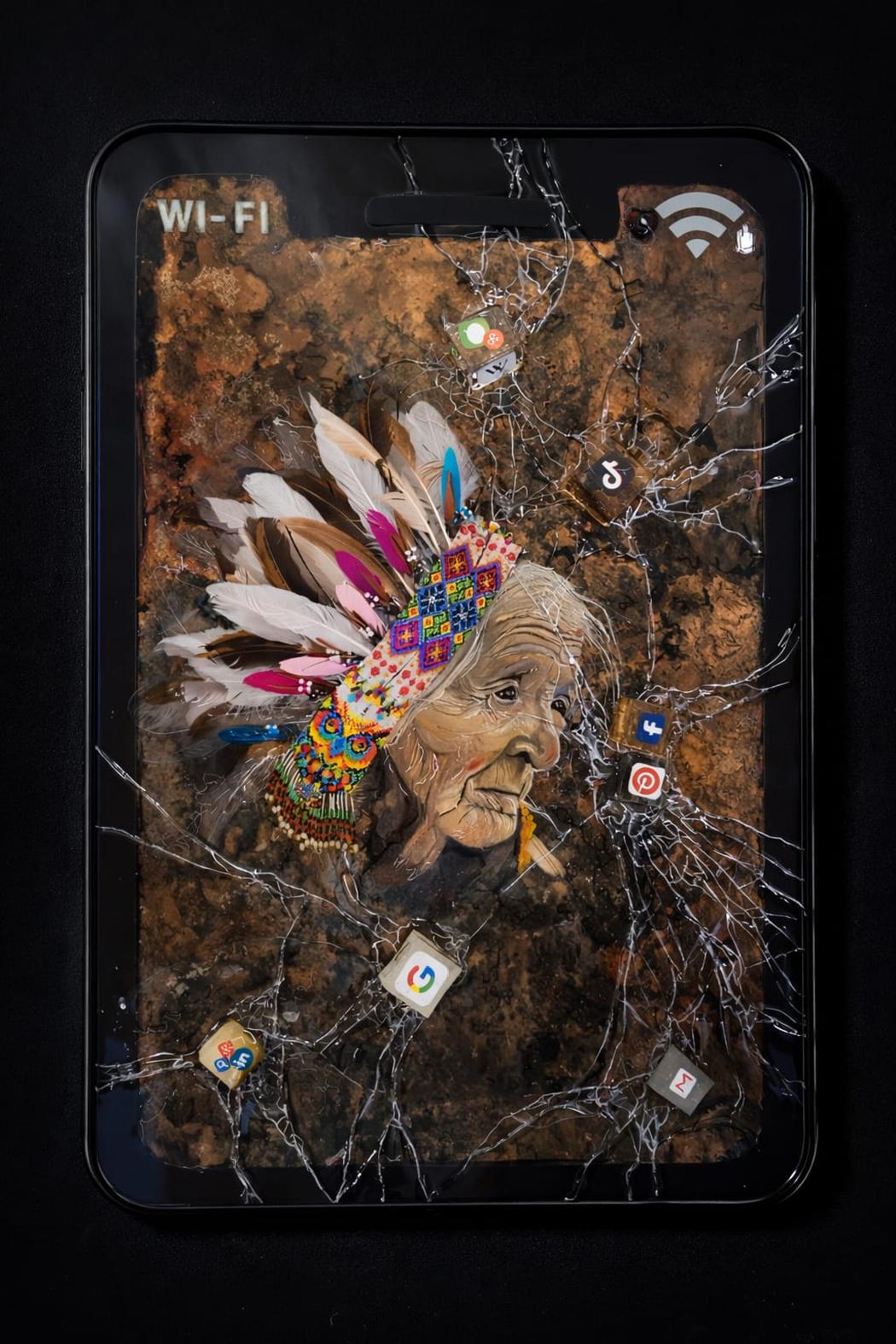 Franchesca Ocampo Swartzberg | Lost Wisdom | 2023
You were raised in Bogotá without screens, surrounded by tactile and natural experiences. How has that childhood shaped your artistic vision?
My childhood was deeply connected to nature. I spent my time fishing, horseback riding, hiking, and enjoying family gatherings and bonfires in the countryside, often with music and dancing under open skies. Those tactile, real-life experiences shaped my perception of the world in a very organic way.
As I grew older, the shift happened not only through moving to the United States, but through the broader transformation of a new era where everything became increasingly digitalized. I felt a very abrupt disconnection from nature and from that physical, grounded way of living.
It was not until I returned to a more rural environment that I felt my creative impulse fully reawaken. That reconnection became essential to my artistic vision, almost like a quiet form of resistance. My work emerges from that tension between the natural world and the digital age, and from the need to reclaim something deeply human that feels increasingly distant.
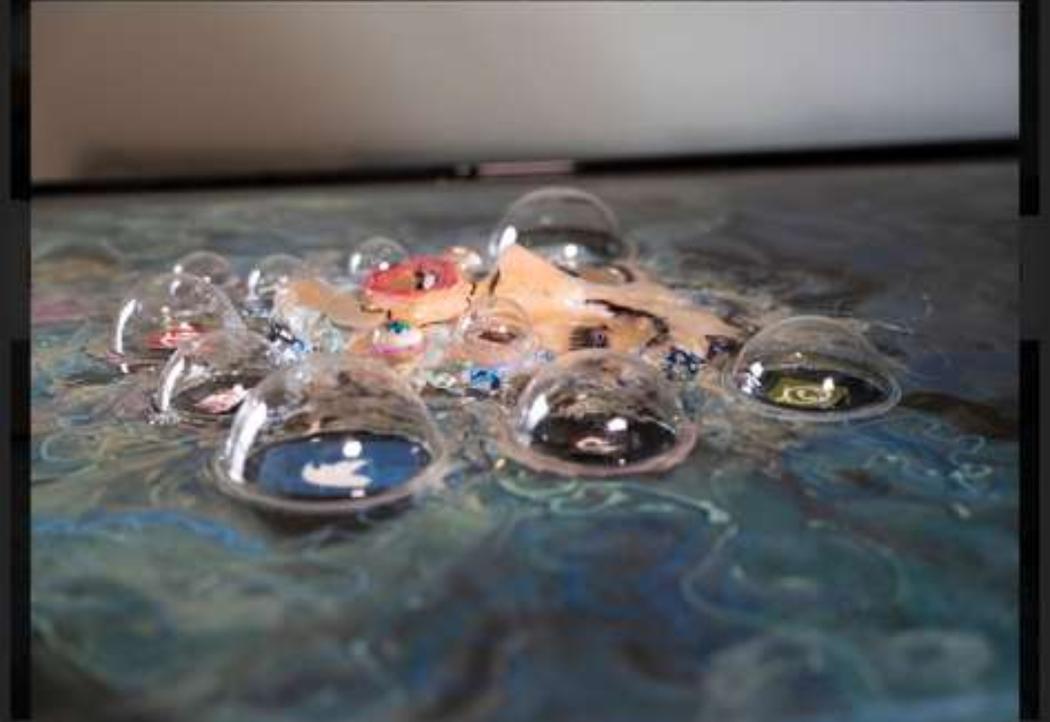 Franchesca Ocampo Swartzberg | Last Breathe Left | 2023
Many of your works use the form of an oversized iPhone. Why did you choose the phone as both a medium and a subject of critique?
I chose the cellphone because it represents the most powerful symbol of our era. My work is an invitation to look beyond the screen and reconnect with what truly makes us human: nature, values, family, and real experiences. Art has the power to make us question our habits, and this is my way of opening that conversation. It is not a rejection of technology. It is an invitation to restore balance between the virtual world and real life.
Your works often combine painting, sculpture, resin, found objects, and digital elements. How do you decide which materials belong in each piece?
For me, every material has its own energy and language. By combining painting, sculpture, resin, found objects, and digital elements, I can activate different senses and emotions at the same time. I want the viewer not only to see the work, but to feel it, imagine it, and connect with it on a deeper level. Although each piece is different, they all share recurring elements that make them recognizable as part of the same artistic language.
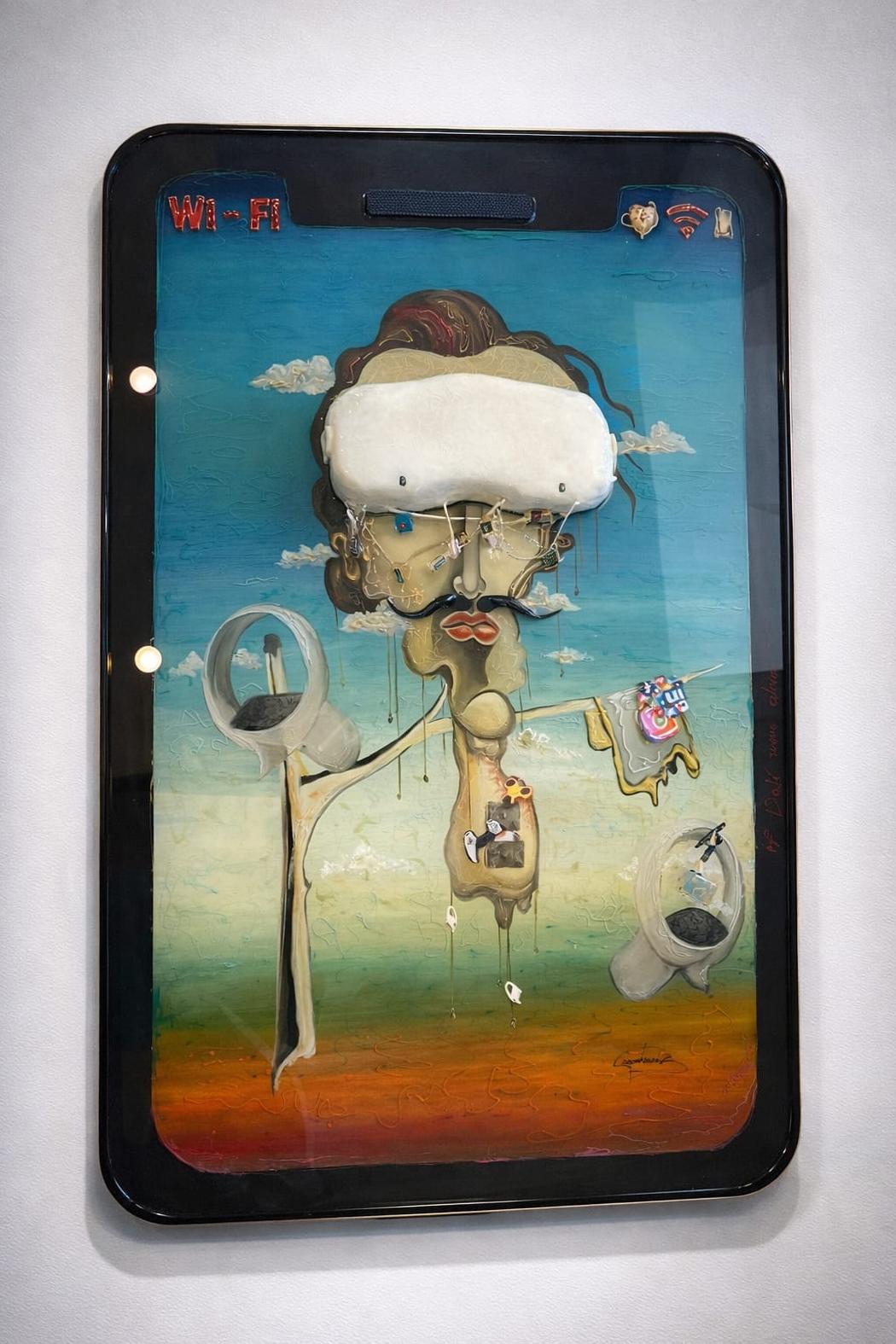 Franchesca Ocampo Swartzberg | If Dali Were Alive | 2023
Your pieces address digital dependency, attention fragmentation, and emotional disconnection. Do you see your work as a warning, a mirror, or an invitation?
I see my work primarily as an invitation. I invite the viewer to reflect on digital dependency, attention fragmentation, and emotional disconnection, not from a place of judgment, but as a space for awareness. My intention is not to warn or preach, but to hold up a mirror that encourages personal reflection and reconnection with what is real and essential in our lives.
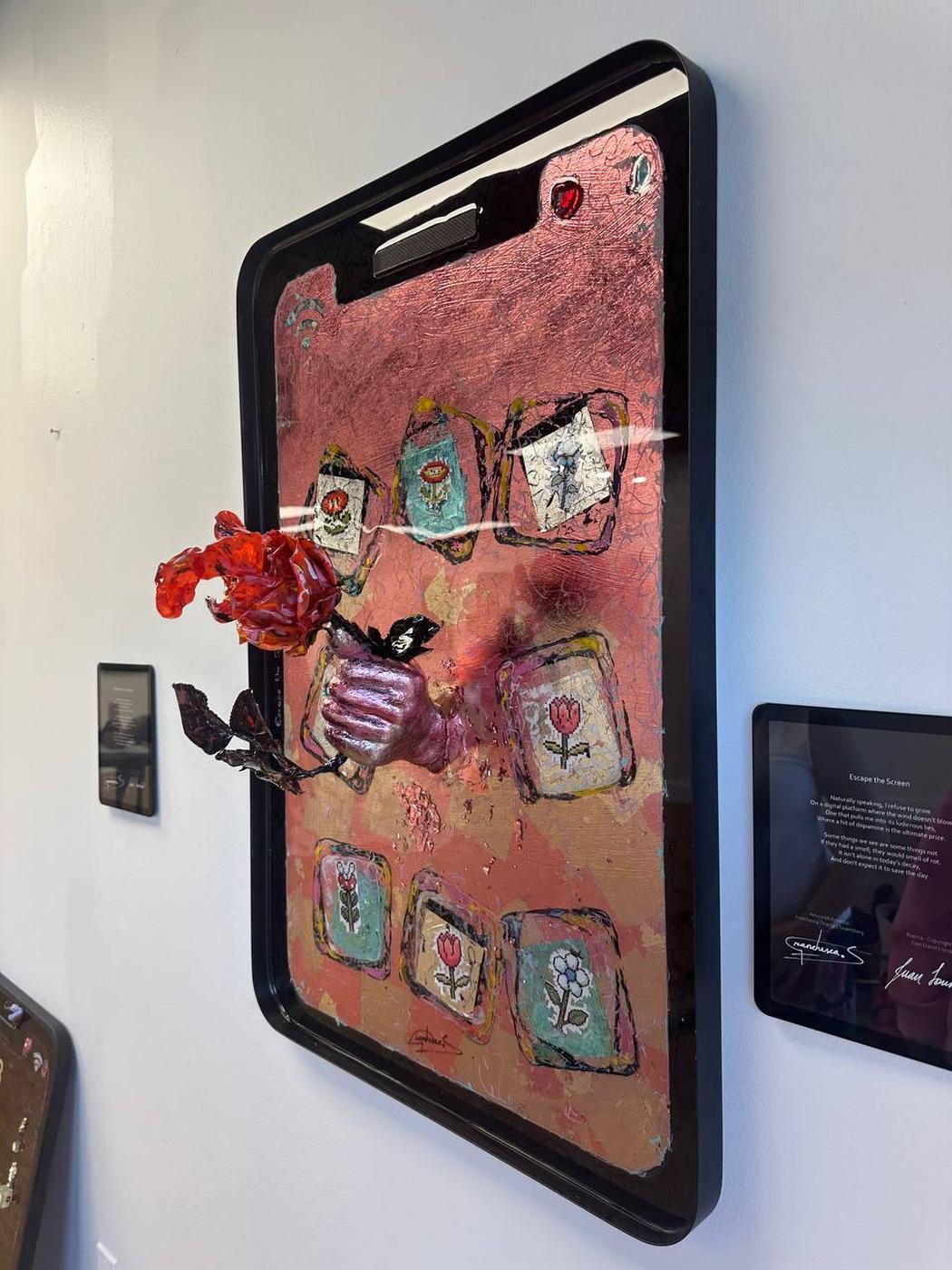 Franchesca Ocampo Swartzberg | Scape To The Screen | 2023
Augmented reality plays an important role in your practice. Why is it important that the viewer uses a screen to fully experience works that critique screen culture?
I use the screen because it is the same system that hyper-connects us and disconnects us at the same time. I do not reject it. I use it as a mirror. In my augmented reality practice, I want to express that beyond the device there is a life we are losing sight of: nature, real human connections, spirituality, and presence. Things we are simply not paying enough attention to.
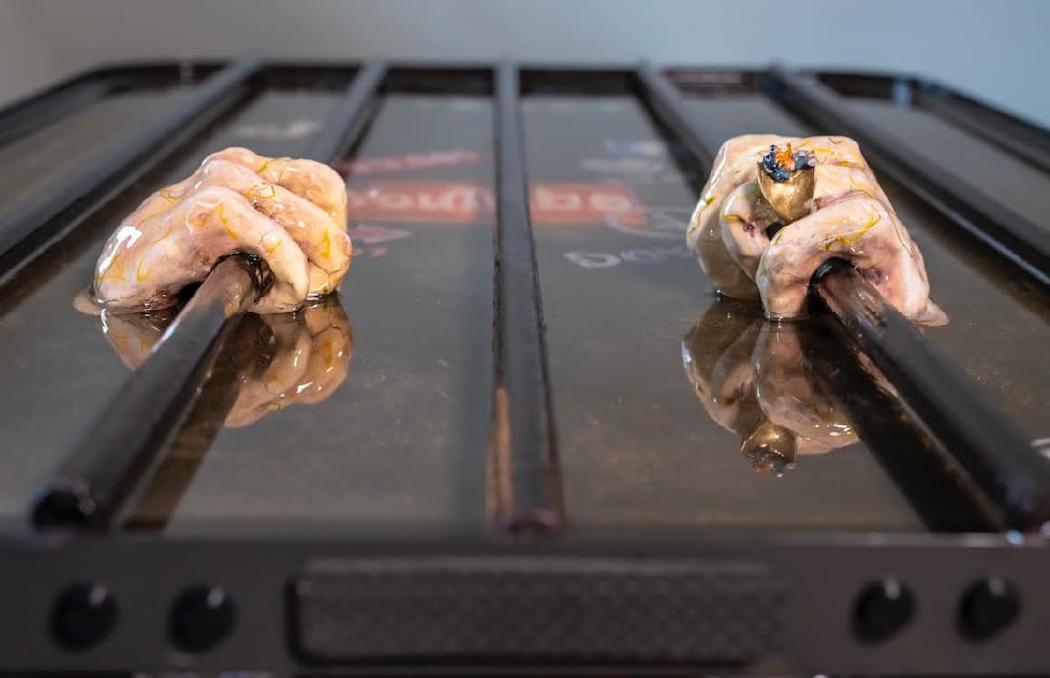 Franchesca Ocampo Swartzberg | Virtual Prison | 2023
Some viewers may feel uncomfortable when seeing themselves reflected in your works. Is discomfort an important part of the experience?
Absolutely. When we feel uncomfortable, it is often because something inside us recognizes the truth, and that recognition is also a tool for self-knowledge. When that impact is translated into artistic expression, it becomes even more powerful. It lingers in memory, deepens understanding, and transforms into something lasting and meaningful.