
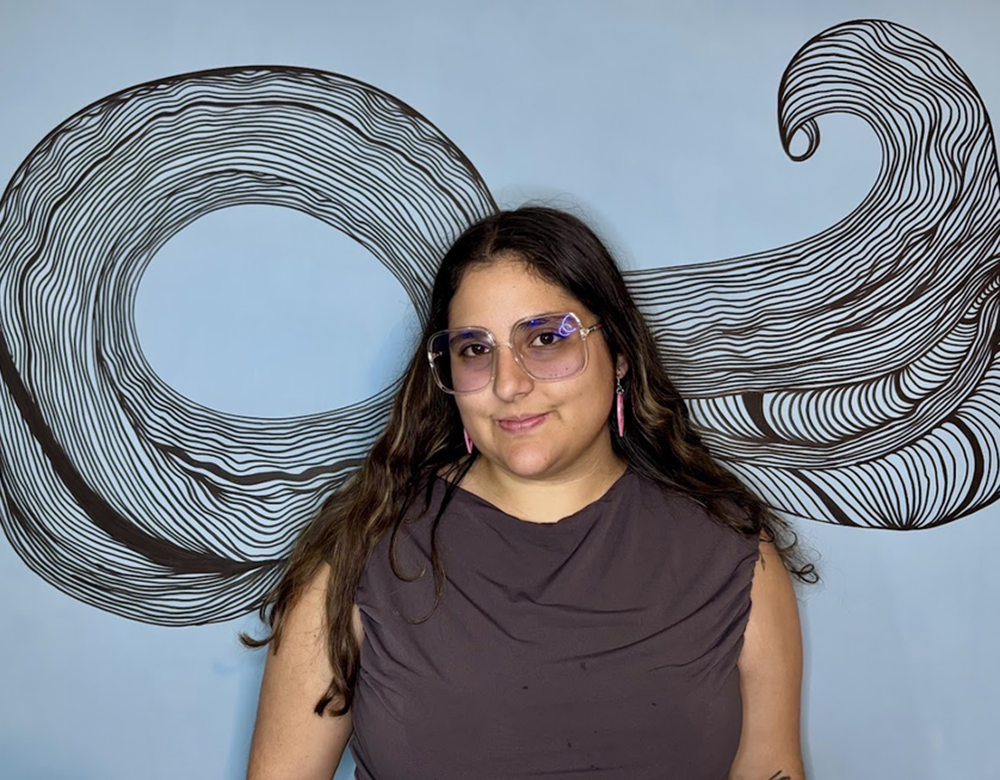
Sofía Hurtado Montes
You are both a visual artist and a writer. How do writing and image-making influence one another in your practice? Are there experiences that you feel can only be expressed through words, and others only through visual form?
Writing and image-making complement each other in my practice. They allow me to approach the same ideas and experiences from different perspectives. Sometimes writing helps me understand or articulate something that I later explore visually, while other times an image can express something that words cannot fully describe.
I don’t necessarily see them as separate languages, but as two ways of thinking and processing. They can overlap, respond to one another, and sometimes even reveal different aspects of the same experience. For me, moving between words and images is part of the process of understanding what I want to communicate.
You studied both your BFA and MFA at Universidad de los Andes in Bogotá. How did your education there shape your approach to drawing, painting, and interdisciplinary practice?
Studying both my BFA and MFA at Universidad de los Andes was fundamental in shaping the way I approach my practice. It gave me the freedom to explore drawing and painting while also encouraging me to question the boundaries between disciplines, and I had the honour to have great teachers, I want to specially mention Catalina Mejia and Esteban Peña, both great teachers and artists.
My education there was not only about developing technical skills, but about learning how to think through my work. I was able to experiment, research, and learned to allow the process to guide the outcome. Drawing and painting remain at the core of my practice, but my studies helped me understand that they can exist in dialogue with other mediums and ways of thinking.
The interdisciplinary environment also encouraged me to develop a more personal visual language and to approach my work as an ongoing investigation rather than something confined to a single technique or medium.
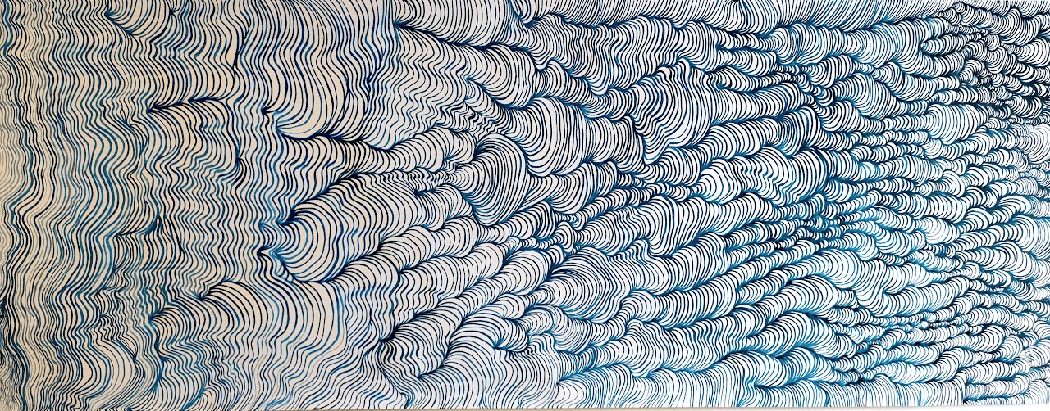 Sofía Hurtado Montes | Mares De DesesperacióN
As a Colombian artist whose work has been exhibited and published internationally, how has moving between local and international contexts affected the way you think about your identity and your work?
I think both visually and conceptually, my work can be understood across different contexts and cultures. Although my experiences and perspective as a Colombian artist are an important part of who I am, the themes I explore; memory, identity, repetition, absence, and transformation, are not limited to one place or culture.
Moving between local and international contexts has made me especially grateful for the way my work has been received and loved by audiences from very different backgrounds. It has shown me that something that begins from a deeply personal experience can still create a connection with people who have completely different lives and experiences.
For me, that connection is one of the most meaningful aspects of exhibiting internationally: seeing how people from different places can find their own interpretations and emotions within the work.
Memory and absence are recurring ideas in your practice. When you begin a new work, are you usually responding to a specific memory or personal experience, or does meaning emerge gradually through the process of making?
Usually, a new work begins with a personal experience, memory, or emotion, but I don’t always know exactly what the work is going to become. The process of making allows the meaning to emerge gradually.
I often use repetition and pattern as a way of exploring these experiences, almost as a process of revisiting or reinterpreting them, also to literally show my obsessions. As the work develops, I begin to discover connections and meanings that weren’t necessarily clear to me at the beginning. In that sense, the work becomes a space where memory can transform rather than simply be represented.
For me, the process is as important as the initial experience. I may begin with something very personal, but through making, it can evolve into something more open and universal.
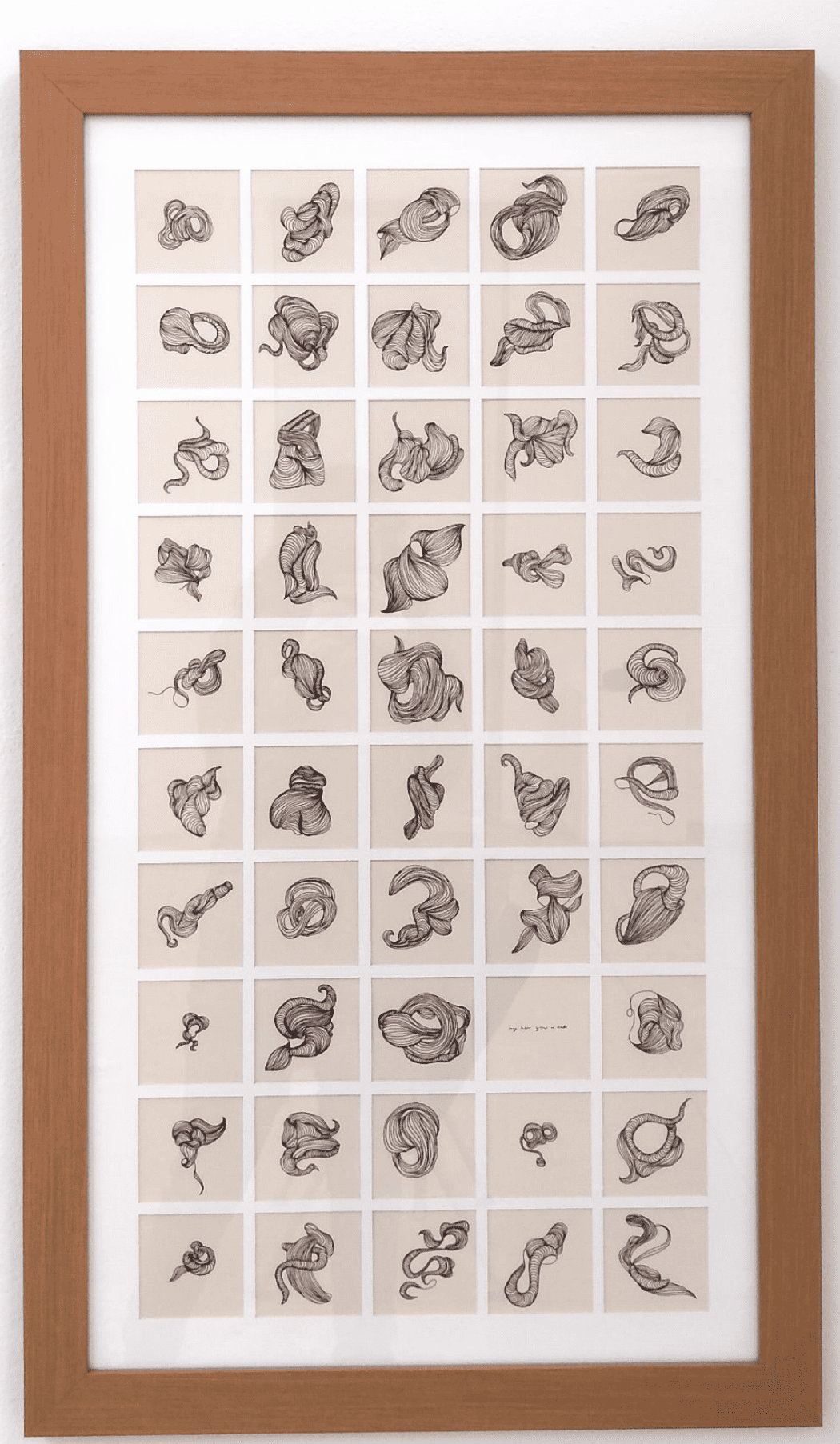 Sofía Hurtado Montes | My Hair Grew In Knots
You describe grief as a “temporal condition”. How did grief become such a central subject in your artistic practice, and how has your understanding of it changed over time?
Grief became a central subject in my artistic practice as a way of processing the death of my mother at a young age. After years of not finding ways to process my trauma, art became a tool to navigate that experience and, in many ways, a form of healing. At first, I was trying to understand and express what grief felt like, something that was difficult to put only into words.
Over time, my understanding of grief has changed as I have grown both personally and as an artist. Through my work, I have learned to see grief not as something static, but as an experience that shifts and transforms with time. My relationship with death, with that loss, and with the experience of grieving continues to evolve, and so does the way I translate it into my work.
In “My hair grew in knots”, individual forms seem almost like specimens or fragments collected and carefully observed. What was the starting point for this work, and what does the image of tangled or knotted hair represent for you?
The image of tangled knots, represents how my relationship with my hair changed after my mothers death. Hair was a huge part of my relationship with my mother, she used to brush it and fix it, and after she died my relationship with it changed drastically.
This piece is accompanied by the following poem:
Tangled
I remember the sound of the brush de-tangling my hair, the song you hummed, and how you had to stop when you laughed so hard That time was meaningless.
Your fingers ran across my curls, helping them have the perfect shape, or organizing them in a braid, de-tangling every one of my thoughts.
Now,
I can’t stand the sound of the brush against my messy hair,
I don’t sing any song,
I growl
I don’t laugh I get angry and it takes way too
much time. so,
I simply don’t touch it much, I don’t braid it, my curls haven’t been shaped in years, my thoughts are tangled, and my hair, my hair grew in knots.
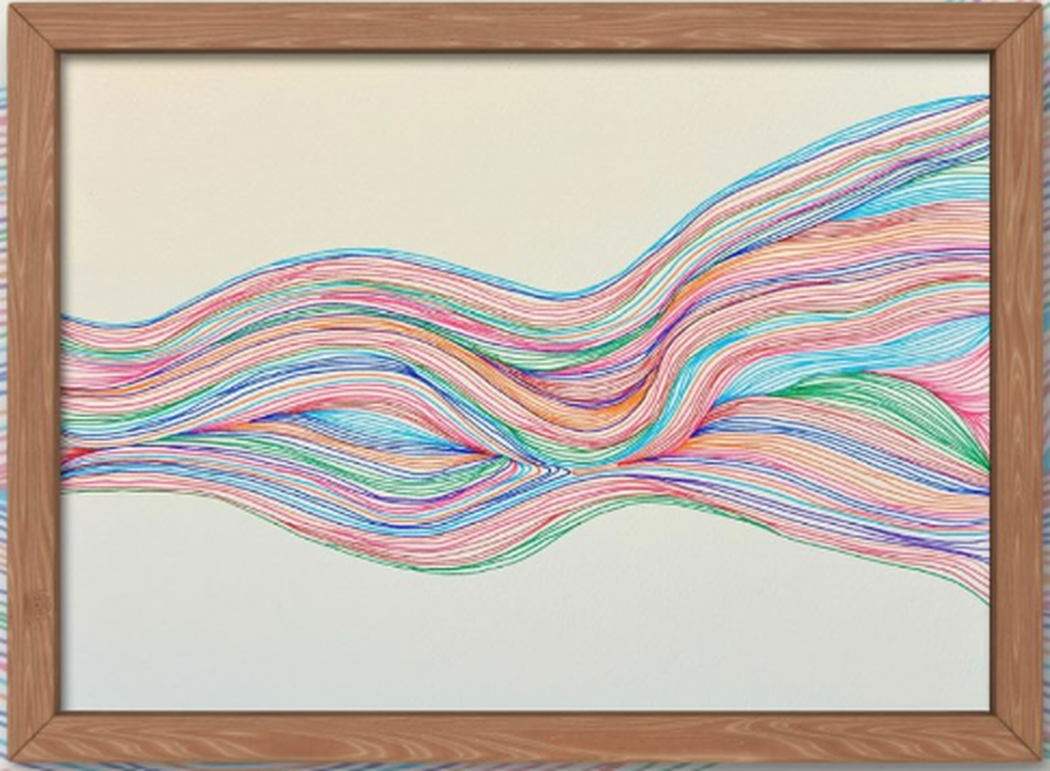 Sofía Hurtado Montes | Soul 002
Looking across your current body of work, from Mares de desesperación (seas of desperation) to the Soul pieces, do you see these works as separate investigations or as parts of a larger, continuing narrative about loss, transformation, and healing?
I see them as separate investigations, although they are connected by a common thread within my artistic process: my ongoing exploration of repetition and pattern. These elements have become a way for me to observe how experiences, emotions, and ideas can accumulate and transform over time.
While Mares de desesperación (seas of desperation) is more closely connected to ideas of loss and emotional transformation, the Soul series moves in a different direction. Rather than focusing on loss, it explores identity and the ways in which each person’s individual experiences shape who they become. I’m interested in how our personal histories leave traces on us, and how those traces can influence the way we perceive ourselves and the world around us.
So, I wouldn’t describe the works as chapters of a single narrative. Instead, they are different investigations that emerge from the same ongoing curiosity about repetition, pattern, experience, and transformation.