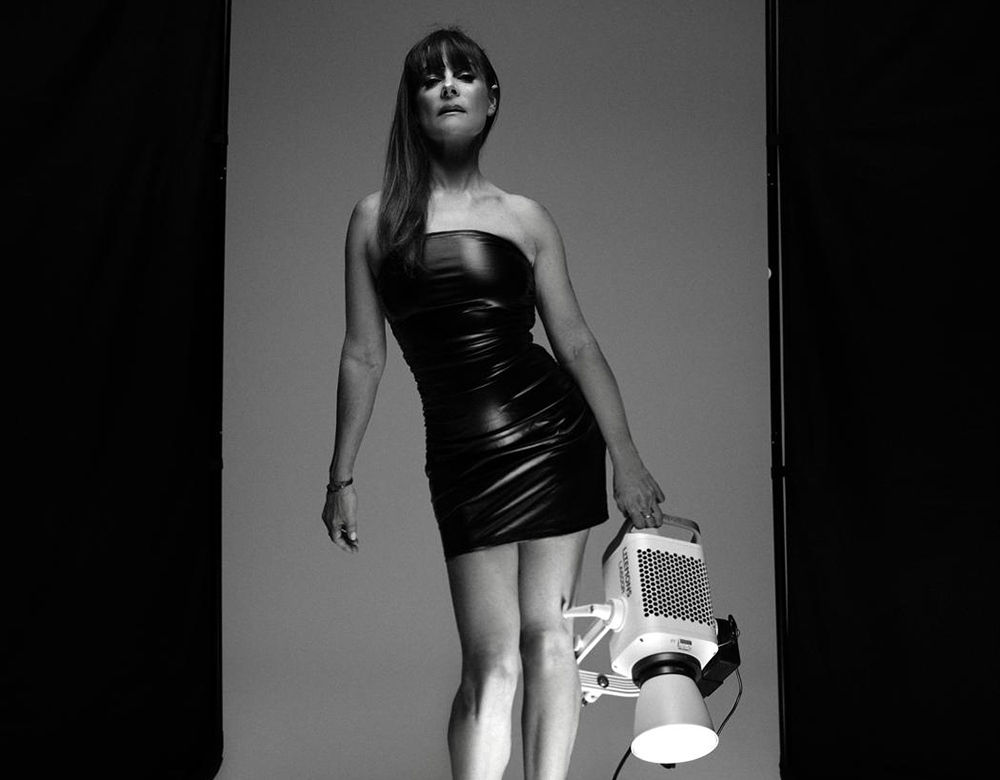
Sari Fishman
Could you tell us about your path as an artist and the experiences that have most shaped your practice?
Art has always been there. It has simply taken different forms at different periods of my life. For me, it is a way of expressing my inner world, and sometimes also a way of bringing order to the chaos that comes from the outside world. In recent years, the artist in me has simply burst out in every direction — quite literally, since my work is now being exhibited in different places around the world.
But art has never existed for me in a space separate from the rest of my life. Anyone who visits my Instagram page, @sari.fishman.books, will find in the bio a rather ambitious attempt to explain who I am: Contemporary Artist & Poet; VP Business Development – Can-Fite; Numerologist; PhD in Education | M.A. in Art Therapy. Then you get to more than twenty Highlights, each devoted to a different world within my life, and realize that the bio did the best it could.
I like that, precisely because I have never felt the need to choose one definition and live inside it. Art, poetry, my work in biotechnology, dance, and all the other things I do are not competing identities to me. They are simply different parts of the same life. I don’t think in terms of what an artist is supposed to do or what her life is supposed to look like. I go toward what intrigues me, what draws me in, and what feels right to me at that particular moment.
Perhaps that is why my art has developed the way it has. There is no path leading toward a single technique or a visual language that has gradually become fixed. It changes with me, and with whatever is asking to be expressed at that particular moment.
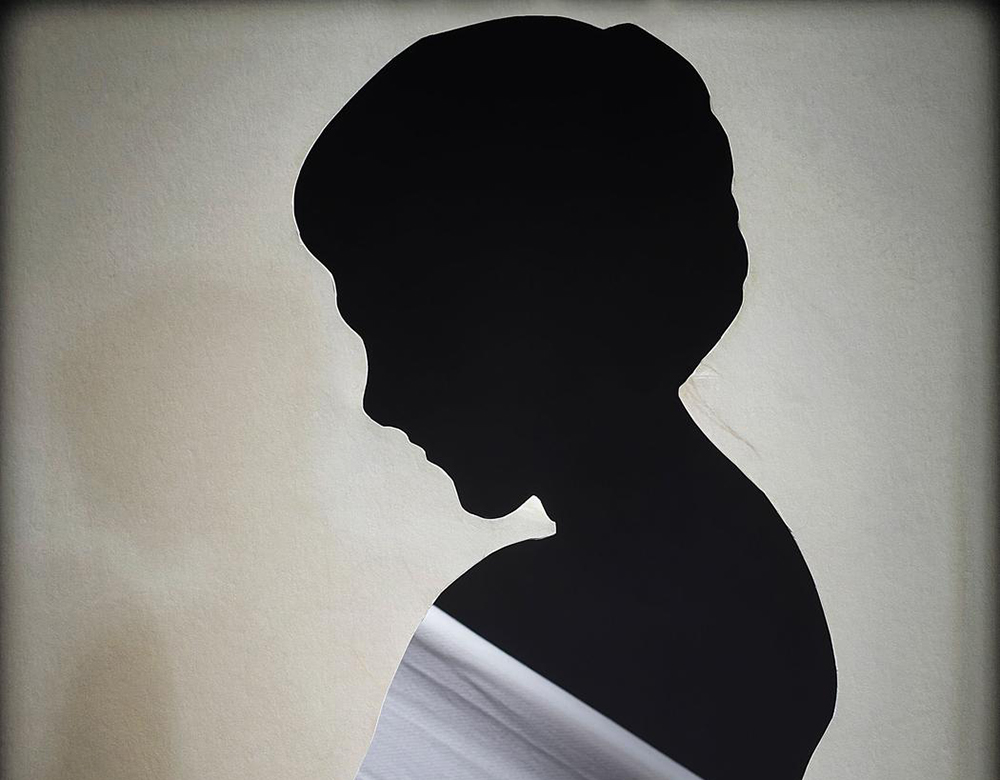
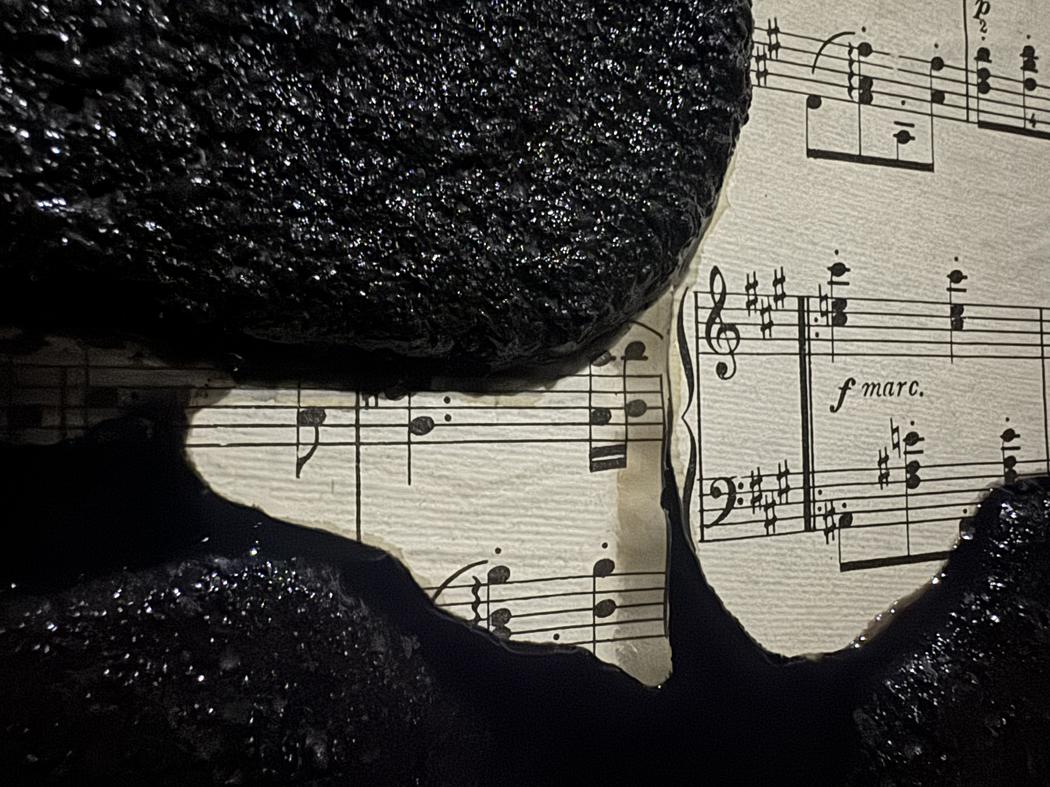 Sari Fishman | Requiem #2
Your work resists a fixed visual style, and each series begins from what you describe as a “blank page.” Why is it important for you to avoid repeating an established artistic language?
I’m not sure I resist a fixed style. Resistance would require me to think about it in the first place, and I simply don’t. For me, every work begins again, and its form is determined by what I want to express, not by any need for it to resemble something I have made before.
Perhaps this is the same relationship I have with definitions in general. Titles, professions, and definitions can change. You can earn a degree — and being able to do so is a great privilege — you can change professions, and today you can be somewhere completely different from where you were yesterday. When I meet people, I am far more interested in the person, the chemistry, the energy, and the way they move through the world than in the definition that appears beside their name. In the end, we are human beings. Period.
Commercially, I suppose this makes me a somewhat inconvenient artist. The art world often likes to be able to recognize an artist from across the room. With me, one series can be completely different from the one that follows it. It probably takes a rather brave gallery to represent an artist like that — and Toolip Art Gallery in Vienna, which represents me, was brave enough.
I make art for art’s sake, not with any thought about what might be easier to sell or what might appeal to a particular audience. In fact, this is true of almost every kind of work I have chosen to do in my life: if it genuinely interests and fascinates me, I would do it even if I weren’t paid for it. Money is, of course, necessary to live; it has simply never been a good enough reason for me to choose how to live.
When I was asked to describe my art in three words, I chose: Impulse. Expression. Presence. In retrospect, I realized that these three words also explain why I don’t have a fixed style. First comes the impulse, the urge to express something. With it, or a moment later, comes the way in which it will be expressed. Sometimes it is poetry, sometimes material and color, sometimes photography, video, or movement. The medium serves the idea, not the other way around.
So every series really does begin with a blank page. Not because I am trying to reinvent myself, but because I see no reason why the past should decide in advance what the next thing should look like.
You work across visual art, photography, video, poetry, and movement. How do you decide which medium — or combination of mediums — can best express a particular inner experience?
I don’t choose it. Usually, the medium arrives together with whatever I want to express.
When a poem comes, for example, I can suddenly feel words arranging themselves in my mind, connecting to one another and almost jumping out. I don’t sit down and decide that poetry is the right medium this time. The same thing happens with material, with an image, or with movement. Usually, the way of expressing something arrives together with the thing itself.
In fact, in those moments I try to think as little as possible. Thought very quickly brings judgment with it: Is this good? Is this right? What does it mean? What am I going to do with it? I prefer to try to remain in a deeper place, in what I call No-Mind. Not an absence of consciousness, but a state in which consciousness is not managing every moment through thought.
Winnicott’s expression Going on Being has always spoken to me for the same reason. There is something in it that I recognize both in life and in creation: not constantly trying to produce a state, explain it, or control it, but simply being within it while it is happening.
And then the medium is no longer really a choice. It is part of what arrived.
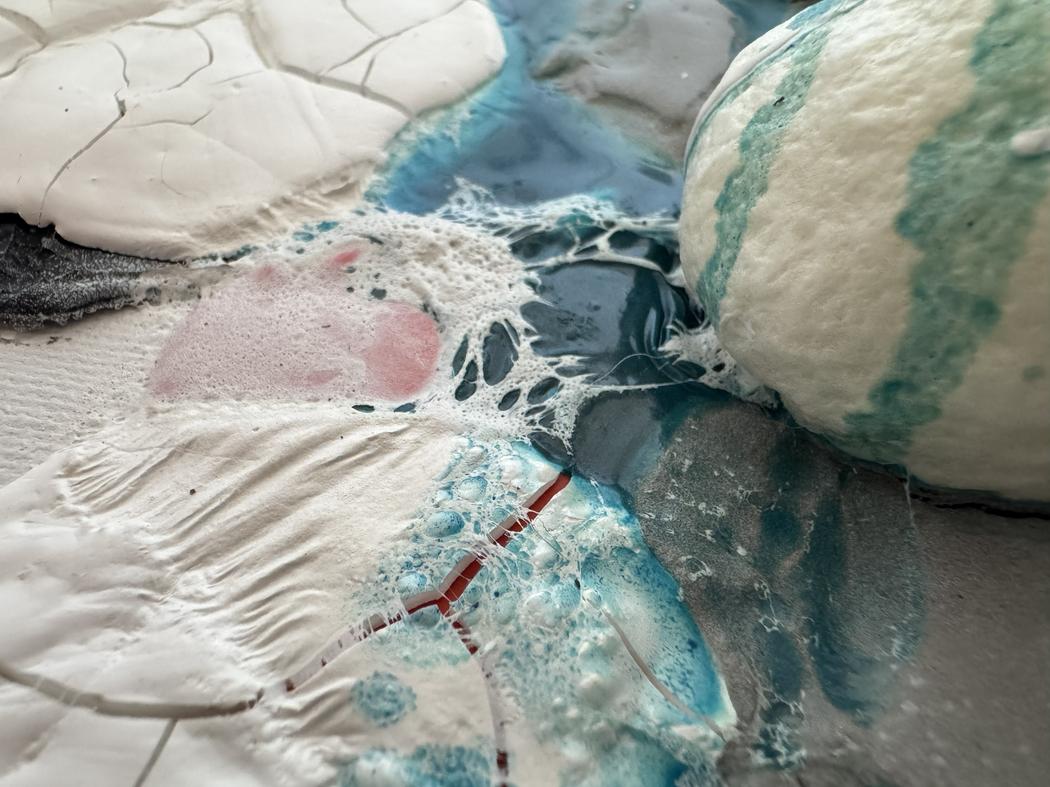 Sari Fishman | CançÃO Do Mar #18
Your artistic process is described as intuitive and driven by an internal necessity. What usually signals to you that a new body of work is ready to begin?
Nothing. I never know that “a new body of work is about to begin,” because I never begin with a body of work.
I don’t wait for inspiration, and I don’t schedule hours for creating. I don’t “work at creating” in that sense. Creativity simply erupts. It can happen day after day, and then not happen for weeks. Sometimes an image arrives, sometimes a sentence, sometimes an impulse that does not yet have a name. I don’t try to manage its frequency.
Nor do I have any way of knowing in advance what will remain a single moment and what will develop into something larger. Sometimes an impulse finds its expression in one work and ends there. Sometimes it returns, and then returns again, each time finding another expression. At some point, I look at what has emerged and realize: there is a series here.
It happens in poetry as well. I wrote Overdose, for example, in about two weeks. There were days when I wrote several poems one after another. I did not sit down to write a book. There was no plan, and I did not know that I was in the process of writing one. The poems simply kept coming until, at a certain point, I realized that a book was what had emerged.
So perhaps the question is not when I know that a body of work is ready to begin, but when I discover that it has already begun.
In your practice, making art can become a therapeutic and cathartic act. What role does this emotional release play in the final work?
I think the word “release” can be slightly misleading here, because it makes catharsis sound like something that happens at the end — as though there were something inside me, I put it into the work, and now I am free of it. I experience it differently. The catharsis is within the act of creation itself.
It is the moment when the impulse, the expression, and the action come together and I arrive at my third word: Presence. I am completely inside what is happening. Thought almost disappears. There is no past that needs to be explained and no future result that needs to be planned. There is only what is happening now.
That moment cannot be recreated. I can try to make exactly the same work tomorrow, but it will no longer be the same creation, because the moment in which it was born has passed.
Perhaps that is one of the reasons I document so much of my creative process and share it on social media. On the surface, I am filming the process, but I think what I am really trying to do is capture something impossible: that singular moment before it disappears.
The work is what remains; the creation itself was the moment.
This exists in everything I create, but with RED, that presence took me to the most powerful and extreme place I have experienced in my work to date.
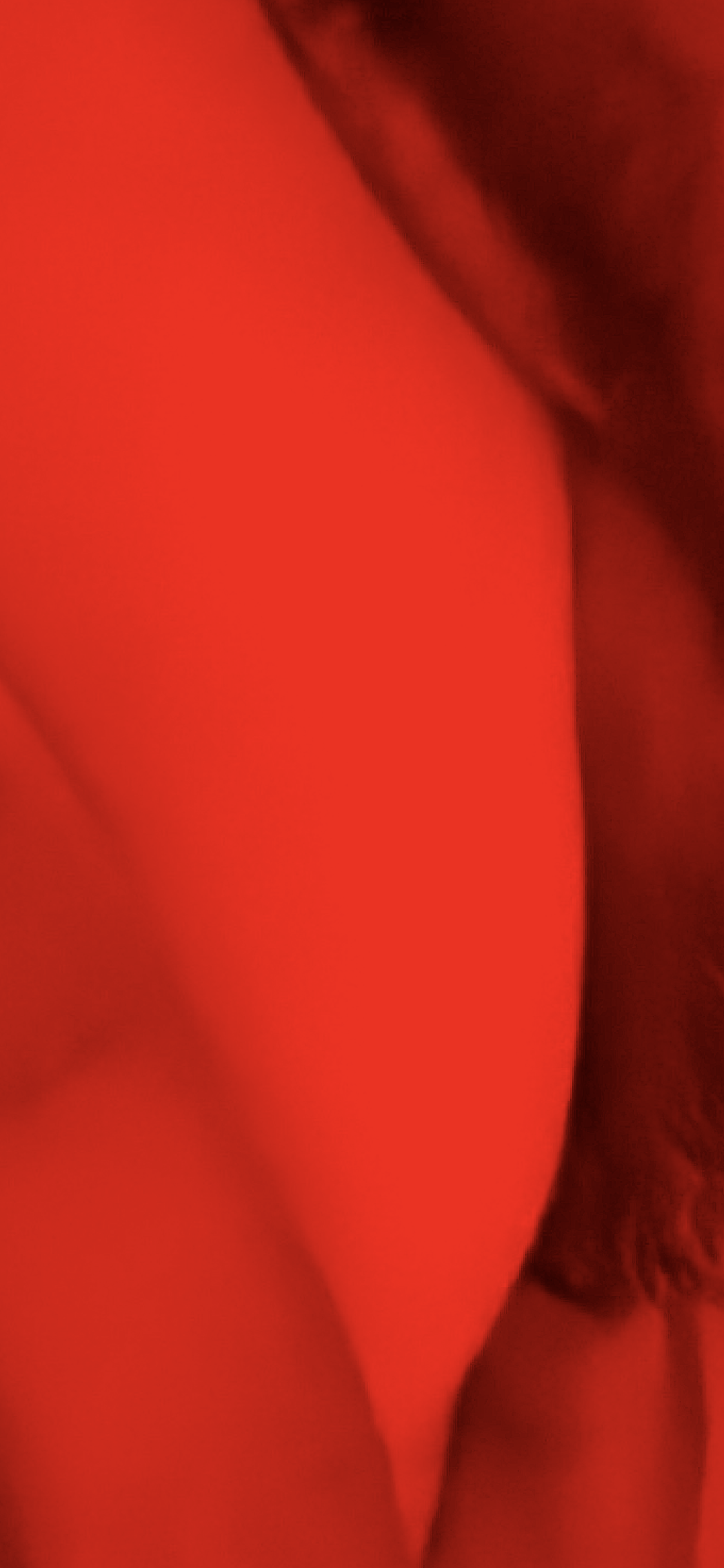 Sari Fishman | Red #2
The RED series is dominated by a single, highly charged color. When did red first become central to this project, and what does it allow you to communicate that other colors cannot?
Red did not “become” central to RED. RED was born red, just as WHITE was born white. There was no decision about color, and I did not ask myself what it was supposed to symbolize. It was simply there.
Only after the series had been created could I look at it from the outside and see everything that red brings with it. There is passion and vitality in it, but also power, danger, and vulnerability. These things can exist within it simultaneously, without one canceling out the other. I love the fact that a single color can hold almost contradictory emotions within it.
But that is already my reading of the work after it was created, not the reason I created it.
What do you hope audiences will carry with them after encountering RED, particularly when they allow themselves to stay with the work beyond the first impression?
The truth is, I don’t think in terms of what I would like the audience to take away from RED. Once a work leaves me, it meets each person in a different place, and I have no need to direct that encounter or give it a particular meaning.
Perhaps this is also a natural extension of my relationship with definitions in general. If I want the freedom not to live according to what other people think is right for me, it would make little sense for me to stand in front of a viewer and tell them what is right to feel or understand when looking at my work. Once it has left me, that encounter belongs to them as well.
What interests me about RED right now is what is happening to it out in the world.
At the end of September, it begins a new journey. The curator of the traveling exhibition in Italy selected six works, and on September 24 they will arrive in Milan with me. I am going there to compete in a ballroom and Latin dance competition, and at the same time the exhibition will open. From the outside, these may seem like two different worlds; to me, there has never been any reason to separate them. From there, the exhibition will continue through Italy, while the works that remain in Israel will be shown on November 16 as part of my retrospective exhibition in Tel Aviv.
The word “retrospective” itself amuses me a little. At midnight, I will turn 55 — my birthday is November 17 — and that same evening we will also celebrate one year of Poetry & Art Nights, the poetry and art evenings I produce in Tel Aviv. Alongside a pair of works from RED, a pair of works from each of the series I especially love will be shown. You can call it a look back. I prefer to think of it as a celebration.
I don’t feel any need to stop at 55 and sum up my life or decide what the “next chapter” will be. I am not particularly good at chapters, definitions, or plans like that anyway. While we are talking about styles, mediums, careers, and the right way to explain art, life itself keeps happening — and that is the part that interests me.
And amid all of this, RED #2 will make another journey and appear in Times Square in New York.
I could give a sophisticated answer about what I hope people will feel when they see it there, but the truth is much simpler: I don’t really care what they think.
For me, it is an almost purely narcissistic pleasure. RED #2 is the work I love most, and the thought of seeing it displayed on an enormous scale, high above Times Square, in one of the most famous places in the world, simply makes me smile.