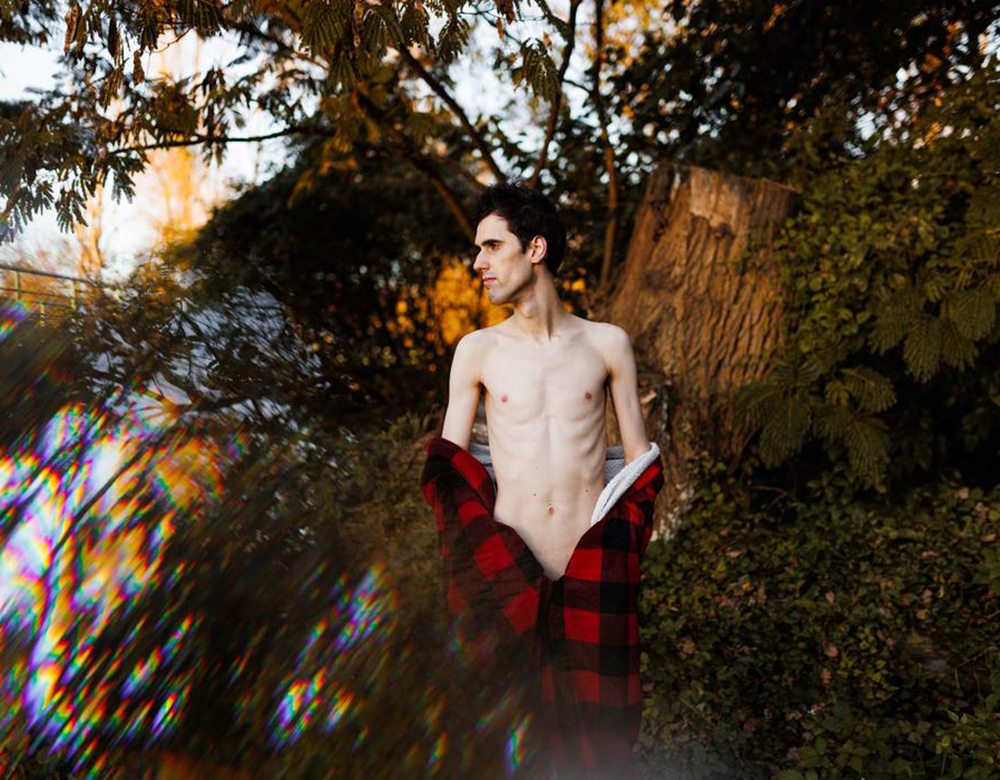
Tylen Lambert
Your practice brings together modelling, visual art, boudoir and fine-art photography. How did these different creative paths first begin to intersect in your work?
Everything really began with boudoir. At first, I did not have a precise plan for where my work would go. I simply started exploring my body, intimacy and the ways in which I could express myself through photography.
Over time, I spontaneously began incorporating more influences from fashion, fashion aesthetics and gender-fluid visual expression. I became increasingly drawn to the idea that the male body is not limited to a single representation of how it should look, pose or be presented.
A very personal experience also played an important role in this. After an important emotional connection came to an end, I went through a period of intense reflection about myself, my body and the way I wanted to be seen. Photography gradually became a space where I could explore those feelings and transform them into something visual.
This is how boudoir, fashion, fine art, visual art and gender-fluid aesthetics naturally began to intersect. Today, I no longer see them as separate directions. They are all part of the way I express myself and explore who I am.
What does working both as a model and a visual artist allow you to express that might not be possible from only one side of the camera?
Being both in front of the camera and part of the creative process behind it allows me to understand an image from two different perspectives. As a model, I experience the photograph physically and emotionally. As an artist, I think about what the image is trying to communicate.
This combination gives me more freedom to participate in the entire creative process. I can think about the pose, the atmosphere, the relationship between the body and the light, and the emotion I want the final image to carry.
For me, the camera is not simply a device that documents my body. It becomes a space where I can explore who I am and how I want to be seen.
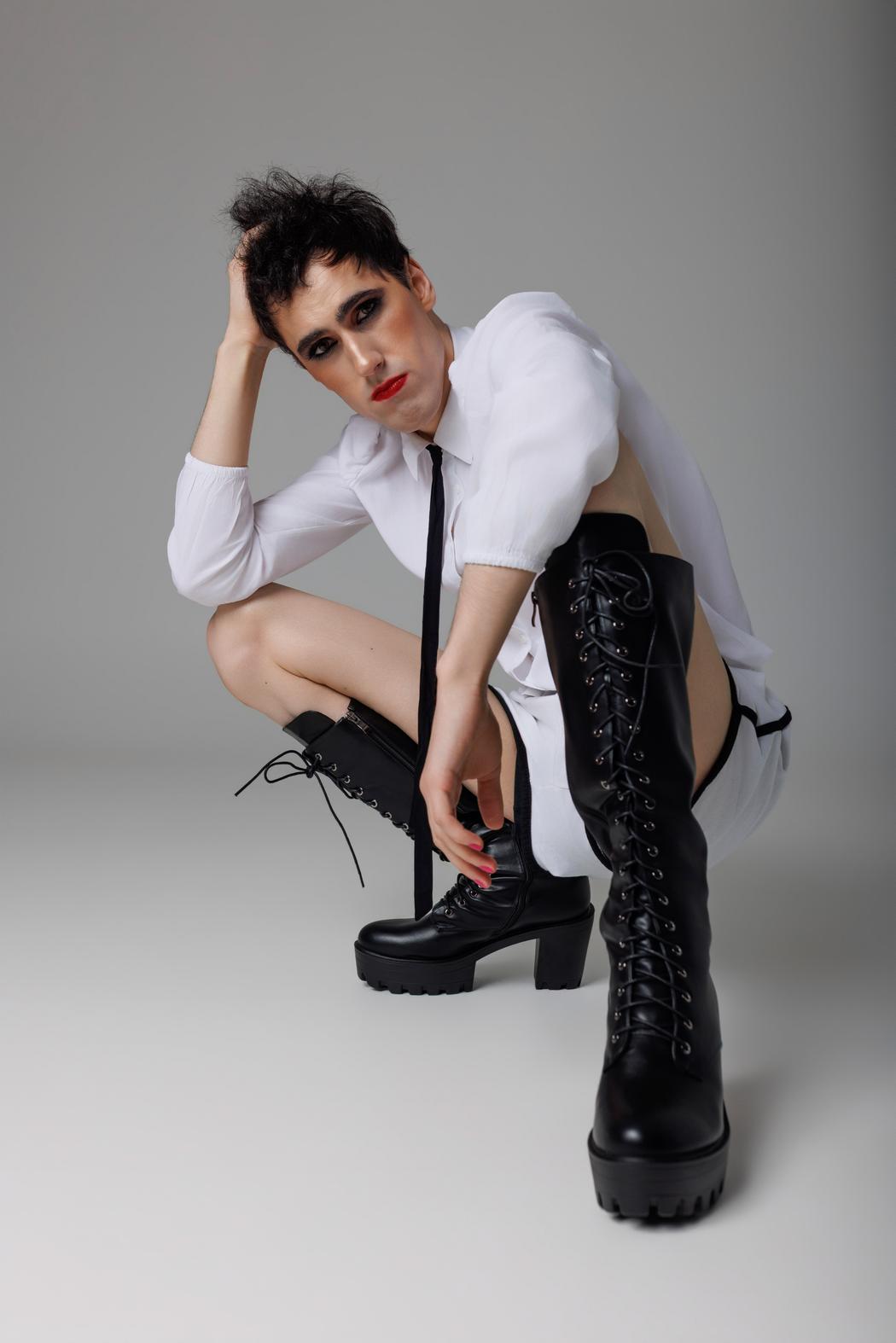 Tylen Lambert | Photography Isa Gauvin | Makeup Manca Rodman | Styling Tylen Lambert |
Styling Assistance Isa Gauvin And Manca Rodman
The body in your images appears vulnerable yet self-possessed. How do you understand the relationship between vulnerability and strength?
I do not see vulnerability and strength as opposites. I believe vulnerability can be one of the most powerful forms of expression.
Showing your body honestly and allowing softness, intimacy or uncertainty to be present in an image can require a great deal of confidence. For me, strength does not always have to look powerful or dominant. Sometimes strength is simply allowing yourself to be seen without hiding the parts of yourself that society tells you should be hidden.
I want my images to show that vulnerability does not take away from the strength of the body. Quite the opposite — it can give the body an entirely different kind of strength.
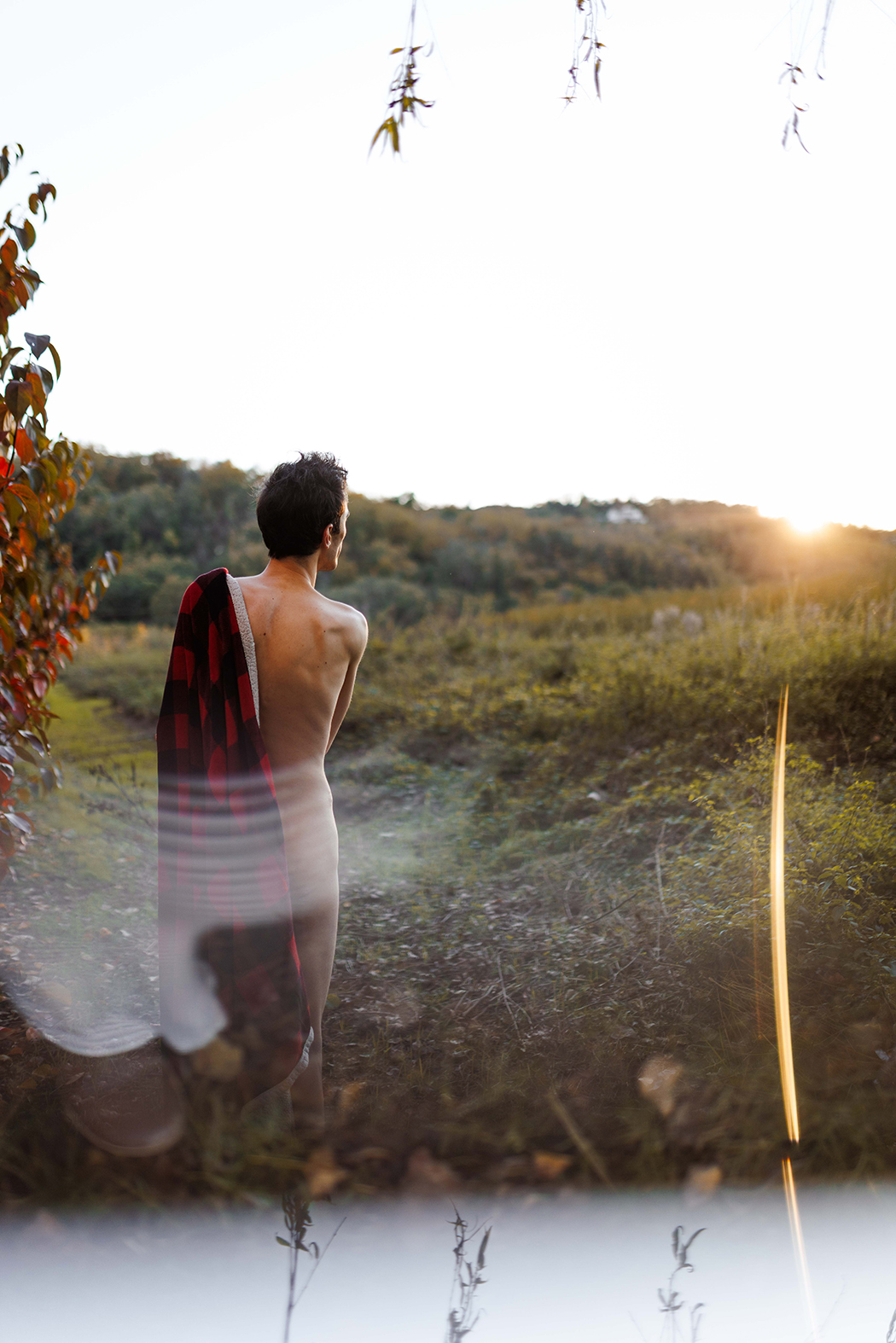 Tylen Lambert | Photography Isa Gauvin
Your work challenges conventional representations of the male body. Which stereotypes or expectations surrounding masculinity are you most interested in questioning?
I am interested in questioning the idea that the male body must always appear strong, dominant, emotionally controlled and sexually confident.
There is often a very narrow visual language surrounding masculinity. Men are expected to occupy space in a certain way, pose in a certain way and avoid appearing too soft, delicate or vulnerable.
My work explores what happens when those limitations are removed. I am interested in a male body that can be sensual, elegant, vulnerable, androgynous or soft without becoming any less masculine because of it.
For me, questioning masculinity does not mean rejecting masculinity. It means allowing it to have more than one definition.
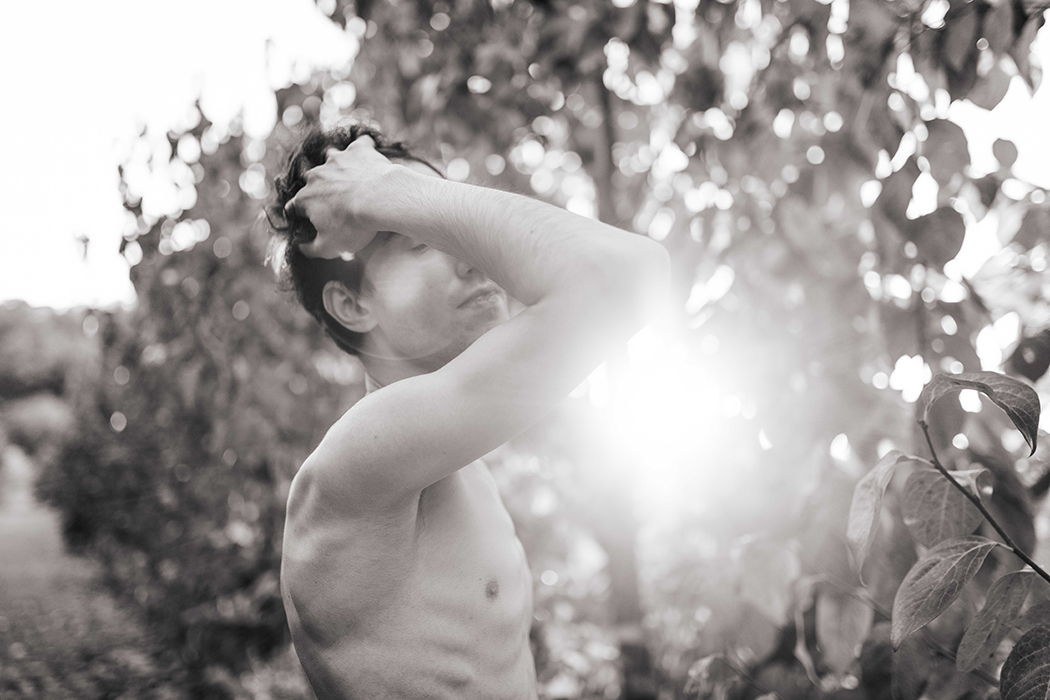 Tylen Lambert | Photography Isa Gauvin
Creating intimate images requires a particular degree of trust and openness. How do you establish a safe and collaborative environment with the photographers you work with?
Trust is very important to me when creating intimate photography. Above all, I follow the photographer’s vision and give them space to guide me through their idea of the final image. When I trust the photographer, I can completely surrender myself to the process.
In my case, I often work with Isa Gauvin, whom I trust deeply. When we work together, I feel a sense of safety and mutual understanding, which allows me to open up physically as well. I do not have to constantly think about how I look or whether a pose is good enough. I can simply surrender to the feeling, the light, her direction and the moment.
This is especially important to me in fine-art and boudoir photography, because I simply love both of these forms of expression. They are where I feel most free to explore the body, vulnerability, sensuality and aesthetics.
For me, a safe environment is not only about setting boundaries, but also about feeling that you can trust the photographer enough to truly open yourself up in front of the camera. When that trust is present, photography becomes much more honest and personal.
To what extent are your poses and gestures planned in advance, and how much emerges intuitively in response to the location, light and atmosphere?
Most of the time, I have a basic vision or feeling in mind before the shoot, but I do not plan my poses and movements down to every detail. A lot of it develops naturally in front of the camera.
When I trust the photographer and their vision, I can surrender to the moment. I listen to their direction while also responding to the light, the space, the music, the atmosphere and, above all, to how I feel in my body at that particular moment.
I think my experience with modelling allows me to respond to these situations quite intuitively. Sometimes a particular movement or pose comes almost unconsciously, and those are often the moments when something truly authentic can emerge.
That is why I like to leave room for spontaneity in my work. The concept and vision create the foundation, the photographer’s direction gives it a sense of direction, and my body responds to everything in the moment. That unpredictability is something I really enjoy about photography, because it can lead to something neither of us had planned before the shoot.
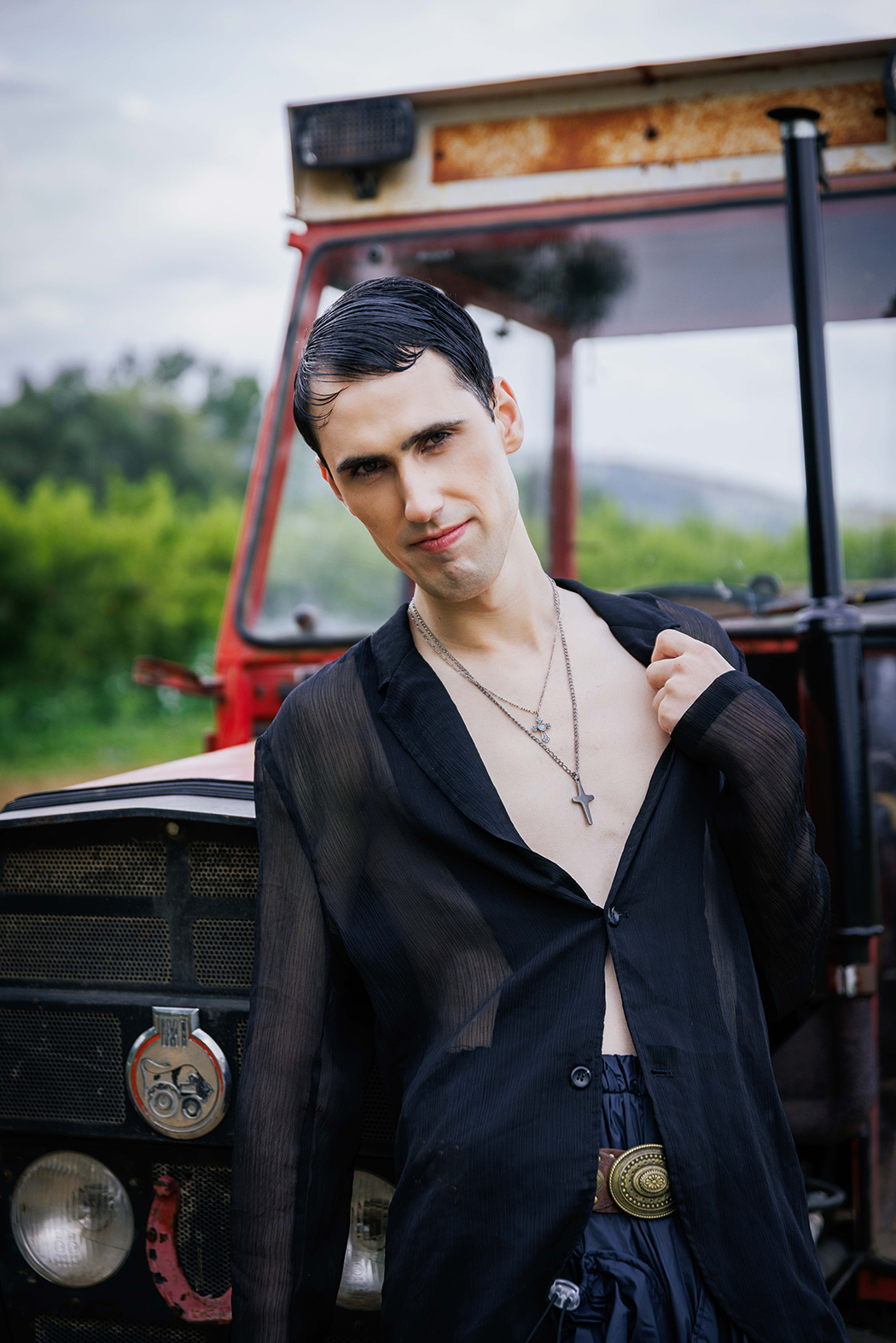 Tylen Lambert | Photography Isa Gauvin | Makeup Manca Rodman | Styling Andrej Lazarevski |
Designer Emanuela Trajcheska
What would you like viewers to reconsider about the male body, identity or vulnerability after encountering your work?
I would like viewers to question the idea that there is only one correct way for a male body to exist or to be represented.
I want people to see more in the male body than simply strength, sexuality or physical appearance. I want them to see emotion, vulnerability, beauty, individuality and humanity.
Ultimately, I hope my work creates a little more freedom — both for the person looking at the image and for people who may recognise a part of themselves within it.