
The Distance of Recognition
by Anna Gvozdeva
In Nazanin Ghahramani’s Looking in the Mirror / Self-Portraits, self-portraiture appears not as a sequence of stable likenesses but as an inquiry into how the self comes into view under different conditions of seeing. The five selected works span the period from 2015 to 2026, moving from the isolated face to the figure within the studio and finally to a collective scene. This chronology does not offer a conventional narrative of maturation or a fully integrated identity. Instead, each medium redefines the relationship among face, surface, and viewer. Recurring features, round glasses, and a direct gaze establish recognition without proving continuity. The project’s central tension lies between the ability to identify a person and the impossibility of knowing her completely.
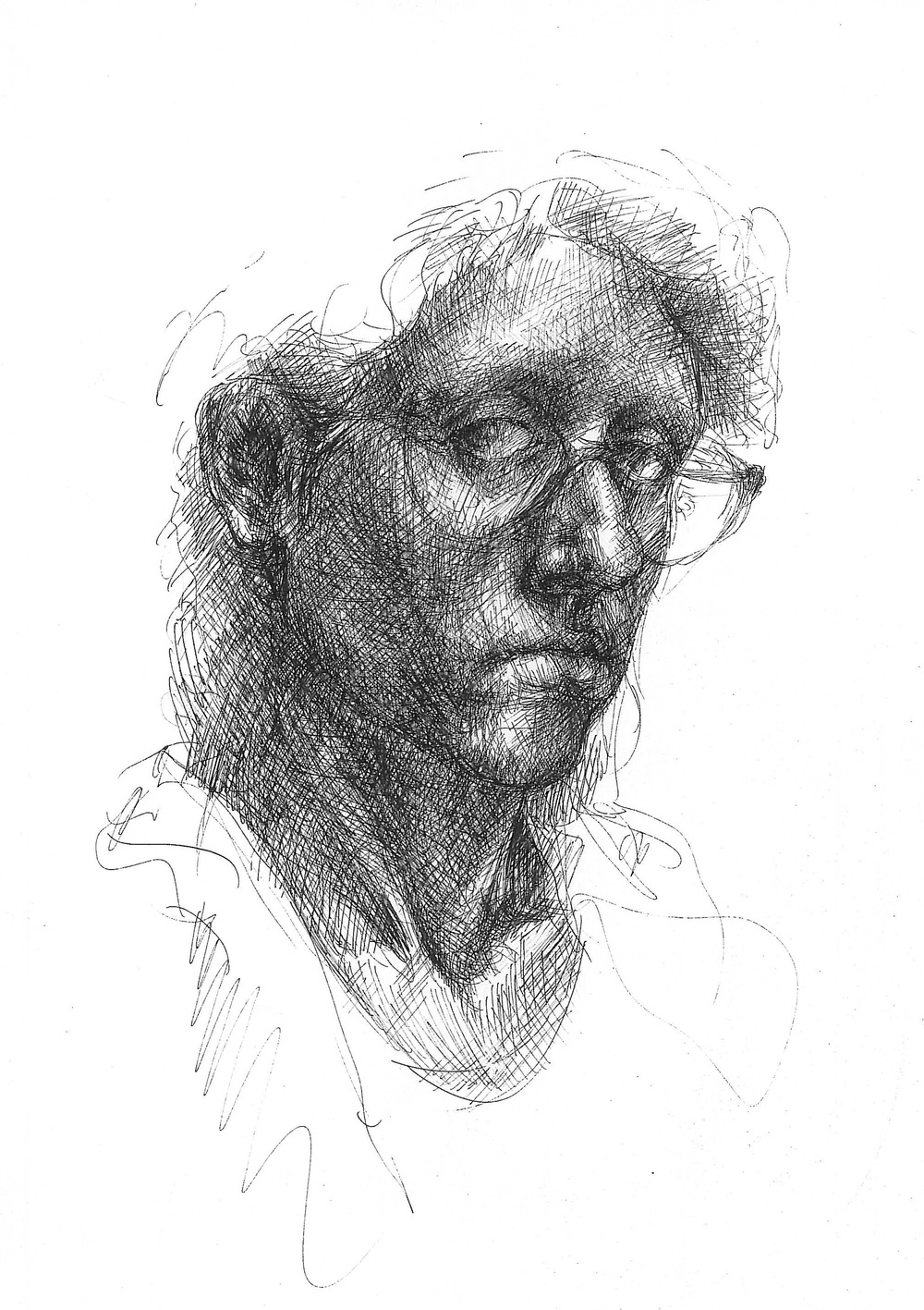
Nazanin Ghahramani, Self-portrait, Pen & ink on Paper, 2015
In Self-portrait, Pen & Ink on Paper (2015), the face is constructed from a restless web of intersecting marks. Density gathers around the eyes, cheekbones, and neck, while the outer boundaries of the head remain open and partially dissolve into the blank sheet. Each line adds information, yet the accumulation of lines also obstructs clarity. The white paper functions not as a neutral background but as the possibility of erasure. This is one of the selection’s most persuasive works because its technique enacts the contradiction of self-scrutiny: sustained looking does not secure identity but makes what is seen increasingly unstable.
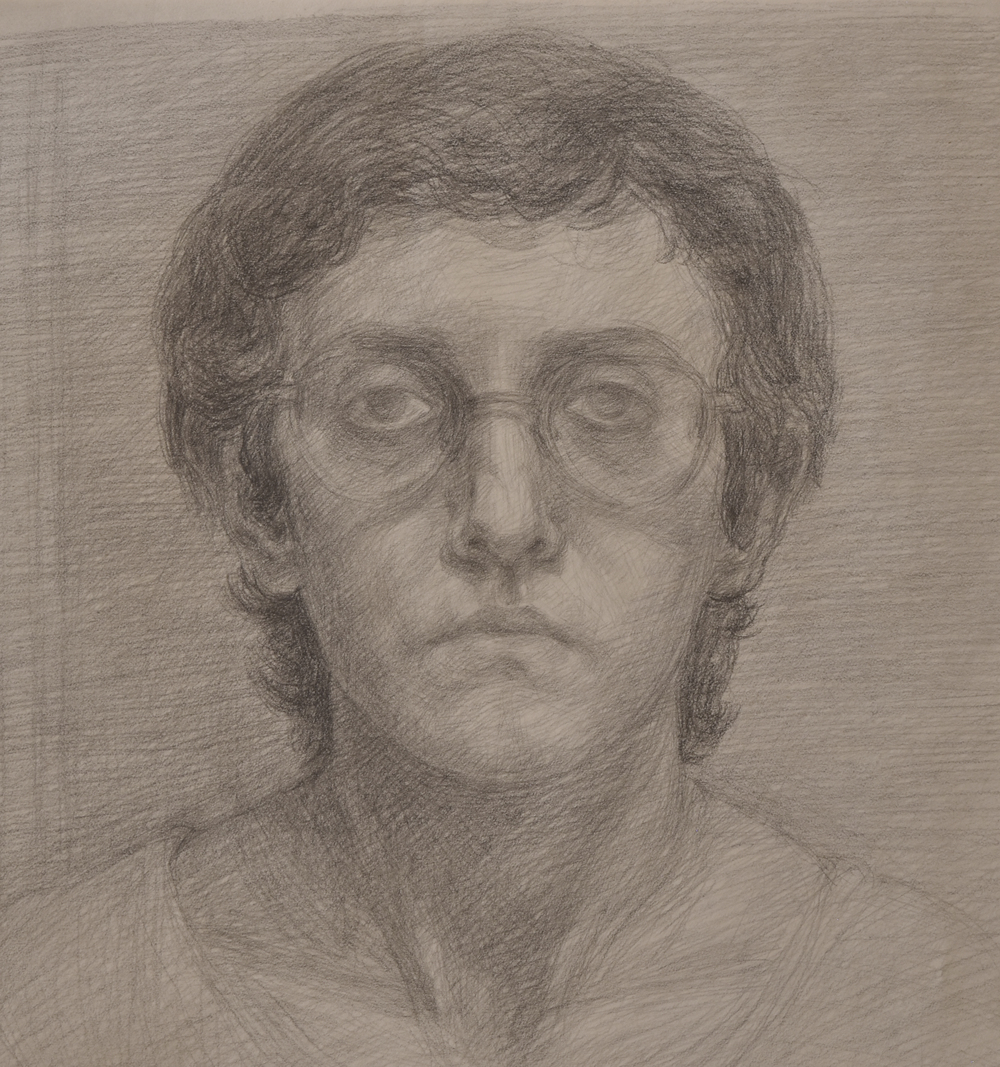
Nazanin Ghahramani, Self-portrait, Pencil on Paper, 2021
Self-portrait, Pencil on Paper (2021) changes the tempo. Frontal symmetry and a continuous graphite veil produce a sense of closure and almost archival stillness. The face no longer fragments as it does in the pen-and-ink drawing, yet it gradually merges with the evenly worked background. The lenses remain transparent, but the gaze behind them is distant; descriptive precision does not provide greater psychological access. Blue Self-portrait, Oil on Canvas (2019), reverses this restraint through tight cropping, visible brushwork, and a cold range of blue, gray, and black. The circular lenses create an additional frame within the painting, acting as both a means of vision and a barrier. Color does more than suggest melancholy: it estranges the flesh and turns the face into an optical event. At the same time, the blue register risks determining the emotional reading too quickly; the work gains complexity when placed beside the quieter graphite portrait.
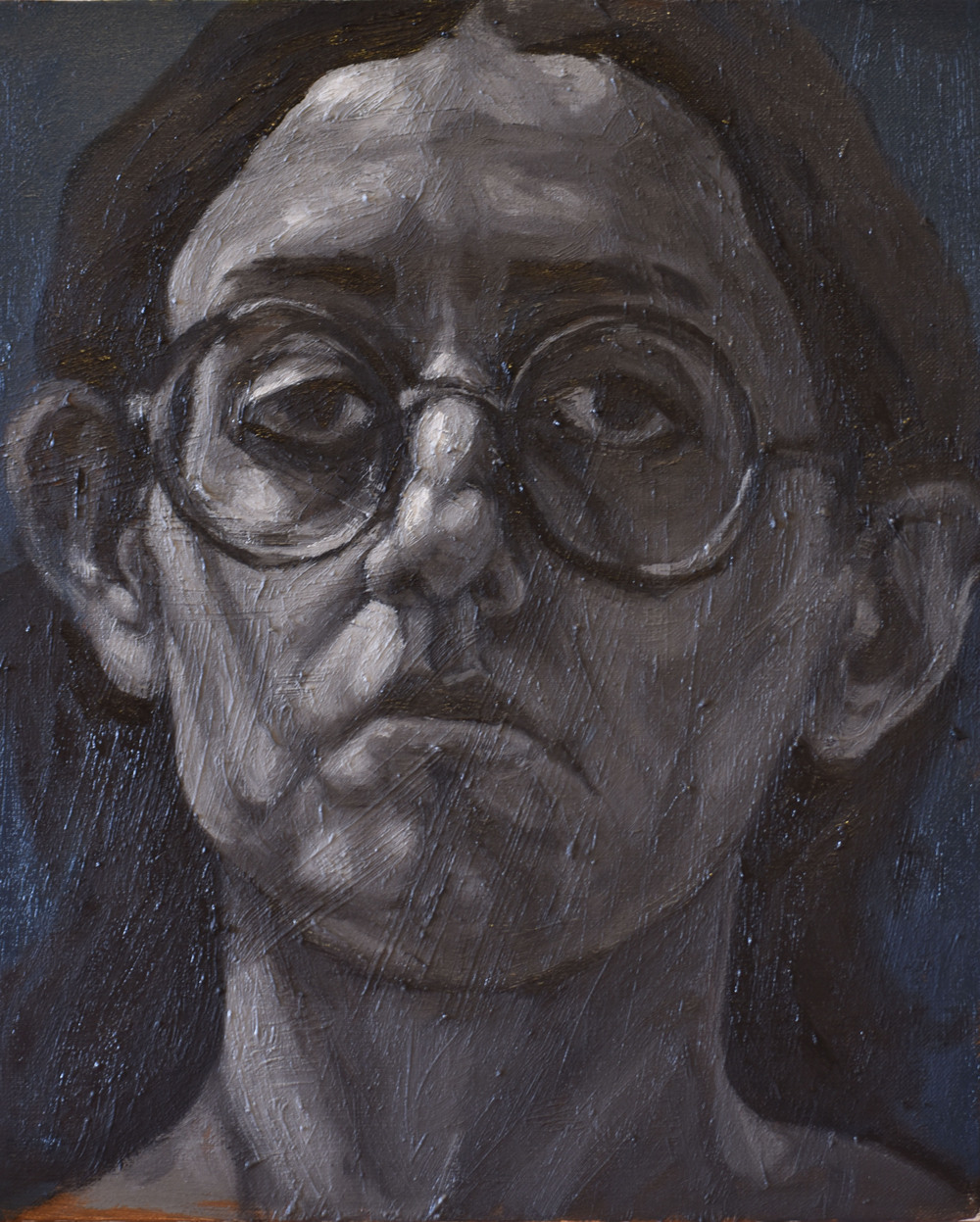
Nazanin Ghahramani, Blue Self-portrait, Oil on Canvas,2019
Green Self-portrait, Oil on Paperboard (2022) introduces the most decisive compositional shift. The face no longer fills the image. The artist sits behind a dark rectangular plane that conceals part of her body, surrounded by shelves, small pictures, containers, and studio objects. Repeated rectangles create frames within the frame, making the face only one element within a broader visual inventory. Muted greens and browns transform the studio into a space of inward concentration. Unlike the proximity of Blue Self-portrait, this work keeps the viewer at a distance across the table and incorporates the circumstances of its own making. The subdued spatial hierarchy makes some objects difficult to identify, yet this compression supports the underlying idea: identity is formed through surroundings, routines, and artistic labor rather than in isolation.
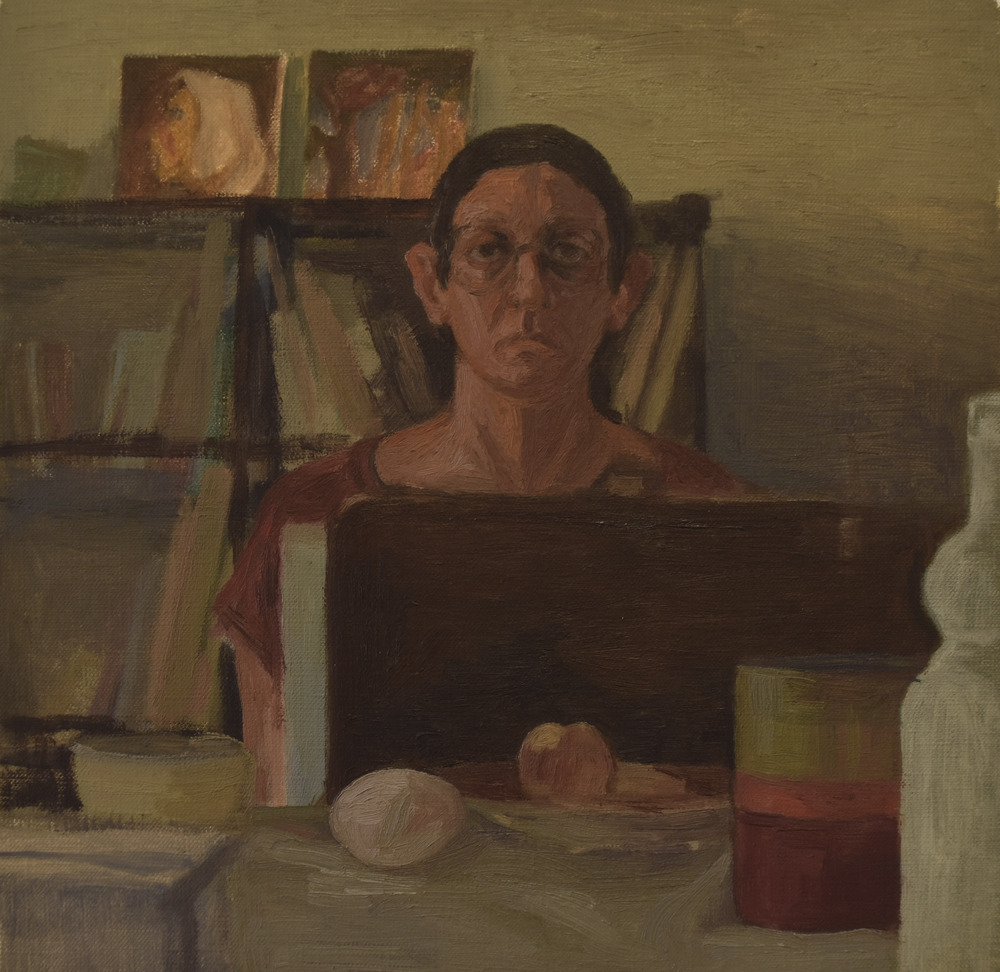
Nazanin Ghahramani, Green Self-portrait, Oil on Paperboard, 2022
In Un/Known Faces No.2, Oil Pastel on Paperboard (2026), the singular self gives way to the group. Several figures bend toward a shared center while a child stands slightly apart. Black vertical lines divide the saturated red interior, while rough oil pastel and the abraded surface deprive the faces of individual specificity. Identity is now defined less by likeness than by one’s position within collective memory. The red carries a risk of turning recollection too readily into danger or emotional intensity, but the resistance of the material prevents such a simple reading. The figures appear to have been physically retrieved from an incomplete memory rather than faithfully copied. The work extends self-portraiture beyond visible presence: the artist may no longer be individually identifiable, yet the self persists through its relationship with others.
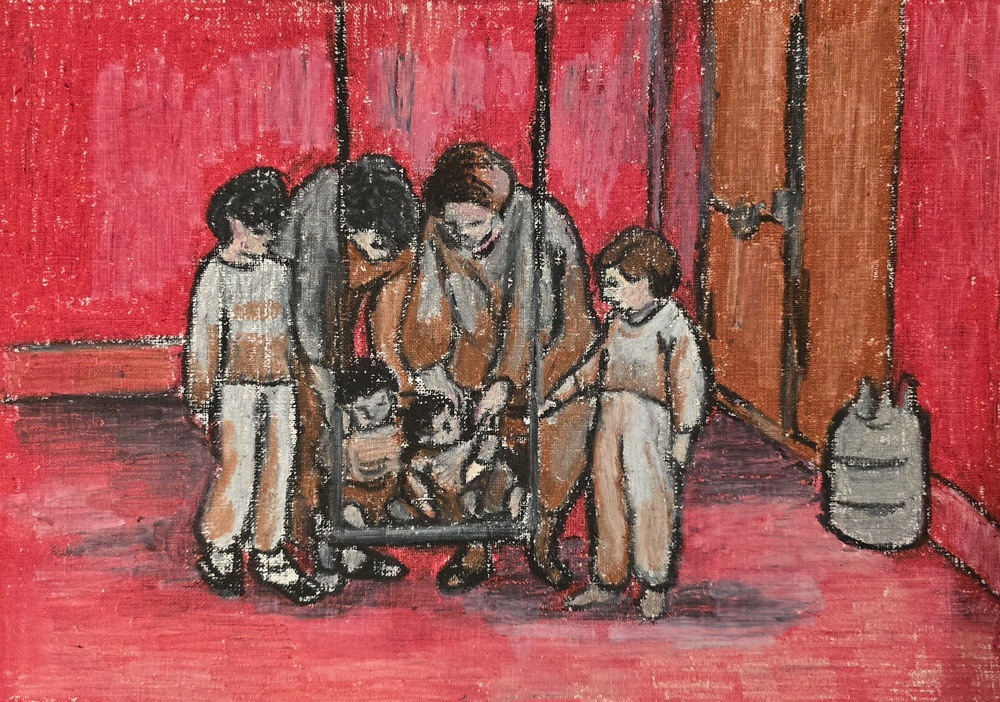
Nazanin Ghahramani, Un/Known Faces No.2, 2026
Across these five works, Ghahramani’s achievement lies less in producing a definitive image of herself than in exploiting the differences among drawing, painting, and pastel. The project is most convincing when the material complicates recognition rather than simply illustrating an assigned mood. The movement from agitated line to graphite stillness, chromatic estrangement, the layered space of the studio, and collective memory makes self-portraiture a practice of continual revision. For Ghahramani, recognizing oneself is not the same as possessing oneself; identity remains a shifting encounter among vision, memory, material, and the presence of others.