
Nabil Mousa
When art begins to exist primarily to reassure us, something essential to its purpose quietly disappears. The work may remain beautiful, technically accomplished, even emotionally pleasant, but it stops doing the one thing that art has always been known for: showing us what we have been avoiding. In a cultural moment that rewards immediacy, affirmation, and frictionless visual experience, the pressure on artists to produce work that confirms rather than challenges has grown enormously.
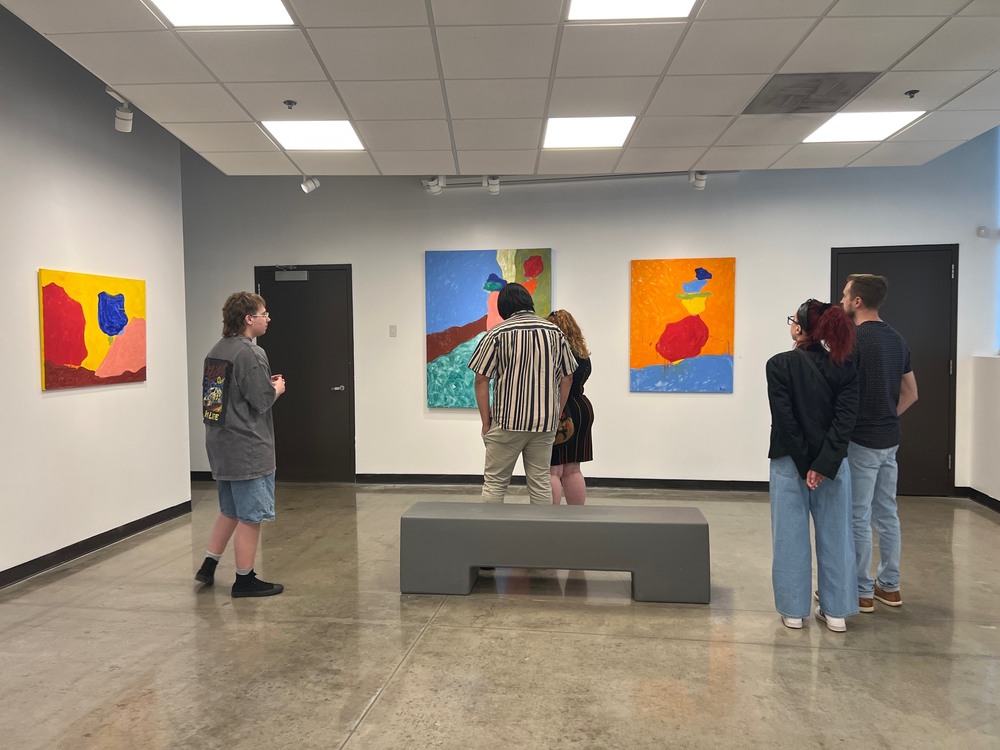
Algorithms favor familiarity, collectors often reward predictability, and visual culture is increasingly consumed as décor, as branding, or as an extension of personal identity. Art that never risks alienating us, however, rarely reveals anything we do not already know, and the works we still return to across centuries tend to share one quality, which is not pleasantness.
What We Actually Mean by Comfortable Art
Comfortable art is not the same as art that is serene, beautiful, or easy to approach. Agnes Martin produced paintings of light-colored grids, which were themselves expressions of restraint yet also confronted the viewer with loneliness, silence, and concentration. The work of Mark Rothko employed saturated colors not as decoration, but as a means of approaching something like existential profundity. They were not decorating, even when their works looked good on a wall.
In fact, it becomes an act of deception by denying the intricacy of contradictory emotions, by producing the illusion of depth through visual clichés without venturing into the emotional terrain they are meant to evoke, by substituting certainty where there should be moral uncertainty, and by maintaining style while lacking the capacity for discovery. The question here isn’t whether such art is nice. The question is whether pleasure has come to serve as a substitute for wonder.
Comfort Was Never The Historical Role of Art
The historical record on this point is almost embarrassingly clear. Francisco Goya’s Disasters of War rejected the heroic conventions that had governed depictions of conflict for centuries and instead presented the dismembered and the executed without the consolation of meaning. The reason why Manet’s Olympia made the bourgeois art salon feel uncomfortable was not its nudity but its look back at the spectator, with a level of awareness that violated all the rules of academic painting. Picasso’s Guernica showed how modernist painting could serve as the bearer of politics in ways unprecedented in a visual medium. Käthe Kollwitz made images of mourning, starvation, and corpses of children in a way that made those in power feel that it was nearly impossible to endure. Francis Bacon twisted the human body beyond recognition to make viewers see the psychic violence they were already living in.
This same formula occurs beyond painting. Dostoevsky crafted characters who held opposing moral stances within a single breast, thereby depriving the reader of the satisfaction of aligning himself with the correct character. Toni Morrison confronted her American audience with the historical pain that genteel society sought to deaden. Ingmar Bergman brought silence and existential questioning into the very fabric of film, while Nina Simone sang of beauty and outrage in the same song. Therein lies a commonality across these diverse artistic endeavors. Those works that endured did so because they discomfited their original audience before being embraced, and this truth is no accident.
Why Contemporary Art Risks Becoming Too Comfortable
A combination of several factors, none of which are new in themselves, has made comfortable art much easier to create and harder to resist at this point in time. The first of these is algorithmic. The social platform rewards images that make sense in less than a second, leaving ambiguity, slowness, and complexity of tone economically disadvantaged before they even get a chance to be seen. In a way, an artist who creates something that requires viewing in situ is structurally competing with an entire ecosystem designed to ensure no one does so.
Secondly, there is market pressure. Often, galleries and collectors favor something that bears a familiar signature, creating an environment where the artist is subtly compelled to embody a trademarked version of themselves, constantly making the same gesture, using the same color scheme, and creating works of identical size and scale. This does not necessarily stem from the artist’s cynicism, but from survival. Nevertheless, after years of doing so, the artist ends up making copies of their own discoveries rather than new ones.
Pressure number three is institutional. A large percentage of the current work consists of articulating preconceived moral stances rather than undertaking inquiry. The result is preordained from the start, and the piece merely serves as an illustration of the point, which runs counter to the very process by which art creates knowledge, since the goal is unknown at the outset.
The final pressure is perhaps best described as the aestheticization of everything. Trauma, dissent, migration, intimacy, and loss are all possibilities as visual styles; the implication here is that a painting can now convey political weight without actually having any. As early as Andy Warhol, the value of such a practice lay in its seeming lack of content, as it was in repetition, fame, and image that Warhol found his emptiness. In the hands of Banksy, this idea is taken a step further, with dissent becoming the most marketable commodity of all. None of this is to say that political art is no longer possible; only that it requires much more effort.
Difficulty Is Not the Same as Pretension
In order to present an authentic account of this argument, some recognition must be made. In itself, difficult art does not necessarily constitute truthfulness, and many pieces are shrouded in ambiguity not due to the nature of the topic but due to the artist’s mistaken conception of obscurity being the equivalent of profundity.
Shock tactics soon lose their effectiveness on second use, and when the shock requires nothing of the performer, no enlightenment comes from it either. One such case is Marina Abramović’s performance art, which succeeds only when the performer is truly vulnerable; when she acts, it becomes a completely new entity.
What Honest Art Actually Does
Authentic art runs the risk of misinterpretation. Authentic art leaves room for contradictions, since it refuses to transform contradictions into a message and makes an impact on the artist as well as on the work, making him or her change, which is the main thing that proves that something authentic is going on within the work.
What stands the test of time usually combines conflicting elements into a single entity. Beauty and violence, harmony and chaos, intimacy and detachment. Anselm Kiefer addresses Germany’s past through heavy materials that ensure the subject is never detached from its concrete context. Louise Bourgeois made her own pain universal but never gave up its specific origin. For fifty years, Gerhard Richter refused to commit to any artistic style, seeing in every change another step in his research process rather than a failure of brand identity.
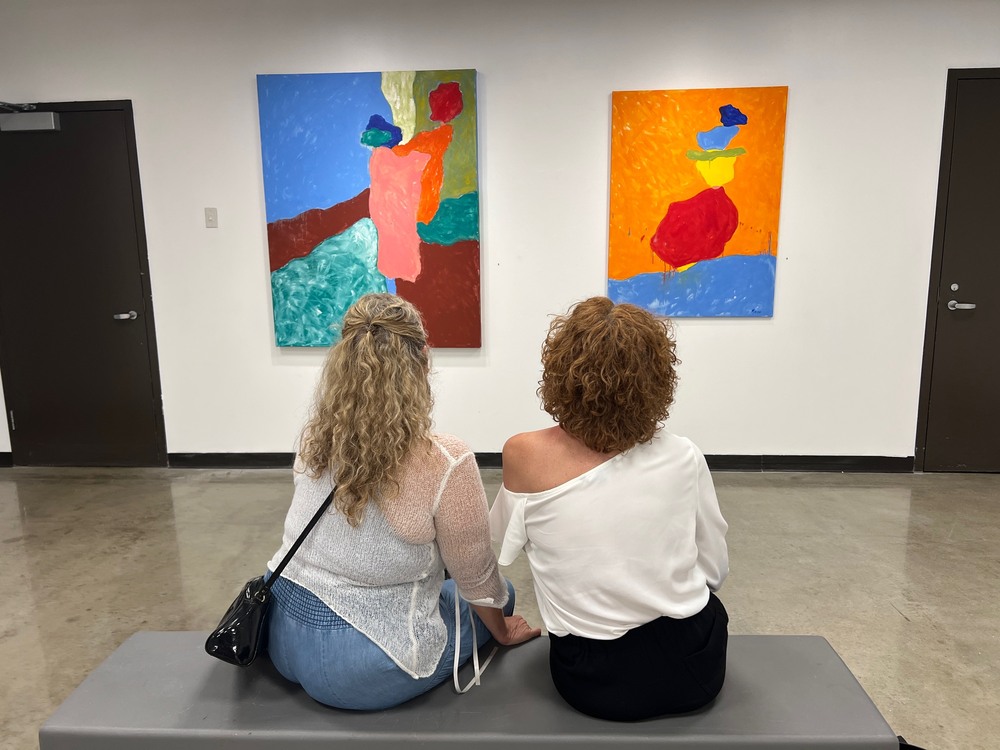
This same logic continues to operate in artists whose subjects are migration, faith, and identity in cultures that have not made room for all three at once. Working across recycled fabric, found objects, collage, geometric designs, religious texts, and layered pigment, Syrian American painter Nabil Mousa has built a practice that treats abstraction as a method of inquiry rather than a style. His Veil of Ignorance series incorporates pages from the Bible, the Koran, and the Torah into the same surface, refusing to grant any of them the final word and refusing to mock any of them either.
The way in which he discusses the issues of queer identity in an Arab context, the issue of religion, as well as that of cultural dislocation, cannot be summed up as any kind of slogan, and that’s why his work deserves another look. It’s because many years have gone by studying all these subjects.
The Artist’s Responsibility in a Comfort-Driven Culture
What is more important for contemporary artists than whether their works are beautiful or not is whether they use beauty to enhance their perception or to evade it. Are they using repetition to explore or retreat into something familiar? Is there really something to be at stake for the artist when making this piece, or is the artist just putting on airs because of expectations? These are among the questions asked by artists who have preferred rigor and evolution to instant satisfaction.
Comfort is not inherently antithetical to art. Comforting works of art, however, become a decorative language of avoidance, and there are plenty of them already in existence within our society. The true purpose of art lies in much more than simply making us comfortable with the world in which we live. Rather, art should make us realize that we are asleep in the world we live in.
It is exactly this kind of approach that makes the work of artists such as Nabil Mousa relevant even today, since his work constitutes a subtle yet important critique of a culture that confuses visibility with substance. The works of Nabil Mousa do not offer any definitive solutions. On the contrary, the artist asks questions that linger on long after the viewer has left the canvas behind.
Talks such as this are crucial, not because they provide consolation, but because they open up room for investigations that markets, institutions, and algorithms cannot accommodate. So long as artists continue to create art that can lead to misunderstanding but reveals the truth about the world we inhabit, the necessary role of art endures, allowing culture yet another opportunity to take a hard look at itself.
 BIO:
BIO:
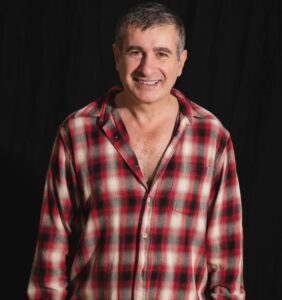
Nabil Mousa is a Syrian-born, American artist whose multidisciplinary practice spans painting, sculpture, printmaking, performance, and community engagement. Born in Syria in 1966, he emigrated to the United States at age 12. His work has garnered national recognition, including front-page coverage in The New York Times and a solo exhibition at the Arab American National Museum. His current projects explore religion, identity, and transcendence.
Leave a Reply
You must be logged in to post a comment.