
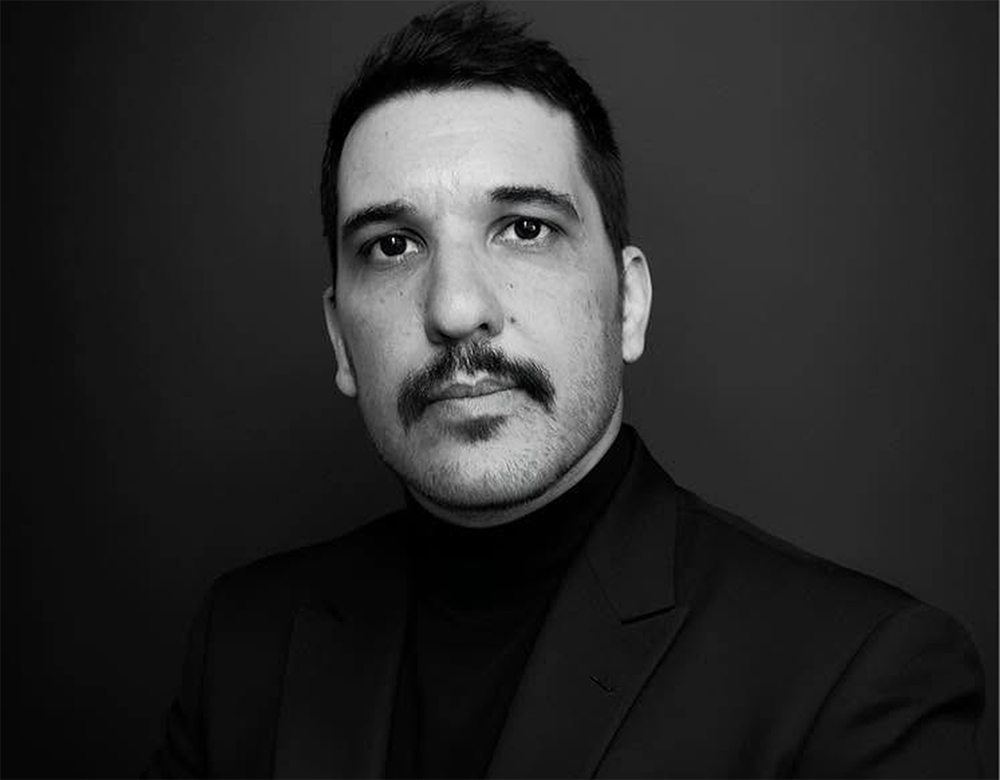
Gil Zablodovsky
You describe your artistic practice as an ongoing laboratory dedicated to the visualization of sound. How did this investigation begin, and what first made you interested in translating something auditory into visual form?
My investigation began with a fascination for the invisible forces that shape our sensory experience. Sound is inherently physical—it travels through space as vibrations and frequency, affecting us long before we rationalize it. I became captivated by the idea of making these intangible acoustic phenomena visible. The transition from pure visual communication to an artistic inquiry into sound allowed me to explore how cadence, rhythm, and acoustic tension can be captured within a static, spatial medium.
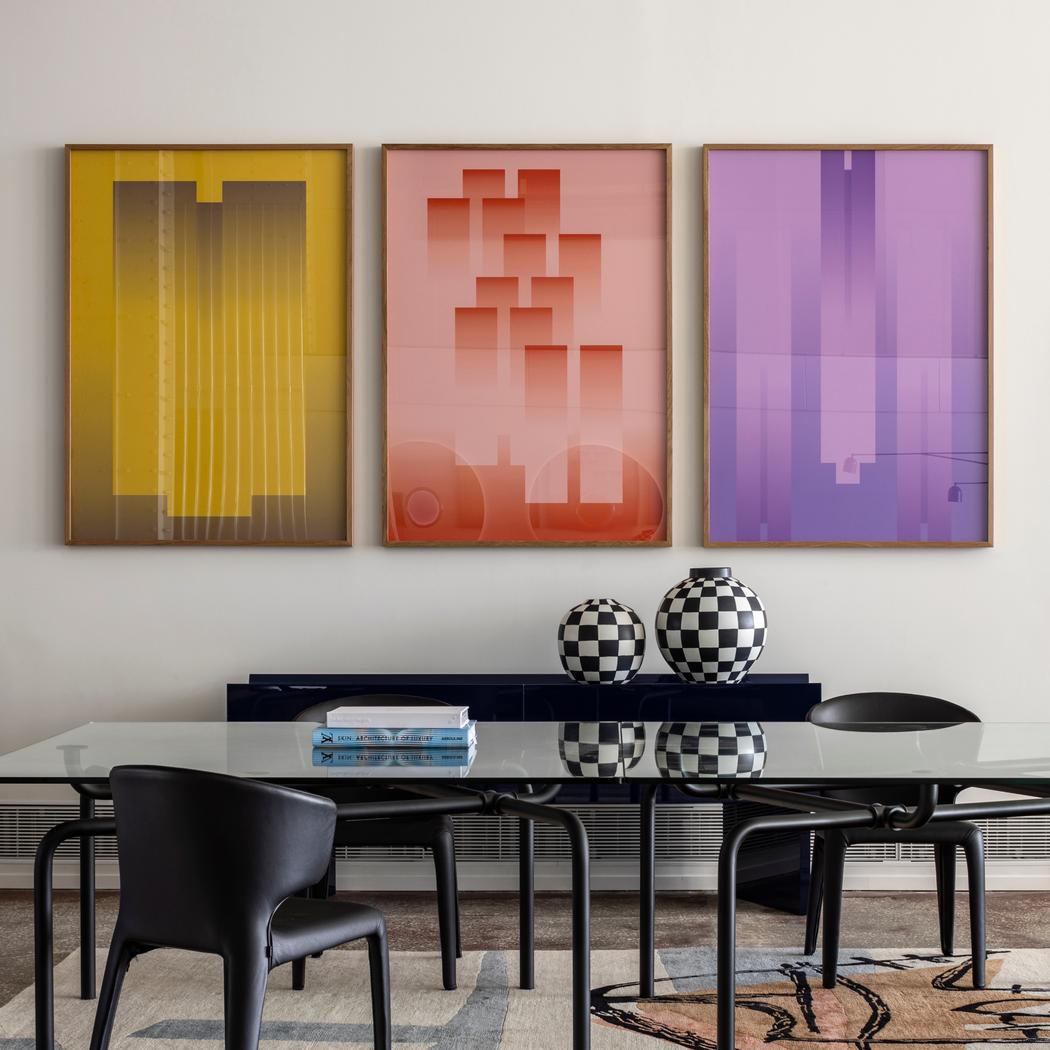 Gil Zablodovsky | Arcadia | 2024
When you begin a new work, what usually comes first: a sound, a rhythm, a geometric structure, or a more intuitive emotional impulse?
It almost always begins with a rhythmic or emotional frequency rather than a concrete image. I listen for a specific resonance or cadence—a sense of vibration—which then demands a geometric counterpart. The geometric structure acts as the visual architecture designed to contain and express that initial impulse, giving form to what was previously only felt or heard.
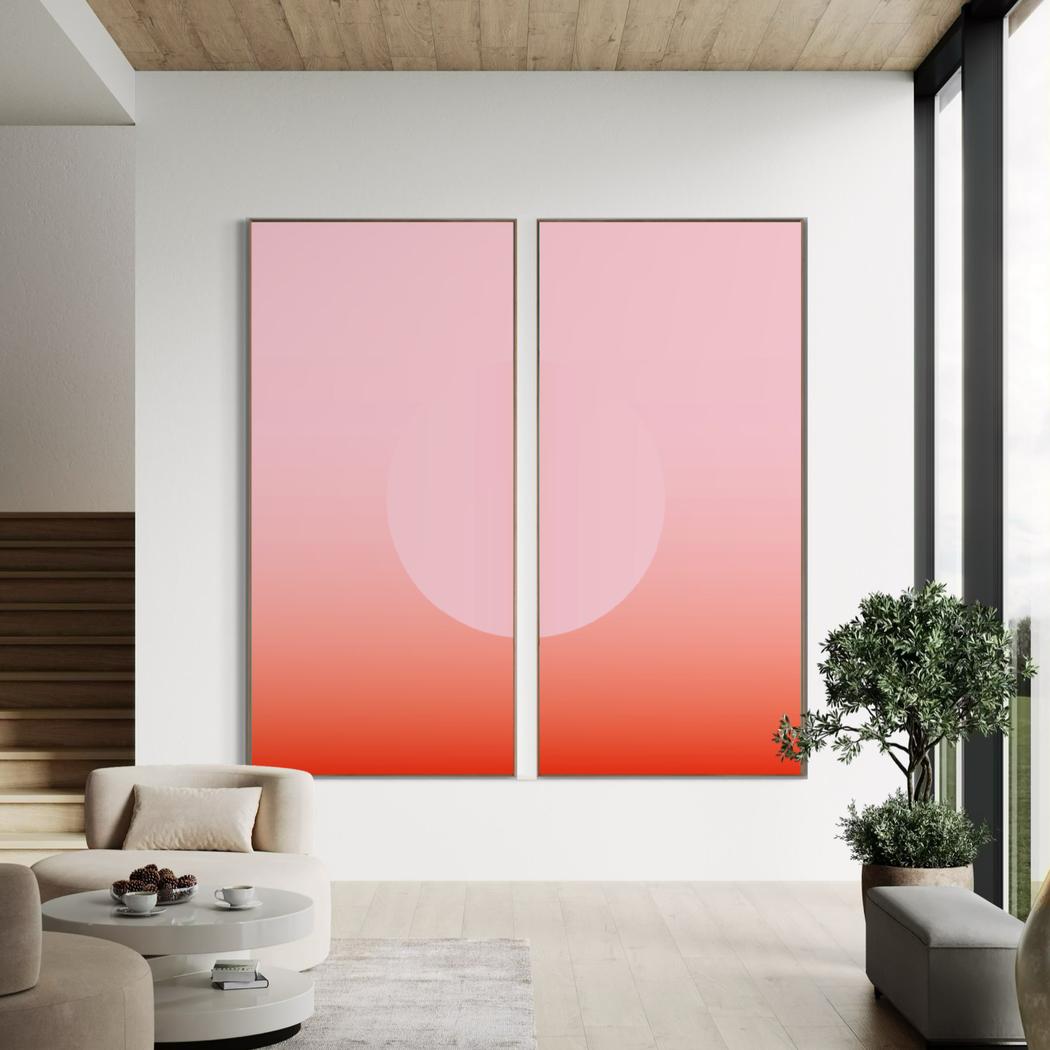 Gil Zablodovsky | Sunset | 2025
The circle and the matrix occupy an important place in your visual language. What do these forms allow you to express that other geometries cannot?
The circle is a fundamental symbol of resonance, cycle, and infinite expansion; it naturally mirrors sound waves propagating outward from a source. The matrix, on the other hand, provides structure, order, and grid-based discipline. Together, they create a dialogue between infinite flow and structural boundaries. This combination allows me to represent both the precision of sound waves and the expansive, emotional nature of listening.
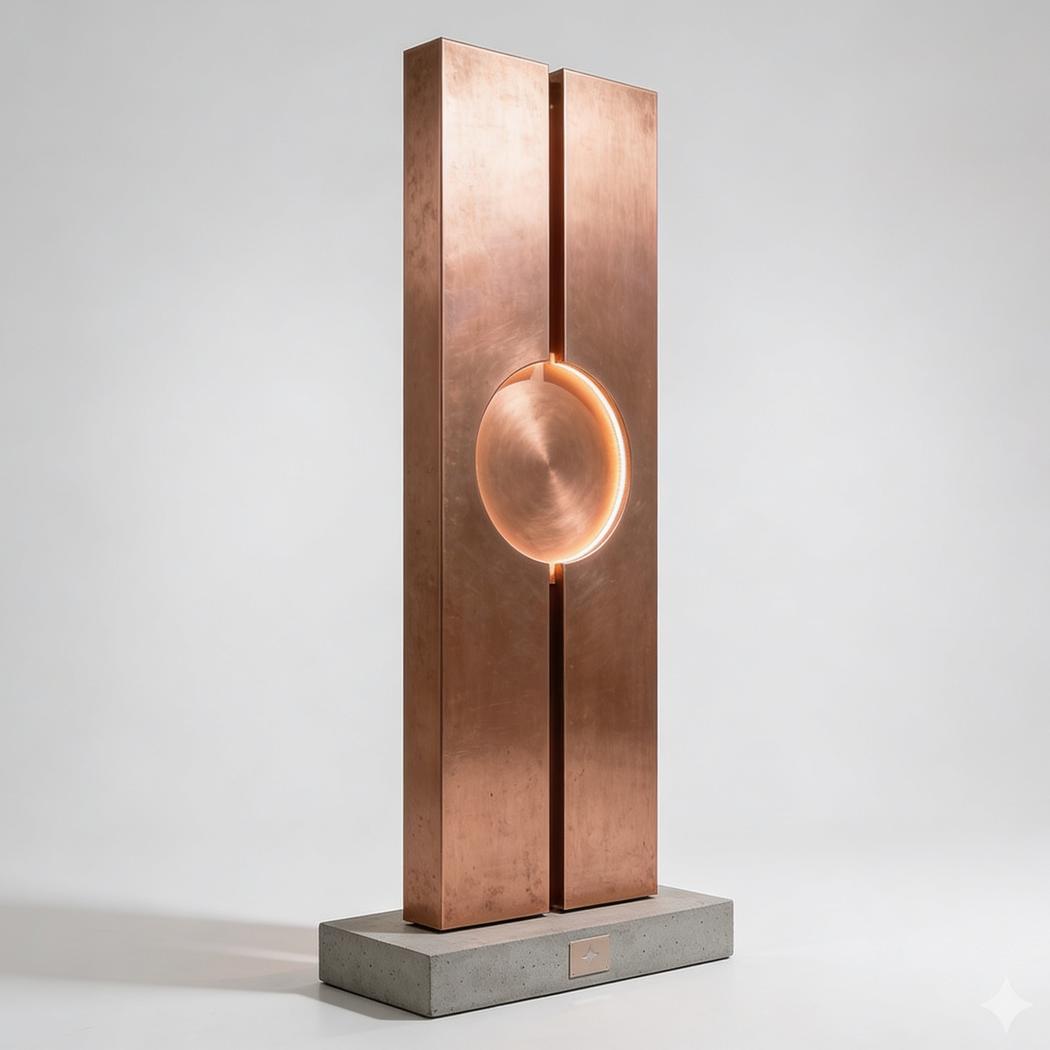 Gil Zablodovsky | Totem | 2026
Your work often combines strict geometric precision with gradients, transparency, repetition, and a sense of movement. How do you balance control and intuition during the creative process?
I approach my work like a visual laboratory. Control lies in the rigorous geometric composition, vector precision, and structural rules I set for a piece. Intuition comes forward through color gradients, transparency layerings, and subtle shifts in movement. The geometry forms the system, but the intuitive layering gives it breath and vitality. I know a work is finished when the strict control gives way to a fluid visual sensation.
You speak about sound not simply as inspiration, but as something that can be translated into visual and material structures. Is there a particular system or methodology behind this translation, or does each work develop according to its own internal logic?
It is a synthesis of both. While I operate within a consistent system—utilizing vector-based compositions, digital fine art techniques, and specific geometric relationships—each piece or series develops its own internal frequency. I don’t use a literal one-to-one translation algorithm; instead, I construct visual systems that function as analogies for acoustic behavior, letting each work dictate its own harmony and scale.
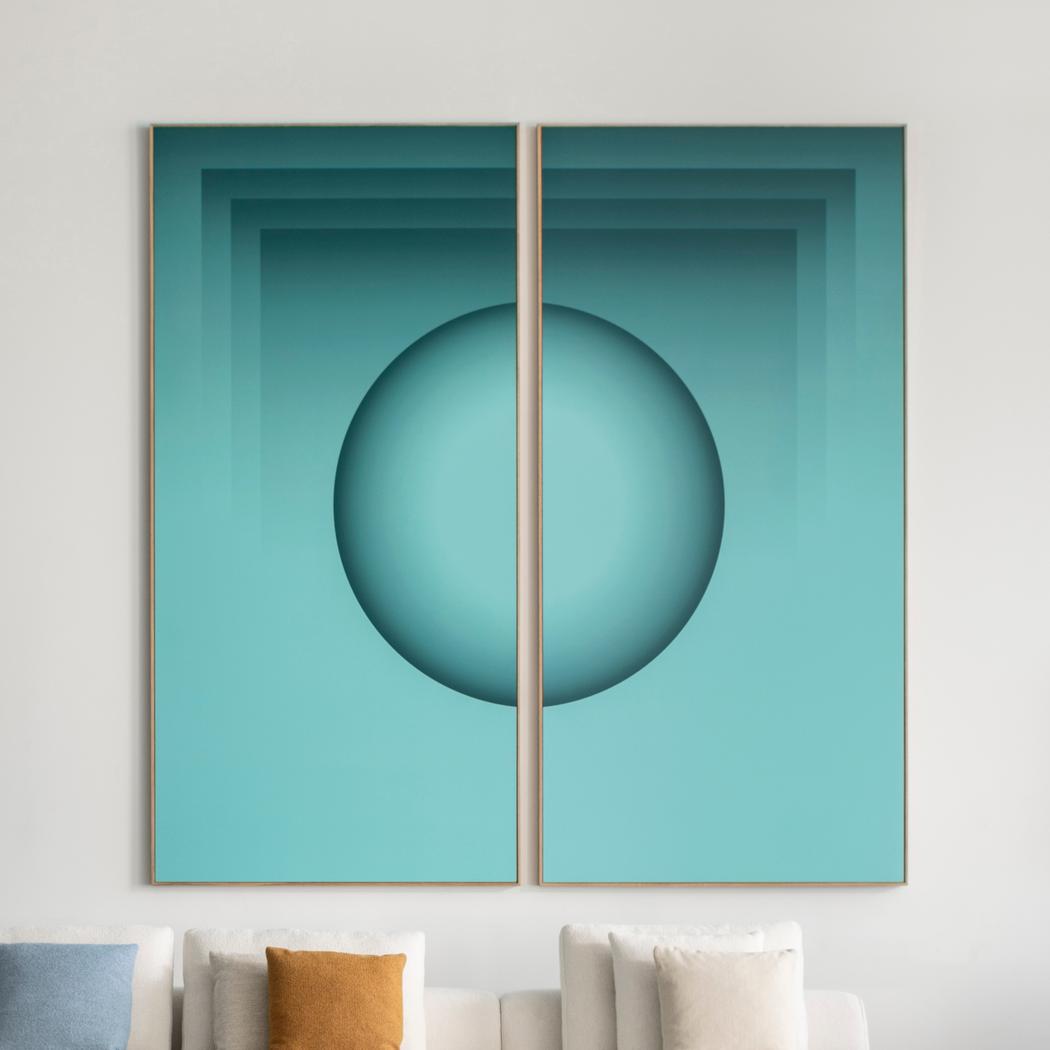 Gil Zablodovsky | Life Is A Circle | 2024
Scale seems particularly important in your practice, with some works taking on an almost architectural presence. How does the physical scale of a work influence the way you want the viewer to experience it?
Scale transforms a viewer from a passive observer into an active participant. When a work scales up to an architectural presence, it commands physical space in a way that mimics low-frequency sound—it surrounds you. Large-scale compositions allow the viewer to step into the visual rhythm, experiencing the artwork not just with their eyes, but spatially and bodily.
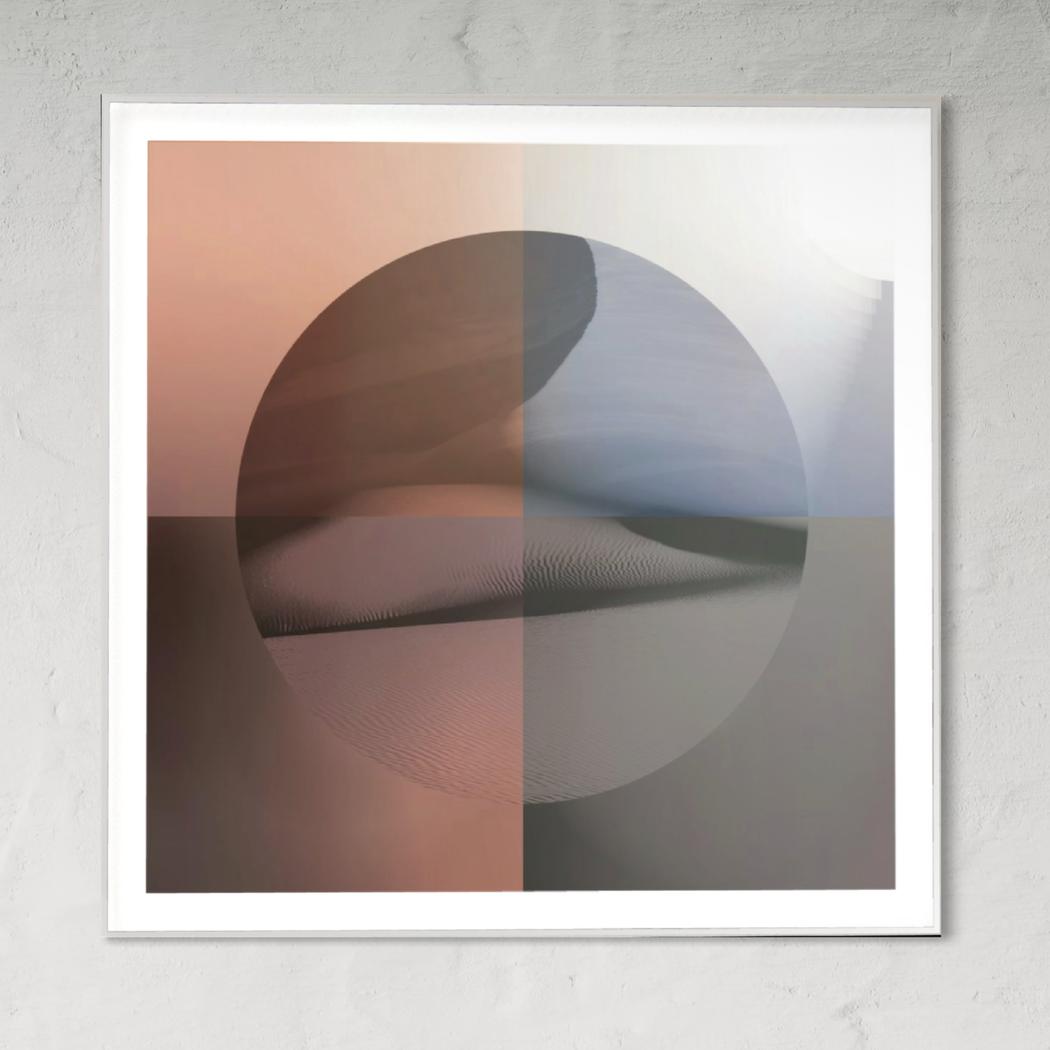 Gil Zablodovsky | Stair Sun | 2025
Your background includes visual communication, integrated design, teaching, and collaborative artistic practice. How have these different disciplines shaped your approach to contemporary art, and where do you draw the boundary between design and art – if you draw one at all?
My background in visual communication and design provides me with a deep structural literacy—an understanding of hierarchy, grid systems, and medium precision. Teaching continuously sharpens my ability to articulate abstract ideas. For me, design is about solving a problem within given constraints, whereas art is about asking questions and opening space for resonance. I don’t see a rigid boundary between them; rather, I use design methodologies as tools to build contemporary artistic experiences.