
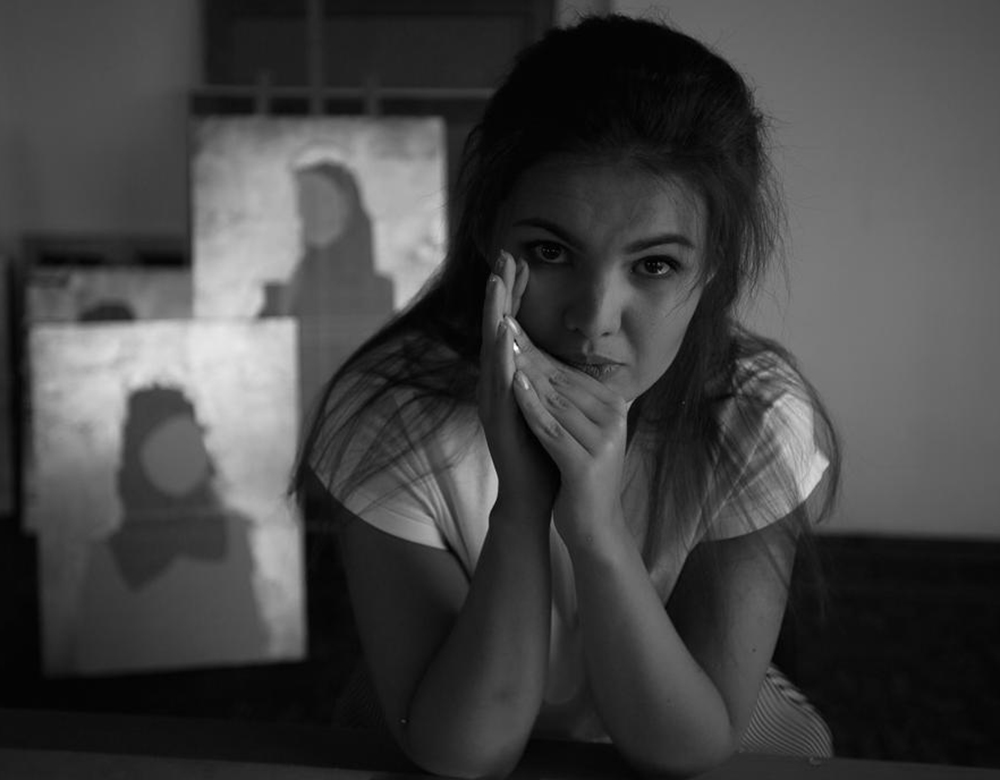
Anastasiia Dobrovolskaia (Asya Dobrovolski)
You were born in Siberia and began your journey with reportage photography. How did the place where you grew up influence your artistic vision and your interest in space, memory, and the human environment?
Tyumen is a meeting point of different cultural layers: the traditions of Indigenous peoples, Russian heritage, and a powerful industrial dimension. From an early age, I began to notice how differently people inhabit the same space, what traces they leave behind, and how these traces accumulate over time. This became the foundation of my interest: to see territory not as something fixed, but as a system of relationships between people, time, and memory.
Siberia shapes a particular way of seeing: vast distances, harsh nature, and a sense of remoteness. You learn to notice fragility in what appears unchanging. Later, when I was extensively involved in documentary photography — from expeditions across Siberia to working for a news agency — this way of seeing only became stronger. Documentary photography taught me to be honest with myself and to approach the people I photographed with deep respect. At the same time, it revealed the limits of the direct image: so much remains invisible — memory, loss, and the way an environment outlives the human presence. Over time, this zone of silence became the central focus of my artistic practice.
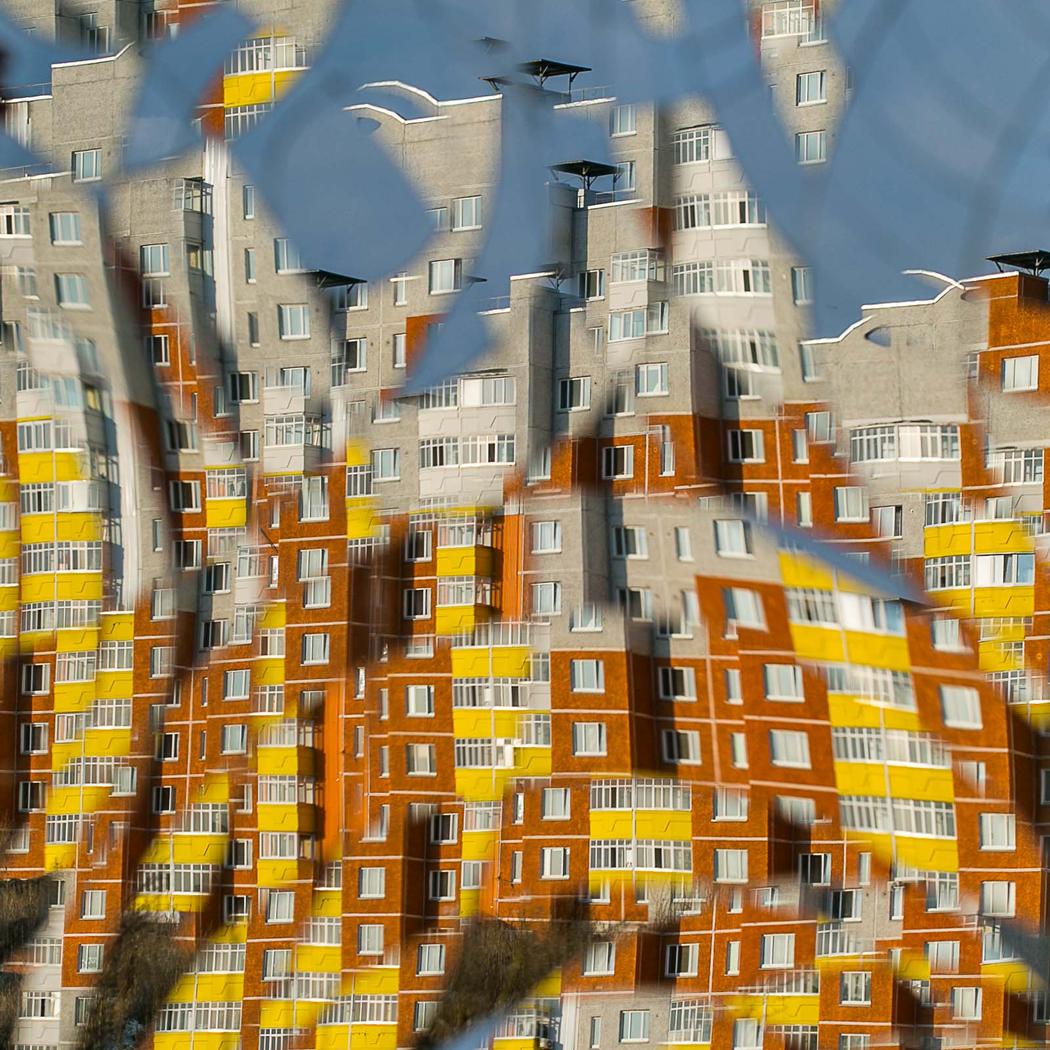 Anastasiia Dobrovolskaia (Asya Dobrovolski) | Archevolution | 2018
Your career began with documenting remote regions and social environments – from the Arctic to Latin America. What has this experience of observing different territories and people brought to your artistic practice today?
Ten years in documentary photography are, above all, a training of the eye. When you work in extremely different conditions — from Arctic expeditions to the slums of Latin America — you quickly learn to distinguish what is external and decorative from what is essential. Territories and cultures may be entirely different, but the fundamental human narratives — attachment, loss, the attempt to take root, to leave a trace — prove to be universal.
This experience gave me a certain visual sensitivity to environment: I began to acutely perceive how space shapes behavior, and, conversely, how people, even in the most inhuman conditions, continue to inhabit and domesticate their surroundings. Today, in my artistic practice, this perspective has not disappeared — it has simply shifted from documentary testimony toward a more metaphorical form of expression. I continue to explore the relationship between human beings and their environment, but my tools have become broader: instead of a direct photographic frame, I now work with mirrors, embroidery, and layers of materials. Yet the fundamental question remains the same: how we leave a trace, and what happens to that trace afterwards.
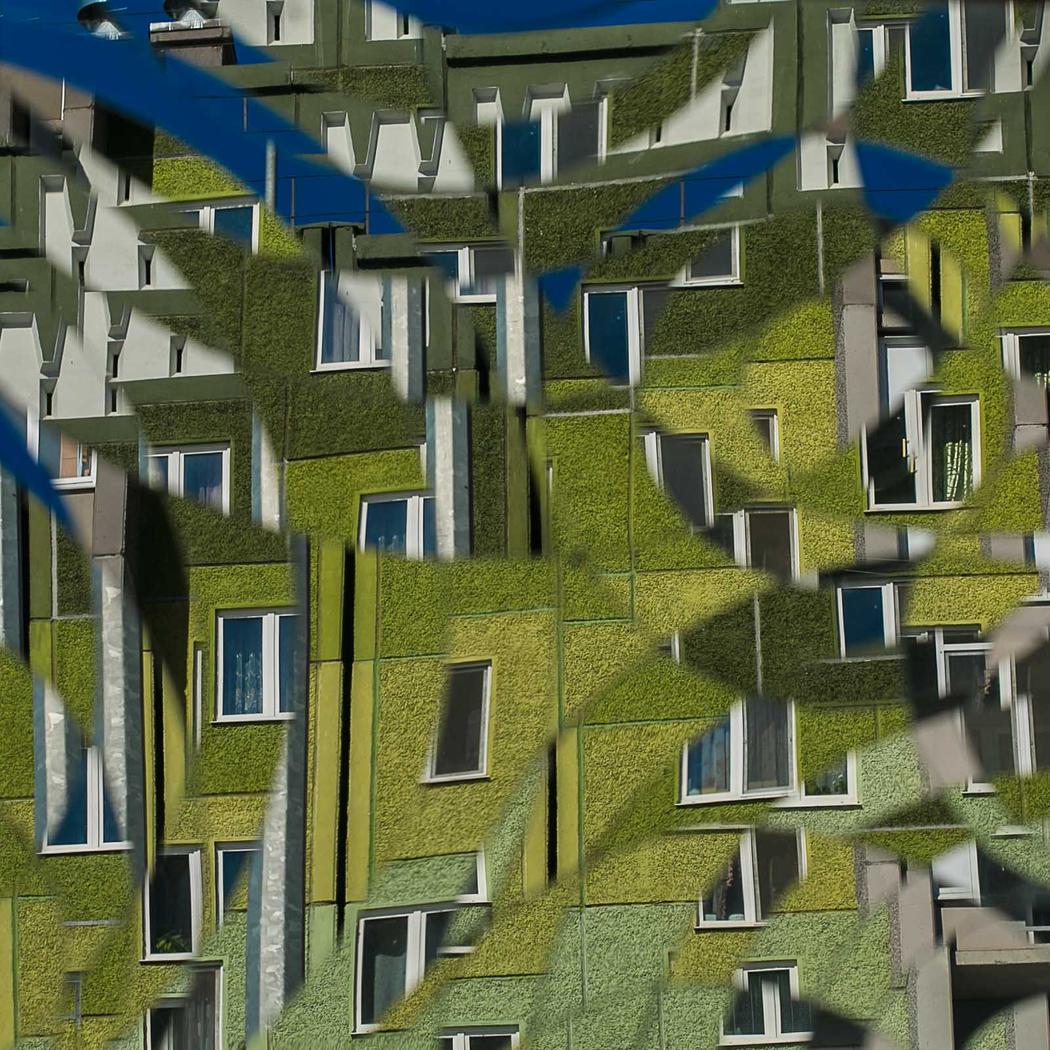 Anastasiia Dobrovolskaia (Asya Dobrovolski) | Archevolution | 2018
At what point did you feel the need to move beyond classical photography and turn to mirrors, embroidery, video, and mixed media?
It was not an instantaneous decision, but rather a gradual one. I had worked in news photography for quite a long time, where an image has to be as precise, unambiguous, and immediately readable as possible. But over time, I came to realize that I was absent from documentary photography. For it to remain honest, it had to be a dry recording of an event, a moment — while I wanted to speak in a different language. By chance, I joined a course in art photography, and at that moment everything changed.
I turned to the mirror because it brings the viewer into the image and does not allow them to remain in the position of an outside observer. Embroidery came as a gesture — slow, tactile, almost meditative. In a sense, it was a return to the very beginning: when I was 12, my work was included in the Russian Museum, and it was a textile piece, hand weaving. So thread and needle are materials with which I have had a long-standing relationship. Video and mixed media appeared later as a logical extension — when a single static layer was no longer enough to convey the complexity of experiencing an environment.
In the project Archevolution, architecture becomes not merely an object of representation, but a reflection of society’s internal processes. What was the first impulse behind creating this series?
Through documentary photography, I traveled extensively across Russia and visited dozens of cities. At some point, I began to notice that the architecture had become almost indistinguishable: you could no longer tell whether you were in a residential district of Moscow, in Chelyabinsk, or in Irkutsk. This total erasure of identity became an alarming signal for me.
The standard high-rise apartment block, already rather impersonal by nature, suddenly began to disguise itself as something bright and colorful — yet behind these façades, the emptiness remained. I was struck by this gap between the exterior and the interior: architecture “changes its clothes” without changing its essence, and in this gesture I see something deeply human, almost neurotic.
Society demands increasingly vivid images, and the buildings of the Soviet and post-Soviet periods obediently respond to this demand. But instead of humanism and genuine care for the environment, what emerges is a kitsch-like mixture of styles and a loss of identity. I wanted to explore architecture not as an urban planning phenomenon, but as a symbol of its time — a mirror in which we see ourselves reflected, often without realizing these metamorphoses.
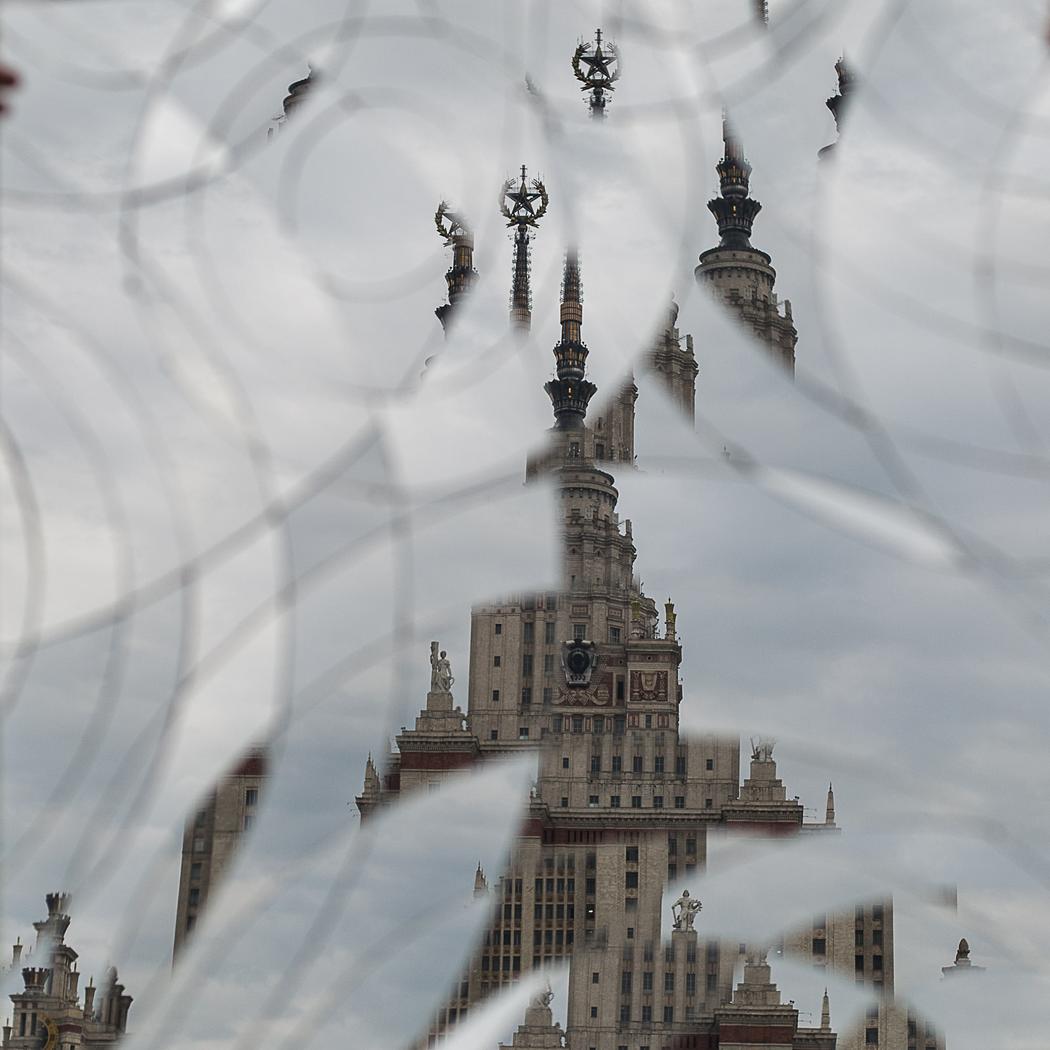 Anastasiia Dobrovolskaia (Asya Dobrovolski) | Archevolution | 2018
The project speaks about depersonalization, the loss of identity, and the “dressing up” of Soviet and post-Soviet architecture in bright facades. What concerns you most about the contemporary urban visual environment?
What concerns me most is the disappearance of authenticity. We live in an era when the urban environment increasingly resembles a stage set: bright, glossy, but lacking depth. I am troubled by the speed at which this transformation is taking place — we do not have time to realize how the kaleidoscope of time places us into an entirely new visual and semantic reality.
Humanism in urbanism is giving way to a kitschy mixture of styles. The old and the new coexist, but not in dialogue; rather, they form a chaotic, heterogeneous mass. Attention becomes scattered among endless colorful houses, and the city ceases to be a place of rootedness — it becomes alien and impersonal. Behind the bright façade, there is often nothing but emptiness, and this emptiness gradually becomes the shared background of our lives. This, perhaps, is what worries me most of all — when the environment stops being an extension of the human and becomes merely a surface with nothing behind it.
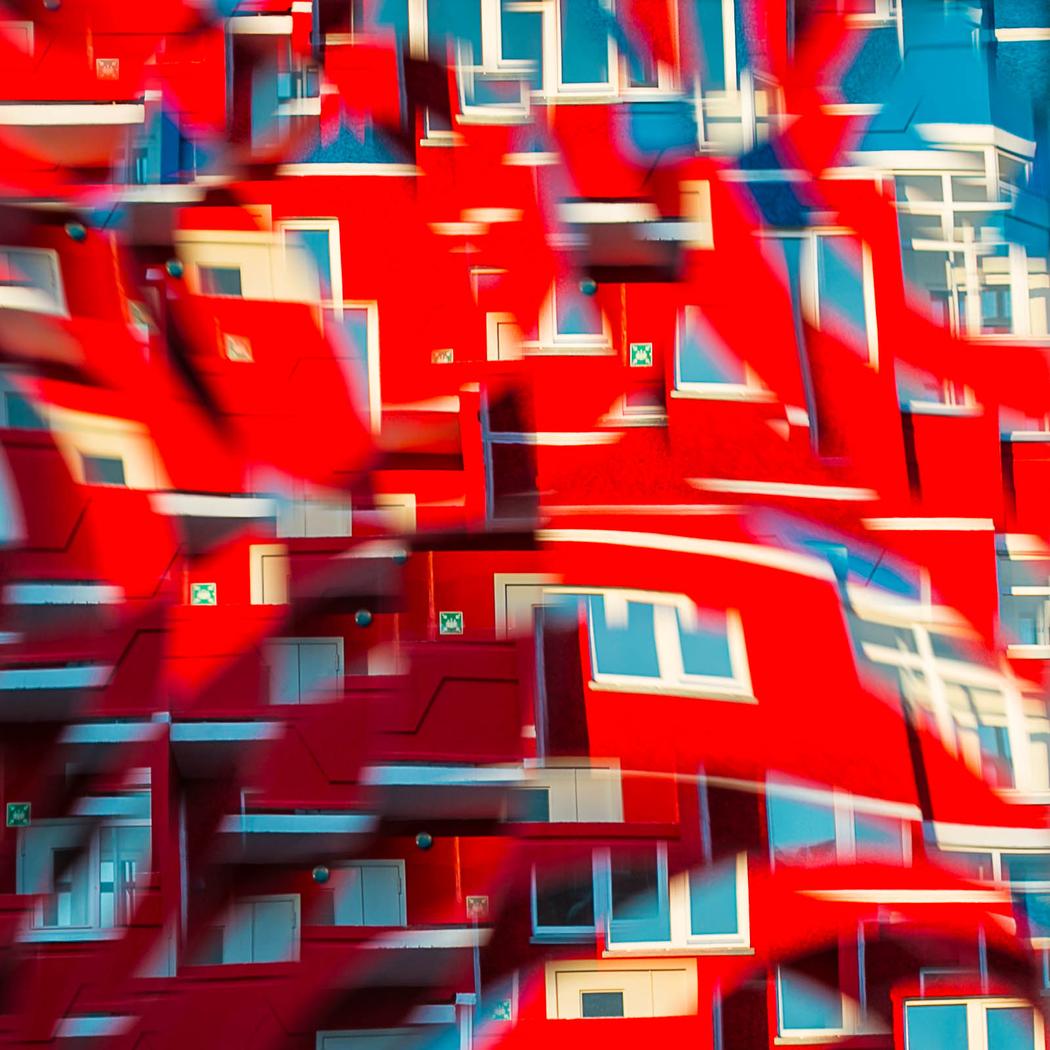 Anastasiia Dobrovolskaia (Asya Dobrovolski) | Archevolution | 2018
Your photographs often create a kaleidoscopic effect, where the city breaks down into color, rhythm, reflection, and surface. How do you build your compositions – intuitively, or through a carefully planned structure?
I tend to trust my intuition, but it is guided by certain inner settings that have developed over years of working with images. The composition often emerges on site — as a response to color, the rhythm of façades, and the play of reflections. I do not follow a rigid plan, but I always know exactly what I am looking for in the environment.
For the Archevolution project, I created my own custom mirror, which became my constant compositional tool. The mirror is made up of different fragments and seems to “assemble” an urban kaleidoscope within itself, creating a frame while still leaving space for improvisation. For me, this effect of a dissolving, fragmented image is not just a visual technique, but a way to convey the very feeling of the contemporary city — fragmented, multilayered, and inviting each viewer to discover something of their own within it.
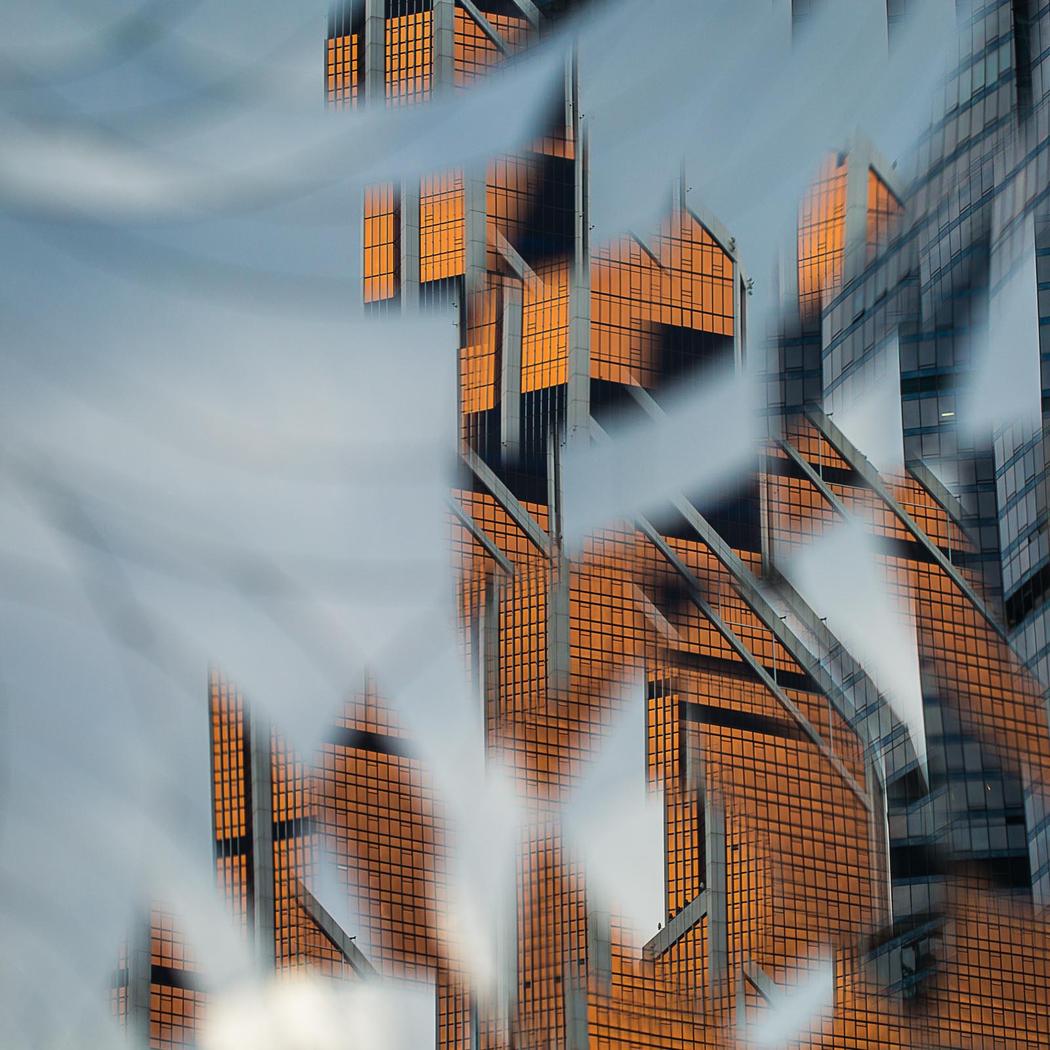 Anastasiia Dobrovolskaia (Asya Dobrovolski) | Archevolution | 2018
If we consider Archevolution as a reflection on the human being within the contemporary city, what would you like the viewer to feel: alienation, recognition, anxiety, beauty, or something else?
I would like the viewer to move through several states. First, recognition: these are familiar residential districts, standardized housing blocks where millions of people live. Then, perhaps, a slight sense of discomfort or anxiety — when, behind the bright façade, one begins to discern the emptiness we spoke about. But the final point to which I hope to lead the viewer is not alienation, but reflection.
It is important that the viewer sees themselves in this architecture. After all, we too often “dress ourselves up,” wear masks, and fear the silence and emptiness within. In this sense, the city is an extension of us, our mirror. And if, at some point, an awareness of this connection emerges, then after the anxiety there may also come beauty — strange, complex, but genuine. Because even in a fragmented, impersonal environment, one can find rhythm, color, and a reflection of one’s own humanity.