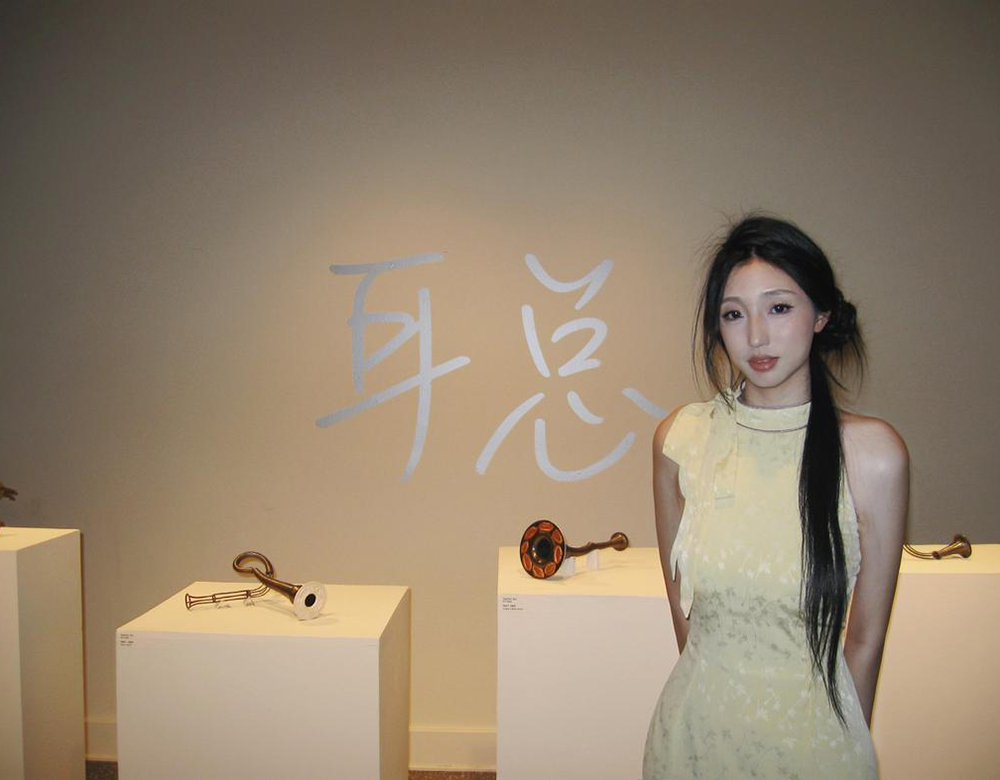
Xiaohan Wu
Your work often begins with the form of the horn. What first drew you to this object as a symbol of sound, voice, and communication?
The horn first caught my attention because it can both project sound outward and receive it, almost like it can speak and listen at the same time. I became interested in it as a form that represents communication rather than just an object. Its shape naturally guides sound, but it also creates distance between people. That duality made me think about how communication is never as simple as sending a message. The horn became a starting point for exploring the relationship between speaking, listening, and misunderstanding.
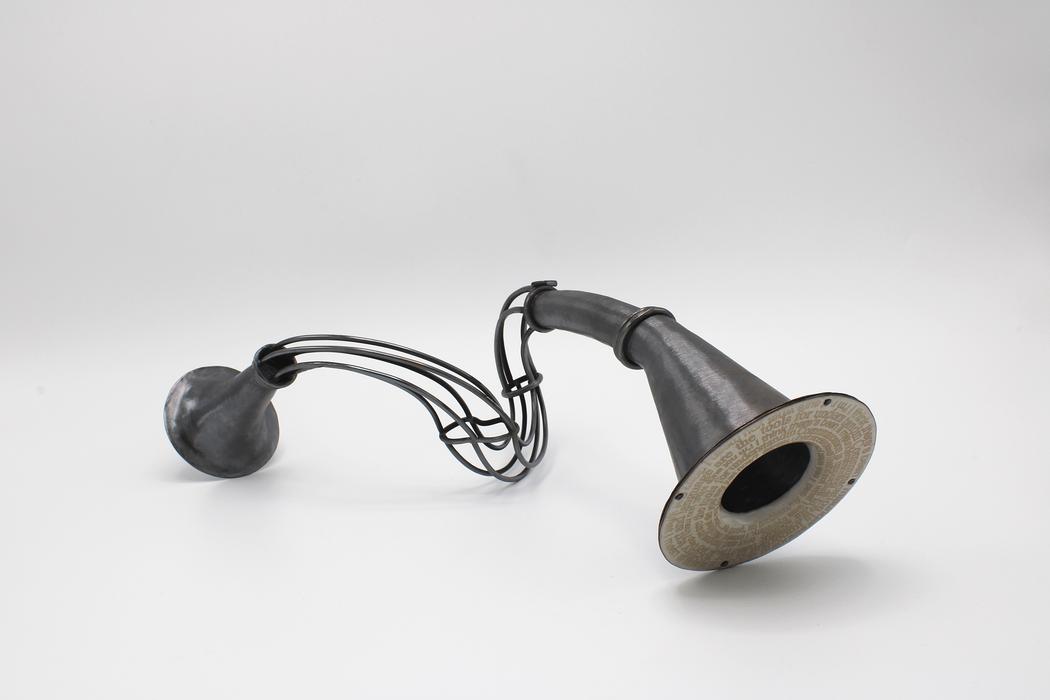 Xiaohan Wu | How Are You Copper | 2025
You describe miscommunication as an important part of your practice. How did your experience of moving between languages and cultures shape this body of work?
Moving from China to the United States made me realize how often communication fails, even when everyone has good intentions. English is not my first language, so I sometimes struggle to express exactly what I mean or worry that people misunderstand me because of my accent or word choices. Over time, I realized that miscommunication isn’t only about language—it also happens because everyone interprets experiences differently. My work comes from those everyday moments where something gets lost, changed, or misunderstood between people.
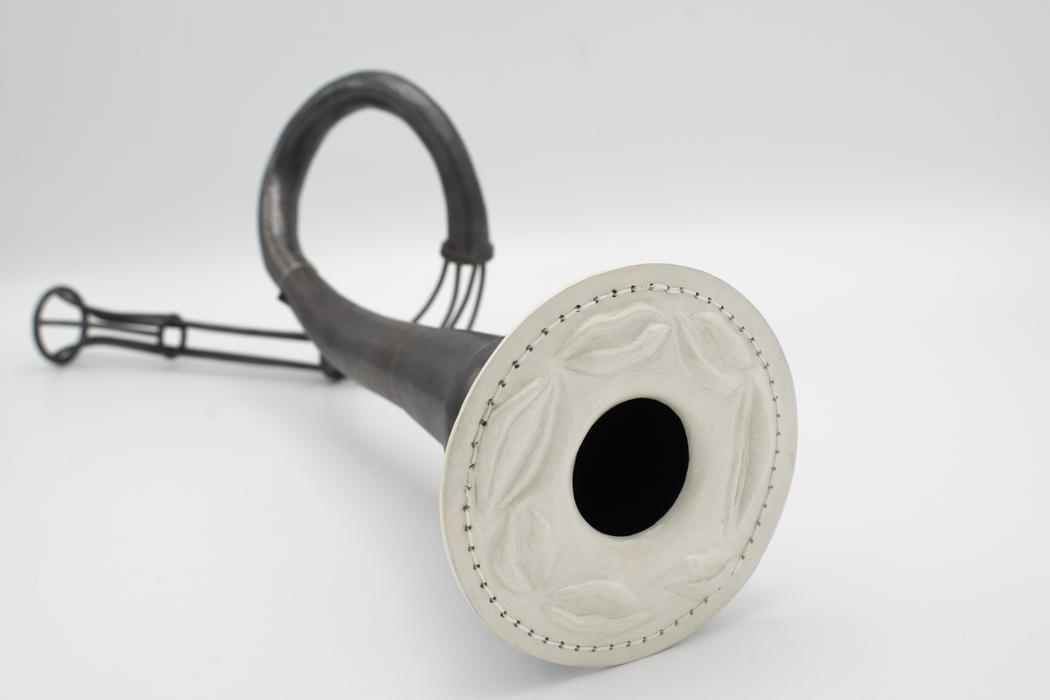
The horn can amplify a voice, but in your work it also seems to distort or interrupt it. How do you think about this tension between speaking and being misunderstood?
I think speaking and being misunderstood are closely connected. We often believe that speaking louder or more clearly will solve communication problems, but that’s not always true. Even when a message is amplified, people may still hear something different based on their own experiences. In my sculptures, the horn sometimes looks like it should help communication, but instead it blocks, redirects, or complicates it. That reflects how communication works in real life.
Many of your pieces feel both functional and symbolic, almost like instruments or vessels. Do you imagine them as objects that could be used, worn, heard, or performed?
I like creating objects that sit somewhere between function and sculpture. Some pieces look wearable or usable, while others only suggest a function without actually performing it. I’m interested in that ambiguity because it invites people to imagine interacting with the work. Even if the objects aren’t meant to be used literally, I hope viewers think about what they would sound like, how they would feel to wear, or what kind of conversation they might create.
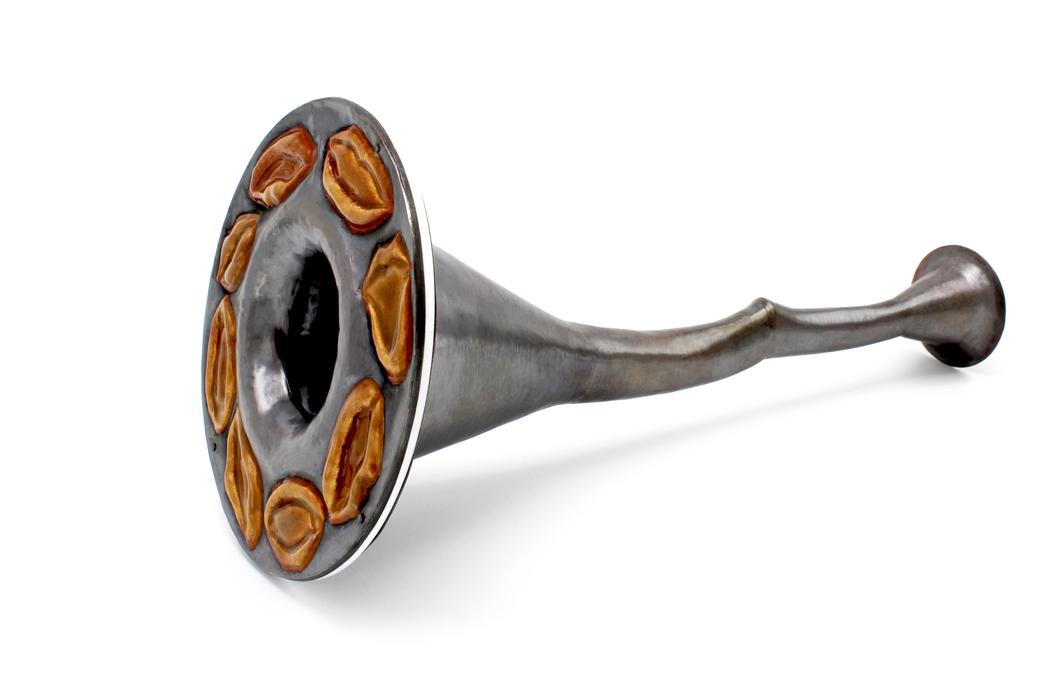
In several works, the opening of the horn resembles a mouth or a place where language begins. What role does the body play in your understanding of sound and speech?
The body is where communication begins. We speak with our mouths, breathe through our lungs, and hear with our ears. I often think about the mouth as both a physical opening and a symbolic place where ideas become language. By combining forms that resemble mouths, ears, and horns, I try to connect the physical act of speaking with the emotional experience of trying to be understood.
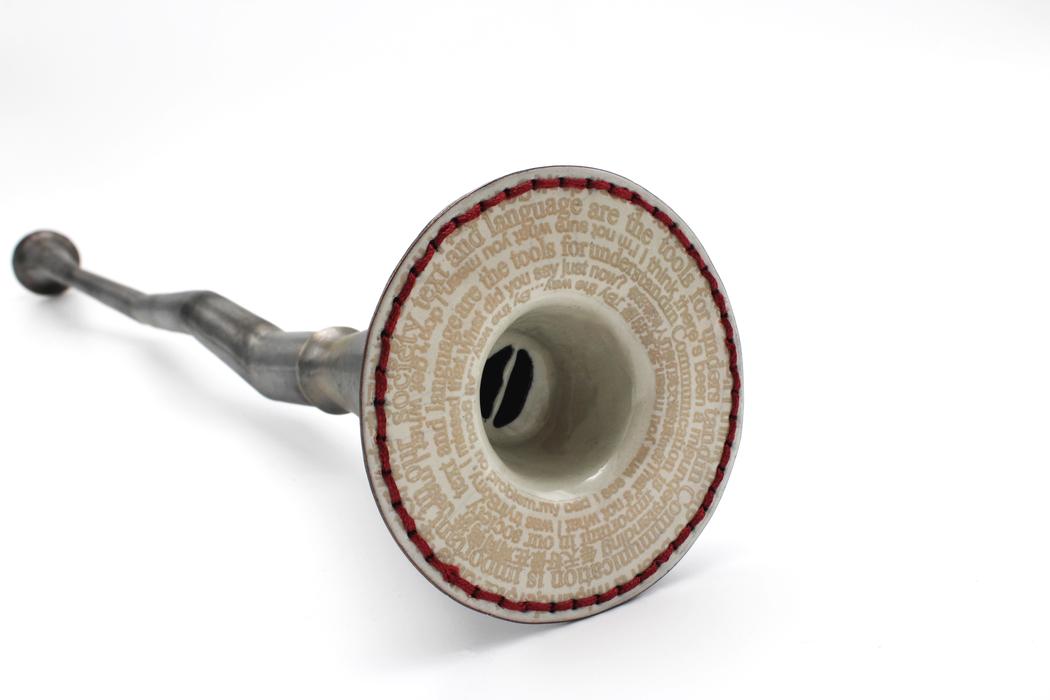
How does your background in metalsmithing and contemporary jewelry influence the scale and intimacy of your work?
My background in metalsmithing and jewelry makes me think carefully about materials, craftsmanship, and the relationship between objects and the body. Even when I make larger sculptures, I still approach them with the same attention to detail that I would give a piece of jewelry. I’m interested in creating work that feels personal and invites close looking. The scale may change, but I always want the work to create an intimate experience between the object and the viewer.
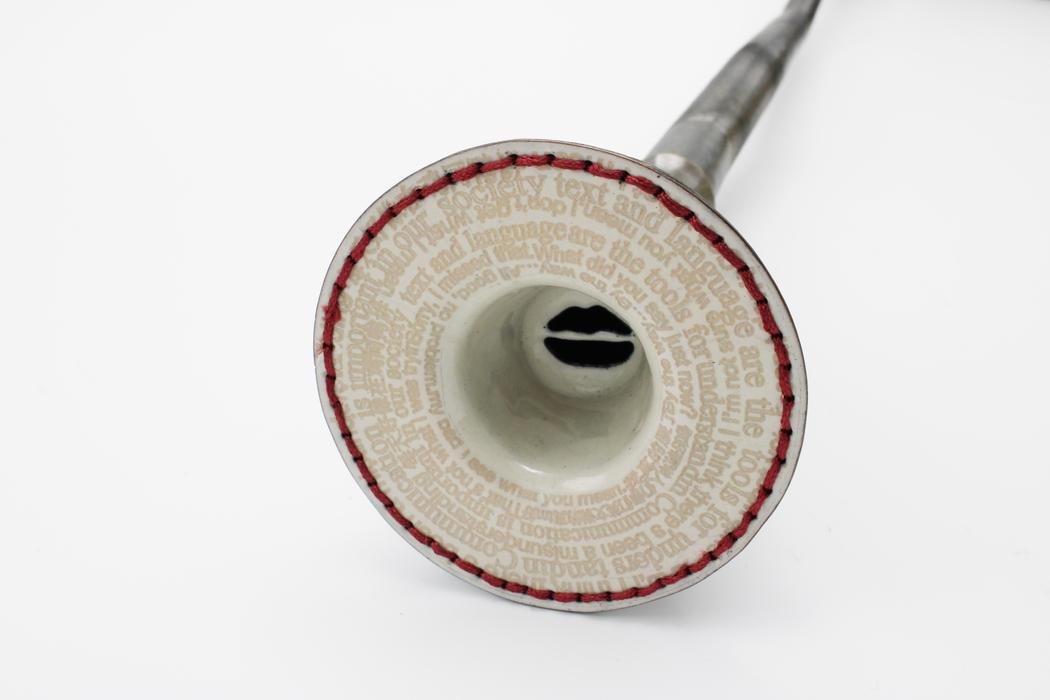
As an artist currently living and working in Chicago, how has your environment influenced the way you think about identity, language, and belonging?
Living in Chicago has introduced me to people from many different cultural and linguistic backgrounds. That diversity reminds me that communication is something everyone continues to navigate, regardless of where they come from. At the same time, building a life here as an immigrant artist has made me think more deeply about identity and belonging. My work has become less about my personal experience alone and more about communication as something universal. Even though we all speak differently and come from different places, we’re all trying to connect with one another.