
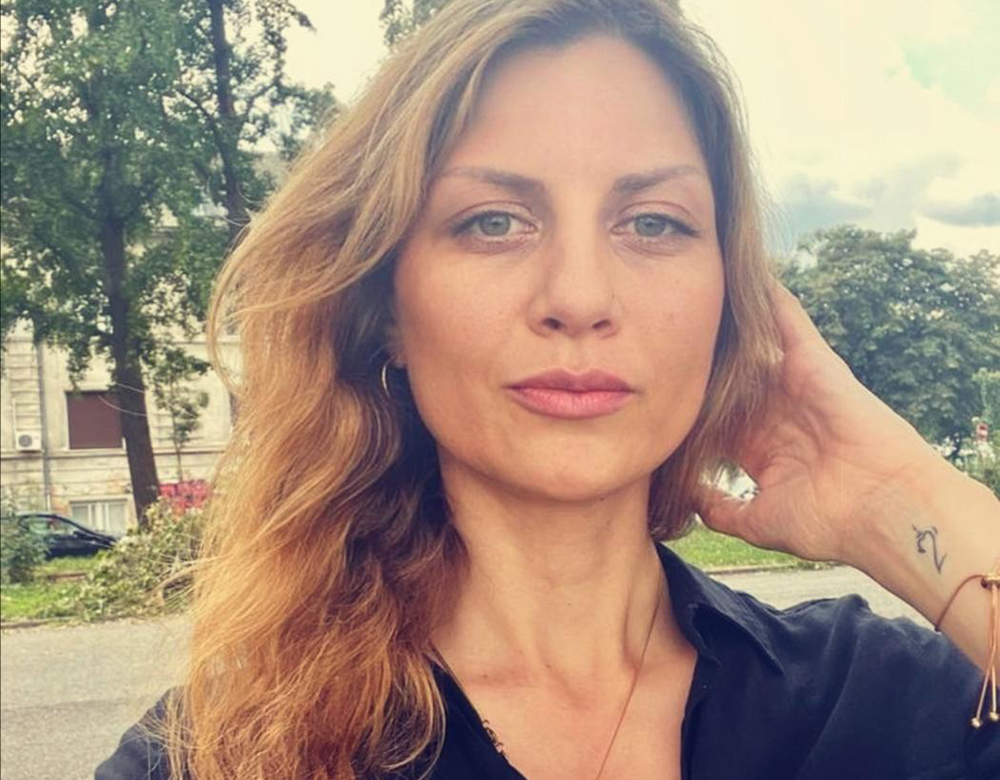
Svetlana Popovic – Lana S
You have an academic background in culture and media. How has this experience influenced your understanding of art and the development of your own artistic language?
My background in Culture and Media taught me to see art not only as an image, but as a language shaped by psychology, history, and cultural context. Later, at the Indonesian Art Institute (ISI) Denpasar in Bali, I developed a practical foundation in painting, fine art, and batik. Together, these perspectives shaped a practice that moves between conceptual inquiry and an intuitive, material-led process.
How did your journey in visual art begin, and at what point did art become the central focus of your professional life?
Visual art has been part of my life since childhood, even while I explored other forms of expression, including performance. The turning point came during my seven years in Bali, where I lived and worked among international artists in a culture where art is woven into daily life. Painting gradually moved from the background to the centre and became my professional practice.
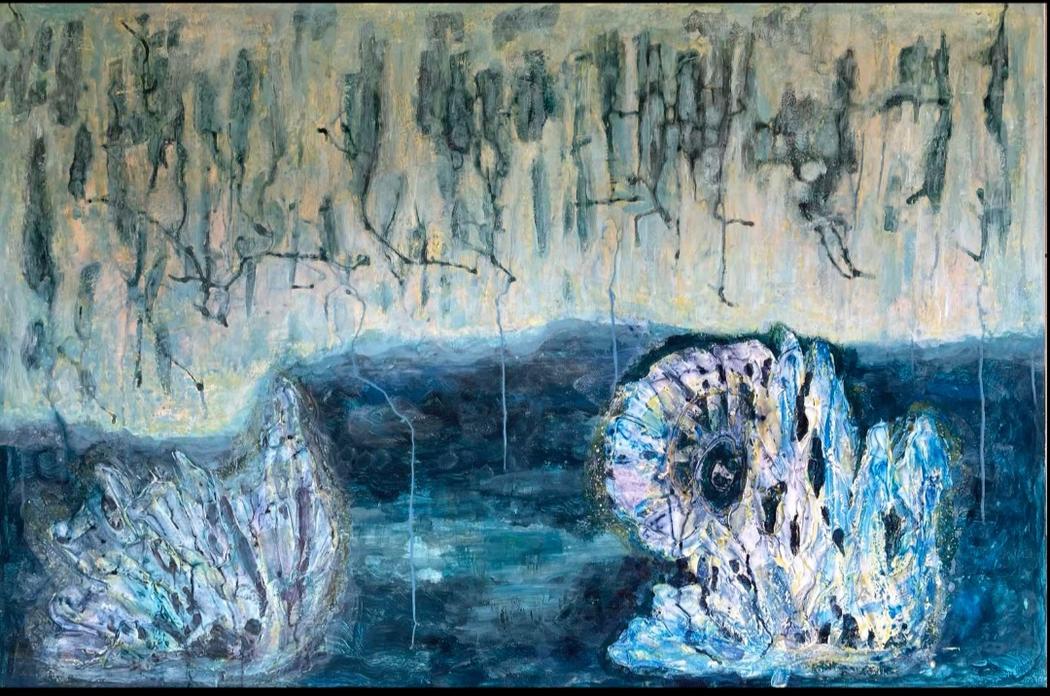 Svetlana Popovic – Lana S | Between Two Breaths
Your work explores memory, transformation, and the hidden layers of reality. How do these themes emerge during the creation of a particular painting?
When I work, I enter a state in which conscious thought recedes. Memory and transformation are not subjects I illustrate, but traces that surface through colour, gesture, and material. I am most interested in the threshold between the rational and the irrational—where something deeply personal can also resonate with the viewer’s own inner transformation.
Your abstract compositions evoke underwater environments, organic forms, and unfamiliar natural structures. How important are water and nature as sources of visual imagery in your work?
Water appears less as a subject than as a symbol of the subconscious, memory, and change. The broader theme of my work is Passages—the invisible transitions between inner states and forms of being. Nature informs this through its rhythms and constant transformation. I leave the imagery open so that the viewer’s first association may reveal something about their own inner world.
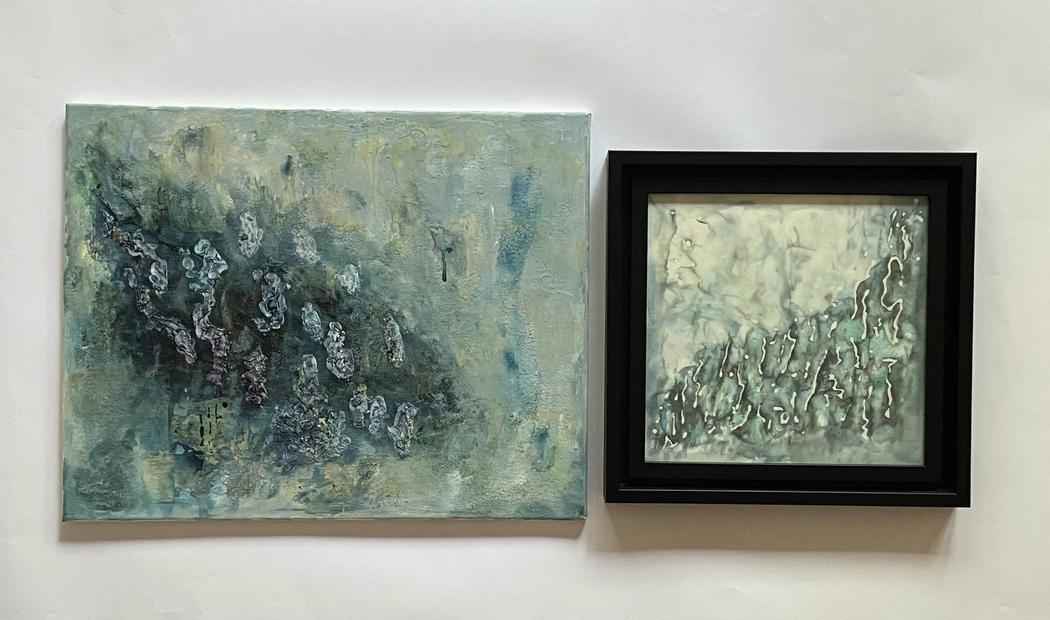 Svetlana Popovic – Lana S | Rain In Battersea
Do you usually begin a work with a specific idea, or do you allow the composition to emerge gradually through the interaction of paint, texture, and gesture?
I begin with a clear idea, but I do not treat it as fixed. As the layers accumulate, the painting develops its own logic through colour, texture, resistance, and chance. At that point, I follow the work rather than impose an outcome; the final composition emerges through this dialogue.
The presented works are characterised by richly textured surfaces and multiple layers.What techniques and materials help you create a sense of depth and movement?
I build my surfaces through successive layers, primarily using hot natural beeswax and texture paste. Yet the method matters more than the materials themselves: I treat matter as the skin and bones of the painting, rather than as decoration. Its density, transparency, and resistance create depth and movement, while other materials enter only when the work calls for them.
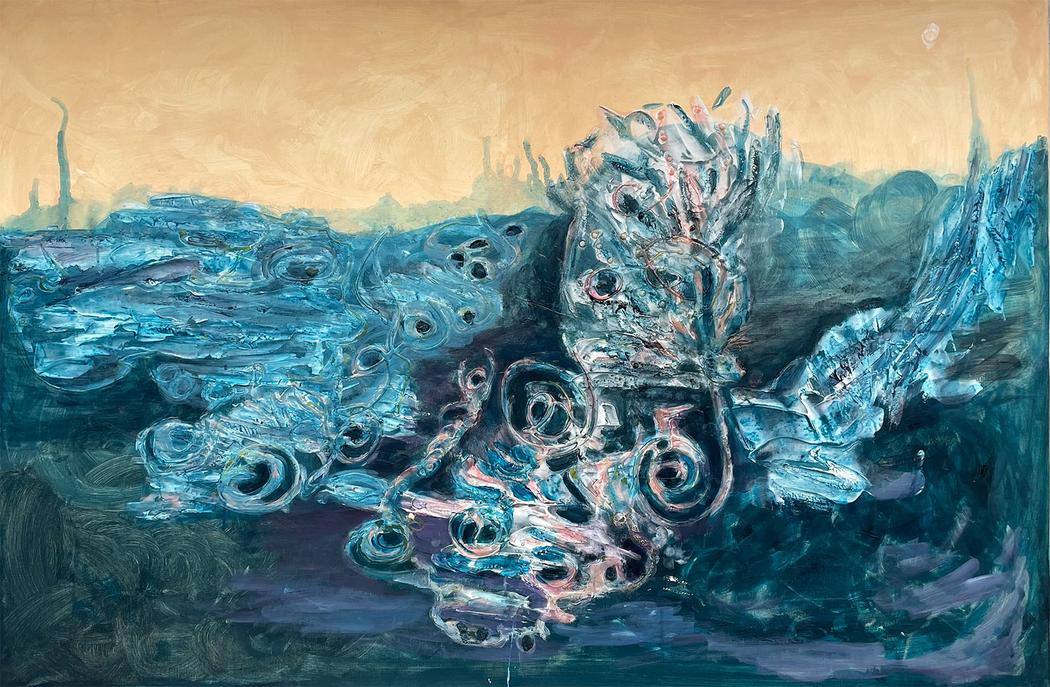 Svetlana Popovic – Lana S | Subsurface
How does working on canvas differ from painting on silk for you? Does your way of thinking change depending on the surface and the intended purpose of the work?
Canvas and silk require different kinds of attention, although the ideas come from the same source. Silk is fluid, delicate, and allows little hesitation, so I work quickly and intuitively, following its movement. Canvas offers resistance and time: I can revise, build layers, and shape the surface gradually. The tempo changes, but the visual language and emotional source remain the same.