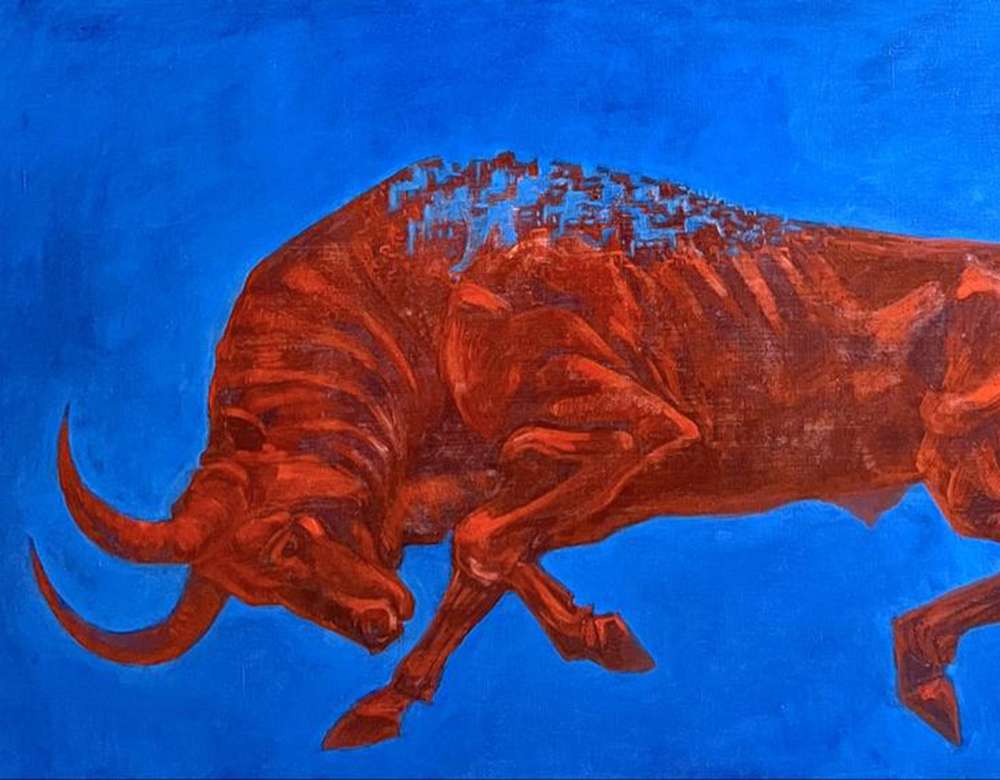
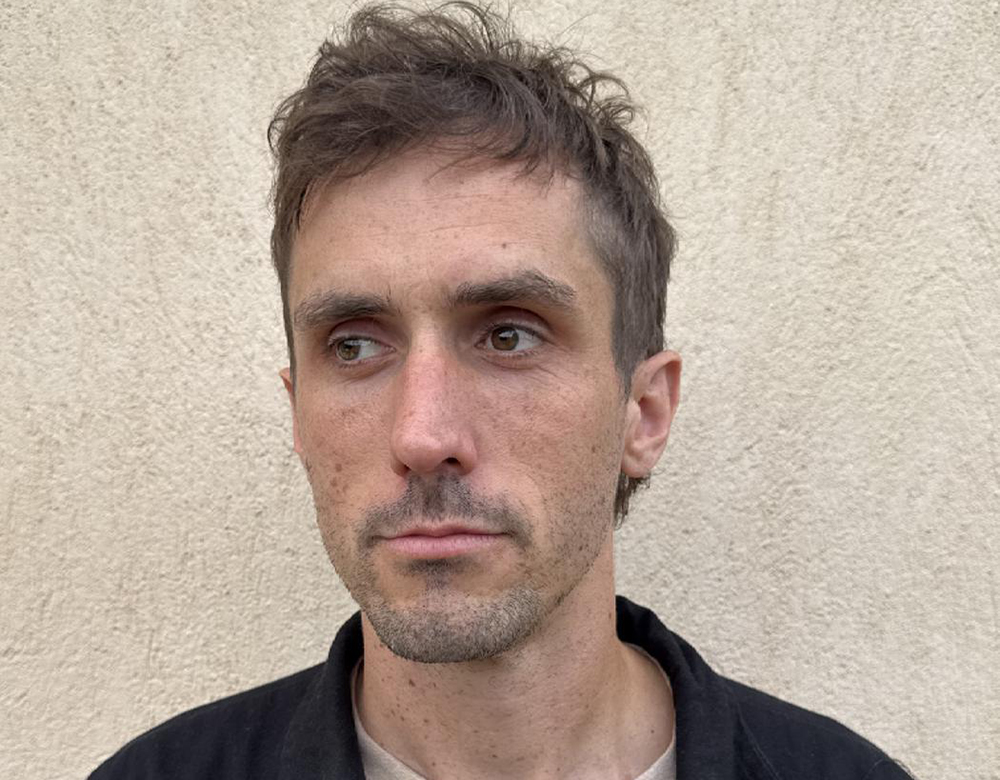
Alex Mullen
You have lived and worked in Adelaide, London, rural South Australia, and now Provence. How has moving between such different environments shaped the way you understand place and your own identity as an artist?
I didn’t consciously set out to make work about place, but looking back it has always been central to my practice. Growing up in Adelaide, it was something I took for granted. It was only after moving to London that I realised how much my own sense of self had been shaped by where I was raised. Living in England connected me to my family history, but it also made me realise how Australian I am.
Later, moving to Webb Beach, a small fishing town on the Adelaide Plains, was another kind of contrast. After London, the flatness and isolation felt strangely liberating: there were only a handful of permanent residents, no shops, and the tide could recede so far that the water disappeared from view. I had spent time there as a child, so there was also a sense of returning to something familiar, but experiencing it as an adult and with my partner gave me a different perspective. She grew up in Provence, and seeing Australia through her eyes made me more aware of things I had previously taken for granted. Now, living in Provence, I find myself experiencing her landscape in a similar way.
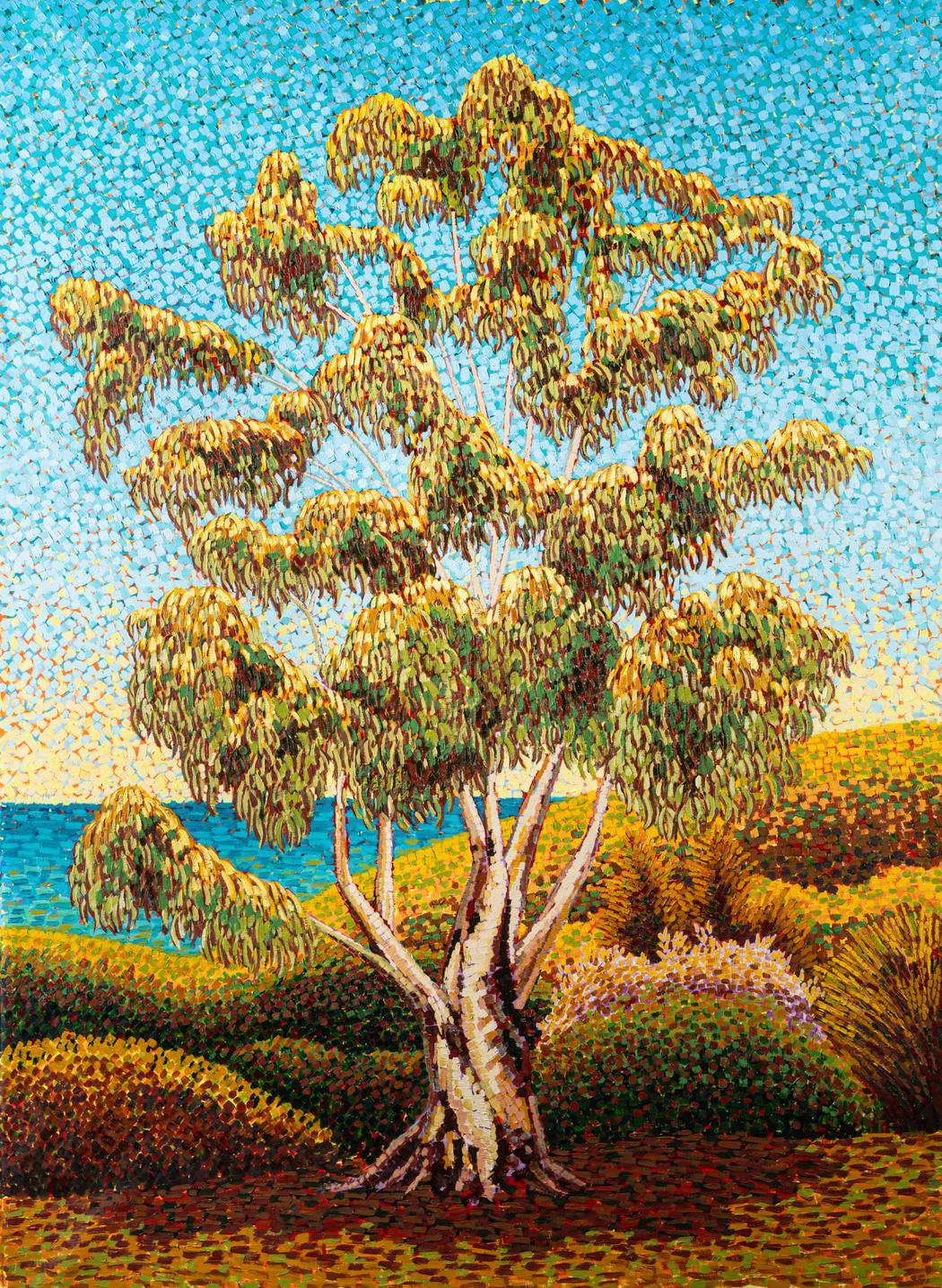 Alex Mullen | John (Oil) | 2025
What originally drew you to art, and when did you begin to see painting as the primary way to express your experiences and ideas?
As a kid I was always drawing and art was my favourite subject at school, but for whatever reason I never considered it something I could pursue seriously. I ended up studying psychology at university instead, probably because I had a great teacher in high school. By the start of my second year I knew it wasn’t what I wanted to be doing. I remember telling a friend during a lecture that I was going to quit but had no idea what to do instead. She looked at my notebook, pointed to the drawings covering the pages, and said, “All you ever do in lectures is draw. Maybe you should be doing that.”
I went on to study graphic design, thinking it was a practical choice. While I enjoyed the course, I realised I was spending a lot more time on the computer than I was drawing. That led me to Adelaide Central School of Art, where drawing formed the foundation of everything we did. As soon as I picked up oil paint, I knew I’d found the medium I wanted to dedicate myself to.
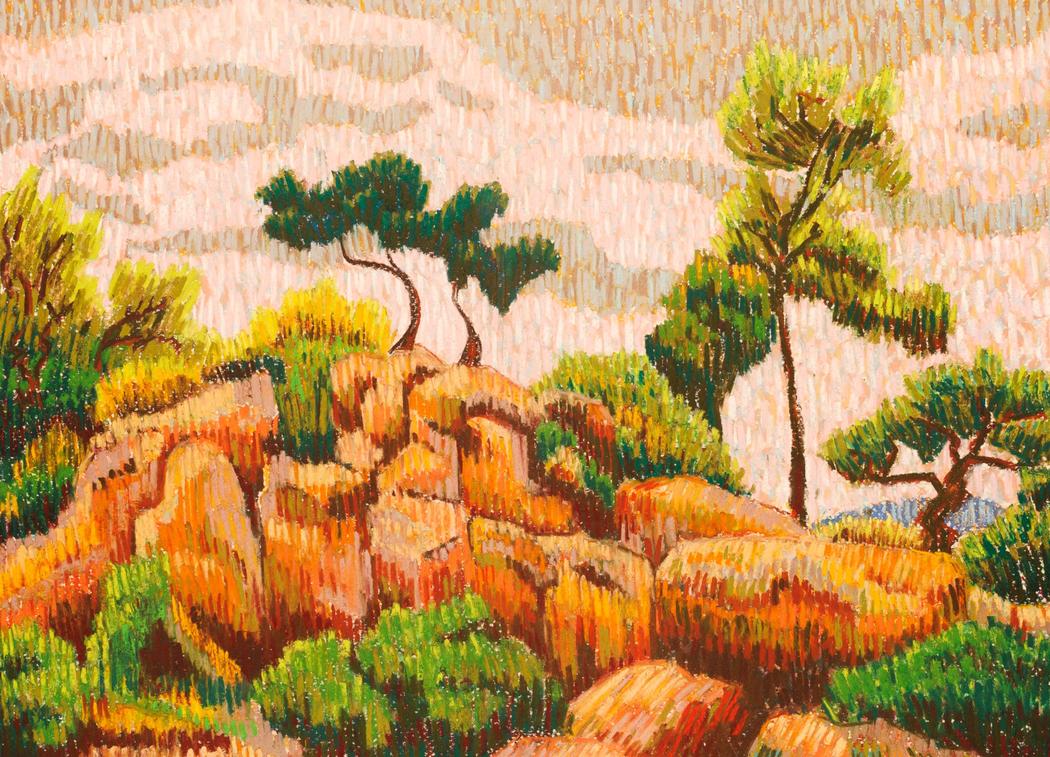 Alex Mullen | Courtney (Pastel) | 2025
Since moving to southern France, landscape has become increasingly central to your practice. What was it about Provence that changed or redirected the way you work?
Everywhere I look in Provence feels as though it could be a painting. That’s partly the landscape itself, but also the legacy of artists who have worked here before. Arriving in a place so closely associated with the history of painting was both exciting and intimidating.
When I first moved here I continued making work that was closer to my earlier practice, but it gradually began to feel contrived. At the same time, becoming a father shifted my perspective. My life suddenly felt bigger than just myself. The work I had been making had a darker edge to it, and although I didn’t necessarily change my view of the world, landscape offered a different sense of scale. The darker and more difficult things in our lives are temporary; the world continues beyond us. That idea has become increasingly present in the way I think about landscape.
Your recent landscapes are built from dense, rhythmic marks and vivid colour rather than conventional naturalistic description. How did this distinctive visual language develop?
Drawing has always been the foundation of my practice, and I tend to paint in much the same way that I draw. In my recent landscapes, the mark-making is quite literally a translation from the coloured pencil and pastel drawings that come before the paintings.
In previous bodies of work, I often combined different styles within a single painting, and I found that I sometimes had a tendency to overwork them. I wanted to develop a more consistent visual language, both for the qualities it could bring to the work and because I felt that a more defined way of painting would help me avoid overworking the surface. I’ve always felt that an understanding of colour is one of my strengths, and working with broken marks gives me the freedom to play with it more intuitively.
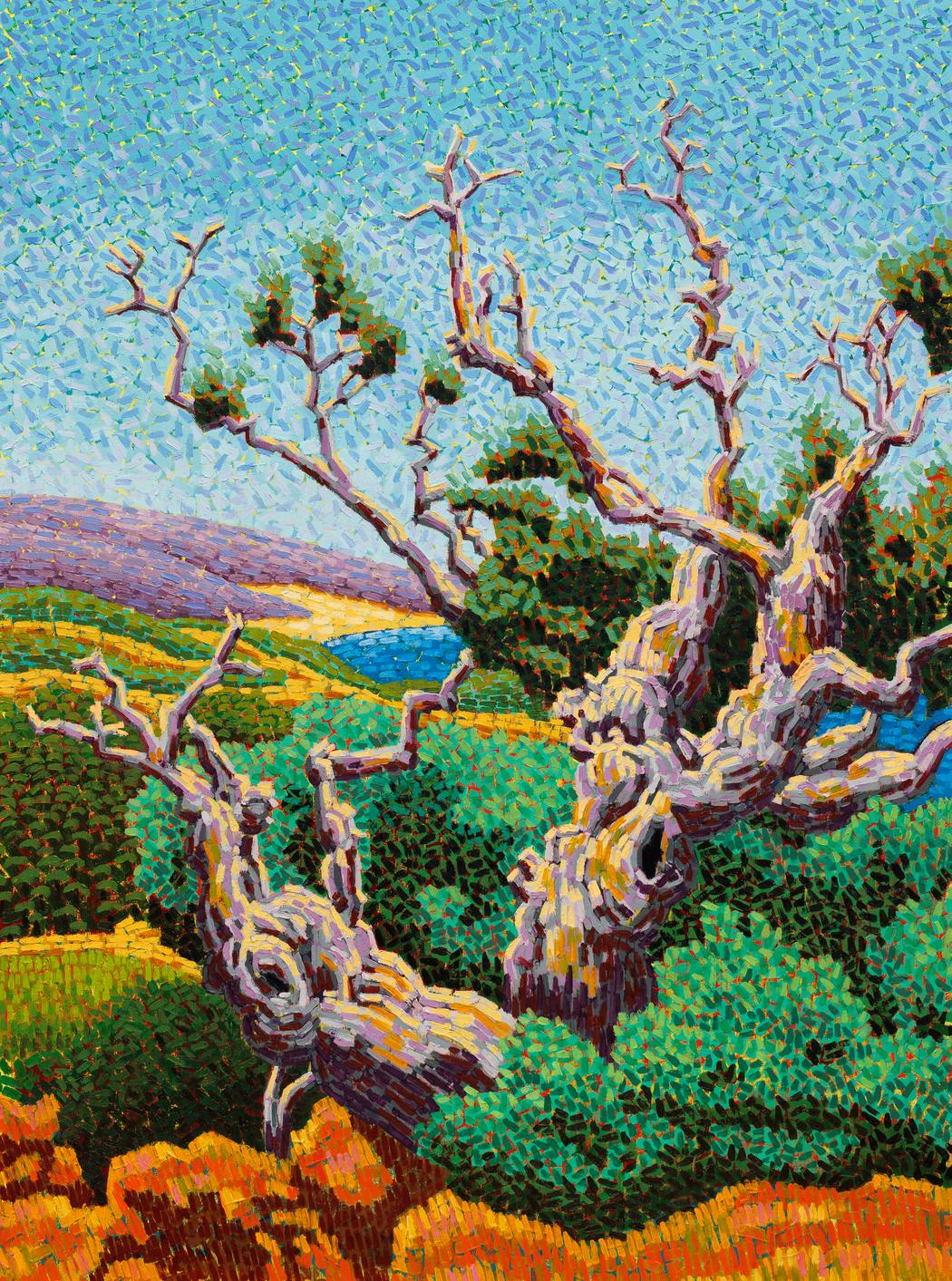 Alex Mullen | Andy (Oil) | 2025
Trees, rocks, hills, and vegetation often become almost individual characters in your paintings. What attracts you to these particular natural forms, and how do you decide which landscapes are worth translating into a work?
That has generally been the case with my work. Whether it’s a tree, a rock, a book on a shelf or a park bench, I tend to paint things in a way that gives them a sense of energy or life. I think this comes partly from an interest in ideas around consciousness and animism, and the possibility of seeing the world as being more alive than one might generally assume.
There is also something more simple behind it: a desire to pay attention to the things we normally overlook. Sometimes I’m simply struck by something. One of my paintings depicts a tree I passed every day on my way to work. When it came into blossom one spring, I felt I had to paint it. At other times, the decision is more pragmatic: I’m looking for the possibility of a strong composition and considering how the different elements relate to one another. I think this way of looking at things probably contributes to them taking on a sense of character. Sometimes a particular tree, rock or other natural form becomes the anchor of a composition, and the rest of the landscape is built around it.
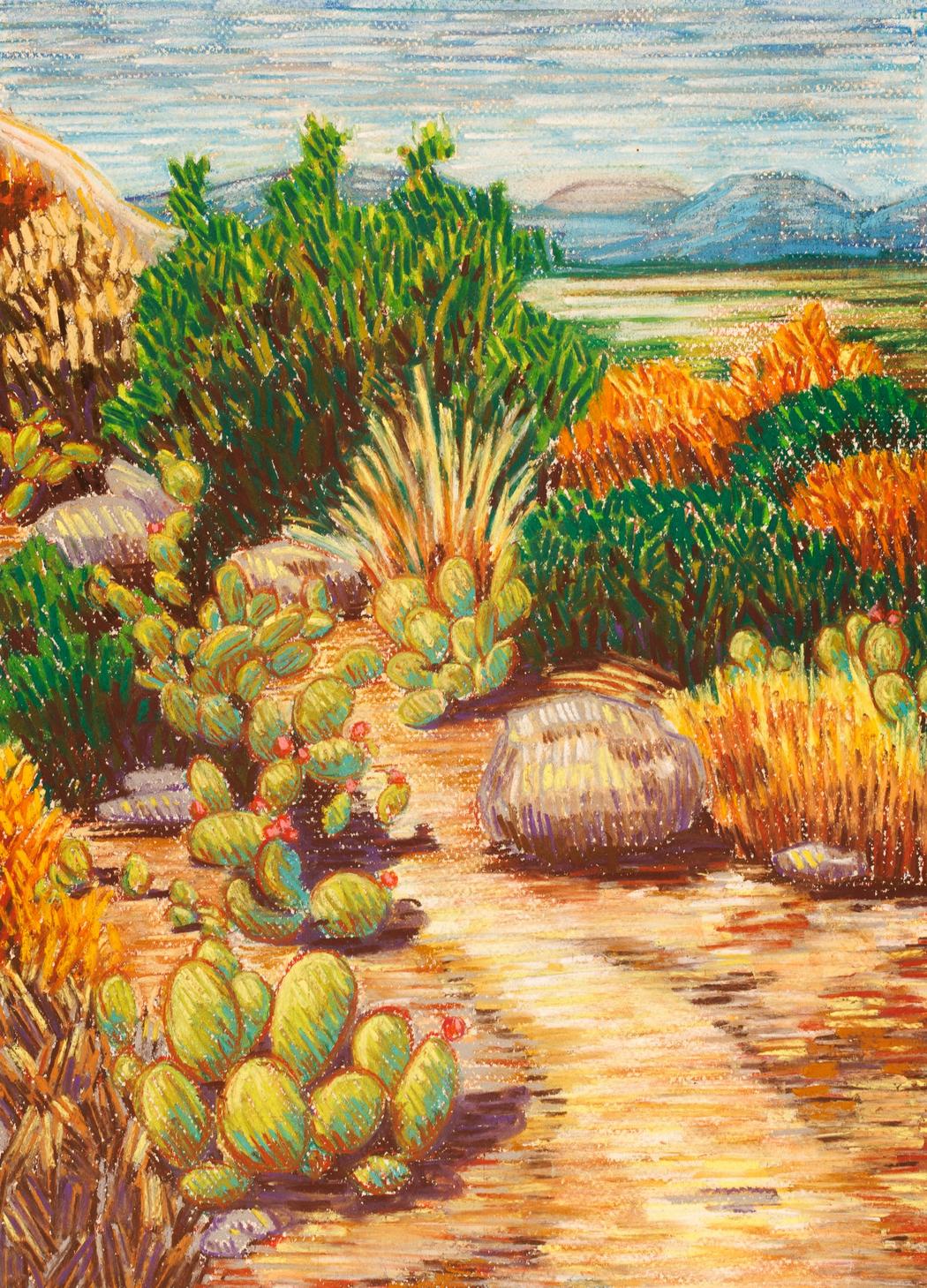 Alex Mullen | Shola (Pastel) | 2025
You have mentioned that you are interested in “recognition” rather than “truth” in art. What does recognition mean to you, and what kind of response do you hope occurs when someone encounters your work?
For me, painting isn’t about explaining an idea or faithfully describing a place. It’s about creating the conditions for an emotional response that connects us to something we perhaps already know but might not be able to put into words.
A painting by William Mackinnon or Alice Neel, for example, can trigger an emotional response because they have captured something of the human experience that I recognise, even if I can’t necessarily articulate what it is. There’s a comfort in that, even if the feeling is uncomfortable. That is the kind of response I hope to create with my own work. The only problem is that I can never really know if I’ve been successful.
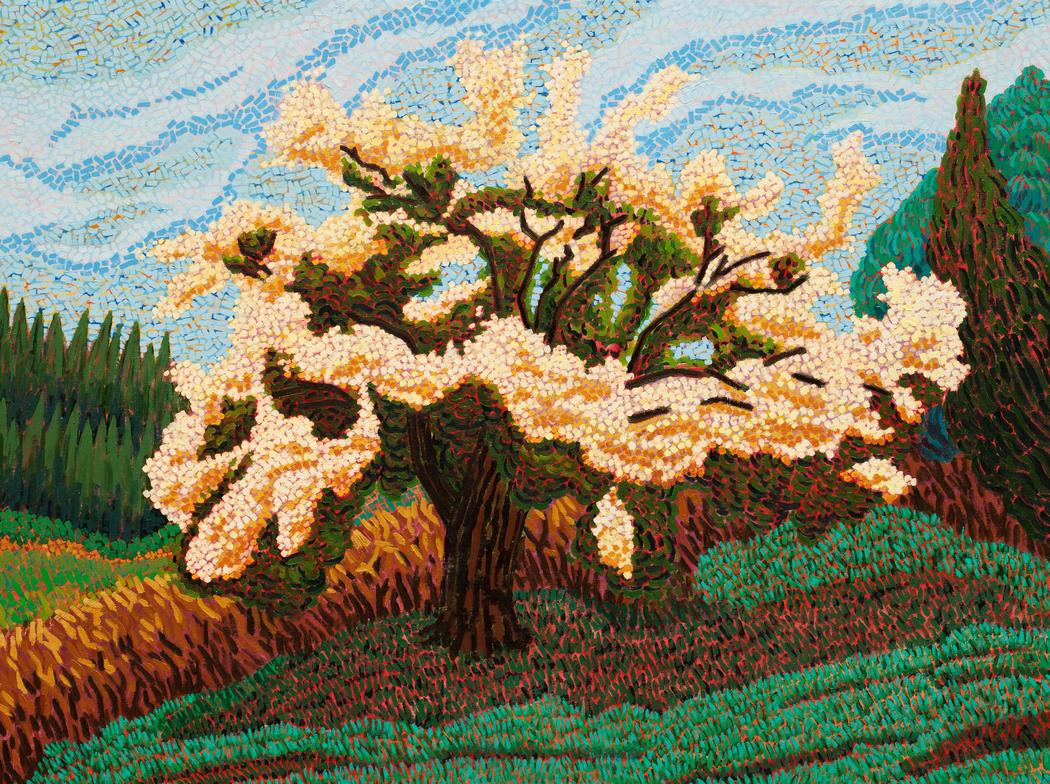 Alex Mullen | Steve (Oil) | 2024
As your work continues to evolve in France, what are you currently exploring that feels new or unresolved, and where do you see your practice moving next?
The works featured here are part of Goat Country, a two-part exhibition, the second part of which will be exhibited in Draguignan, Provence, in October this year. Once I finish those paintings, I have some ideas that are more historical and narrative-based that I’d like to explore in greater depth.
I’d also like to continue painting landscapes. There’s a well of possibilities to explore there, whether through different colour palettes or trying to show further restraint when working the canvas. I think there’s still a lot of room to develop my technique.