
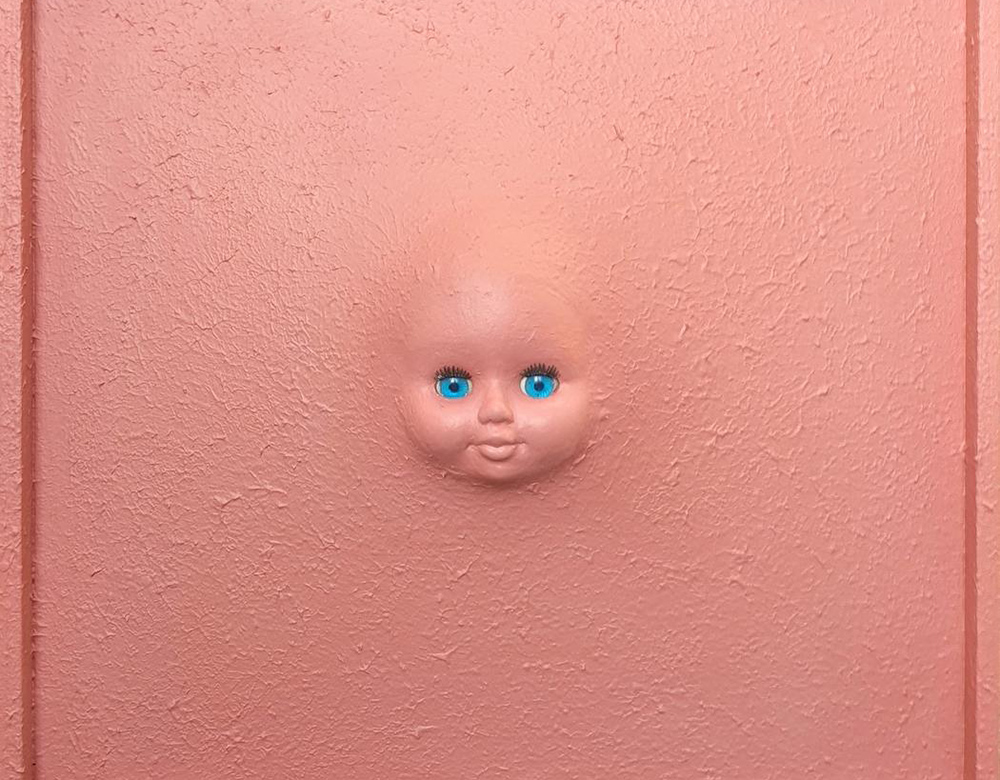
Vladislav Aksyonov
Your mother played an important role in developing your creative skills. How do you remember that first support, and how did it shape your path as an artist?
From my biography, it is clear that my mother was the person who first guided me towards a creative path. She enrolled me in a children’s school of applied arts, where I was introduced to various forms of creative expression. Applied art involves working with a wide range of materials, and this may be why my current artistic practice incorporates such diverse materials—from fabric and clothing to artificial stone and children’s dolls.
Before becoming a contemporary artist, you founded a fashion house and worked with clothing collections. How does your experience in fashion continue to influence your artistic practice today?
For a long time, running a fashion house was my primary occupation. However, after spending many years in the industry, I gradually became disillusioned with it. Through my work, I came to realize that I had grown tired of the artificiality of the glossy fashion world. I felt constrained by the boundaries of the fashion industry and decided to move into contemporary art, where I could bring my boldest and most provocative ideas to life through art objects.
I have developed an entire project entitled Art in Fashion — The End of Fashion. Using my couture collection transformed into works of art, I create a metaphorical farewell and funeral ritual for my creative practice in fashion, allowing me to be reborn as an artist.
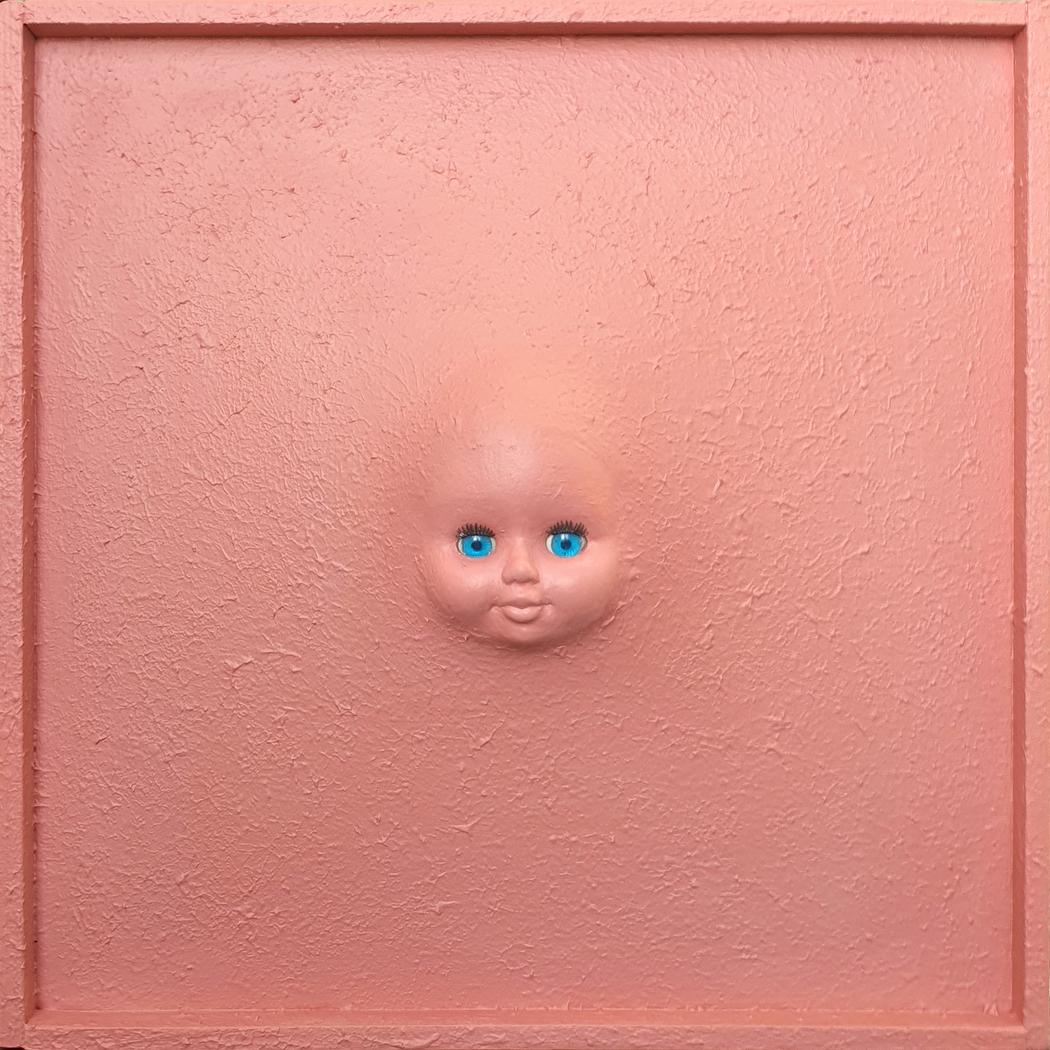 Vladislav Aksyonov | I Am No Longer A Toy | 2024
You have also opened a residence for young artists. Why was it important for you to create a space for other creative people?
I founded the residency in 2007, at a time when I had not yet imagined becoming an artist in the traditional sense. To be honest, supporting young artists and helping them realize their creative potential was quite fashionable within St. Petersburg’s bohemian circles at the time. That was exactly what I decided to do.
Today, I am deeply grateful for that experience. The artist Nadezhda Kosinskaya, a former resident of my program, became well known many years later, and I still own some of her early works, which is a great source of joy for me.
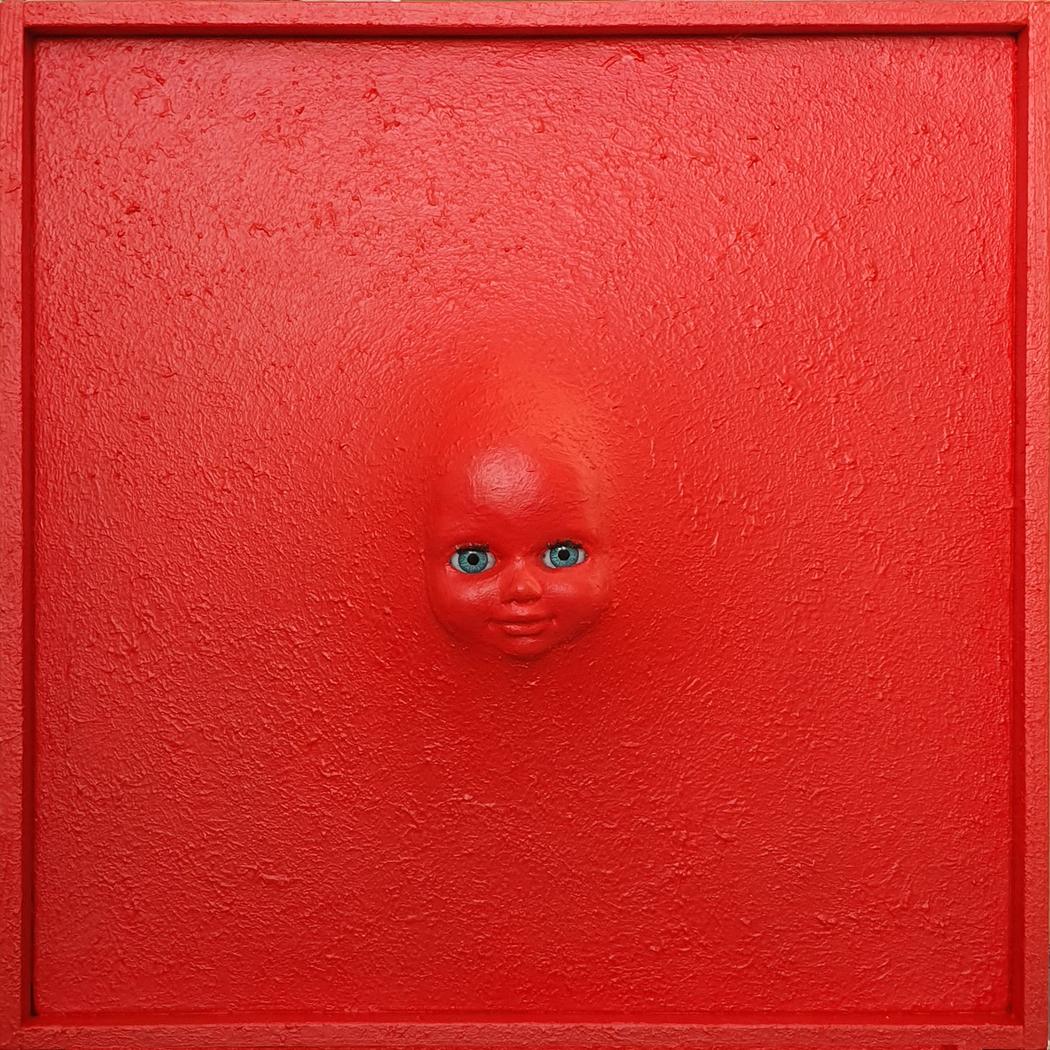 Vladislav Aksyonov | I Am No Longer A Toy | 2024
Your biography mentions psychology and personal transformation as important parts of your artistic development. How did this inner work help you find a new artistic language?
Above all, every person is driven by the desire to understand themselves. We all undergo a process of transformation in which we learn to recognise, understand, and accept the parts of ourselves that are judged or considered shameful by society at large. This is an important stage of life, when we begin to open up to ourselves.
All artistic expression is filtered through the artist’s personality. The works of mine that most clearly reflect this approach are My Muse and Fear of Public Speaking. My Muse emerged from my feelings of envy towards other successful artists. In this work, I attempt to accept that envy and transform it into a source of inspiration. Fear of Public Speaking, meanwhile, becomes both a form of public expression and an acknowledgement of my phobia of speaking in front of an audience.
This approach has allowed me to use psychology in my art both as a form of personal therapy and as a relevant subject of research within the field of contemporary art.
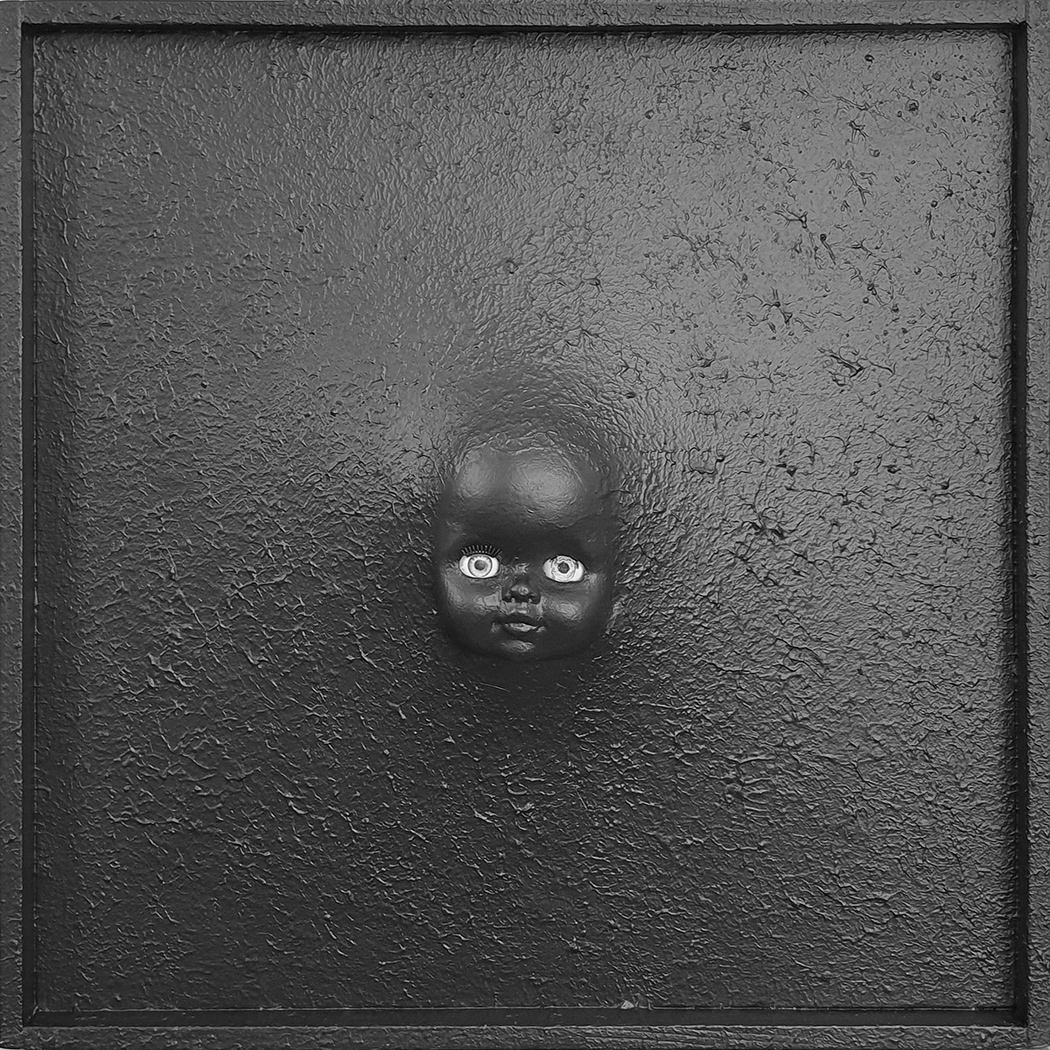 Vladislav Aksyonov | I Am No Longer A Toy | 2024
In the series “I Am No Longer a Toy”, the viewer encounters doll-like faces emerging from monochrome textured surfaces. What does the image of the doll mean to you?
For me, the image of the doll is inseparable from the central idea of the series I Am No Longer a Toy. My initial reflection on the project was that a doll resembles a human being in the hands of God. We, too, created it—originally from clay—just as, according to Scripture, God created humankind. Throughout this series, I ask the question: “Do dolls have souls, since we are so alike?” For me, therefore, the doll represents an attempt to draw closer to the Creator.
Each doll in the series had been abandoned by someone. I found them at flea markets or rubbish dumps, and later gave each of them a name, a colour, and a new life. The doll appears before the viewer as an independent being, as though returning from the past to declare that it exists and is no longer a toy.
By its very nature, a toy is deprived of free will and a voice; it is created for someone else’s entertainment. It can be broken, decapitated, or thrown away. The phrase “I am no longer a toy,” however, marks a point of manifesto and protest against this condition. It is the moment when the inanimate comes to life, when an object acquires the will, the voice, and the aggression to say: “I am alive. I am no longer under your control.” In human relationships, this reflects a difficult process of separation—from abuse, from social pressure, and from the role of a puppet.
Yet this protest also has another side: the pain and sorrow of loss. Being a toy is painful on the one hand, but on the other, it offers a kind of sadomasochistic pleasure, a state in which one does not have to take responsibility. Breaking free from this fusion, separating from the “tyrant,” or simply growing up and losing the paradise of childhood is an enormous source of stress. My baby dolls appear anxious and sinister precisely because they are frozen on the threshold between gaining freedom and confronting loss—the loss of their former form in exchange for the right to live their own lives.
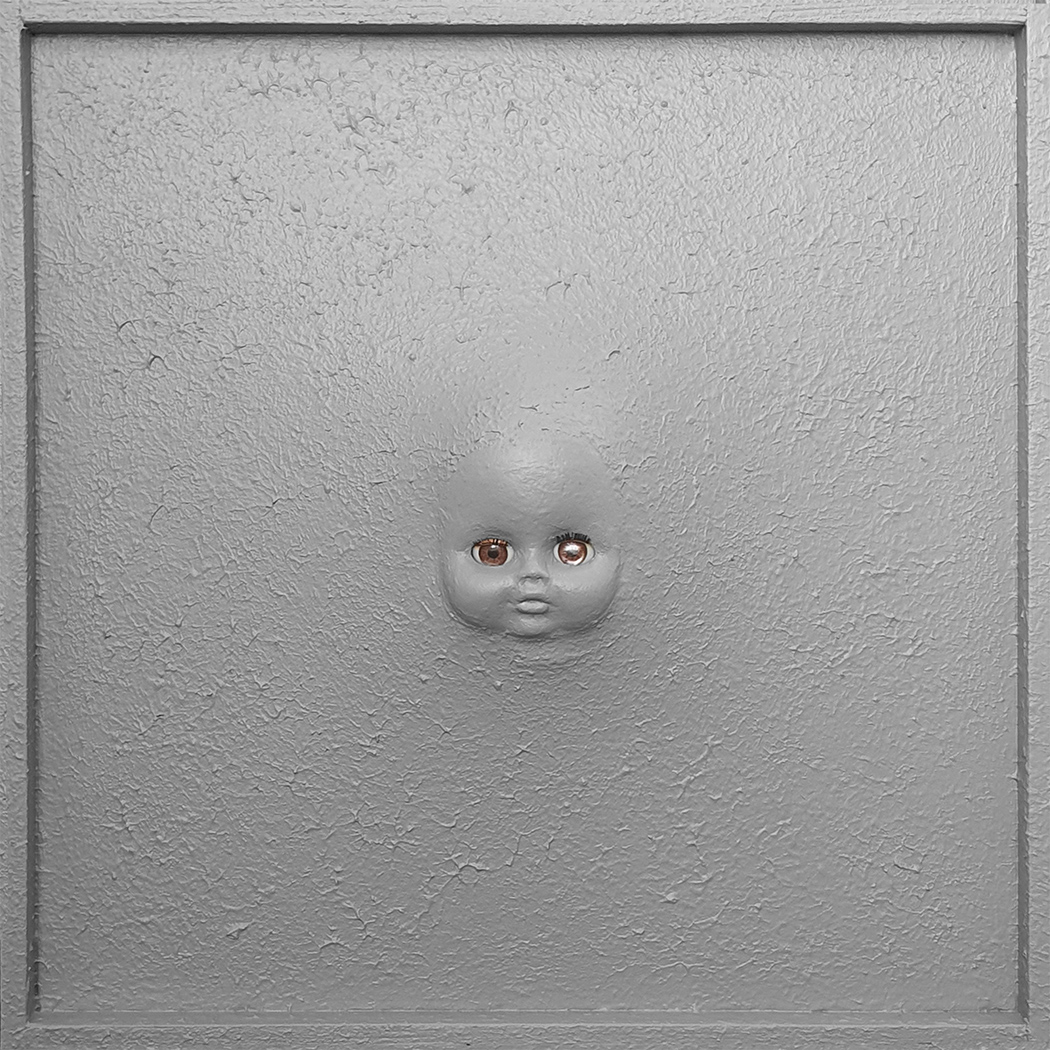 Vladislav Aksyonov | I Am No Longer A Toy | 2024
Your works combine a sense of childhood, vulnerability, and unease. Are you interested in the border between innocence and trauma?
I am less interested in the boundary between innocence and trauma than in trauma itself. Everyone experiences it, though to varying degrees of severity. My work condemns trauma, demands that the viewer pay attention to it, and at times attempts to provoke a traumatic response through confrontation.
When it comes to innocence, I understand it solely as purity and absolute untouchedness—as embodied by a child or a baby doll, physically incapable of causing harm. Trauma is its opposite: it is always a violent, invasive, and contaminating intervention, such as psychological or sexual abuse.
When viewers encounter my work, they are left with a distinct feeling that something terrible has happened—that some dark secret is concealed within it. For me, there is no boundary between innocence and trauma. There is only the moment of a harsh, traumatic event that destroys what is natural.
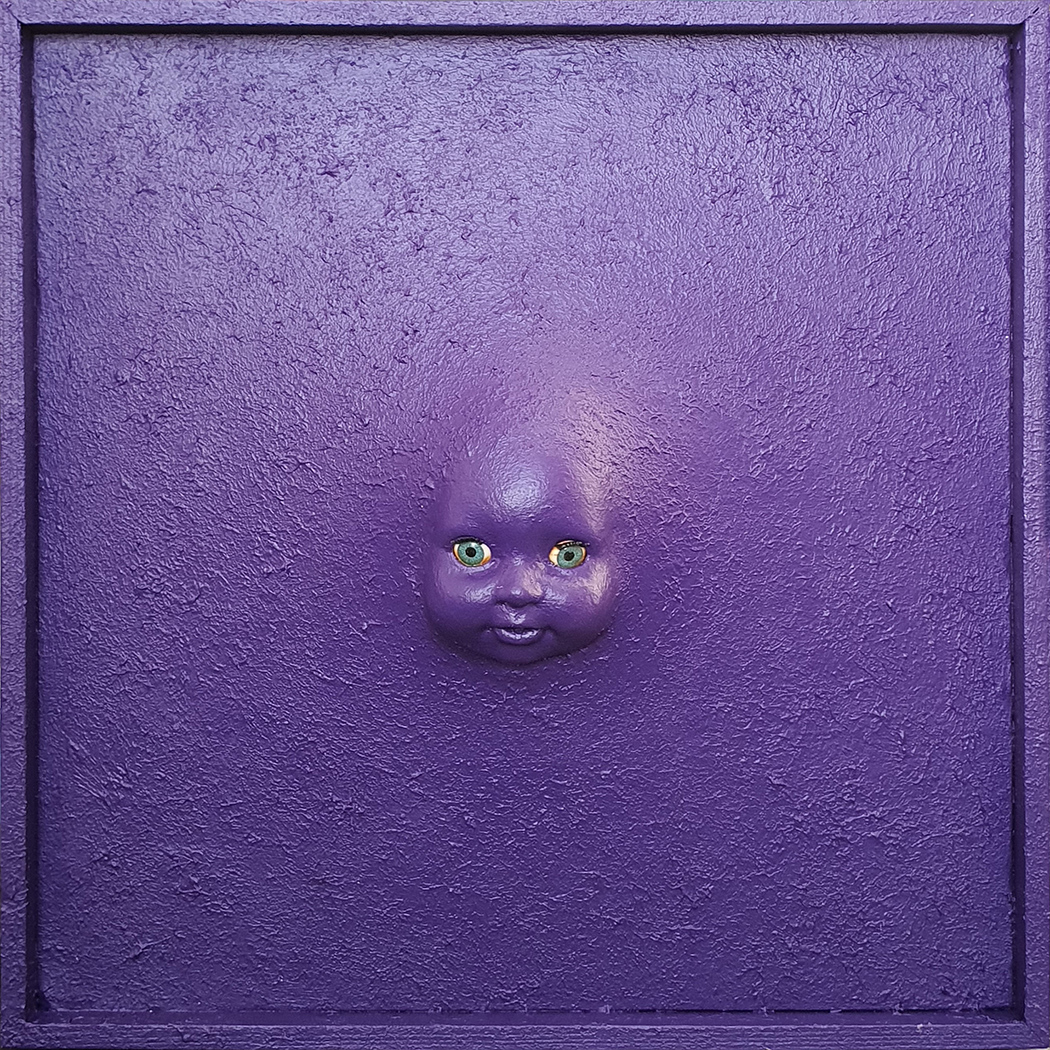 Vladislav Aksyonov | I Am No Longer A Toy | 2024
What do you want the viewer to feel when standing in front of these works: discomfort, recognition, compassion, fear, or something else?
Emotions! Everything beyond that is subjective and unique to each viewer. No matter how much you try to guide the viewer’s emotional response, they will still see something of their own in the work. On more than one occasion, my artworks have evoked completely opposite feelings in different viewers.
This particular series, I Am No Longer a Toy, inspired fear and anxiety in some, while others responded with admiration and curiosity—but it never left anyone indifferent. That is what makes it so wonderful: so many different perspectives are directed toward my work, each accompanied by a genuine emotional response.