
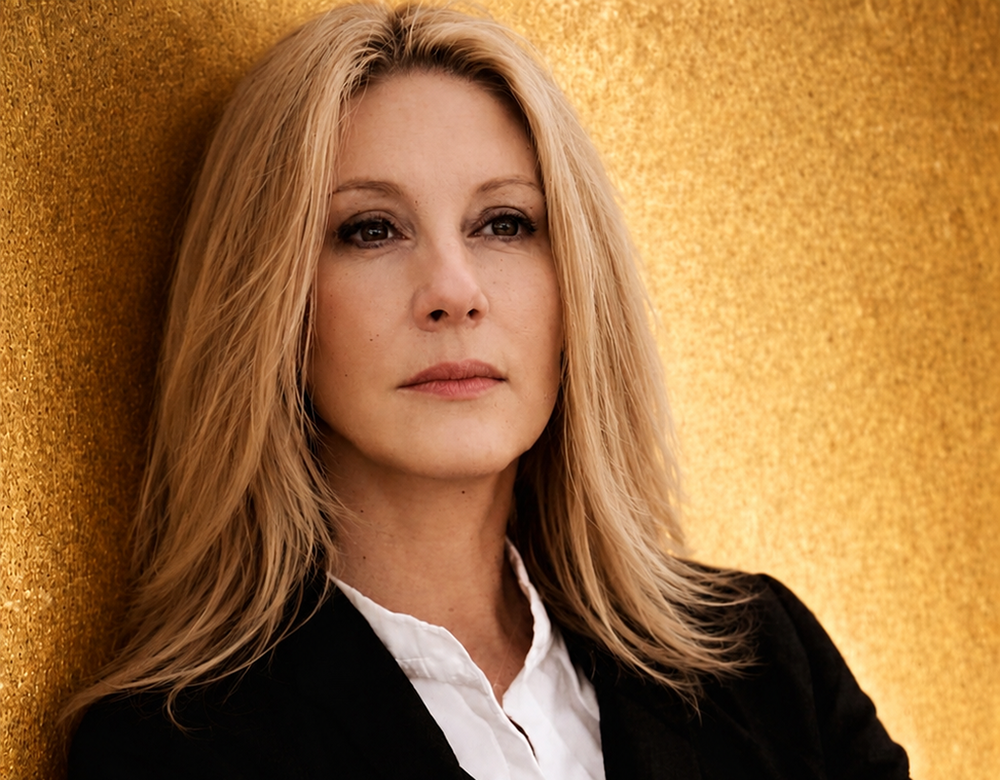
Pavlina Bargili
Your work often feels like an excavation of the inner self, as if memory is hidden beneath the surface of the body. How do your images usually begin – with a face, a material, an emotion, or a personal memory?
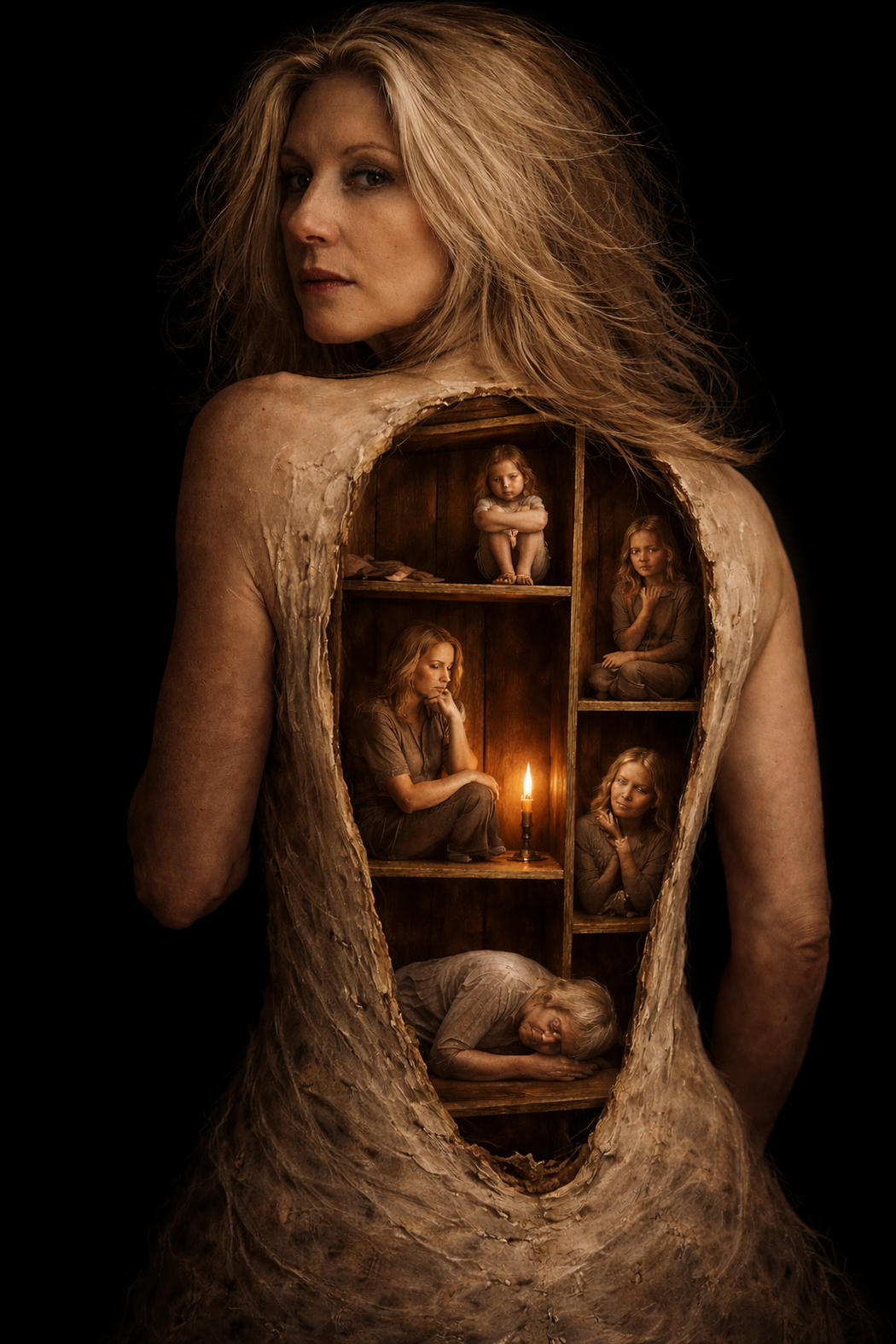
Most of my works begin with an emotion. Sometimes it is a feeling I cannot easily explain, and the image becomes a way of understanding it. At other times it begins with a memory, a fragment of a place, a silence, or a question that stays with me. The face often appears later, almost as a landscape where memory can exist. Materials such as marble, gold, stone, wood, or fabric are never decorative elements for me. They become metaphors for experience, endurance, vulnerability, and time. I am interested in what lies beneath the visible surface and how a person carries their history within them.
You describe memory, identity, and personal history as central themes in your practice. How has your early experience of displacement from Famagusta shaped the emotional language of your art?
Being displaced from Famagusta after the events of 1974 shaped not only my life but also the emotional foundation of my work. I grew up with the experience of loss, absence, and longing for a place that remained physically close yet unreachable. That feeling became part of my artistic language. Much of my work explores what remains after something is taken away: memories, fragments, traces, and invisible connections. I believe displacement teaches you that identity is not only connected to geography but also to memory. In many ways, my work is an ongoing conversation with absence and with the things that continue to exist even when they cannot be seen.
Many of your portraits combine beauty with fracture – marble cracks, gold seams, damaged surfaces, and fragile bodies. What does the idea of “breaking” mean in your work?
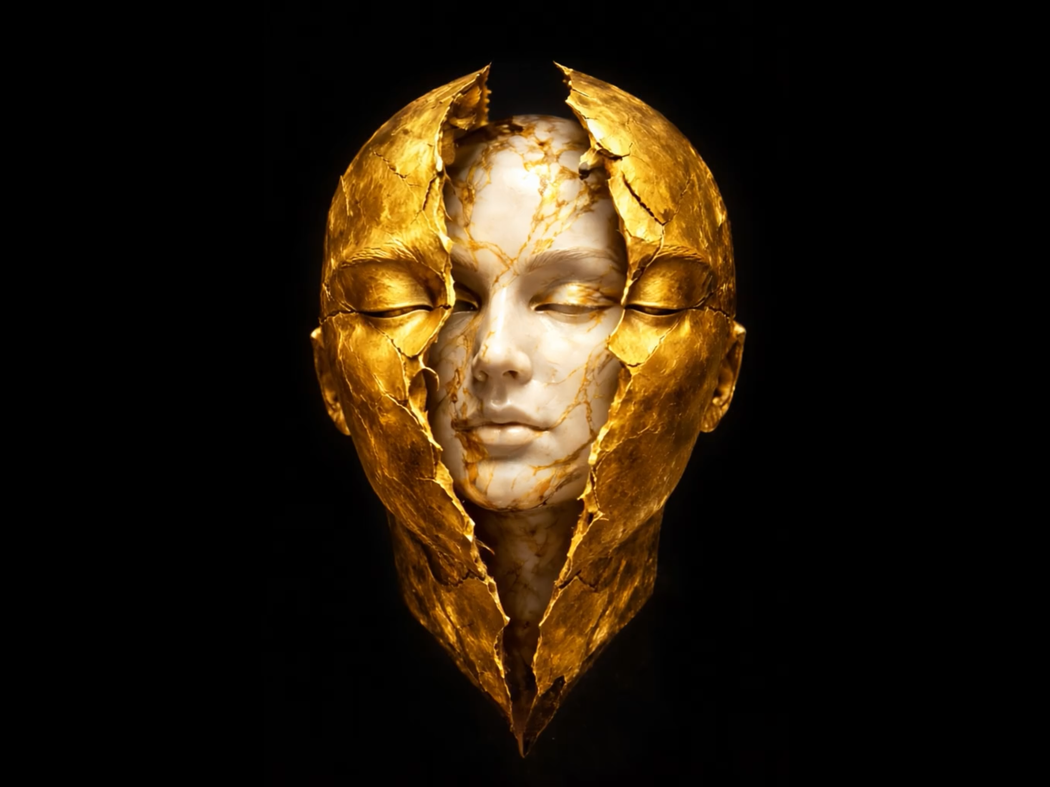
I do not see breaking as the opposite of strength. For me, breaking is often a stage of transformation. Human beings are shaped by loss, disappointment, grief, and change. The cracks in my work are not simply signs of damage; they are evidence of survival. They reveal where life has touched us. I am fascinated by the tension between fragility and resilience. A fractured surface tells a story. It reminds us that imperfection is often where our humanity becomes visible.
Gold appears frequently in your images, often alongside ruin, stone, or darkness. What does gold symbolize for you – healing, survival, sacredness, memory, or something else?
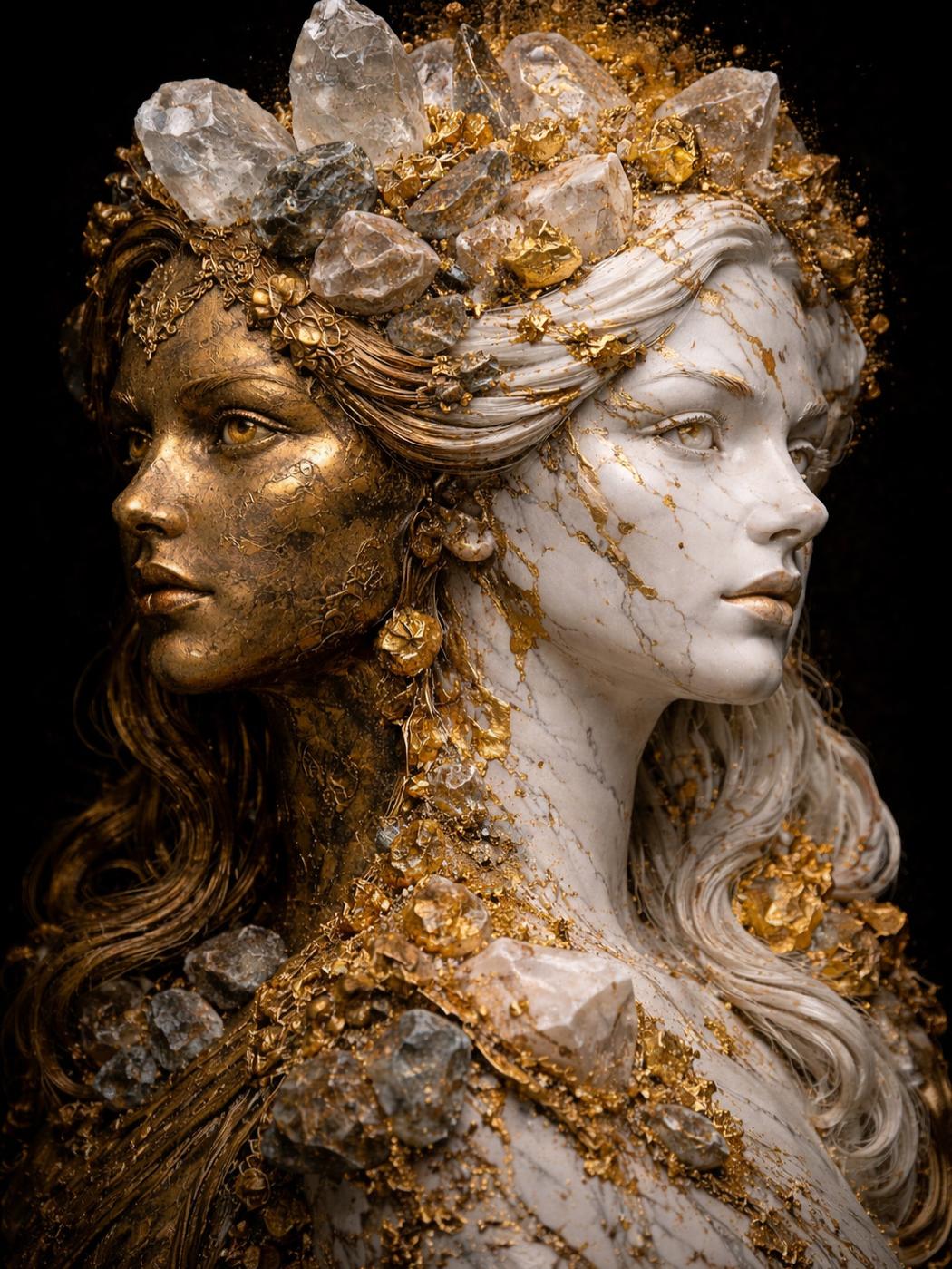
Gold represents many things simultaneously. It can suggest healing, resilience, memory, dignity, and transformation. I often place gold beside damaged or weathered surfaces because I am interested in the dialogue between loss and value. What survives difficult experiences often becomes precious. Gold also connects to my background in jewellery design, where I learned to appreciate both the beauty and symbolic power of materials. In my work, gold is not about luxury. It is about endurance and the light that remains after hardship.
Before becoming fully focused on digital art, you studied jewellery design and worked in the jewellery industry. How did that background influence your sense of detail, material, and composition?
Jewellery design taught me to think carefully about structure, balance, texture, and the relationship between materials. Working with precious metals and stones trained my eye to notice subtle details and understand how different elements interact. Even though my medium has changed, that sensitivity remains present in my work. I often approach an image as if I am constructing an object, considering weight, texture, and material presence. My experience in jewellery design also deepened my appreciation for craftsmanship and for the emotional significance that materials can carry.
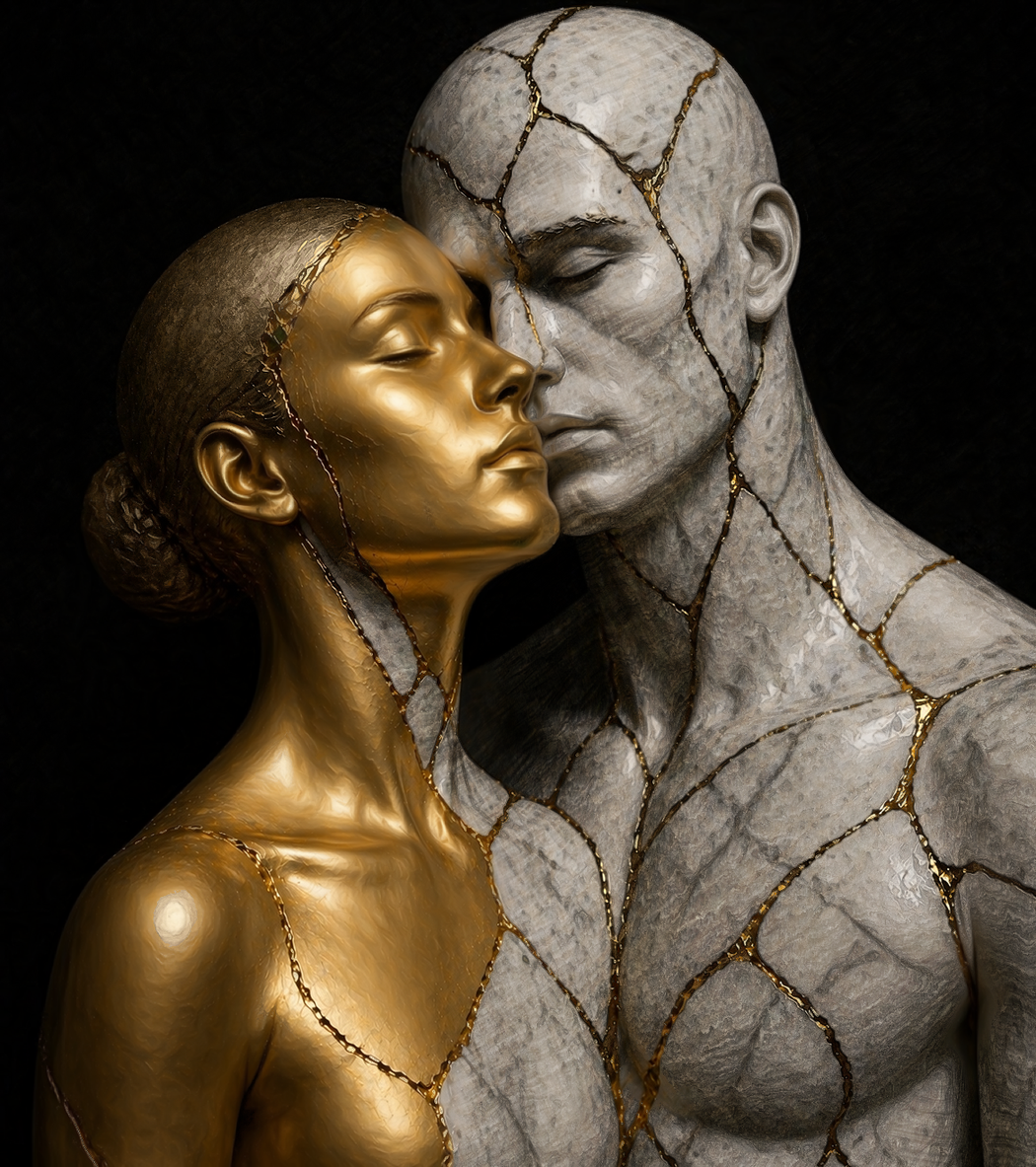
There is a strong cinematic and almost mythological quality in your images. Do you see your figures as portraits of real people, symbolic characters, or fragments of yourself?
They are often all three at once. Some figures begin as personal reflections, while others emerge as symbolic characters carrying broader human experiences. I am less interested in portraying a specific individual and more interested in exploring emotional and psychological states. Many of my figures contain fragments of my own memories, fears, hopes, and questions, but they are also meant to be open enough for viewers to find their own stories within them. I think of them as vessels for shared human experiences.
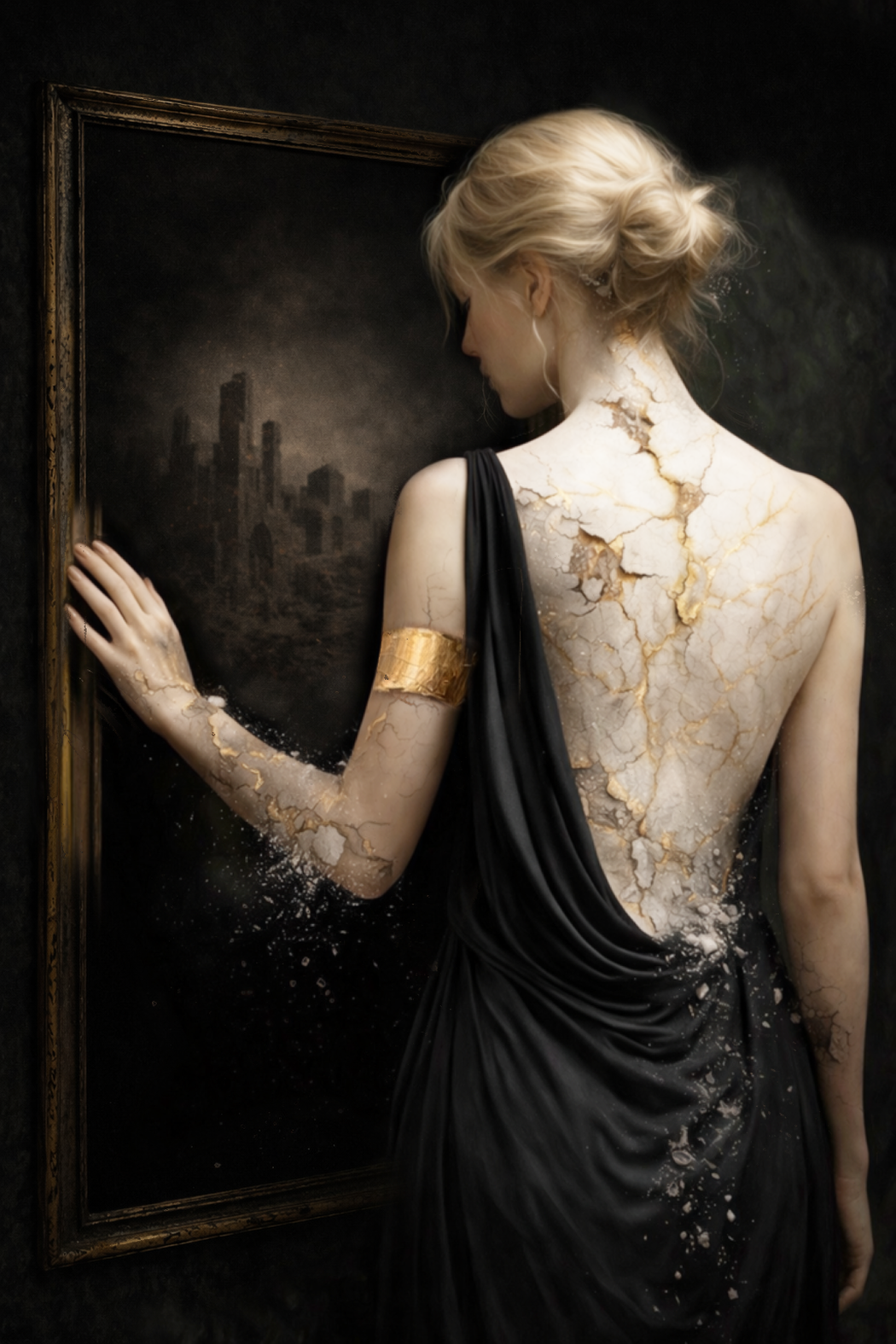
What do you hope viewers feel when they encounter your work – recognition, discomfort, healing, curiosity, or a deeper awareness of the stories hidden beneath the surface?
I hope viewers pause for a moment and feel something genuine. Whether that feeling is recognition, curiosity, reflection, or even discomfort, it means the work has created a connection. We often move through life carrying invisible stories, wounds, memories, and dreams. My hope is that the work encourages people to look beyond appearances and consider the complexity that exists within every human being. If someone leaves with a deeper awareness of themselves or of others, then the work has fulfilled its purpose.