
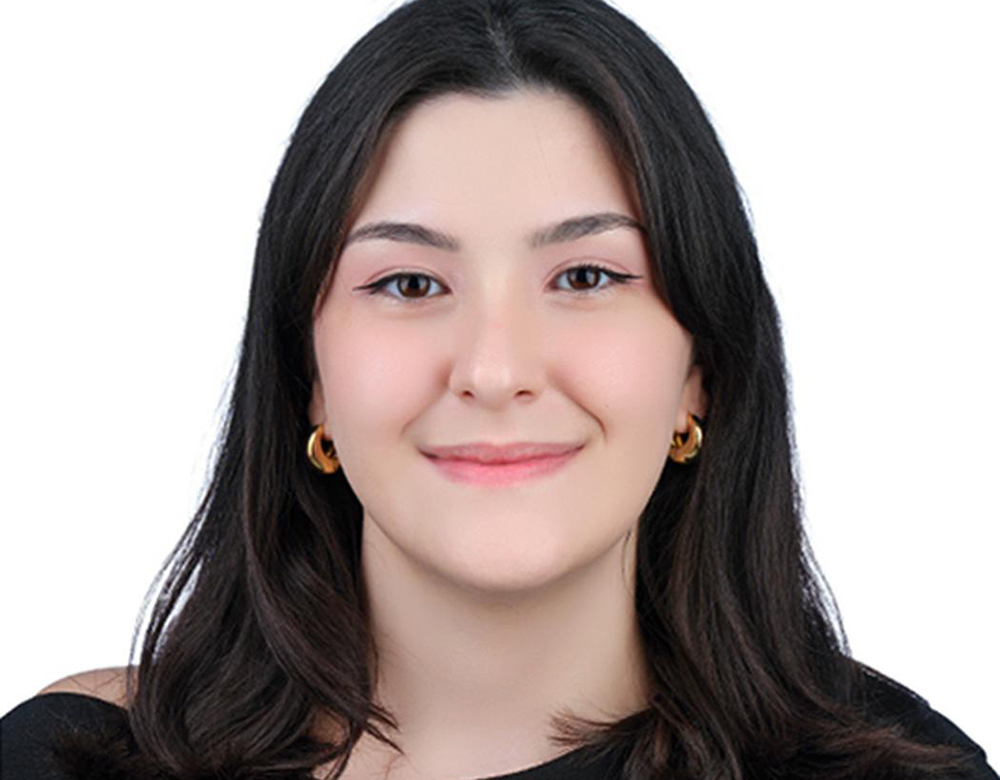
Nursena Tetik
You studied painting and are currently pursuing a Master’s degree in the field. What led you to use photography for the series Where Time Rests, and how does your background in painting influence the way you compose a photograph?
My education in painting has shaped not only the way I create images but also the way I perceive space, light, and visual relationships. While painting involves a prolonged process of construction and contemplation, photography allows me to engage with fleeting moments that emerge spontaneously within everyday life. In Where Time Rests, photography became a means of capturing encounters that exist only briefly before disappearing.
Although I work with a camera, I continue to think as a painter. Composition, balance, negative space, tonal relationships, and the orchestration of light remain central to my practice. Each photograph is approached as a carefully structured visual field in which architecture, shadow, and human presence interact within a composed spatial arrangement.
The title Where Time Rests suggests a pause or suspension of time. What does this idea mean to you, and how did it shape the development of the series?
For me, Where Time Rests emerges from an interest in liminal states—moments that exist between movement and stillness, departure and arrival, presence and absence. During my travels, I often encounter situations that seem suspended between defined narratives, where ordinary reality briefly slows down and reveals a more contemplative dimension.
The series developed through an attention to these threshold experiences. Rather than documenting events, I became interested in the subtle temporal gaps embedded within everyday life. These fleeting moments create spaces where time appears to pause, allowing both the subject and the viewer to become more aware of their surroundings and their own presence within them.
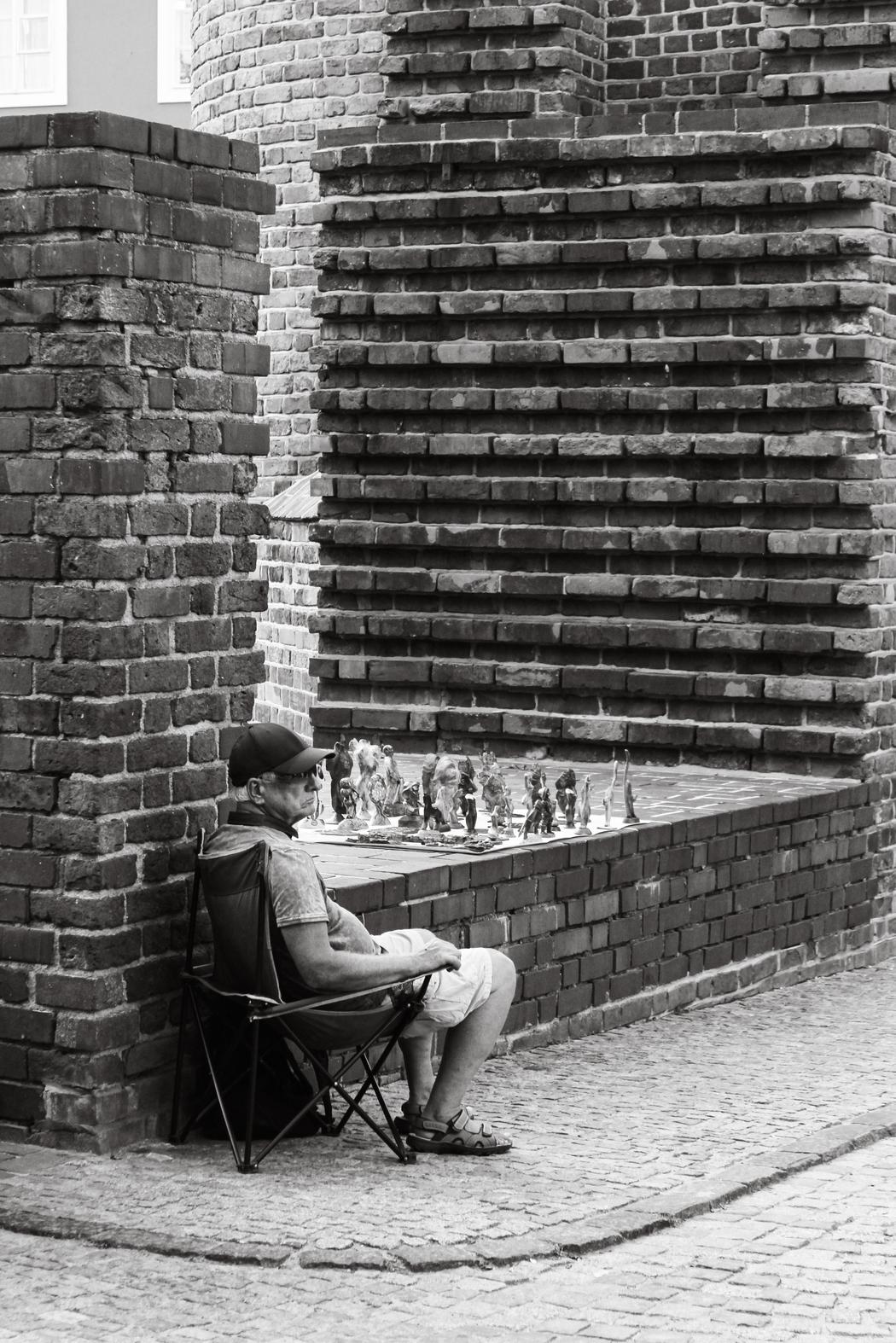 Nursena Tetik | Where Time Rests | 2024
Architecture plays a dominant role in these photographs, while the human figures appear relatively small within the surrounding spaces. What relationship between people and the built environment were you hoping to explore?
In this body of work, architecture functions as more than a backdrop; it becomes an active presence that shapes perception, movement, and experience. I am interested in the ways built environments define the scale of human existence and influence how individuals occupy space.
The relatively small figures within the compositions emphasize both vulnerability and transience. They appear as temporary presences moving through structures that seem more permanent and enduring. This relationship reflects my interest in the tension between individual experience and the larger spatial systems that surround and condition it.
Your use of black and white emphasizes light, shadow, texture, and geometry. Why did you choose to remove color from these images, and what emotional atmosphere does monochrome allow you to create?
The absence of color is not a reduction but an opening. By removing color, I aim to shift attention toward the structural elements of the image—light, shadow, texture, rhythm, and spatial relationships. Monochrome allows these visual components to emerge with greater clarity and intensity.
At the same time, black and white photography introduces a degree of ambiguity that I find essential. Without the specificity of color, the image becomes more open-ended and interpretive. Viewers are invited to project their own memories, emotions, and even imagined colors onto the scene. In this sense, monochrome creates a participatory space in which meaning is not fixed but continuously reconstructed through individual perception.
The use of black and white also reinforces the atmosphere of stillness and timelessness that lies at the core of Where Time Rests, allowing the photographs to exist outside a clearly defined temporal context.
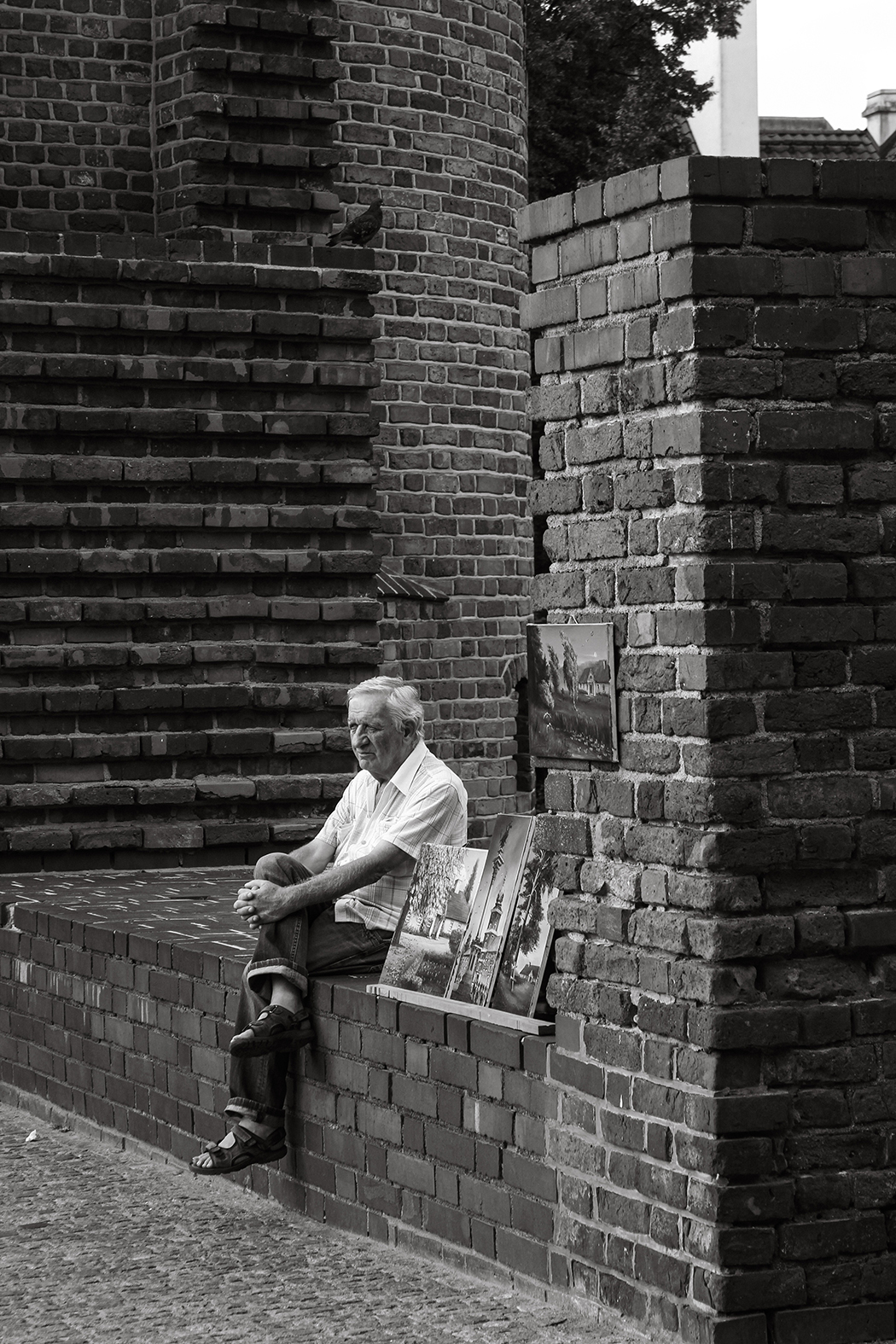 Nursena Tetik | Where Time Rests | 2024
Several works capture people in moments of waiting, solitude, or quiet observation. What attracts you to these seemingly ordinary and uneventful moments?
Much of my practice is rooted in observing the unnoticed dimensions of everyday life. I am drawn to moments that appear uneventful because they often reveal forms of presence that remain invisible within the accelerated pace of contemporary experience.
Waiting, resting, observing, or simply occupying a space can become deeply expressive states. These situations exist outside spectacle and narrative climax; they belong instead to the quiet rhythms of daily life. I am interested in how such moments generate subtle emotional and psychological landscapes, transforming the ordinary into something reflective and poetic.
How do you approach street photography? Do you wait patiently for a particular alignment of light, architecture, and human presence, or are your images created more intuitively?
The photographs in Where Time Rests are primarily made during my travels and periods of movement between places. Rather than searching for predetermined subjects, I respond to situations that unexpectedly emerge along the way. In this sense, photography becomes a practice of attentiveness rather than pursuit.
I am particularly interested in liminal moments—brief encounters experienced while passing through urban spaces, crossing thresholds, or pausing within transitional environments. These situations often exist between destinations and resist clear narratives, yet they contain a remarkable sense of presence.
My images are therefore shaped by a combination of intuition and observation. I do not necessarily wait for a specific event to occur; instead, I remain attentive to ephemeral relationships between architecture, light, and human activity that arise within the fabric of everyday life. Photography becomes a way of preserving these transient moments before they disappear.
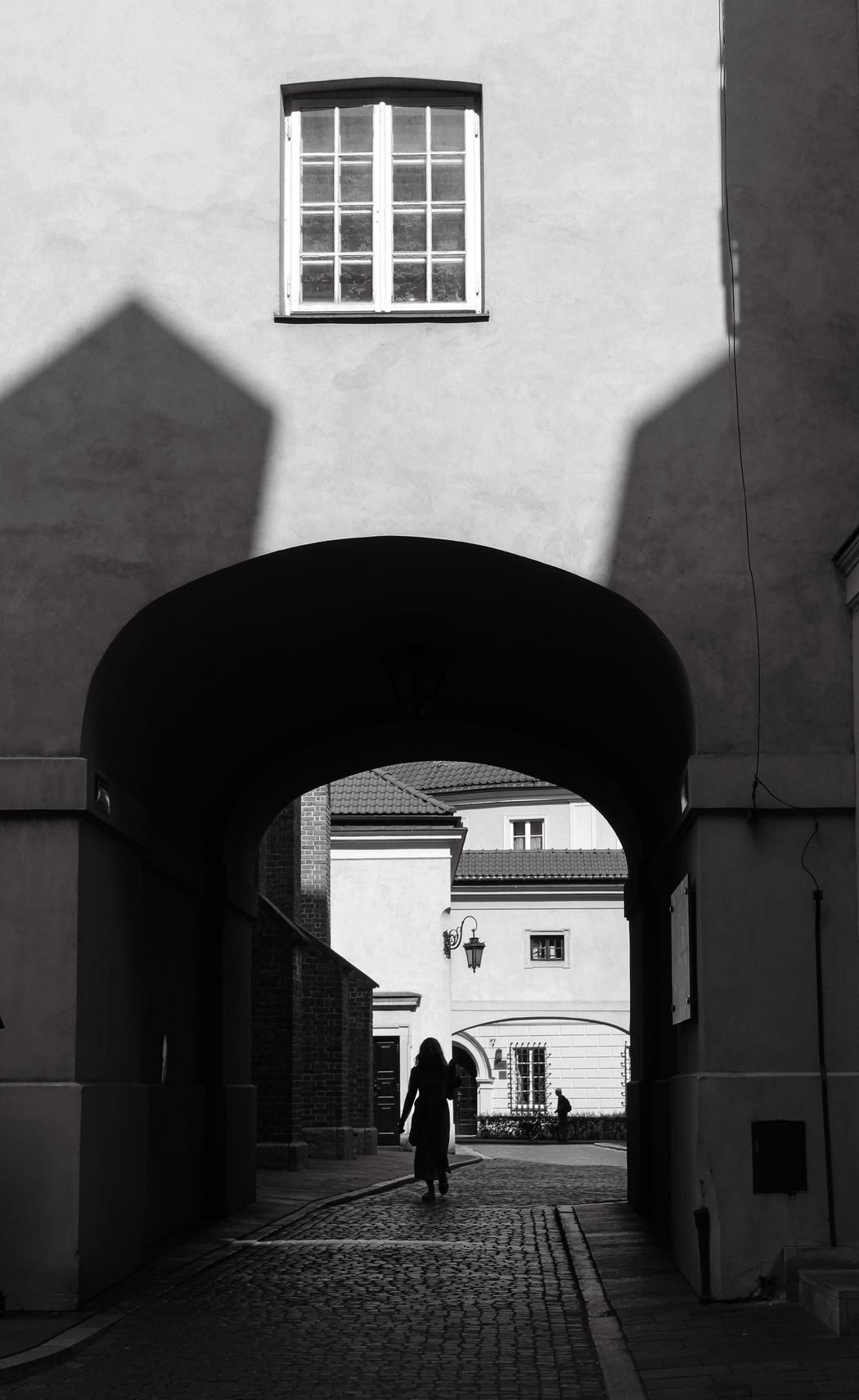 Nursena Tetik | Where Time Rests | 2024
How do your interests in visual communication, corporate identity, and branding coexist with your more personal artistic practice? Do these disciplines influence one another?
Although these fields may appear distinct, they share a common concern with the construction of visual language. My experience in visual communication and branding has heightened my awareness of composition, perception, symbolism, and the ways images generate meaning.
At the same time, my artistic practice allows me to approach these concerns from a more open-ended and exploratory perspective. While design often seeks clarity and effective communication, art embraces ambiguity, multiplicity, and interpretation. I see these disciplines as mutually enriching: design provides structure and precision, while artistic research expands the conceptual possibilities of visual expression.