
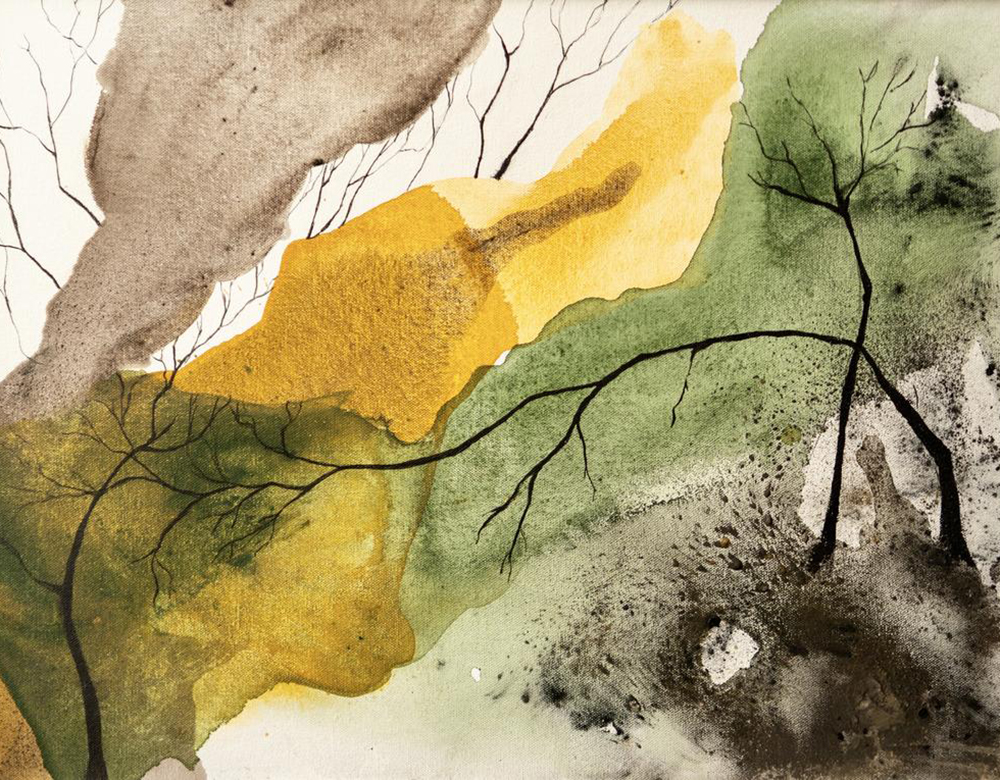
Ekaterina Stolyarova
You grew up in Nizhny Tagil, a city known for its massive factories and harsh industrial landscape. How did this shape your worldview and your artistic vision?
Nizhny Tagil is a city of incredible contrasts. On one side, you have the majestic beauty of the Ural nature; on the other, giant factories and skies gray with smoke. Seeing this stark contrast with my own eyes from a very young age deeply influenced me. It made me realize both how profoundly human activity can alter the environment and how fragile the natural world truly is.
But rather than feeling discouraged, I became determined to explore this tension through art. My childhood experiences taught me a vital lesson: nature possesses extraordinary resilience and a remarkable capacity for renewal, but it is not invincible. This understanding became the foundation of my artistic philosophy. The lifelong search for harmony between humanity and the natural world continues to inspire every work I create today.
Your works frequently feature fragile ecosystems and solitary trees surviving in abstract landscapes. What do these recurring natural forms symbolize for you?
The solitary tree is the central symbol of my work. To me, it represents resilience, endurance, and quiet inner strength. Trees survive storms, harsh winters, droughts, and human intervention, yet they continue to grow and sustain life around them.
I intentionally avoid depicting specific, recognizable locations. Instead, I create emotional landscapes that exist somewhere between memory, imagination, and ecological reality. I want viewers to bring their own experiences into the work and form their own personal connections.
A single tree standing within an abstract environment can symbolize both vulnerability and hope. It reminds us that even the smallest element of an ecosystem holds immense value and that strength often emerges from fragility.
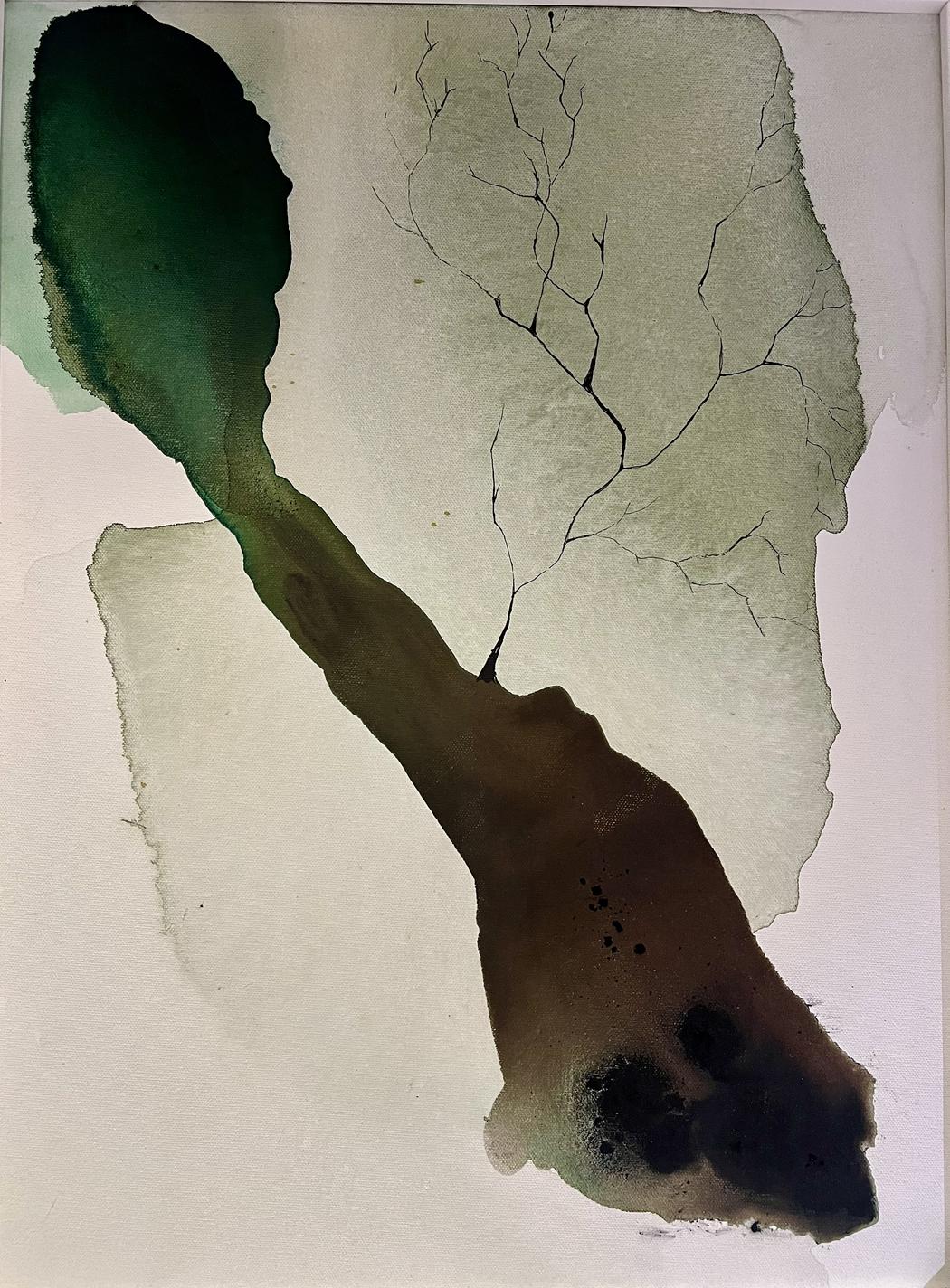 Ekaterina Stolyarova | Chaos Canopy
You stepped away from conventional acrylics to create your paintings using natural pigments. How did you develop this technique, and what is the biggest challenge it presents?
It began with a desire to create genuinely sustainable art. I wanted to explore materials that would maintain a direct connection to the Earth while reducing the environmental impact often associated with conventional artistic production.
That curiosity led to years of experimentation with mineral-based and earth-derived pigments. Over time, my artistic exploration evolved into scientific research, ultimately resulting in the publication of a peer-reviewed scientific article focused on the conservation and restoration of artworks created with eco-friendly paints and natural pigments.
Working with natural pigments is significantly more demanding than using ready-made acrylic paints. Every pigment behaves differently. Particle size, mineral composition, humidity, water absorption, evaporation rates, and surface tension all influence the final result.
Natural materials always retain an element of unpredictability. Yet it is precisely this dialogue between artistic intention and natural forces that makes the process so meaningful. The materials become active participants in the creation of the artwork rather than passive tools.
My research on natural pigments has also contributed to broader professional discussions surrounding sustainable art practices and the long-term preservation of environmentally conscious artworks. Today, this distinctive methodology has become one of the defining characteristics of my artistic practice and has been presented through museum exhibitions, international art fairs, publications, and professional art platforms in the United States and abroad.
The textures and organic flows in your work often resemble geological cross-sections or biological cells. How important is the role of natural processes and chance in your compositions?
They play a fundamental role.
I am fascinated by the way rivers carve landscapes, how roots spread beneath the earth, how minerals crystallize, and how natural systems organize themselves without external control. Nature itself is an extraordinary creator.
Rather than maintaining complete control over the image, I create conditions that allow natural forces to become collaborators in the artistic process. The movement of water, the dispersion of pigments, evaporation patterns, and material interactions generate textures and forms that could never be fully planned or replicated.
This balance between intention and unpredictability mirrors the complexity of nature itself. Nature is neither chaotic nor entirely controlled – it exists within a dynamic equilibrium. That living balance is something I continually strive to capture in my work.
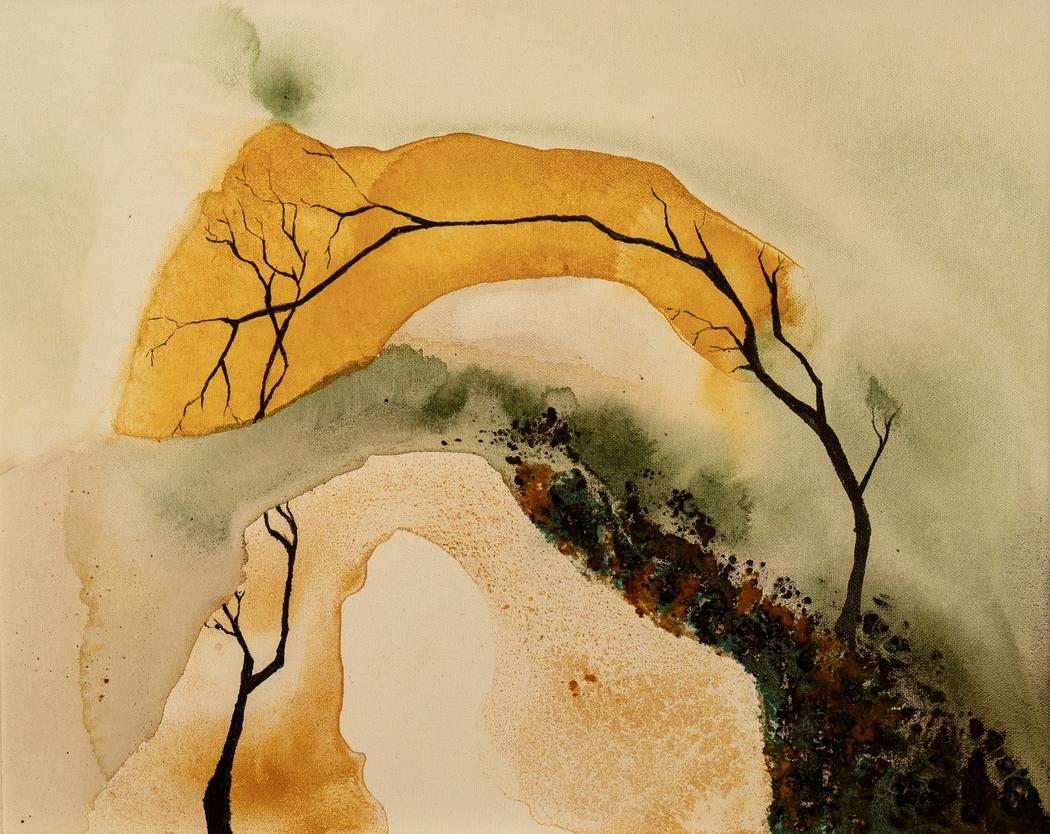 Ekaterina Stolyarova | Serene Shade
Your paintings often suggest landscapes that appear damaged yet resilient at the same time. Is this duality a reflection of your environmental concerns?
Absolutely.
I believe one of the defining realities of our time is that environmental degradation and ecological resilience exist simultaneously. My goal is not to present nature solely as a victim, nor to ignore the serious environmental challenges facing our world.
Instead, I am interested in exploring the space between vulnerability and regeneration. Ecosystems can be damaged, yet they also possess remarkable capacities for recovery when given the opportunity.
This duality reflects both concern and optimism. While environmental issues are undeniably serious, I believe awareness, education, innovation, and collective responsibility can contribute to meaningful change. I hope my paintings encourage reflection and inspire people to see themselves as active participants in protecting the natural world.
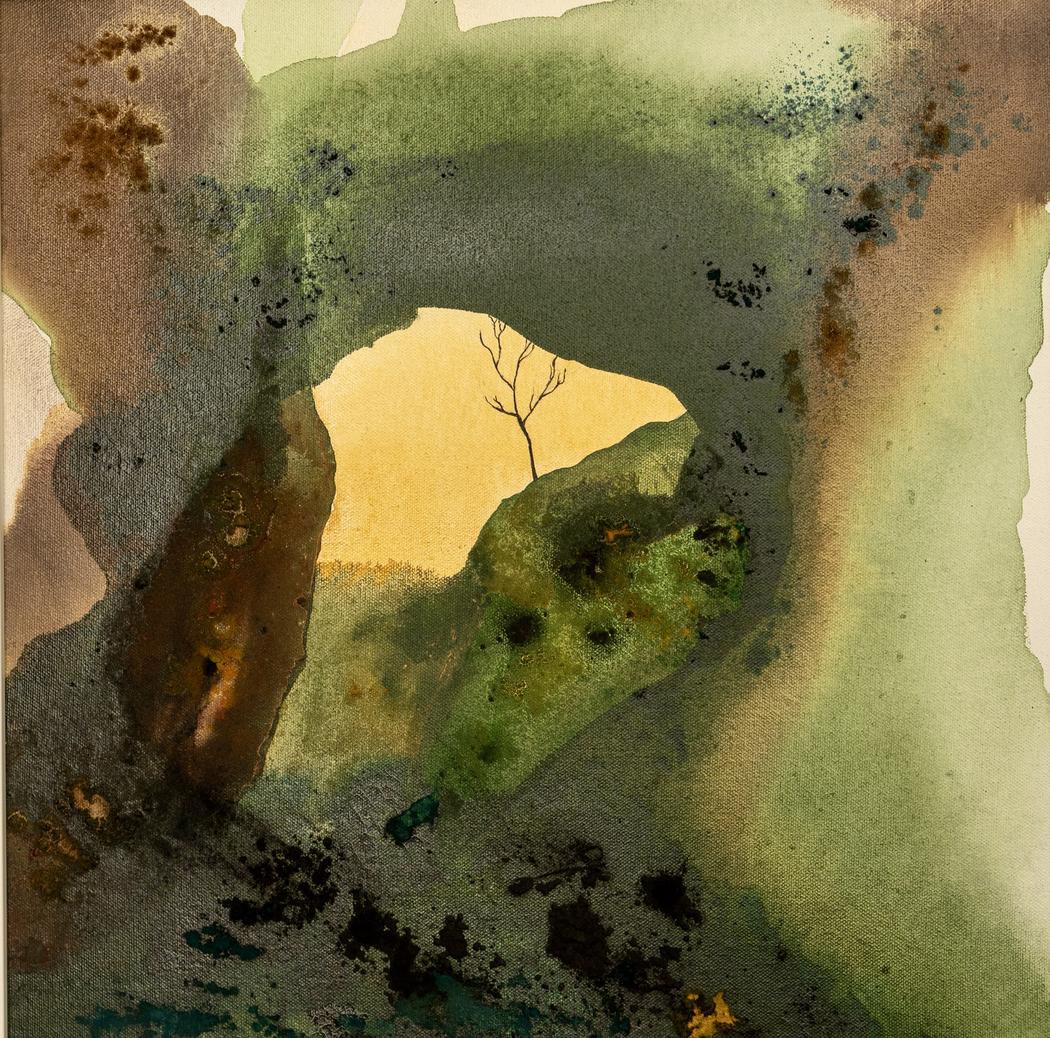 Ekaterina Stolyarova | Shaded Solitude
As someone deeply engaged with eco-art, what role do you believe artists should play in addressing environmental issues today?
Scientific data and environmental research are essential, but facts alone do not always inspire people to change their behavior. Art speaks through emotion, imagination, and personal connection.
I believe artists can serve as cultural translators, helping audiences engage with environmental issues on a deeply human level. Through exhibitions, publications, educational initiatives, and interdisciplinary collaborations, artists can contribute meaningfully to conversations about sustainability and environmental responsibility.
As an internationally recognized eco-artist, I see this responsibility as extending far beyond the creation of individual artworks. My practice includes exhibitions at major international art fairs and museum exhibitions in cultural centers such as New York, Miami, and Los Angeles, alongside scholarly research, publications, jury service, and educational outreach.
In addition to exhibiting internationally, I have served as an expert juror and evaluator for international art competitions and have contributed to professional discussions surrounding sustainability in contemporary art. I am also the Founder and Chair of the Jury of the International Eco-Art Award, an initiative established to encourage artists from different countries to engage with environmental themes through contemporary artistic expression.
Through these activities, I strive not only to create artworks, but also to contribute to the advancement of eco-art as a professional field and to support the next generation of environmentally conscious artists.
Art has the power to influence culture, and culture ultimately shapes the choices societies make.
Many viewers describe your paintings as meditative or contemplative. What kind of emotional or psychological experience do you hope your audience takes away?
We live in a world defined by constant speed, digital noise, and endless streams of information. Moments of stillness have become increasingly rare.
When viewers encounter my work, I hope they experience a pause – a temporary shift away from urgency and toward reflection. The abstract forms and organic textures are intentionally open-ended, allowing each person to bring their own memories, emotions, and interpretations into the experience.
If a painting helps someone reconnect with nature, discover a moment of calm, or simply look inward with greater awareness, then I feel the artwork has fulfilled its purpose.
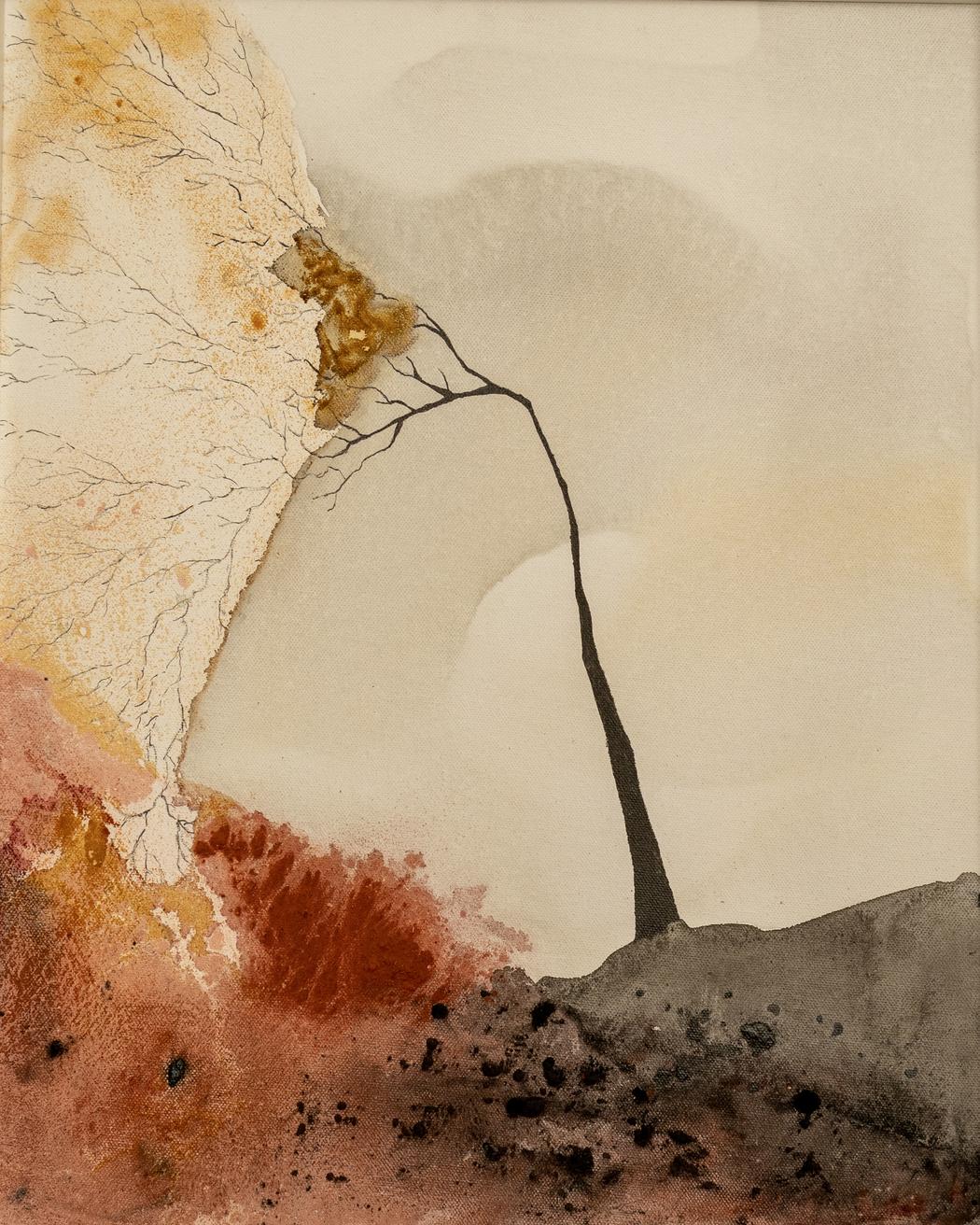 Ekaterina Stolyarova | Tranquil Treetops
Could you share your experience presenting your work in Los Angeles during Oscar week, specifically at the private event hosted at Warren Beatty’s residence? How did the film industry respond to your eco-art?
It was a truly memorable experience.
The event brought together distinguished figures from the film industry, cultural leaders, collectors, and creative professionals, creating a unique environment for meaningful artistic dialogue. Presenting my work during Oscar week in Los Angeles was both an honor and an opportunity to engage with audiences from outside the traditional art world.
What impressed me most was how naturally conversations evolved beyond aesthetics and into broader discussions about sustainability, environmental responsibility, and humanity’s relationship with nature. Many guests were intrigued not only by the visual qualities of the paintings, but also by the philosophy behind them and by the use of natural pigments as an environmentally conscious artistic medium.
As an artist whose work has been exhibited at major international art fairs and museum exhibitions in the United States – including New York, Miami, and Los Angeles – it was especially meaningful to see eco-art resonate so strongly within a community known for storytelling through film.
The experience reinforced my belief that environmental narratives can transcend disciplines and cultural boundaries. It demonstrated that conversations about environmental stewardship are increasingly becoming part of mainstream cultural dialogue.
For me, the evening was not only a professional milestone, but also a reminder that art can create meaningful connections between people, industries, and ideas. Seeing influential creative leaders engage deeply with themes of sustainability reinforced my conviction that environmental awareness can be advanced through culture, storytelling, and artistic expression on an international scale.