Oleksandra Roche-Newton
Your creative journey began from a need to translate the ideas in your head into paintings. What kinds of images or emotions usually appear first in your imagination?
I notice many small details first and then build these up to form the bigger picture. Each artwork is like a puzzle in my mind. As soon as all the pieces come together, I see a clear image that I feel excited to bring to life on canvas. This puzzle usually begins with an idea or something that inspires me. Then, over days or sometimes months, I continue to reflect on it—exploring concepts, details, colors, and how everything will come together in a composition.
I also like to focus on messages—my feelings and thoughts that I want to share with the world. Painting gives me a sense of freedom. It’s my way of preserving beautiful moments, expressing what I carry in my heart, and escaping into my own imaginary, colorful, and peaceful world.
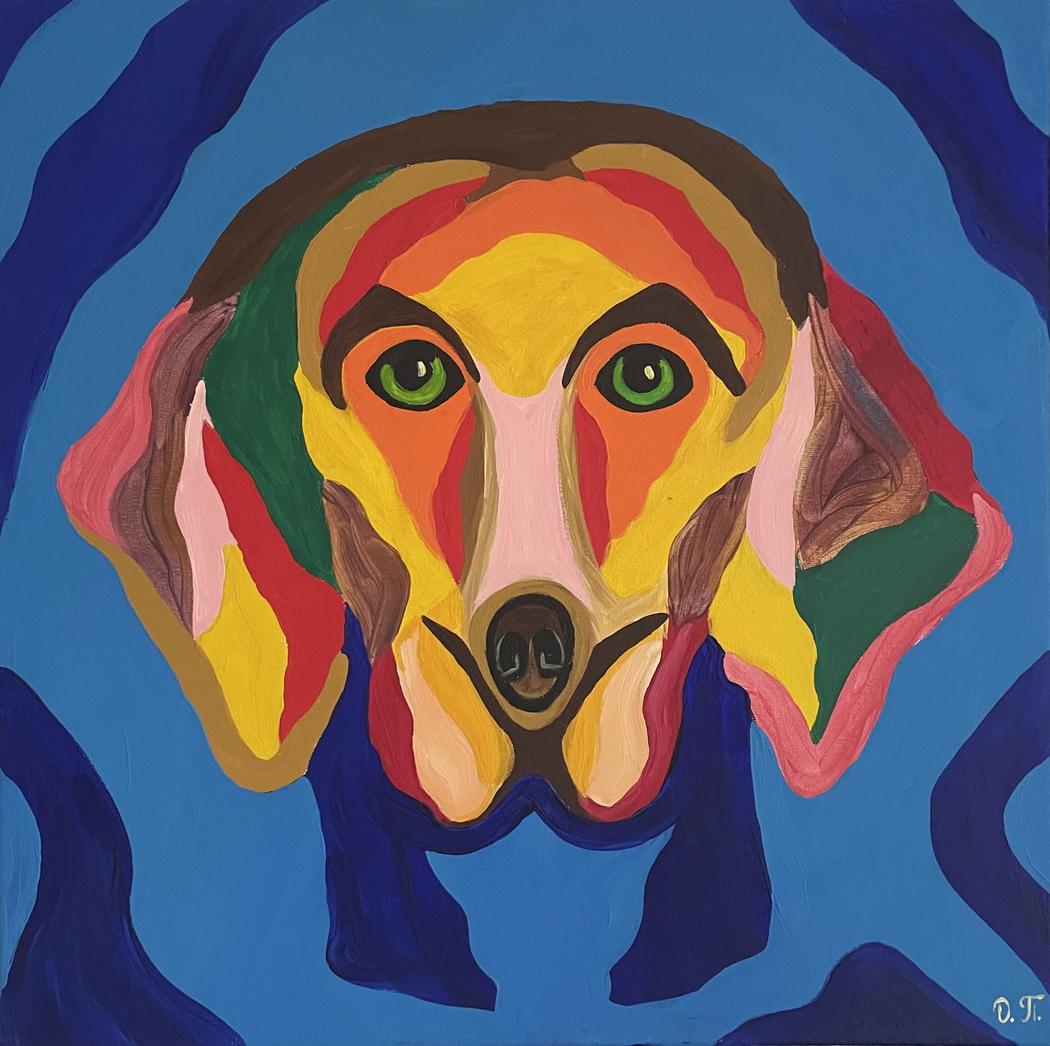 Oleksandra Roche-Newton | Charlie The Dog | 2018
After moving to Austria in 2015, painting became an important way for you to cope with relocation and adaptation. How did this experience change your relationship with art?
Emigration is a major life challenge—often difficult and overwhelming. You can feel lonely, scared, even depressed, and at the same time torn between wanting to meet people and wanting to hide from them. In those moments, art became my therapy and my meditation— a way to release stress, to find balance, and to feel a sense of happiness and acceptance.
The beautiful nature of Austria has had a strong influence on my work. It’s impossible to remain indifferent to it. When I lived in Kyiv, I dreamed of seeing the Alps. Now I live so close to them—and I can paint them. These moments, like many others, stay with me and are preserved in my art.
Your works often combine bright color, nature, and emotional symbolism. How do you choose the colors for each painting?
It’s mostly intuitive, to be honest. I usually start by imagining a color scheme that I’d like the painting to have. Then I look for accent colors that catch the eye and harmoniously complement the composition. Once I feel confident with these choices, I begin painting—although, of course, everything can evolve and change during the process.
I like to use bold and vibrant color combinations to brighten everyday life and bring a sense of positivity, strength, and energy, while still holding space for emotions and meaning. In a way, it also reflects who I am—I’m naturally drawn to bright, colorful clothes as well. They give me a sense of joy, motivation, and confidence.
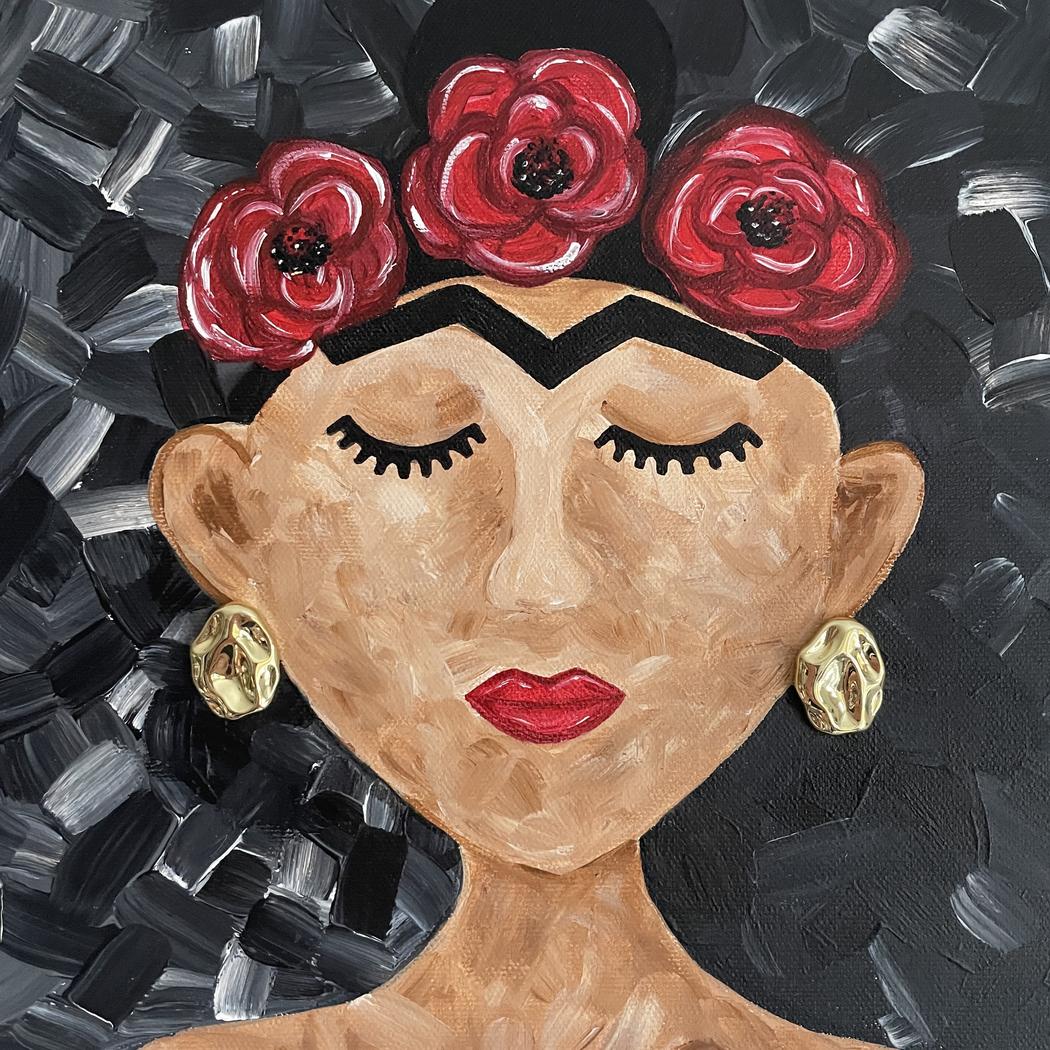 Oleksandra Roche-Newton | Fridain Red | 2025
Flowers, mountains, water, and sky appear frequently in your paintings. What does nature represent in your artistic world?
It represents the source of beauty in this world—the origin we come from, the flow of life, and a place of energy. Our lives are often filled with tasks, duties, and responsibilities, and sometimes we forget who we are and what we truly need. The flowers, mountains, water, and sky in my paintings serve as gentle reminders of that inner source—especially in moments when we don’t have the time or space to be in nature.
Living in Innsbruck, I saw the mountains every day—from my window, on my way to work—along with incredible landscapes, soft pink sunsets, and beautiful architecture. It helped me stay connected to myself and recharge. I believe that once you fall in love with nature, it stays with you forever.
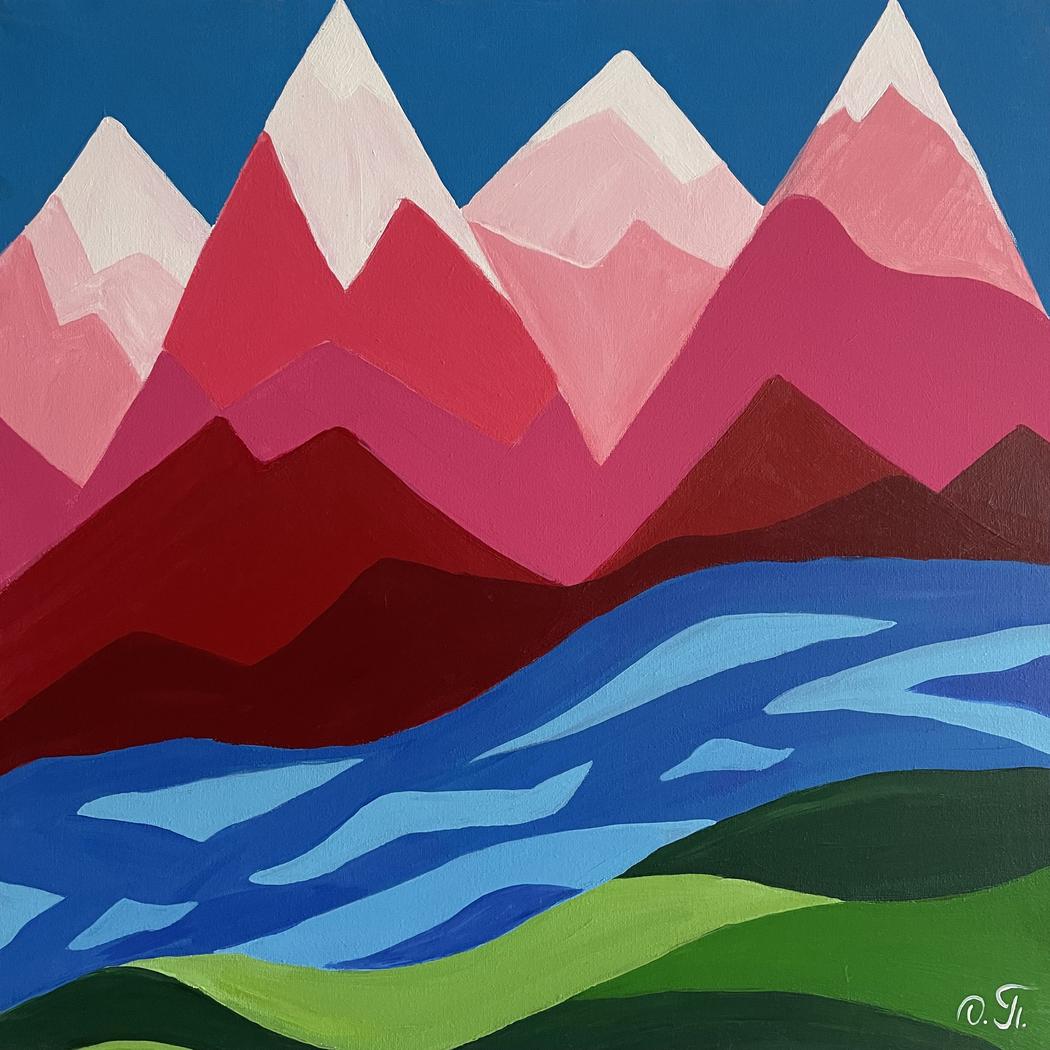 Oleksandra Roche-Newton | Pink Mountains | 2018
Several of your works feature calm, closed-eyed female figures. Who are these women for you – portraits, symbols, alter egos, or emotional states?
The first painting from the “Frida” series, a manifesto of inner vision, was created after watching a movie about Frida Kahlo. I was deeply moved by her story and her strength.
For me, these portraits of women with closed eyes and a monobrow represent a hidden part of each woman—a character she may feel the need to conceal because it is seen as inappropriate, inconvenient, or outside of societal expectations and narratives, or because she is simply afraid to express it openly. When we close our eyes, external noise fades away, allowing us to finally hear our true voice.
With these paintings I aim to convey a message about self-discovery, inner strength, and the importance of finding moments of pause in a turbulent world. I want to remind us that the most important thing is to listen to ourselves.
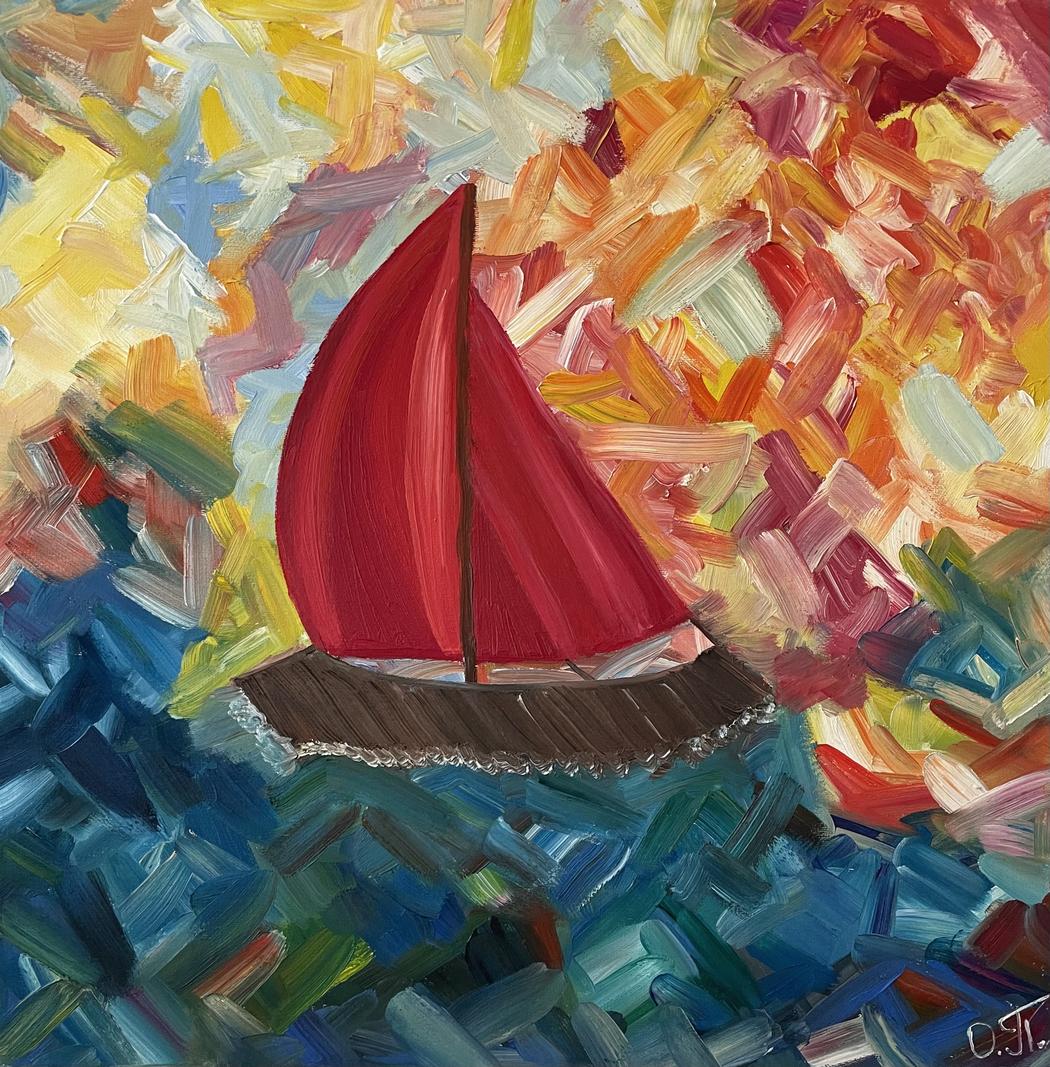 Oleksandra Roche-Newton | Lonely Boat | 2018
Your paintings feel very emotional, but also playful and accessible. How do you balance personal meaning with visual joy?
That’s a thoughtful question—and honestly, the balance isn’t something I calculate consciously, it’s something that happens in the process.
For me, every painting starts with a feeling or a story I want to express. Sometimes I just want to capture a beautiful moment, sometimes it’s something very personal, sometimes heavy—but I don’t want it to stay heavy. I translate it into color, symbols, and characters that feel alive, a bit naive and playful. That’s where the transformation happens.
The “visual joy” comes with bright palettes, soft or exaggerated forms, small details that invite you in. I think it makes my work approachable, so the viewer doesn’t feel pushed away by the depth behind it. Instead, they can enter gently—and then, if they want, discover the deeper layer. I think of it like this: the surface smiles, but underneath there’s a quiet conversation.
Also, I don’t try to explain everything. I leave space for people to bring their own meaning into the painting. That’s important to me—because then the work becomes not only about my emotions, but also about connection. So the balance comes from honesty in the feeling, and freedom in how I choose to express it.
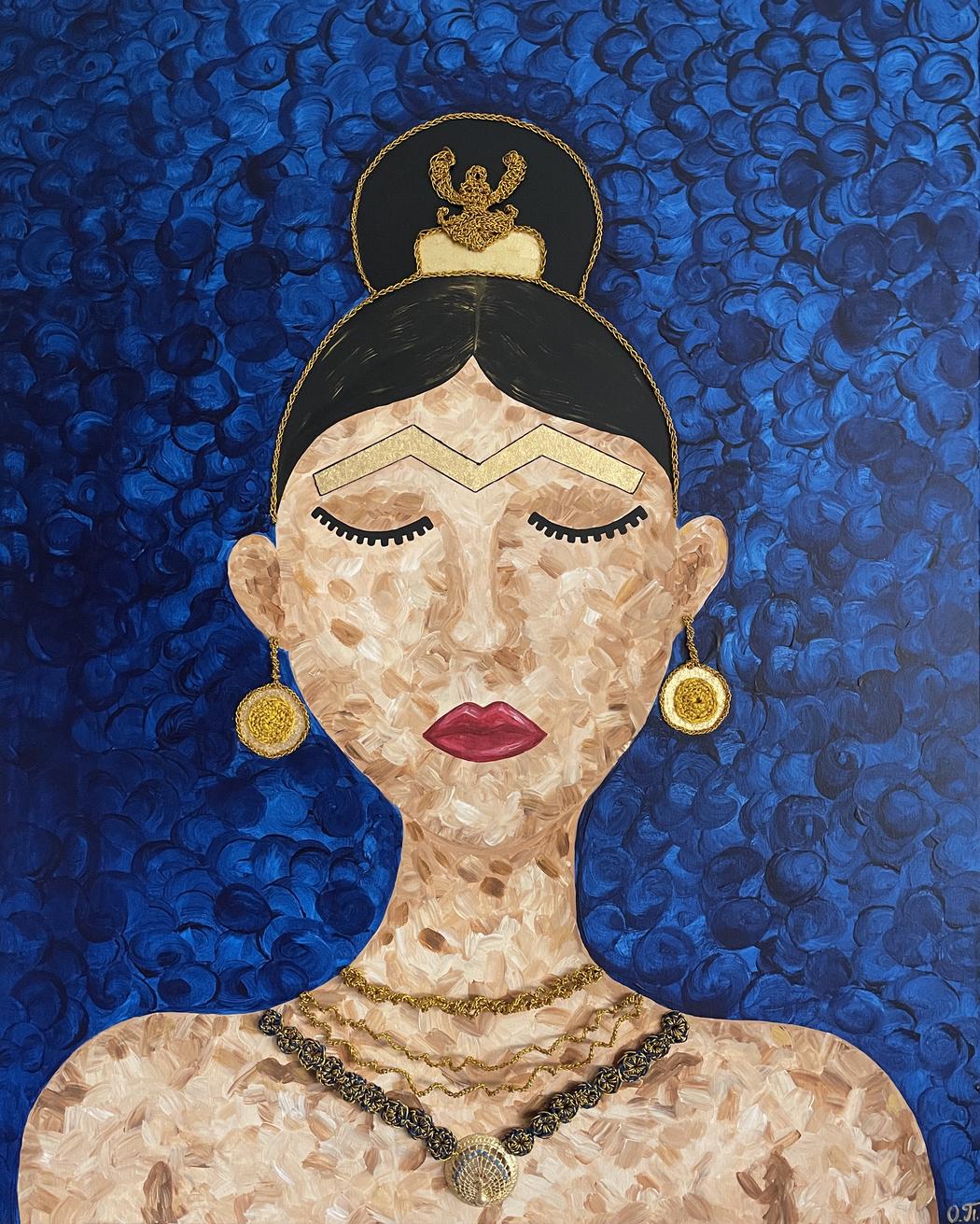 Oleksandra Roche-Newton | Scythian Frida | 2025
You have said that every brushstroke is a conversation between your inner vision and the beauty you see in nature. What do you hope viewers feel when they encounter your work?
I hope that at first, viewers feel something positive—light, warm, perhaps even a small sense of curiosity or joy that draws them closer. I love hearing what associations they have with my paintings, what they see in them, and what emotions they experience. And if they’re curious, I can share my story.
Ideally, there is a moment when they slow down—when they notice a detail, a color combination, or a character, and it gently opens an emotional space. It could evoke inspiration, imagination, motivation, playfulness, or a deeper awareness of their own feelings, or even a need to pause and reconnect. Perhaps it also brings back a childlike way of seeing the world, where everything feels a little more alive and meaningful.