Cynthia Cavalieri
You received a Gold Key Award for pen and ink drawing in 1974. How did that early recognition influence your confidence and direction as an artist?
My art teacher submitted the drawing, and I was surprised to find out about the award. I only realized its significance when I attended the event.
Validation is a wonderful motivation. I would have continued drawing and painting because I love the creative process, but it definitely fueled my confidence and inspired me to study art.
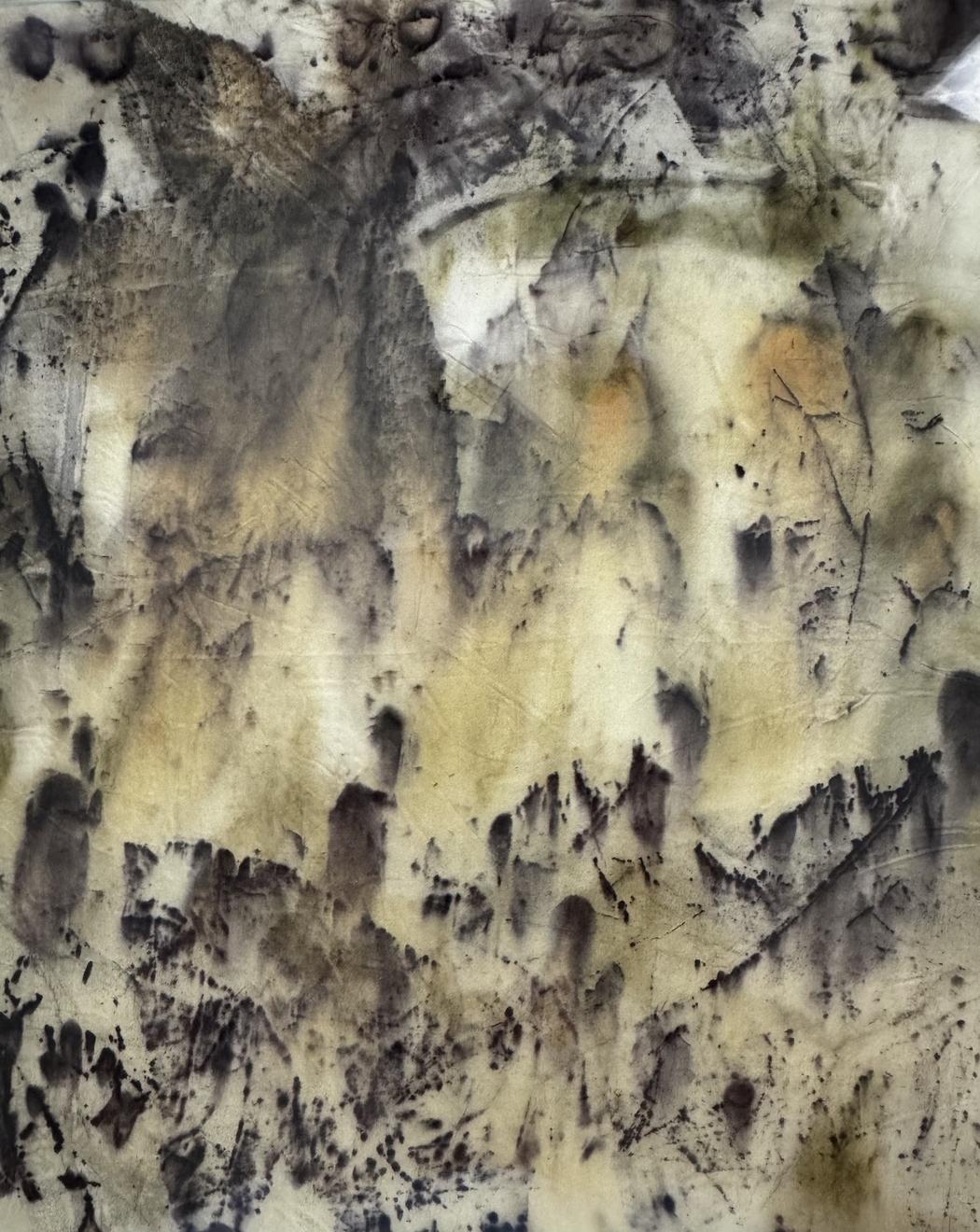 Cynthia Cavalieri | Wedding
You studied Fine Art at St. Mary’s College of Maryland and also describe yourself as self-taught. How have formal training and personal exploration shaped your artistic path?
Formal training is eye-opening. To study the masters, to understand artists’ processes, techniques and approaches to aesthetics, is invaluable. It is truly inspiring, and provided the impetus to explore different mediums. I took classes in every medium possible—printing, ceramics, sculpture, silver jewelry, painting, drawing. With endless resources, I would still be taking those classes. It was a huge playpen of exploration.
I was offered the opportunity to produce art for book covers for a small literary press and was involved with a network of poets and writers—so I was very lucky to have that opportunity. I focused on drawing and pen and ink, and it gave me the discipline to work with intent. I was allowed to apply what I learned.
I am not sure formal training sparks the desire to create something—the curiosity, to explore and experiment. Formal classes provide ideas, techniques, and you learn what really works and why—but the creative process, the joy of play and wonder—I’m not sure it can be taught.
What first drew you to eco-printing, and what keeps you connected to this process today?
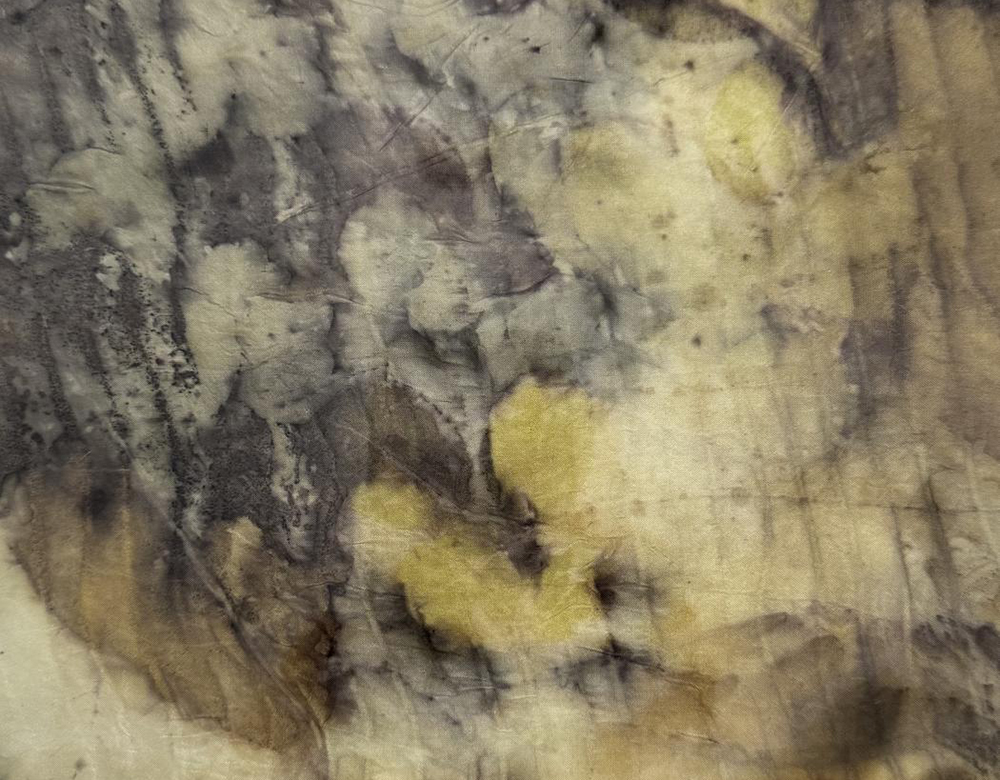
Eco-printing is a new world of possibilities, and I am still learning, really. I love experimenting with different leaves and flowers, different natural elements that can be introduced in the process. I am focused on it because there are so many things to try! There are quite a few failures, honestly, but I keep working at it. I read and study artists who are experts, but I enjoy trying different things.
Eco-printing involves leaves, flowers, plants, steam, and time. Do you see this process as a collaboration with nature rather than a fully controlled artistic technique?
It is definitely a collaboration with nature, and it’s not a controlled process for me at all, which is part of the enjoyment. There are specific techniques, but there is a great deal of trial and error to find out the amount of tannin in certain leaves, for instance. Nature gets to decide the outcome, and I like that.
Your works have a very delicate, atmospheric quality, with natural forms appearing almost like memories or traces. How do you approach the balance between image, texture, and abstraction?
That is such a nice compliment—thank you. When eco-printing, I may work with a larger piece of silk, with the best of intentions, but there may be a specific area on the silk that catches my eye. Sometimes the aesthetics of a smaller section of the fabric will speak to me. I love abstract art, and knowing what ‘works’ is partly gut feeling and partly study and observation.
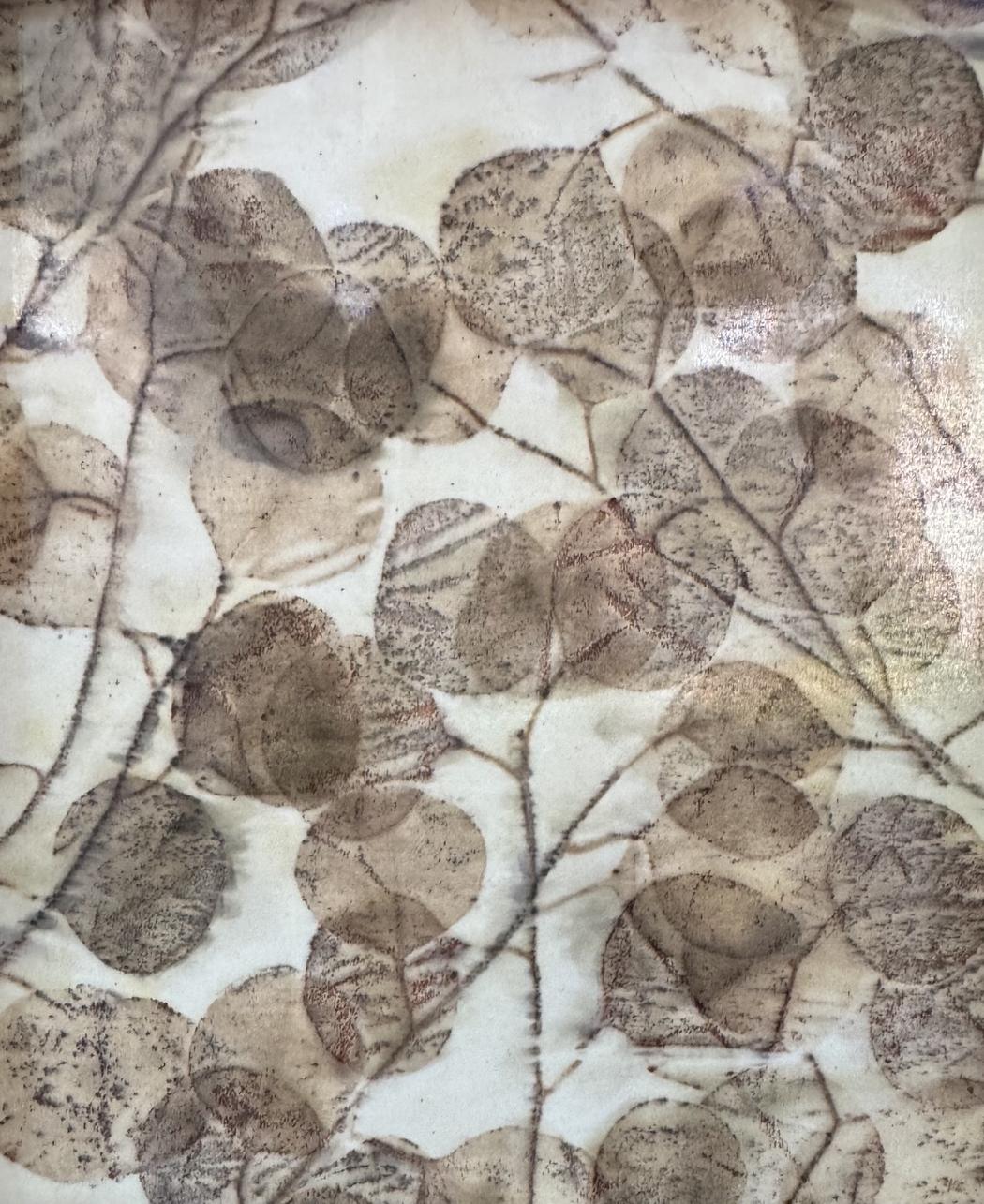 Cynthia Cavalieri | Eucalyptus
How important is unpredictability in your work? Do unexpected marks or transformations often lead you in new creative directions?
Unpredictability is fun, and the surprise will often spark a new idea. Unexpected marks can also be expensive and demoralizing, but I learn what I should or shouldn’t do. Sometimes it turns out to be aesthetically pleasing, so I look at it objectively and see if it is a ‘happy accident’. The unpredictability intrigues me.
When viewers encounter your work, what do you hope they notice first: the natural materials, the process, the atmosphere, or their own emotional response?
I try to provide a piece of art that is interesting to explore. I think the process lends an element of interest, of depth, and hopefully invites a viewer to examine the work more closely and find their own surprises—as I did.