
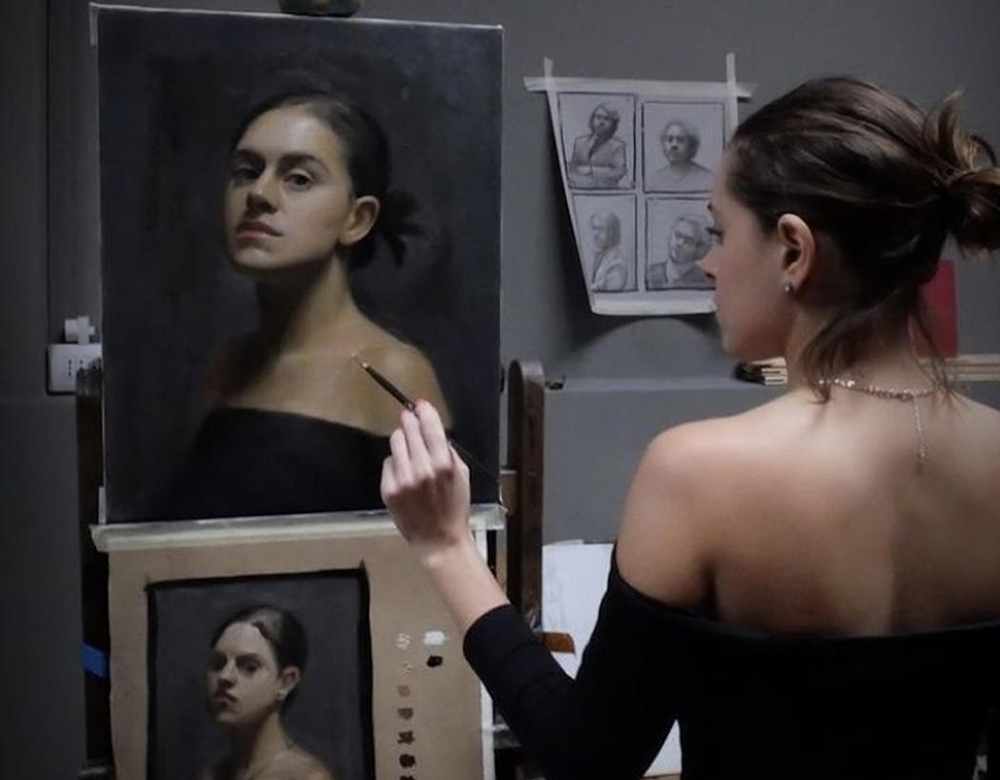
Paulina Ramos Moreno
Your background combines Fine Arts and Psychology. How has the study of the human mind influenced the way you approach portraiture and the human figure?
I have always believed that the body is merely the outermost layer of something far more restless. Psychology taught me to listen beneath the surface. When I stand before a model, I am not cataloguing anatomy. I am attending to what cannot quite be contained: the emotion that presses outward through the skin. My portraits are not likenesses. They are attempts to give form to the interior weather of a human being; to breathe humanity back into a body that the world so often reduces to mere appearance.
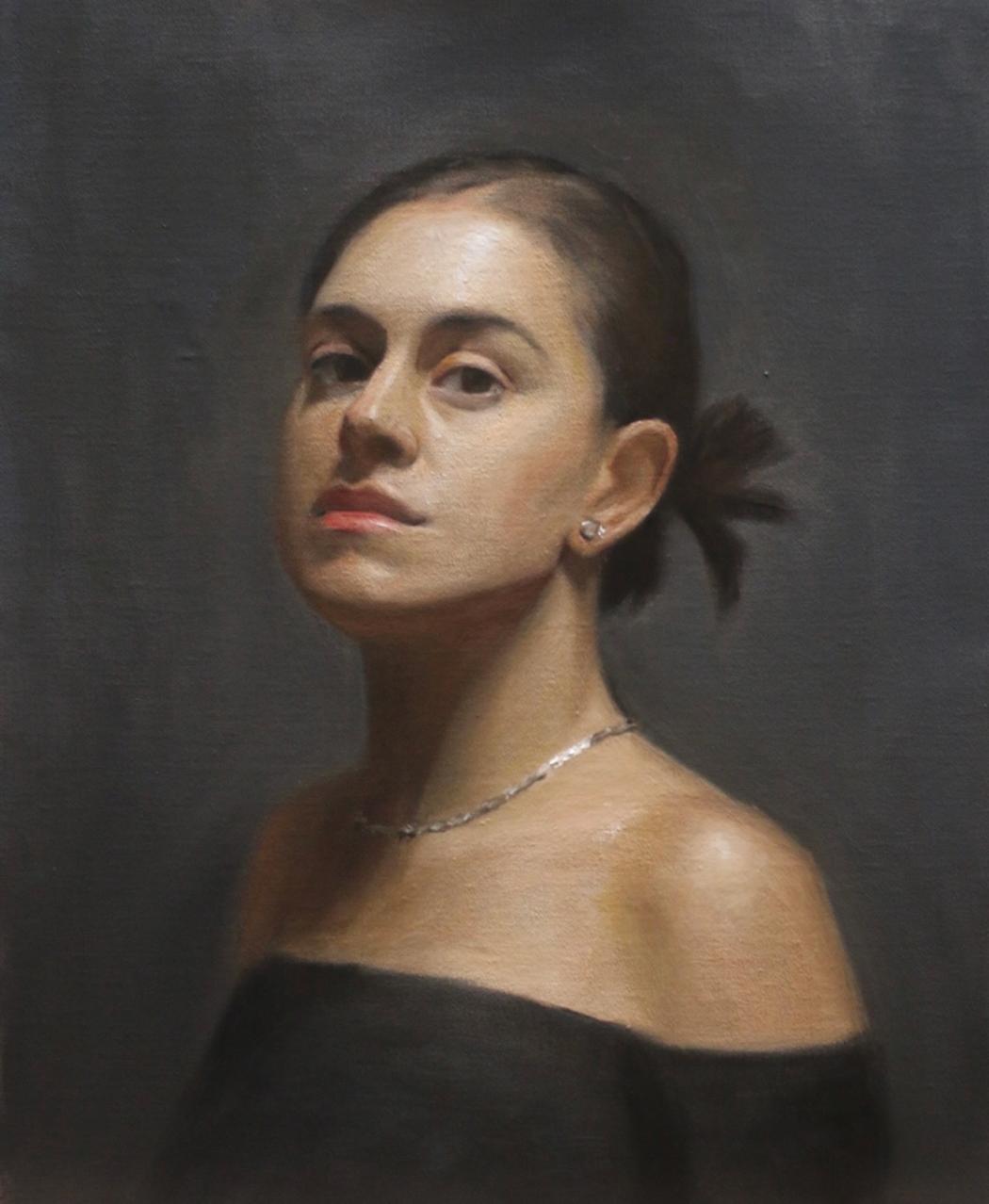 Paulina Ramos Moreno | Self Portrait | 2022
You describe painting as “an emotional excavation.” What does this process look like for you in the studio?
To excavate is to go downward, carefully, with full attention to what might break. In the studio, I work like an archaeologist of feeling, brushstroke by brushstroke, I uncover what the face almost conceals. It is the subtle things that tell the truth: the barely-parted lips, the heaviness gathered beneath the eyes, the tension held in a jaw. I do not invent emotion. I unearth it. And when I have found it, I place it on the canvas so that the viewer must ask. The painting becomes a question the subject poses to the world, one they may not even know they are asking.
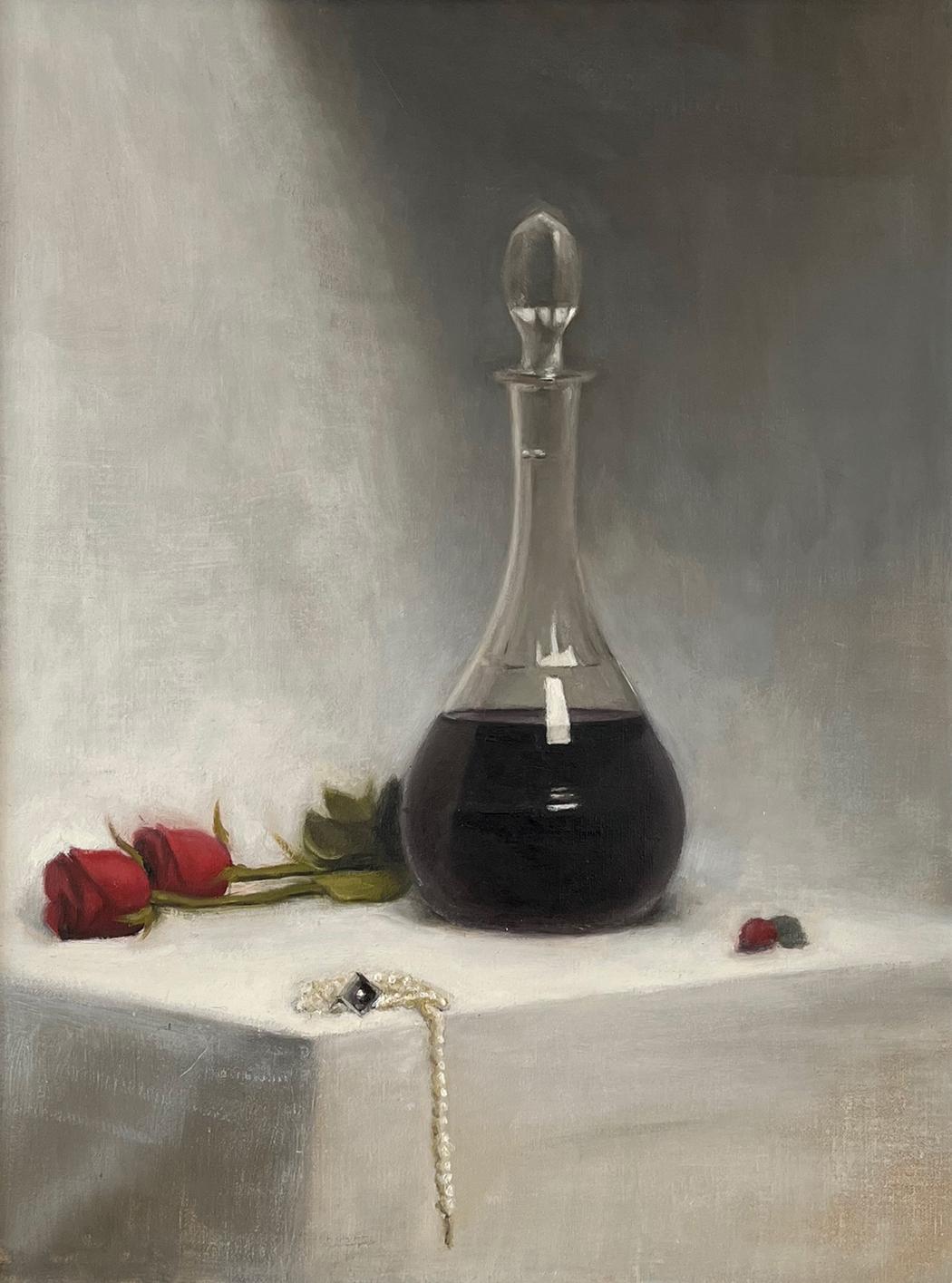 Paulina Ramos Moreno | Lost Love | 2022
Many of your portraits seem to capture a moment of silence, introspection, or emotional suspension. What draws you to these quiet psychological states?
There is a particular kind of stillness that is not emptiness; it is density. When a model holds a pose for twenty minutes, the body grows inward. Movement ceases, but the interior does not. What I find extraordinary is that in the forced pause, everything the person carries becomes visible. A single delicate gesture, a hand resting against a thigh, the slight fall of a gaze, these small acts contain entire narratives. I am drawn to the suspended moment because it is where the soul, for once, cannot hide.
Your work often creates a dialogue between classical painting traditions and contemporary emotional sensitivity. How do you balance the old and the new in your practice?
The old masters gave me structure; the architecture of light and shadow, the Zorn palette with its strict and beautiful constraints, the chiaroscuro that carves form from darkness as if releasing it from stone. But I cannot live entirely in the past. I carry the present inside me, and it demands its own language. So, I introduce color, vivid, insistent and geometry that cuts through the realism like a modern interruption, a reminder that the figure exists not only in classical time but in this moment, this century, this fractured and luminous world. The tension between the two is not a conflict I resolve. It is the conversation itself. It is where the paintings live.
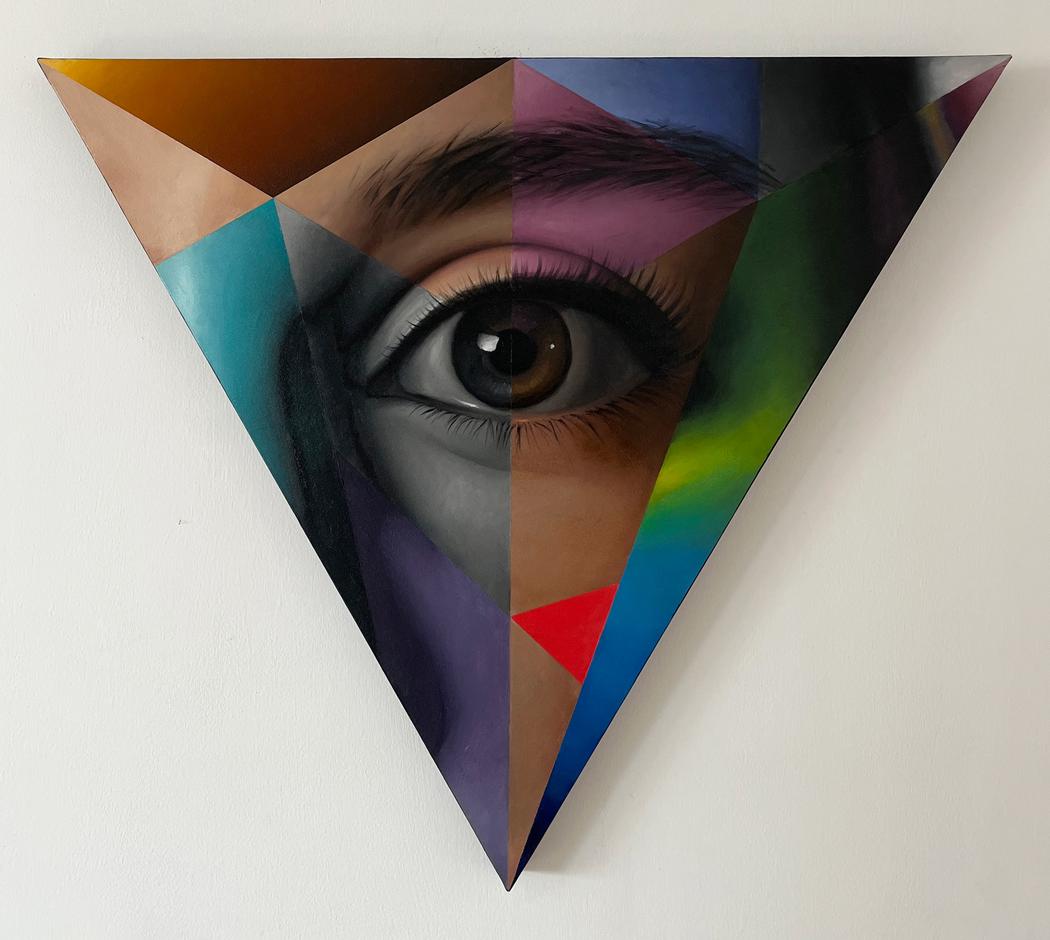 Paulina Ramos Moreno | Euphoria | 2022
Studying at the Florence Academy of Art gave you direct contact with traditional European techniques. What was the most important lesson you took from that experience?
That you must learn from the living world, not from its photograph. A photograph is a closed door; it gives you an image but withholds the reason behind it. It cannot tell you why a shadow falls where it falls, what quality of light is producing that particular warmth along a collarbone, what the air itself is doing. Working from life is working from truth. Nature becomes your teacher, endlessly patient, endlessly complex. You begin to understand volume not as a concept but as a fact. Florence taught me that to paint from life is an act of humility and sincerity.
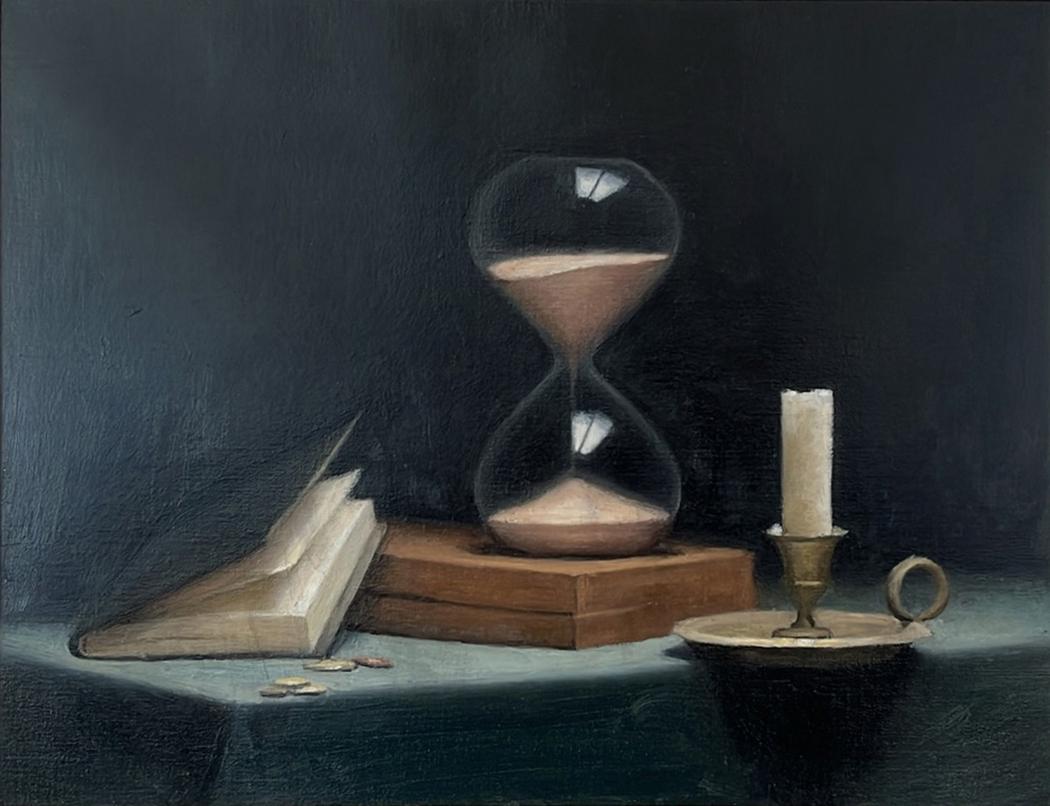 Paulina Ramos Moreno | Time And Hope | 2023
In your paintings, light often feels almost psychological rather than purely visual. What role does light play in revealing the inner world of your subjects?
Light, for me, is never neutral. Light is the first thing a viewer encounters, the first silence before the painting speaks, and I use that moment of first attention to draw the viewer toward something essential; the brightest point, yes, but also what surrounds it, what the darkness is protecting. Light and shadow in portraiture are not opposites. They are collaborators in the work of revelation. The light shows what a person carries toward the world; the shadow holds what they have not yet surrendered.
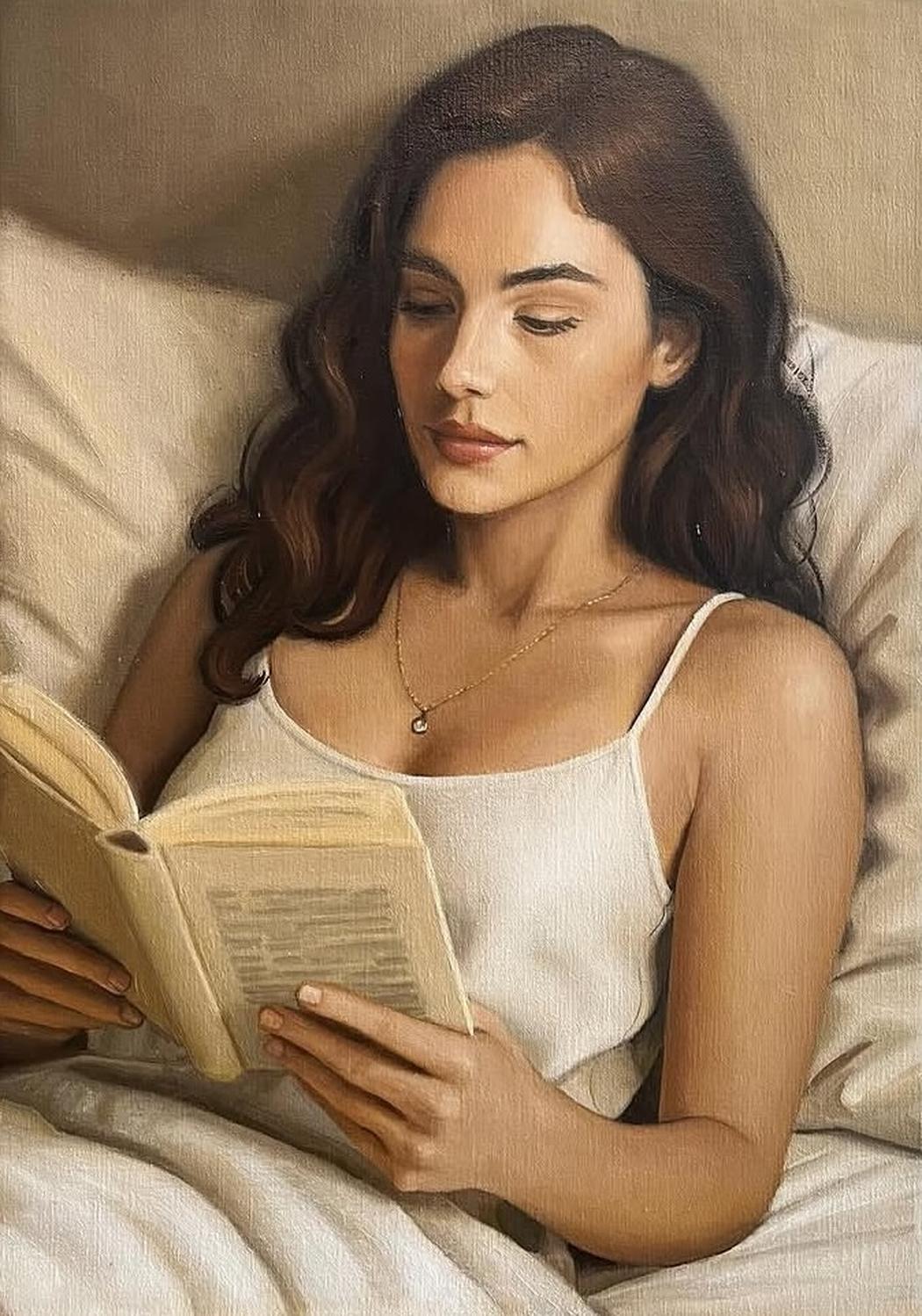 Paulina Ramos Moreno | Woman Reading | 2025
How does your Mexican-American background and your connection to Chihuahua shape your artistic identity and visual language?
Growing up in Chihuahua, I was surrounded by the weight and beauty of tradition. My parents also brought me books of European masters from their travels : Velázquez, Rembrandt, figures who seemed to reach across centuries and speak directly to something I did not yet have words for. When I came to the United States, I encountered new mediums, new perspectives, new ways of seeing. My identity now lives at the crossing point of these cultures. I do not belong entirely to one or the other; I belong to the conversation between them. And that, I have come to understand, is not a limitation. It is the very source of my language.
Leave a Reply
You must be logged in to post a comment.