
WirSindKunst
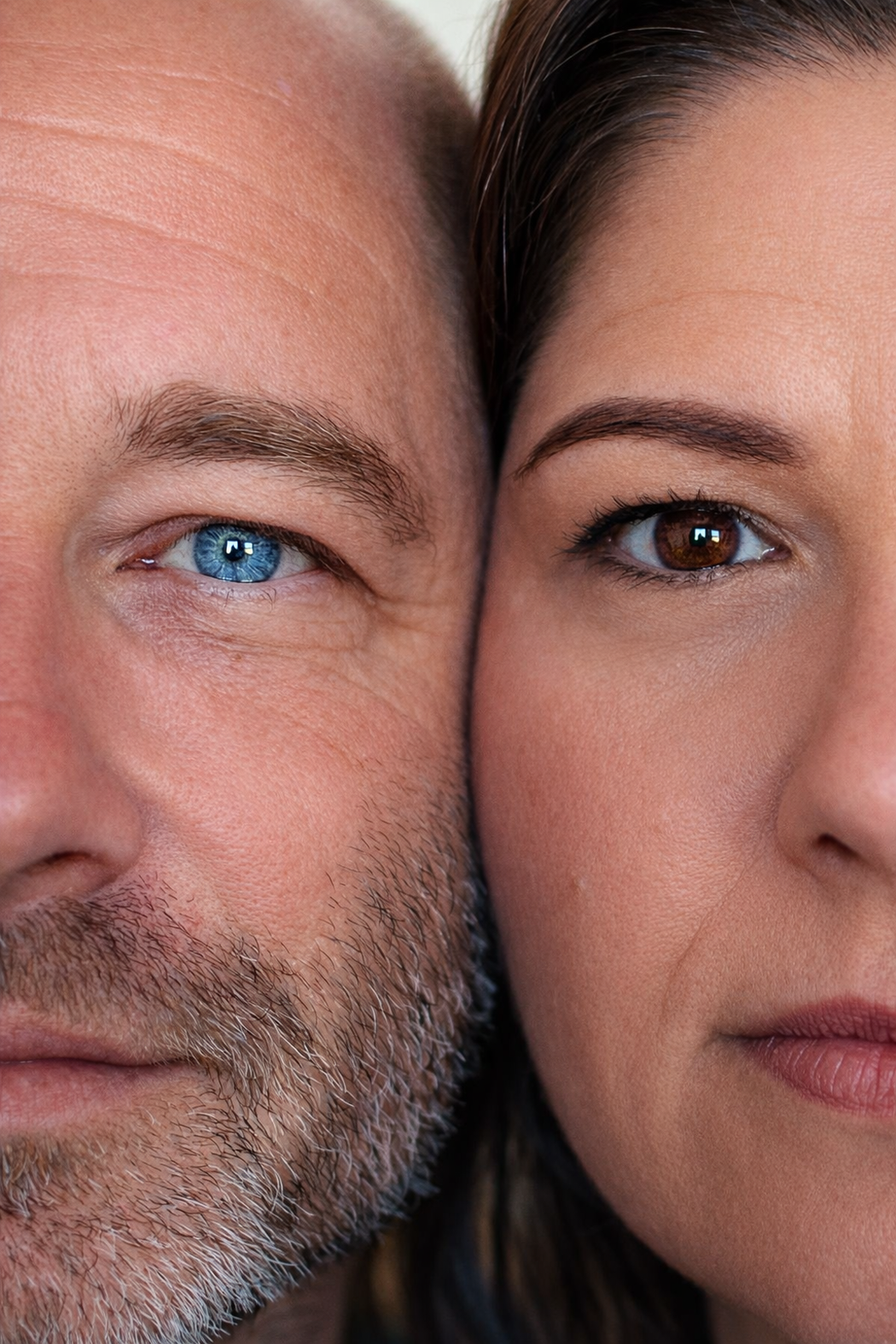
Your practice is built around “Dual Flow Art”. How did this concept originate, and how has it evolved over time?
Dual Flow Art didn’t begin as a defined concept.
We had always created alongside each other, but on separate surfaces.
Over time, we became aware that our approaches were fundamentally different.
Not only in style, but in how we perceive space, color, and movement within an image.
That difference made us curious. At first we didn’t aim to combine our approaches. We wanted to understand what would happen if both ways of seeing were brought into the same space. So we began working on a single canvas.
What followed was not a fusion, but an interaction. Our approaches didn’t blend, they responded to each other, sometimes reinforcing, sometimes interrupting.
This intuitive experiment evolved into a structured method, including timed intervals of 7 to 10 minutes that force a regular exchange of control.
How do you navigate authorship when both of you are continuously intervening in the same work?
Authorship, in our work, is not something we assign or preserve. From the moment we start working on the same surface, every decision becomes vulnerable to change.
Nothing is protected and each element introduced by one can be altered, interrupted, or completely transformed by the other.
Because of this, authorship cannot be traced in a linear way, but rather dissolves into the process itself. The work doesn’t belong to either of us. It belongs to what happens between us.
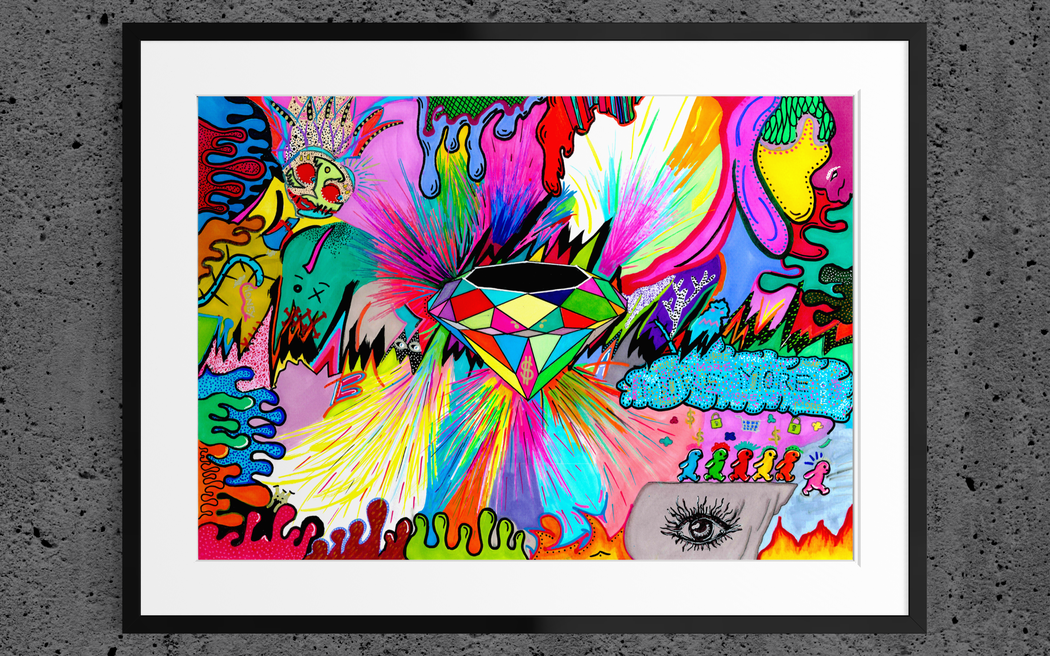 WirSindKunst | Diamond
Can you describe a moment in your process where tension between your two perspectives led to an unexpected breakthrough?
Breakthroughs in our process rarely come from agreement.
There are moments where one of us introduces something intuitively, but cannot fully develop it because the timer forces a switch.
Over the next two or three cycles, this idea may remain untouched. The other works elsewhere in the image, allowing it to exist. Then, in a later cycle, it gets interrupted.
There is often a brief moment where one of us hesitates. Not because something is wrong, but because the image has shifted beyond what we expected.
But instead of restoring what was there, we continue to use the shift to create something new. By allowing these abrupt and unexpected changes, we reach a breakthrough that could not have been planned.
How does the interaction between neurotypical and neurodivergent perception shape the final visual outcome?
Our work is shaped by two fundamentally different ways of perceiving. One moves through impulse, intensity, and rapid associations. The other through structure, orientation, and compositional clarity.
These differences influence how we see space, how we use color, and how we respond to what is already present. Because of this, the image develops through two distinct logics operating at the same time.
Our work shows that these perspectives do not need to be aligned to coexist.
The canvas becomes a space where these different systems become visible in how they operate. Instead of existing side by side, they actively interact.
Through this interaction, something emerges that neither system could produce independently. In that sense, the work also reflects a broader question of how different ways of thinking are perceived, valued, and allowed to exist.
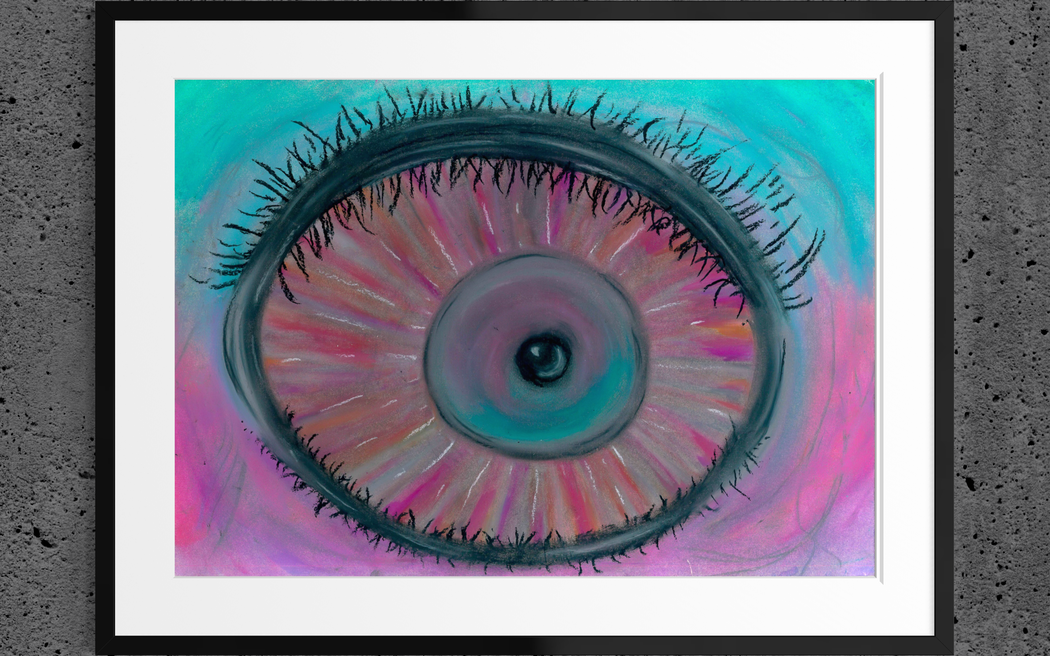 WirSindKunst | Eye
Your works often feel dense and layered. Do you begin with any structure, or does the composition emerge entirely through interaction?
There is always a starting point, but never a fixed outcome. Each of us can introduce a separate main anchor without knowing whether it will remain in the final work.
The anchor serves as an initial orientation, not as a plan. From there, the composition develops through interaction, but not randomly.
We work in timed intervals of 7 to 10 minutes and then switch, regardless of whether something feels finished. This interruption is essential. It prevents control from stabilizing and keeps the image in motion.
Structure can appear, but it is never final. It is continuously altered, questioned, and redefined. The density of our work emerges from this repeated interruption.
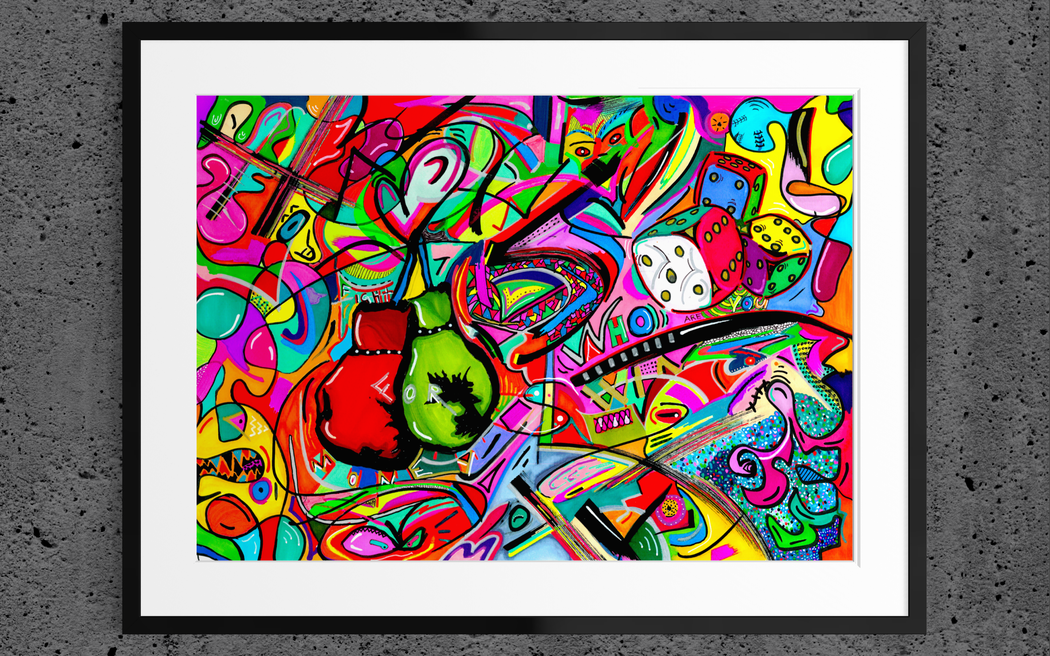 WirSindKunst | Fight
In your statement, you describe your work as “confrontation” rather than collaboration. Could you elaborate on what confrontation means in your artistic dialogue?
When we speak of confrontation, we don’t mean conflict in a negative sense. We mean the active engagement with what the other introduces.
Instead of preserving elements or avoiding interference, we respond directly. We question, interrupt, and build from what is already there.
Confrontation means allowing difference to remain present and effective within the work. It is not about agreement. It is about working through divergence.
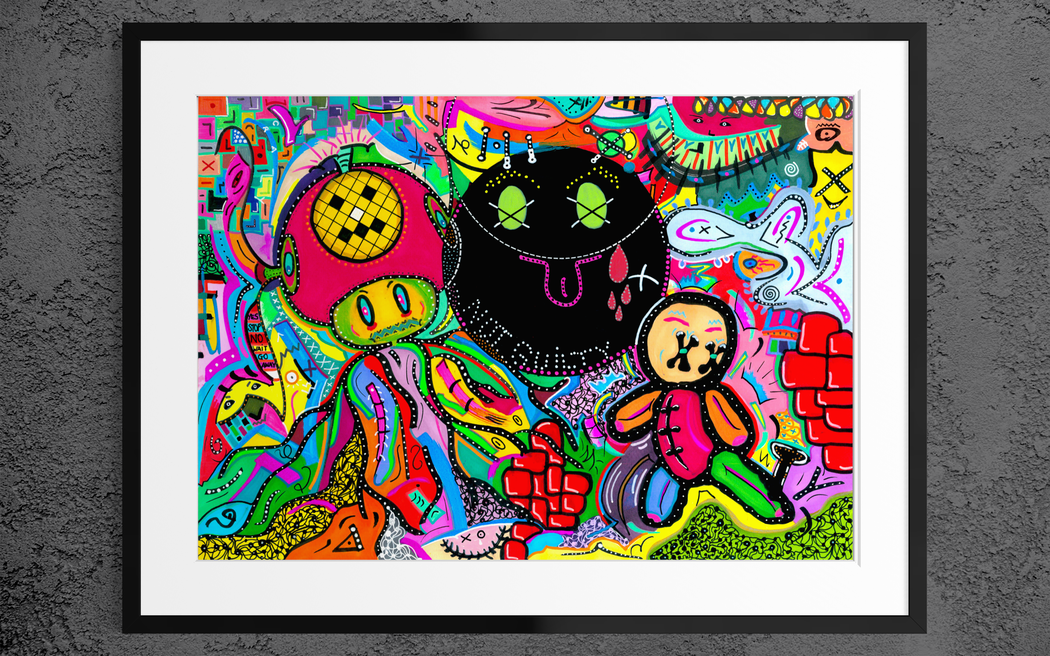 WirSindKunst | Not Guilty
What do you hope viewers perceive or feel when encountering the tension and complexity within your works?
We don’t aim to define what viewers should feel. What we are interested in is how they perceive the work.
Our images contain tension, density, and shifting structures.
They don’t offer a single, stable reading. Viewers may search for order or direction, only to encounter disruption and confrontation within the image.
That moment matters. Because it reflects how perception itself works.
Not fixed, but constantly adjusting. This is where the work becomes active. It challenges, disrupts, and expands perception.
Leave a Reply
You must be logged in to post a comment.