
Kristina Ushakova
 Kristina Ushakova | Eco of the wind
Your work bridges materiality and storytelling – how did your journey into glass art begin, and what drew you specifically to this medium?
When it comes to my story, I would definitely say that some things choose you before you ever have the chance to choose them. Glass found me. I didn’t seek it out. When I was applying to university, I hesitated between departments until I landed, almost at random, in the Glass Art Department.
I had no idea that this spontaneous decision would become a turning point in my life. In glass, I found my language as an artist. Over time, I found my opponent, as glass is a demanding and unforgiving material. But I’ve never been one to step away from a challenge. The deeper I go into the history of glass — from ancient furnaces to the fearless experiments of the 20th century — the more certain I am: glass has no limits.
 Kristina Ushakova | Dragons
You work across different techniques and formats. How do you decide which method best expresses a particular idea or concept?
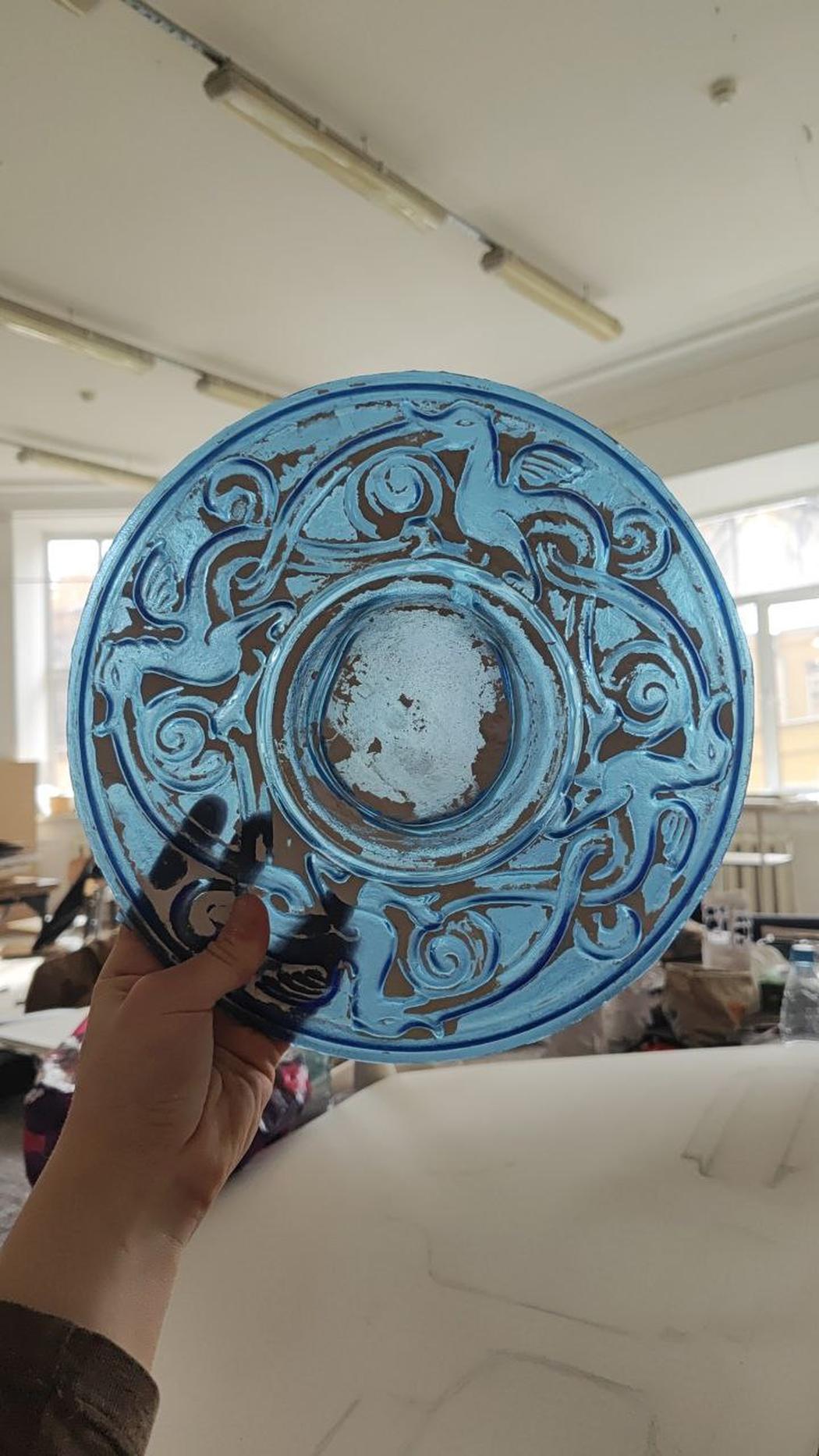
Actually, the choice of technique is rarely one-sided. Ideas tend to come to me when I’m already diving into a material — the material itself gives me clues: “Look, here it could be like this, and here – something else.” So I make a mental note to give it a try. In that sense, the technique becomes less a tool for executing a ready-made idea and more of a catalyst. While working on one project, I come up with several others. And sometimes it plays out the other way around: there’s a vague image already in my mind, and I go through materials like filters, trying to see which one will amplify the feeling I’m after.
Glass is both fragile and resilient. How do these dual qualities influence your artistic thinking?
I think the best way to put it is: “We turn defects into effects.” That’s how we go about things in our department. Glass is a capricious material, one that always introduces its own adjustments. When I start a project, I understand from the very beginning that the original idea will transform many times during the process. I often leave space for the glass to express itself just in case the material behaves unexpectedly (this can work in a positive way or a negative one).
 Kristina Ushakova | Eco of the wind
Could you walk us through your creative process – from initial sketch to the final glass object?
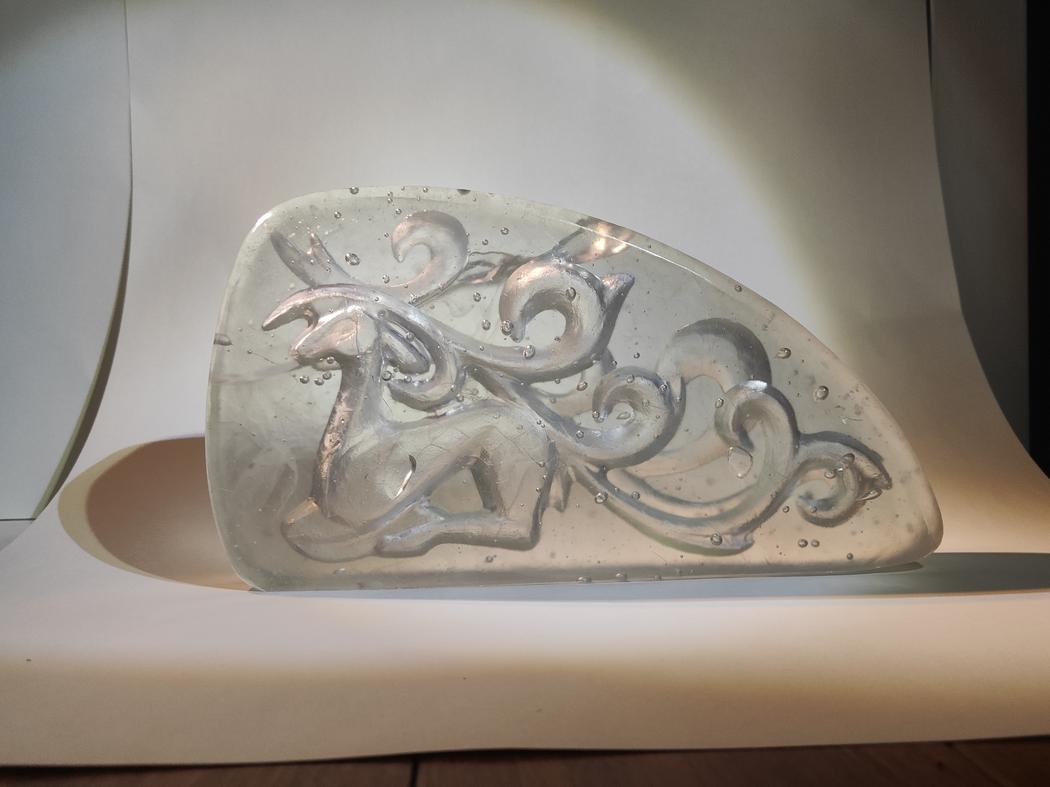
A lot depends on the project. No two follow the same path. Let’s take the glass sculpture Echo of the Wind as case in point.
– The first stage was creating sketches at the zoo.
– Then came a long process of stylization and searching for form. I spent a lot of time studying the art of the Scythians and Etruscans. It was at this stage that the artistic image took shape: “A deer swept by an icy northern wind.” The form emphasizes the gust of air, while the material evokes the north, ice, and the crystalline cold ringing in the air.These two stages took me over a month, and by then there wasn’t much time left before the deadline.
– I began working with the material:
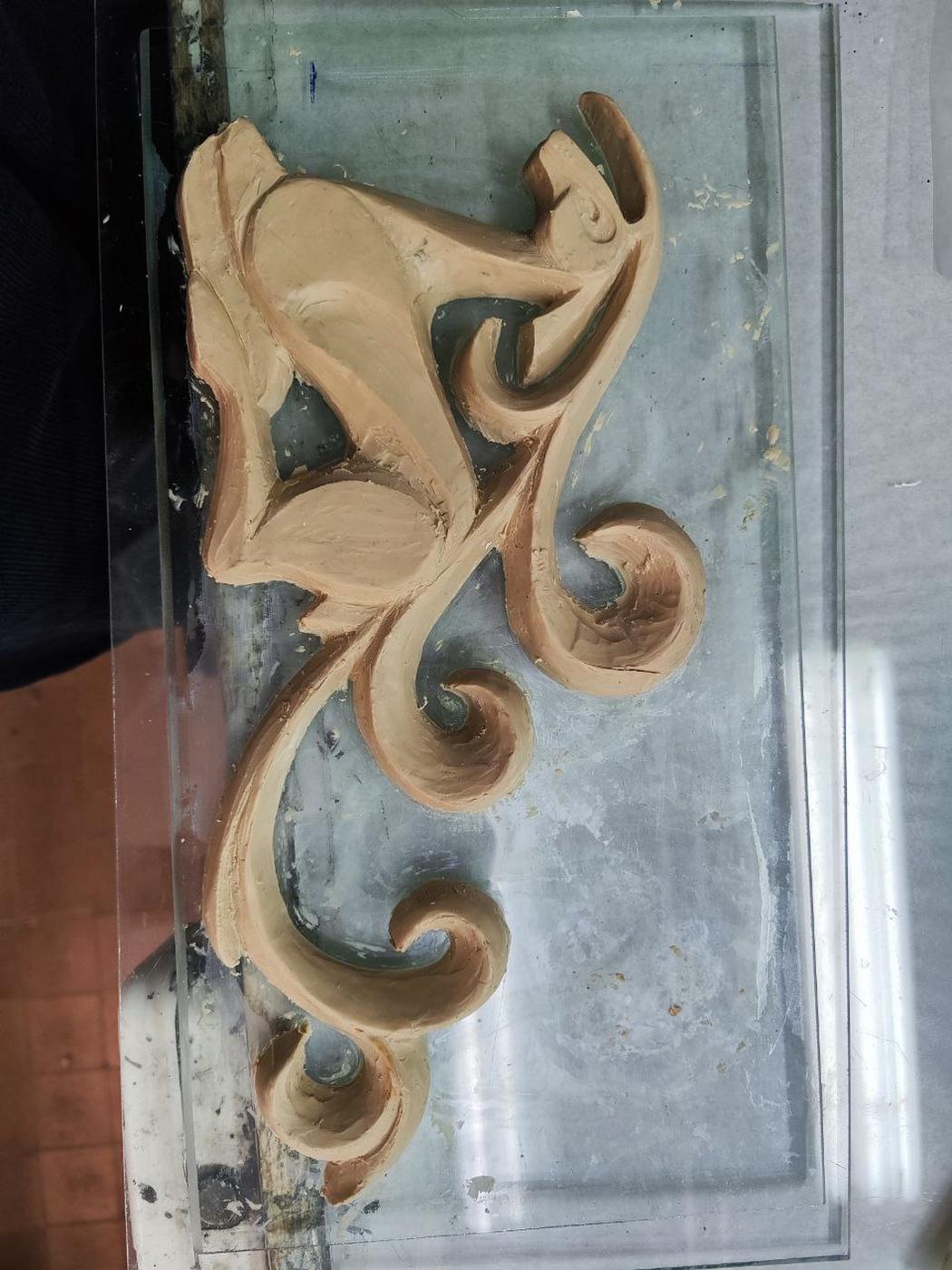
To create this piece, I sculpted two mirrored forms using sculptural plasticine. Then I made two positive plaster molds from them. (They’re called “positive” because if you lay glass into them, you get exactly what was sculpted in plasticine.) Next, I created negative molds and, in addition, made refractory frames to prevent the glass from spreading in the kiln. I coated all the elements — both negative molds and both frames — with kaolin, which is necessary to keep the glass from sticking. After that, I fritted the glass (in this case, a crystal dinnerware set), placed it into the mold, and put it in the kiln. The technique of melting glass in or on a mold is called slumping. After that came a long and grueling process of grinding, desticking, edge finishing, assembly, and polishing.
To sum it up:
- Sketches, studies, concept development
- Stylization and design
- Sculpting the master model in plasticine
- Working with plaster
- Slumping the glass
- Cold working
How has your education at the Stieglitz Academy shaped your artistic vision and technical approach?
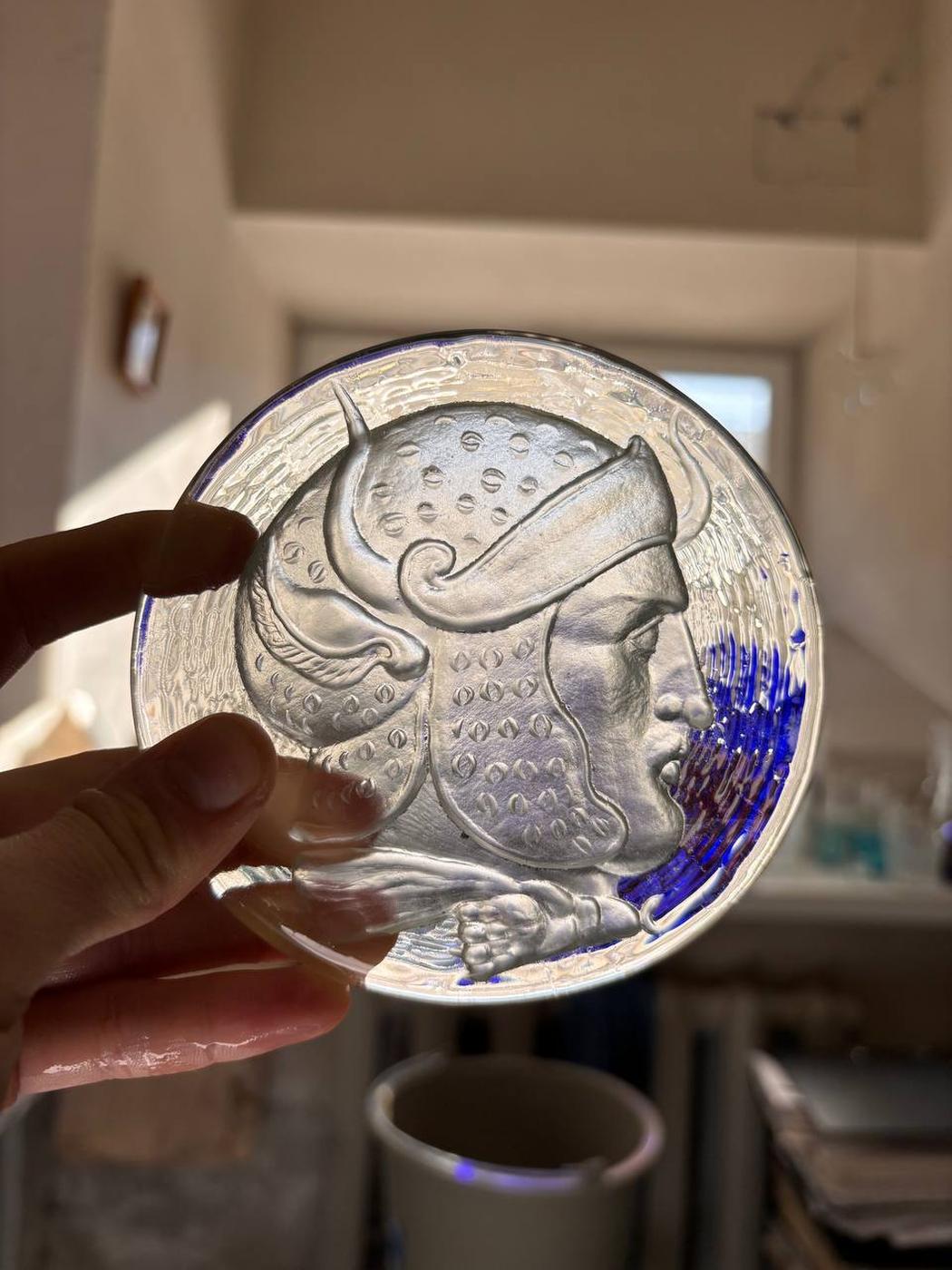
My education at the Academy had a profound influence on me. I started thinking in terms of imagery and form, noticing stylization in the world around me, and applying it myself. I grew to love large formats, scale, seriality, and purity of form.
What challenges do you face when working with glass, and how do these challenges shape the final result?
Working with glass is always about compromise. Let’s go back to Echo of the Wind — the project earned a second name, “Murphy” (after Murphy’s Law), because everything went wrong. Problems kept cropping up one after another: the molds seized up, cracked up, fell apart; I ran out of glass; the parts didn’t line up; and the icing on the cake was two cracks showing up in the final piece. A lot of it boiled down to the fact that I used several types of glass, even though technically you’re not meant to mix them. There were also difficulties stemming from the imperfections of the kilns. Each problem brings in its own change to the original concept — in this way, the work takes on its character as it comes to life.
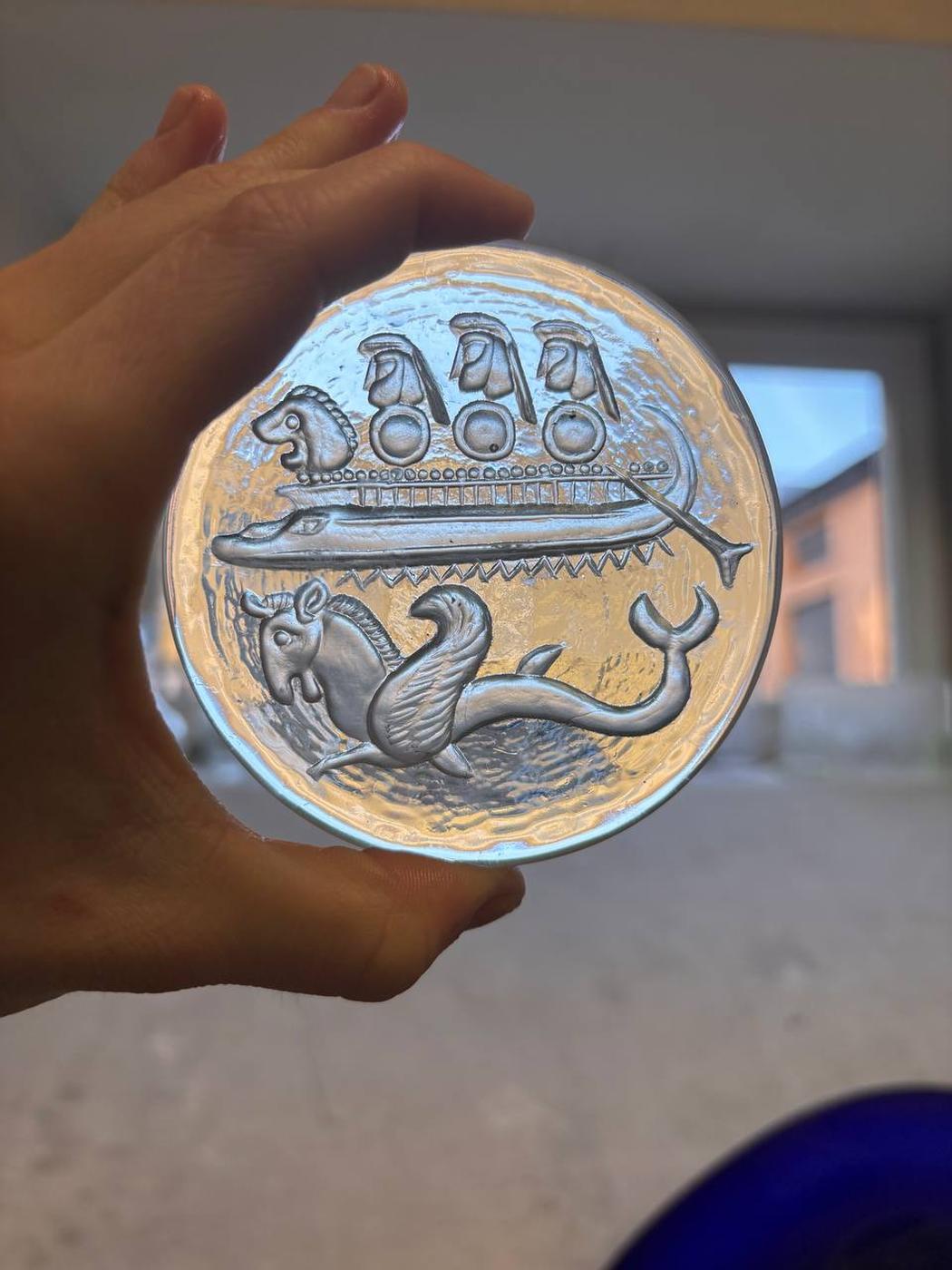
What themes or ideas are you currently exploring, and what directions do you see your work evolving toward in the future?
For me, the central theme is the north. I’m ready to explore its different facets endlessly. That could mean visualizing Celtic music or reinterpreting the woodcarving found on Viking galleys. Right now, I’m working on a project for a glass partition in a residential interior, inspired by the ice drift.
Leave a Reply
You must be logged in to post a comment.