
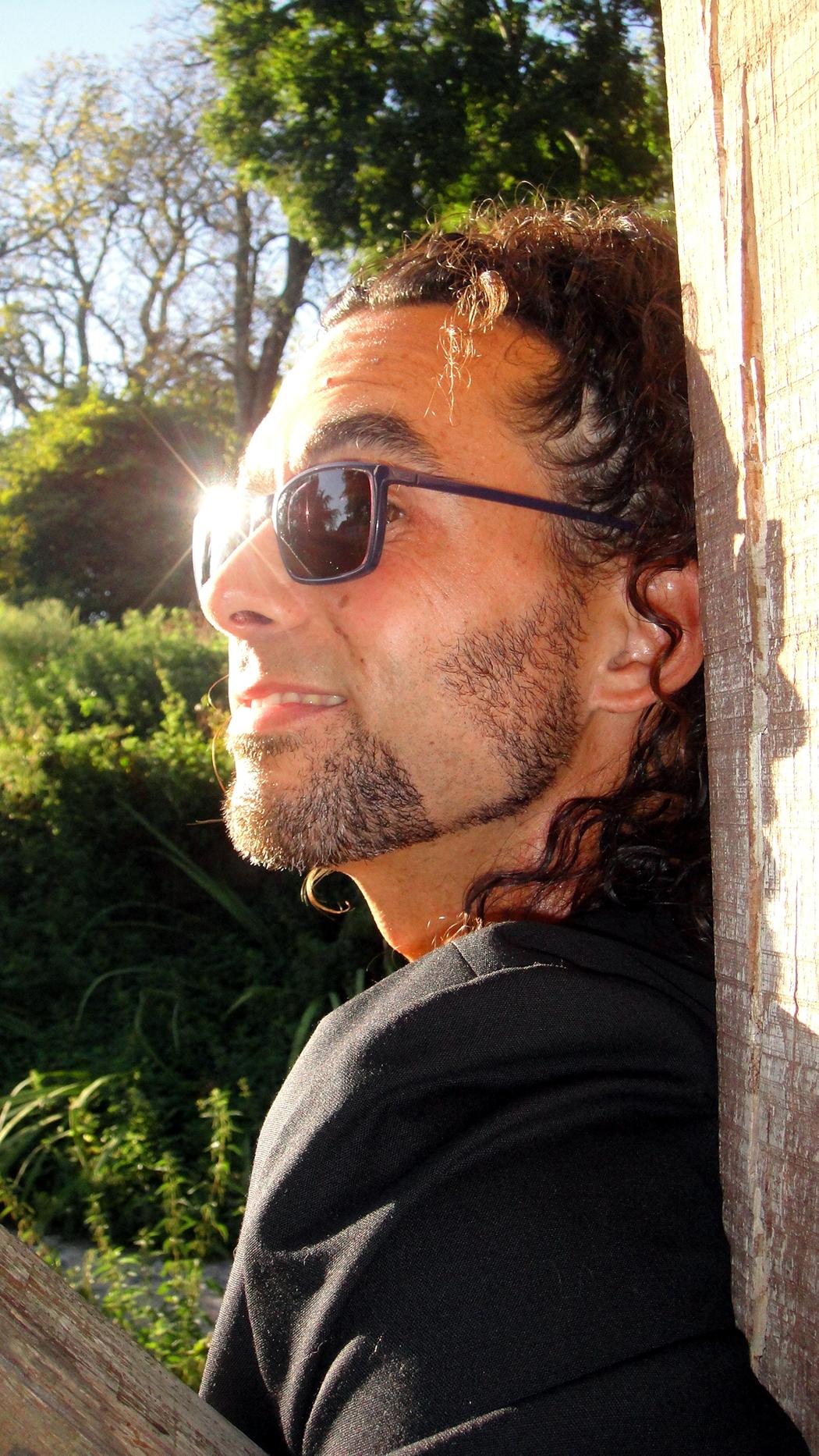
Your statement questions whether we are living life itself or merely its interface. How does this idea shape your visual language and artistic decisions?
For many of us, interactions now only take place through screens. It is from this situation that the question arises « Are we dealing with life or with its interface? »
Human interactions are increasingly biased by the technology they use to subsist. Therefore, my works act in harmony with the sensory shift that characterises the relationships between « absent » interlocutors.
This idea shapes my visual language to such an extent that, on the reverse side of the canvas, a painting is sealed, whose reproduction materialises the obverse side. Back to back, interconnected but unrevealed to each other, these two distinct phases of the creative process reflect our detachment from the world beyond its projections.
The trilobite appears as a recurring emblem in your work. What does this prehistoric creature symbolize for you in relation to authenticity and time?
From this basic living being, multiple, more complex organisms may have developed. I therefore observe a transitional creature, which synthesises questions of authenticity and inauthenticity, related to the genesis of creation and the unfolding of future possibilities. From front to back, the trilobite is composed of three lobes (head-thorax-tail). This fossil thus symbolises a temporal trinity (between past, present and future) converging the beginning and the end at the same point. In this, it is the emblem of my technical process! But also, from the depths of human evolution, the trilobite reminds me that our species is merely the snapshot of a sequence of everything that happens and inevitably transforms, or even disappears.
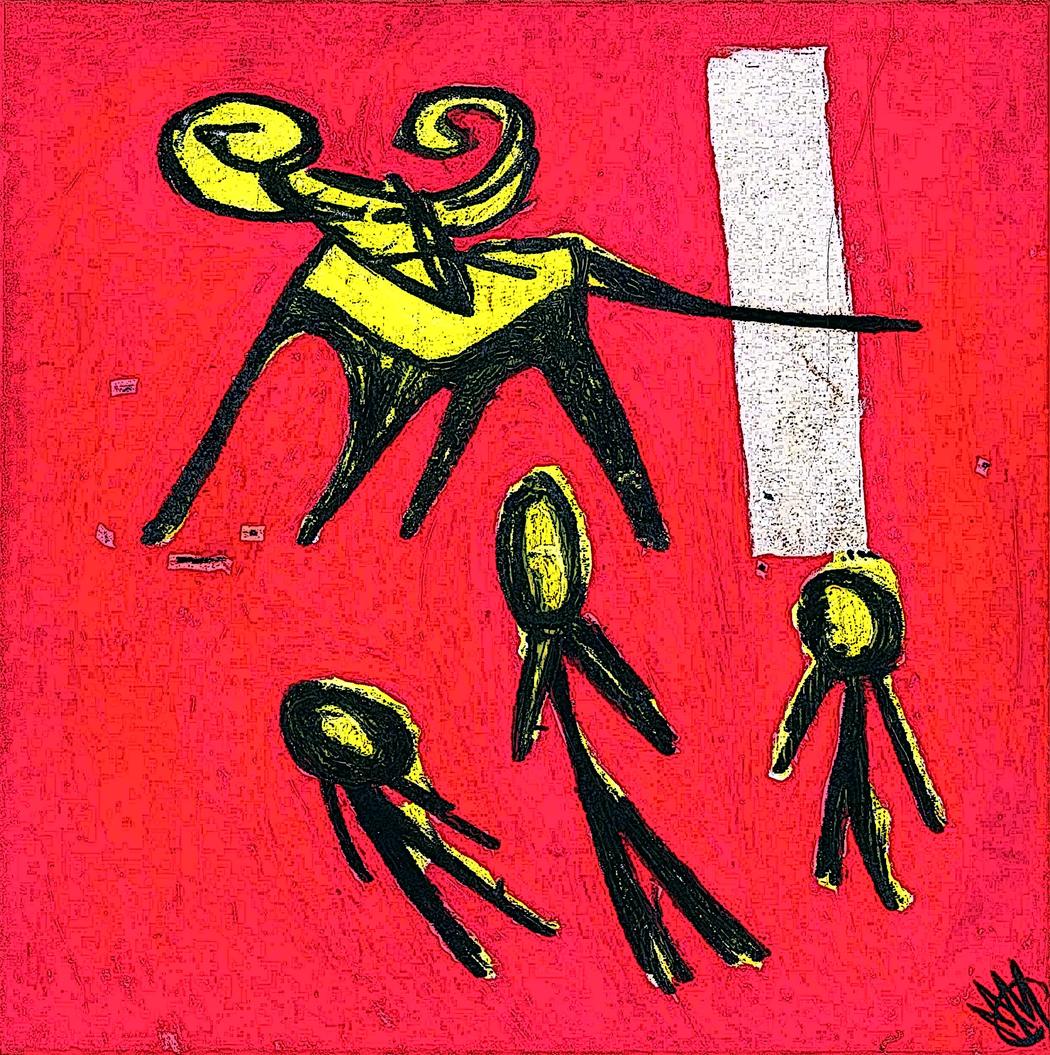 MM | Scène Tutélaire | 2022
Your process combines manual drawing, photocopying, digital colouring, and printing. How do you perceive the relationship between the original and the reproduced in your practice?
I submit most of my drawings and paintings to serial transfer and enlargement operations that mystify the relationship between what serves as the basis for a work and its outcome. In the series of spontaneous drawings « Le Petit Bestiaire » for example, the handwork (ink on paper, oil pastels, grattage) is gradually lost during photocopying and other digital treatments, only to reappear, highlighted, in a one-off print on canvas, which I commission from a leading European laboratory in this field. In this perspective, the original and the reproduced become one and the same misunderstanding, subordinated to the sacralisation of the facsimile.
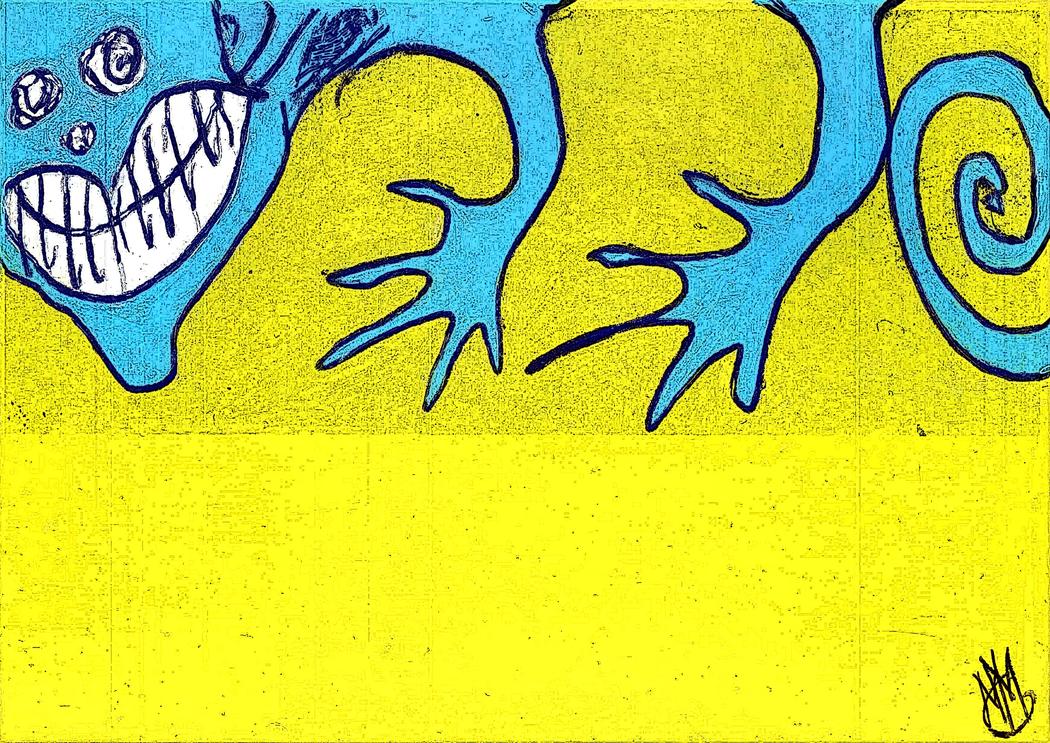 MM | Sovrammostro | 2022
Many of your works are described as « joker pieces ». What role does irony and playfulness occupy within your critical reflection on contemporary society?
The idea of play, or at least the intention to play, supports my entire artistic approach. Irony and playfulness, however, have a primordial role in my « joker pieces ». In Europe, monarchs often had their own court jester, the only person who could mock the sovereign without consequence. Contemporary society and its oligarchs deserve much criticism, but the prevailing gloom and the taboos of « political correctness » nip even witty remarks in the bud, pushing people towards self-censorship. Joker pieces thus grant a certain diplomatic immunity to contents that, through allegory, deliver a bold message.
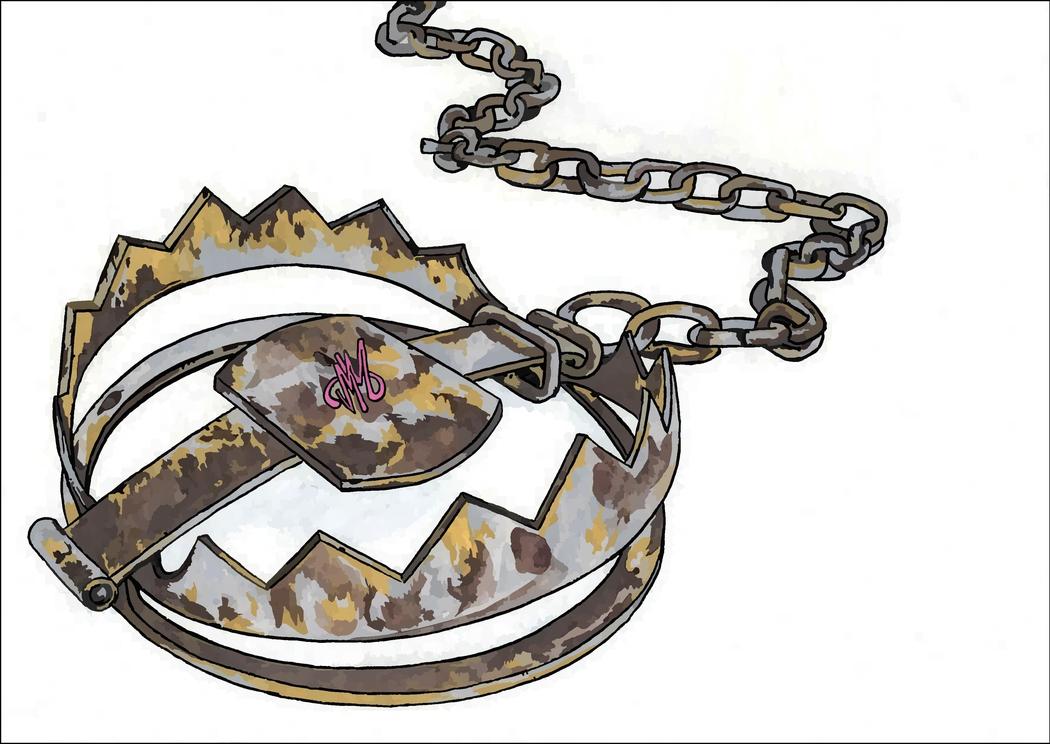 MM | Piège | 2022
Your background includes philosophy and intellectual property work. How have thinkers like Kant, Nietzsche, or Schopenhauer influenced your artistic vision?
It is more my philosophy that includes my background than the contrary. In fact, my former job in the field of intellectual property is reflected in my modus operandi.
In short, to build my artistic vision, Kant provided the conceptual scaffolding, Schopenhauer the mortar (i.e., being and being a representation are one and the same for the subject), and Nietzsche the hammer (to strike the idols)!
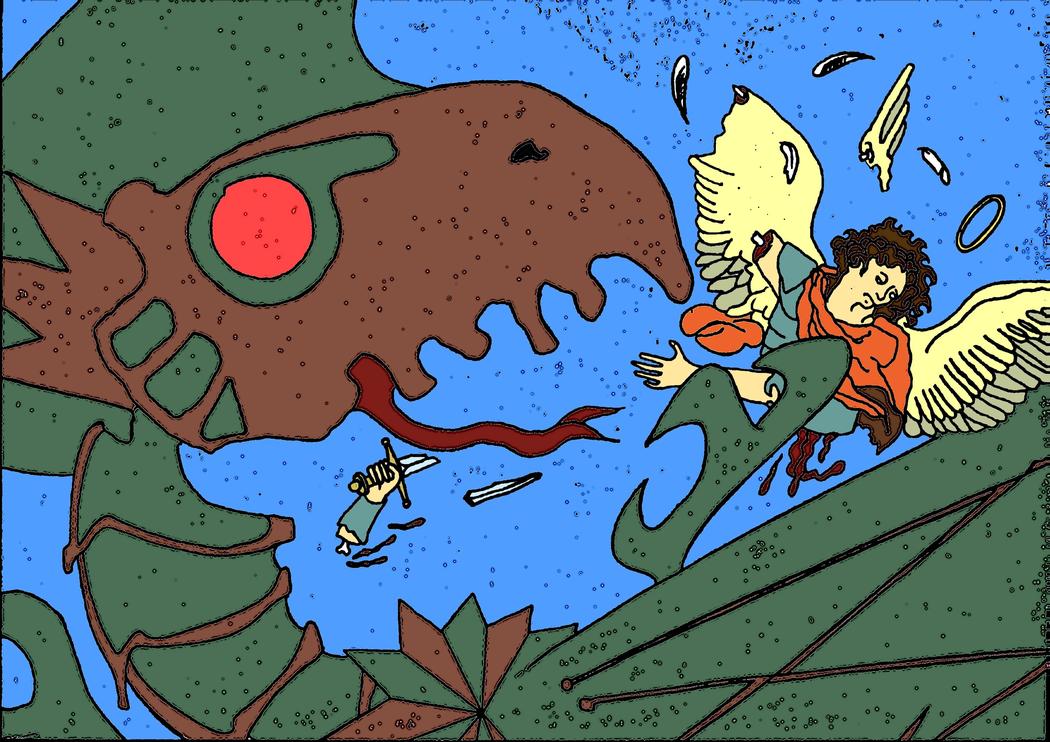 MM | Saint-Michel et Le Dragon | 2022
You often blur the boundaries between authenticity and inauthenticity. Do you believe originality still exists in the digital age?
Nowadays, authenticity is something (when it exists as a thing) that we believe we can buy with a few clicks, or at the supermarket, under the « Organic » sticker for example (even nature has become a label)! Public opinion shifts with the posts of designated influencers, and people without intellectual or moral benchmarks embrace ever-changing dogmas, as if downloading updates. Proselytism is rampant.
In the digital age, originality comes from thinking with your own head, managing to maintain the integrity needed to be what you love.
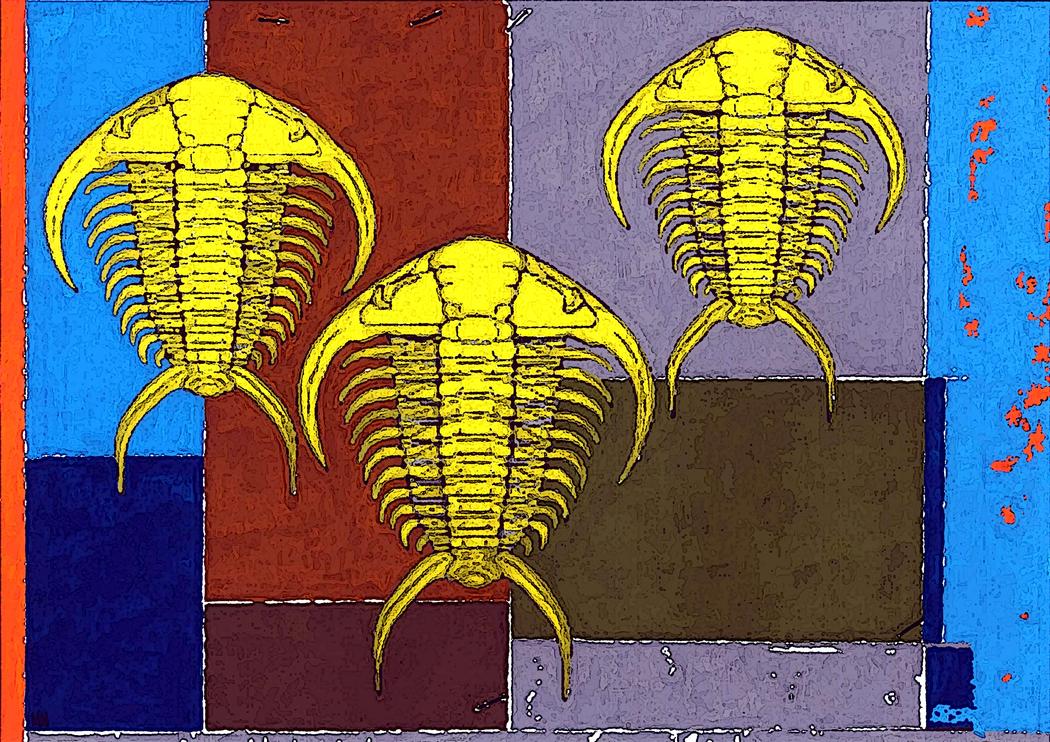 MM | Trio Lobite | 2022
After a forced interruption of your artistic career, you are now returning to a new cycle of creations. Has this pause transformed your perspective on art and productivity?
Not too much. In my new cycle of creations, I maintain the rhetoric and the pop aspect of the first one, where analytical reflection and sensory enjoyment coexist without clashing. Apparently, I’m not the only one who appreciates this blend, which, however, will be available in new forms. Only my approach to productivity has really changed, since I am opening myself up to other pictorial methods, which are more difficult to master and slower to implement.
Leave a Reply
You must be logged in to post a comment.