
Ju Xie
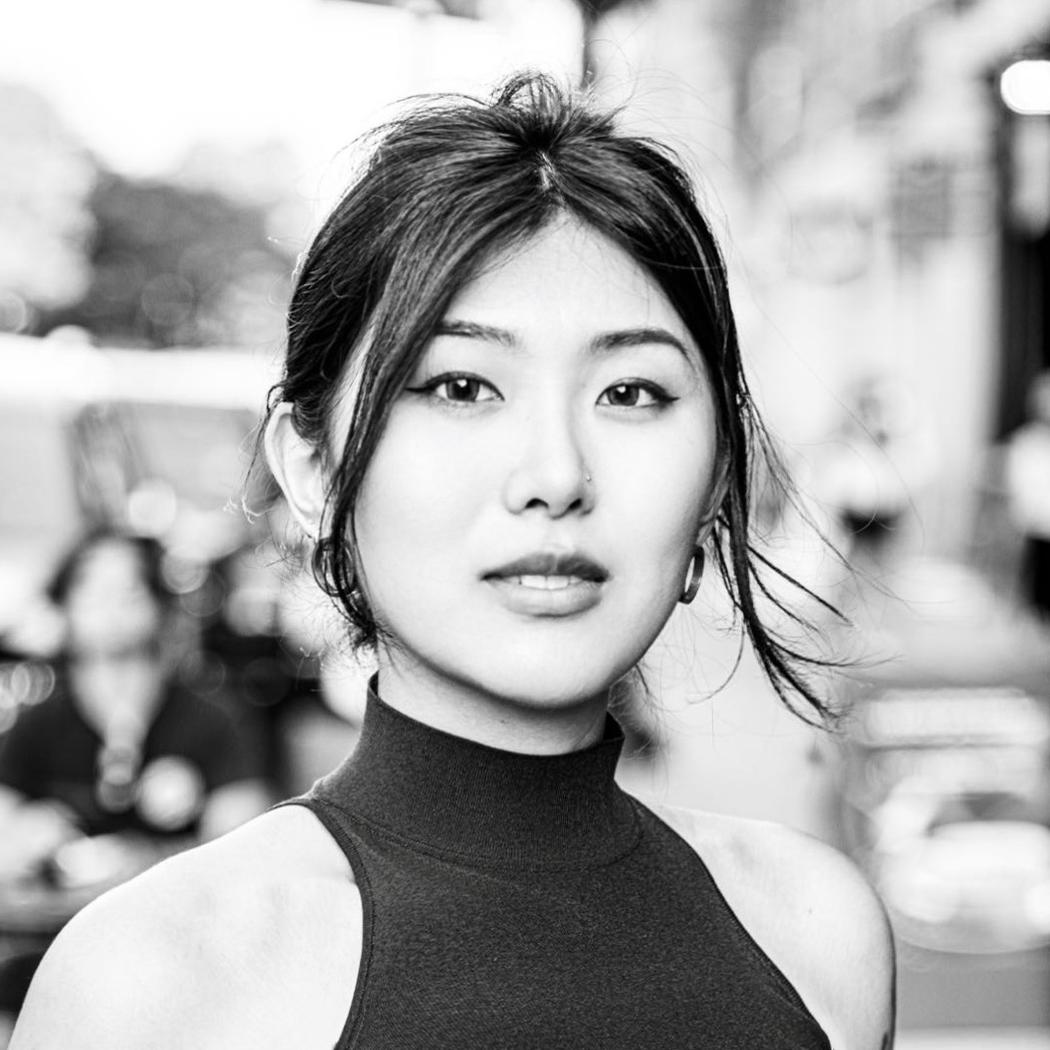
Your work often bridges emotional storytelling and structured design systems. How do you balance intuition and system-thinking in your creative process?
In my design practice, emotion functions as a visual connection between a brand and its audience. However, that emotional layer must be grounded in research and a clear understanding of user needs. In fine art, emotional interpretation can remain ambiguous and subjective, but in design, emotion needs to be intentional and communicative.
Before any visual exploration begins, I conduct in-depth market and user research to understand audience pain points and evaluate the brand from a marketing and business perspective. This ensures that emotional expression is not only expressive, but also relevant and viable. Once this foundation is established, I translate the brand story into visual language through imagery, composition, and tone. Grid systems and structural frameworks are introduced later to organize the visuals, providing clarity, consistency, and alignment with contemporary market expectations.
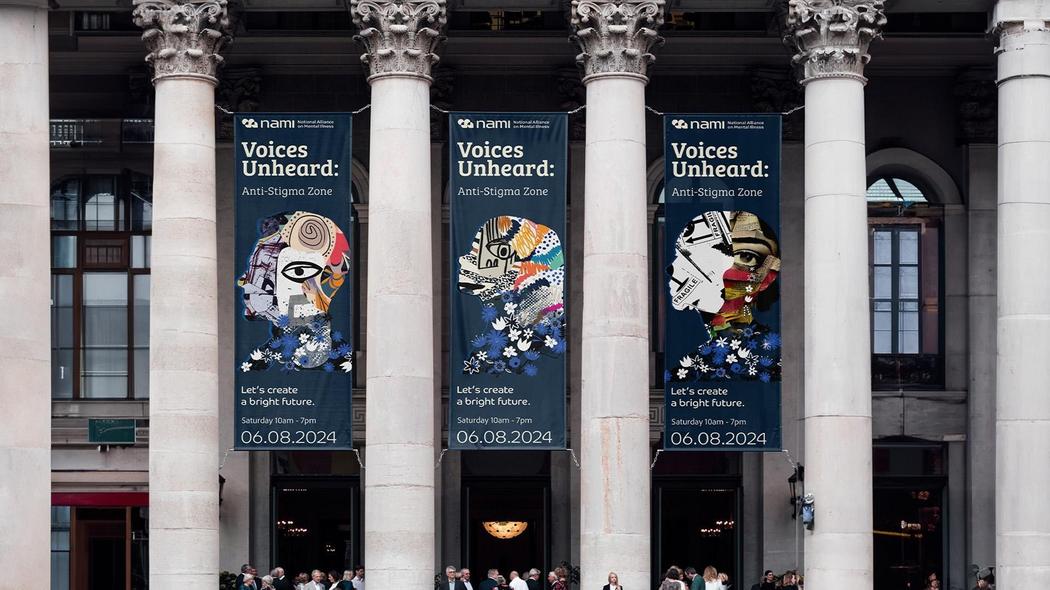 Ju Xie | Nami Anti Stigma
You began your artistic journey with traditional painting. How has this early training influenced the way you approach graphic design today?
Traditional painting shaped my aesthetic sensibility and the way I perceive visual relationships. It trained my eye to be sensitive to light, shadow, color harmony, and composition — fundamentals that continue to guide my design decisions.
This sensibility extends naturally into my motion and 3D work, particularly in how I approach spatial depth, lighting, and atmosphere. Even in digital environments, I work with a painter’s mindset, considering how light defines form and how color carries emotion. Traditional painting was also my introduction to visual storytelling. It allowed me to approach graphic design not only as a problem-solving tool, but as a medium for narrative and emotional communication. Even when working within strict systems, I still think like a painter first: where the eye rests, what carries emotional weight, and what can be left unsaid.
Many of your recent projects explore mental health and emotional fragmentation. What initially drew you to this subject matter?
As mental health challenges become increasingly common, they have emerged as a critical social issue that demands attention. These struggles often lead to secondary issues such as substance abuse or alcohol dependency, which can affect not only individuals but entire families.
People living with mental illness are also among the most marginalized groups in society. They are frequently labeled as emotionally unstable, a simplification that fails to reflect their lived realities. Through research on professional mental health platforms and social media, I found that many share a common desire — to be heard, understood, and taken seriously. Their perspectives on the world can differ profoundly from those without mental health struggles. This realization motivated me to use design as a bridge, creating visual connections that encourage communication, empathy, and understanding, and challenge existing biases.
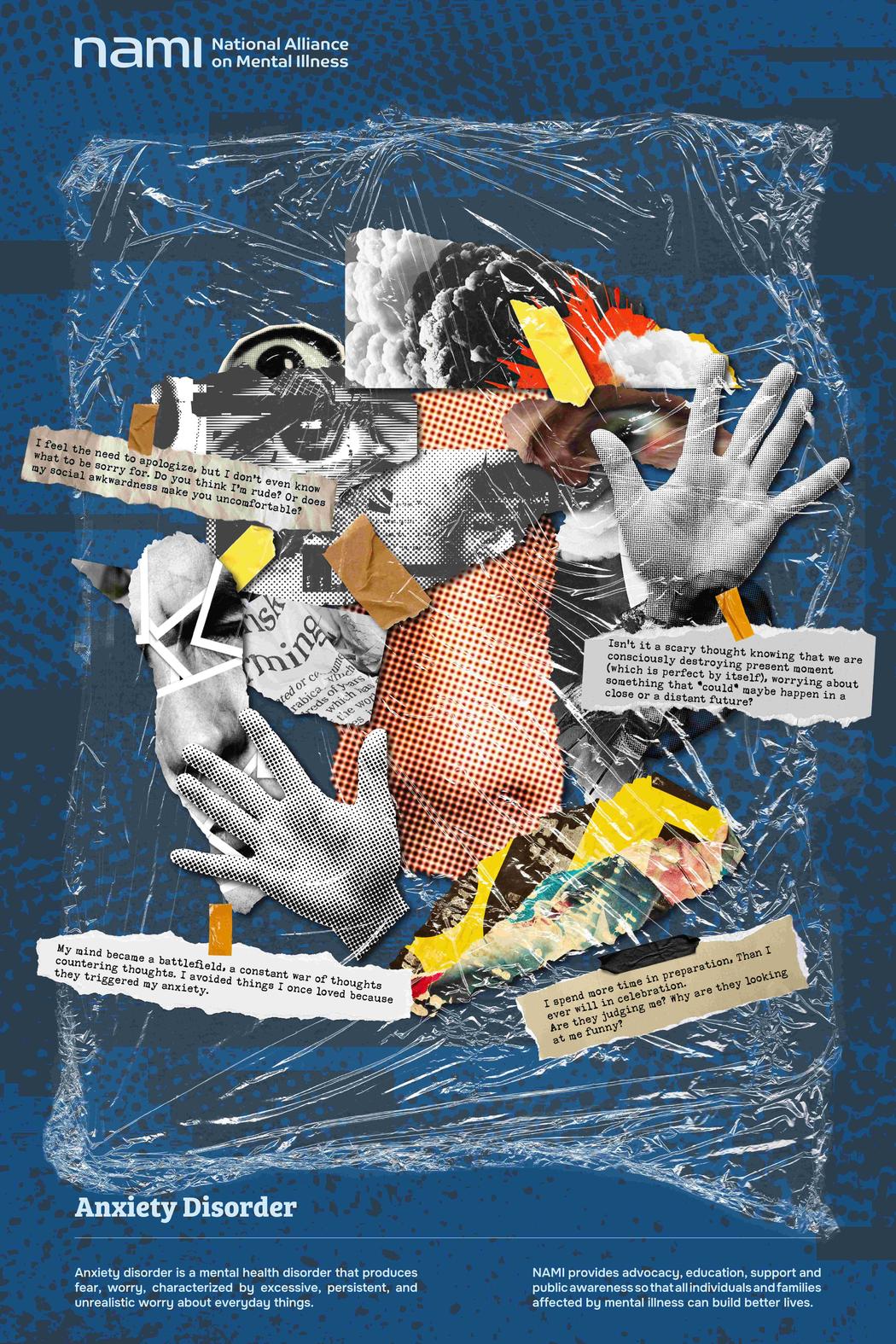 Ju Xie | Nami Anxiety Disorder
In your NAMI rebrand project, collage becomes a central visual language. Why did collage feel like the most honest way to represent mental health experiences?
During my research on social media platforms, I noticed that many people living with mental illness describe themselves as feeling “broken into pieces,” often comparing recovery to slowly putting themselves back together, like repairing a shattered vase. That metaphor deeply resonated with me and led naturally to collage as a visual language.
I began to see collage not as a decorative technique, but as a metaphorical structure. Each fragment represents a lived experience, a memory, or an emotional state. By assembling these fragments, collage reflects mental health not as a linear journey, but as an ongoing process of disassembly and reconstruction. In that sense, collage felt like the most honest way to visualize inner experiences that are complex, fragile, and non-linear.
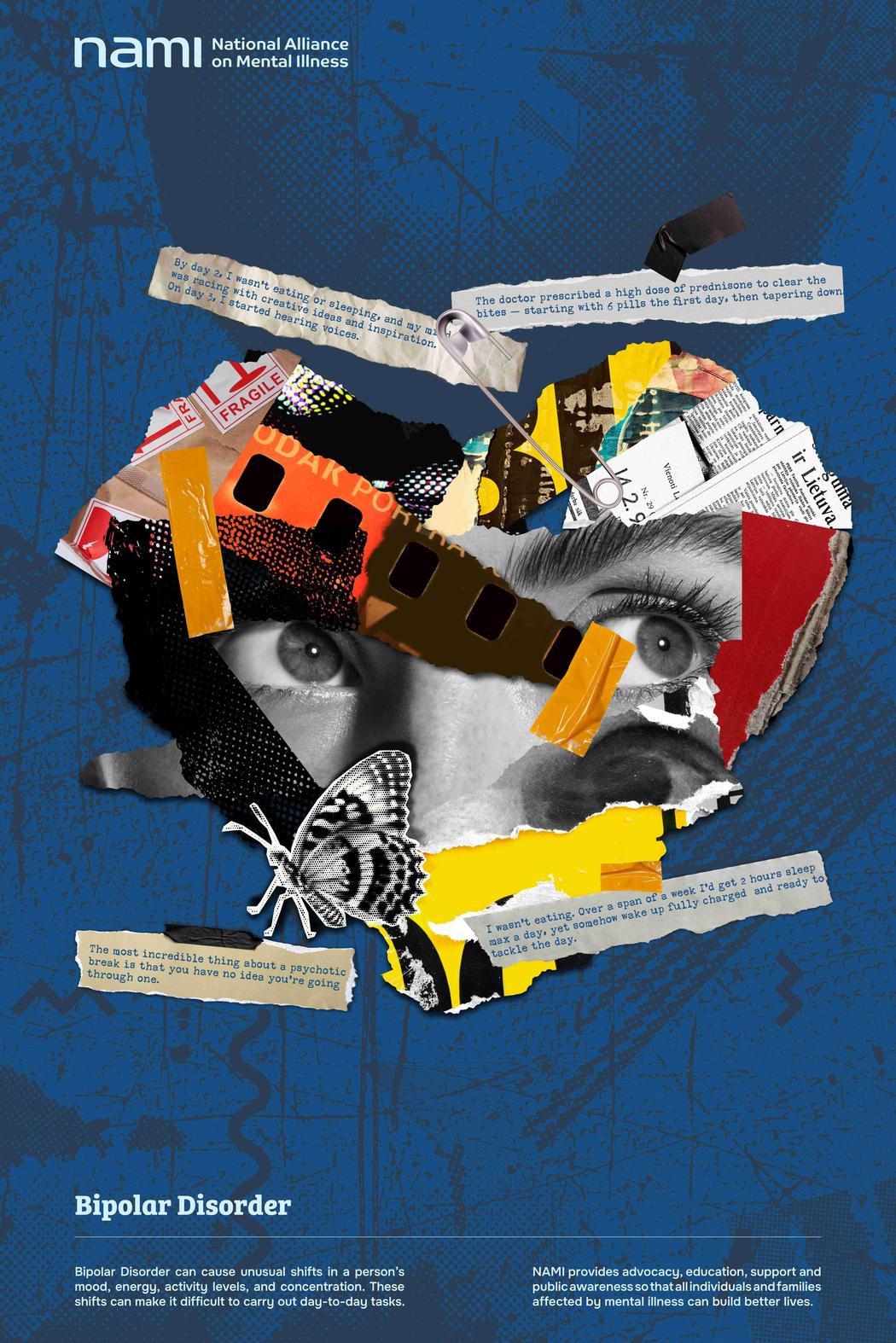 Ju Xie | Nami Bipolar Disorder
You mentioned reading personal diary-style reflections during your research. How did these real voices shape specific visual decisions in the project?
The diary-style reflections influenced how I approached composition, pacing, and visual restraint. Many of the writings shifted between clarity and confusion, hope and exhaustion, which led me to avoid overly balanced or symmetrical layouts.
This translated into uneven layering, disrupted grids, irregular spacing, and moments of visual quiet. Typography was treated as fragments rather than declarations, allowing space for pause rather than constant explanation. Instead of designing about these voices, I designed around them, allowing their rhythms and emotional shifts to guide how elements appeared, overlapped, or faded. The goal was not to interpret their experiences, but to create a visual environment capable of holding them respectfully and authentically.
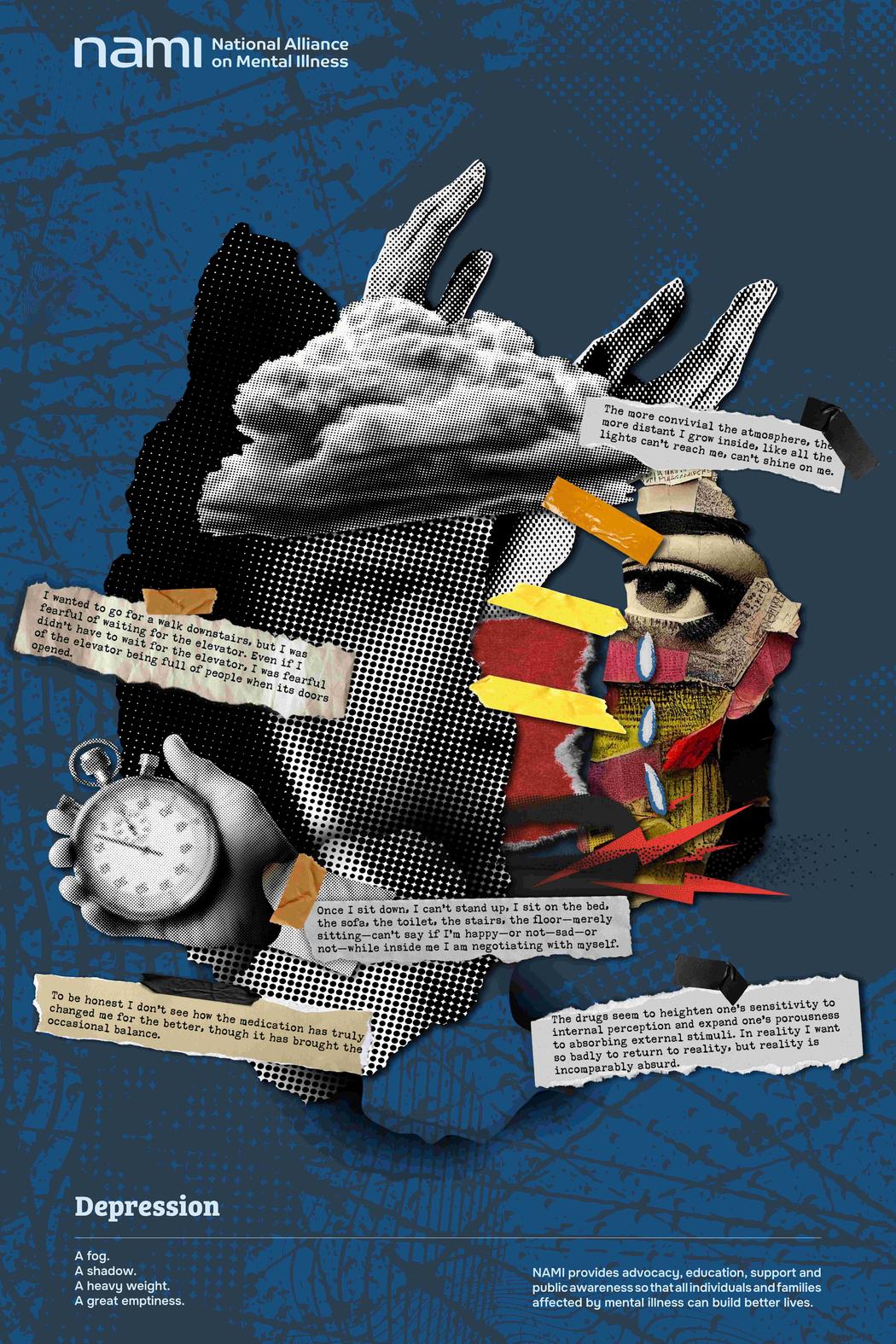 Ju Xie | Nami Depression
The posters feel both raw and carefully constructed. How do you decide when to embrace imperfection and when to impose structure?
I see graphic design as a practice of balance — knowing when to hold and when to release. I don’t strictly follow grid systems, but I respect their role in establishing hierarchy and clarity. I often choose to break the grid, but never without understanding it first.
The imperfections within the collages reflect my interpretation of mental health and emotional movement. There are no perfect people, and emotions are never static. Imperfection becomes a deliberate form of negative space — a quiet acknowledgment of vulnerability and lived experience. Leaving room for imperfection is not a lack of control, but an act of empathy and an understanding of humanity and life.
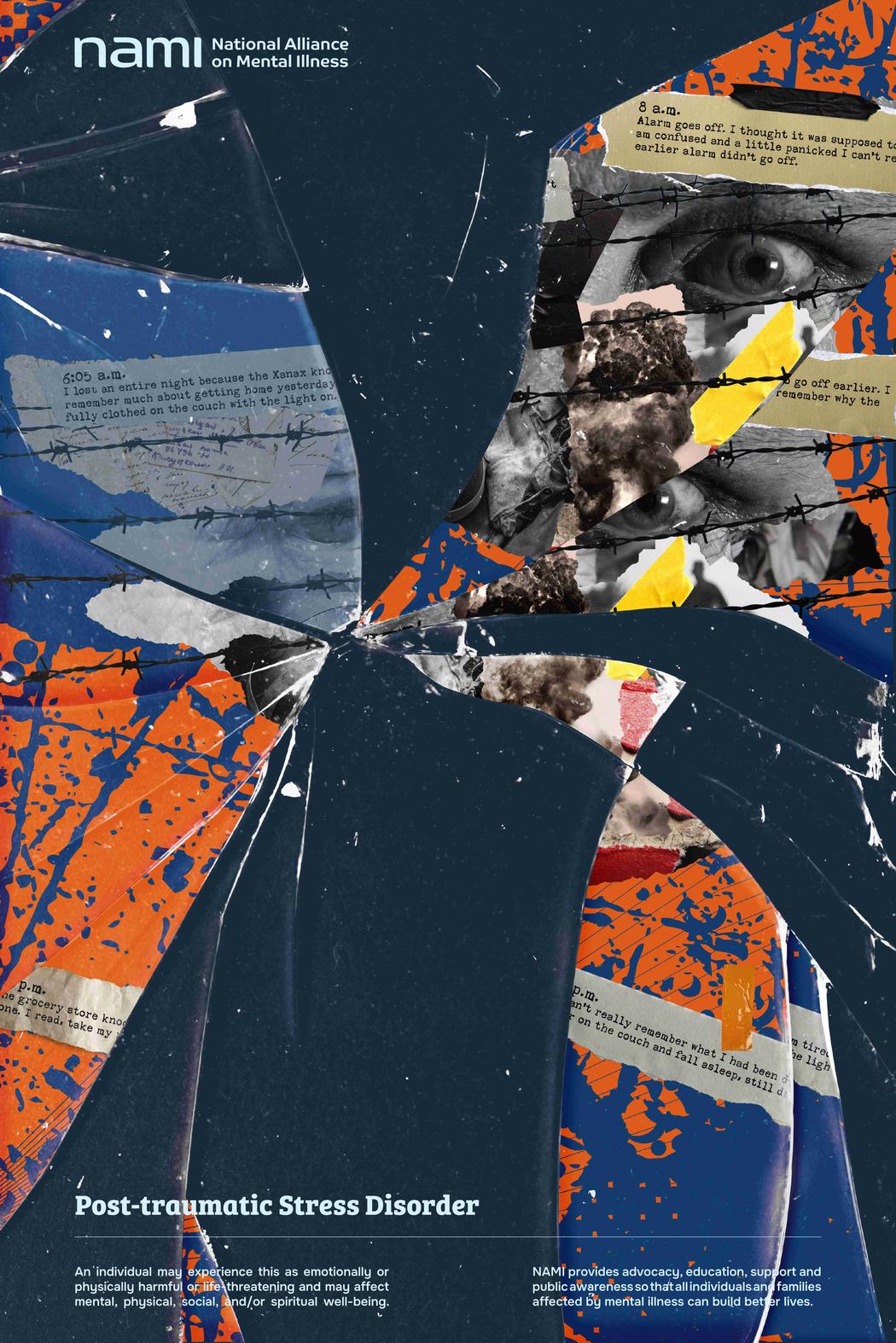 Ju Xie | Nami Ptsd
Your work suggests a strong sense of empathy toward the viewer. How do you define empathy in design, and how can designers cultivate it?
Empathy in design begins with resisting assumptions. It means not designing solely from personal taste, and not allowing visual appeal to dictate an entire system. Graphic design requires a balance between rational thinking and emotional sensitivity.
Before designing, it is essential to listen — to users, to real conversations, and to lived experiences. Designers must step outside their own perspective and consider how work will be received, understood, and used. Design that exists only for self-admiration rarely resonates. Empathetic design, on the other hand, is grounded in understanding. It asks not “what do I want to say,” but “what needs to be communicated, and for whom.”
Leave a Reply
You must be logged in to post a comment.