
Marijana Filipović
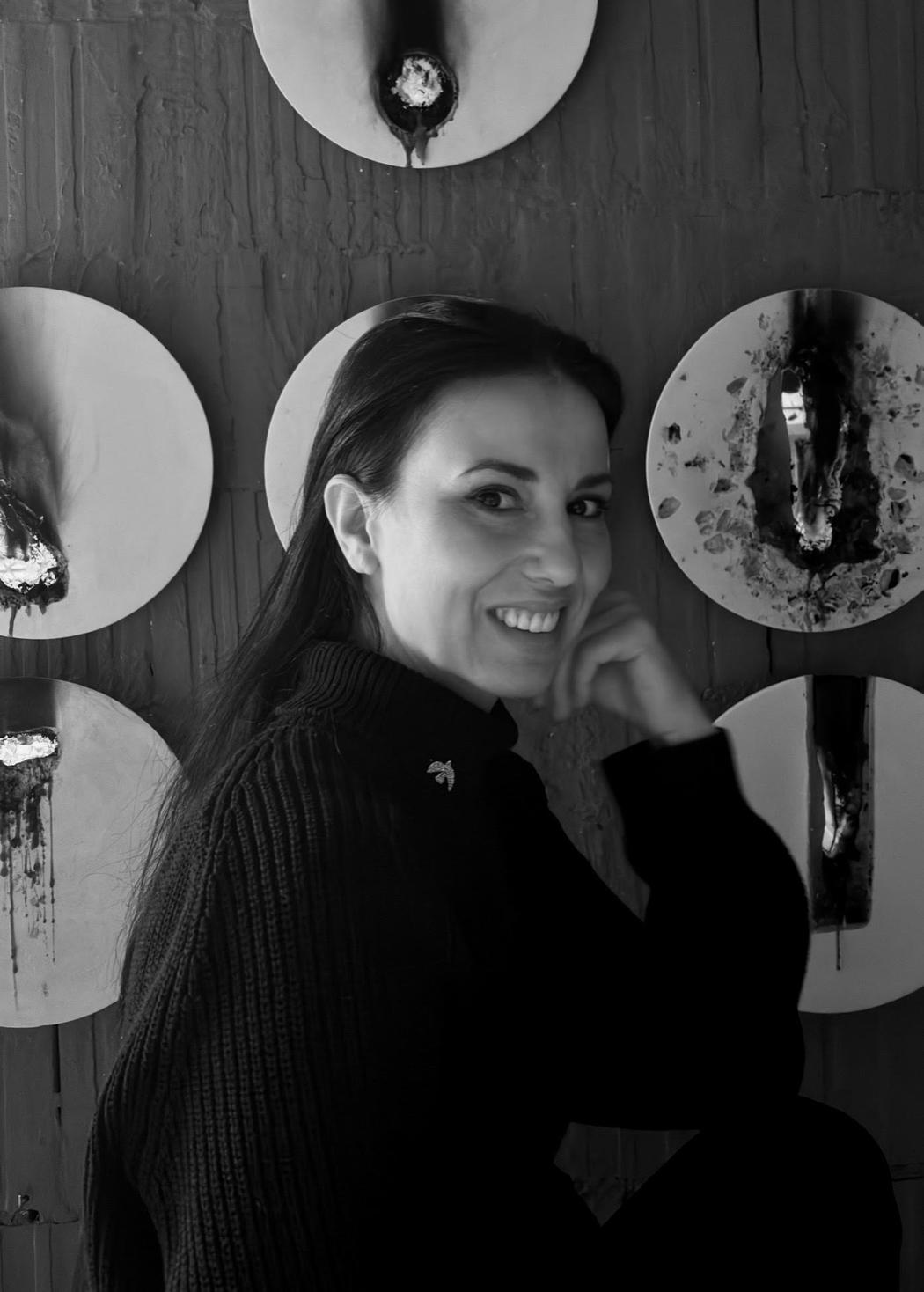
The cycle “Prayer” continues your earlier project “Record of the Soul”. What inner necessity led you to this transition, and what shifted for you conceptually between the two cycles?
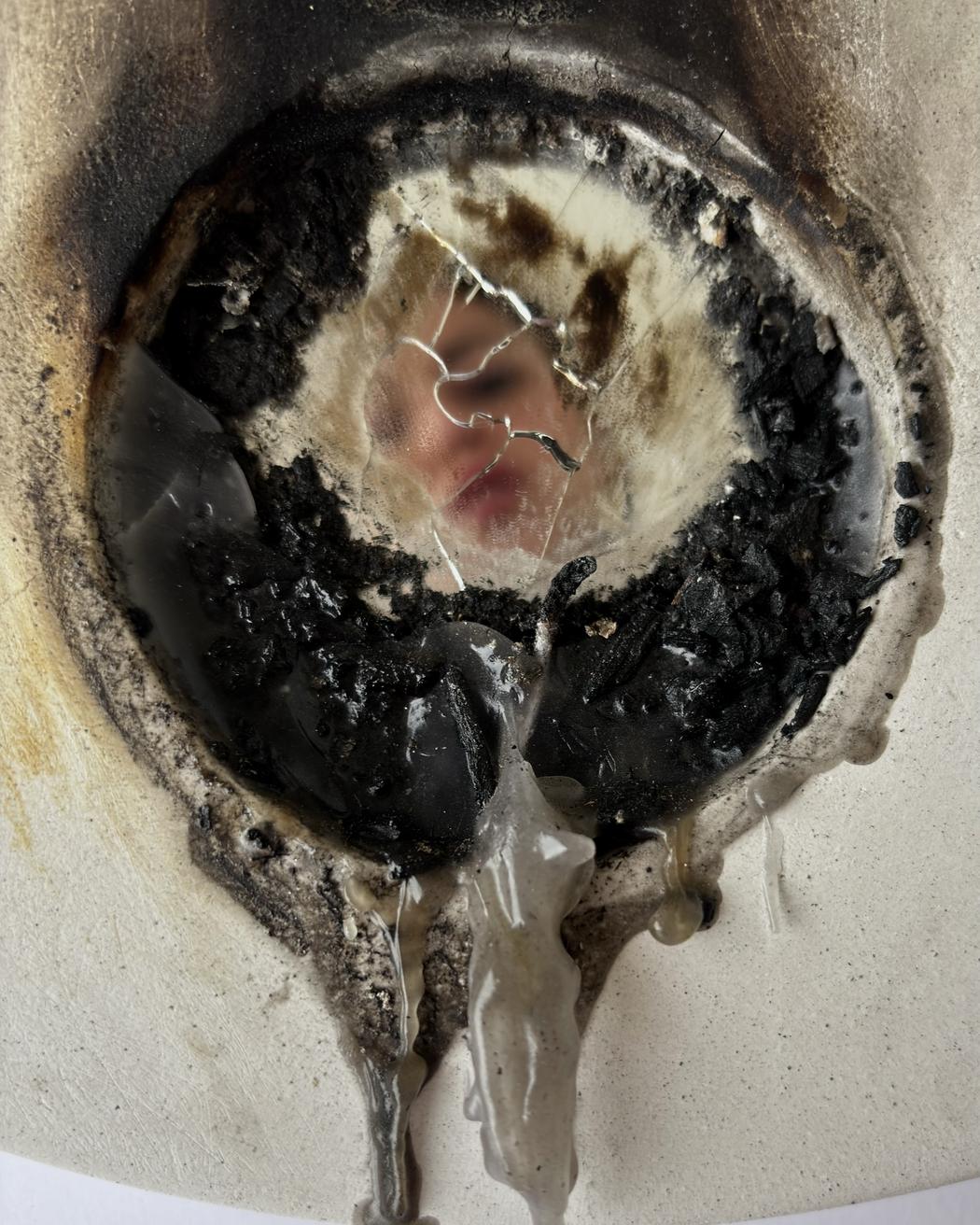
The cycle “Prayer” (2025) builds on the previous cycle “Record of the Soul,” exploring themes of inner reflection, the peeling away of layers, and personal transformation. It consists of seven circular wall objects – relief plaster discs with recesses in which mirrors are located. The surface of the mirror is covered with a layer of pieces of coal and ash, over which melted white wax with a wick is poured, creating a relief surface that can burn. Compared to previous works, in which a colored wire served as a supporting structure, in “Prayer” this function is taken over by the wick – an element that no longer holds the structure, but gradually destroys it. Burning becomes an act of liberation, and the mirror is revealed only through this process – a kind of inner “cleansing”.
The transition from the cycle “Record of the Soul” to “Prayer” was a logical sequence because recording internal states was no longer enough. I was further inspired by the late professor Ante Kajinić’s quote that art is prayer – I have always felt it, but lately I have been experiencing it more intensely than ever. Conceptually, the key change between the cycles is the shift from writing to process.
Fire plays a central role in “Prayer” – not only as a visual effect, but as a real, destructive force. What does burning represent for you personally, beyond symbolism?
For me, fire in the cycle “Prayer” is not just a metaphor, but a real, unpredictable force with which I enter into a relationship. Burning marks a moment of irreversible loss of control – a process that cannot be reversed, but can only be followed and accepted. The size and shape of the “space” for smoldering varies; sometimes it is restrained, emphasizing the solid surface of the plaster, and sometimes openly, allowing for a slow and unpredictable process that leaves uneven traces. The flame gradually decomposes the form, which represents an act of liberation and giving up on the need to preserve everything in order to reveal what was previously hidden.
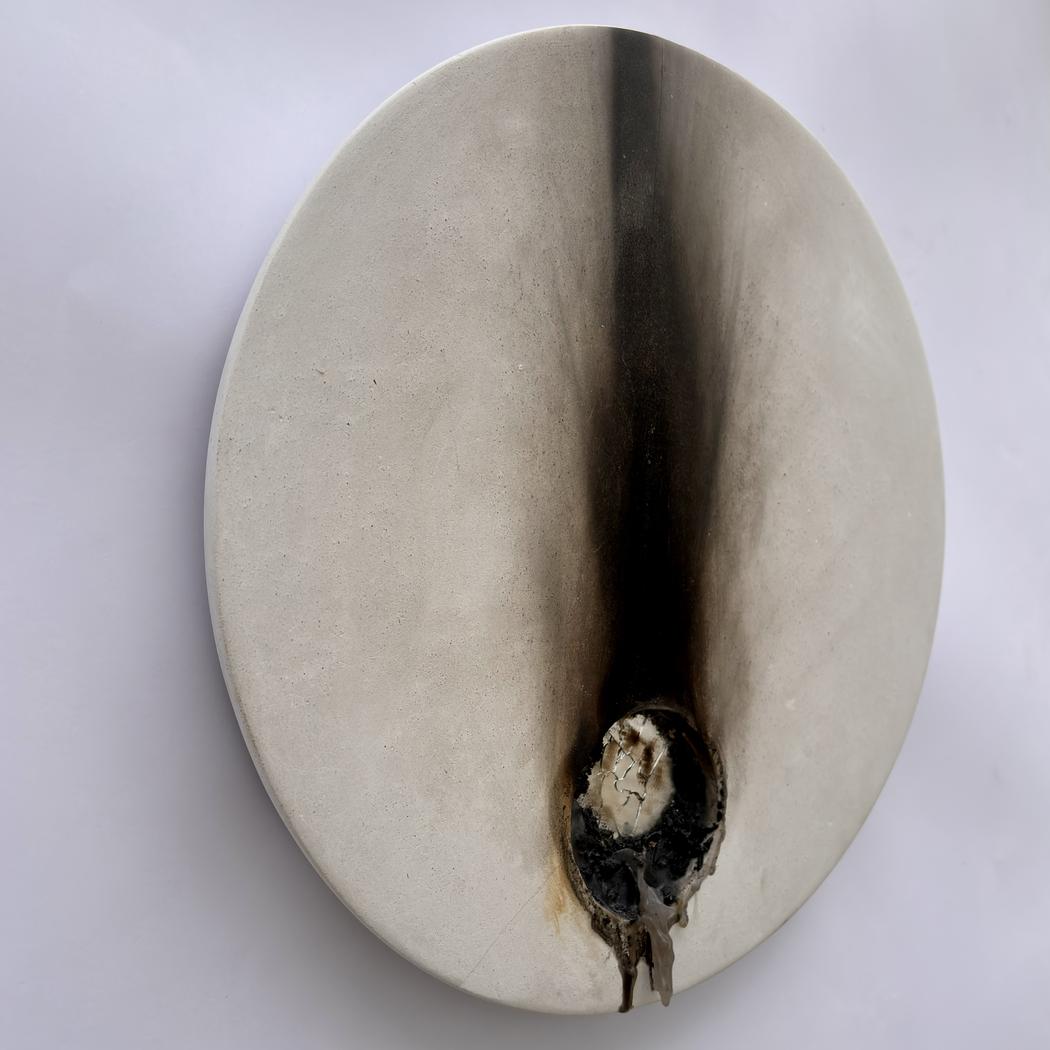 Marijana Filipović | Prayer
In this series, the mirror is hidden and only revealed through burning. How do you understand the act of self-recognition in your work – is it something violent, gentle, or inevitable?
I experience self-recognition in my work as inevitable. It does not happen gently or violently, but through the process of removing the layers that protect and deceive us. The mirror is revealed only through burning, when superficiality disappears. A paraphrase of St. Augustine’s thought sums up the essence of this experience: what we seek has always been present within us, but obscured by layers that have yet to be burned. What remains is not an ideal image, but a real, stripped-down reflection.
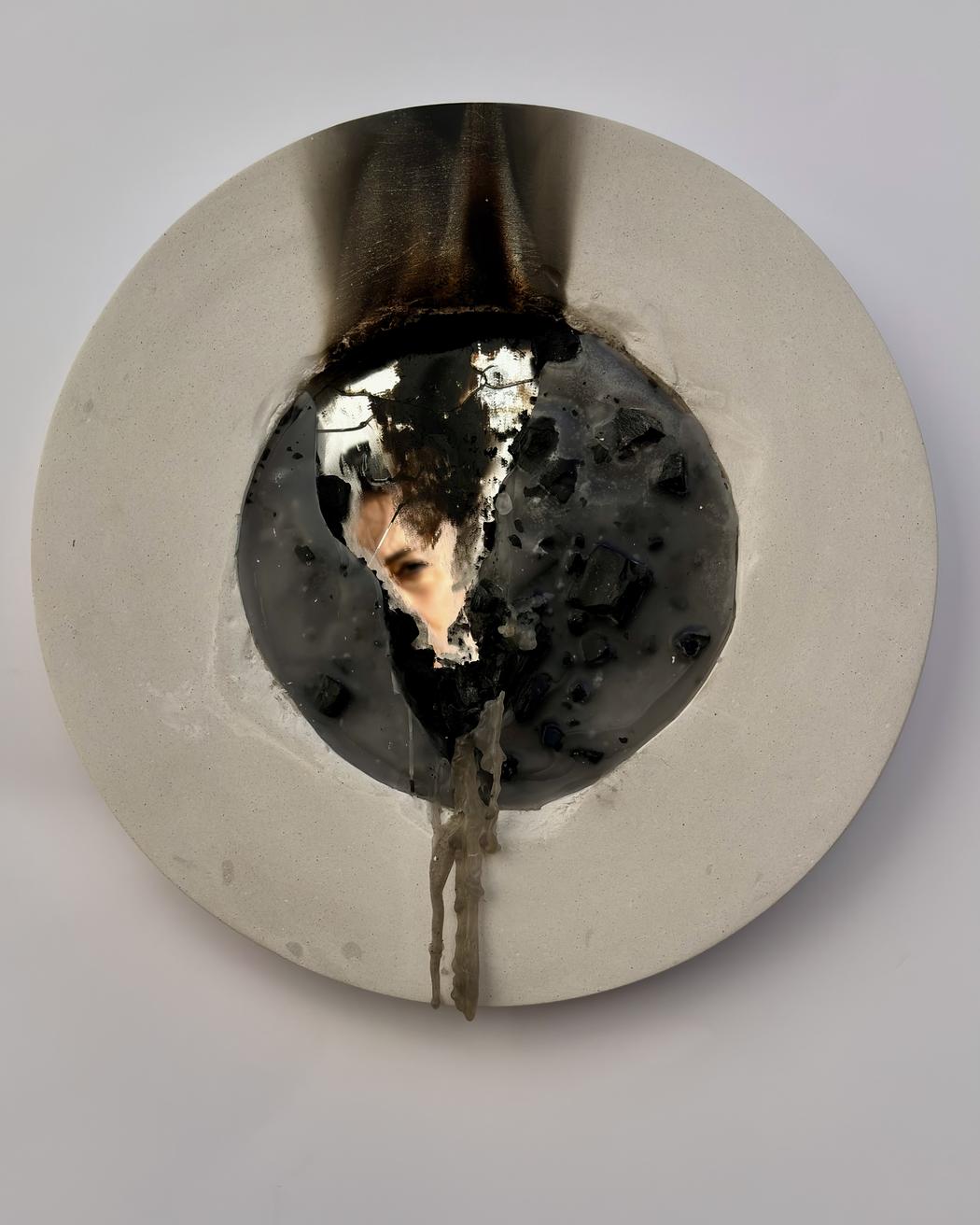 Marijana Filipović | Prayer
Your objects exist between sculpture, painting, and ritual. At what point does the artwork stop being an object and become an experience or act?
A work of art ceases to be just an object when it enters process and time – like a candle that smolders and burns out. Form is no longer permanent; it becomes an event, an act, and an experience. The verticality of the work invokes an inner axis, while combustion becomes a silent moment of introspection. The flame removes the superficial and reveals that the search for light begins within.
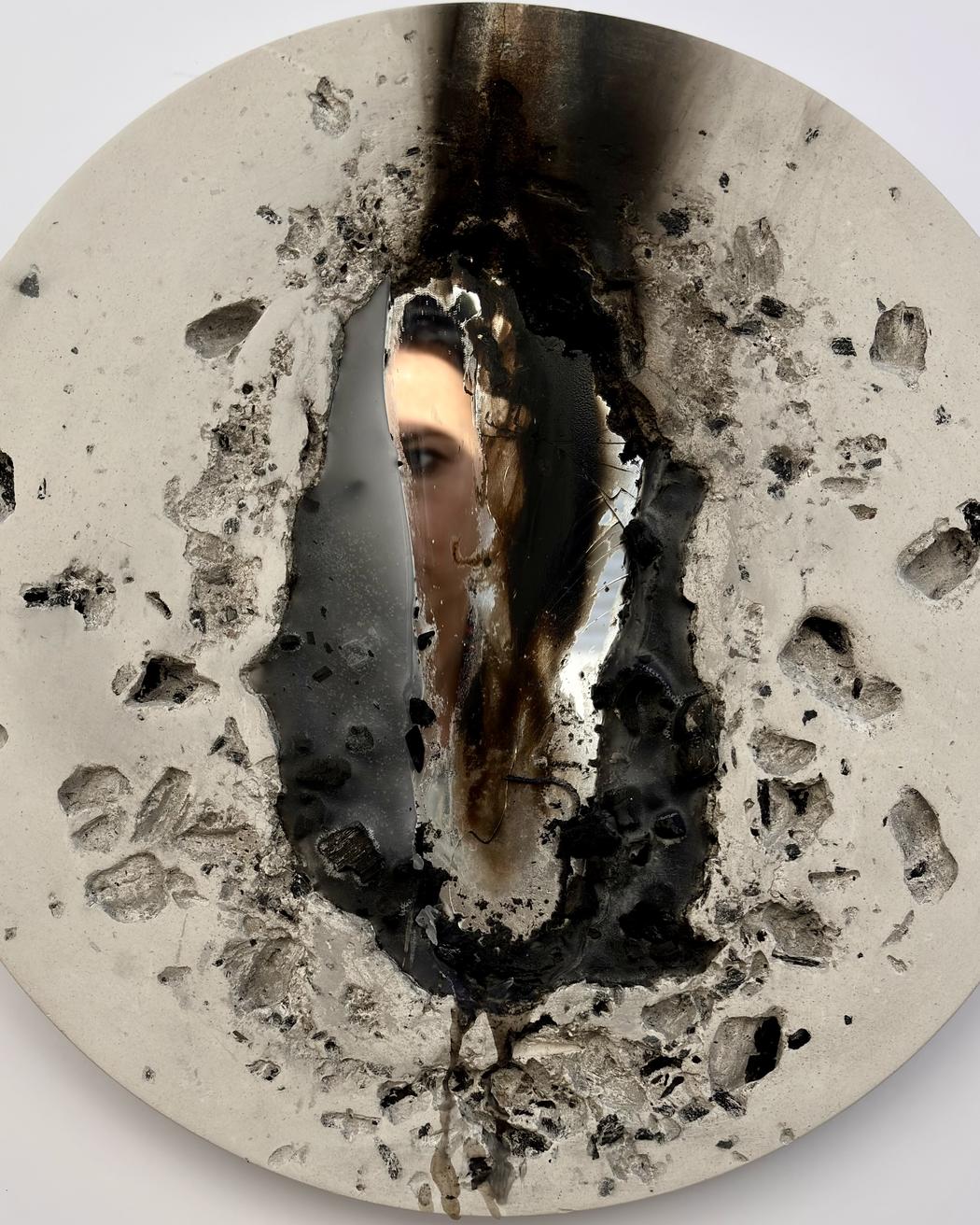 Marijana Filipović | Prayer
The traces of smoke, cracks, and melted wax feel almost like drawings made by fire itself. Do you see fire as a collaborator in these works?
Yes, I see fire as a direct collaborator in the work. During burning, the flame and smoke spontaneously write traces on the surface of the plaster – dark lines, cracks, and deformations emerge with their own rhythm and force. The melted wax and traces of smoke act like reliefs and drawings created by the fire itself, shaping and disintegrating the object at the same time. Fire thus becomes a co-author, whose behavior completes the work.
 Marijana Filipović | Prayer
One work remains active during the exhibition, slowly burning in front of the audience. How does the presence of time and impermanence change the viewer’s relationship with the work?
Six works will be displayed in a post-burnt state, while the seventh will smolder in front of the audience. The visitor will be able to follow the process of the emergence and disappearance of the seventh work, becoming aware of the transience of matter. The slow burning of the seventh work and the gradual uncovering of the mirror introduce a ritualistic, introspective dimension in which the viewer becomes a participant.
If “Prayer” is a silent inner act, what do you hope remains with the viewer after leaving the exhibition space?
I hope that the viewer will remain with a sense of inner silence and introspective space even after the opening of the exhibition. The subdued lighting will emphasize the drama of the burning, while the tones of the duduk lead the visitor towards a meditative experience. Seeing their reflection in the uncovered mirror, each visitor can encounter their own outline and their own sense of truth.
Leave a Reply
You must be logged in to post a comment.