
Emma Coyle
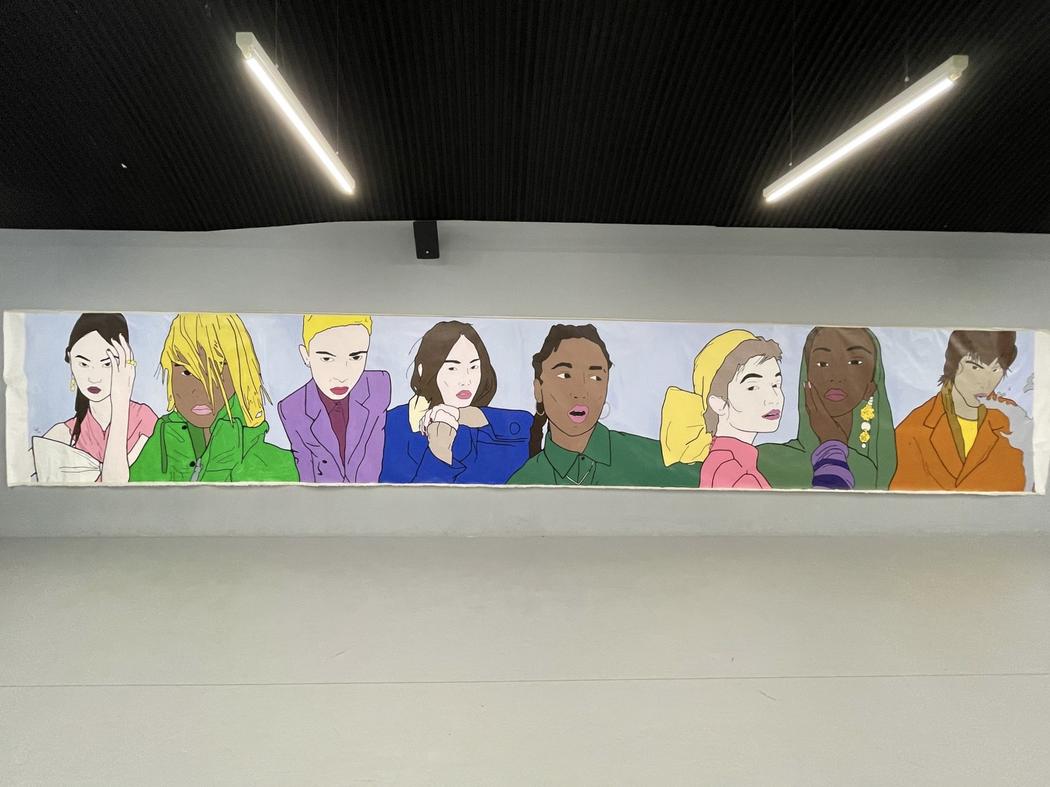 Emma Coyle | Collective Selection | 2024
Your work is often associated with Pop Art, yet you frequently reference Picasso and Matisse rather than Warhol. How do you personally define the lineage of your visual language?
I think knowledge of art through reading books and visiting galleries and museums defines the progress and development of my work. When I started making art in the 1990’s before galleries used the internet, books were the only way to learn about art history and magazine were how you learnt about international contemporary art.
I have always had a strong appetite for learning about art and in the 1990’s it was American Pop Art of the 1960’s which had a lasting effect on me. The impact from large works and bold colours really interested me. The following few years I found interest in the line-work of Modern artists from Picasso and Matisse to Mucha. I think knowledge of art history is important to learn from and a continuing interest in the development of contemporary is important. As an artist you never want to duplicate pass or current art but be inspired by the endless ideas within art.
You work extensively with contemporary magazine imagery and advertising. What draws you to a specific image, and how do you know when it has enough formal strength to become a painting?
I have used current print magazines and in particular fashion and style magazines as the starting point for my figurative work over the past fifteen years. At the start of my career, I had used images from 1920’s Japanese advertisements, Silver Screen movie images etc but I slowly became drawn to current advertising images. I constantly collect magazines and every few years I make a collection of the images which interest me the most. I choose images which are solely strong in form, there is no other influence. From there I can start work on one hundred or more drawings and tracings, adding and subtracting line work for months on end. From these one hundred plus drawings I use a process of elimination before moving on to painting. I keep grouping images together and narrowing down the numbers of drawings in each group. To explain when I know when to stop working on a drawing is impossible, each drawing is dealt with individually, you just have a sense when you know a drawing has enough information to proceed.
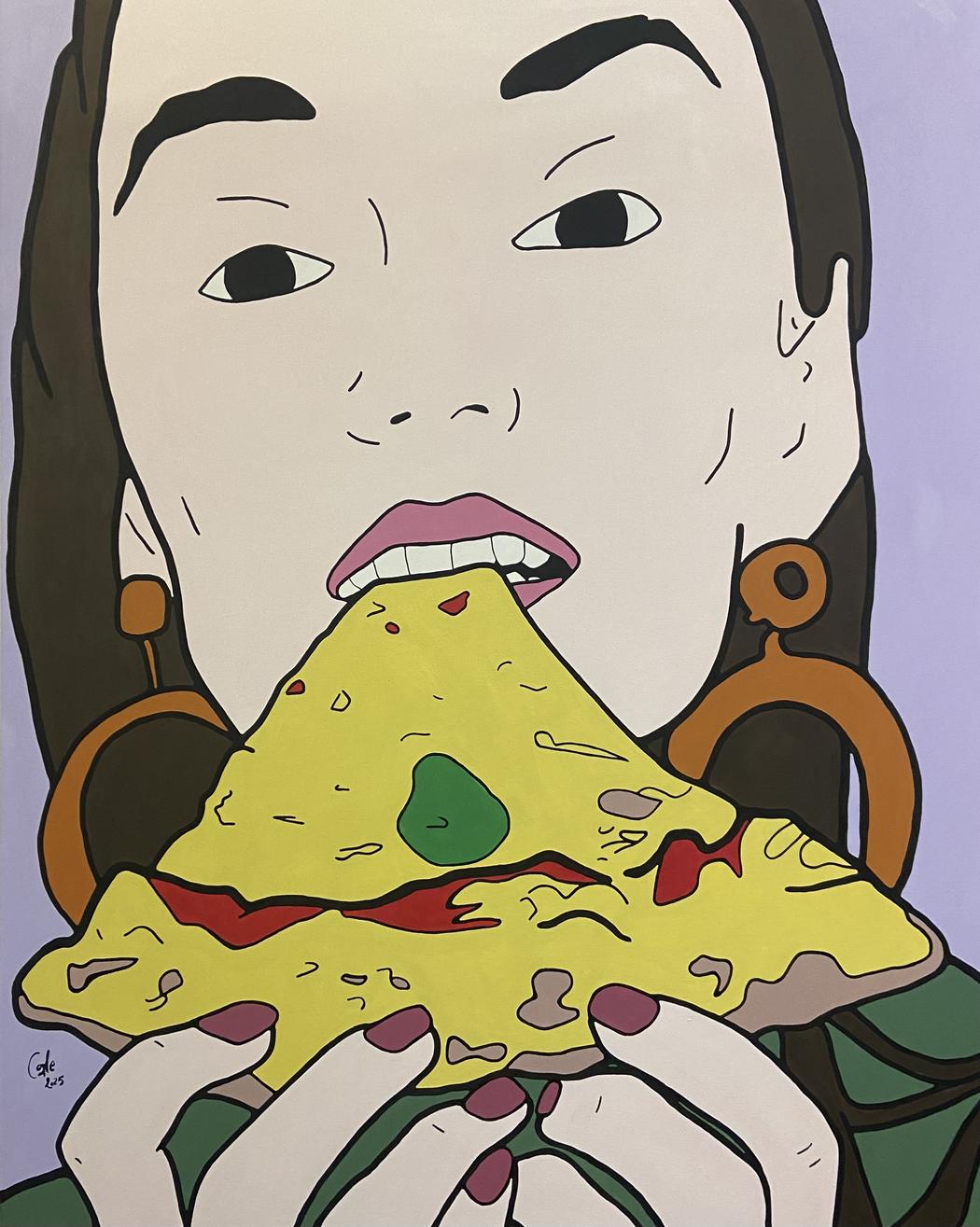 Emma Coyle | The Slice | 2025
Line plays a crucial role in your work, especially the balance between primary and secondary lines. How does line function for you emotionally and structurally within a composition?
Emotion is not something I try to embed into drawings or paintings. For me that relates to the narrative of a piece and is something I leave to the viewer. The line work in my paintings build the structure of each piece and it is used to create form and balance. Primary lines build the form of an individual and secondary lines as I refer to them are used to add movement or depth.
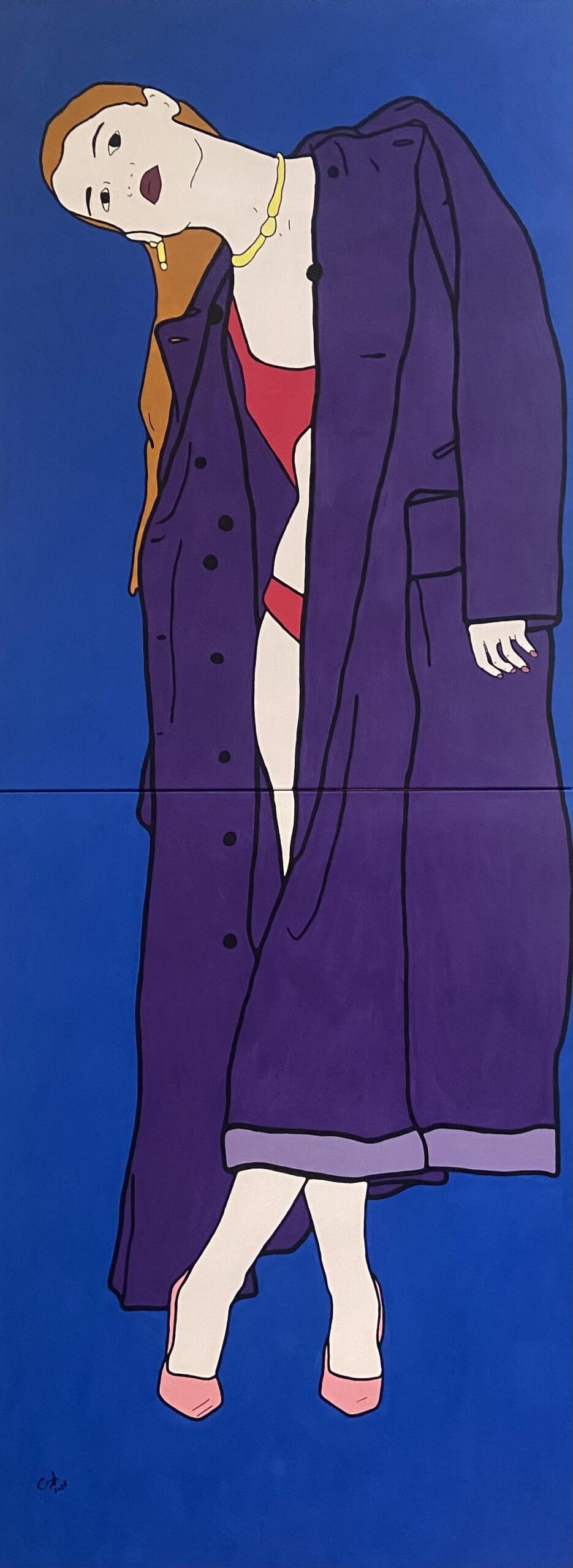 Emma Coyle | 25.01 | 2025
You are known for working in large scale, with paintings reaching several meters in height and length. How does scale affect your physical and conceptual relationship with the image?
The scale of my work has continuously grown over the past twenty plus years. I use it to push the work further; with larger scale the impact of the work is greater. And with a greater amount of canvas to work with this allows you to develop your ideas. I don’t think any artist ever wants to stop developing their work, each year you want to push your ideas to another level. I can plan studio work up to five years ahead, but these plans change from to new ideas found while painting.
 Emma Coyle | Collective Selection | 2023
Your process of mixing paint – never using it directly from the tube and carrying pigments from one work to another – feels almost archival. What does this continuity of material mean to you?
An artist naturally wants to experiment and produce their own pigments and be know for their own pallet of colour. It is a very important part of our studio practice and the foundation for the work we produce. I have pots which have not been cleaned for over twenty years. Even what can look like white on my canvas is paint which contain small pigments of reds, browns or yellows. Painting demands respect and painters are dedicated to the production of work which this is based on. My paintings have always been based on development, to work hard and continually push forward ideas and to never reproduce what I have made in the past. My pallet has always been pushed within each series of paintings over the years. Bringing pigments as a starting point from one series to the following to develop has always been an interest of mine and coincides with the development of all aspects of my work.
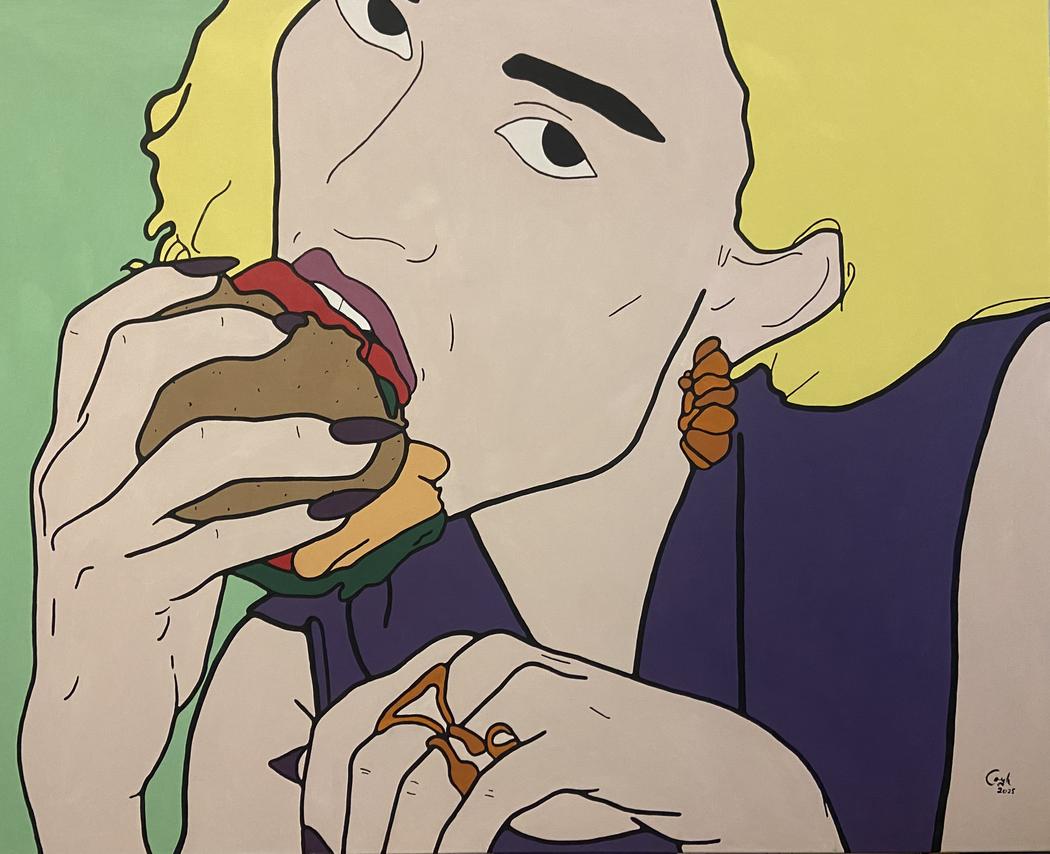 Emma Coyle | Big Mouth | 2025
Your recent figurative works feel simultaneously minimal and emotionally charged. How do you strip away detail without losing psychological intensity?
As I have mentioned the emotion in my paintings for me relate to the narrative of each piece, which I leave to the viewer. In my paintings produced over the past five years I have not touched on the emotion of a figure. Form is the main interest I have in each piece and I am able to keep intensity in each form from years of experience of working with drawings. Continuously working on drawings for each series is the experience I needed to produce the work I am now creating.
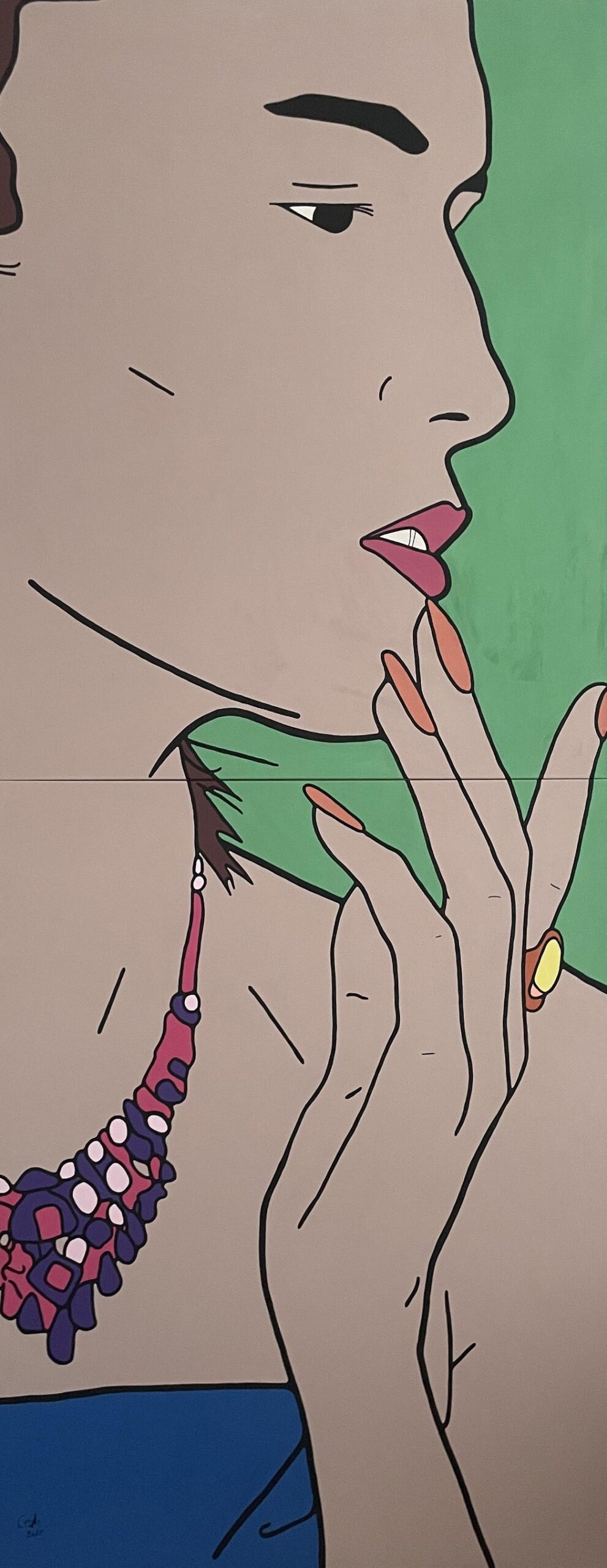 Emma Coyle | 25.02 | 2025
Traveling between and working in Dublin, New York, and London has clearly shaped your career. How have these cities influenced your visual language and professional trajectory?
Meeting people with different ideas, working with different artists, curator, galleries and agents in different cities is the best work for any artist to develop their own ideas. There is a constant energy and excitement which comes from cities, the art world is never stagnant and is always changing because of the people who work within it. Continually visiting galleries and museums is so important to any artist’s career. Not only does it help you articulate your own work but adds to the depth of work you produce. An artist’s appetite to stand out from the crowd is never full.
Leave a Reply
You must be logged in to post a comment.