
Marc Foloni

Your work often exists between abstraction and figuration. How do you personally navigate this threshold, and what does it allow you to express that a more defined image would not?
My process begins intuitively, guided by impulse rather than preparation. I work without sketches, allowing the image to emerge as a quiet transmission of inner experience. What remains unresolved—between what is shown and what is suggested—invites the viewer into their own reading. The titles stay minimal, because the work is meant to be felt before it is understood.
The recurring figure in your practice functions almost like an alter ego. When did this persona first emerge, and how has it evolved over time?
In 2015, I was in Medellín, Colombia, and had already held my first exhibition in Brazil, still working in a style different from my current one. The month I spent there with my partner at the time was so intense and transformative that it resulted in a series of 40 watercolors. It was there that I found my style—the forms, the gestures, my artistic self. Time passed, but the pattern remained and continues to manifest autonomously, always in variation, yet anchored by a constant.
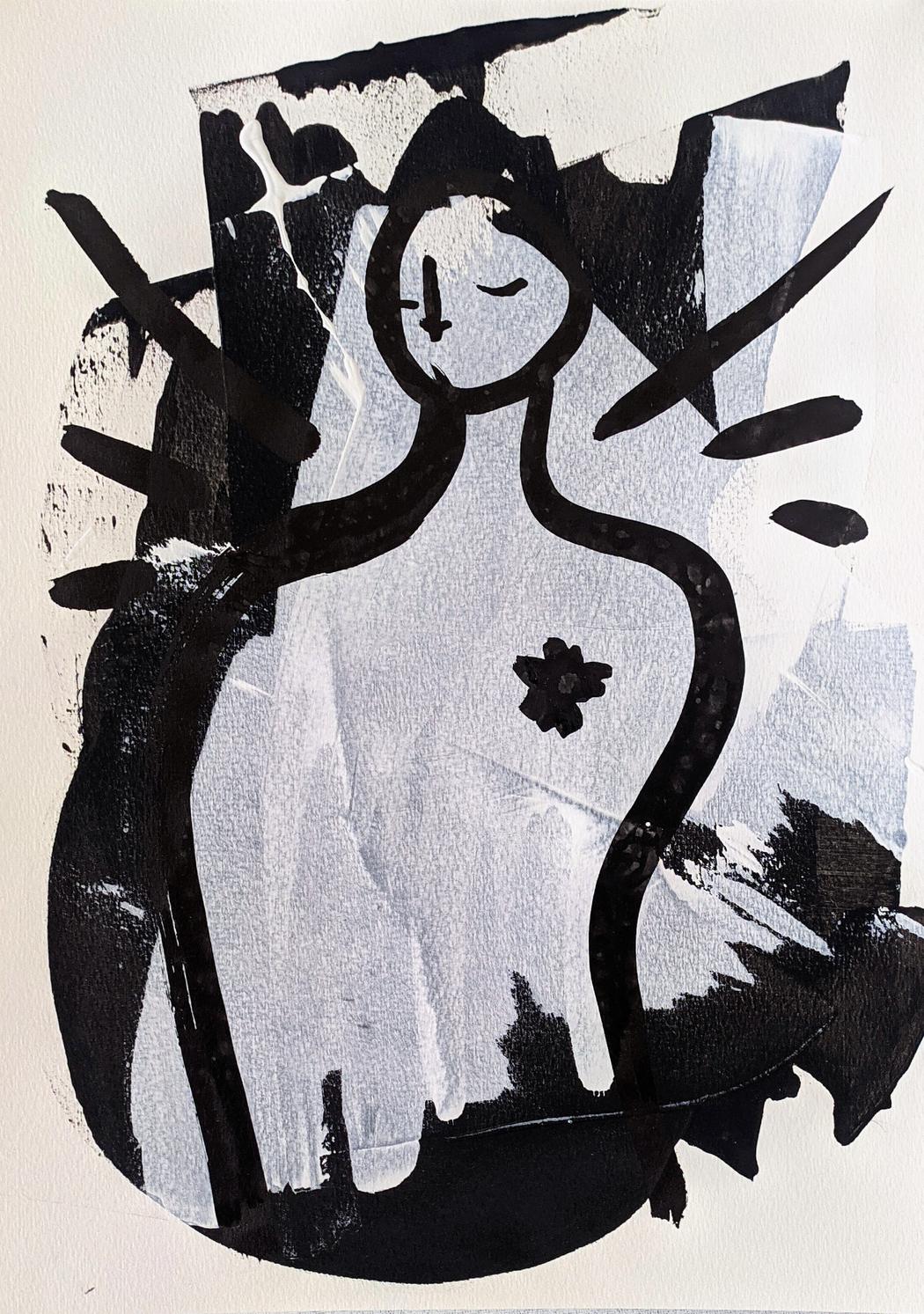 Marc Foloni | Black White Wing
Many of your figures appear androgynous or zoomorphic. What role does ambiguity of identity play in your exploration of the subconscious?
I am deeply influenced by psychoanalysis and psychology. Everything carries meaning, whether I understand it rationally or not—I can be part animal, part man, part woman, part everything, and so can every human being. My method of painting as an act of speech creates moments I prefer to leave open, allowing the viewer to discover, reinterpret, or identify with them.
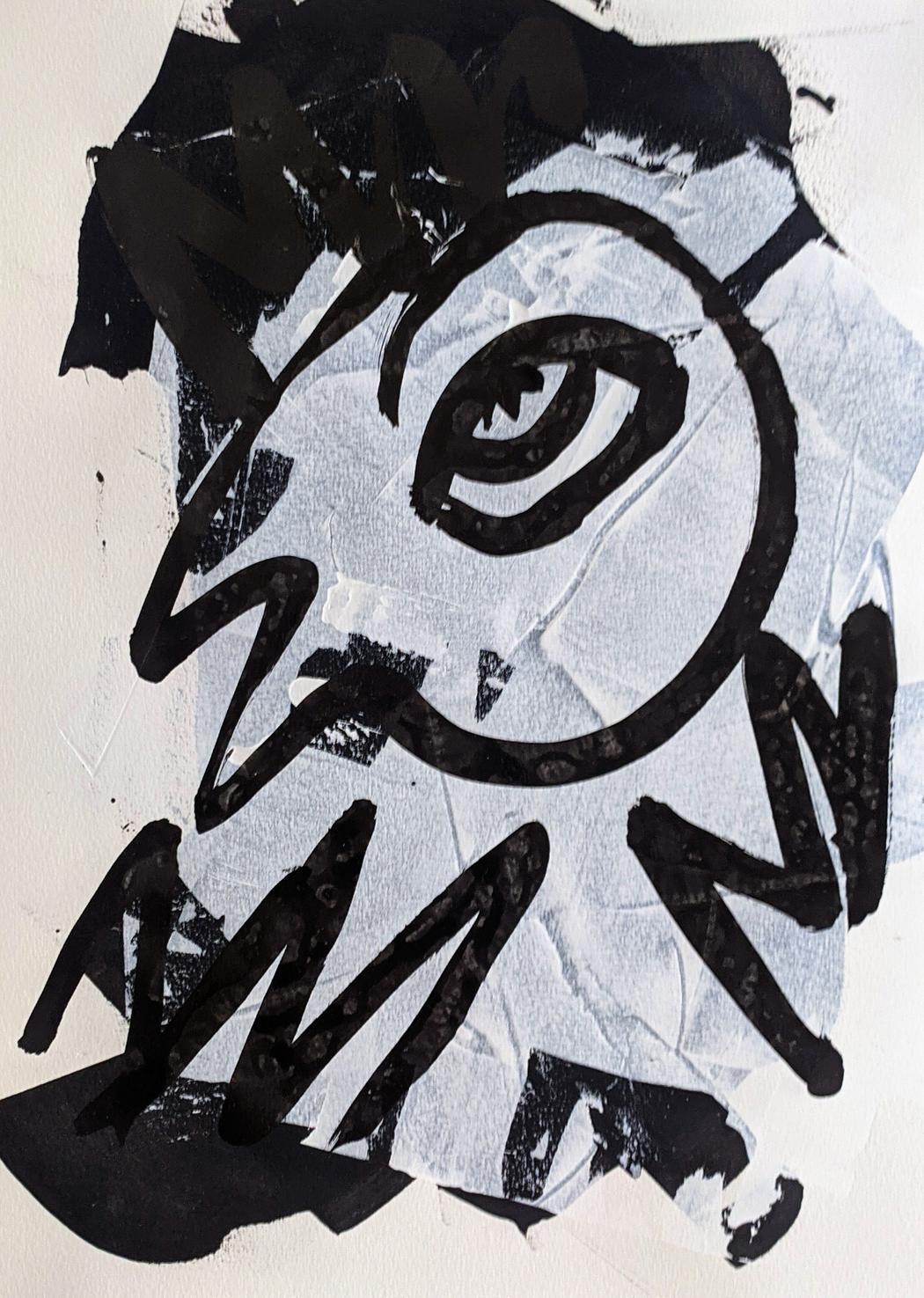 Marc Foloni | Black White Wing
In White, Black, Wing, you restrict yourself to a black-and-white palette. What does this radical reduction make possible conceptually and emotionally?
Every absence carries meaning. I like to say a lot with very little, and I believe this series expresses exactly that. Joy, intensity, pain, love, freedom, and doubt—universal feelings. Here, the intensity lies precisely in the absence of color, control versus risk, containment versus flight, which still creates harmony and balance.
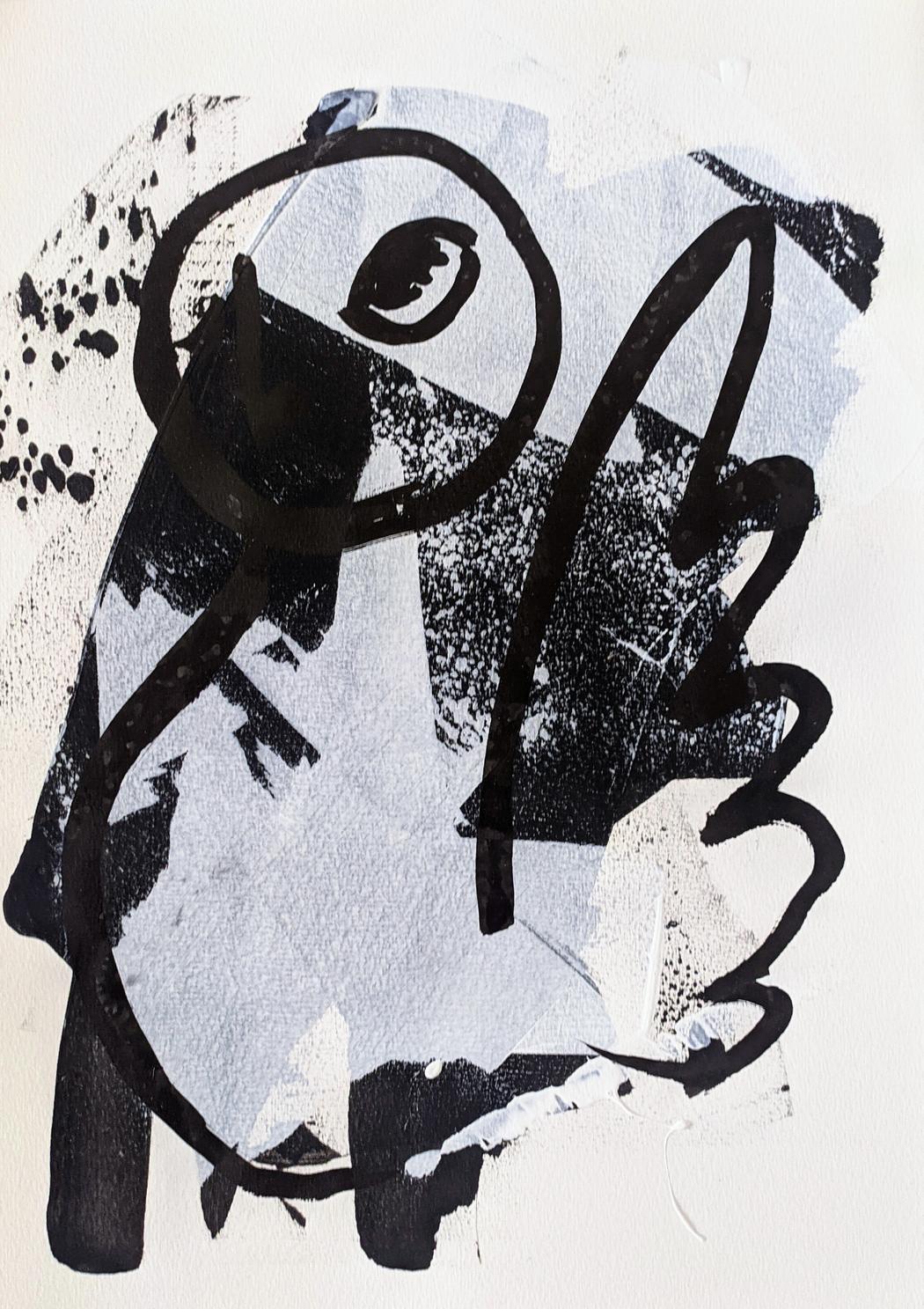 Marc Foloni | Black White Wing
The eye is a persistent motif in this series. Do you see it more as a symbol of perception, vulnerability, or surveillance—or something else entirely?
The eye can be everything; it serves as a powerful metaphor for our generation. At times it relates to surveillance, but more often to vulnerability and openness—still strong, yet exposed. In dialogue with the wing, it suggests awareness and introspection rather than control, existing quietly, fragile, and unresolved.
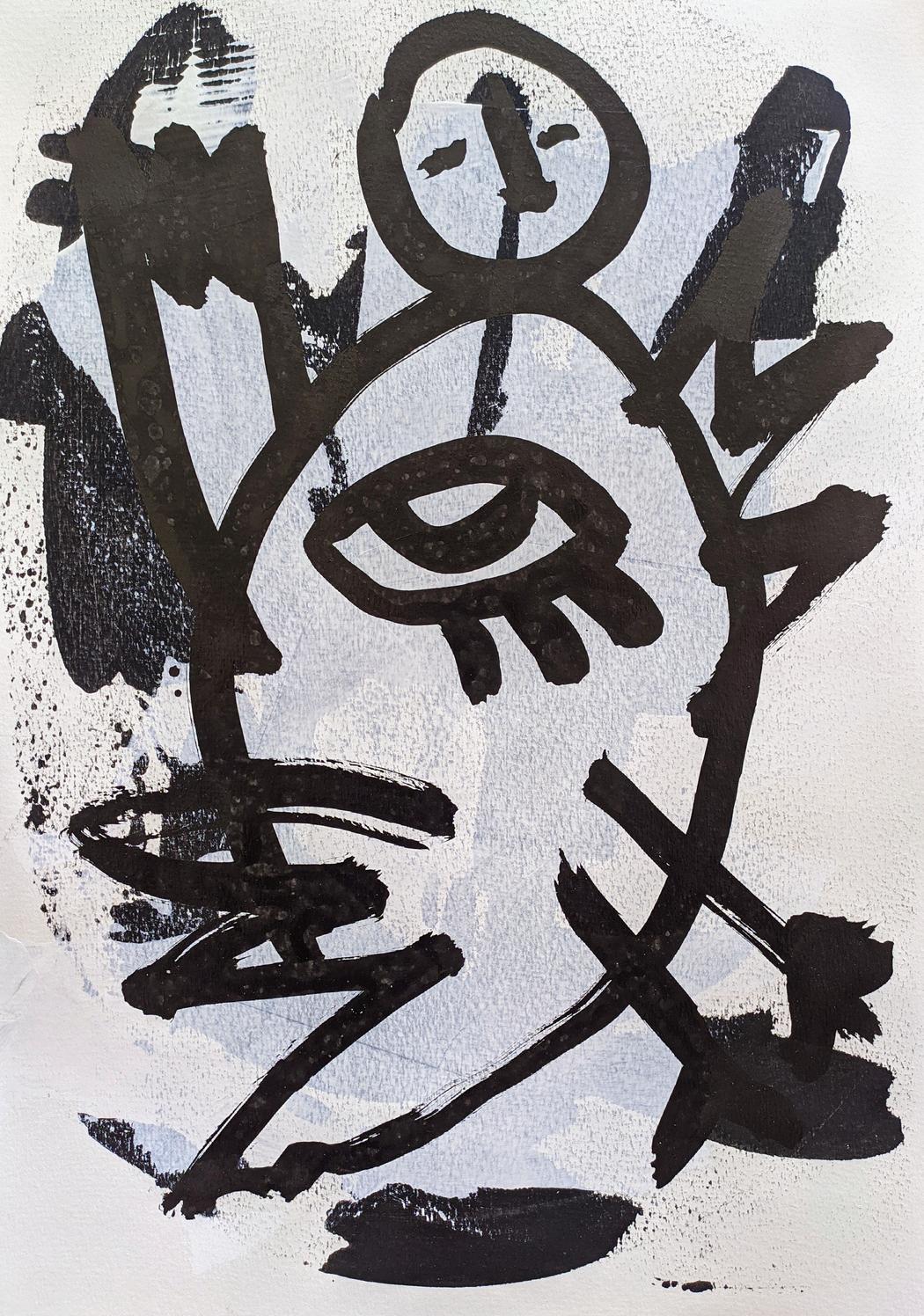 Marc Foloni | Black White Wing
Your lines often feel both decisive and fragile. How important is the physical gesture of drawing or painting in conveying psychological tension?
I paint on the floor, feeling my body in contact with the surface, immersed in a silence that can last minutes, hours, or even days. Afterwards, I contemplate, compare, and try to understand what I’ve created. I believe each work is a fragment of my life that I don’t wish to express in words. Strength and fragility are always in harmony, in one way or another.
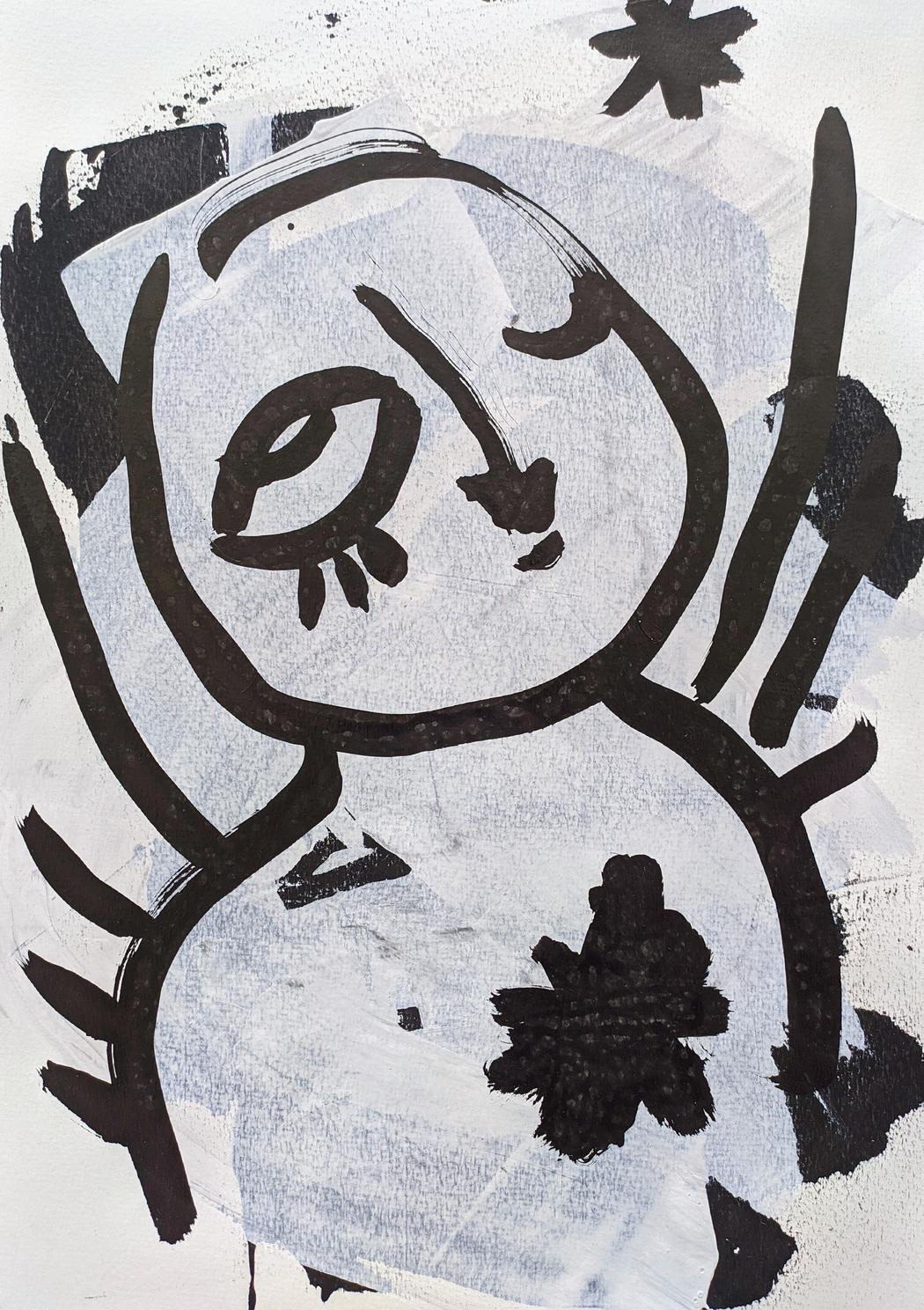 Marc Foloni | Black White Wing
You describe the works as resisting fixed meaning. What kind of role do you hope the viewer takes on when encountering these images?
For me, the most magical aspect of my artistic style is listening to the meanings others bring to the work. This not only makes me happy, but also leads me to reconsider what I hadn’t seen myself. When someone tries to decipher a piece and shares their interpretation, it means they felt something—and that deeply satisfies me. I prefer to ask people, “What do you see here?” After ten years as a visual artist, I still hear completely new interpretations of works from 2016 or 2018 and think, wow, you’ve opened something no one had ever seen before.
Leave a Reply
You must be logged in to post a comment.