
Yilun Liu
Paris Archive by Yilun Liu
Critical Review by Anna Gvozdeva
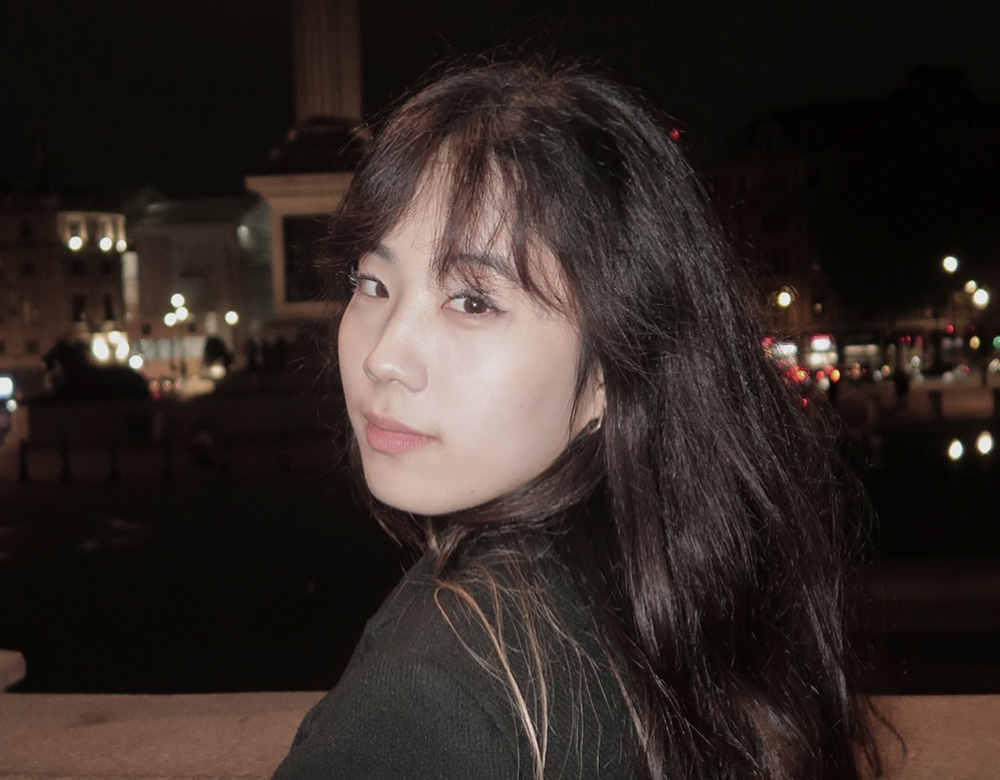
In Paris Archive (2025), Yilun Liu interrogates the mechanics of contemporary travel, memory, and authorship through a subtle yet incisive interplay between digital simulation and physical presence. Rooted in her interdisciplinary practice – bridging architecture, performance, and embodied spatial inquiry – the project exposes how digital interfaces do not merely mediate experience but actively construct belief, intimacy, and trust.
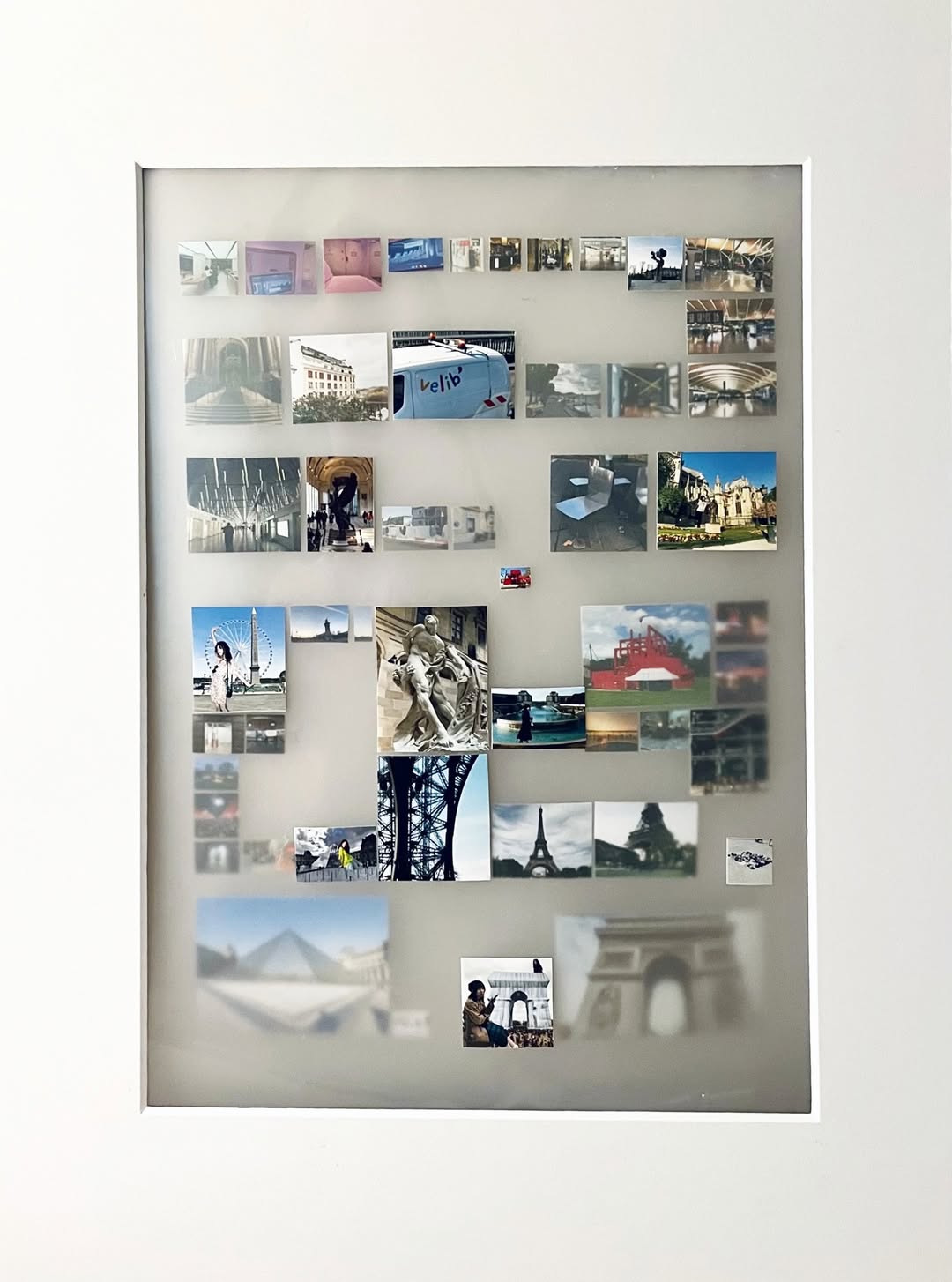
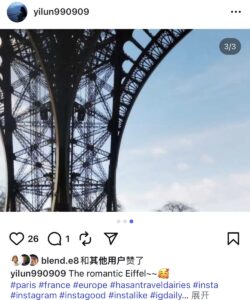
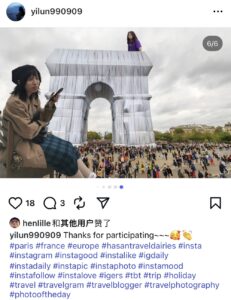
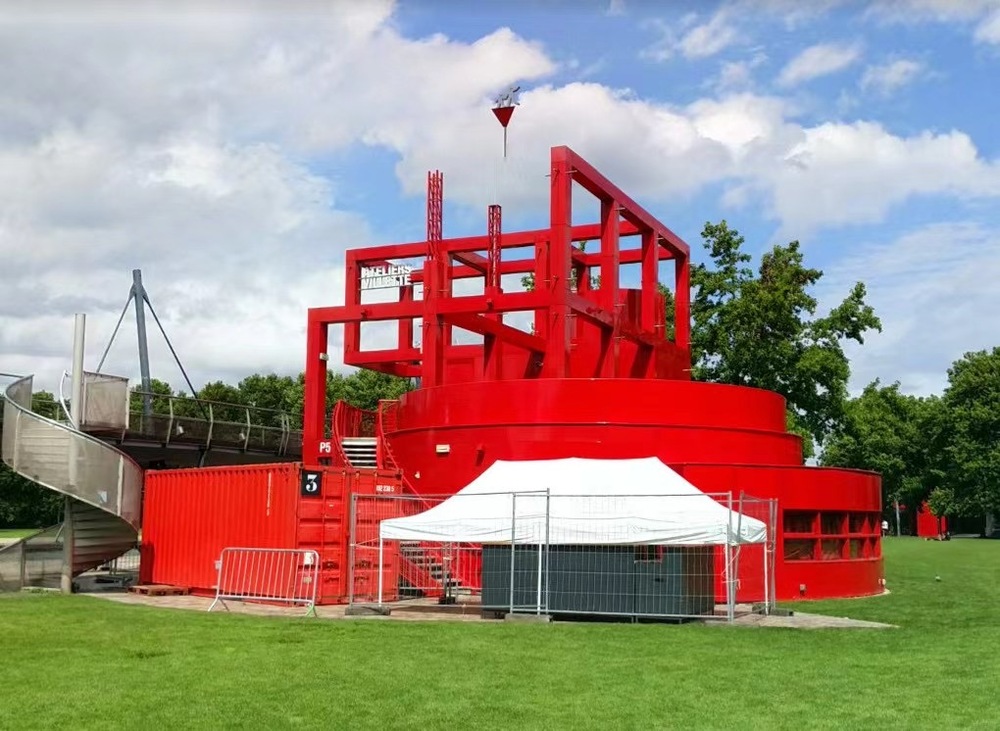
The work originates as a digital performance staged entirely within Google Street View, where Liu fabricated an imagined journey to Paris. Through algorithmically warped imagery, discontinuous perspectives, and temporal glitches inherent to the platform, she generated a series of “travel logs” disseminated via social media. These posts circulated as plausible documentation of a trip that never occurred. Viewers encountered the work unevenly: some accepted the journey as authentic, while others slowly recognized fractures in spatial logic and visual continuity. This oscillation between belief and suspicion is not incidental – it is the conceptual engine of the project.
Liu’s choice of Google Street View is critical. As a tool designed for navigation and verification, it carries an implicit authority rooted in cartographic precision and technological neutrality. Yet Paris Archive reveals this authority to be fragile. The distorted bodies, stretched architecture, and mismatched temporal fragments expose how digital infrastructures flatten lived experience into manipulable data. In this sense, Liu’s work resonates with contemporary critiques of post-photographic truth, where images no longer function as evidence but as performative propositions.
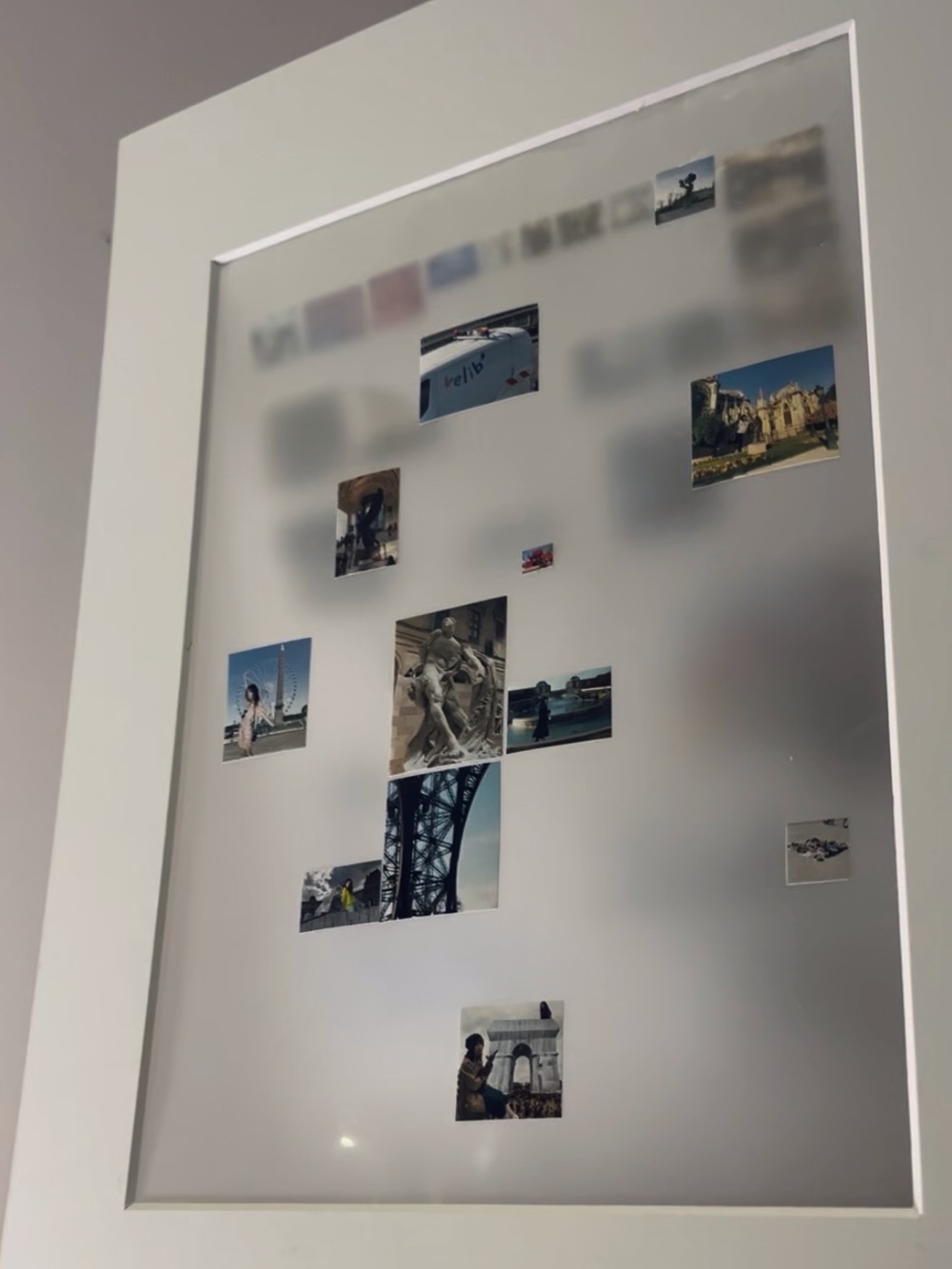
The exhibition version extends the digital performance into physical space through a restrained yet effective material strategy. Images from the online journey are printed and arranged across three laminated sheets, layered to produce subtle shifts in depth and alignment. As the viewer moves, images partially obscure and reveal one another, echoing the parallax effect of Street View navigation. This translation from screen to object does not attempt to “fix” the digital instability; instead, it preserves and amplifies it. The laminated surfaces act as membranes—neither fully transparent nor opaque – mirroring the ambiguity between presence and projection that defines the project.
Importantly, Liu avoids spectacle. The scale is intimate, the gestures precise. Rather than overwhelming the viewer with technological excess, Paris Archive invites close looking and slow recognition. This restraint reflects Liu’s architectural sensitivity to spatial sequencing and bodily orientation. The viewer does not encounter the work as a static image but as a durational experience, activated through movement, proximity, and perceptual adjustment.
The project’s engagement with social media further complicates its reading. By allowing the fabricated journey to circulate organically among friends and strangers, Liu implicates the audience as unwitting participants. The work unfolds not only in the gallery but within networks of sharing, liking, and commenting – spaces where authenticity is often assumed rather than examined. In this context, Paris Archive functions as a quiet critique of how digital travel imagery constructs aspirational identities and collective fantasies, often detached from physical experience.
Ultimately, Paris Archive is less about Paris than about the conditions under which place is imagined today. Liu does not position herself as a deceiver but as a choreographer of perception, exposing how easily trust is produced through familiar visual languages. The work asks pointed questions: What does it mean to “be” somewhere in an era of remote access? How do digital tools reconfigure memory before it is even formed? And where does authorship reside when experience is assembled from pre-existing data?
Through its elegant synthesis of performance, spatial design, and material translation, Paris Archive affirms Yilun Liu’s position as an artist attuned to the subtle politics of perception. The project lingers not as a revelation but as a destabilization – an invitation to reconsider how we navigate, remember, and believe in the spaces we never quite inhabit.
Leave a Reply
You must be logged in to post a comment.