
Anand Manchiraju
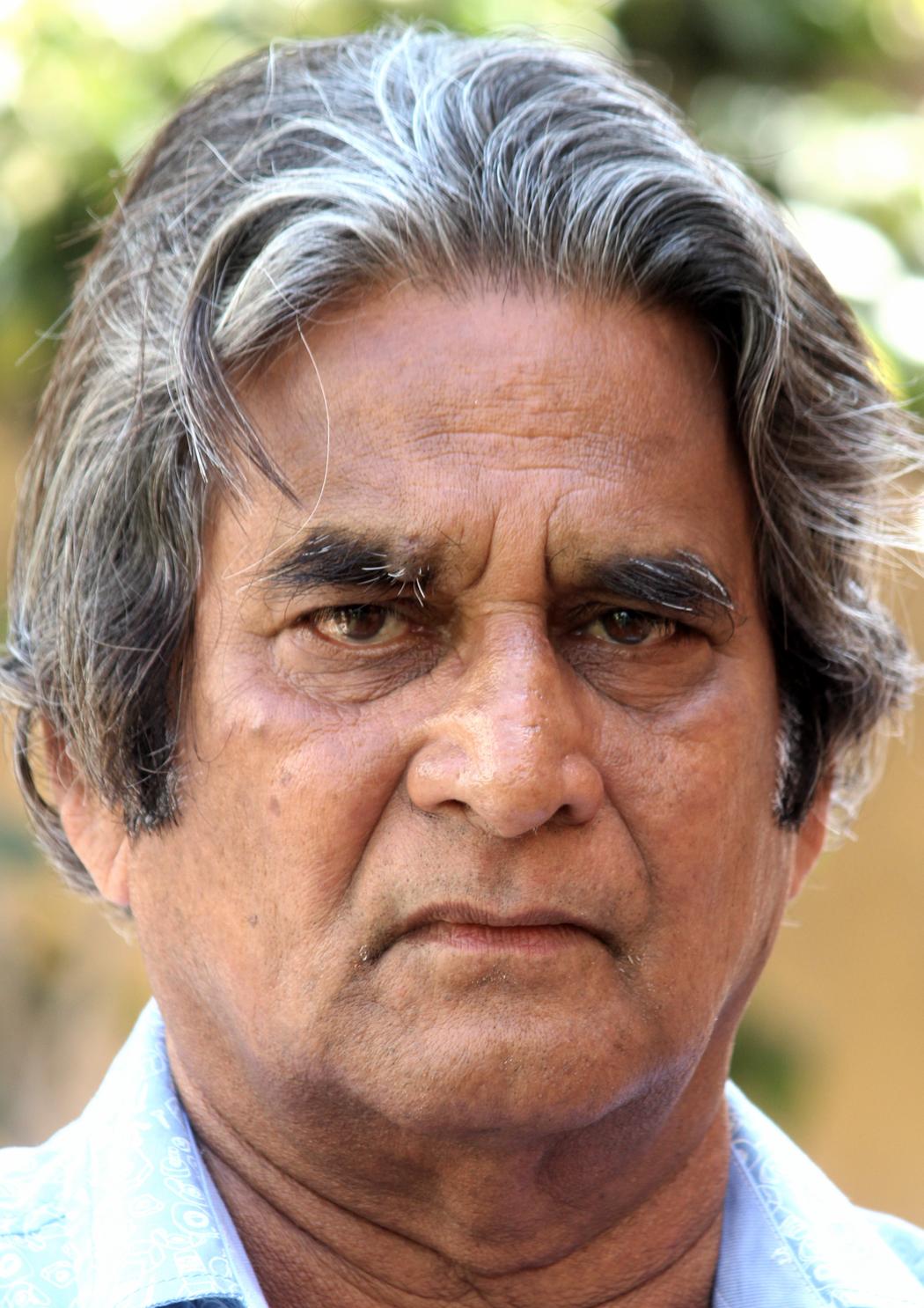
You have worked with painting, photography, and experimental techniques for many decades. How do you decide which medium best suits a particular idea or emotion?
When an idea or emotion begins to take shape, I first observe the nature of my imagination—how it feels, moves, and demands to be expressed. Each concept carries its own rhythm and intensity, and I allow that inner vision to guide me toward the most suitable medium. If the emotion calls for depth, texture, and physical engagement, I naturally turn to painting, translating those feelings into expressive strokes and layered surfaces. Working with acrylics and oils, especially through palette knives, allows me to build textures that echo the energy, mood, and movement of the idea. For me, the medium is never chosen in advance; it reveals itself through the emotional and visual language of the imagination I am responding to.
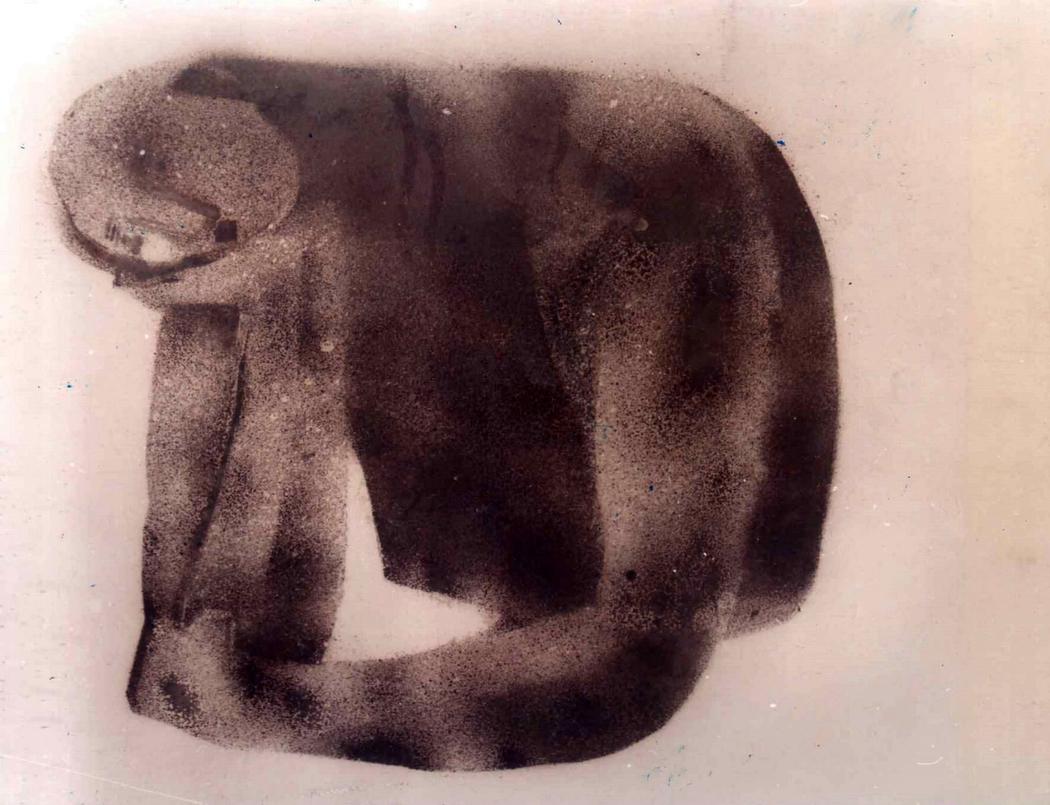 Anand Manchiraju | Waiting Photo Chemical On Bromide
Your concept of “photo-paintings” using bromide paper, x-ray film, and photographic chemicals is quite unique. What initially led you to merge photography and painting in this way?
My journey toward creating what I call “photo-paintings” began during my formal training in photography at J.N.T.U. While studying traditional photographic processes, I had an accidental yet transformative encounter: I noticed a piece of photo bromide paper lying on the floor with photographic chemicals spilled on it. The chemical reaction had created unexpected shapes and tonal variations. That moment sparked my curiosity and planted the seed for a new way of image-making.
Over the last decade and more, I have continuously experimented with photographic chemicals on fogged photo bromide paper—without using a camera, lens, or darkroom. All the work is carried out in room light. In this process, the bromide paper replaces the canvas, and photographic chemicals take the place of conventional artist colours. Because of this hybrid nature, I describe these works as “photo-paintings.”
What fascinated me most was the unpredictability of the medium. Through extensive experimentation with both black-and-white and colour bromide papers, I gradually learned to control the image by adjusting the strength of the chemicals and the methods of application. The most challenging and exciting aspect of this process is that the drawing must be completed before the image reveals itself. Only after the chemical reaction is fully complete do I see what I have created, making the process both intuitive and meditative.
This exploration naturally expanded into working with reprocessed X-ray films. Using acrylic paint, photographic chemicals, and scraped film surfaces, I began creating works that embrace transparency, layering, and ethereal textures. These materials—often discarded—gain new life through experimentation, allowing light, movement, and emotion to emerge in abstract forms. By merging photography and painting in this way, I move beyond traditional boundaries of both disciplines. The process allows me to engage deeply with chance, control, and transformation, creating works that are as much about discovery as they are about expression.
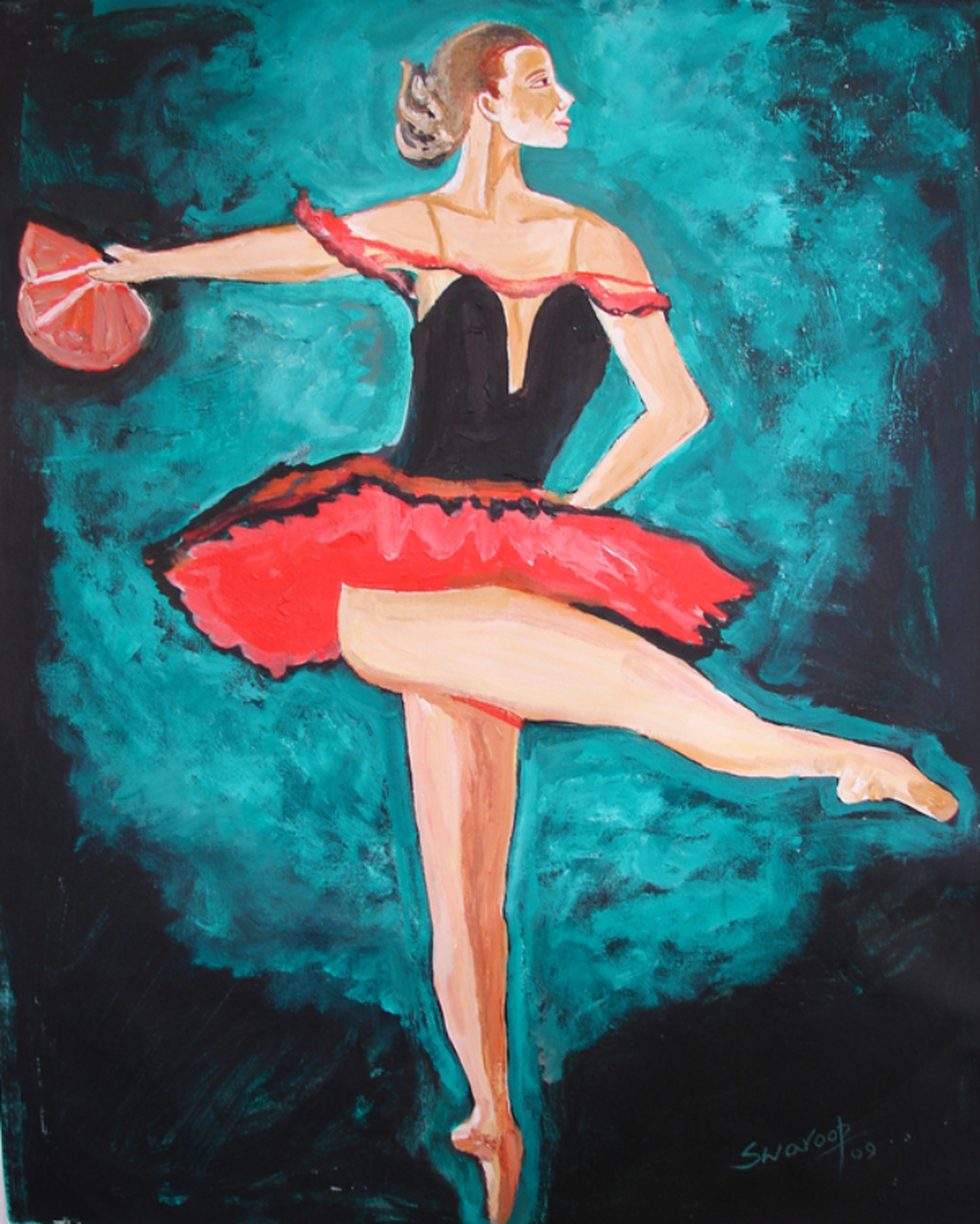 Anand Manchiraju | Us Ballet | 2010
Having started painting in childhood under the influence of your father, how has that early exposure shaped your artistic philosophy today?
My artistic journey began in childhood under the quiet yet profound influence of my father, who was a renowned artist. I spent countless hours observing him at work—watching his process, his discipline, and his relationship with the canvas. When he finished painting, I would pick up the same brushes and attempt to create my own images. Those early moments were not lessons in technique alone, but in seeing, patience, and respect for the act of creation.
This early immersion shaped my belief that art is a way of life rather than a separate profession. From a young age, I followed my passion instinctively, which later led me to formally study photography from JNTU, Hyderabad. My education, combined with hands-on exposure, encouraged me to explore beyond conventional boundaries and remain open to experimentation.
Throughout my career—including my time as an Artist Executive at IDPL, Rishikesh—I remained deeply connected to creative practice. Whether experimenting with photographic chemicals on bromide paper, painting on reprocessed X-ray films, or creating landscapes and abstract compositions, I have always embraced curiosity and risk as essential parts of my philosophy.
Today, my artistic approach is rooted in that early exposure: a belief in learning through observation, honoring tradition while constantly experimenting, and allowing passion to guide the process. I consider myself fortunate to have discovered my calling early in life—and even more fortunate to have transformed that lifelong passion into my profession.
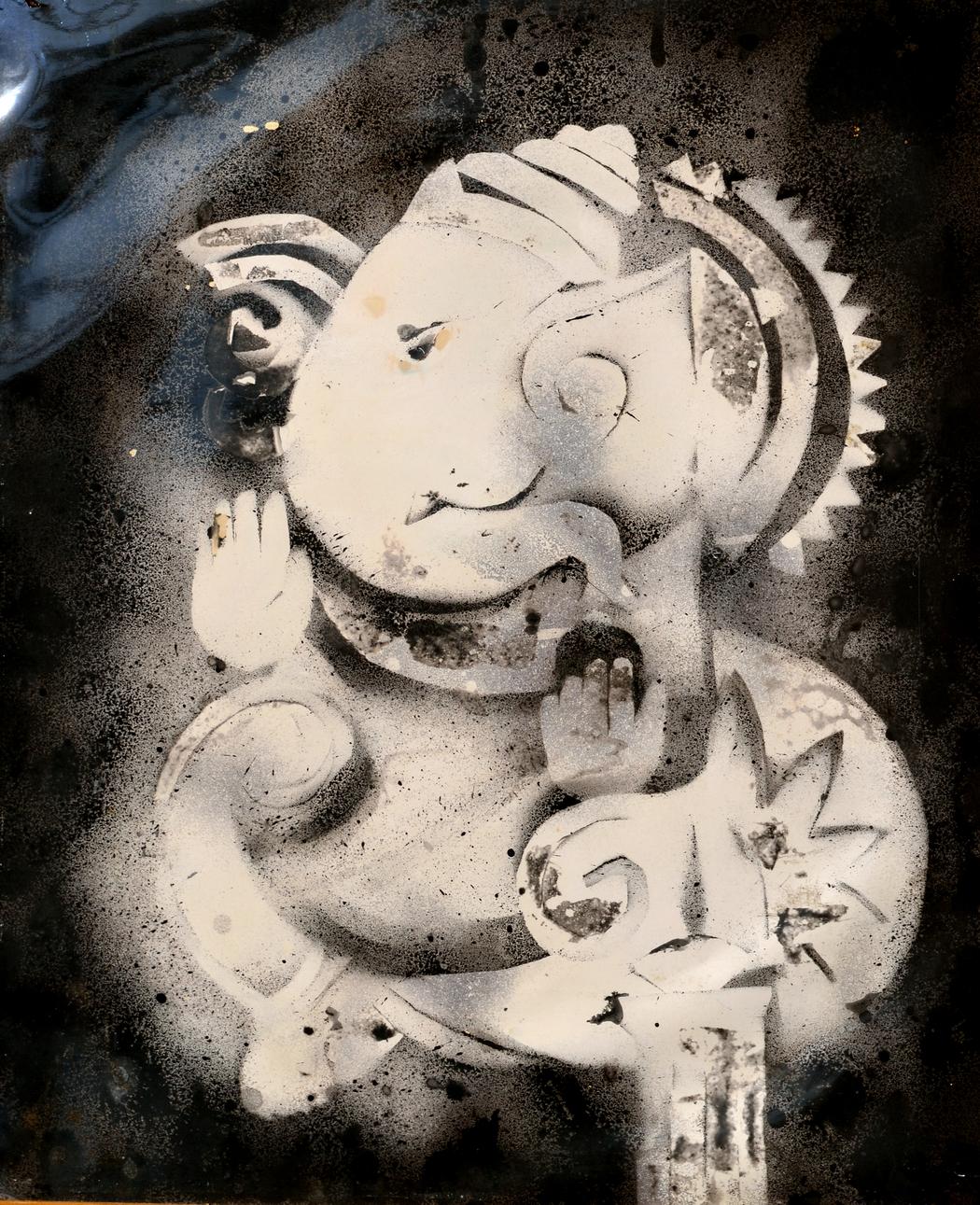 Anand Manchiraju | Ganesha Photo Chemical On Bromide
Your artworks often feel process-driven rather than result-oriented. How important is experimentation and unpredictability in your creative practice?
Experimentation and unpredictability are central to my creative practice. I believe that every artist draws inspiration from a different source—some from wildlife, others from pure imagination. For me, inspiration comes from the life unfolding around me. It may be the serenity of the Himalayan ranges and the spiritual flow of the holy Ganges, or the dynamic energy of cityscapes like the Chicago skyline and the constant urban hustle.
Once an idea is conceived from these experiences, the process becomes an open exploration rather than a fixed plan. I engage with a wide range of tools—palette knives, coconut leaves, broomsticks—and work across mediums such as acrylics and oils, allowing each material to influence the direction of the artwork. Color, texture, and gesture evolve organically as I respond to what the surface reveals at each stage.
Unpredictability plays an essential role in this journey. I move back and forth with the work, adjusting, layering, and reimagining until the image on the canvas aligns with the vision in my mind. The process often stretches across days and nights, beginning with ideas conceived at dawn and unfolding gradually through sustained engagement.
For me, the final result is meaningful only because of the process that leads to it. The act of experimentation keeps the work alive, authentic, and deeply connected to my lived experiences—making the creative journey as important as the finished artwork itself.
 Anand Manchiraju | Crows Crows And Crows | 2025
You have produced thousands of artworks over your career. How do you personally define growth or evolution as an artist after so many years of practice?
After producing thousands of artworks over many years, I define growth as the ability to remain responsive—both to inspiration and to the world around me. There are countless subjects between the earth and the sky, and my evolution as an artist lies in my openness to explore them as they reveal themselves at different moments in time.
I choose my subjects intuitively, guided by the inspiration I feel at the beginning of each creative process. That inspiration is never fixed; it changes with my experiences, surroundings, and emotional state. At the same time, I remain aware of the broader context in which art exists—market trends, collector interests, and the cultural climate of a particular period. Engaging with these realities does not restrict my creativity; instead, it challenges me to adapt, reinterpret, and communicate more effectively through my work.
For me, artistic growth is not about repeating a signature style endlessly, but about evolving with time—experimenting with new themes, materials, and approaches while staying true to my core sensibility. Even after decades of practice, the desire to explore, respond, and reinvent keeps my practice alive and continually moving forward.
Your statement speaks about freedom—freedom to create and to express. Do you feel this freedom has expanded or changed with time?
Yes, my sense of freedom has both expanded and deepened with time. When I reflect on my long association with art, I realize that the creative process itself has always been as intriguing and rewarding to me as the final outcome. From the very beginning, there was a strong inner urge to create—one that persisted even during moments when others attempted to dissuade me from this path.
Over the years, this internal drive has shaped my understanding of freedom in art. It taught me to value exploration, patience, and openness to uncertainty. Rather than being focused solely on results, I learned to trust the journey—to allow ideas to evolve naturally and to embrace experimentation without fear of failure.
Today, freedom in my practice is not just about choosing subjects or mediums; it is about the ability to express myself honestly and intuitively. With time and experience, that freedom has grown into a deeper confidence—one that allows me to create without external pressure and to remain true to my inner voice. This ongoing creative and explorative journey continues to define my relationship with art as an act of personal expression and liberation.
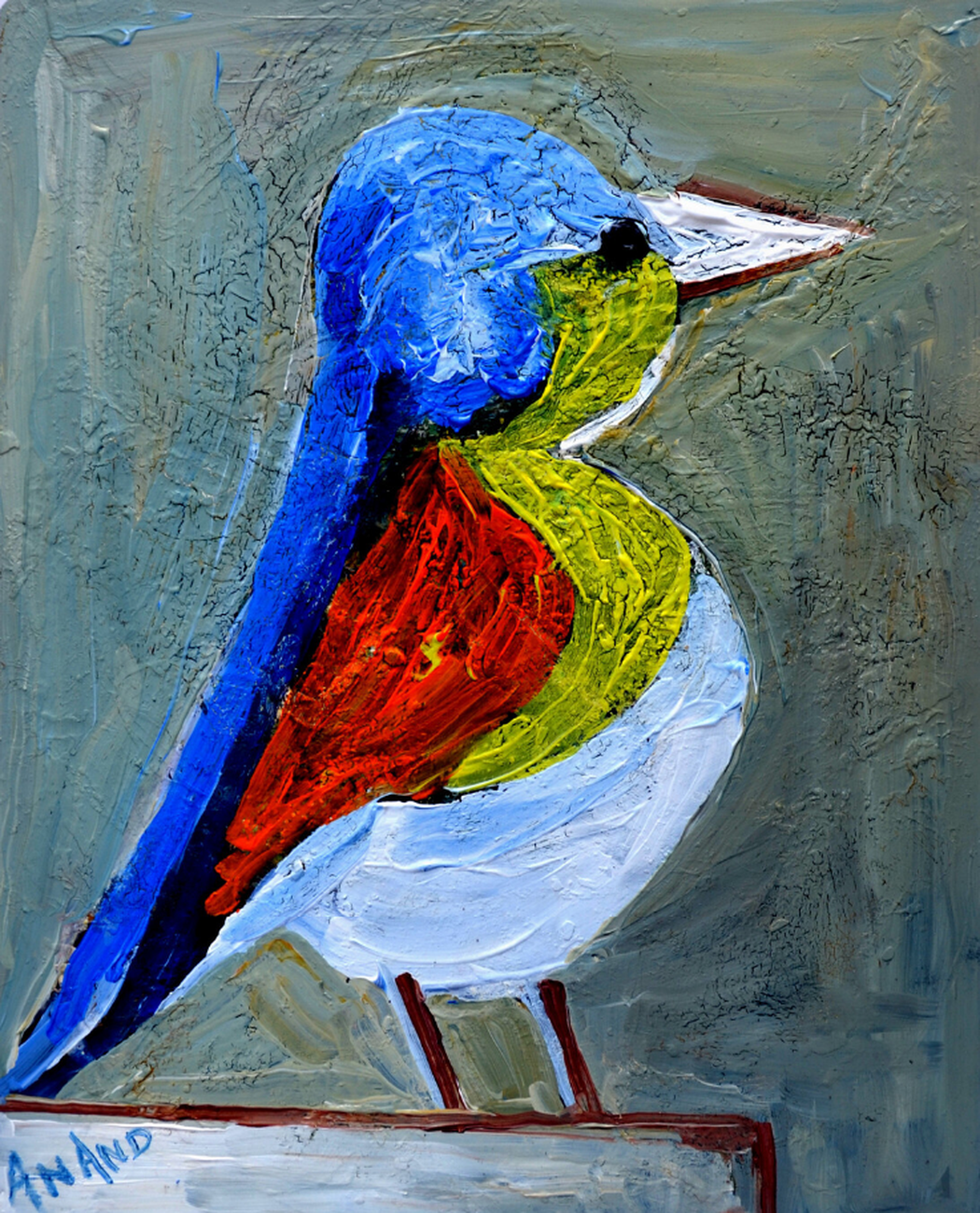 Anand Manchiraju | Blue Bird | 2022
How do spirituality and daily life coexist in your work, and where do you find the balance between the two?
In my work, spirituality and daily life are deeply interconnected rather than separate paths. Spirituality plays an essential role in my creative practice because it strengthens focus, willpower, and dedication—qualities that are vital for sustained artistic work. When practiced regularly, it becomes a grounding force that naturally flows into the process of creating art. At the same time, daily life provides the situations in which this spiritual grounding is tested and expressed. Spirituality keeps me motivated during challenging periods and helps me remain optimistic in moments of uncertainty. It allows me to respond creatively rather than feel limited by circumstances.
A clear example of this balance emerged during the COVID period. When I was unable to access conventional art materials such as canvas, I adapted to the situation instead of stopping my practice. Drawing on inner resilience and creative clarity, I began painting on daily newspapers and developed an entire series of works, including the Ballet Dance series. This experience reinforced my belief that spirituality nurtures flexibility and acceptance, while daily life offers opportunities to translate those values into action.
For me, balance is found when spiritual discipline supports creative resilience, and everyday realities become catalysts for artistic expression. Together, they allow my work to remain both grounded and transcendent.
Leave a Reply
You must be logged in to post a comment.