
Yinxue Zou
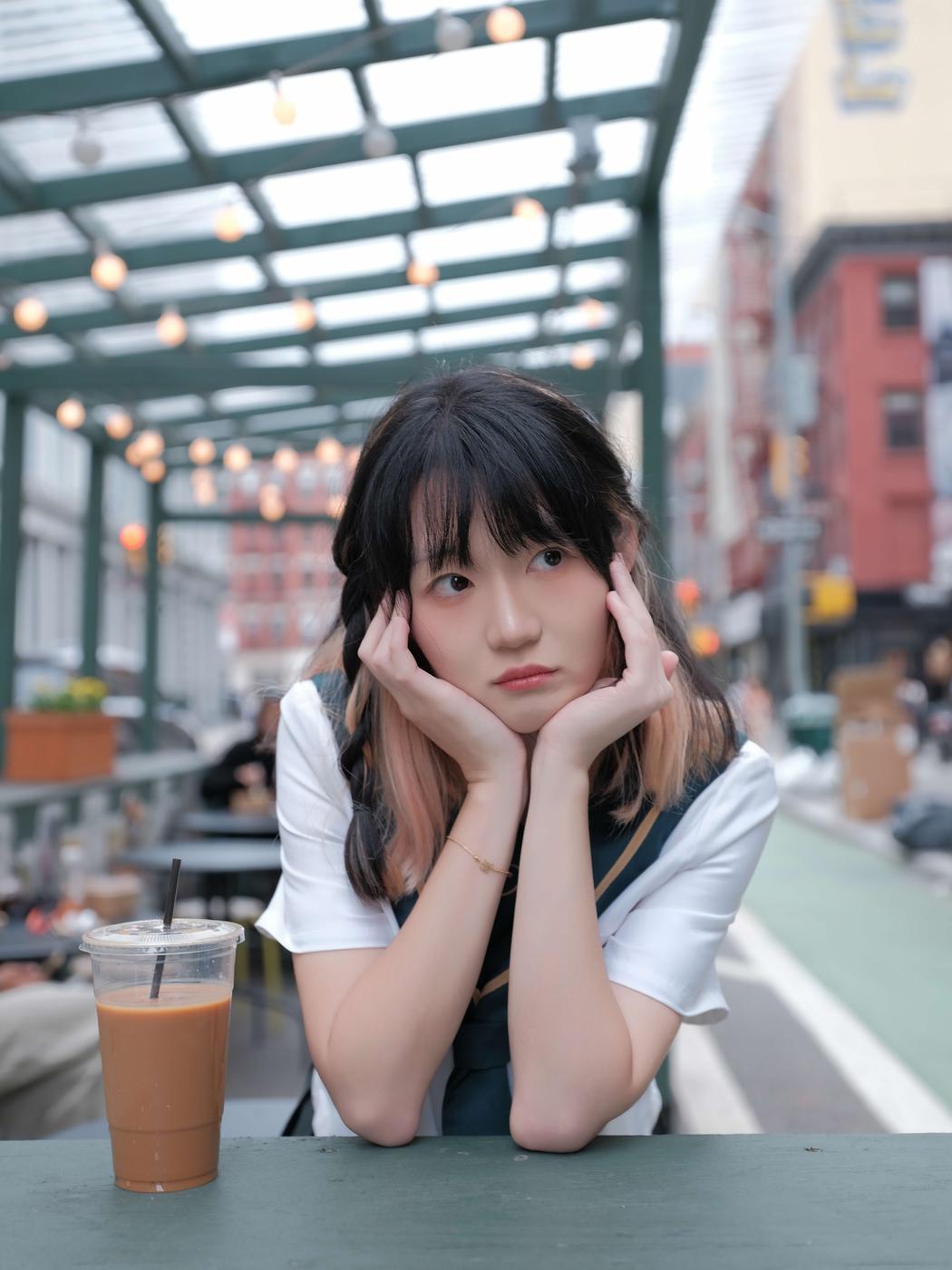
Order and chaos, this tension that recurs in many of your works. Is it a preoccupation? When you start a new piece, does it usually originate in an ordered or a chaotic impulse? What is usually the seed of the first structure—a grid, a text, a visual memory?
Order and chaos are not so much antithetical for me as two stages in the same cycle, and for that reason, the scaffolding for a new piece rarely emerges from a single source. The first element to coalesce is usually some vague visual memory: the blue reflection of headlights on a backseat at 3 a.m., the palimpsest of advertisements on a subway car, the stray margins of a city seen through the window of a moving car. I rarely recall something as a literal image; it’s more that a certain temperature lingers from a particular place or time, and it’s this emotional residue that seeps into the intuitive core of a new work. At the same time, at this early stage I often recall (not think, but recall) one or two short phrases—sometimes in Chinese, sometimes in English—that come as close to a voice as these things have when they first appear. Instinctively, they give a work a sense of direction. But structure usually only settles once a grid is present. A simple grid gives a provisional skeleton for all these other things to latch on to before they begin to break apart, slide out of alignment, or otherwise deform. In this way, memory provides emotional inertia, language provides a conceptual axis, and the grid provides minimal order. The work begins to cohere in their tension rather than at one specific point of origin.
 Yinxue Zou | Dream
Many of the posters and zines in your archive feature bilingual and mixed-script typography. How do you know when you’re treating language as content, and when it’s content as visual material?
Language and text almost always begin as content for me—they have a semantic weight, cultural and autobiographical resonance, and intentional narrativity. In the natural ebb and flow between Chinese and English, my own movement through different contexts also finds an echo. But once language becomes part of a composition, I rarely let it remain a semantic signifier. I often push it into a liminal space between readability and abstraction: spacing is expanded or contracted, syntactical structures are fractured or truncated, layers are misaligned, sentences are duplicated, interrupted, partially erased, or superimposed. In this process of estrangement, language is gradually pushed from the side of meaning to that of visual matter. The way it lands on a page, its shape, density, rhythm, directional flow, becomes more significant than its literal content. The decision of where to push it depends on two questions: if a given sentence or word needs to be clearly legible for the work’s core meaning, and if the presence of language—as residue, noise, or structural trace—is more important than meaning itself. Content and form are not competing imperatives; they’re different folds in the same system.
 Yinxue Zou | Order And Chaos
In several works, there’s a sense of the emotional landscapes you’re creating—fluid, dreamy, even glitchy. When you’re in this intuitive process, how do internal states find their way into decisions about color, texture, and motion?
I rarely start with a specific theme or concept; more often a long-term emotional condition approaches a limit and intuitively becomes something else, something visual: color, texture, motion. When I’m in anxious or unstable phases, my default positions are high contrast, cooler temperatures, sharper edges, and more fractured structures; noise, glitches, misalignments build the way my thought processes do at those times. In calmer or more reflective moments, everything naturally flattens into slower gradients, diffused forms, desaturated grays and blues that are almost atmospheric. Color becomes a register of intensity; saturation and value are less aesthetic decisions than emotional intensities. Texture serves as a way of indexing time, a record of friction, attrition, sedimentation. Motion—actual or implied, suggested by directionality or through repetition and rhythm—becomes psychological pacing. In general, I like to hold a piece in a state that’s not so much resolved as tenuously suspended. This is partly because I tend to work quickly and iterate a lot, but also because this threshold condition is the closest to the way I experience the internal world. It is dynamic and uneven and continually reassembled.
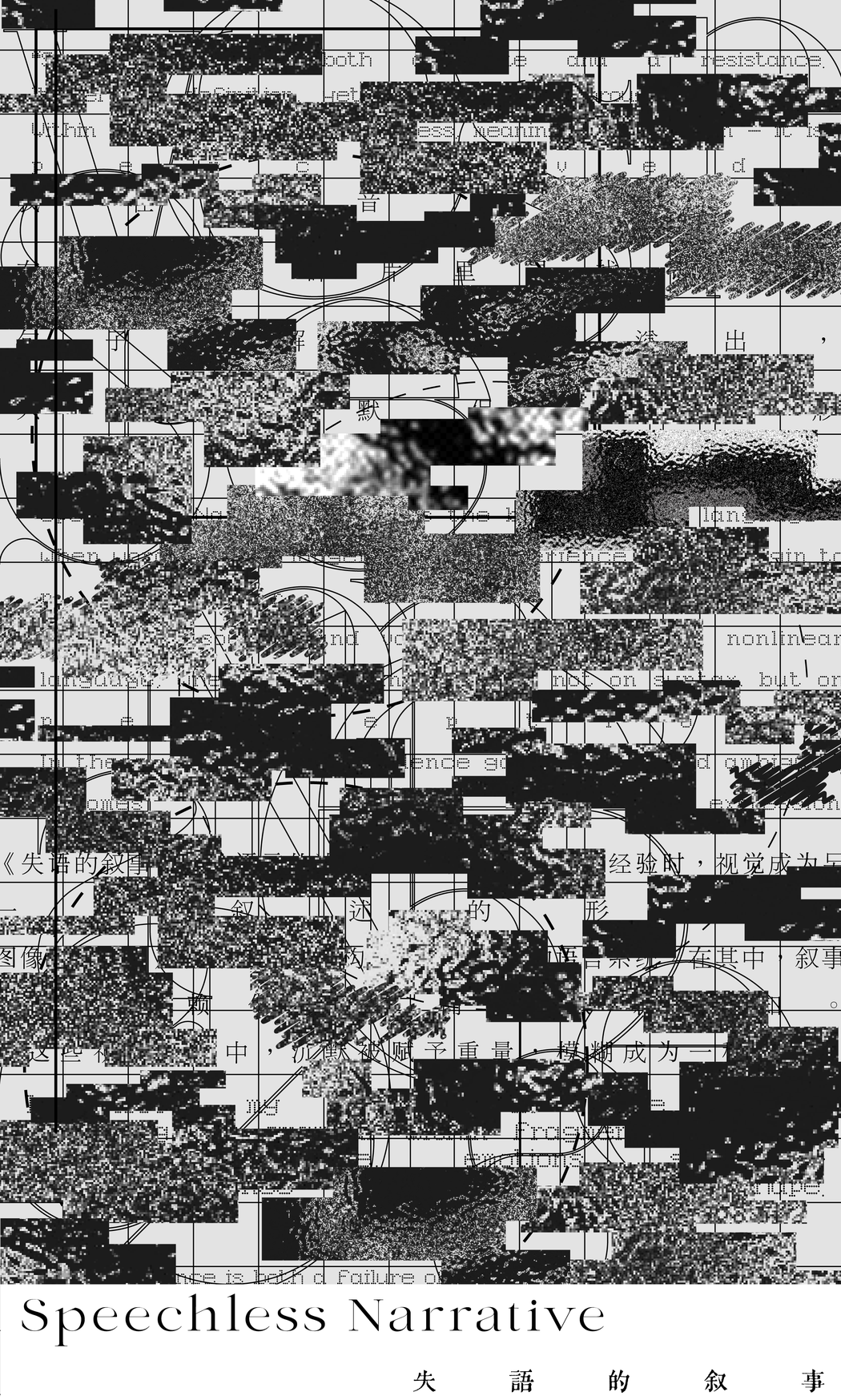 Yinxue Zou | Speechless Narrative
Your series have both analog qualities (grain, scratch, noise) and digital interventions. How do you balance the tactile and the technological in your practice?
Balance is not really the right word for me; it is more a circulation. The analog components reintroduce tactility and temporality to the work (grain, scratches, paper fiber, printing imperfections): material that slows down the image, that accumulates material memory. The digital operations (pixelation, algorithmic disturbance, compositing errors, compression artifacts) push that materiality toward abstraction, reorganization, or reassignment. In general, I acquire tactile source material (through scanning, photography, or hand-made components), deconstruct the fragments and then compose and layer them digitally, and I try to leave in the “failures” of digital intervention (random noise, misalignments, unstable color bands): these become the logic of the image. What results is not a point of equilibrium but of productive tension: both touchable and unstable, resting and volatile.
As a teaching artist, how does your work with young people influence your creative process? Do the workshops generate new ideas or ways of thinking for you?
It reactivates my intuition. In the classroom and during workshops, I see students who use images, text, or materials in a direct way that’s often unconventional or completely outside normative design logics. Their willingness to break stylistic consistency, their interest in “wrong tools” or accidental process, their comfort with error, all challenge me to remember that making is a form of thinking, not a tidy sequence of operations but an open process. For me, many of the later visual systems (shape variations built from simple grids, layered textures that come out of iterative error, modular language systems) first originated from exercises I developed for students or from the ways students would deviate from those exercises. Teaching and making form a feedback loop: what I design for students becomes part of my own process, and their divergences from my systems often open up other possibilities for me. I learn from their approach to failure.
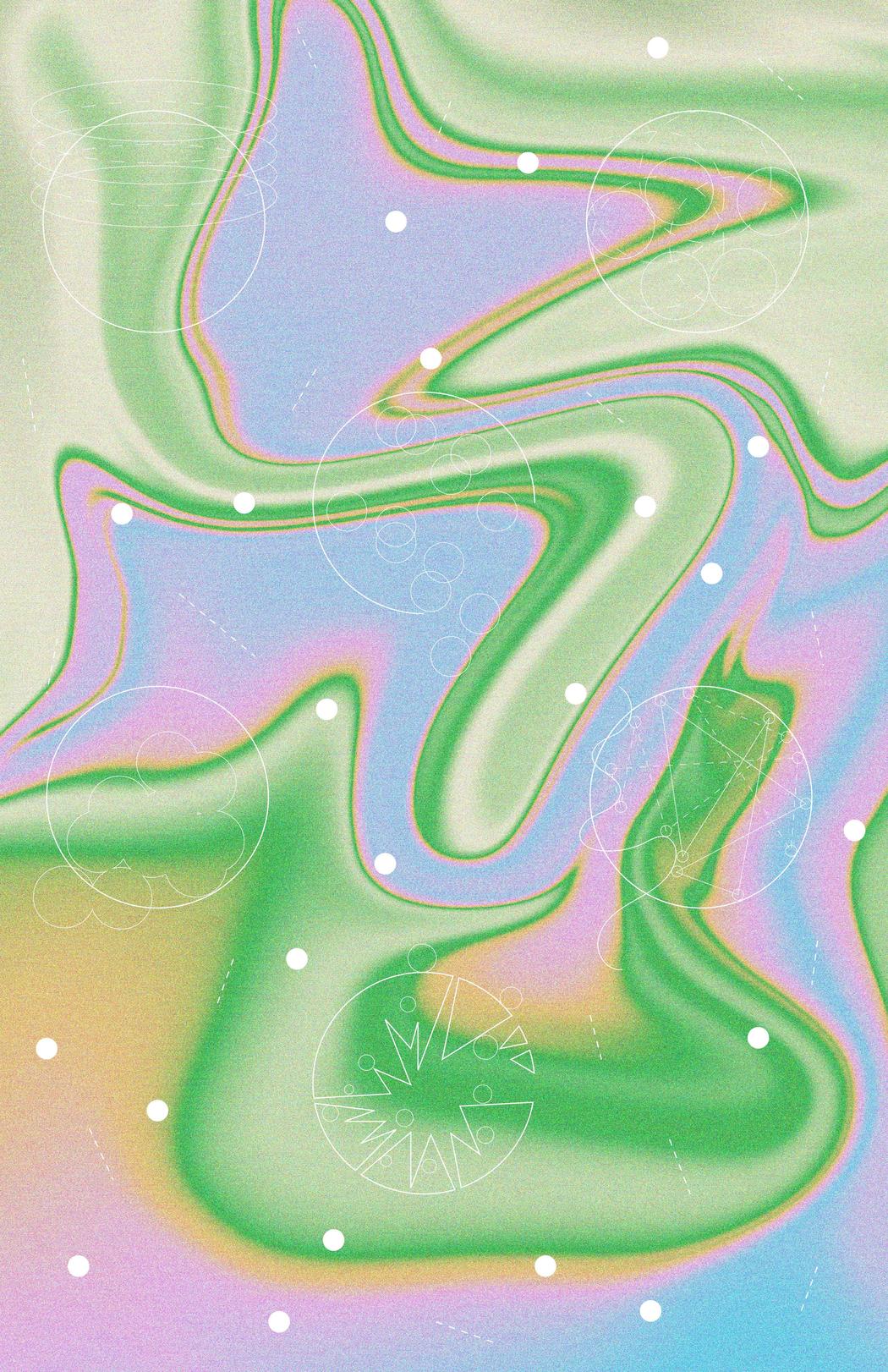 Yinxue Zou | Dream
Your visual systems often feel like they are collapsing or reorganizing themselves. Is this instability intentional, and what does it symbolize for you?
Yes, it is intentional. It’s about my experience of moving across multiple geographies, languages, and professional identities. In practice, many systems—architectural, linguistic, cultural—feel like they are in a state of collapse or reorganization, rather than functioning seamlessly and in unity. For this reason, I tend to let grids fracture, let alignments go out of register, and just let visual logic fall apart right at the last possible moment. The state of “almost falling apart but not quite” is both a descriptive choice and a resistant one: it resists a single fully stabilized identity or narrative and instead suggests an ongoing process of adjustment, re-learning, and renegotiation. Symbolically, it speaks to histories of displacement and linguistic multiplicity, but also to the cultural state of the moment, in which the systems we live in always already have cracks in them. Making visible those cracks is one way of refusing to smooth everything over.
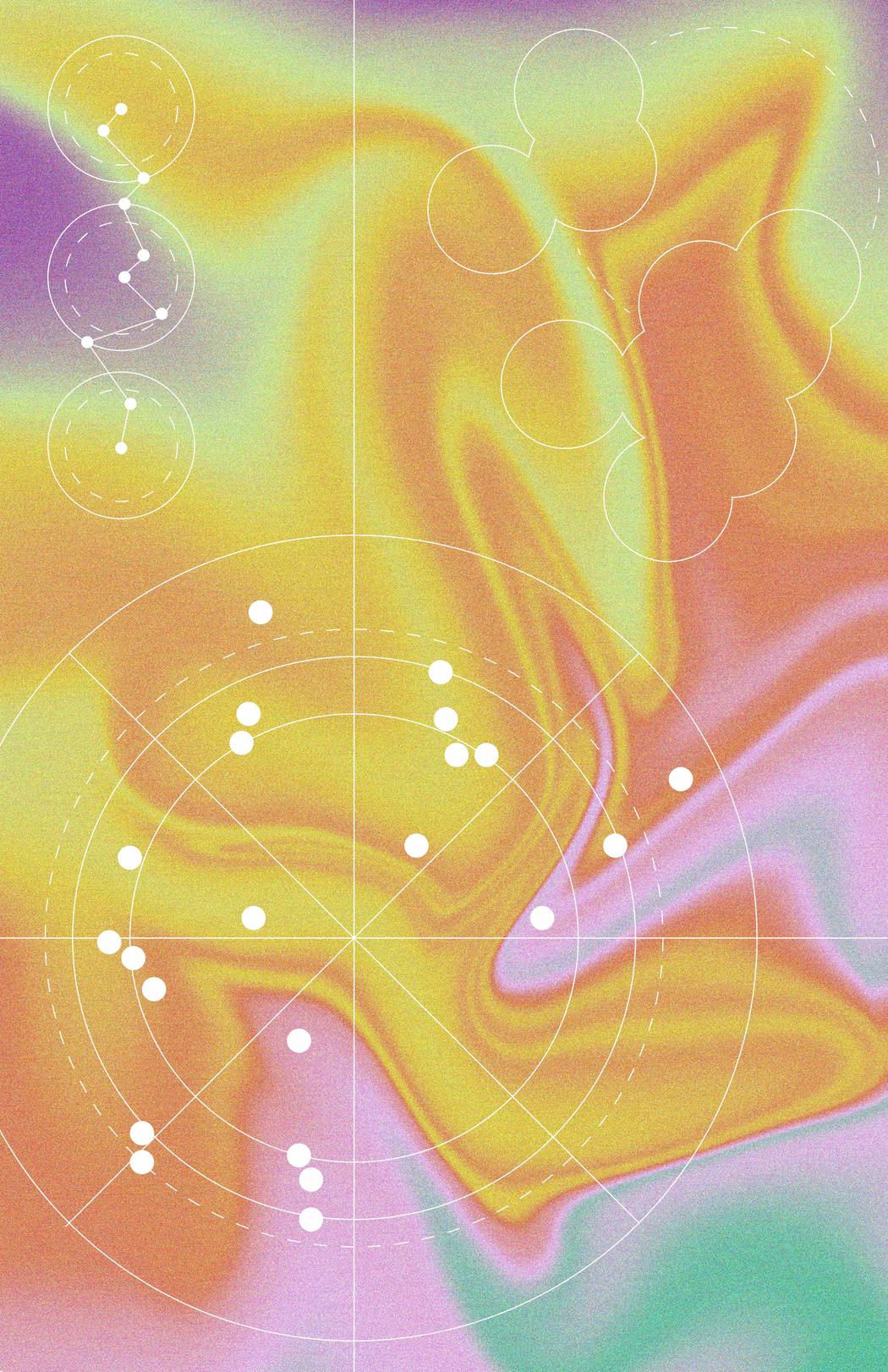 Yinxue Zou | Dream
What do you hope viewers experience emotionally when they encounter your work—especially the more abstract or deconstructed pieces?
I don’t expect viewers to arrive at a single “right” interpretation, but I do hope they can enter a space where language and systems of conceptual framing start to loosen. For me, abstraction and deconstruction are interesting for that very reason: they shift the focus from interpretation to sensation. If a viewer encounters a field of blue, a broken grid, or a spike of unstable text and experiences something—an alien memory, a vague tension, a quiet recognition—then I am content. The work should function as a minor reflective surface, one that does not produce an answer but instead generates internal resonance. For me, for the abstract work in particular, that is enough: not comprehension but attunement, a moment of being made aware that something has touched you even if it is not available to easy language.
Leave a Reply
You must be logged in to post a comment.