
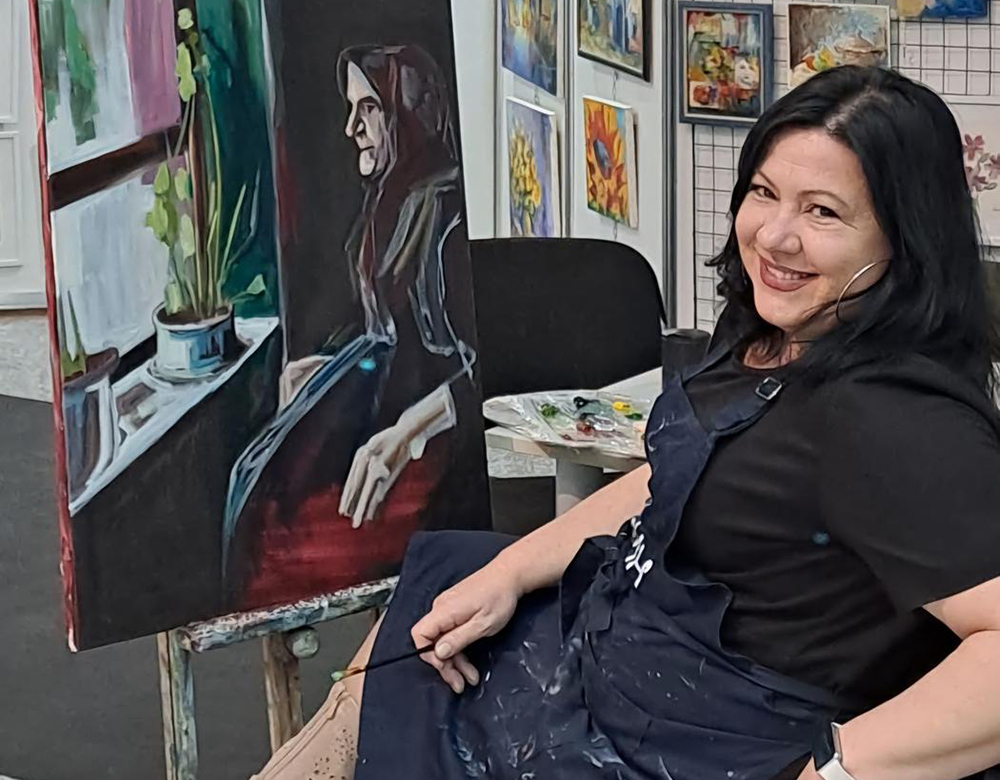
Verica Čupić
What early memories or experiences first connected painting with your interest in cultural heritage?
From early childhood, I felt a strong need to express myself through lines, shapes, and colors—to observe and record everything around me that left a mark, whether on paper or on everyday objects. I was fortunate enough to grow up surrounded by my two grandmothers and a great-grandmother, all of whom practiced traditional craftsmanship such as crocheting, knitting, and embroidery. As a result, I learned these skills at a very young age. Growing up in Vojvodina, surrounded by its vast plains, left a profound mark on my artistic sensibility—the landscapes, antique ornaments, textiles, traditional costumes, rustic courtyards, and stories that have been passed down through generations. Through exploration and practice, I came to realize that painting is not only about creating a picture – it is a way to preserve a world that is gradually disappearing. Representations of childhood and history in my work are not mere nostalgic memories, but values that should live on and which I strive to bring into the present.
In what ways do the landscapes and daily life of Vojvodina shape your artistic expression?
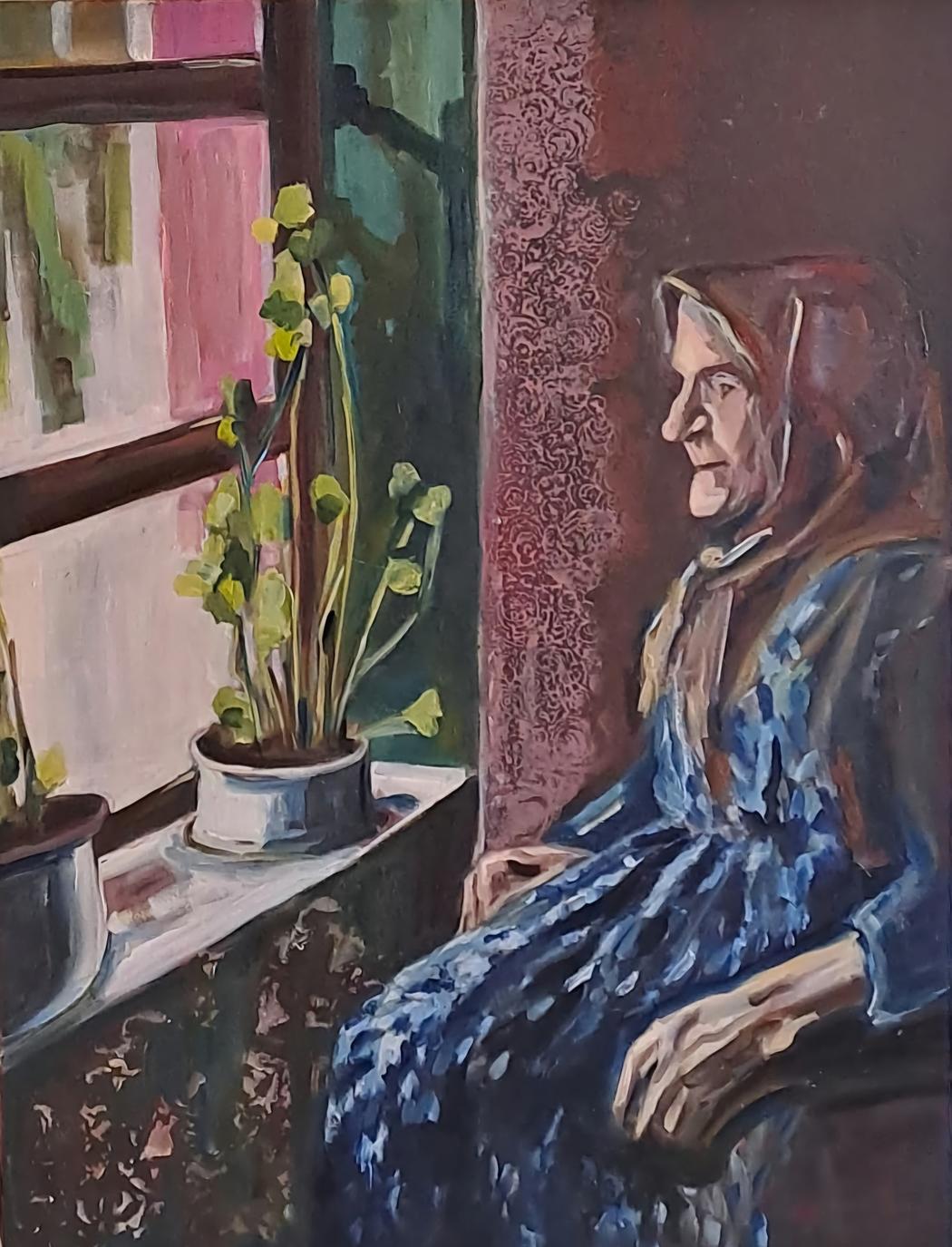
Vojvodina is one of my primary sources of inspiration. Its expansive horizons, plains, morning mist, waters, natural scenery, ancient roads, and traditional houses possess a unique charm that I attempt to capture on canvas. Vojvodina has also preserved its rich multicultural nature, surrounding me with diverse customs and traditional values. Consequently, I am inspired not only by the physical landscape, but by the people, the women, daily life – elements that may appear ordinary or insignificant, but only initially. It is precisely in these subtle details that I discover traces of history and belonging. In this sense, my painting represents a continuous dialogue between my immediate surroundings, the environment that shapes me, and my personal memories.
When incorporating traditional motifs into your artwork, how do you decide what to preserve and what to reinterpret?
When integrating a traditional motif into a painting, my primary goal is to preserve its intrinsic emotion and meaning. I do not wish to translate it literally onto the canvas; rather, I aim to experience it through the emotion and the time required for its original creation. In my work, I leave certain elements recognizable while transforming others through color, texture, composition, brushwork, and the combination of diverse materials. Tradition, ornamentation, and the motifs through which communities historically expressed their identity represent artistic heritage that must remain dynamic. It should evolve and find its place in the contemporary world through visual art.
How do you approach the relationship between personal memory and collective history in your work?
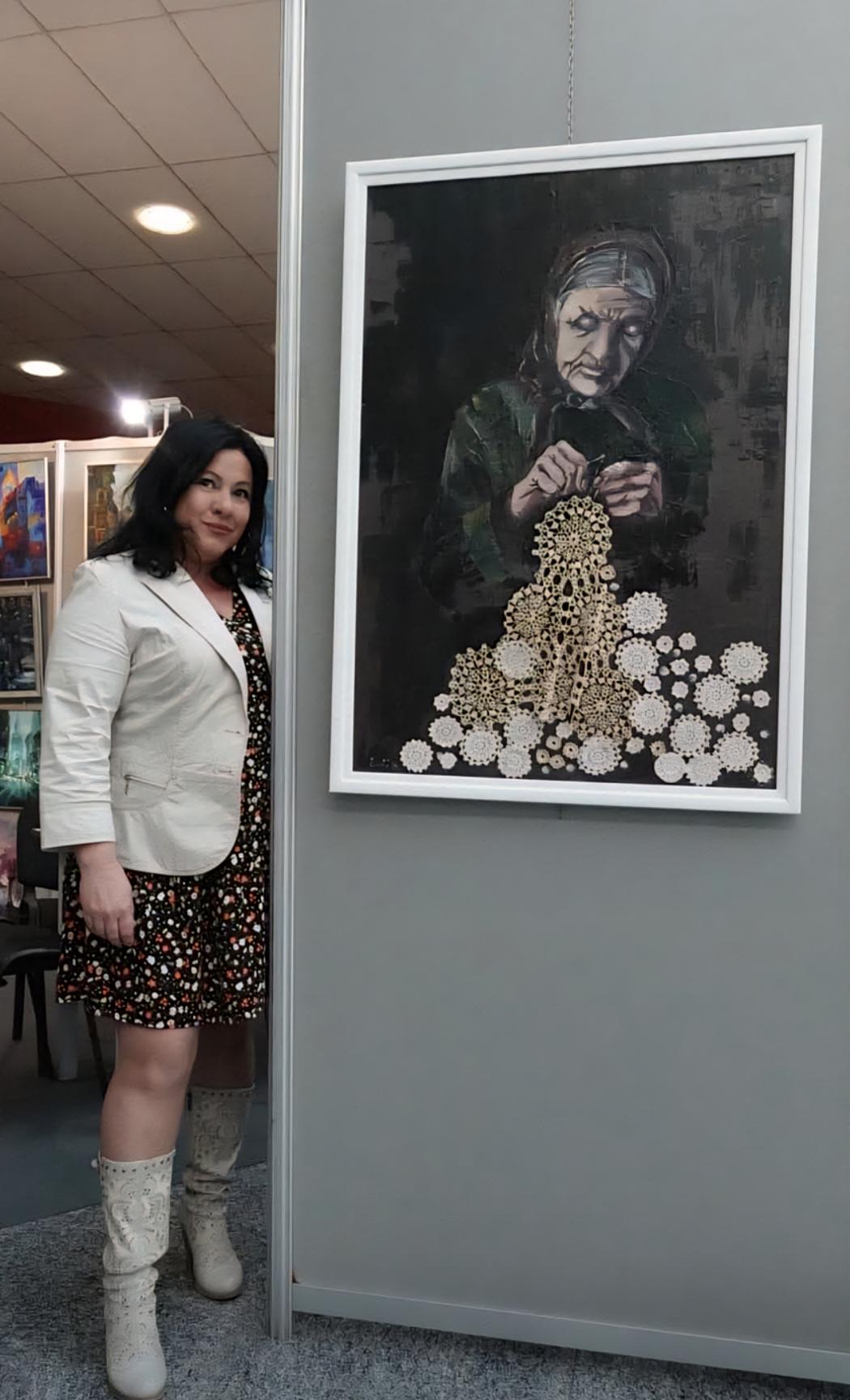
I frequently begin my process with a personal memory, yet I never approach it as something that is isolated. It is deeply interwoven with the memories of past generations and the heritage passed down to us. My objective is not to simply preserve a personal memory, but to use it as a gateway to collective memory. An object or experience that once belonged to a single woman, family or era can, through art, become part of a broader narrative concerning our shared identity and heritage. In specific works, heritage is represented through the symbolic motifs of hands, thread, and handmade lace. The hands symbolize the individual human experience, while the lace and thread carry the lineage of tradition, creative labor, and female heritage passed down through generations. The thread extending across the canvas serves as a metaphor for time, connecting the past with the present. Through my paintings, I strive to revitalize this heritage—not as a passive keepsake, but as a living expression of identity and time.
Women are a central source of your inspiration. Which aspects of their lives and experiences do you most wish to highlight and make visible?
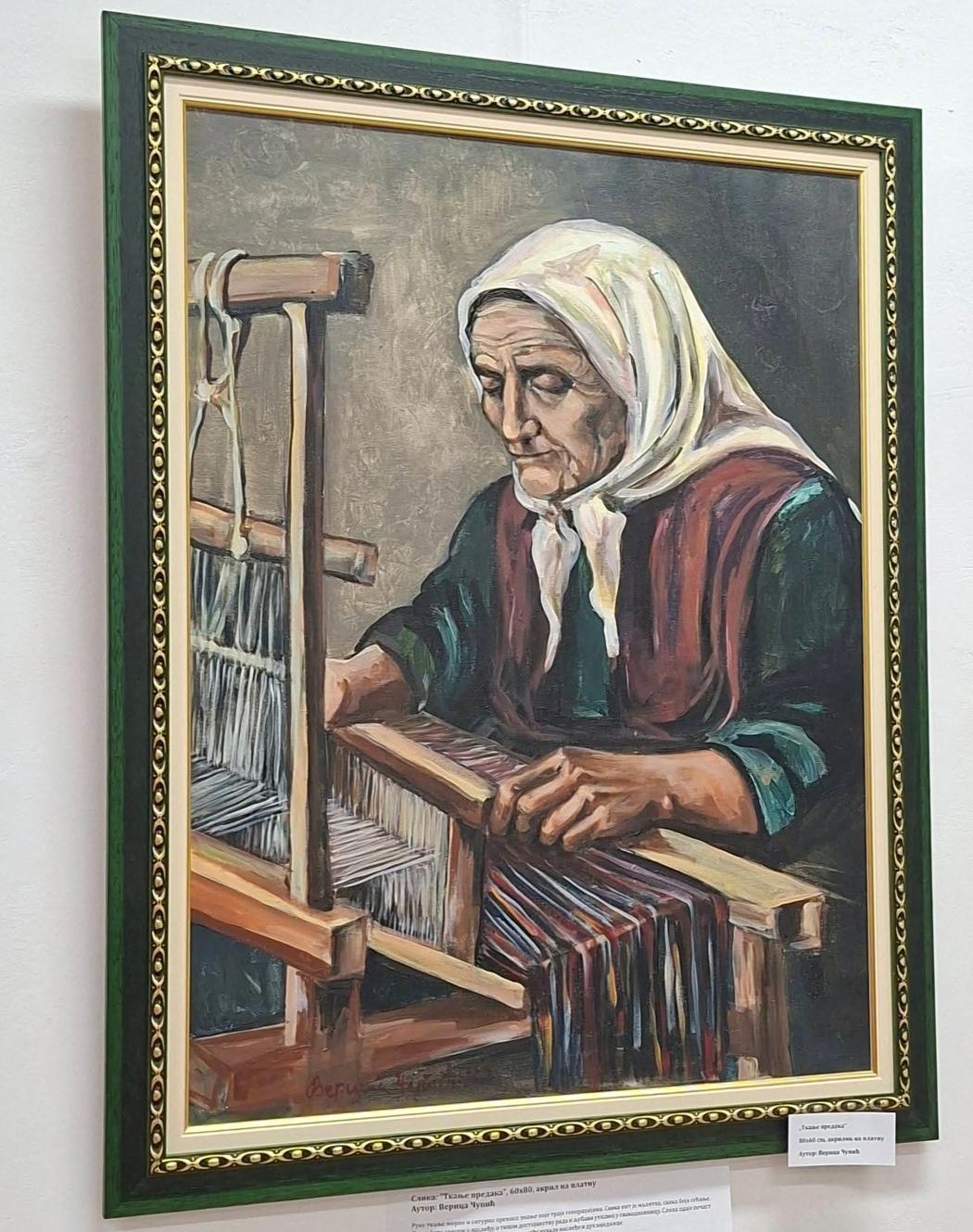
Women are a fundamental source of inspiration for me because in their lives I recognize a profound blend of strength, tenderness, perseverance, and often unacknowledged labor. I am particularly drawn to their daily narratives and the works created by their hands—creations that were carefully preserved and transmitted across generations, yet frequently remained outside the scope of grand historical narratives. I focus my attention on women’s traditional handcrafts and on the hands that create, safeguard, and pass down knowledge. To me, lace is not merely a decorative element; it is a tangible trace of life and heritage. Through my art, I aim to bring visibility to what has often been overlooked: dedication, care, resilience, emotional strength, and female creativity. My works are not solely portraits of women, but reflections of the creative process within their lives, aiming to give them their rightful place in collective memory.
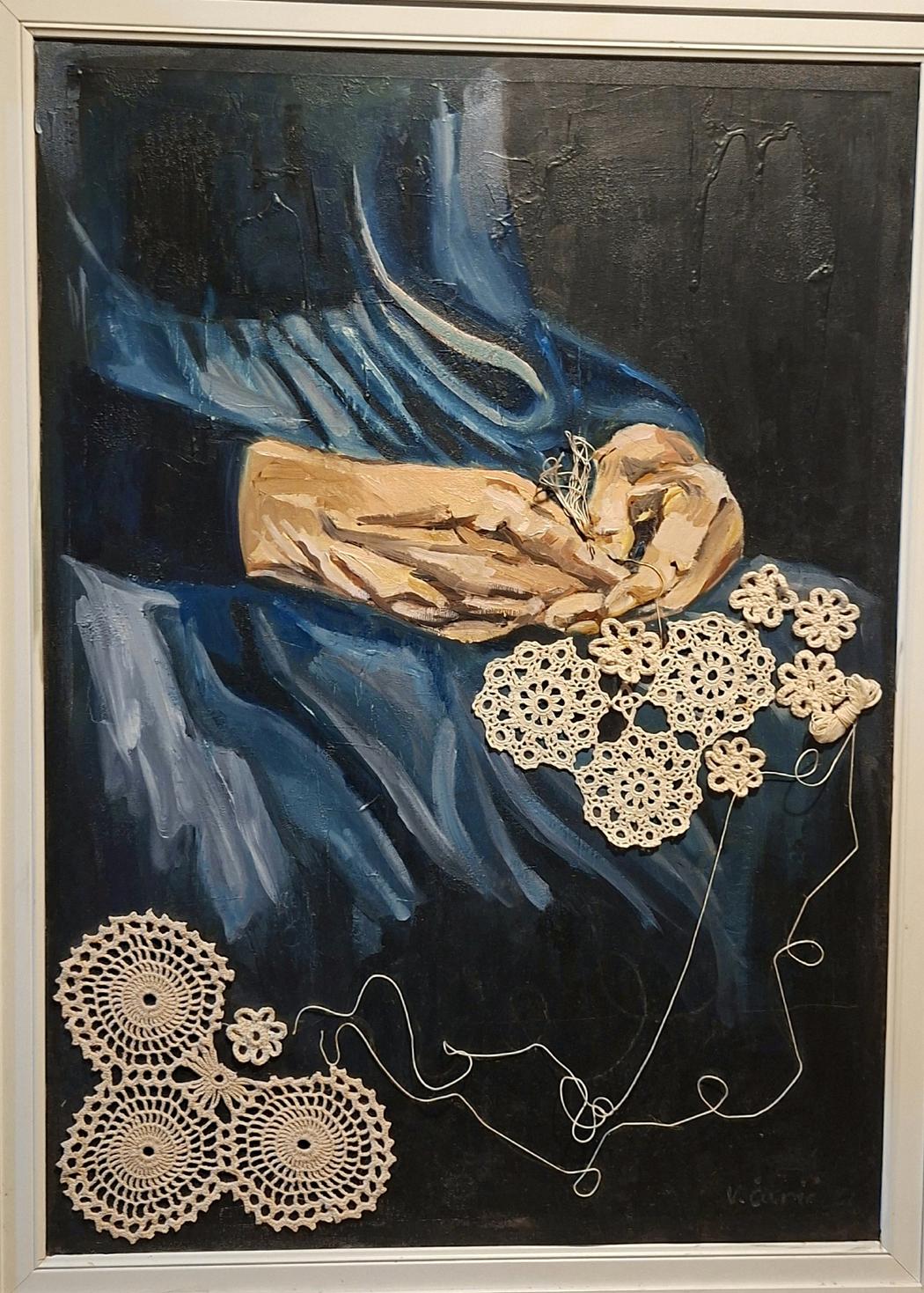 Verica Čupić | Tragovi Nasleđa | 2024
What does oil painting allow you to express that would be difficult to achieve with other artistic mediums?
Oil painting enables me to express depth, luminosity, layering, and atmosphere in ways that are difficult to achieve with other mediums. I am drawn to its deliberate, contemplative process—the ability to build layers over time, revisit the canvas, adjust color tones, and allow traces of previous layers to subtly remain, thereby enriching the artwork’s narrative. Texture is particularly important to me. I prefer visible brushstrokes and palette knife marks that give the surface a tactile quality. This approach allows me to emphasize both emotional depth and the tangible materiality of the form. For me, oil painting is not only a technique, but a fundamental way of conceptualizing a painting.
Through your projects supporting women in rural communities, what have you learned about the role art can play in their lives?
Working with women in rural areas has taught me that art serves a far broader purpose than the creation of an aesthetic object. It creates a space for gathering, connection, mutual exchange, and the realization of personal potential. Art provides women with an opportunity to step away from daily routines, express their creativity and emotions, and recognize their intrinsic worth. I place great value on how these collaborative activities enhance women’s visibility, foster empowerment, and offer a platform to share their knowledge and stories. I firmly believe that every woman carries an untold story, a unique talent, or a cherished memory. Art helps ensure these stories do not remain hidden, but instead become part of our collective cultural heritage. I have learned that art does not always need to yield a formal masterpiece; often, its greatest triumph is a smile, a new friendship, renewed self-confidence, or a sense of belonging to a community where one’s voice matters. Art leaves a lasting imprint not only on canvas, but within people’s lives.