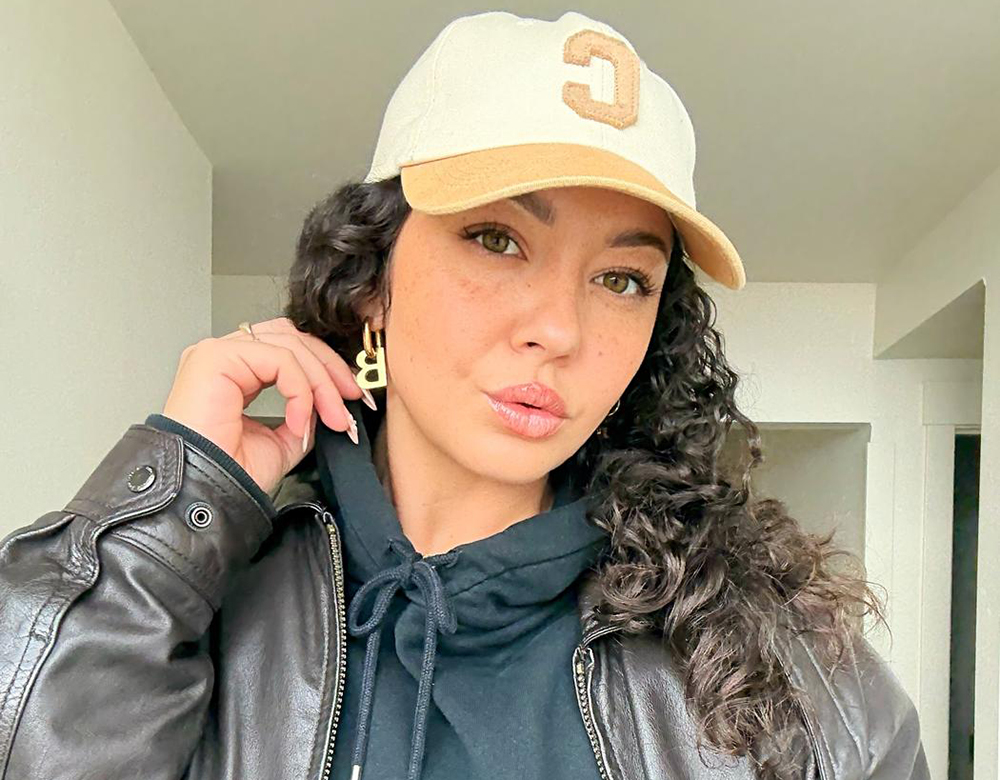
Hannah Bokanoski
As a self-taught artist, what discoveries helped you develop your approach to drawing, and what drew you specifically to oil-based colored pencils?
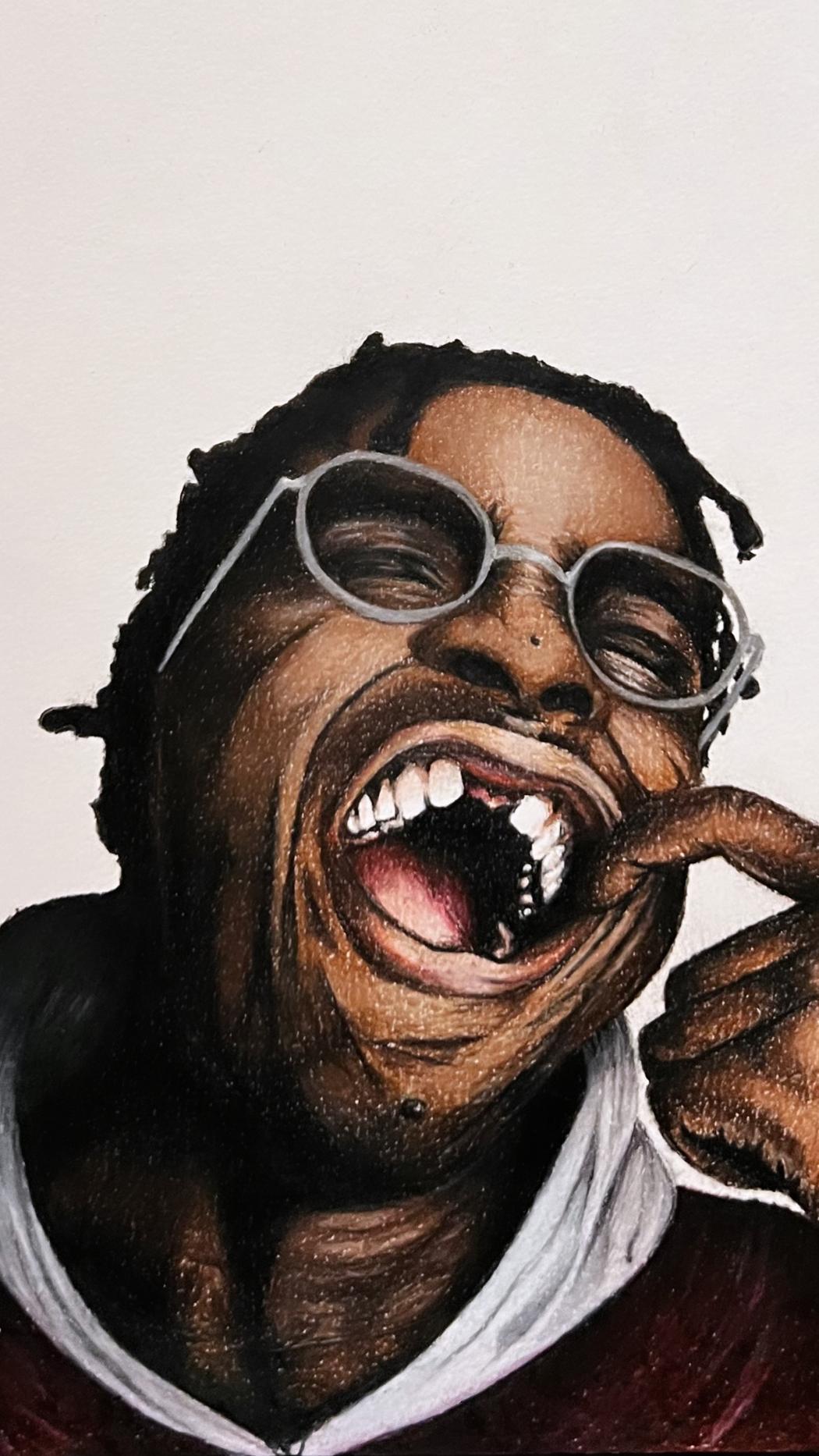
As a self taught artist my approach to drawing took shape when I was practicing line work through still life. While I enjoyed learning about the object or person, I became more interested in what the object/ person was doing rather than how it exactly existed. This discovery during my early drawing years quickly turned into an obsession with expression. I realized I was finding profound beauty in drama and intensity which catapulted my work to focus on emphasizing the real, the raw, and the gritty. For a long time, I thought the ultimate goal of drawing was to try to make my pieces look as real as possible. My approach changed when I discovered expressionism and found that exaggeration and style can convey emotion far better than copying reality. Now, my approach is focused on using realism as an anchor to hold space while adding creative touches to take my drawings in more directions and provoke more thought than I felt perfectionism could. A major turning point in the quality of my work was discovering the capacity of premium oil-based colored pencils for heavy, deliberate layering. When I first became interested in color pencil I treated them like standard drawing tools, but I saw that by controlling the pressure and building layers, I could achieve lifelike depth. Discovering how to blend oil pigments allowed me to move away from grainy textures and achieve a high refinement that rivals various oil based mediums.
What makes a particular face, gesture, or everyday moment compelling enough for you to turn it into a drawing?
I try to create pieces that capture moments life is being expressed candidly because that feels the most true and real. I find myself interested in the unscripted human experience and natural movement so when finding who or what to draw I try to find obscure images to play with and pull Inspiration from. A face, gesture, and every day moments sparks a drawing for me when it tells an honest story. I live by own motto “the more drama the more inspiration”. My love for fashion contributed to the evolution of my drawing style as I started to include elements of texture and styling. I started watching various fashion weeks and letting the designs speak to me. Drapery and veils often have fold that create these pockets of light and pushes the image across a space in ways that seem alive and when I can find something like that in the wild it almost a necessity to try to re create in a drawing in my own style.
Your technique involves meticulous layering and blending. How much of a drawing is planned beforehand, and what remains open to discovery as you work?
Almost every drawing I’ve ever started was planned in some way. Now did it always go the way I planned? Nope. Usually when planning a drawing I will have specific parts fully conceptualized and then there are parts that I allow my imagination to cover for me as I go. As someone who draws with meticulous layering and detail planning and mapping has always helped me create better quality work and stay on task. With that said I am always open minded to the changes that may be inevitable or necessary. While I am coming up with an idea for a piece often times I will have write down various notes and ideas to keep a good grasp on the direction I’m going before a drawing is started. Once I have a good concept down I work on what I want my outline to look like and start mapping out how I want the image to look on paper. That’s when the layering begins, and where things can go in a different direction than you imagined. Oil based color pencil is truly a “trust the process” medium that takes a few passes to get to a point where you start seeing the picture come to life, and in that sometimes parts you wanted one way start to take form and you think of something even better. So while planning is very important to my process, keeping an open mind has allowed me to come up with some of my best pieces.
Skin, leather, and patterned fabric each have a distinct tactile presence in your work. How do these textures contribute to the emotional story of a piece?
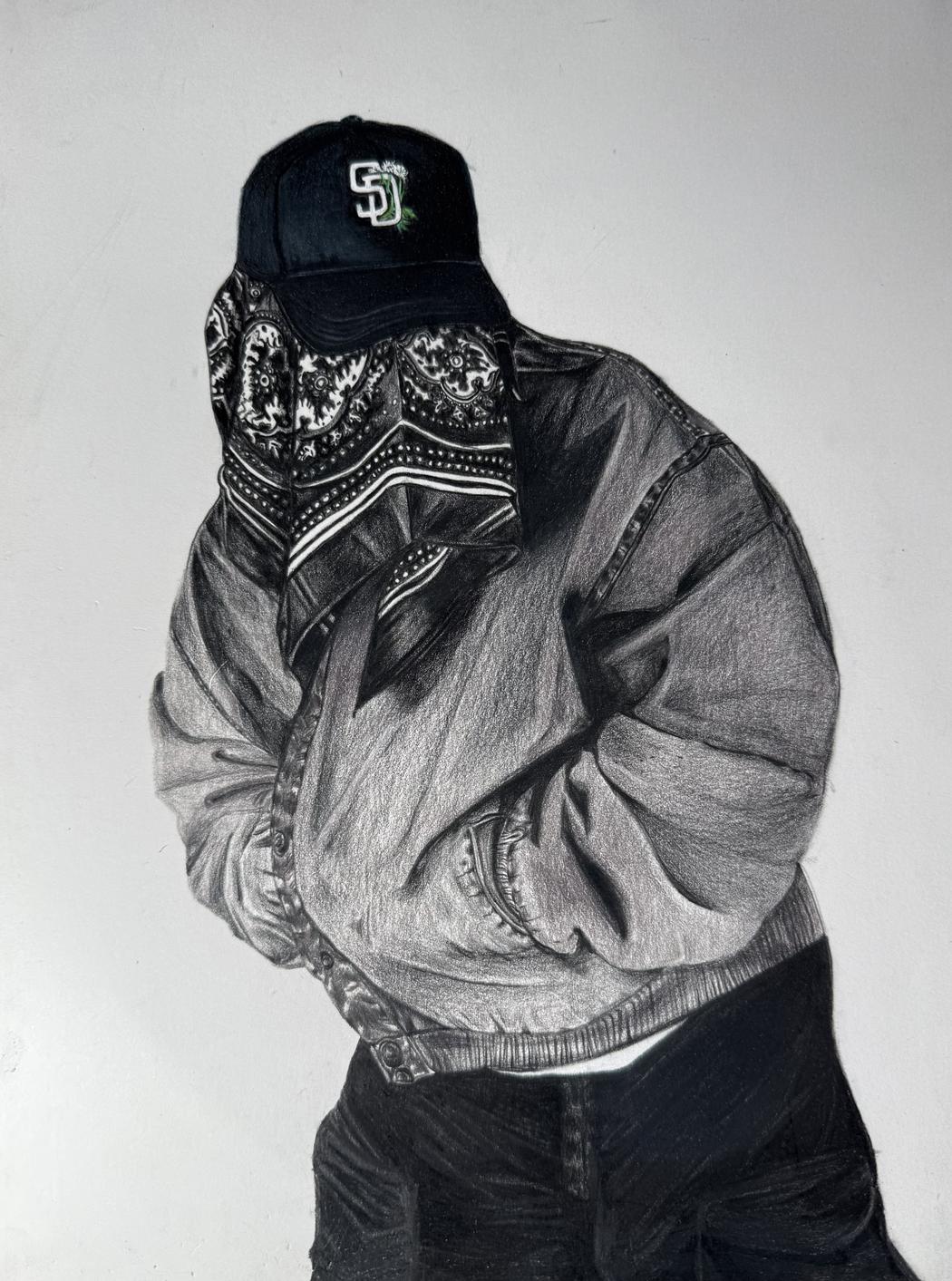
Material and the way they lay tells a story just as much as a face making an expression. Each have the ability to tell you how the moment feels. Long drapes can feel dramatic and classy, whereas veiled pieces that look structured have a mysterious element that can feel stoic or somber. While I want my pieces to look like you can touch them and they would feel like the material or substance I attempt to emulate I also want there to be stories captured in the way you see material styled and persons posed. Most of the fabric you see in my work is directly inspired by moments where we are physically present but internally absent and the human experience we all share in how that affects us. Skin, however, is the ultimate canvas and is where the raw emotion lives. It can be soft, fragile, exposed, covered, tough, and anything in between. The intertwining of skin texture, expression, and fabrics creates moments of movement that can almost mirror a subjects internal psychological state.
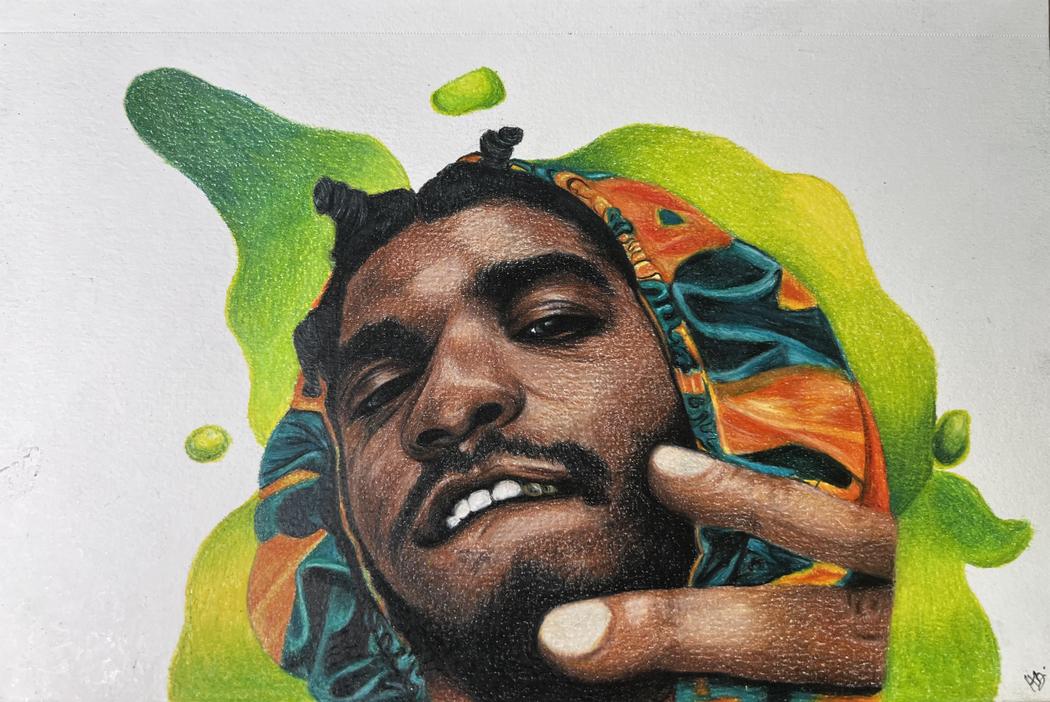
Some of your drawings feature vivid blues, greens, and oranges, while others use a restrained, nearly monochromatic palette. How do you decide which approach a subject needs?
The subject matter of a piece is typically what decides the approach of the color palette. Certain subjects can be anything from one of my favorite musicians that have specific style and attitude to an inspiration design from a fashion week that’s sophisticated and serious. I let a lot of the color selection do the talking when it comes to the way I want my piece perceived. If a drawing is supposed to catch your attention in a way that makes us feel entertained I tend to use an array of rich vibrant colors to let your imagination wander and see what pops. My more edgy pieces will likely lean towards a more monochromatic pallet when the work needs to feel more serious, subjective, and thought provoking. The decision to create a vibrant piece vs more muted monochromatic is one based on the narrative of my artwork. Rich colors evoke a specific mood or energy, whereas monochrome strips away distraction to focus on form and texture.
In your statement, you connect your work to life’s ebbs and flows. Can you describe a drawing whose meaning changed for you because of what you were experiencing while making it?
The piece that shifted for me during its creation is the monochromatic drawing of the figure whose face is entirely hidden by draped, patterned fabric. When I began, my vision was largely technical and conceptual. I wanted to explore identity through anonymity and challenge myself with the complex geometry of folds and hand drawn patterns. However, midway through the drawing, I went through a period of intense overwhelm and emotional exhaustion. As I sat with the piece for hours, meticulously rendering the way the fabric tightly pulls over the face, the meaning completely changed. It stopped being a study of an anonymous other and became a deeply personal reflection of my own state of mind. The veil was no longer a lack of identity but a protective boundary. It reflected my own need to retreat, process my emotions privately, and find solace under the noise of outside life. The tension and structure of the cloth became a representation of the physical weight I was carrying, turning a technical exercise into a view into my own self preservation.
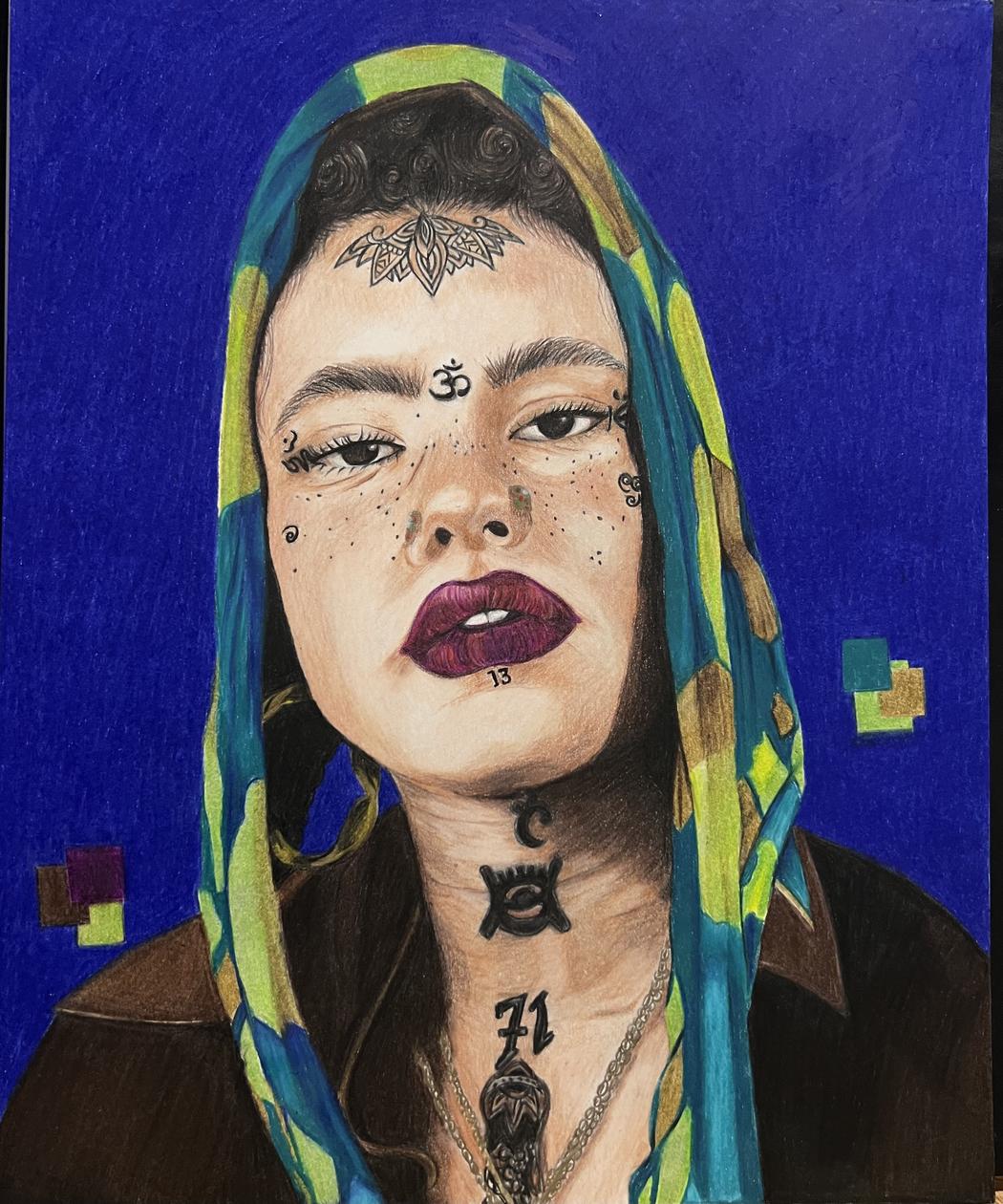
What traces of your San Diego upbringing, if any, do you recognize in your choice of subjects, clothing, patterns, or colors?
Every part of me is inspired by my upbringing in my hometown San Diego. I started drawing with my siblings at a very young age and even then pulled from my surrounding to figure out what was fun or cool to me. Fast forward I improved my technique for years by drawing objects I would see or thought was interesting around me while figuring out what was authentic and worth focusing on. I would sit in my apartment in Barrio Logan drawing on a tiny counter top for whatever local art show I could possibly enter in. This is where I felt most inspired and most free to create because I was in one of the most vibrant art communities where the members were always outside creating in some way. Panels set up so the local spray painters could paint all day for shows they were setting up, Djs on the block every weekend, and friends dropping clothing lines that started in the street and would end up in major shows. All of these intricate moving parts is what drove me to create the pieces that you see today. Some of my work is not only inspired by my hometown but directly from the people I know that I wanted to honor for inspiring me with their own style or medium. I am a true believer that art creates art and drawing from my surrounding helped me achieve higher levels of creation and style that feels extremely personal.