
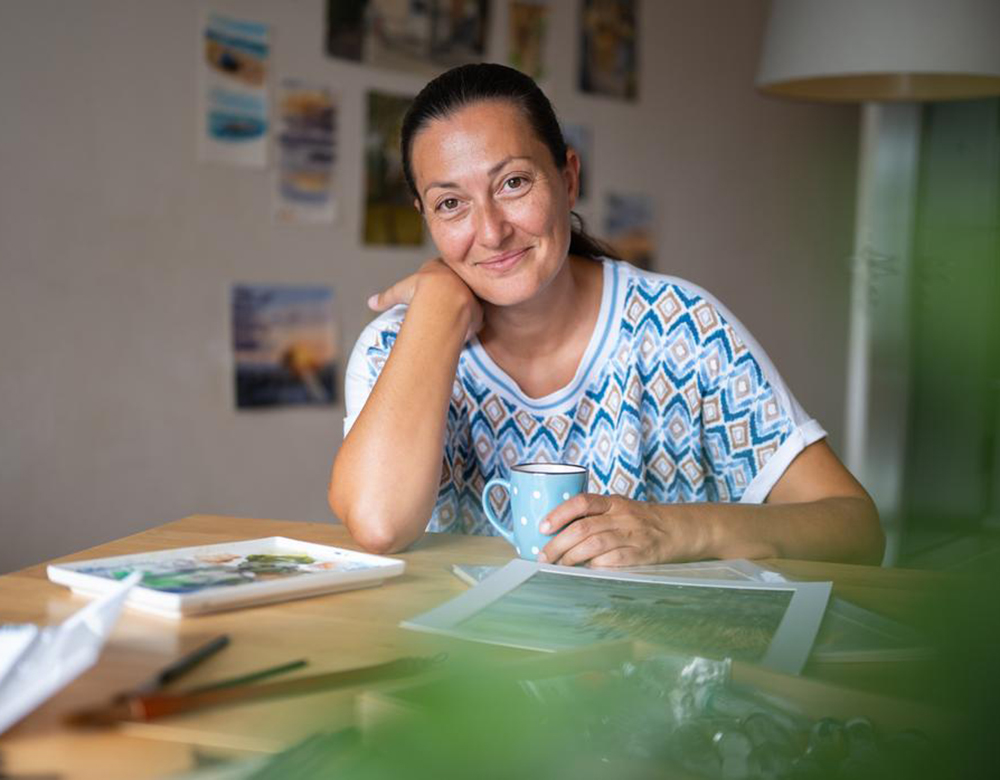
Tsvetelina Tsonova
How did your journey as a self-taught artist begin, and what made watercolor the medium you wanted to explore?
My journey as an artist began with curiosity and a desire to create something with my own hands. I chose watercolor as my preferred medium because of its transparency and expressiveness. It gives me a kind of freedom that I haven’t found in other mediums. At the same time, it is very challenging, and I guess I love being challenged.
I love the way water and pigment interact, how colors blend, and how a painting can develop in unexpected ways. There is always something new to discover, and I think that is one of the reasons I keep coming back to it.
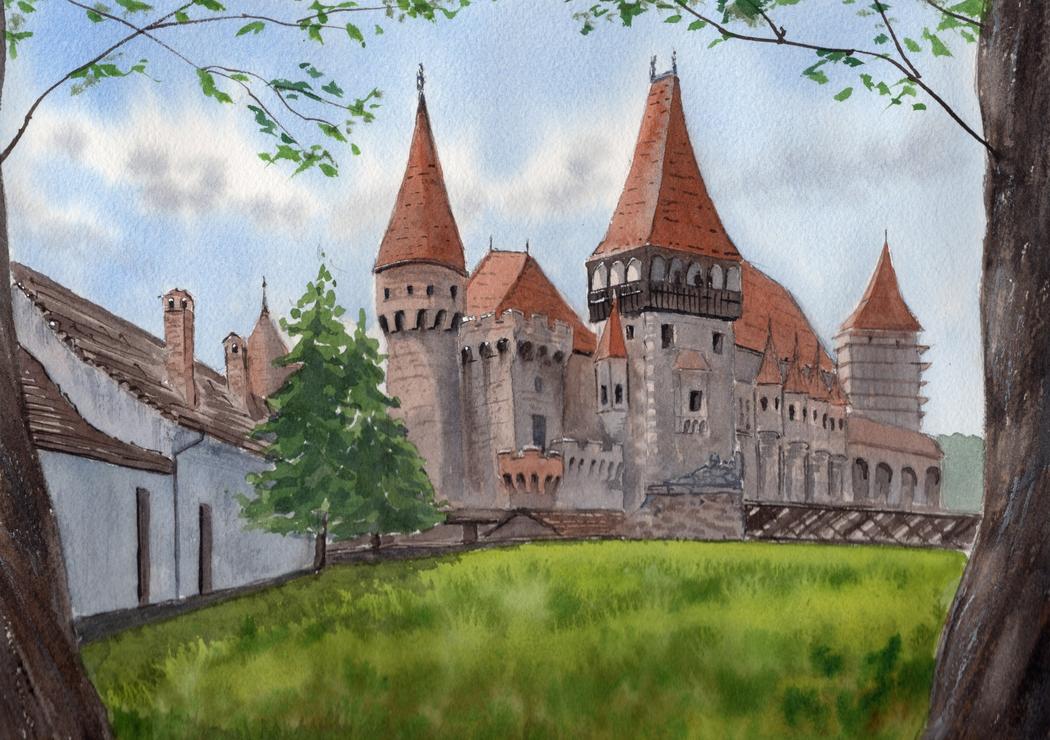 Tsvetelina Tsonova | Spring Over The Castle
When you travel, what makes a particular scene feel like the beginning of a painting? Could you share an example from one of the works presented here?
I take a lot of photographs during my trips. Honestly, at that moment, I don’t always know whether they will become paintings. I just want to capture every place that makes me feel something, and then use watercolor to capture that feeling so I can share it with others.
When I return home, I go through my photographs and choose the ones I would like to paint. I often make a quick sketch on the same day, and if I like it, I develop it into a finished painting in my home studio later on.
For example, in my painting “Andalisia”, I was drawn to the contrast between all the greenery and the earthy, reddish colors of the brick buildings.
How do you develop a painting after visiting a place? What roles do photographs, sketches, and your memories play in the process?
My paintings often begin during a trip, with photographs and sometimes quick sketches or notes. I like to collect visual impressions while I am there, even if I do not yet know which ones will eventually become paintings.
Back home, I look through my photographs and try to identify the scenes that still hold my attention. I consider the composition, the main shapes, and the relationship between light and shadow. Sometimes I make a small sketch or experiment with colors before beginning the final painting.
Photographs are an important reference, particularly when I need to understand architectural details or the structure of a scene. However, I do not feel obliged to reproduce everything exactly as it appears in the photograph. I may simplify a building, change a color, leave out distracting details, or emphasize an element that feels important to me.
My memories help me decide what to preserve and what to change. Ultimately, I want the painting to reflect my experience of the place, rather than simply reproduce an image of it.
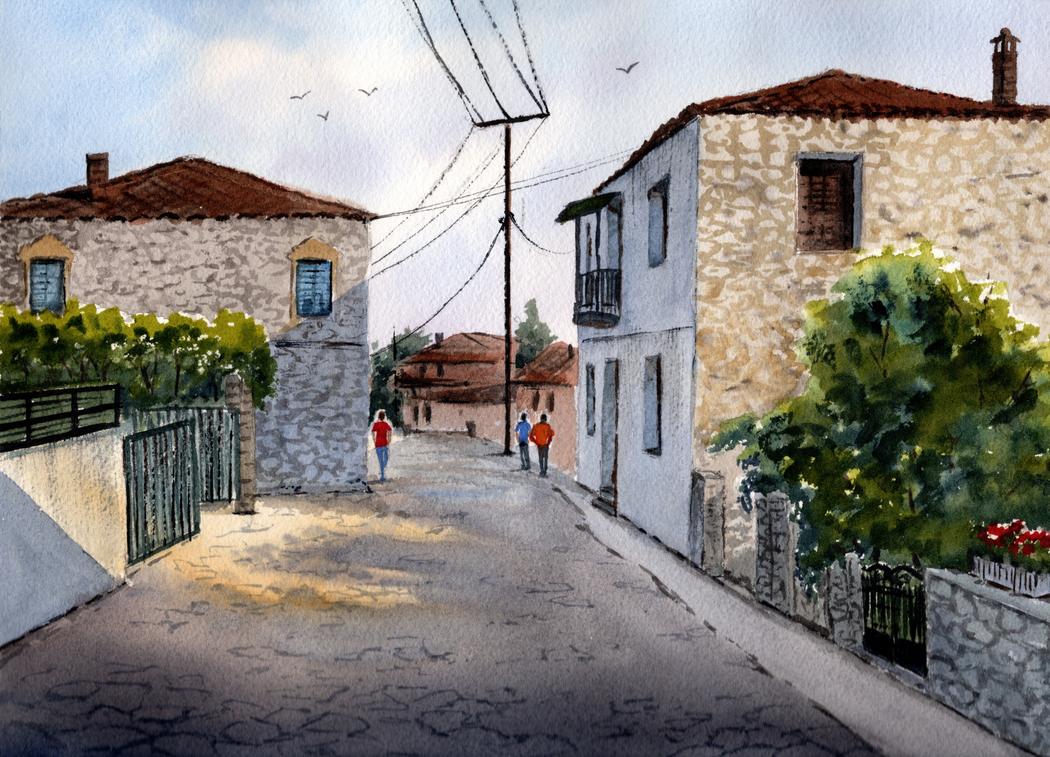 Tsvetelina Tsonova | Where The Day Slows Down
You describe travel as leaving behind colors, light, and emotions. How does the time between a journey and a painting affect what you choose to preserve or change?
I think time can be an important part of the creative process. When I first visit a place, I am surrounded by details and impressions. Later, when I return to the photographs and sketches, I can begin to distinguish what really stayed with me from what was simply part of the moment.
Sometimes I remember a particular color or the quality of the light more strongly than the actual details of a building. Other times, it is the atmosphere of a street or the feeling of being somewhere unfamiliar that remains.
This distance gives me more freedom to interpret what I saw. I can simplify the scene, adjust the colors, or focus on the elements that best communicate the feeling I want to preserve. I do not necessarily want to recreate the place exactly as it was. I want to paint what remains with me after I have left.
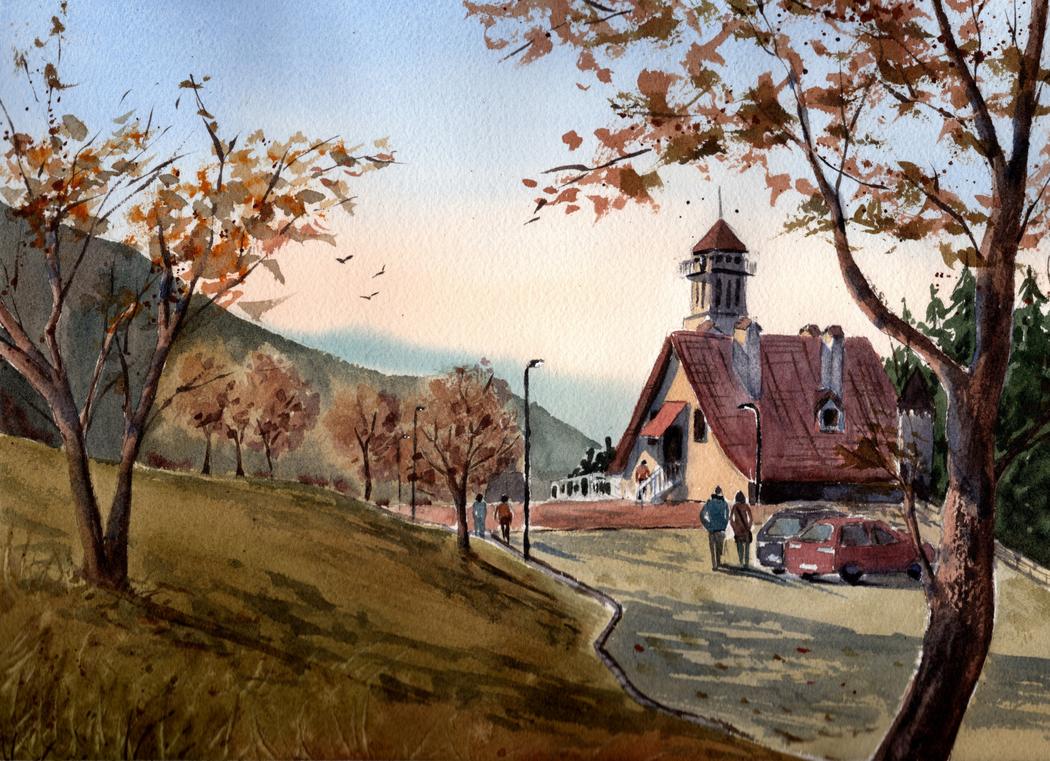 Tsvetelina Tsonova | The Hour Between Arrivals
Your paintings bring together warm rooftops, cool shadows, and softly lit skies. How do you use color relationships to recreate the atmosphere you remember?
The five paintings I shared are from my Watercolor Escapes collection. My idea was to paint the beautiful places I discovered during my travels on sunny days, so the colors are more vibrant rather than muted.
I play with light and shadow, warm and cool colors, and in certain places, I intentionally make the contrasts stronger to draw the viewer’s eye to what I want to emphasize in the painting.
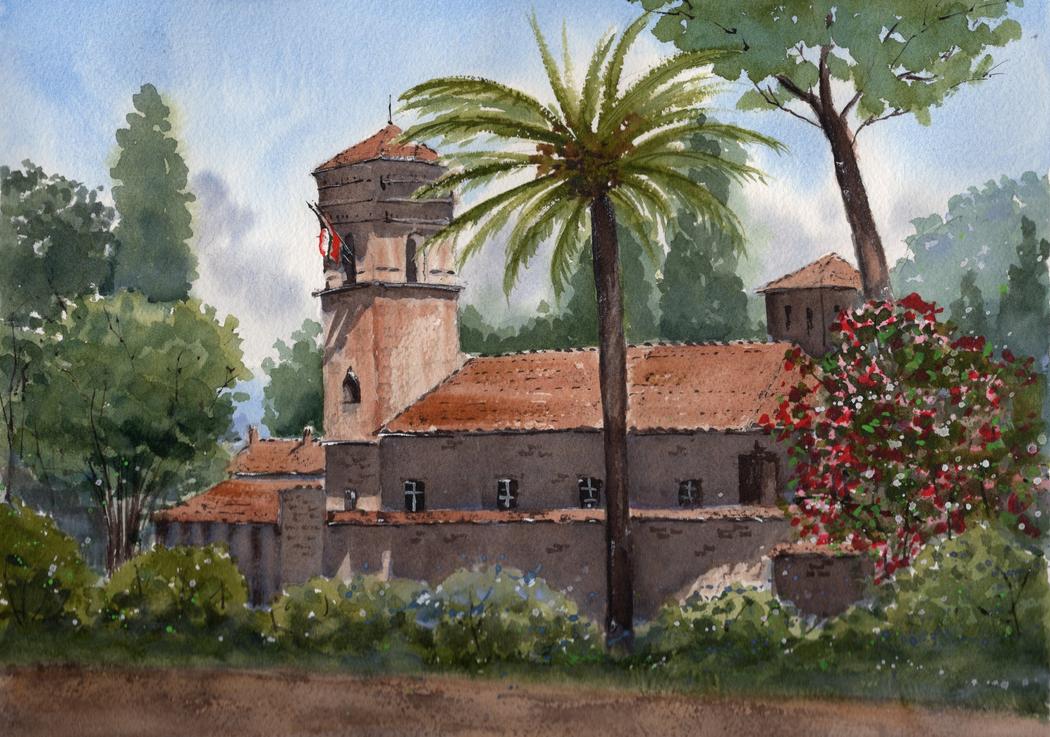 Tsvetelina Tsonova | Andalusia
Architecture requires careful observation, while watercolor can behave unpredictably. How do you balance the structure of a building with the freedom of the medium?
This is definitely a challenge, but as I mentioned, I love challenges. Maybe that is why I am drawn to cityscapes rather than landscapes, for example.
Over time, I have learned that sometimes it is best to let the watercolor do its thing and let go of the instinct to control everything. I don’t mind if a color goes beyond the lines. I actually like it when it does! I enjoy painting wet-on-wet, allowing the colors to blend and embracing the unexpected results.
I don’t want my paintings to feel too rigid or overly controlled. Sometimes a few well-placed lines and carefully chosen shadows are enough to suggest the character of a building. For me, the balance lies in understanding the structure well enough to know where I can loosen up and let the medium take over.
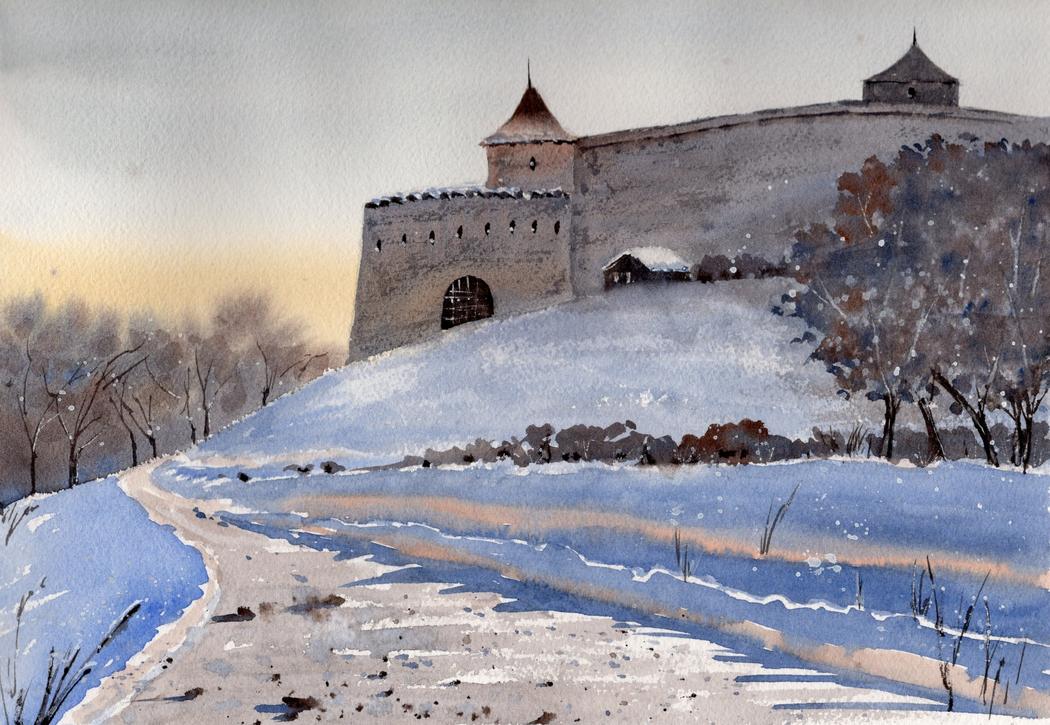 Tsvetelina Tsonova | Whispers Of The Old Fortress
Has painting the places you visit changed the way you look at Sofia? What do you notice in your everyday surroundings now that you might once have overlooked?
Yes, I think painting has made me more attentive to my surroundings, and that includes Sofia.
For a long time, I was particularly drawn to places I discovered while traveling. Visiting new cities and exploring their architecture gave me an endless source of inspiration. But recently, I have started looking more closely at the places around me and discovering that the familiar can be just as interesting as somewhere new. Like for example the painting “The Hour Between Arrivals”. The reference is from my home town – Vratsa.
It is also a reminder that inspiration does not necessarily depend on going somewhere new. Sometimes, it comes from learning to see a familiar place differently.