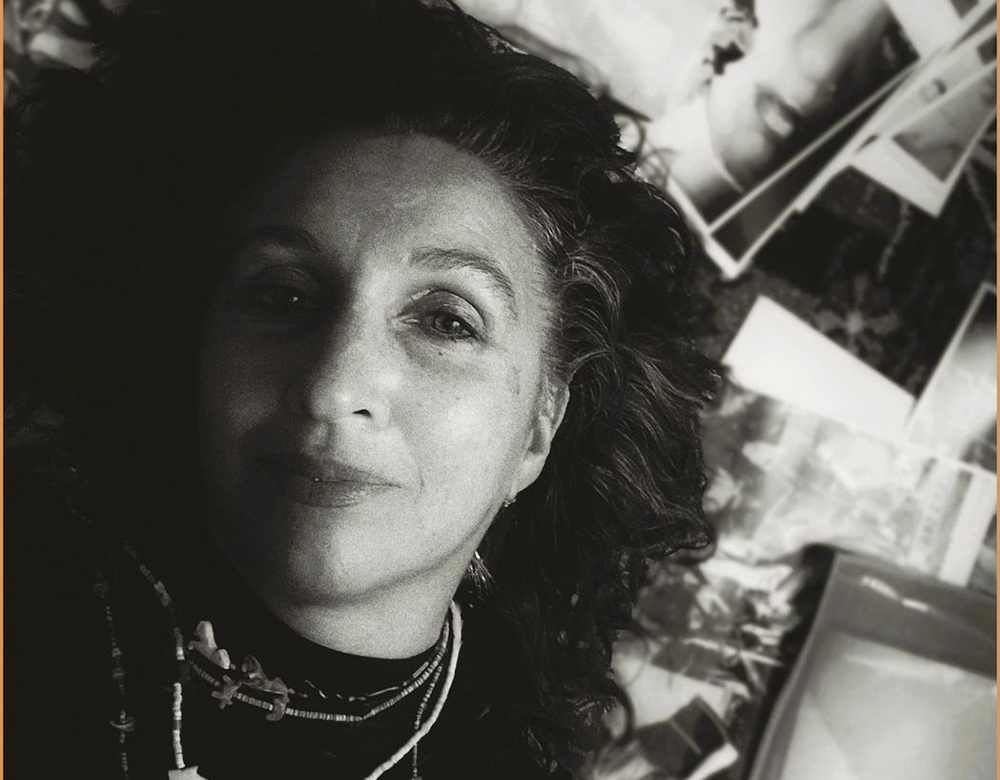
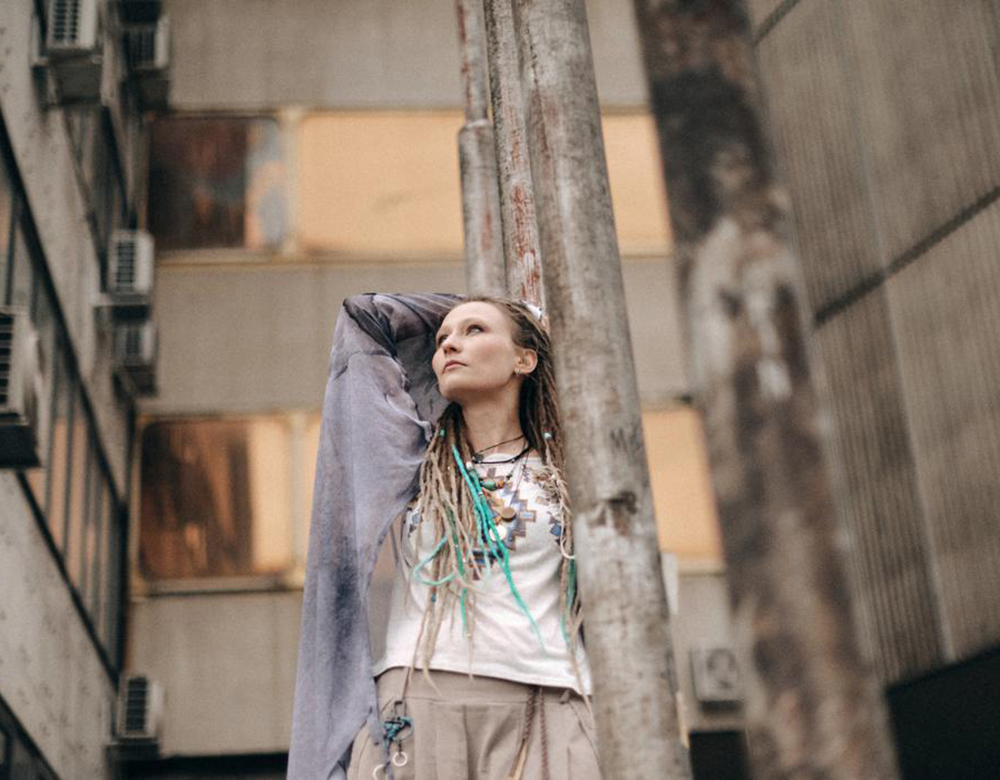
Rada Rey
How has your background in landscape architecture shaped the way you observe and depict landscapes? What changes when you approach a place as an artist rather than as a designer?
My background in landscape architecture, particularly in the design of public spaces, plays a key role in the way I perceive my surroundings. I often notice various details, structures, constructions, and the overall organization of a place. Most importantly, however, I always consider the relationship between the surrounding landscape and the people within it.
Architecture has taught me to immediately ask myself how comfortable I or others feel in a particular place: whether the environment feels oppressive or overbearing, whether it offers a sense of protection, or perhaps gives a feeling of freedom and lightness. From this, it often becomes clear what kind of people live there and what values they hold. After all, human behavior is strongly influenced by the environment in which we find ourselves.
At times when my inner landscape architect is asleep and the artist in me is awake, I perceive the colors around me with particular intensity. Whenever I find myself in a new or interesting place, I try to make quick sketches using just a few primary colors. This helps me experience and understand the unique energy of that particular place more vividly.
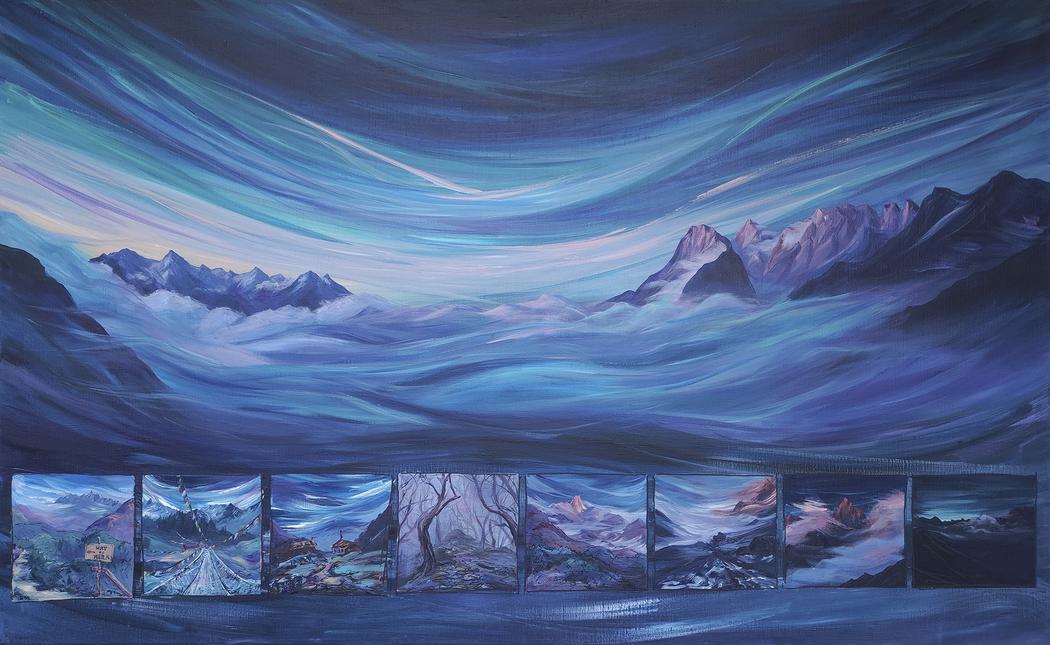 Rada Rey | Beyond Mera Peak | 2024
In 2019, you began exhibiting regularly and travelling extensively in the Himalayas. How did these two developments influence each other?
2019 was a personal turning point for me. During a difficult period in my life, I left everything behind and, with the last of my savings, decided to fulfill a long-held dream — to see the mountains painted by Nicholas Roerich.
At that time, the most accessible option was a trip to Nepal, where I saw the Himalayas for the first time. It was there that I understood why Nicholas Roerich used such extraordinary colors. Only such vivid shades can truly convey the energy of those powerful places.
Once you have experienced that air and that energy, it becomes very difficult to stop.
I felt deeply energized and inspired by the Himalayas, and this experience encouraged me to immerse myself more deeply in my artistic practice — experimenting, exploring, and searching for my own distinctive visual language.
Can you recall a particular encounter or moment in the Himalayas that changed your understanding of your own artistic practice?
The first moment was, of course, my first encounter with the Himalayas—the first sunrise, the first pink and lilac haze dissolving against the grandeur of the mountain peaks. But this journey was incredibly difficult for me, as these were my first mountains, my first hikes with a backpack, and my first experience of Asia.
It took me two years to return to these places. This time, I was no longer running away from myself, but rather coming back in order to find myself.
The journey to the foot of Everest became a turning point in my artistic practice. At that moment, I understood what I was searching for and what emotions and sensations I wanted to convey through my work: the depth, strength, and solitude of the human experience, intertwined with a feeling of absolute freedom against the backdrop of the majestic massifs of the highest mountains on our planet.
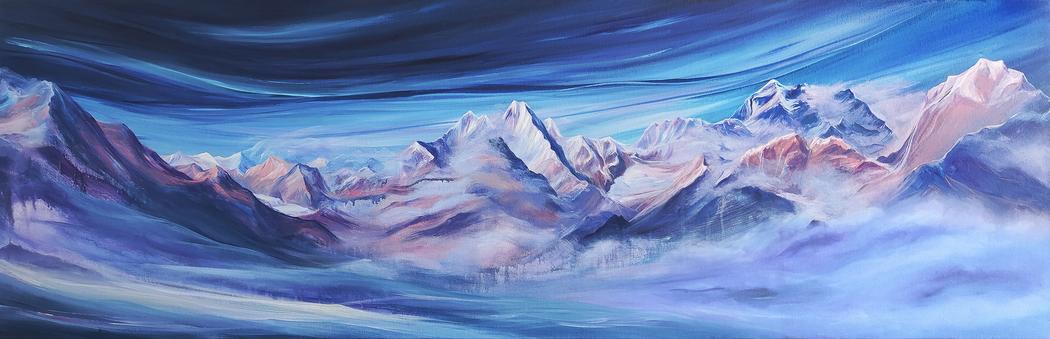 Rada Rey | A Long Journey. Above The Clouds | 2024
What do your quick sketches made during a journey capture that photographs or paintings completed later cannot?
Quick sketches are a kind of travel diary. Instead of writing things down in words, I tell the story and capture the feeling through lines, color, and composition. My sketches preserve what touched me most — what caught my eye, held my attention, and resonated with me.
A photograph captures a moment, but when I sketch, I experience that moment differently. I slow down, look more closely at the space around me, and decide what to keep on paper and what to leave out. In that process, I am not simply observing a place — I am entering into a dialogue with it.
For this reason, a sketch preserves not only what I saw, but also how I perceived it — not as a single instant, but as an experience unfolding through the process of drawing. When I return to a sketch after some time, I can reconnect with that moment and recover the feelings and impressions I experienced there.
When you develop a painting from your travel experiences, how do you balance what you actually saw with what you remember and felt?
As I work on new paintings inspired by my travels in the Himalayas, I find myself returning to my sketches and photographs, gradually recalling how I felt as I shifted my gaze from the mountains to the pages of my sketchbook, what the air tasted like as I made the first strokes with my pen — and how, in that moment, something magical began to happen.
The gradual transition from the mountain landscape to the sheet of paper, together with the slowing of my breath, would draw me into a kind of trance or meditation. Now, as I revisit my sketches again and again, I return to that same meditative state I experienced in the mountains. At a certain point, my hand seems to move across the canvas on its own, as though the very energy of the Himalayas were guiding me.
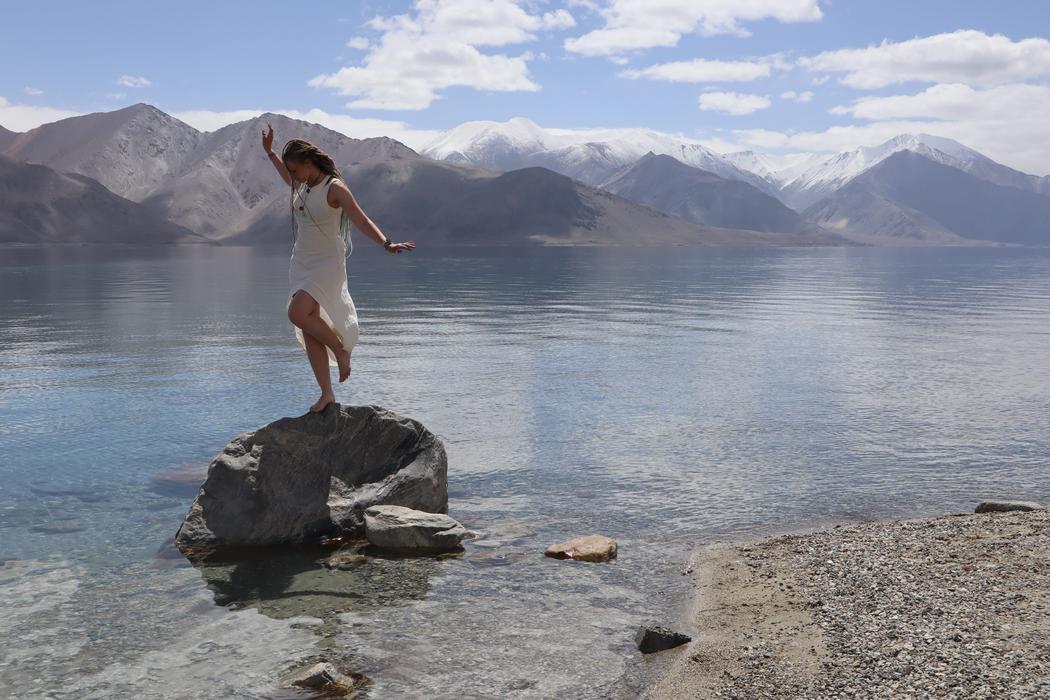
You describe mountains as the energy of a place rather than simply a landscape. What choices in colour, form, or composition help you communicate that energy?
One of the main ways I convey the energy of the mountains is through lines — like streams of invisible force moving through space. I try to capture the movement of the mountain wind, the rhythm of the slopes, and the way mountain ranges seem to flow into one another.
I begin with lines and gradually introduce color. Color becomes an extension of my perception of the place: the stronger and more vivid the impression, the richer and bolder the color combinations can become.
What matters to me is not simply depicting the mountains as I saw them, but conveying their scale and my own emotional state in their presence. That is why, in my work, color and form may move away from a literal representation of reality, becoming a language of emotions and inner experience.
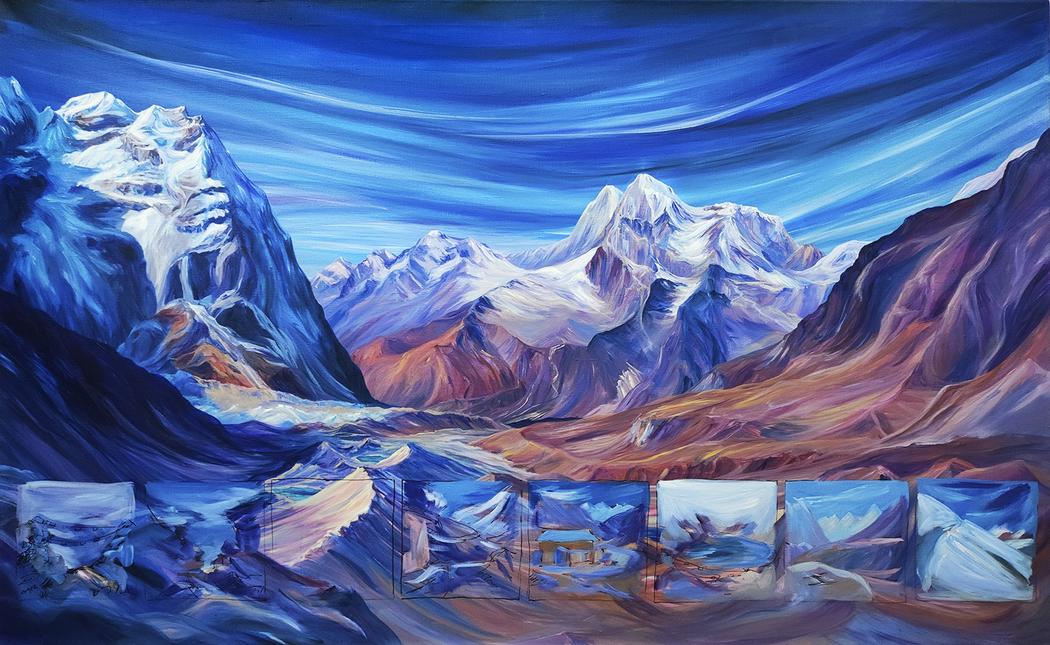 Rada Rey | The Path to Mera Peak | 2025
What role do your written travel notes play in your artistic process? Do words and images preserve different aspects of the same experience?
I dream of creating a book that brings together my travel notes, sketches, and paintings, combining travel and artistic practice into a single story.
For me, words and images are two different ways of preserving lived experience. Words can capture thoughts, inner questions, chance encounters, and small details that might otherwise be forgotten. Sketches, on the other hand, preserve visual impressions and the immediacy of direct contact with a place.
Sometimes a few lines and patches of color can convey a feeling far more precisely than a detailed description. At other times, it is words that help reveal what lies behind an image.
I am interested in bringing these two languages together in order to tell a story not so much about the geography of a journey, but about the inner path of the person who experiences it.