
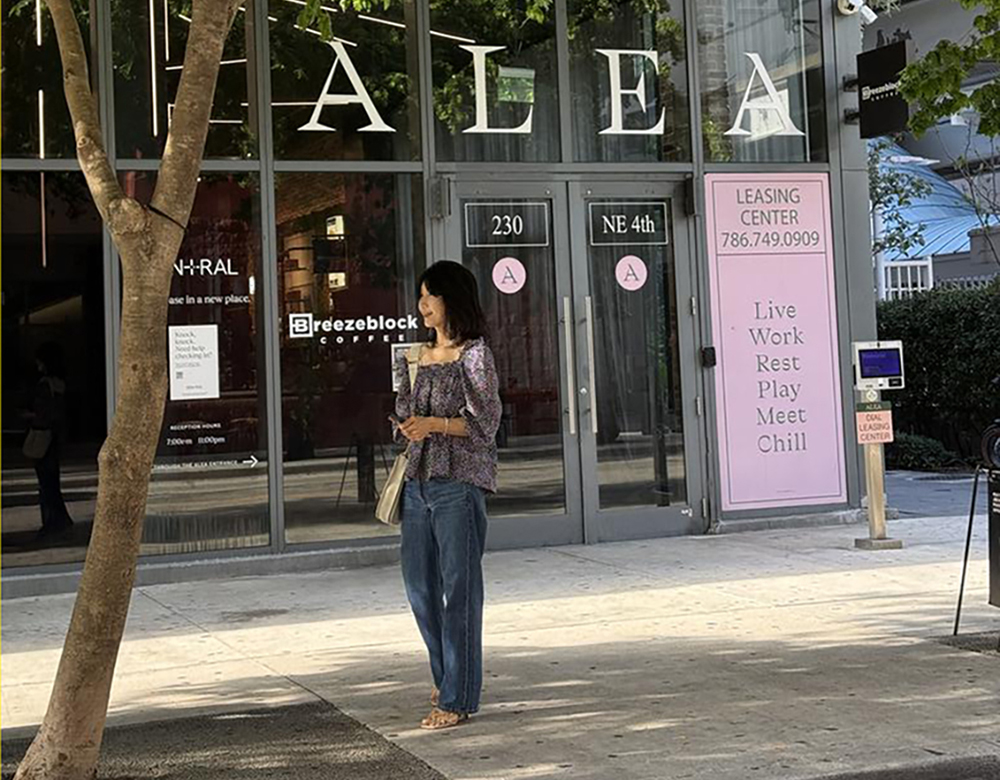
June Lee
How did growing up by the sea shape your imagination, and what does the Gwangalli Beach horizon mean to you today?
Pusan Gwangalli Beach is a place where the vast nature of the sea and the city coexist. Living in a modern building of that era next to the beach, I used to swim and play on the shore and walk back home in my swimsuit. In a place where the city and nature coexisted, I think I absorbed both modern and commercial, as wel as natural and artistic sensibilities. My childhood was a time when I could deeply observe the patterns and textures of the sea waves and the ripples on the sand. Back then, I found it mystical to see how the sea, the sky, and the sandy beach al underwent continuous changes while remaining connected. The apartment was a very modern piece of architecture. Thinking about it now, it seems people want to use buildings and objects to freeze changing things in a way that is convenient for them. That modern apartment is now facing redevelopment after some 40 years. It makes me realize that even what people wanted to fix in a permanent form changes eventualy.
For me, life in the new apartments along the Gwangali Beach felt like embracing both the aesthetics of human-made modern creations and the beauty of nature, against a backdrop where the human-made and the natural coexist So I think I have naturaly absorbed and accepted the two fields of modern design and pure painting, which are convenient for people.
The horizon of Gwanganri is like the curtain of a stage before a performance begins.
The vertical fear of the deep sea and the wonder beneath it coexisted horizontaly with the fear and curiosity of the world beyond the horizon.The horizon of the sea is the curtain before the performance begins, an obstacle to overcome fear, and for me, the horizon of the sea of Gwangali Beach is the door that connects the next section of a new and strange place. I always vaguely thought that one day I would open the door to a new place in the beyond world, and I thought that it would connect the changing flow of my life like the waves of the ocean and the grains of sand.
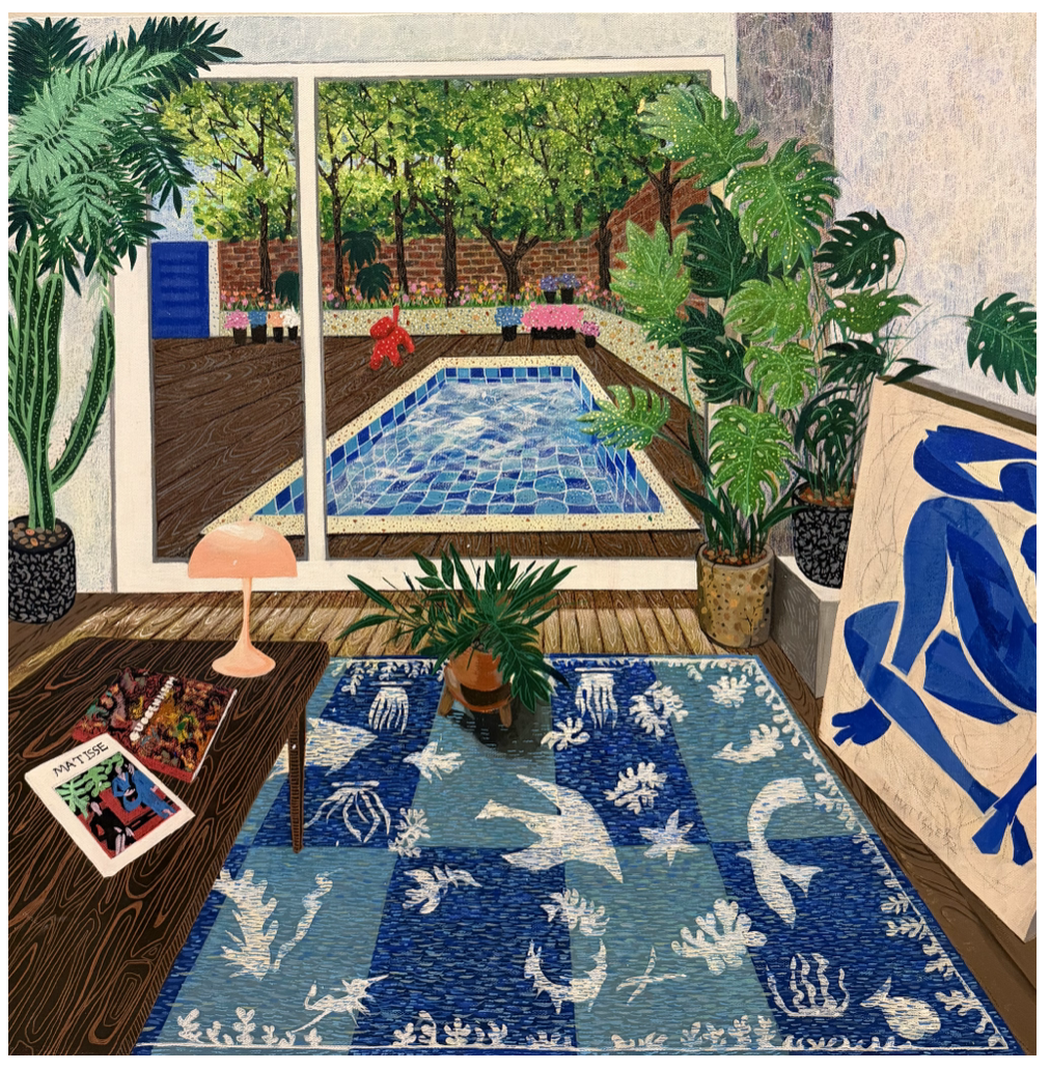 June Lee | House Of Heaven | 2018
What prompted you to move from a twenty-year career in design to fine art, and what was the most challenging part of that transition?
I majored in textile art. In fact, I expected industrial fiber patterns or textile designs with fashion, but the university course was pure painting with fiber.
This major is a good combination of the medium of painting and fiber in my future work.
When I graduated from colege and came into society, Korea coincided with the IMF crisis, which is Korea’s economic crisis. I couldn’t avoid it either, and that was a time when design was emerging as a promising field. However, I have been working as a designer with the same expectations as the destination of fine art related to nature that I had since I was young. The SSAMZIE brand was the first place to design bags, supporting artists and designing leather products such as works of art. It seems to reflect my longing like a pure painting. In addition, I have been in the business of designing and producing bags, walets, hats, etc., and the concept of the design was the same as the work. Since then, I have been designing outdoor sports brands for over 10 years. I have been designing outdoor bags, hats, shoes, tents, etc. in nature. When I took pictures of market research and product tests, I had never been to Baekdu Daegan in Korea, Mt. Hala in Jeju Island, Olegil, Seoul, Mt. Bukan, Cheonggyesan, etc., and I have been with pure nature such as Switzerland, France, Austria, the Alps, and Salt Lake City in the United States. I always design with nature, so I had a lot of time to take a deep look at nature and a longing for pure painting.
The experience of the IB (Ho Chi Minh City International Baccalaureate Curriculum) found that the process and method of creating an artist’s work coincide with the design process that captures the direction and concept of the product. So I’m also interested in expanding the content and concept of pure works to the design of products. In the future, I think these artistic handicrafts wil be more valuable than products printed in factories in the AI era. So I don’t have a big boundary between design and art.
How does your background in fiber arts influence the way you approach texture, structure, and composition?
While majoring in fiber art, I became especialy interested in working with thread. For my graduation project, I knitted human faces to depict the two selves within us, then connected the figures to tel the story of my life—from birth to death. The work received awards at the Korea Art Exhibition and the Hongik Textile Sculpture Exhibition.
I was drawn to the process of creating forms by connecting threads, and that interest continues today in my pen drawings, where I build images by joining lines. Through the figures in my work, I have explored relationships with others and the conflict between the two selves within me. Looking back, I find it remarkable that I have been expressing emotions I felt from childhood through my art.
The work in which I connected threads to create forms and linked knitted ful-body figures to express the path I have traveled and the one stil ahead resonates with a 2019 piece in which I used acrylic on cotton fabric to depict branches in an abstract form. At the time, I did not consciously connect the two works. In retrospect, however, I realize that questions about human relationships have always been at the heart of my practice. The tangled branches reminded me of the connections between people. The use of line and the process of forming shapes by joining threads—both rooted in my studies of fiber art—as wel as my ongoing reflections on human relationships, continue to inform my work today.
In future works exploring forms in nature, I plan to combine the continuous lines of my pen drawings with saddle stitching, used in luxury handbag making, and other stitching techniques. Through this approach, I hope to depict trees, flowers, and water, bringing together line drawing and stitch.
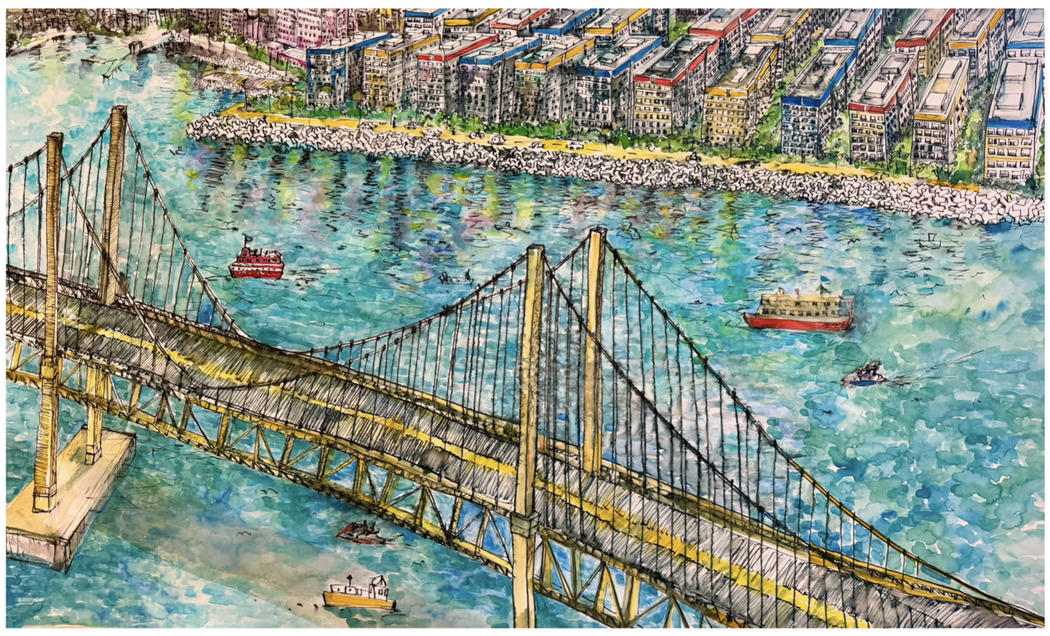 June Lee | The Departure Of The Universe | 2026
You describe each person as a unique microcosm. How did this idea develop, and how do you translate it into visual form?
During a difficult period in a relationship, when my self-esteem had falen to its lowest point and I was questioning my very existence, I came across a piece of writing by chance.
In Eastern philosophy, there is a saying attributed to the Buddha:
You are the flower that the universe bloomed.
Hundreds of millions of years of time and countless stars,
The warmth of the sun and the distant wind overlap and overlap
It is the only existence that has bloomed here now.
As you live, you are shaken by the commotion of the world,
The moment comes when you lose your own light by comparing yourself to others.
But remember. Just like the flowers on the side of the road are not jealous of the size
of the flowers blooming next to them,
Just like roses don’t envy the color of tulips,
If you bloom with your own color and scent in your own season, that’s all.
Like a lotus flower that takes root in the mud but is not stained by the dirt,
Deep in your heart, there is a clear and perfect Buddha nature.
No matter how the world evaluates you,
No matter what kind of rain and wind blew on the road you walked,
The nobility of your existence does not change for a single moment.
So get away from other people’s eyes today.
Embrace yourself completely. You are already perfect in itself,
It is the most beautiful flower that the universe has bloomed with all its strength.
While teaching IB Art in Ho Chi Minh City, I explored the golden ratio. Seeing it appear in the cosmos, in flowers such as sunflowers, and in the human body led me to think about how the laws of the universe are connected to human life. I began to wonder why people, often out of stubbornness, find it so difficult to accept advice and guidance offered with good intentions.
This question brought the solar system to mind: planets orbiting around the Sun. We live in a universe made up of galaxies, solar systems, and perhaps even stars that exist alone. When others interfere with the orbit of the planets that revolve around the Sun at the center of my own world—myself—they can disrupt its natural course.
Just as countless galaxies exist independently, each folowing its own orbit, I came to see every person as a complete and independent microcosm. Each of us holds an inner world that is sustained by its own unique mass and gravity—a space that belongs to us alone. I came to cal this inner world a “microcosmos.”
I came to believe that, just as no two perspectives or inner worlds are identical in the universe, there can be no complete overlap between human beings.
To translate this philosophy into visual form, I draw on the language of line, thread, and organic texture—elements I have explored since studying textile art. In particular, my pen drawings connect as many lines as possible, expressing the way the laws of the universe flow through nature and human life.
Through my work in outdoor design, I have often stood at the top of a mountain and looked out over a city. From that height, the world can appear no larger than a speck of dust. I began to feel that we spend precious time and energy on things that matter very little, and that I should instead direct my limited energy toward the things that orbit around the star at the center of my own world.
Perhaps this is why, during a trip to New York, the view from the Top of the Rock at Rockefeler Center reminded me of the cosmos. The city seemed to me like a supercluster, formed by countless stars and stelar systems. In my future work, I hope to continue developing an abstract visual expression of the universe.
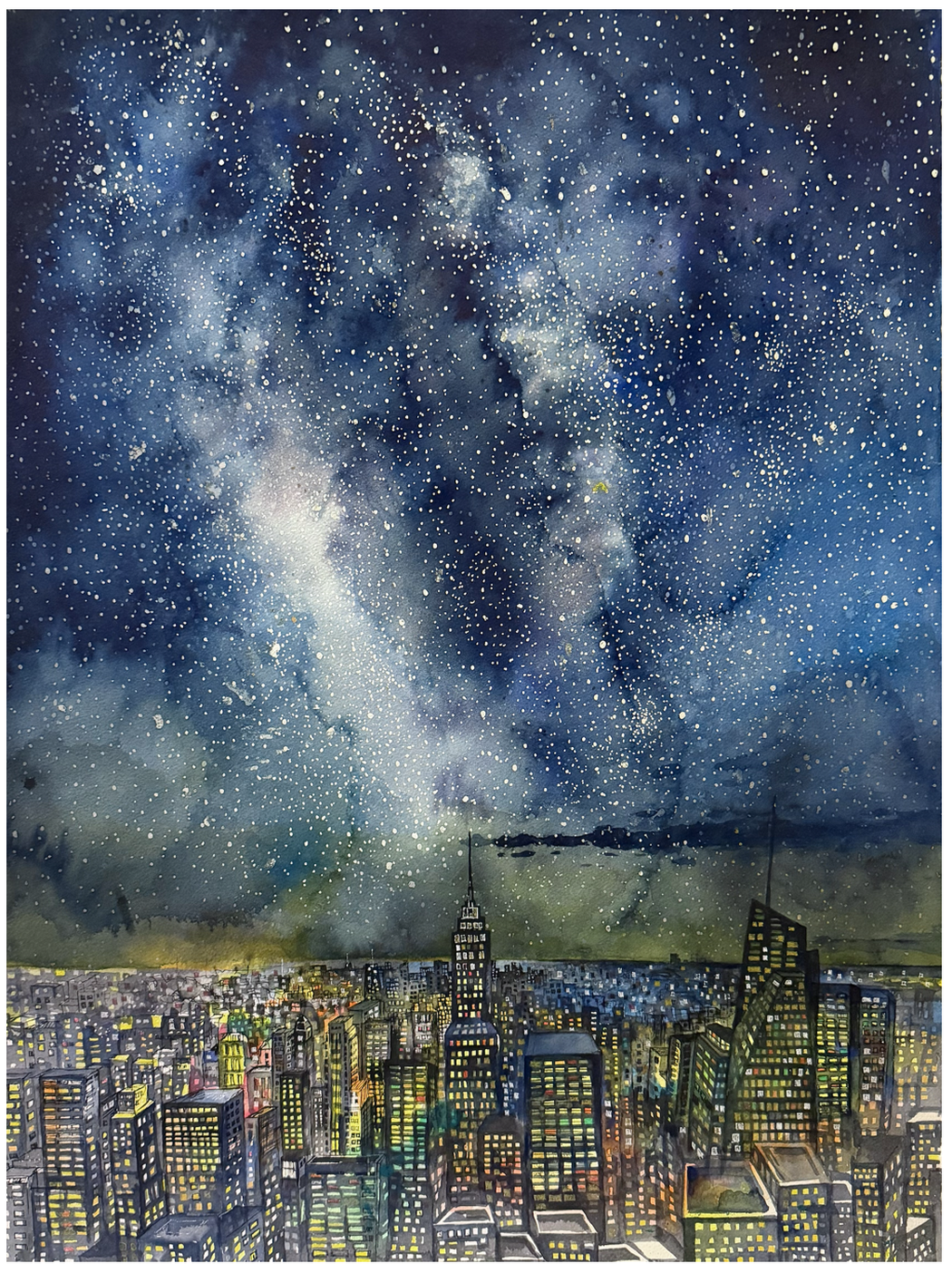 June Lee | Small Universe New York | 2018
Personal boundaries are central to your description of human relationships. How do you explore the balance between connection and independence in your work?
As a designer and someone responsible for leading design work, I have experienced the difficulties in human relationships that almost everyone encounters, in one way or another. When I moved to Ho Chi Minh City, I found a temporary sense of peace by letting go of many of the things I had been carrying. However, even in the smaller relationships of everyday life—with family, neighbors, and other parents—I came to realize that conflicts and difficulties arise in all kinds of human relationships.
My relationships with my children, in particular, led me to read many books about human behavior and relationships. One book that especially influenced me was Sparks of Genius: The Thirteen Thinking Tools of the World’s Most Creative People. In Unit 4, which explores pattern recognition, I learned that similar patterns can be found across many fields, including nature, natural phenomena, human behavior, history, and economic trends. I began to recognize patterns in the childhood environment and relationships that had shaped me. I wondered whether these recurring patterns might also resemble the fundamental physical patterns that govern the universe.
I came to recognize that even some of the experiences I had gone through in the past were connected to patterns arising from my relationship with my parents. This led me to reflect on the kind of relationship I wanted to build with my own children. At that point, I began to use the physical laws of the universe as a metaphor for understanding human relationships. I imagined myself as the Sun at the center of my own solar system, with the things I consider important—my work, relationships, husband, children, financial well-being, and other priorities—orbiting around me like planets. I came to realize that my galaxy could not simply overlap with another galaxy without consequences. Such an encounter could lead to a galactic collision and merger.
Therefore, I felt that if I wanted to protect my own galaxy, I needed to keep my distance when encountering another galaxy that interfered with or collided with mine. Equally, I needed to avoid interfering with other galaxies myself. If I continued to hold my children within my own galaxy even after they had nearly reached adulthood, they would not be able to create galaxies of their own. This made me reflect on what I should do when my children, who were once like small asteroids in my universe, grew up and began building their own galaxies.
I was also influenced by the Korean reality dating program Heart Pairing, which gained popularity in Korea in 2025. Watching how pairing different people could produce different dynamics, atmospheres, and outcomes made me think about how human relationships can generate different kinds of chemistry depending on whom we are paired with.
In the universe, for two stars to form a binary star system and orbit around one another, many physical conditions must be met. If two stars simply pass by each other, their gravitational interaction may bend their trajectories, but they will generally move apart again along hyperbolic trajectories. For them to become gravitationally bound in an orbit around one another, a phenomenon known as capture must occur, requiring a mechanism through which their orbital energy can be reduced or transferred.
Understanding this made me more deeply appreciate the extraordinary nature of human connections. Just as many physical conditions must come together for two stars to form an orbital relationship, the encounter between two people that develops into a lasting bond can feel almost miraculous.
In Buddhism, the connection between people and phenomena is also understood through the principle of dependent origination.
Cause (因, Hetu): The direct and inherent cause that produces a result, such as a seed.
Condition (緣, Pratyaya): The indirect and external circumstances that support the cause, such as sunlight, soil, water, and a gardener’s care.
Result (果, Phala): The phenomenon that emerges when causes and conditions come together.
This helped me understand that even stars require countless conditions and circumstances—the equivalent of Pratyaya—to become bound in an orbit. It was a process through which I came to appreciate that the formation of an orbit between celestial bodies, just like the meaningful connection between two people, depends on many conditions coming together.
Another profound realization came from the Japanese film Exit 8, released in 2025. In the film, the protagonist searches for an exit by gradually recognizing anomalies that he had previously passed without noticing. There are strange characters, including a man and a schoolgirl, whom the protagonist does not attempt to persuade or change. Instead, he takes the child who represents his future and continues searching for the anomalies that will lead them to the exit.
This gave me a powerful insight: to change harmful behavior or recurring patterns in life and move toward a better future, a person must first recognize their own errors.
As I watched the protagonist confront his own mistaken behavior in the subway, I saw a reflection of myself. I realized that I had often tried to persuade my colleagues, friends, parents, siblings, and even my children to recognize their errors and change themselves. I had been trying to convince others to change, just as the protagonist might have tried to persuade the strange people he encountered.
I came to understand that the part I can truly change is myself. My responsibility is to recognize and correct the errors and patterns within my own life, while helping my children develop the ability to maintain their own orbits as they build their own galaxies.
Throughout my long career as a designer, I have repeatedly designed products, brought them to market, evaluated the previous year’s sales, and reflected on how to create better products. I have conducted market research, incorporated new ideas and improvements, and persuaded investors and colleagues to support my direction. Over time, this way of thinking became almost a professional habit, and I carried it into my family life and personal relationships as well.
I have now come to understand that nature is in a continuous state of change. It is something I cannot hold still, fix permanently, or define once and for all. By contrast, the things we create artificially are often intended to be defined, structured, and fixed according to human purposes. They are things we can attempt to persuade others to understand and accept within a particular framework.
But human beings are like the sky, the sea, and the sand: they are part of nature, continuously changing and evolving. They cannot be permanently fixed or defined according to our expectations. I have come to realize that while I can design and define objects, I cannot treat people in the same way. People, like nature itself, must be allowed to change.
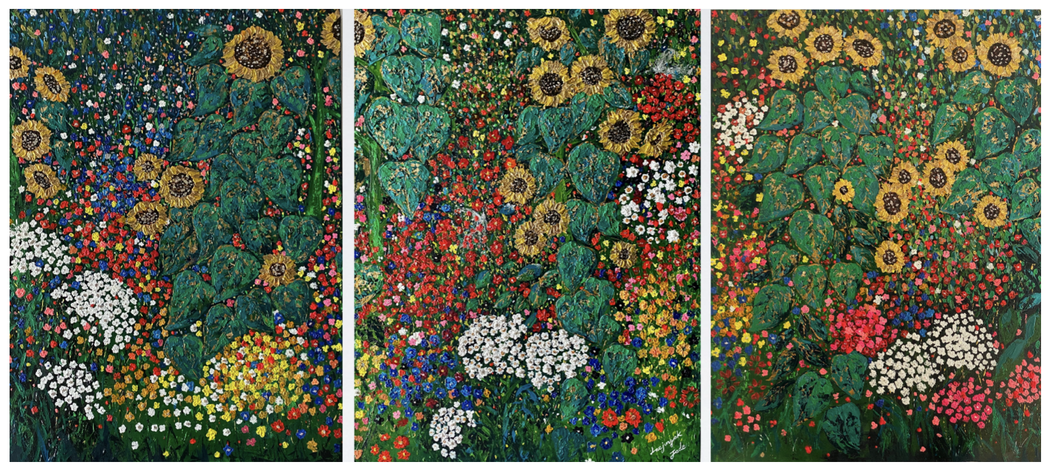 June Lee | Life Is A Garden Of Microcosms | 2019
How did living in Ho Chi Minh City change your understanding of nature, resilience, and your own life journey?
In Ho Chi Minh City, I often encounter trees whose roots push through concrete, revealing the persistent force of nature even within an urban environment.
One day, while going out for a meal in Thao Dien, I noticed a tree that had grown around a newly constructed building. Its branches had bent and changed direction to avoid the structure, alowing the tree to continue growing while maintaining its balance. Looking at it, I found myself thinking about how much energy it must have taken to adapt its own form to survive. I felt a sense of empathy for the tree and thought to myself, You must have had such a difficult time, too.
On another occasion, I saw a tree in a jungle whose branches had become tangled and intertwined with those of the surrounding trees. Its form reminded me of myself, caught up in the many big and smal issues involving my parents, holding on to those relationships and struggling to find my own direction.
Perhaps I, too, had been trying to escape recurring patterns in my life by moving from Gwangali Beach in Busan to Seoul, and eventualy to Ho Chi Minh City. Moving to different places may have been my way of seeking distance from the patterns I wanted to leave behind. Yet trees cannot simply move away from their surroundings. They must adapt their growth to whatever conditions they encounter. I sometimes felt a deep sense of compassion for them because they had no choice but to remain where they were and find a way to survive.
Living in Ho Chi Minh City has given me many opportunities to observe trees closely. The city has numerous schools that folow the International Baccalaureate (IB) curriculum, and alongside my work supporting art education within this educational environment, I began researching trees as a subject of artistic exploration. This research has continued to influence my practice.
The more closely I studied trees, the more I began to recognize similarities between their structures and human lives. Their roots, trunks, and branches respond to their surroundings, adapting to light, space, obstacles, and the presence of other trees. Every bend, intersection, and irregularity tels a story of how a living organism has responded to the conditions around it.
I began to see these details as reflections of our own lives. Like trees, we are shaped by our environments, our relationships, and the obstacles we encounter. Sometimes we bend to survive; sometimes we grow in unexpected directions. Our forms carry traces of the circumstances we have lived through.
I also began to recognize paralels between the structures of trees, human beings, and the larger laws of the universe. Each exists within a network of relationships and conditions, continualy responding to forces beyond itself while developing its own distinctive form.
These observations eventualy led to my work Self-Portrait (Work 2). Rather than representing myself through a conventional human likeness, I explored the tree as a way of reflecting my own experiences, emotional patterns, and search for balance.
I am currently continuing to study the forms and biological structures of trees through drawing as I develop my next series.
Living in Ho Chi Minh City has changed the way I understand resilience. I once thought that resilience meant enduring difficulties and finding ways to overcome them. Now, I have come to see that it can also mean adapting without losing oneself, recognizing when a familiar pattern is causing harm, and finding a new direction when circumstances change.
Trees have taught me that survival does not always require standing straight or growing along a predetermined path. Sometimes, it means bending around an obstacle, finding another way toward the light, or alowing one’s form to change in response to the world.
Through my observations of trees, I have also begun to understand my own journey with greater compassion. Perhaps my movements between cities were part of my attempt to find a place where I could grow differently. And perhaps, through my art, I can now transform the patterns I once struggled with into something I can observe, understand, and express.
For me, the trees of Ho Chi Minh City have become more than subjects of artistic study. They are mirrors of my own life—reminding me that even when we cannot control the conditions around us, we can continue to grow, change our direction, and discover new forms of existence.
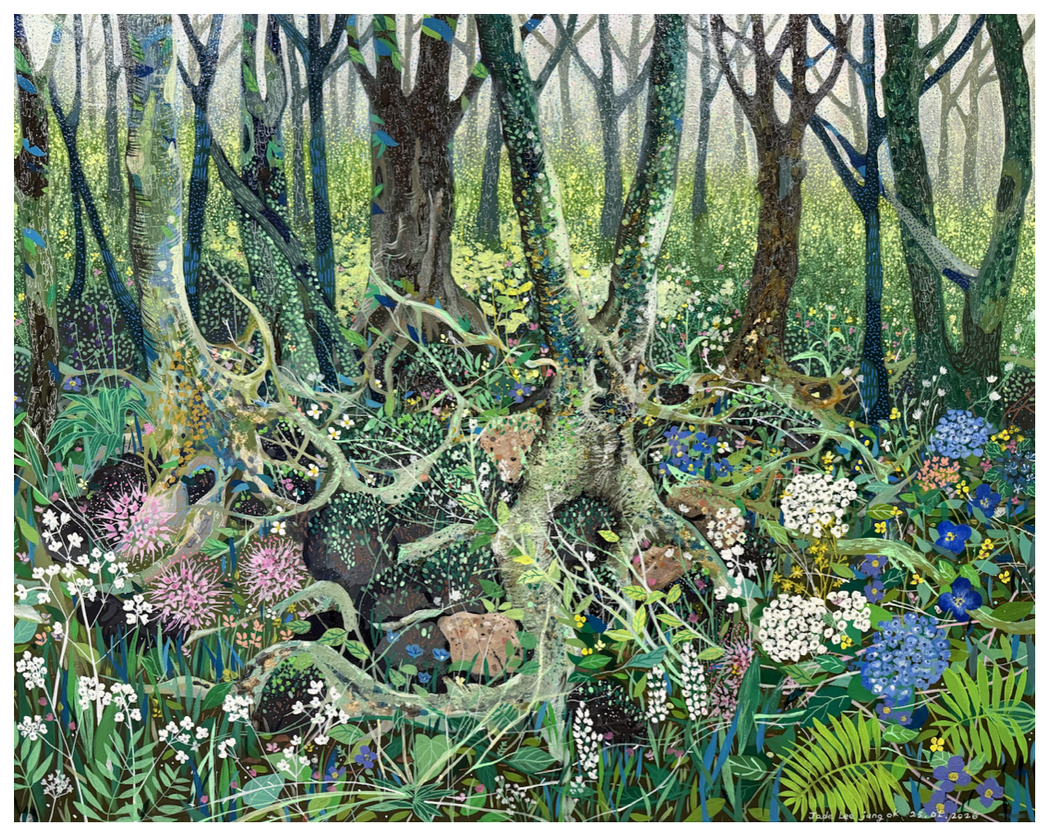 June Lee | Life Is A 자화상 | 2026
What would you like viewers to discover about themselves through your work, and what questions are you hoping to explore next?
Looking back, there have been three major crises in my life. In the midst of those rough waves back then, I could not yet see it clearly, but looking from a distance, those crises were ultimately processes of planets experiencing small and large shifts and collisions within the relationships that surround me. They were not merely moments of pain, but a necessary cosmic journey through which I made my own choices and decisions amidst countless collisions, eventually shaping my own unique worldview.
This reflection brings me face-to-face with a new artistic inquiry. Moving forward, I wish to explore how this artistic universe and the stars I have created can endure healthily over time and move along a mature orbit. At times, unexpected collisions in life may break and shatter certain pieces away. Yet, I want to embrace those wounded fragments with a profound and positive energy so that they too—in the near future, or perhaps even after hundreds of millions of years—can re-emerge as healthy stars and radiant galaxies. Thus, rather than being shaken by external forces, I intend to silently carry on this practice, finding my balance through inertia and centrifugal force, grounded deeply in my own inner mass.
It is my hope that those who encounter my work through this journey will also be able to look back upon their own lives. I hope they come to understand that the numerous conflicts and heartaches they experience within complex relationships are not due to personal weakness, but are simply part of the universe’s immutable, grand physical laws. In doing so, I wish for them to find deep healing within the work, without spending the finite time granted to us on consuming pain and harming their own mental and physical well-being. I sincerely hope that they will dedicate that precious time and energy entirely to nurturing the peace and happiness of their own personal universe.