Léon Émile Loizeau
You describe failure as a creative principle. When did technical imperfection first become central to your photographic language?
This was not a decision I made at a specific point in time. Rather, it emerged gradually through different periods of experimentation, sometimes through accidental discoveries and sometimes through techniques I consciously developed.
I first encountered the idea in 2009, while taking self-portraits with a webcam. The webcam was malfunctioning, and I noticed that the image would occasionally become distorted. Instead of seeing this as a technical problem, I became interested in the visual possibilities of the distortion. Later, I began experimenting deliberately with the bottoms of glasses, crystal glass, plastic bags, transparent packaging, and any kind of glass or plastic that could refract light, interrupt the image, or transform what was in front of the lens.
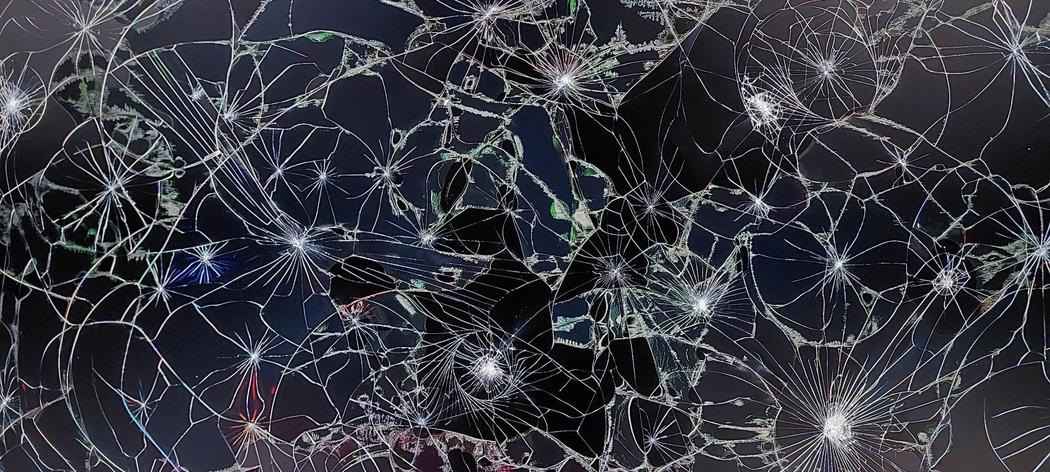
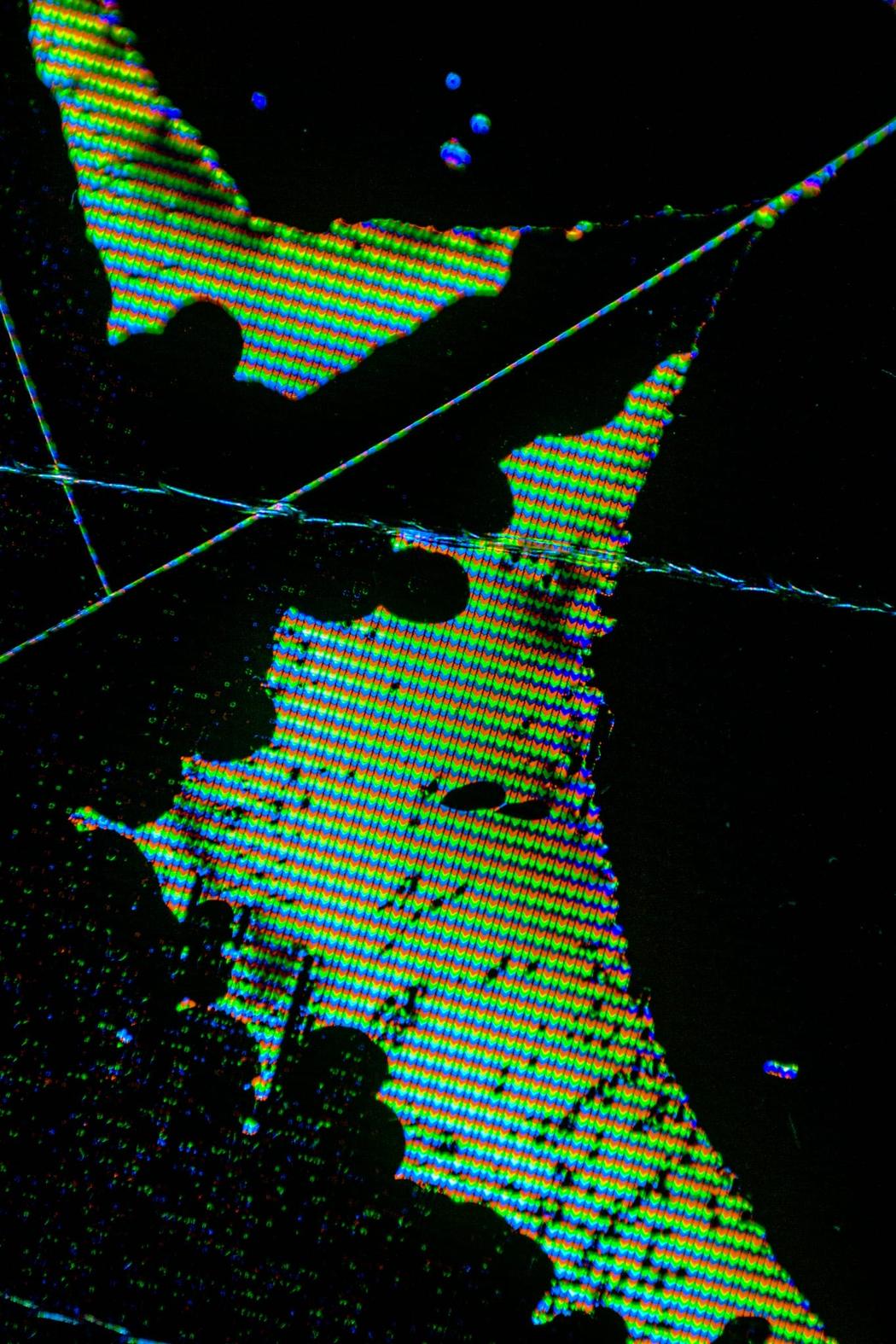
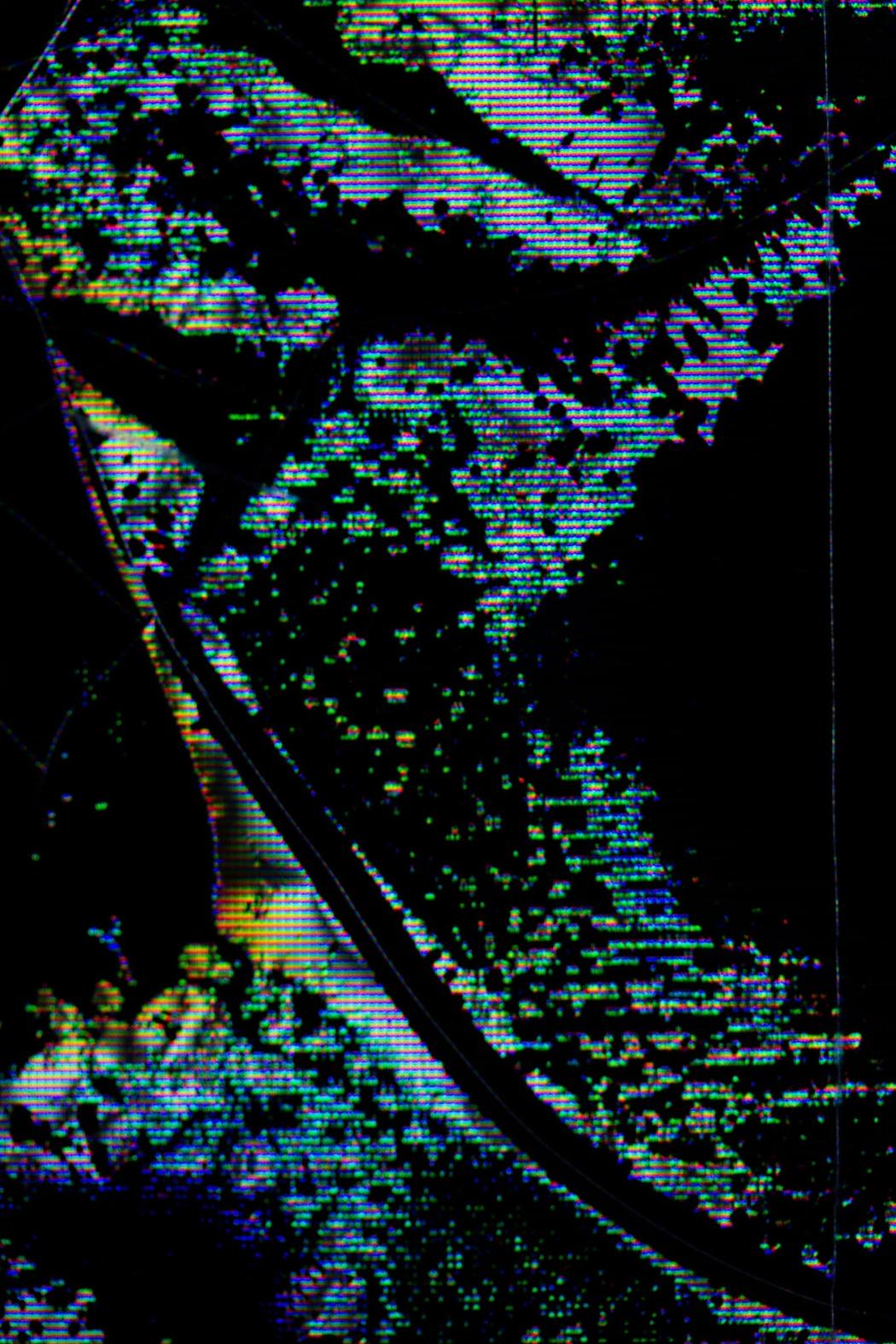
I also explored other forms of technological failure: a cracked LED television screen that produced unexpectedly abstract images, applications that generated distorted or fragmented visuals, and image disruptions caused by weak internet connections. These accidental forms of failure gradually became part of my photographic vocabulary.
For me, photography does not have to reproduce the outside world exactly as it appears—perfectly, realistically, or photographically. I am interested in what happens when the image itself becomes unstable and begins to transform without relying on Photoshop or similar digital manipulation. By allowing photography and painting to move into each other, I try to create images that become painterly, abstract, fragmented, or ambiguous.
The aim is therefore not necessarily to create something perfect or conventionally beautiful, but to discover something unexpected and visually compelling within imperfection, distortion, and chance.
You work with broken cameras, pinhole cameras, shattered glass, nylon, and low-quality filters. How do you decide which material or intervention best expresses the idea behind a particular image?
I determine this through experimentation. I try different materials and interventions and observe how each one transforms the image. I can often see and understand the results more clearly on a computer screen, where subtle distortions and unexpected effects become more apparent.
I then select the photographs according to whether the intervention transforms the image in a way that feels meaningful, comprehensible, painterly, abstract, or visually intriguing to me. It is not so much a predetermined choice as a process of discovery: I experiment, observe the results, and allow the image itself to reveal which material or intervention works best for it.
How much of the final result is carefully planned, and how much emerges through accident, improvisation, and the unpredictable behaviour of your equipment?
I begin with a certain idea in mind. I construct the image mentally and try to visualize it before I take the photograph—in a sense, I make the photograph in my head first. But I never remain completely fixed on that initial idea.
I work experimentally, using different objects and interventions, and then I observe the results on a computer screen and select the images that speak to me. I cannot assign a precise percentage to what is planned and what is accidental, because I am completely open to unpredictability and chance.
In fact, I think it is almost impossible for an image to emerge as something that is one hundred percent planned. Even in the traditional process of working with film, there is room for experimentation and uncertainty: you take the photograph, but the developing of the film and the process of printing it on paper can also produce unexpected results.
For me, experimentation is therefore a way of working with possibilities rather than trying to control every outcome. I begin with an intention, but I remain open to what happens in the moment—to new possibilities, changes, and accidental discoveries. Often, it is precisely this dialogue between what I imagine and what I could not have predicted that shapes the final image.
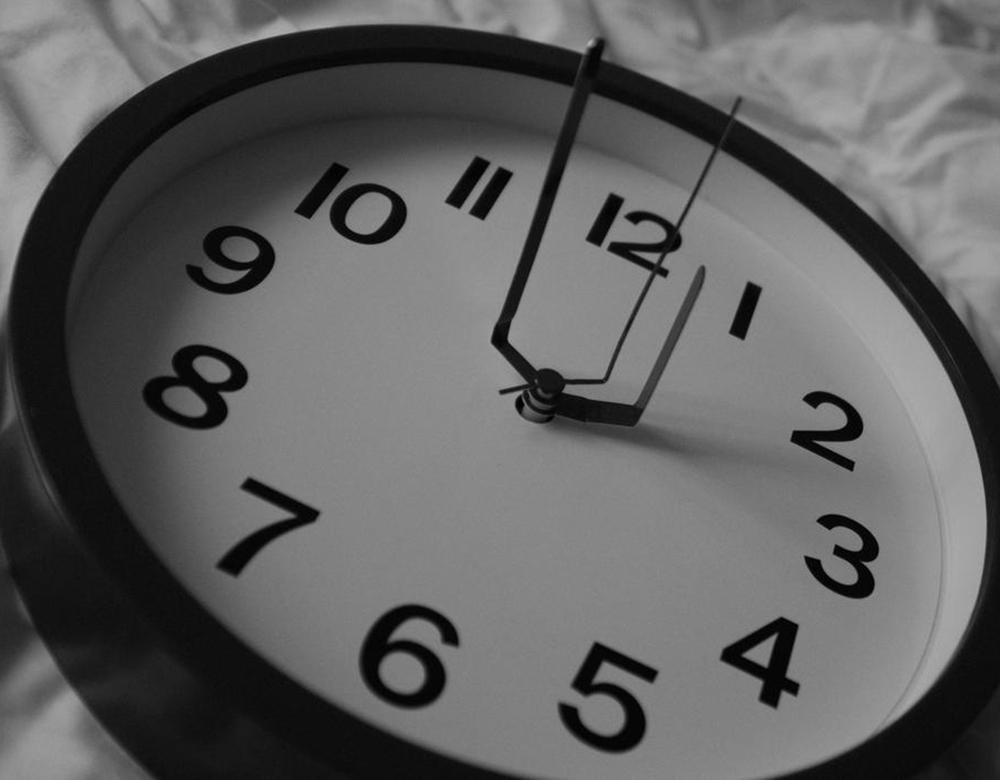
In Dimension Changed Time, Escape from Time, and Twisted Time, you physically distort the hands of a clock. What does the clock represent in this series, and why was it important to alter the object itself?
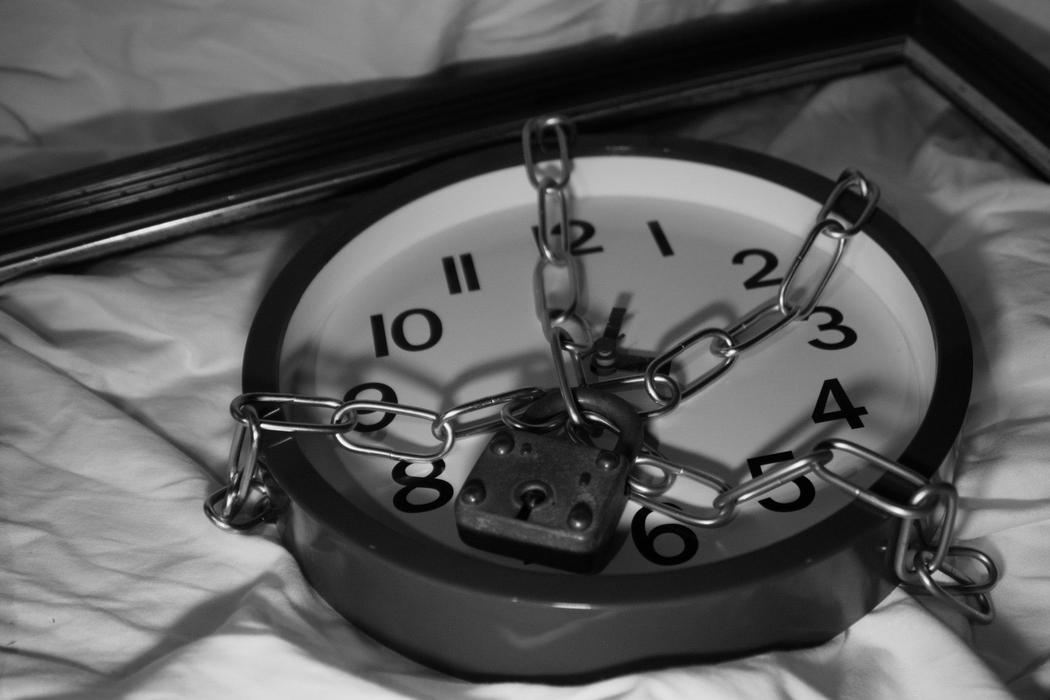
There are actually several other variations in this series, some of which I have already conceived but have not yet photographed: 4x XYZ, Pruned Time, Vanished Time — Time That Has Vanished and Disappeared, 2x Repaired Time, Fragmented Time, Time in Chains, Time Fought, and 2x No Name.
The clock represents time, while its hands make visible the continuous flow of time and its irreversible movement forward. By physically bending, distorting, or even breaking the hands of the clock, I try to intervene in this familiar representation of time. Yet no matter how radically I alter the object, I cannot actually slow time down, make it move backwards, or bring it even slightly closer to a previous moment. Time cannot be stopped, repaired, or destroyed.
This tension between physically altering the object and being unable to alter what it represents is central to the series. The distortion of the clock becomes a kind of futile intervention: I can manipulate the image and the object, but I cannot manipulate time itself. For me, this is where the physical transformation of the clock becomes meaningful—it turns an ordinary object into a space for thinking about the irreversibility and persistence of time.
The clocks remain recognizable even as their ability to measure time becomes unreliable. Are these works concerned with psychological time, memory, mortality, or resistance to chronological order?
I would not say that these works are directly concerned with death, but rather with ageing—the experience of slowly dying while still alive, or of living as though one were already dead. Time keeps moving forward, and we have no way of stopping it. We are carried along with it, whether we want to be or not.
We continue to do things in our own way, trying to get through the present and make the most of each day, but ultimately we cannot prevent our own disappearance. Memories belong to the past, and we cannot return to them. We cannot relive the moments we once loved.
When we die, everything ends. There is no longer pain or sorrow. I am an atheist, so I do not believe in an existence beyond death. What interests me more is what happens as we grow older, when psychological and physical difficulties begin to appear or become more pronounced, and life can become increasingly difficult.
At the same time, memories become more vivid. Depending on where we live and the circumstances in which we find ourselves, ageing can also bring dreams of returning to another place, coming back into the world, experiencing certain moments again, or somehow going back into the past.
In this sense, the clocks are connected to both psychological time and memory. They remain recognizable as clocks, yet their function becomes disrupted. For me, this reflects the tension between the objective, chronological passage of time and our subjective experience of it—the desire to hold on to what has passed, even though time continues to carry us forward.
Born in Istanbul and now based in Geneva, you have lived between two very different cultural and visual environments. How have these cities influenced your perception of beauty, identity, and alienation?
Rather than speaking specifically about Istanbul and Geneva, I would describe this experience more broadly in terms of Turkey and Switzerland.
Beauty: When I came from Turkey to Switzerland in 2004, the internet was not yet as widespread as it is today, and social media did not exist. Access to information, images, and different perspectives was much more limited. I arrived with a certain understanding of beauty that had been shaped in Turkey. Living in Switzerland, or more broadly in Europe, expanded that understanding considerably. I encountered a greater openness to different ways of seeing and thinking, as well as to new ideas, differences, and individual freedoms. In many ways, this experience widened my horizons and continues to influence how I perceive beauty.
Identity and alienation: I have experienced a sense of alienation and questions of belonging both in Turkey and in Switzerland. I do not feel that I completely belong to any particular place. At the same time, Switzerland has given me a much broader space for individual and intellectual freedom. That freedom has been important to my way of thinking and to my artistic development. Of course, Switzerland also has people with narrow or very limited ways of thinking, and sometimes these attitudes can become obstacles. For me, belonging therefore remains an unresolved and ongoing question rather than something tied to a specific place.
Your work has been exhibited across Europe, North America, the Caribbean, and the Middle East. Have different audiences interpreted its distortion and ambiguity in noticeably different ways?
I can speak most directly about my experiences in Turkey and Switzerland. In both places, I have often found that my work is difficult for audiences to understand. In Turkey, it received very little attention, and if there were people who understood what I was trying to do, they were very few. I have experienced something similar in Switzerland. I have often been told, quite directly, “I don’t understand anything about your art.” This has sometimes come even from photography teachers.
I think part of the difficulty comes from the fact that I do not have an academic degree in art. Without an academic background in the field, it can be difficult to be taken seriously within the art world. I also find it difficult to describe my own work using established artistic terminology. My approach is largely intuitive, experimental, and developed through practice rather than through academic theory.
My experiences in photography courses made this particularly clear to me. The artistic and photographic approaches of many teachers and classmates were very different from mine. I often felt that people were photographing the same or similar subjects, in the same or similar places, and largely reproducing what they saw rather than transforming it through their own perspective. What interests me is precisely the opposite: bringing something personal into the image, questioning what we recognize as a photograph, and allowing distortion, ambiguity, and experimentation to open up other ways of seeing.