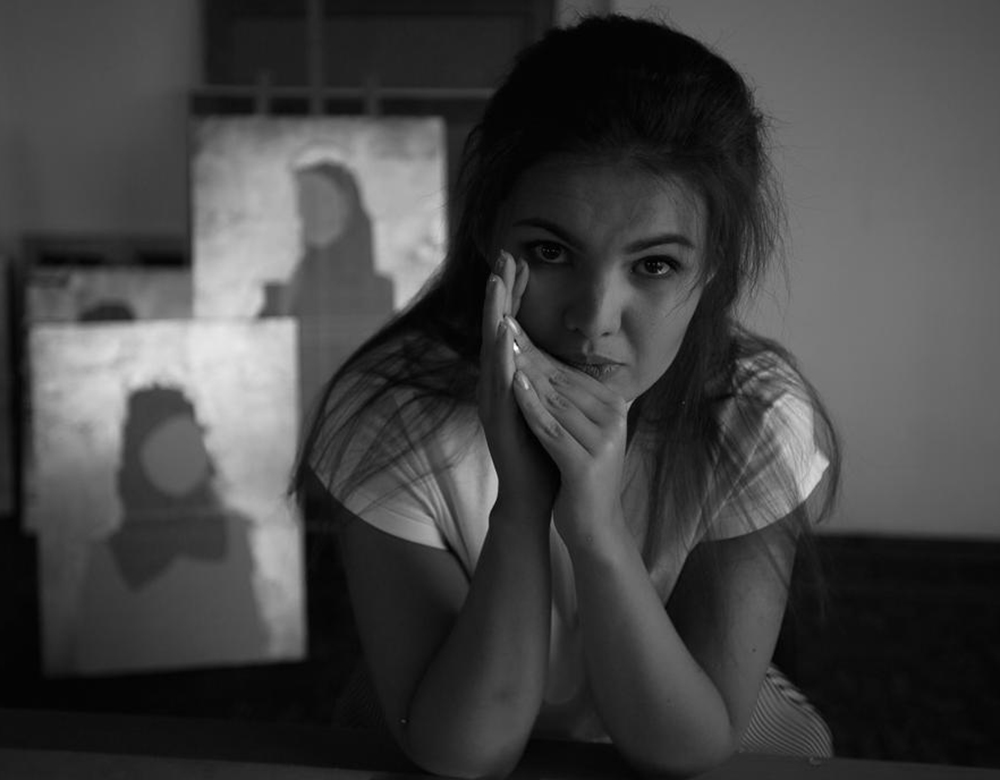
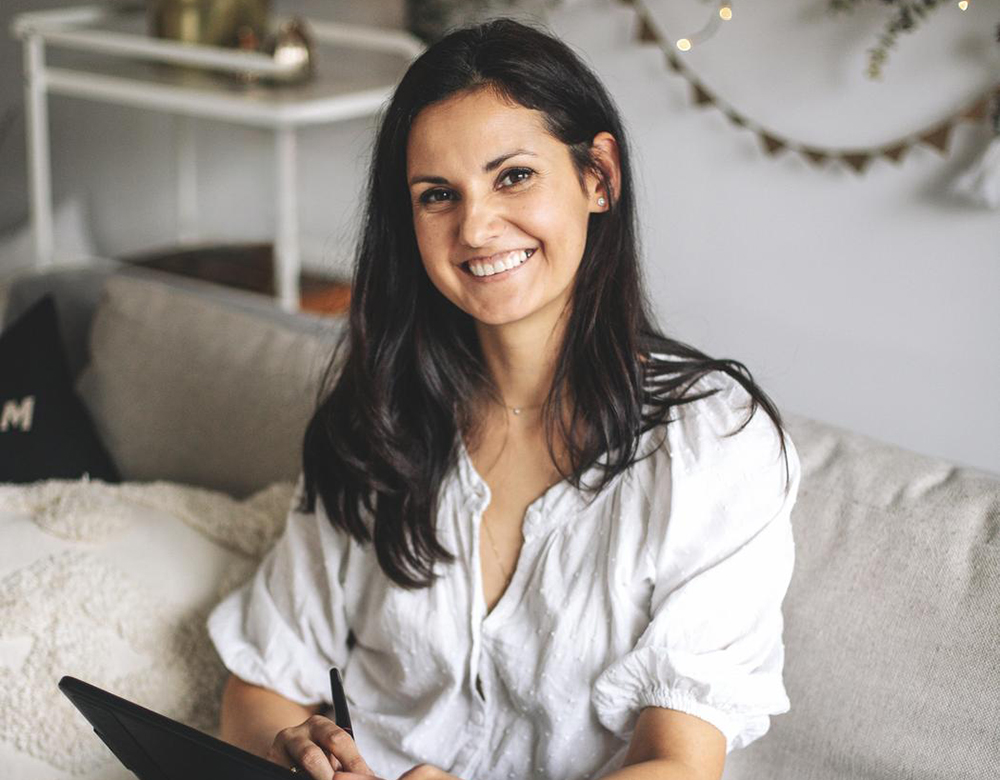
Tes Atelier
You came to painting after a background in engineering and more than a decade of creating hand-painted glass ornaments. What prompted you to begin working on canvas, and how did that transition change your creative practice?
My first painting on canvas actually happened about fifteen years ago, long before I ever thought of myself as an artist. It was an oil painting of a kiss between me and my boyfriend at the time, who is now my husband.
I had no idea what I was doing. I had never studied painting, and at first I was simply trying to make things look right. But somewhere in the process, something clicked. I stopped chasing realism and started thinking about how the colours worked together and, more importantly, how I wanted the painting to feel. I remember knowing then that one day I would come back to painting.
Life took me in a different direction first. I studied engineering and began working in a corporate environment. Then I became a mother, and while I was at home with my children, I found my way back to painting. When my twins were born twelve years ago, I painted my first glass Christmas ornament for them. That small, personal project eventually grew into a creative business, and for more than a decade I continued painting ornaments and creating pieces connected to other people’s memories and stories.
About three years ago, I finally returned to canvas. It didn’t feel like starting something completely new. It felt more like coming back to something I had left waiting for me.
Today I work with both oils and acrylics, on canvas and paper. And what fascinated me in that very first painting is still what interests me today — not reproducing exactly what I see, but finding the colours, atmosphere and details that make the work feel like my own.
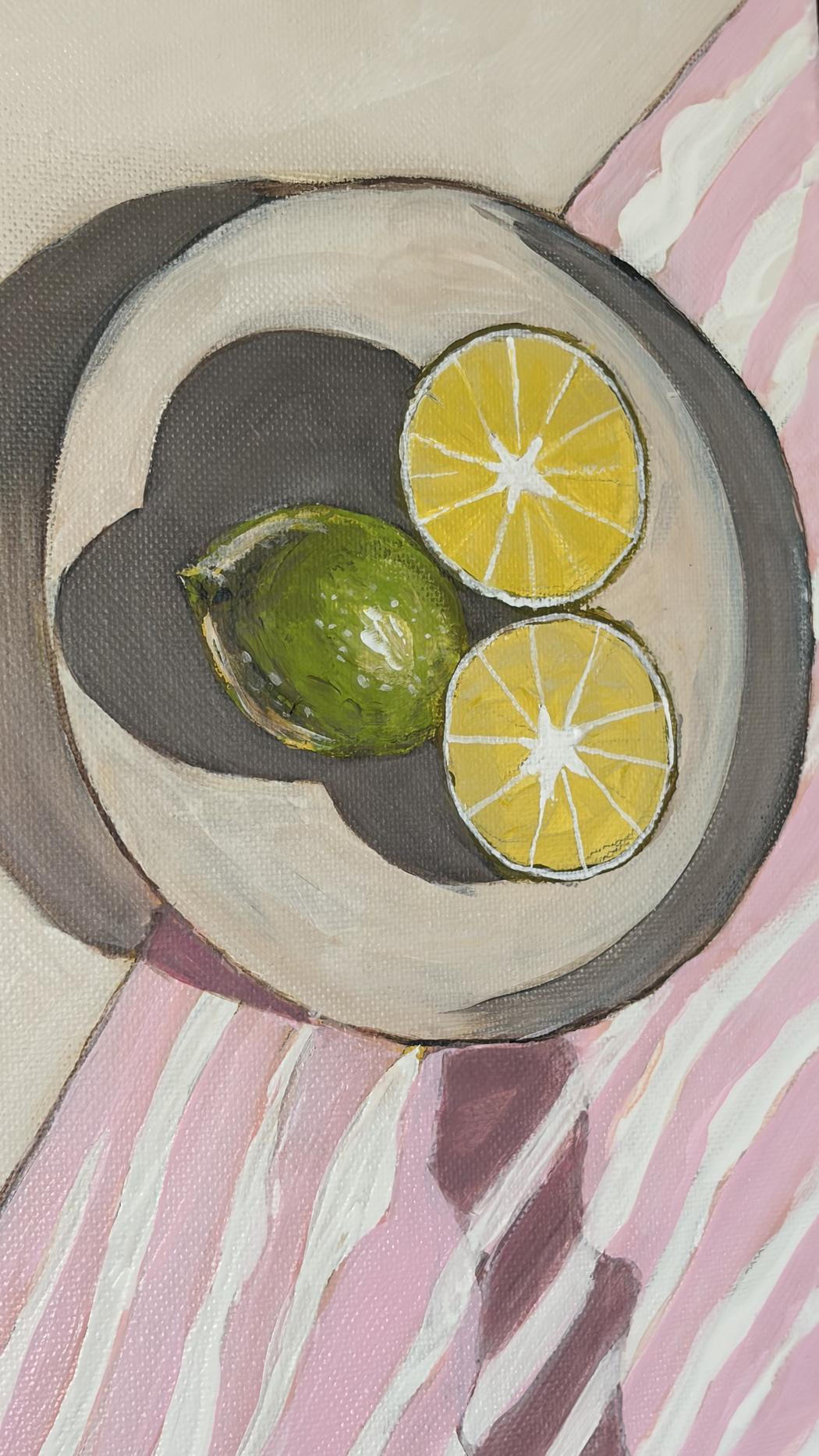 Tes Atelier | Summer, Slowly | 2026
Has your engineering background influenced the way you approach composition, structure, or problem-solving in your paintings?
Probably not in the most obvious way. When I paint, I don’t consciously think like an engineer — in fact, painting is probably the place where I allow myself not to.
But I do think that background has influenced the way I work. I tend to observe, analyse and look for solutions when something isn’t working. Painting constantly involves small problems — composition, colour, proportion, balance — and I enjoy figuring them out.
At the same time, one of the things painting is teaching me is to let go of the need for everything to be correct. I’m learning that sometimes an imperfect line or an unexpected colour can make a painting feel more alive.
Your current body of work is titled Dolce Far Niente. What does this Italian philosophy mean to you personally, and how do you translate it into visual form?
Dolce far niente is often translated as “the sweetness of doing nothing,” but for me it doesn’t really mean doing nothing. It means allowing yourself to be fully present without feeling that every moment needs to be productive.
The collection was inspired by a summer my family and I spent in Italy. What stayed with me wasn’t one particular place or event, but the feeling of those days — warm light, simple food, the sea, sitting somewhere without needing to rush to the next thing.
When we came home, I realised that was what I wanted to paint.
So the works in Dolce Far Niente are not a visual diary of that trip. They are my way of returning to it — slowing down, noticing ordinary beauty and allowing a moment to simply be enough.
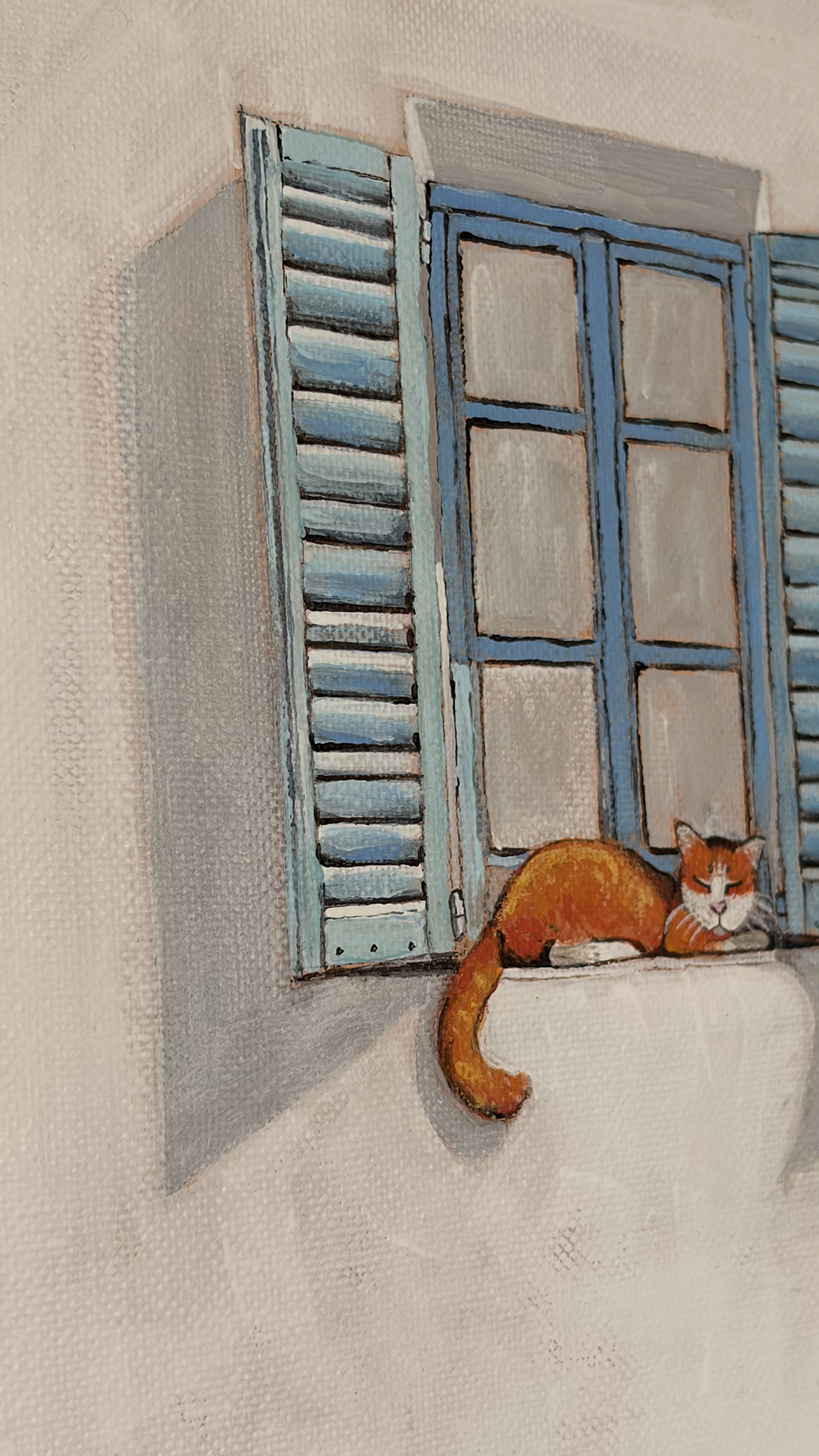 Tes Atelier | Nothing Urgent | 2026
Travel and the Mediterranean appear to play an important role in your work. Are your paintings based on specific places and memories, or do you combine different experiences to create an imagined atmosphere?
Travel is a big source of inspiration for me, but my paintings are not necessarily depictions of specific places I have visited.
I’m much more interested in how a place makes me feel and what I remember about it afterwards. Sometimes I work from an image because it immediately brings back a feeling I recognise, even if the photograph itself is not from my own travels.
I may be drawn to the light, a gesture, a colour combination or simply the quietness of a scene. From there, the painting becomes my interpretation of it.
So in a way, the places in my paintings exist somewhere between reality, memory and imagination.
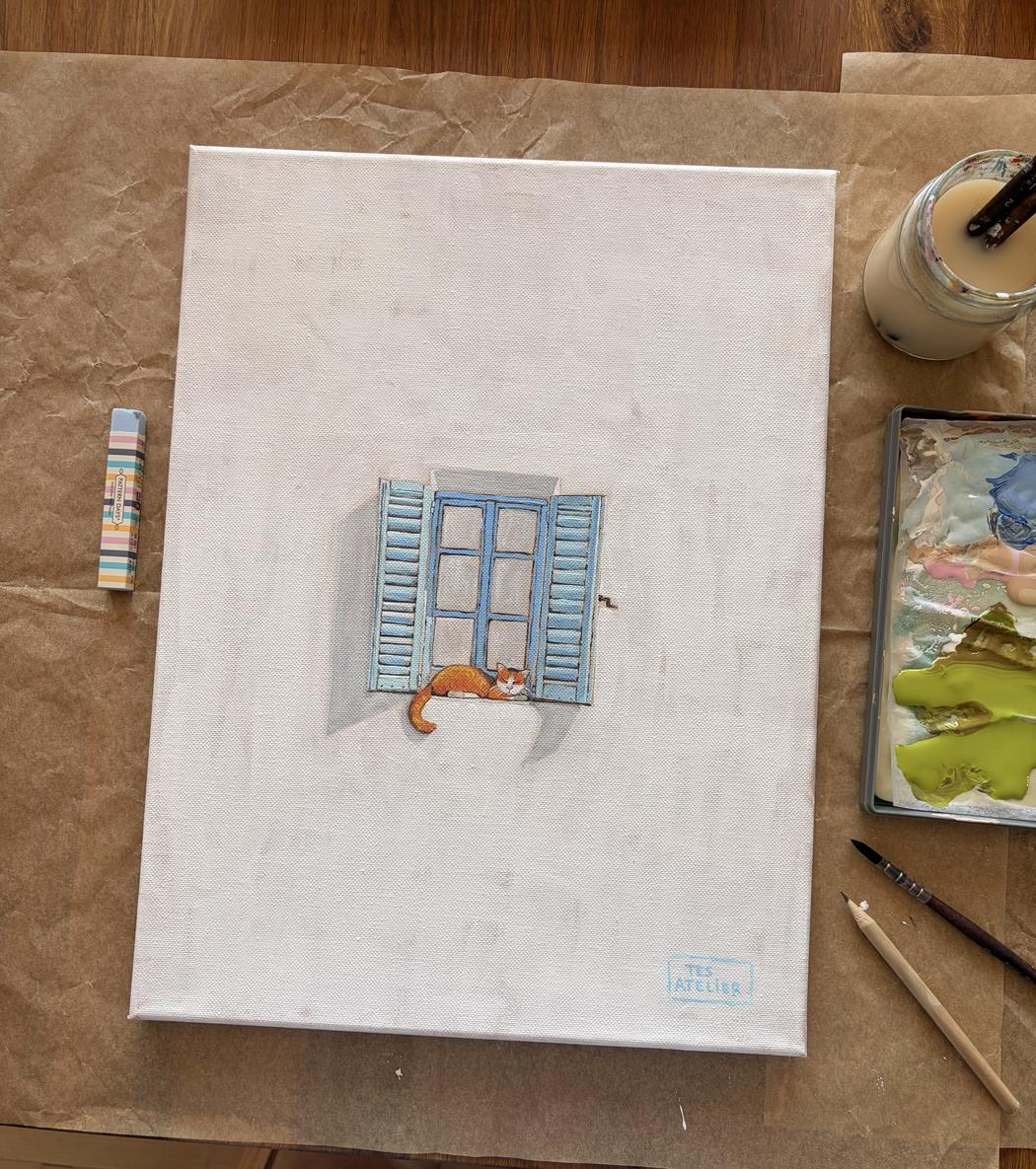 Tes Atelier | Nothing Urgent | 2026
Everyday objects — a bottle of wine, a sun hat, lemons, an open window, or a resting cat — often become the focus of your compositions. What draws you to these seemingly ordinary details?
I think the ordinary details are often what make a moment special.
We tend to remember the big events in our lives, but when I think about the moments when I have felt truly happy, they are often very simple. Being together with the people I love, sitting around a table after a long lunch, watching my children play on the beach or hearing them laugh. Sometimes there is a moment when everything seems to slow down, and you just want to be completely present in it — to experience it fully and somehow remember every little detail.
A bottle of wine, a sun hat or a few lemons may not be extraordinary by themselves. It is the life happening around them that makes them meaningful.
I think I’m drawn to that sense of calm and to the idea of finding perfect happiness in an imperfect everyday life. There is something very beautiful to me about real life not needing to be perfect for a moment to feel perfect.
When you begin a new painting, do you work from photographs, sketches, direct observation, or memory? How much does the image change during the painting process?
At the moment, I mostly work from photographs. I’m very visual, and sometimes I can look at an image and immediately know that I want to paint it.
I don’t necessarily look for a particular subject. Sometimes it is the light, the colours, the composition or simply something about the scene that makes me stop.
Once I start painting, I allow the image to change. Colours may become stronger, details disappear, and sometimes the imperfections become my favourite parts. I’m becoming less interested in reproducing exactly what I see and more interested in making the painting my own.
As my practice develops, I also want to explore working more from my own photographs, sketches and memory.
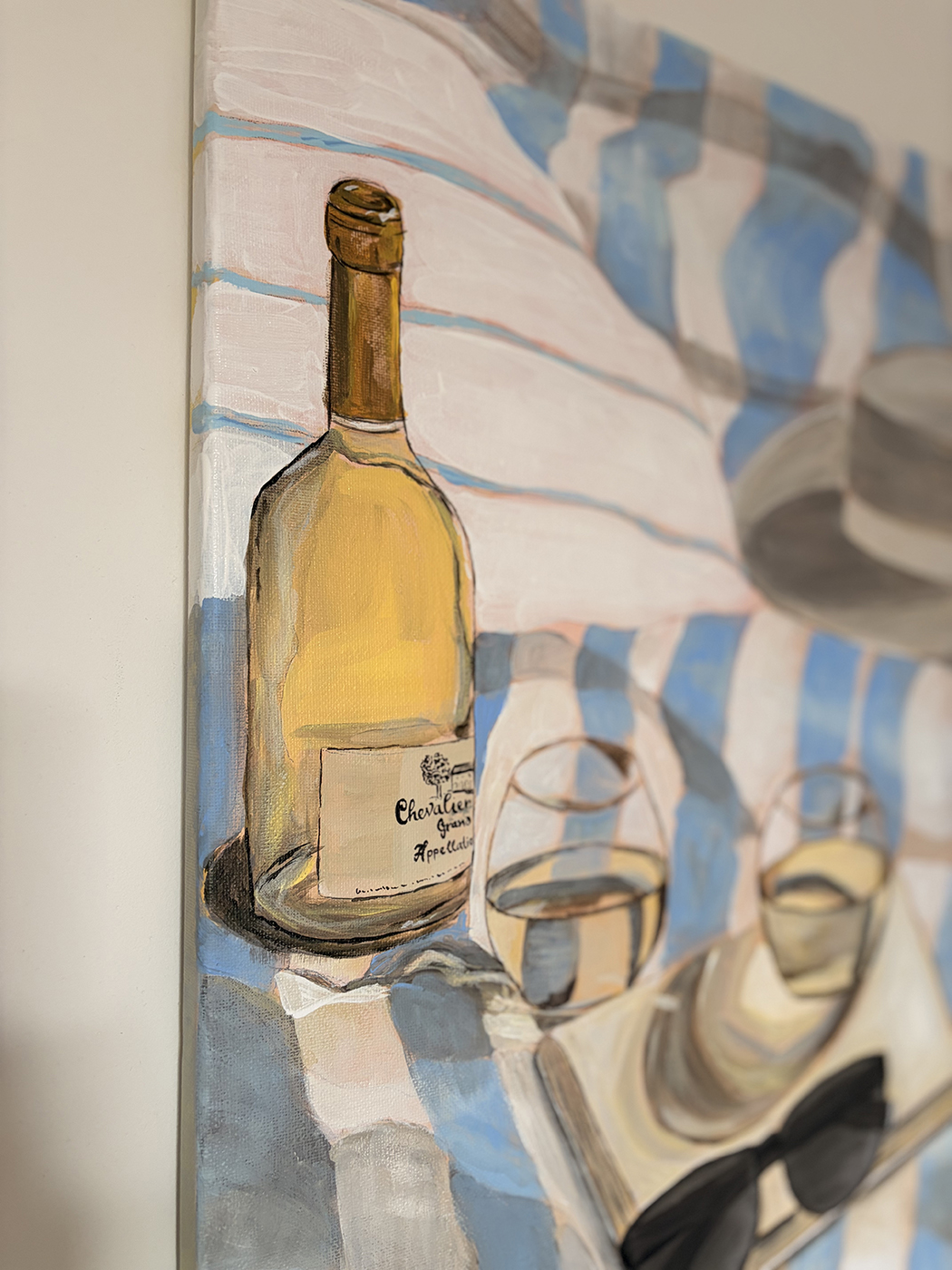 Tes Atelier | Stay A Little Longer | 2026
In a culture shaped by speed and constant distraction, do you see your paintings as a quiet form of resistance — a way of encouraging people to pause and pay closer attention?
I’ve never consciously thought of my paintings as resistance, but I really like that idea.
I think I started painting Dolce Far Niente partly because I needed that reminder myself. Life can become very focused on what comes next — what we need to finish, achieve or take care of.
Painting makes me stop and pay attention. And if someone looking at one of my paintings feels, even for a moment, that they would like to sit there, stay a little longer, feel the sun or simply do nothing — then perhaps the painting has done what I hoped it would.
Maybe we don’t always need more. Maybe sometimes we just need to feel more.