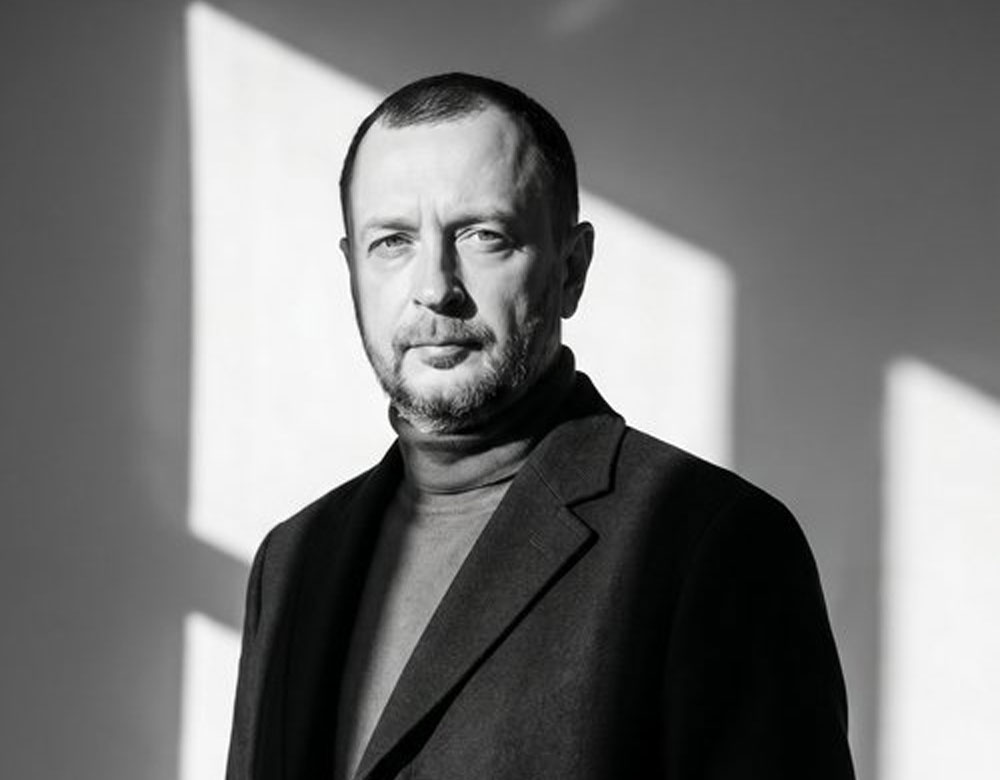
Artem Klunny
You studied both mining engineering and economics. How have these fields shaped your artistic thinking and approach to abstraction?
Mining taught me one simple thing: the most interesting things are always beneath the surface, and to get to them, you have to break something apart. Geology also trains you to think in sections and layers. Later, when I saw the way Rozanova laid down color in bands, I caught myself thinking that I was looking at a stratigraphic column.
Economics added something else: it teaches you to use abstraction as a practical tool. An investment model does not depict a mineral deposit either; it describes it through relationships between quantities. No one expects a cash-flow chart to bear a portrait-like resemblance to oil.
So, in essence, I have been doing the same thing all my life. It was only in 2015 that I stopped pretending it was reporting.
You describe abstraction as a philosophy. What does this mean for you personally?
It means that I’m not very good at answering the question, “So what exactly is depicted here?”
Seriously, though, figurative painting gives you an answer. Abstraction gives you a question, and that is where its honesty lies.
I grew up in the North, in Yamal, where the horizon stretches empty for three hundred kilometres. You learn fairly early there that the world does not have to resemble anything recognizable. It simply exists — vast and indifferent — and all a person can do within it is place signs.
For me, a painting is one such sign. I do not describe reality; I argue with it. Sometimes I lose.
How do geometry, color, and texture help you express emotions and philosophical reflections?
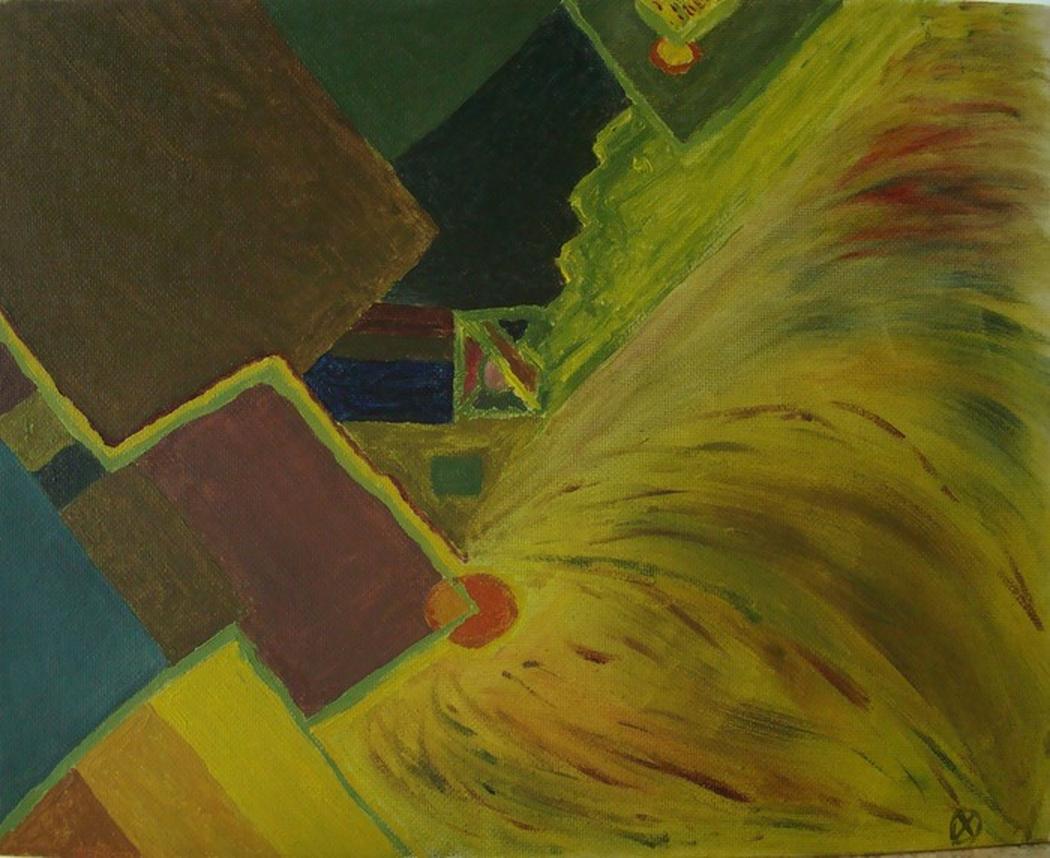
They each have their own role. Geometry is responsible for what a person thinks, color for what they actually feel, and texture reveals whether they are lying or not.
A straight line always represents a decision, will, intention. A blot or patch of color is a state of being — something that simply happens to you. When I place a hard contour next to a blurred mass, I am essentially depicting an ordinary Tuesday at work: the plan on paper and what actually happened in reality.
And texture is the most incorruptible of all. You can construct a flawless composition, but if the brushstroke is weak or lifeless, the viewer will sense it, even without understanding exactly why.
Do you see your paintings as a universal language, and if so, what message do you hope to convey to viewers?
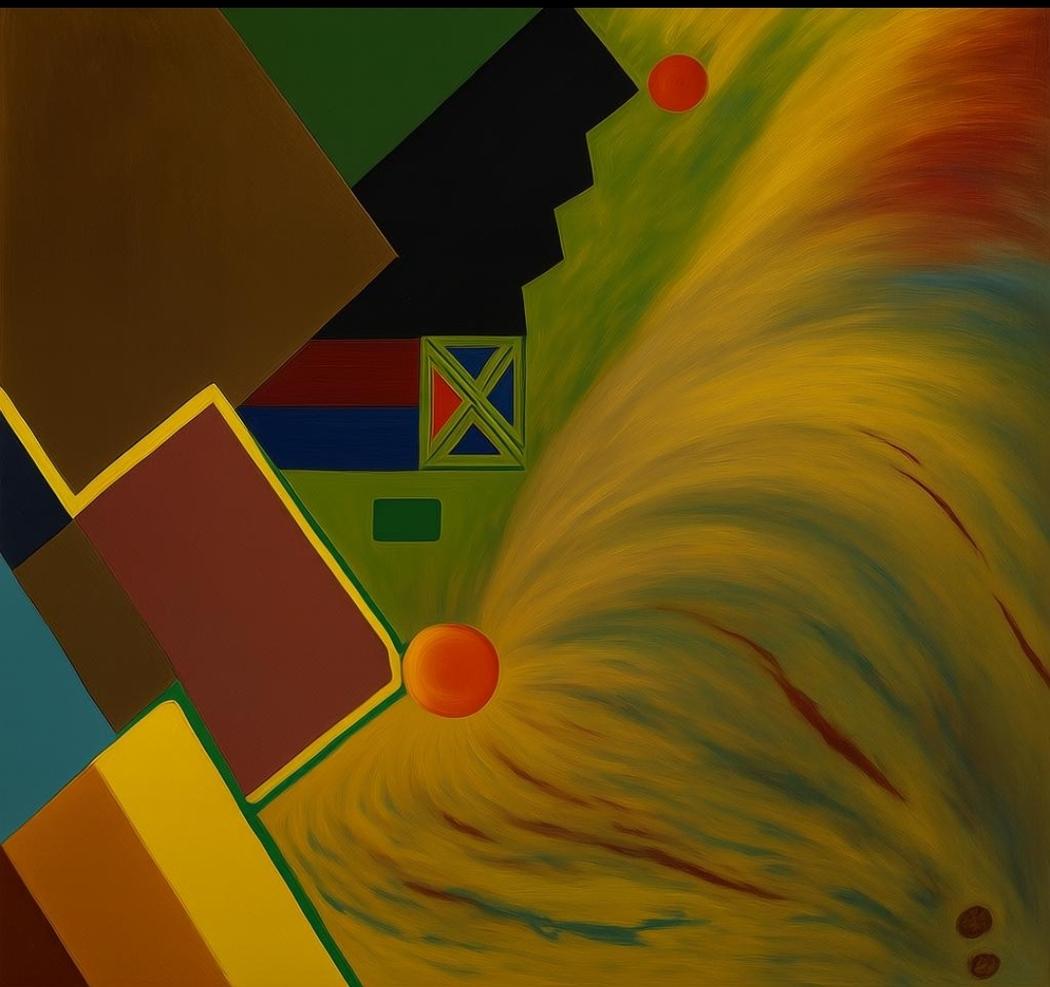
Universal — yes, but in the way music is universal, not in the way a road sign is universal. It can be understood by everyone, yet mean something different to each person.
My message is quite modest: look longer. We live in a culture where an image is consumed in a second and a half, and in that sense abstraction is a healthy form of resistance. It gives nothing away immediately. If you have stood in front of a canvas for three minutes and felt something, then the work has succeeded—and it does not matter to me at all whether what you felt was the same as what I felt.
Everyone should see something of their own in it: a philosopher may find a harmony of ideas and concepts; a writer, a story and its characters; an architect, a structure, a sense of harmony.
The worst thing is when a viewer simply nods and moves on.
Your works show both geometric precision and expressive freedom. How do you balance structure and spontaneity in your practice?
Honestly? I don’t find it at all. I watch for it.
I usually start with structure. I have an engineering background, so I feel more comfortable when there is a framework in place. And then, at some point, the hand slips out of control — and that is the one part of the painting that makes the whole process worthwhile. Structure is what I know how to do. Freedom is something I can only allow to happen.
In the end, experience has really come down to one skill: knowing when to stop. Otherwise, you carefully correct everything, and what you end up with is a diagram. I’m already quite good at making those at work.
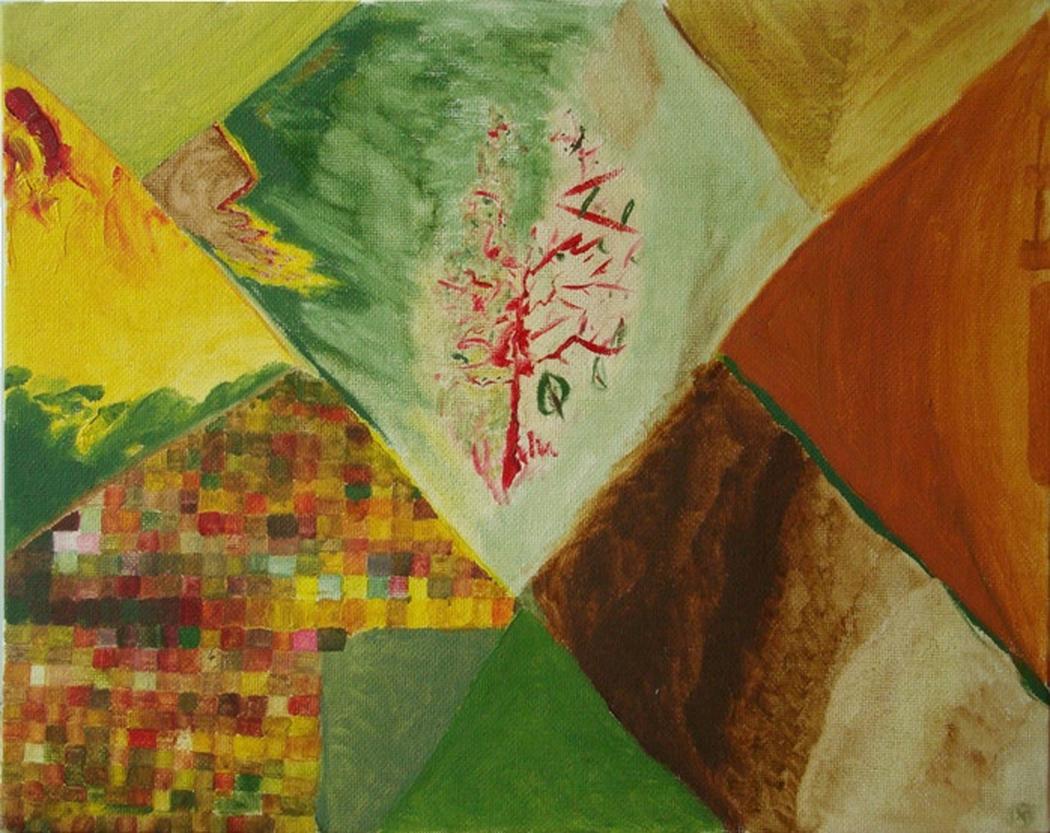
How do you see your artistic journey evolving since you first picked up the brush in 2015?
For the first three years or so, I openly imitated — everyone and everything I knew, and that is perfectly normal. Then it started to feel uncomfortable, and that was when the most useful stage began: I started ruining my own good compositions.
Now I am less interested in getting things right and more interested in tone. My earlier works were louder and more self-assured. The ones I make now are quieter, but they seem closer to what I actually wanted to say. I have become more willing to leave things unfinished.
And the biggest change is this: I used to paint for myself, to work something out within myself. Now I want people to see it. And that has turned out to be much more frightening.
In your opinion, what role does abstract art play in today’s society?
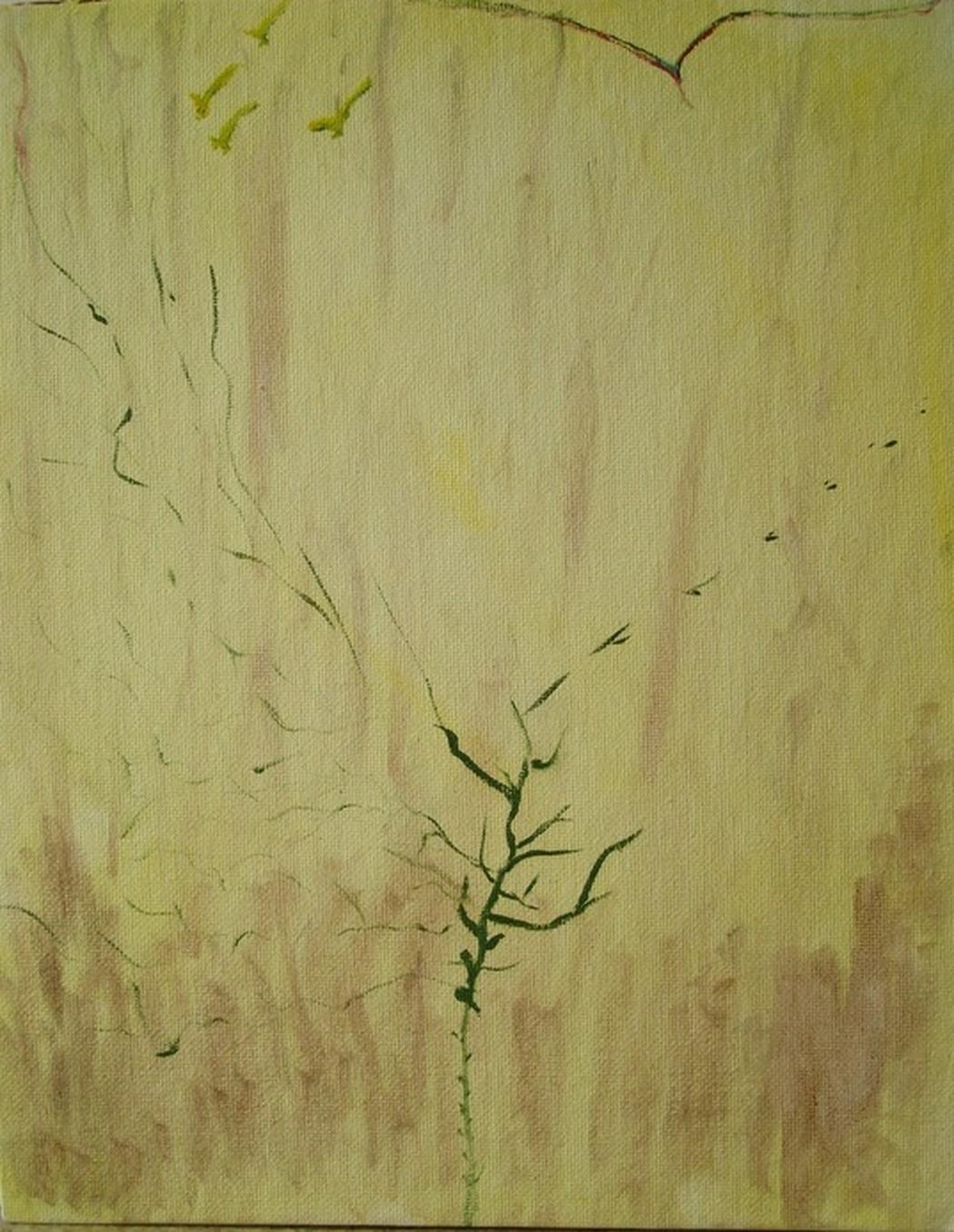
The role of an image that cannot be quickly put to use.
Today, everything around us seems to want something from us, even demand something of us: to sell, persuade, engage, or hold our attention for another eight seconds. An abstract painting wants nothing. It does not deliver news, illustrate a position, or lend itself easily to being reposted with a caption. And precisely because of this, it gives the viewer something rare: a pause in which they are left alone with themselves, rather than with someone else’s agenda.
A hundred years ago, the avant-garde was about the future and revolution. Today, in my view, abstraction is more about resisting the noise, about creating a pause. Its function has changed, but the need for it remains.