
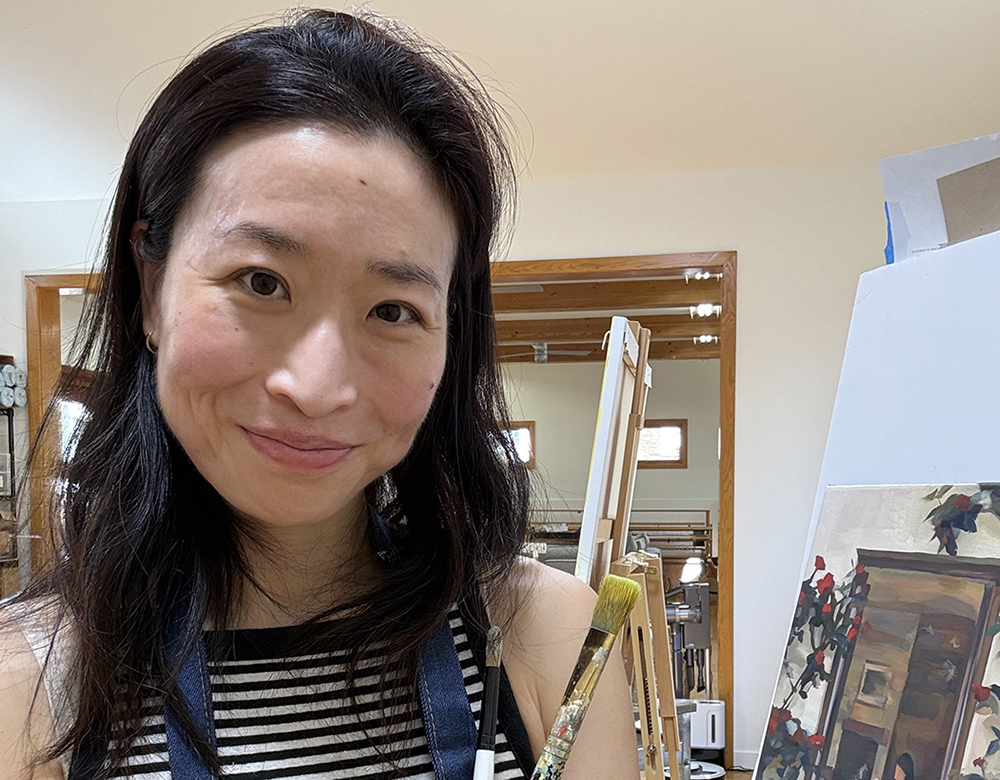
Jennifer Ko
Your paintings often focus on quiet, everyday moments and familiar objects. What draws you to subjects that might otherwise be easily overlooked?
I’m interested in the things we live with so closely that we stop noticing them. An ordinary object or quiet moment can hold an entire history—who used it, who cared for us, where we came from. Painting gives me a reason to look again and give those things the attention they deserve.
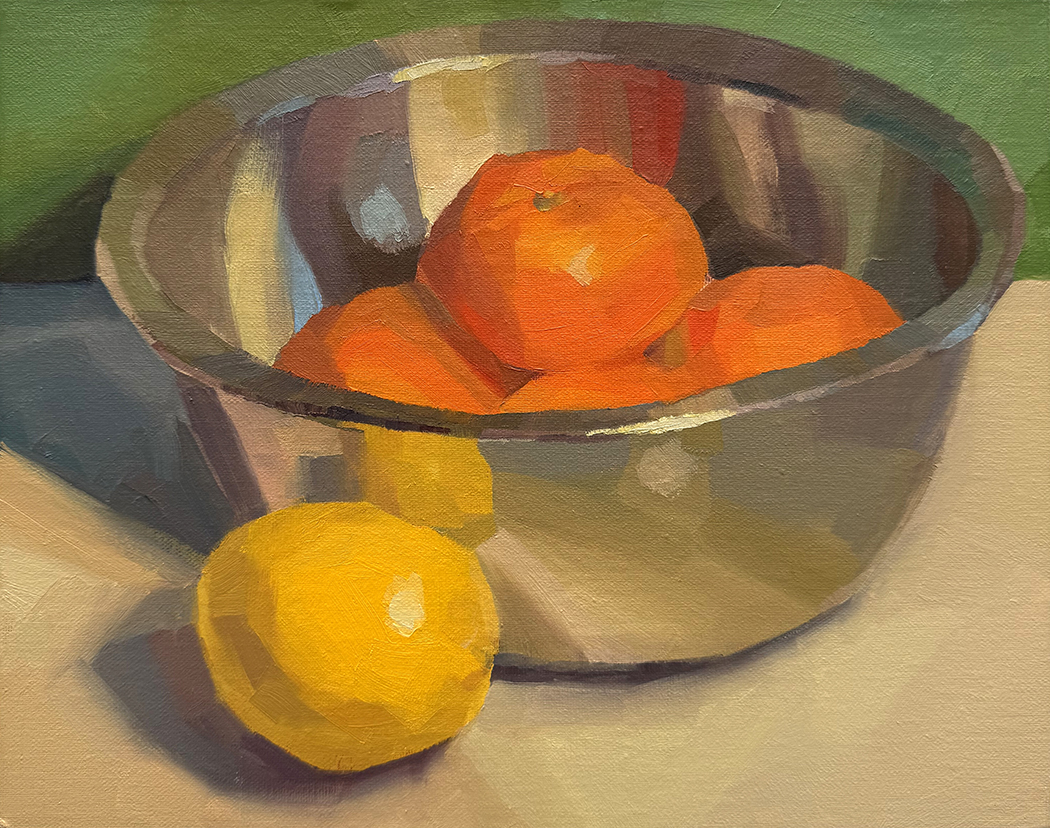 Jennifer Ko | Citrusand Steel Bowl | 2026
Motherhood has had a profound influence on both your life and your artistic practice. How has becoming a mother changed the way you observe and interpret ordinary moments?
Motherhood completely changed my relationship with time. When my children were babies, the days could feel incredibly long, but at the same time, everything was changing so quickly. You’re exhausted and moving through all of these repetitive routines—feeding, washing bottles, cleaning, rocking a baby to sleep—and then suddenly that stage is gone.
I think becoming a mother made me much more aware of how temporary ordinary life actually is. The things that can feel mundane while you’re living them often become the things you miss later. That realization changed the way I paint. I started paying attention to gestures, routines, objects and spaces that I probably wouldn’t have noticed before.
You describe painting as a way to slow time and preserve fleeting experiences. Are there particular memories or moments that you feel compelled to hold onto through your work?
I’m especially drawn to memories that I know I can’t return to. Some are from my own childhood and my Korean-American upbringing, while others come from watching my children grow. I think there is often a point when you realize something that once felt completely ordinary has become a memory. Those are the moments I want to hold onto.
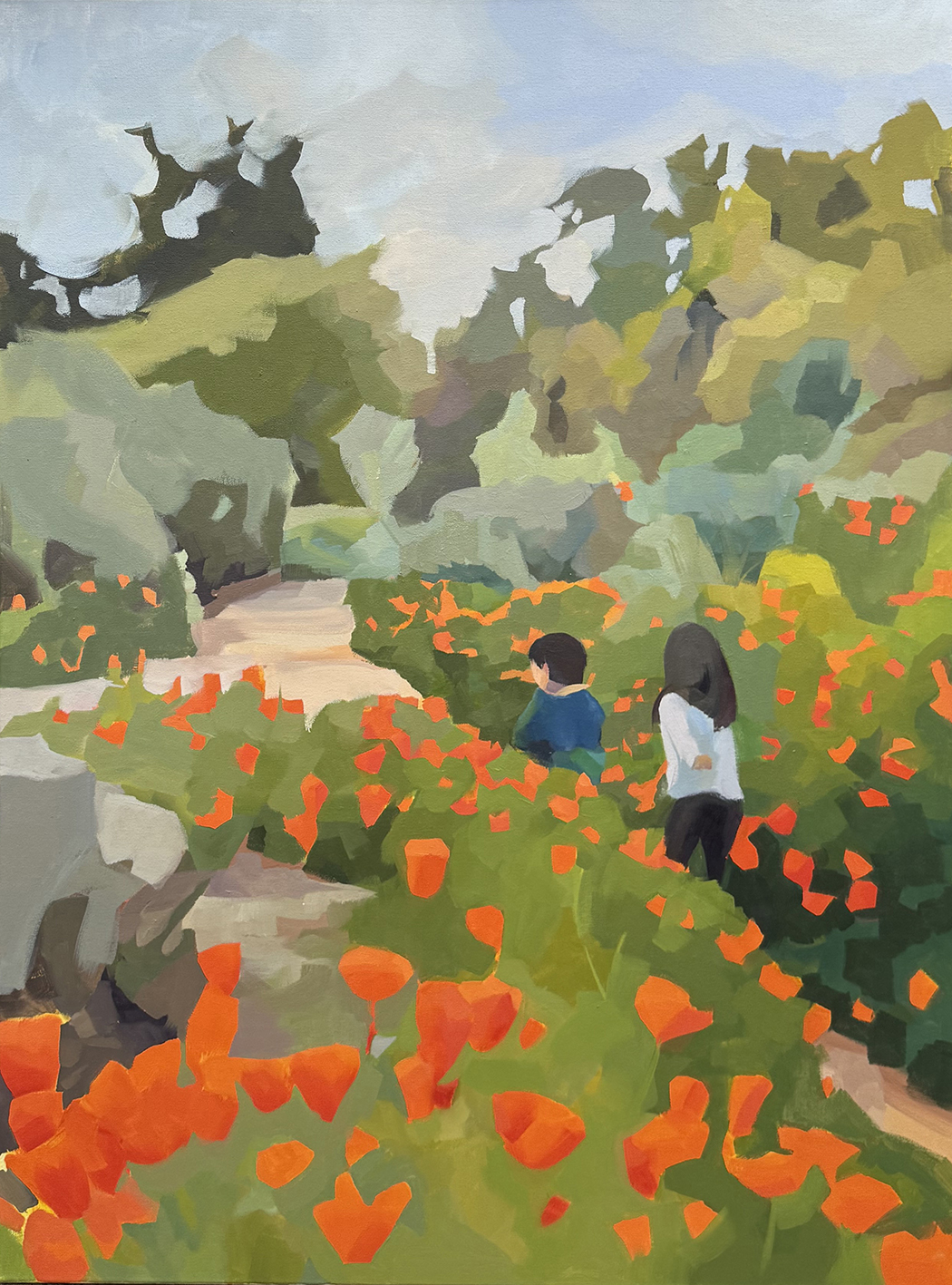 Jennifer Ko | Poppy Fields | 2026
How do you know when an ordinary scene or object has the potential to become a painting?
It’s usually instinctive. Something will make me stop—a certain composition of light, the depth of shadows, a gesture, a familiar object, or the way a figure or object occupies a room. I’m not necessarily looking for something beautiful.
I think there has to be some kind of emotional recognition for me. The subject itself can be incredibly simple, but if it reminds me of someone, a particular time in my life, or even just a feeling I want to remember, I start imagining it as a painting.
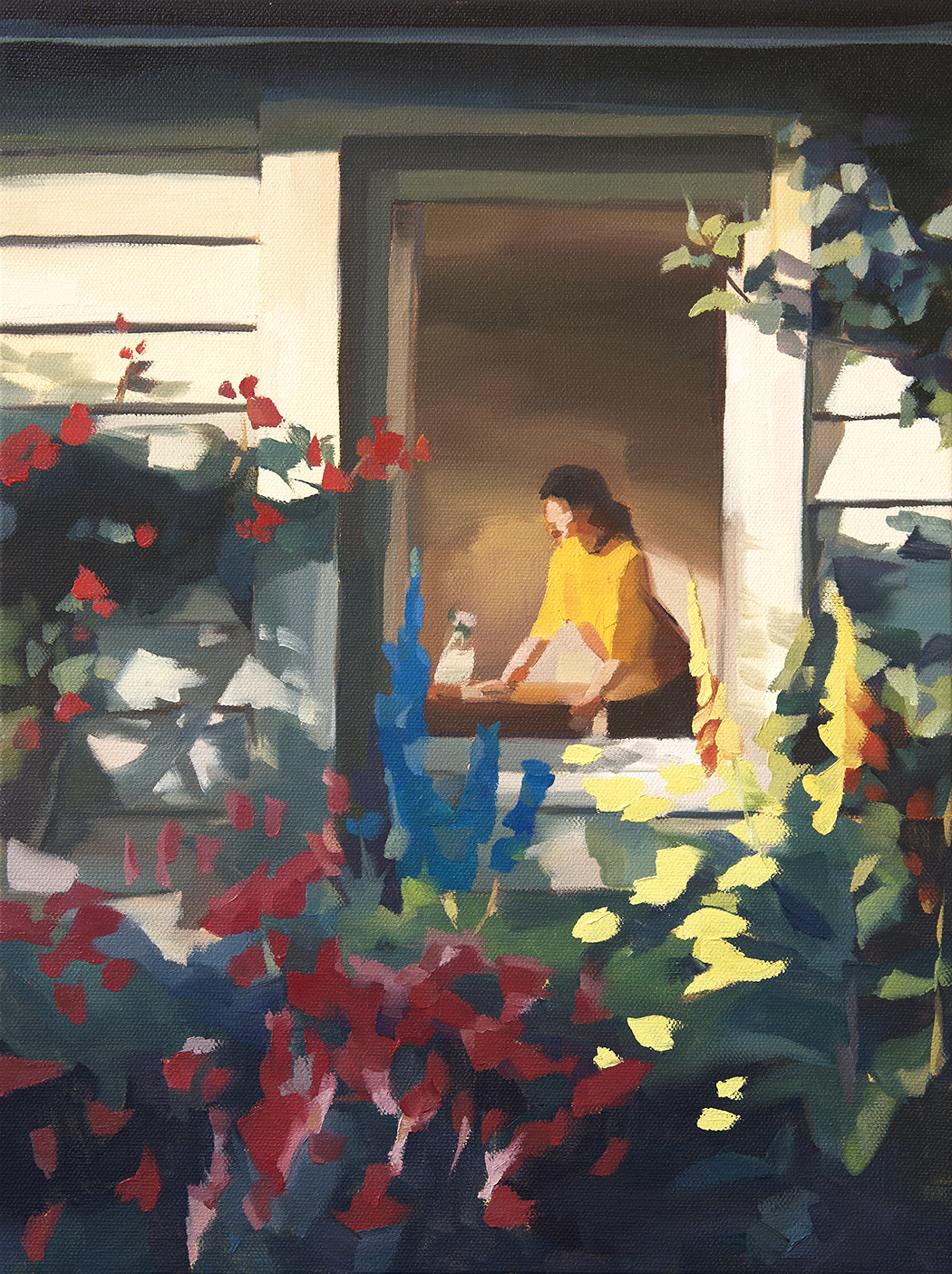 Jennifer Ko | Woman By Window | 2026
As a Korean-American artist raised in Los Angeles, how has growing up between cultures shaped your ideas of home, belonging, and family?
Growing up between cultures made me understand home less as a single place and more as something created through people, food, language, objects, and routines. Some of my strongest memories of family are very sensory and specific—the things that were on our table, the way food was prepared, or the objects I saw every day. As I’ve gotten older, I’ve realized how much those details shaped my sense of belonging.
As I’ve gotten older, I’ve realized how much of what I remember about childhood is tied to ordinary domestic life—the foods my family cooked, the vegetables my grandmother grew, the objects that were always around the house, and the ways people cared for one another without necessarily talking about it.
I think that has shaped the way I understand belonging. There can be multiple versions of home existing at once. Now that I’m raising my own children, I find myself thinking about what gets carried forward and what changes. A lot of those questions quietly find their way into my paintings.
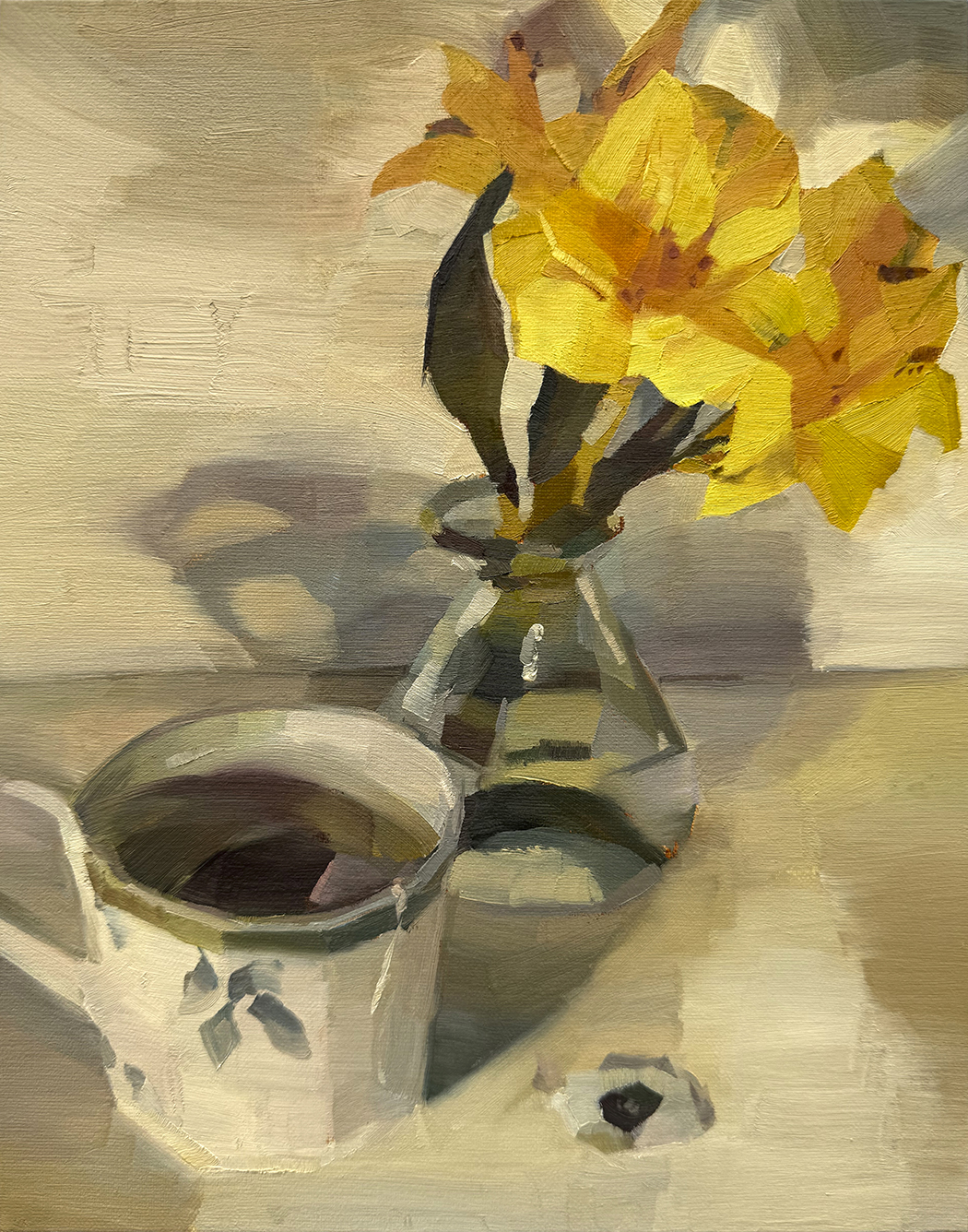 Jennifer Ko | Morning Tea | 2026
Is there a particular subject you feel especially drawn to painting, and what is it about that subject that continues to inspire you?
I keep coming back to women inside the home. Lately I’ve been working on a series where women are seen through the windows of their homes, going about their everyday routines— working, cleaning, cooking, caring for children, or simply moving through their day. I’m interested in looking from the outside in, because there’s something both intimate and distant about it. You’re witnessing a very private, ordinary moment that would usually go unseen.
So much of women’s lives happens this way, especially the work of caring for a home and a family. It can be repetitive and almost invisible, but there is also beauty and tenderness in it. I want to give those moments space and permanence.
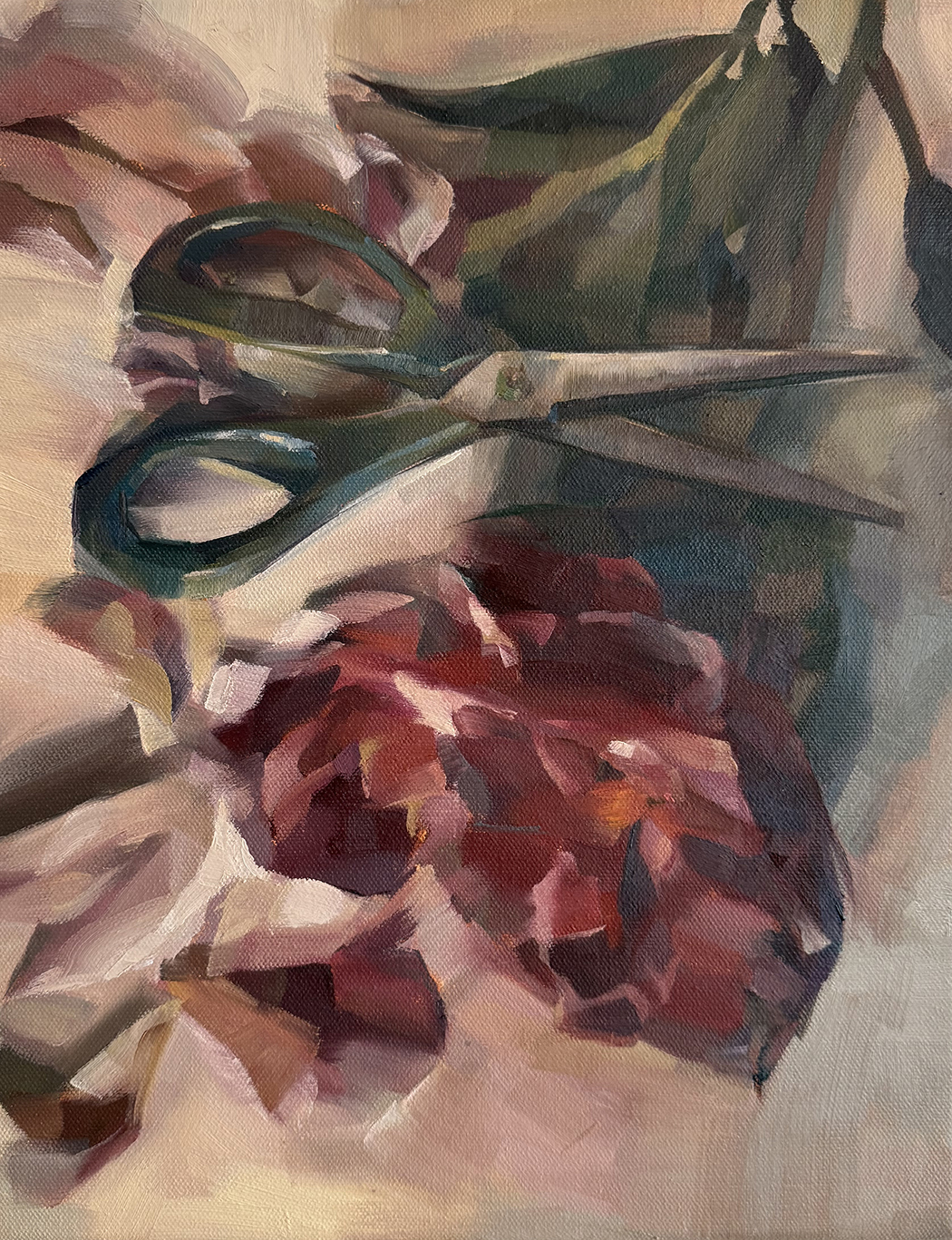 Jennifer Ko | Peonies | 2026
What do you enjoy most about the process of working with oil paint?
I love the physicality of oil paint. There is a luminosity that is hard to describe. I can work loosely, scrape something away, soften an edge, or build up color until the painting begins to feel right. I especially love mixing color. I have a dedicated freezer that I use to store my pre mixed colors. Sometimes I’ll spend a long time trying to find exactly the right cool gray, green, or warm shadow.
It’s a very physical and intuitive process. There is a point when the paint stops feeling like material and suddenly becomes light, skin, fabric, or atmosphere. That transformation is probably what I enjoy most.