
Anna Survivor
Your professional path spans tattooing, interior and architectural design, academic drawing, and abstract painting. What led you to make painting an independent and central part of your creative practice?
Probably, above all, the fact that painting gives me a feeling of complete freedom. Here I can decide absolutely everything myself: which colour to choose, which material or tool to work with, what size the work will be, and where the process will go. I do not have to adapt to someone else’s expectations or know in advance what the final result should be.
In both tattooing and interior design, I have always worked for myself, but there is inevitably a client involved. In tattooing this is especially obvious: a person comes with their own wishes, and although I always have my own professional opinion and can refuse a project if I do not want to do it, ultimately it is their body and their decision. Design works a little differently, but there are still many limitations: the client’s tasks and wishes, budget, dimensions, materials, the characteristics of the space, functionality, deadlines and schedules. I like working within these frameworks, and I genuinely love both tattooing and design.
But painting gave me a completely different kind of space. There is no client, no brief, and no need to arrive at a particular result by a particular deadline. I can start a work without knowing how it will end, change direction, cover something, leave a trace, or simply stop and see where the process is going.
I think that is why painting has become such an important and personal space for me. It is an opportunity to stop controlling everything for a while and simply allow myself to act intuitively. At the same time, design remains my main professional activity and source of income, while painting exists alongside it as an independent part of my creative life — a space that belongs completely to me.
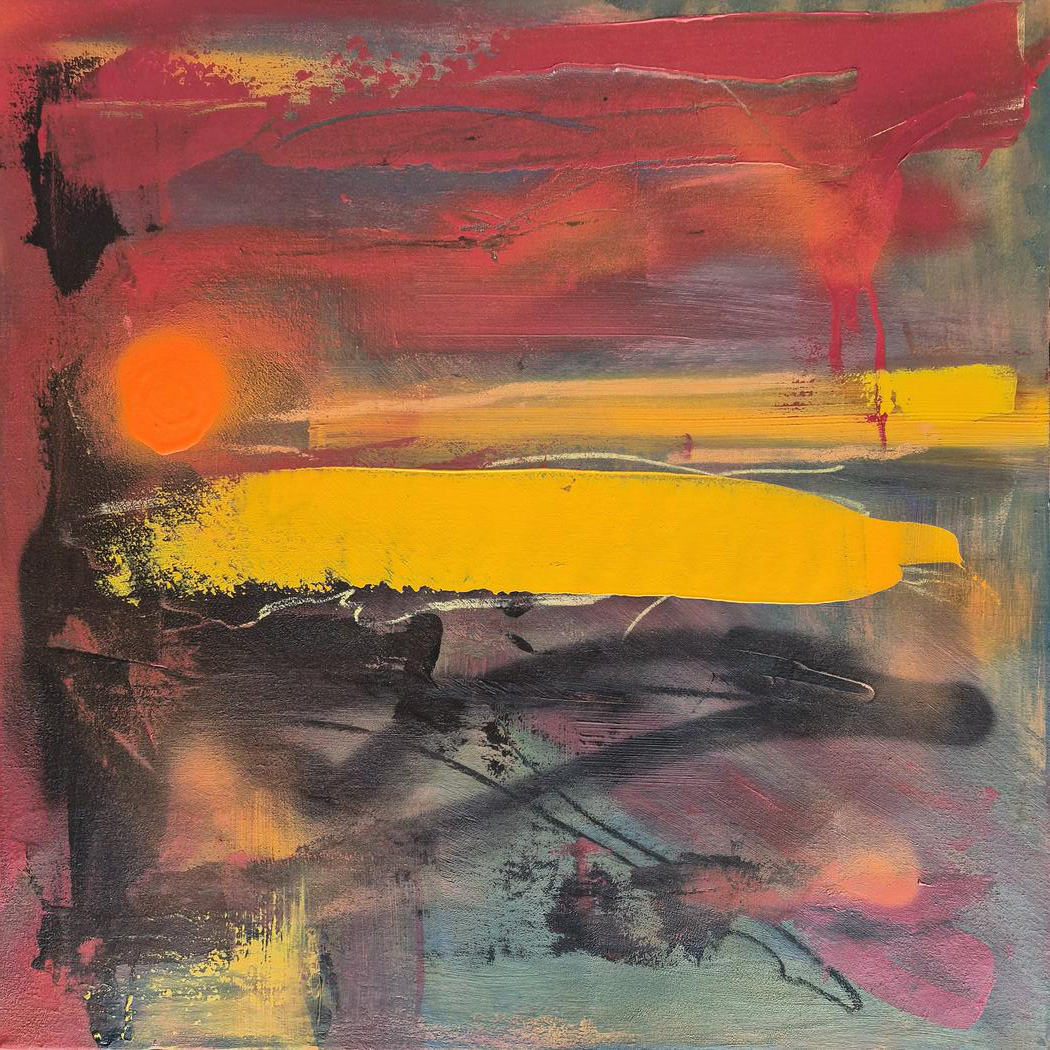 Anna Survivor | Critical State | 2026
The name “Anna Survivor” suggests endurance and transformation. What does this name mean to you personally, and how does it relate to your identity as an artist?
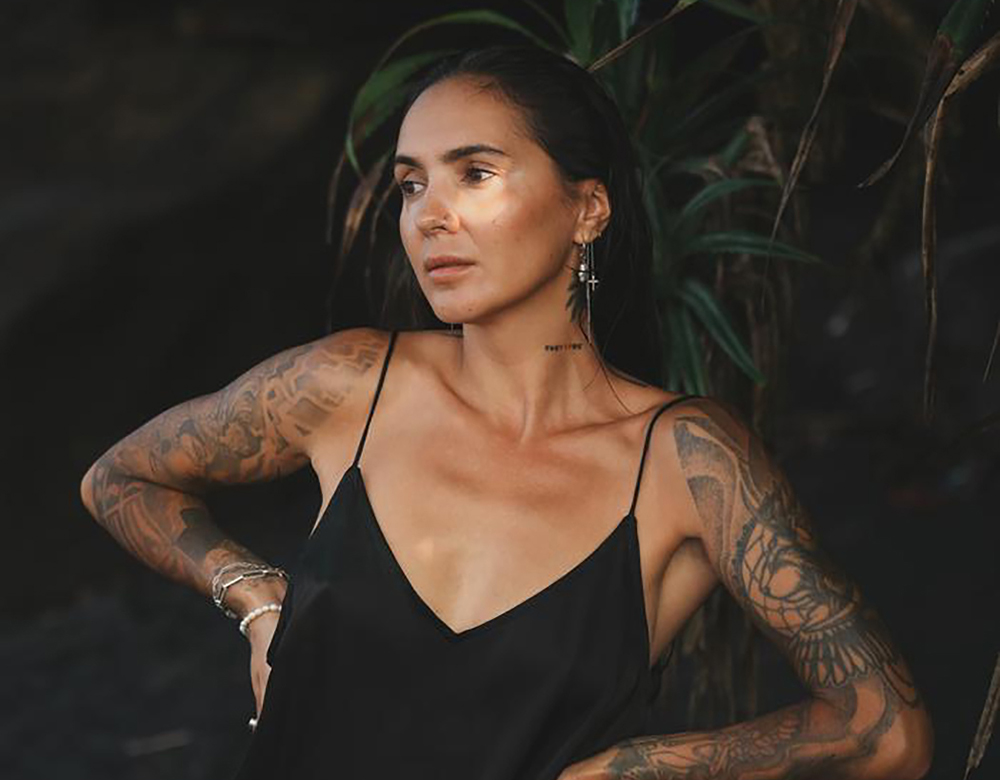
The name Anna Survivor is very personal to me. I even have a tattoo of the word “Survivor” on my neck.
I do not take this word literally. For me, it is much deeper than simply being able to get through difficult circumstances. It has become a kind of definition of my life path.
I grew up in an orphanage and went through difficult family circumstances from childhood. After leaving the orphanage, I had to start building my life independently at a very early age: getting an education, finding work, making decisions, and gradually creating myself almost from nothing.
Later, there were other serious challenges in my life. About eight years ago, thyroid cancer was discovered by chance. I had to undergo urgent surgery, and since then I have been taking hormone replacement therapy continuously. But I have never viewed my life simply as a series of tragedies. On the contrary, I value my experience, because it has shaped me in many ways and brought me to where I am now.
For me, Survivor is not about a person who is constantly fighting or living in a state of war with the world around them. It is about the ability to go through difficult periods, remain yourself, and continue moving forward. I could have ended up in a completely different place in my life, but each time I found the strength to keep going and to decide for myself who I wanted to become.
So Anna Survivor is not an attempt to present myself as special or invincible. I am not super-rich, I am not super-famous, and I do not consider myself someone who has conquered everything. For me, it is much simpler: I am a person who could have broken many times, but did not. I was able to build my life and become the person I want to be.
That is why this name has become part of my artistic identity. It reminds me of my past, but at the same time it speaks about the present and about the fact that I continue moving forward.
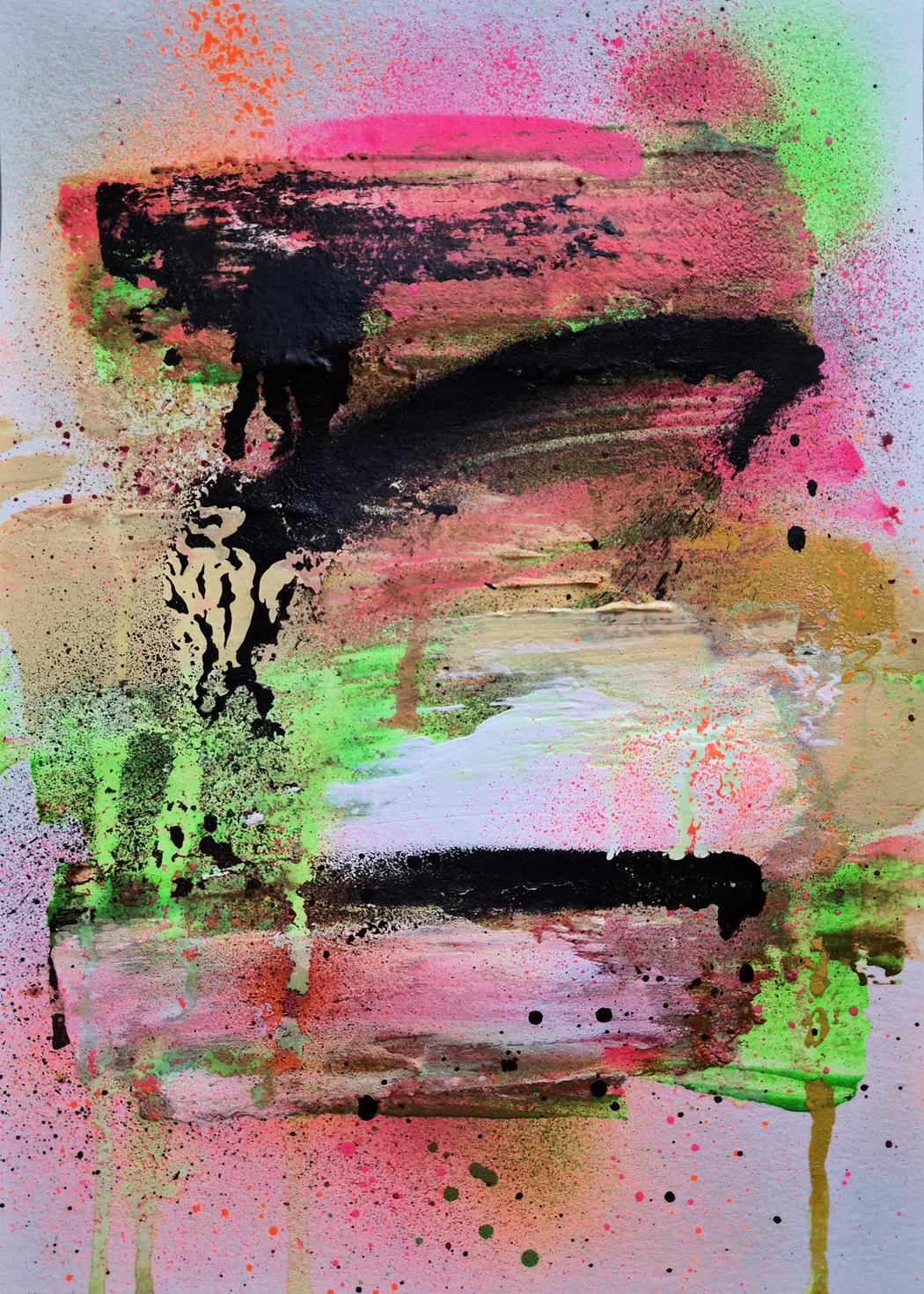 Anna Survivor | Trace | 2026
You describe painting as a way of transferring tension, memories, and emotions onto a physical surface. Do you usually begin with a specific experience in mind, or does its meaning emerge through the act of painting?
Usually, I really do begin with a particular internal state. I am a person who thinks a lot and can constantly worry about the past, the present, or the future. Sometimes I reach a point where I simply realise that I am tired of it and need to stop thinking about it, at least for a while. That is when I go and paint.
But at that moment, I do not set myself the task of transferring a specific problem or a specific experience onto the canvas. I do not think, “Now I am going to paint about what happened to me today,” or “this brushstroke will mean this.” Rather, I simply shift my attention to painting.
And something interesting happens for me there. The state I bring to the work gradually changes during the process. What was worrying or irritating me ten minutes earlier stops being the main thing. I become interested in what is happening with the work itself: the colour, the combination of materials, the surface, the texture, and the way the image is developing. I begin to enjoy the process, and at some point I realise that I no longer want to return to the thoughts I came in with.
So I would say that my emotions and experiences really do enter the work, but not literally. I cannot say that a particular brushstroke is dedicated to a particular problem. It happens much less consciously. My state is transformed into colour, texture, layers, and the overall feeling of the work.
What is especially important to me is that painting allows me to let go of that state. Sometimes it is simply anxiety or accumulated tension; sometimes it is memories, regrets, thoughts about what has already happened or what might happen in the future. Through the process of painting, I can almost leave all of this on the surface instead of continuing to hold it inside me.
That is why the meaning of a work does not fully exist in advance for me. I begin with a particular internal state, but I do not know what it will become. The process gradually changes both me and the work. At some point, I simply realise that I feel good, that I enjoy what I am doing, and that whatever was troubling me before I started no longer has the same power.
Movement appears to be fundamental to your work. How do the gestures of your body, the speed of execution, and the pressure you apply shape the final composition?
Movement is indeed a very important part of the process for me. I used to dance, so a sense of the body, fluidity, and movement comes naturally to me. At the same time, movement does not necessarily have to be soft or slow — it can be a broad movement from the shoulder, strong pressure, a sharp change of direction, or, conversely, a smoother, more extended movement.
I do not particularly like working with a conventional brush. I am much more interested in interacting with the surface through different tools: a palette knife, sponge, fabric, spatulas, abrasive materials, and other objects that allow me to rub, work into, remove, or shift the paint. I also enjoy experimenting with objects that were not originally intended for painting but can leave unusual marks or textures.
I am especially interested in the interaction between different materials. For example, I can apply a large, active area of aerosol paint and then spray water over it. The drops of water penetrate the layer of paint, make it change, and leave a very distinctive trace. It is difficult to reproduce this effect with a brush — it comes from the interaction between the materials and the precise moment at which I intervene in the process.
The position of the work itself is also important to me. I can lift and tilt the canvas, change the direction in which the water and paint move, and allow them to flow across the surface. So the composition is shaped not only by my direct movement, but also by the way the materials respond to that movement.
At the same time, I do not try to work as quickly as possible. It is more important to me to complete the process. If I start a painting, I usually find it difficult to leave it unfinished for several days — I want to go through the process to the end at the moment I have begun it. Sometimes it takes very little time, sometimes longer, but for me the feeling of completion is what matters.
Ultimately, physical movement becomes part of the image itself. The way I move, the amount of pressure I use, whether I change direction or the position of the canvas — all of this directly affects the trace that remains on the surface and what the final image becomes.
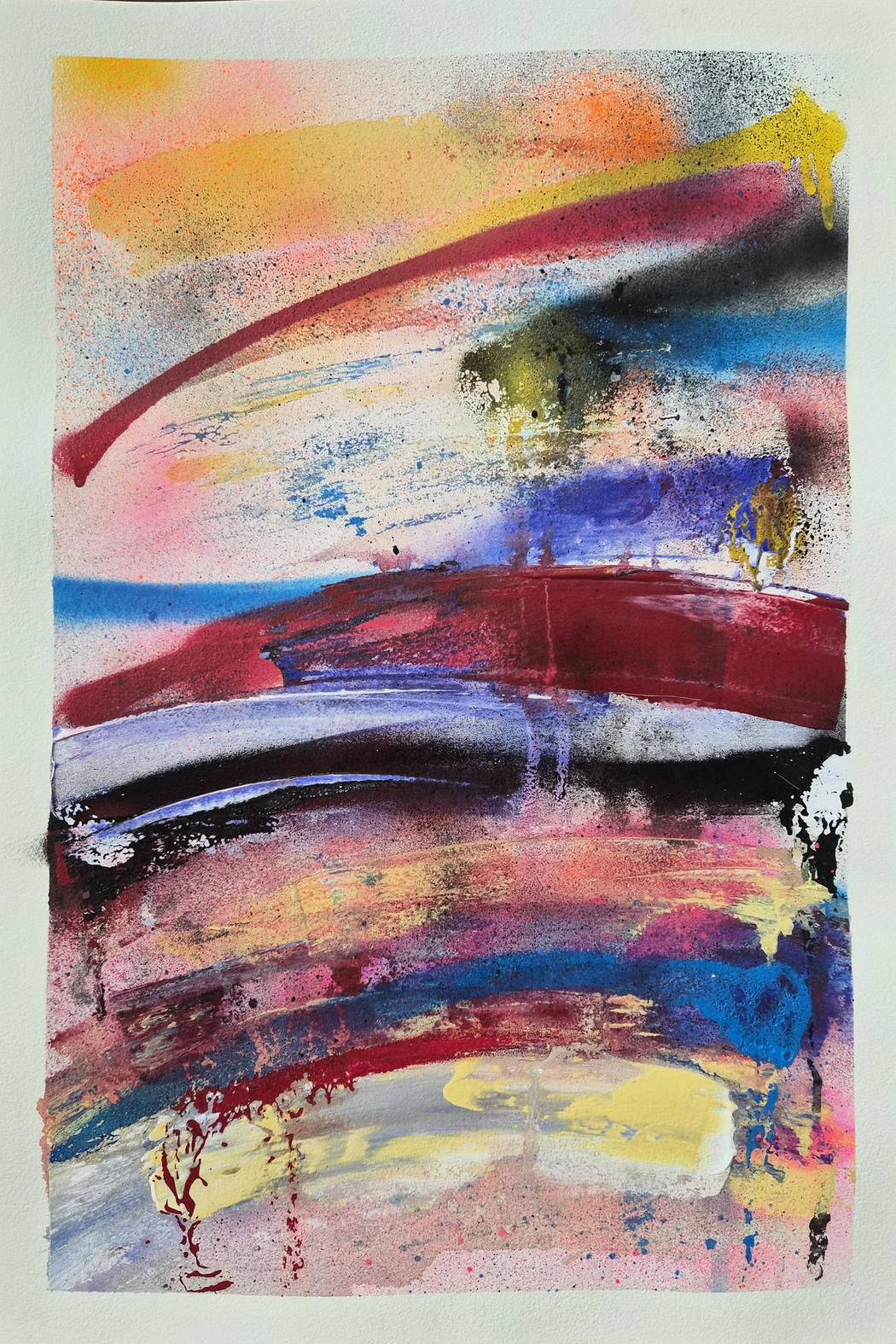 Anna Survivor | Trace | 2026
Your process combines intention with spontaneity. Which elements do you tend to plan in advance, and at what point do you allow instinct or chance to take control?
In painting, I try not to control almost anything in advance. I have a canvas or a sheet of paper in front of me, all the materials are nearby, and I simply choose whatever I am interested in at that moment. I do not have a pre-planned sequence in which I know what the first layer will be, what the second will be, and how everything should end.
I have tried working that way, planning the sequence and the result in advance, but it does not suit me. In that case, the work starts to feel too programmed and artificial. In life, I already have enough processes that require routine, schedules, planning, and control. So in painting, I find it important to let go of that instead.
At the same time, the absence of a plan does not mean the absence of decisions. Sometimes everything starts with one very simple impulse. For example, I take a particular shade of pastel because at that moment I feel like working with that colour. Then I might choose a similar shade of paint or aerosol because it interacts well with the first colour. But the next second I might spontaneously add bright pink, lime green, or some other colour simply because I want to at that moment.
So the work develops through a constant reaction to what has already appeared on the surface. I look at the result of the previous action and decide what I want to do next. Sometimes I can continue a logic that has emerged, and sometimes I can completely change direction.
I think that is what interests me about this combination: I do not plan the result, but I constantly make decisions during the process. I allow the work to develop intuitively and accept what appears by chance or unexpectedly, instead of trying to force it in advance to become exactly what I imagined.
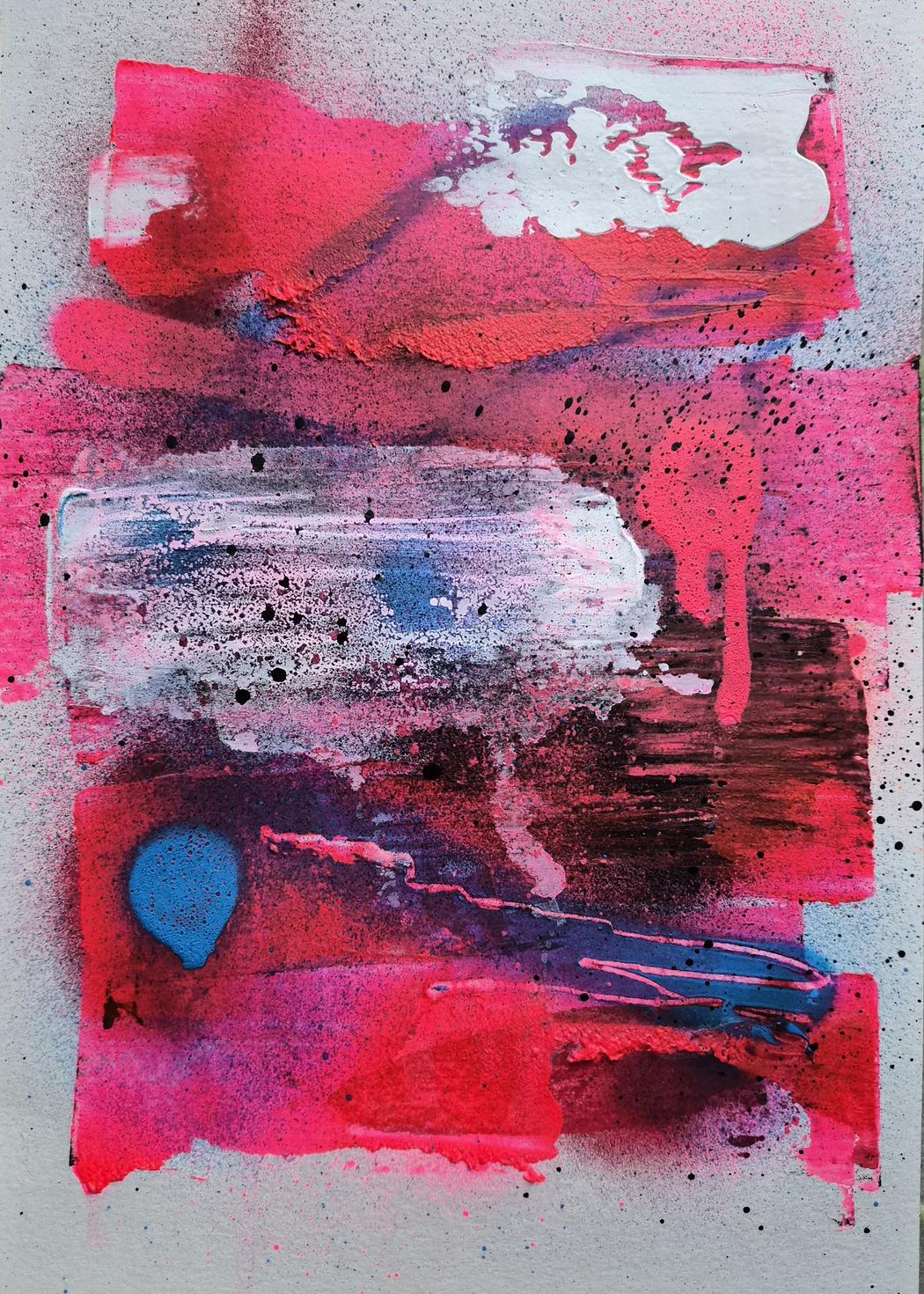 Anna Survivor | Trace | 2026
You worked as a tattoo artist for more than ten years. How has the experience of making permanent marks on the human body influenced your understanding of line, gesture, pain, and personal history?
Tattooing has given me a great deal, both as an artist and as a person. Over the years, I met a huge number of people, heard their stories, learned how to interact with different personalities, and, of course, continued to develop myself. But beyond that, tattooing strongly shaped my perfectionism.
When you work on human skin, precision really matters. You constantly control the line, pressure, depth, and movement of your hand. A millimetre can matter. And because the result remains on a person’s body, every mistake feels very serious. Of course, I made mistakes at the beginning too, and they discipline you very strongly. You can remember one of your mistakes for many years and understand very clearly where you could have done better.
For many years, I worked in different areas of tattooing — from realism and graphic work to dotwork and whip shading. I did portraits, animals, flowers, cities, and many different kinds of imagery. So I have a great deal of experience specifically with creating images on the human body.
But the most interesting thing for me happened when I began studying academic drawing and painting alongside tattooing. I clearly felt how different human skin and paper or canvas are as surfaces, and how different the ways of thinking about them are. Despite all my experience in tattooing, I consciously do not try to use it directly in my painting. I do not transfer familiar tattoo imagery or techniques into my paintings.
On the contrary, painting became an opportunity for me to do things that I cannot allow myself to do in tattooing. On canvas, I can make a mistake, cover a layer, change direction, try something new, and change the result again. No one will be hurt by it, and I do not have to remember for the rest of my life that I once did something imperfectly.
So if tattooing taught me to control every movement and strive for absolute precision, painting became an opposite experience for me — an opportunity to loosen that control. I can allow myself to make mistakes, change my mind, and not know in advance what the result will be.
I think that is the most important connection I currently see between tattooing and painting. Tattooing made me a very strong perfectionist, while painting gives me a space where I can become a little freer from that perfectionism.
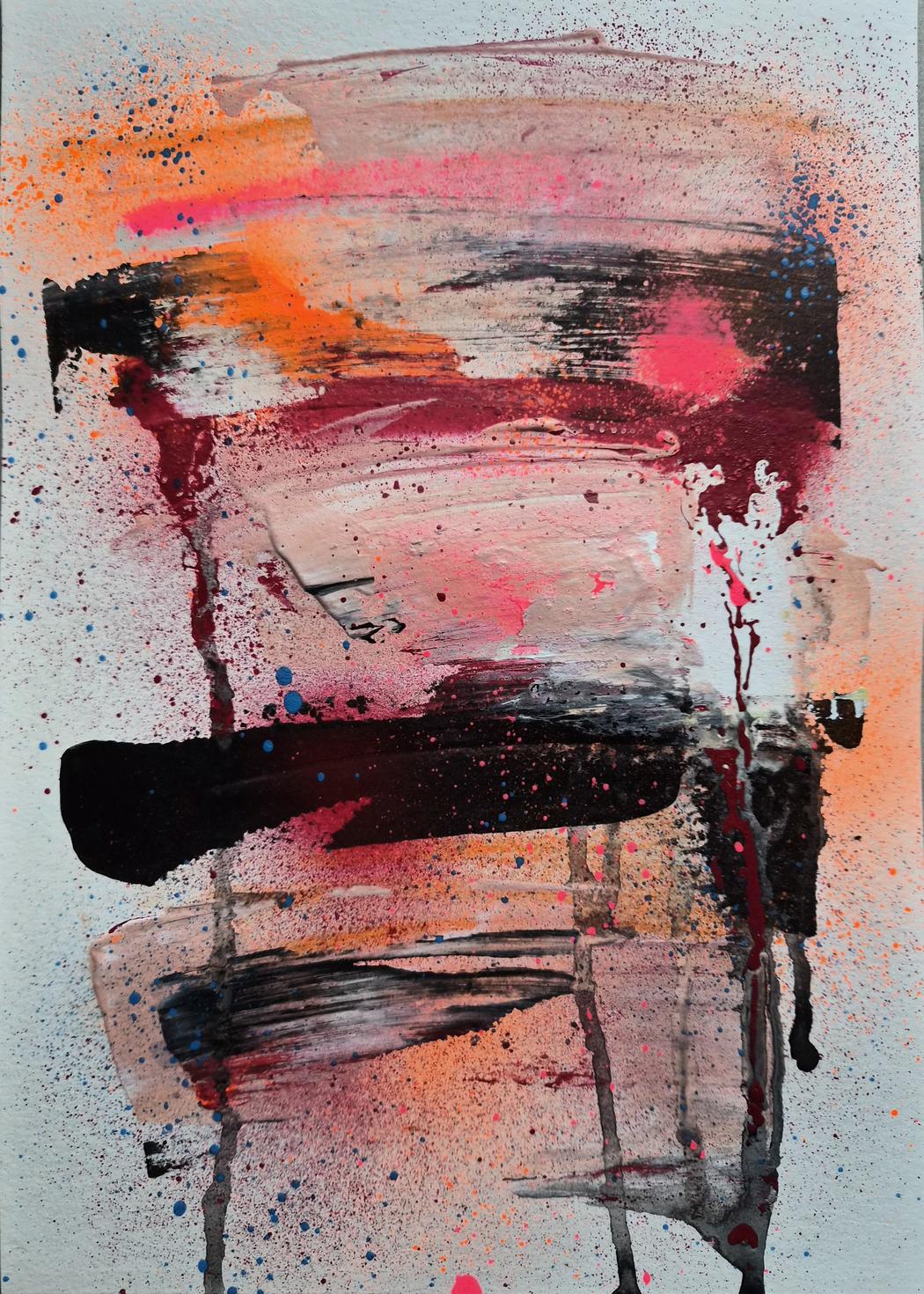 Anna Survivor | Trace | 2026
You are currently living and working in Bali. Has the island’s light, landscape, rhythm, or cultural environment influenced your palette and your development as an abstract painter?
I often think about this question because Bali is very easy to imagine as an obvious source of inspiration for an artist. There is a lot of colour, nature, interesting architecture, light, and a fairly developed artistic environment.
But if I am being honest, I cannot say that Bali has directly shaped my artistic language.
I have lived here for almost five years, so of course it is impossible to completely separate yourself from an environment you have been in for that long. During the first years, I was very strongly impressed by the colours, landscapes, nature, and light. Surely all of that has remained with me in some way. But I do not think about colour literally: I do not choose green because there are many plants around me, or blue because the ocean is nearby. I have always loved bright colours, regardless of where I lived.
I would say that Bali’s influence on me is more indirect. This place is constantly around me, and I simply experience it as part of my life. I even have a desire now to experiment with plant imprints and certain natural forms, but this is not an attempt to make work “about Bali.” I am more interested in what happens to form and material when I use something from the environment around me.
At the same time, I do not strongly connect my personal or artistic identity to a particular place. I have lived abroad for quite a long time and have become accustomed to seeing the place where I live more as the environment I happen to be in at a particular moment than as part of the definition of who I am. I can love the place where I live, be interested in its culture, and still not feel the need to express it directly in my work.
So I would say that Bali has influenced me more as a long-term experience of living in a particular environment than as a specific source of artistic inspiration. I am sure that some of what I see and feel here has already become part of the way I perceive things; I simply do not try to translate it into direct visual quotations.
And perhaps I am interested in preserving that independence. I live in Bali, but my work does not have to be about Bali. For me, what happens within the artistic process itself is more important.