
Russel Lavis
You work across sculpture and design and have explored a wide range of crafts and mentorships. Which experiences have been most influential in shaping your artistic language?
When I was in twelve grade I met my mentor, Mira Wilks. She introduced me to sculpture and taught me how to think and conceptualize. She had already mentored many well-known South African artists such as Allan Alborough. She also organized my first competition where I won 1st place called WAM wax art awards.
What was the starting point for this work, and what does “a world in between” mean to you in relation to it?
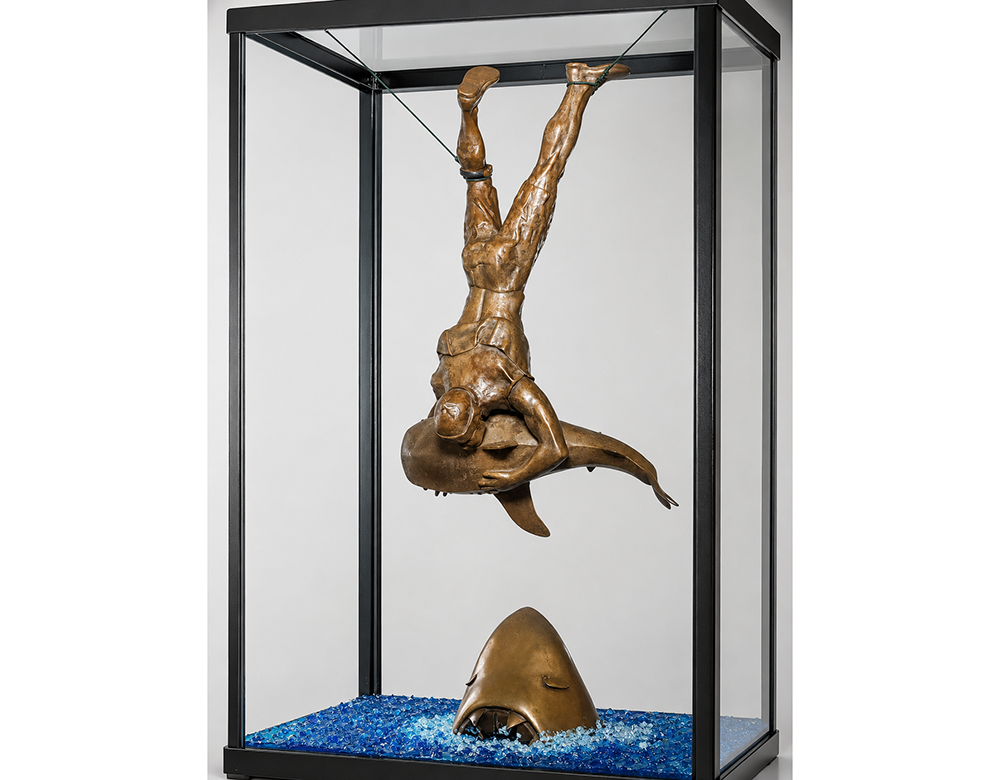
I heard about this sculptor called Damien Hirst and his Shark Tank sculpture. He inspired me to make my own tank with sharks and a human element. The ‘world in between’ represents the ideal relationship between humans and sharks. You have the larger ominous monster emerging from the depths threatening the ideal relationship. Popular media has distorted people’s perception of these animals and conservationists are fighting to correct that and should be supported. Even Hirsts work relied on perception to convey a sense of awe and dread fuelling the reaction from the audience whose space (gallery floor) is being invaded by this sea creature.
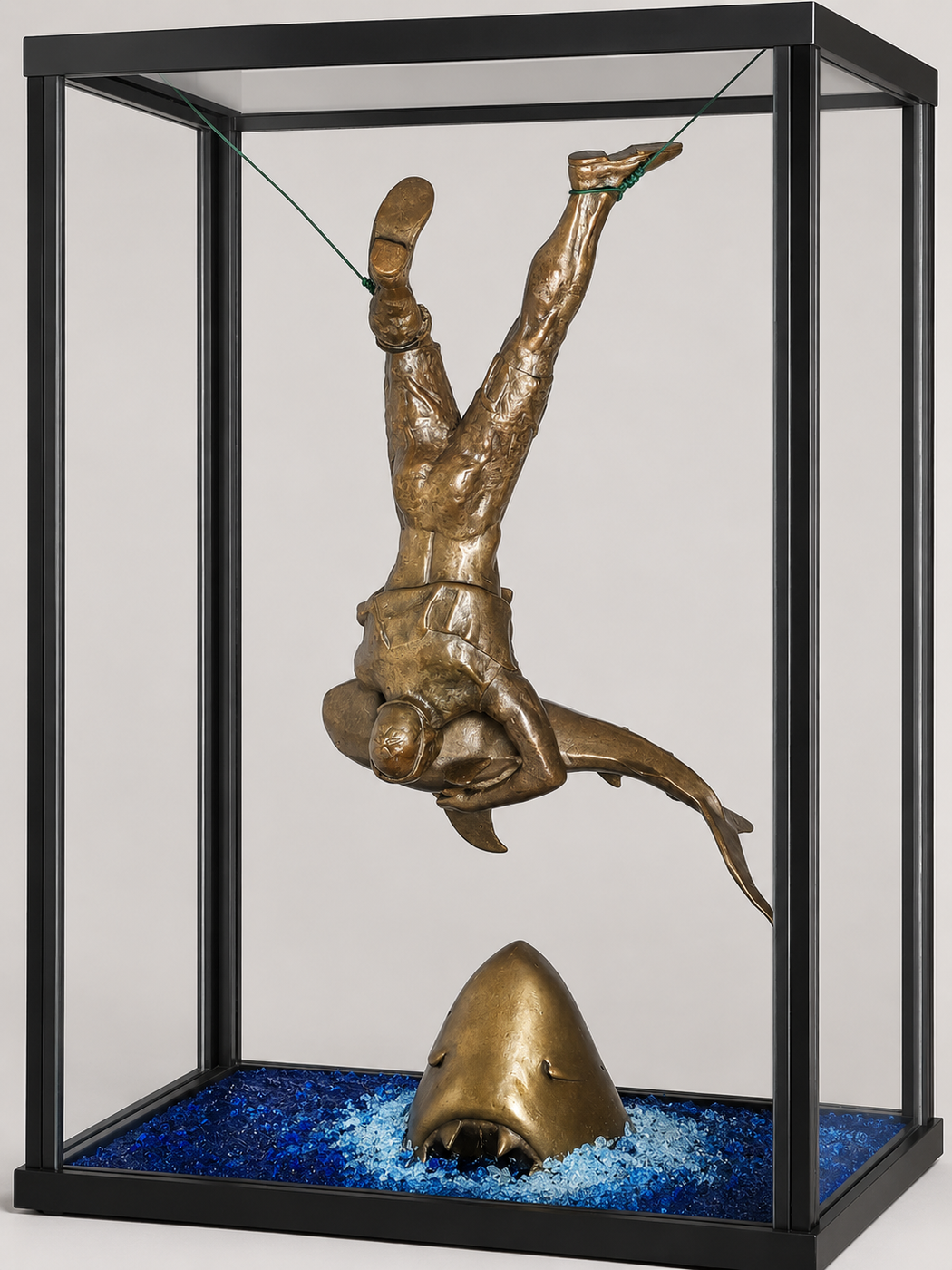
The composition presents an upside-down human figure holding a shark, while another shark emerges from the water below. What relationship or narrative connects these three elements?
The composition is a play on Hirsts Shark but executed horizontally with traditional media such as bronze, steel and resin. A suspended bronze figure that hugs such a fierce creature is absurd and is reminiscent of shark films I have watched such as Deep Blue Sea. I reacted to Damien Hirst whilst retaining his technical influence similar to Andy Warhol insisting on having “dripping and drizzling” present in his early works due to the influence of Jackson Pollock.
Sharks are often portrayed as ferocious predators, despite their vital role in marine ecosystems. How does this work challenge that familiar image?
The subject matter cause discomfort amongst supporters of the ferocity only acceptance of the shark. We must rather embrace the notion of balance. Hype is useful when attempting to argue against an established narrative. Animals have too long been symbols of conquest and cruelty, such as being painted on weapons of war. I believe we should reflect on our role as caretakers rather than apex predators.
You are preparing a proposal to Tate Modern based on this piece. What kind of dialogue would you like the work to open in that context?
Damien Hirst was present at The Tate Modern and I wish to be too. I would like to create dialogue between the artistic community, the entertainment industry as well as influential figures in society and the youth. I require a platform to introduce more support of conservation ideals to the world. I would also like to work with other artists of similar vision.
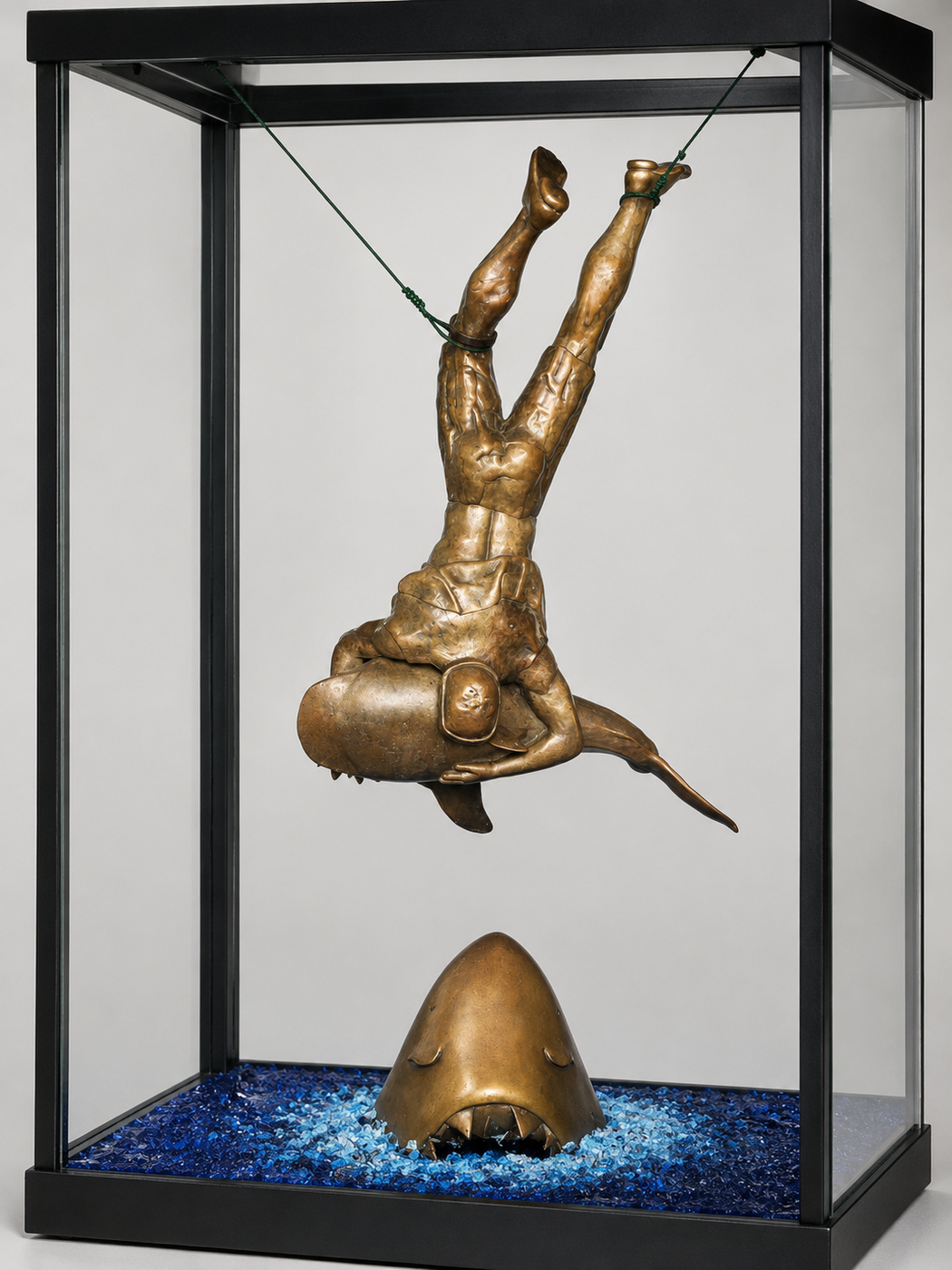
You hope to explore the film industry. Could the tension between stillness, movement, danger, and intimacy in this sculpture be translated into a cinematic scene or narrative?
Yes, film is a very effective vehicle to accompany this sculpture. You gave me ideas now that I wish to explore, perhaps an animation in charcoal. This is one of the reasons I believe a joint exhibition would be more beneficial as artists can facilitate more meaning by helping each other.