Ali Riley
You began learning visual art at the age of fourteen. What initially drew you to painting, and when did you realise that it would become a central part of your life?
At first I absolutely hated painting. Before art school I’ve painted only once. When I had to paint because my school required it, I even considered to drop out because I got very bad grades, comparing to perfect scores for drawings. I had a very hard time learning how paint and colours work. But after a few months I started to get it and not only that, I was enjoying it. In fact even more than I ever enjoyed drawing. I had to first understand it and when I did, it was so freeing and I could get lost in mixing colours and working with brushes.
You trained in traditional painting and gilding techniques. How does this classical education influence the way you approach contemporary subjects?
In case of my own work it definitely shaped the way I see and mix colours. The way I look at my art and its value but also the way I pursue it. If we’re talking about contemporary art around the world, usually I can tell what technique had been used in certain artwork. I can visualize how the artwork came into existence, what steps it took to create it and I can judge a little if it’s been done according to traditional conventions.
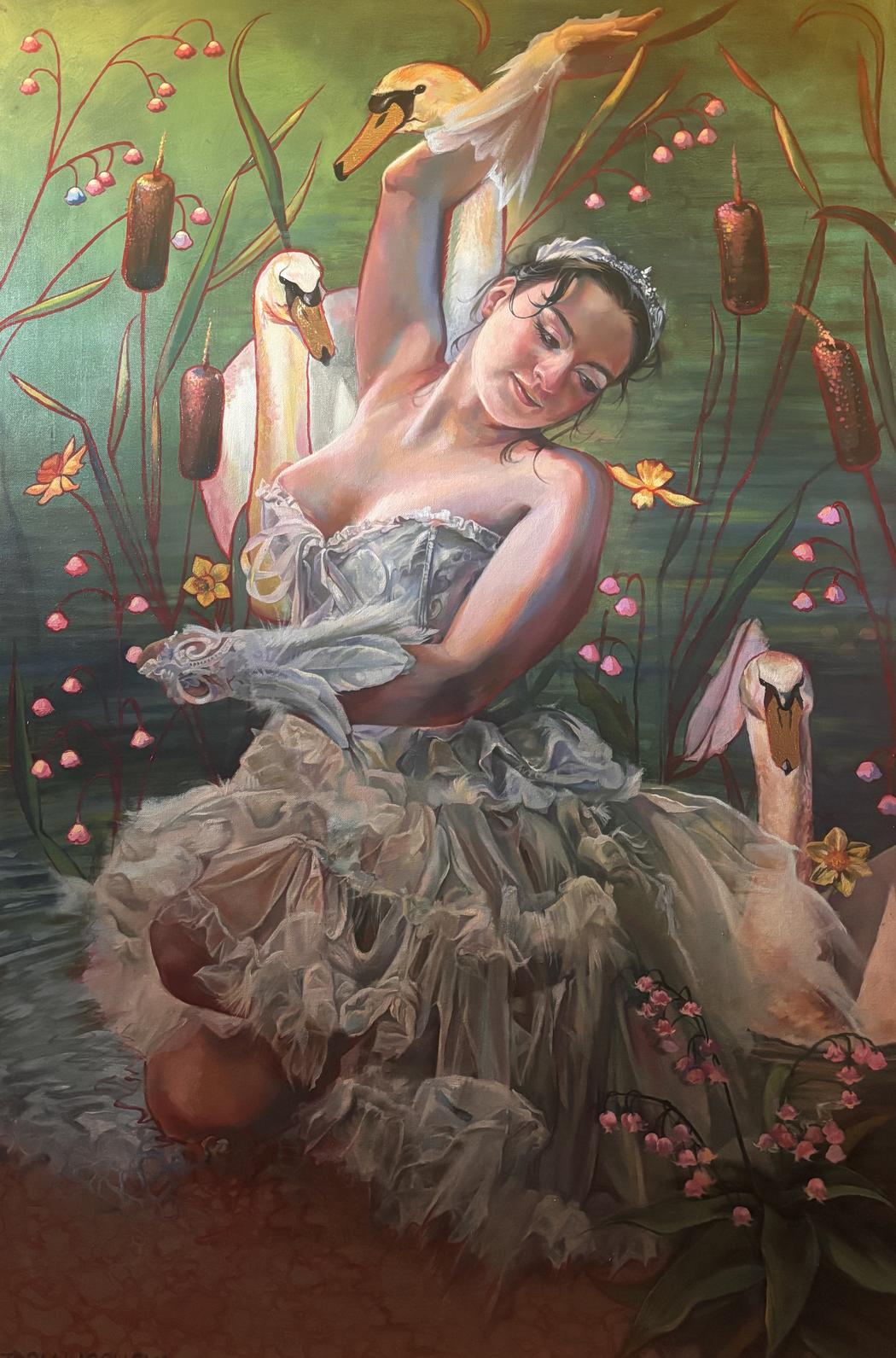 Ali Riley | Clearance (Daybreak) | 2025
You live and work between Poland and the United Kingdom. How has this transnational experience shaped your artistic identity and visual language?
I definitely take a lot of inspiration from British art and culture. UK and especially London has a strong grip on my personal style. I absolutely love how expressive and bold it gets. However as a polish person I adore the spirituality of polish artists. I am deeply connected to my culture with mythology and art. In my craft I want to express and mix my polish mentality with the British boldness.
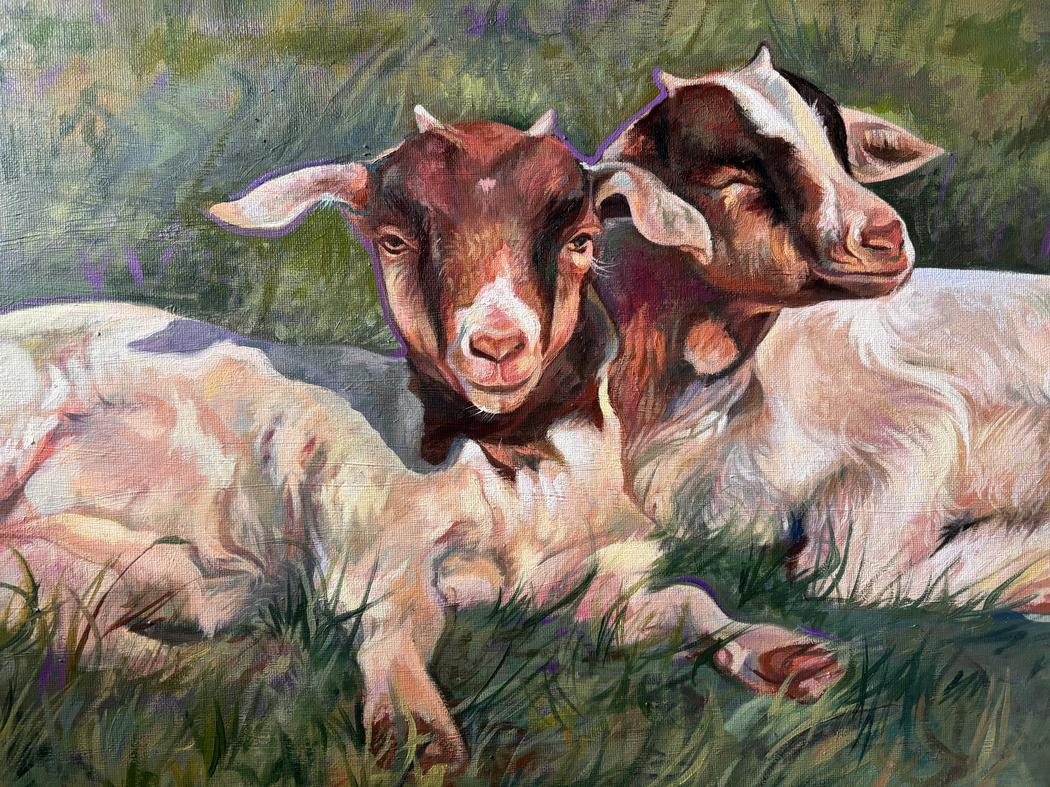 Ali Riley | Childhood Best Friend | 2026
You describe your work as an attempt to reflect “tiny bits of soul”. How do you translate an emotion or an inner state into colour, light, gesture and composition?
Each colour universally symbolizes different emotion. It comes in handy but I also like to use my own associations „you look like this colour”. I use light as kind of a ethereal tool. It can make up the whole magic of the artwork. When I paint I am locked in, my hands paint but I myself am quiet inside my mind.
Several of your paintings feature elaborate white garments, lace and translucent fabrics. What attracts you to these materials, and what role do they play in expressing the personality or emotional state of your figures?
White fabric is one of my all time favorite things to paint. I like how the light shifts between the layers of fabric and creates various colours and shades. These materials allow me to express over something that is theoretically white and plain but I make it vibrant and eye catching. Also you can pick two white, lacy shirts and they’re gonna be completely different and that’s what I’m trying to achieve. The type of white cloth I pick for specific painting helps to set the mood and emotional weight.
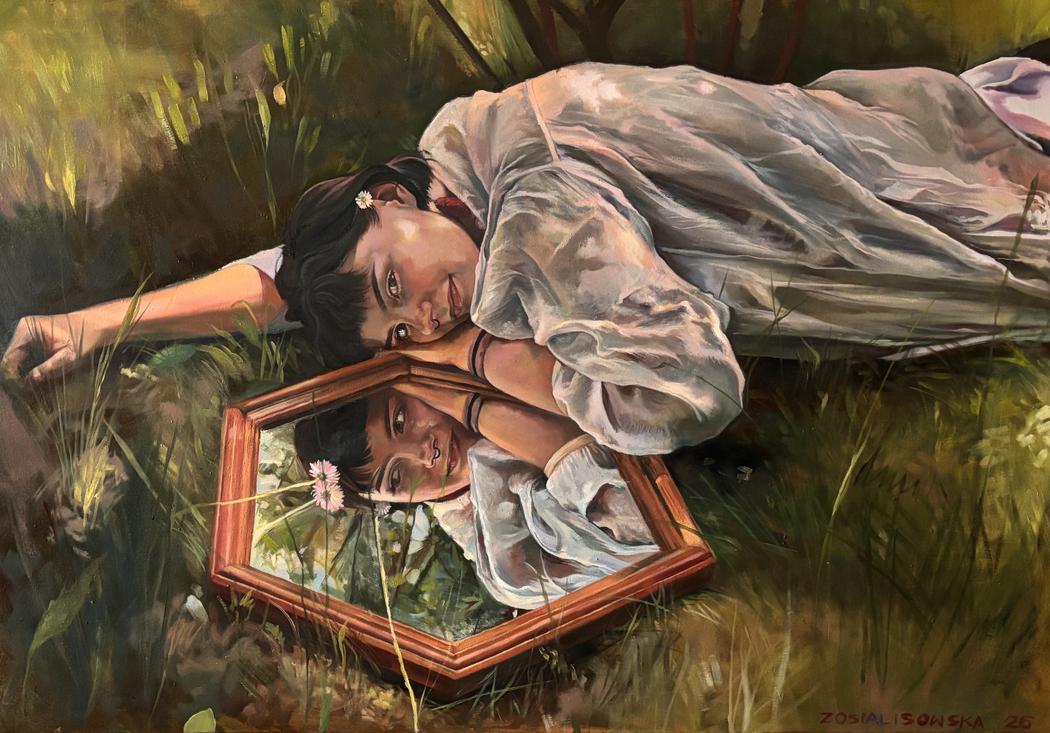 Ali Riley | Spring Of A Person | 2026
Animals appear in several of your works, from swans and a dog to resting lambs. What draws you to animals as subjects, and do they function as symbols, individual characters or emotional companions?
Actually they’ve been portrayed by me as all of these. Depends on the artwork. I did a self portrait with my dog which was just a portrayal of our bond. The resting lambs were used as a symbol, and swans in „clearance” are characters in „Swan lake” which inspired the cycle they belong to. I pick animals to represent all kinds of roles and meanings simply as both an animal lover and because of their symbolic nature.
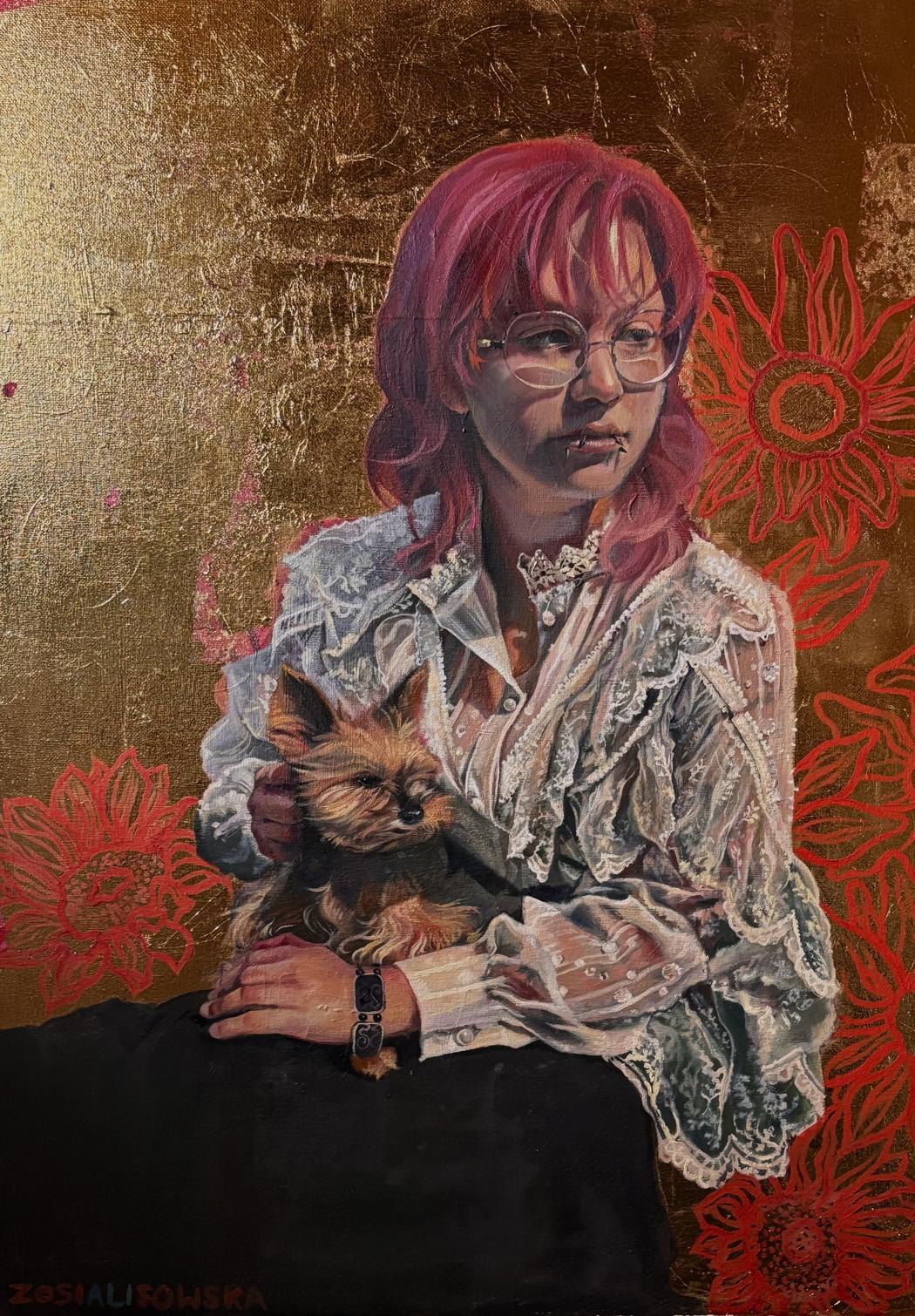 Ali Riley | Unconditional Love (Self Portrait) | 2025
Could you describe your process of creating an oil painting, from the first idea and visual references to the final layers? How do you recognise when a work is complete?
Most of my ideas come out of the blue, when I’m resting, talking to someone, crafting something else. It’s enough to spark an idea. Then with the first idea in mind I take pictures with people especially picked for certain project, and sometimes I buy or craft garments and accessories. After a photoshoot I pick the one photo that strikes the right emotions I’m going for. When it’s time to paint I first start roughly and then add details. Sometimes the idea shifts during the process. A work is done simply when I look at it and feel satisfaction with the quality and feel that it’s telling what it’s supposed to.