
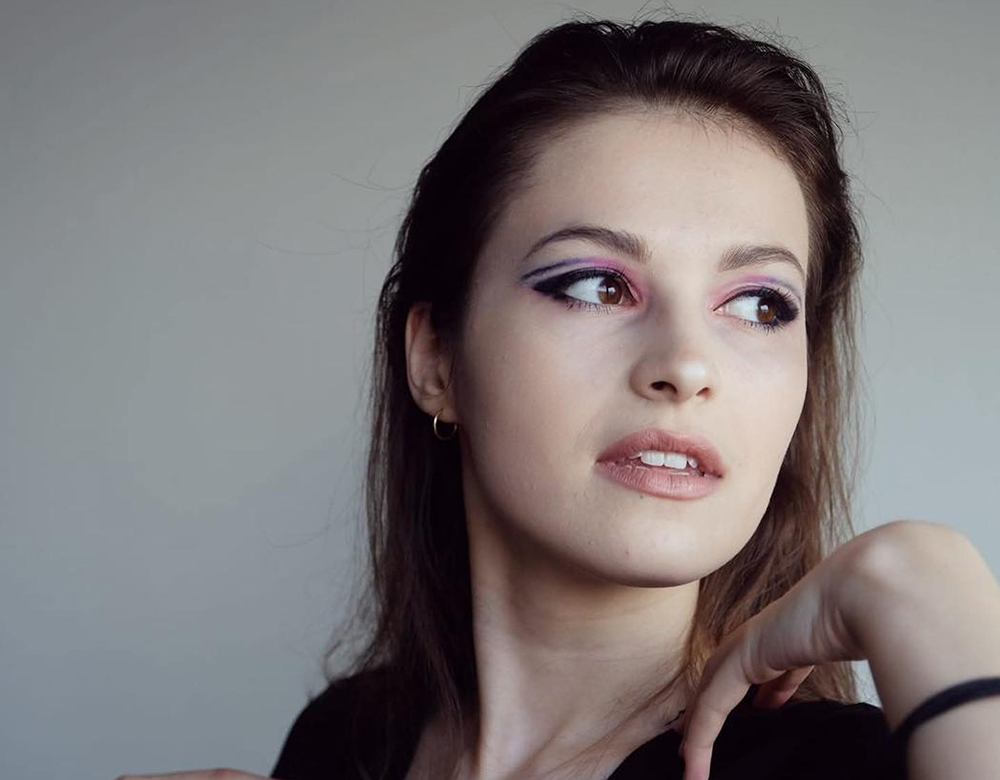
Verona Petkova-Harizanova
You have been painting for as long as you can remember, but only recently reconnected with your inner artist. What prompted you to return to art at this particular moment in your life?
Art has always been a part of my life, one way or another. I’d like to believe this is true for everyone, or at least I wish it were. The inspiration to create usually comes in waves, but recently, I have been heavily influenced by the idea of “muchness” and the role it plays in our lives. We are all carrying this individual kookiness which makes us who we are; which enriches the world (just like all different cultures do), but more often than not, we choose to erase any trace of it, in hopes to be accepted by a standartization machine which, eventually, turns us into nothing but mechanical animals. A juxtaposition between what food our soul craves, and what it is being fed. There is this fragile silver line; a connection between the state of the world, and the part we all play in it – both as individuals, and as a collective being. This concept inevitably brought me closer to my inner artist, or at least to the self I would like to be if I am being entirely myself.
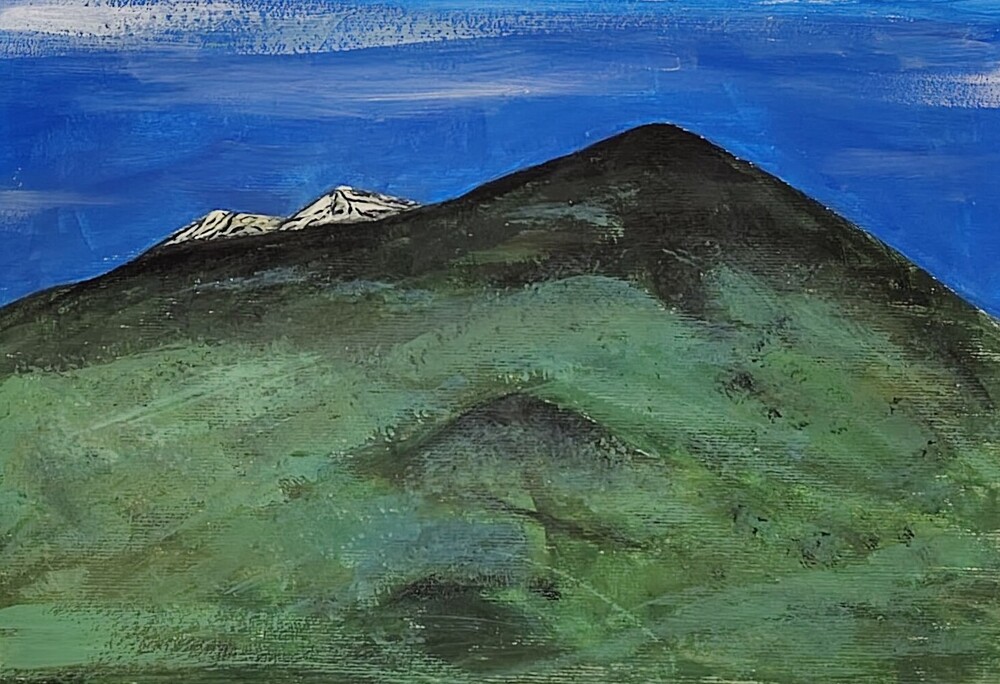 Verona Petkova-Harizanova | Through The Concrete | 2026
You chose a professional path outside the arts. How has that experience influenced the way you think, observe, and create as a painter?
The corporate world, as we like to call it, has its lessons and opportunities. However, I have realized that the more time I spend within its limitations and expectations, the more I crave consuming and creating real, raw art in its many forms – deprived, as much as possible, from the artificial element, in all senses of the word.
Your practice moves between recognisable images – birds, landscapes, and trees – and highly expressive abstraction. What determines which visual language you choose for a particular idea?
I am a firm believer in creating when inspired, and trying to portray a language you cannot speak, or learn. Art is not universal, as much as it is. By painting something, and putting a certain meaning behind each painting, I am not trying to lead the narrative to what it means for the observer. I had my idea; my inspiration, but it is up to the viewer to choose what they see. I have been told I could popularize my work more by painting clear messages, or recognizable pieces based on consumer research. Currently, this does not align with my understanding. The language I choose; the message I choose depends solely on my mood, and what has influenced me at that particular moment – a thought, a song, a landscape, there is no correct formula I follow. And I think this is true for the members of the audience, too.
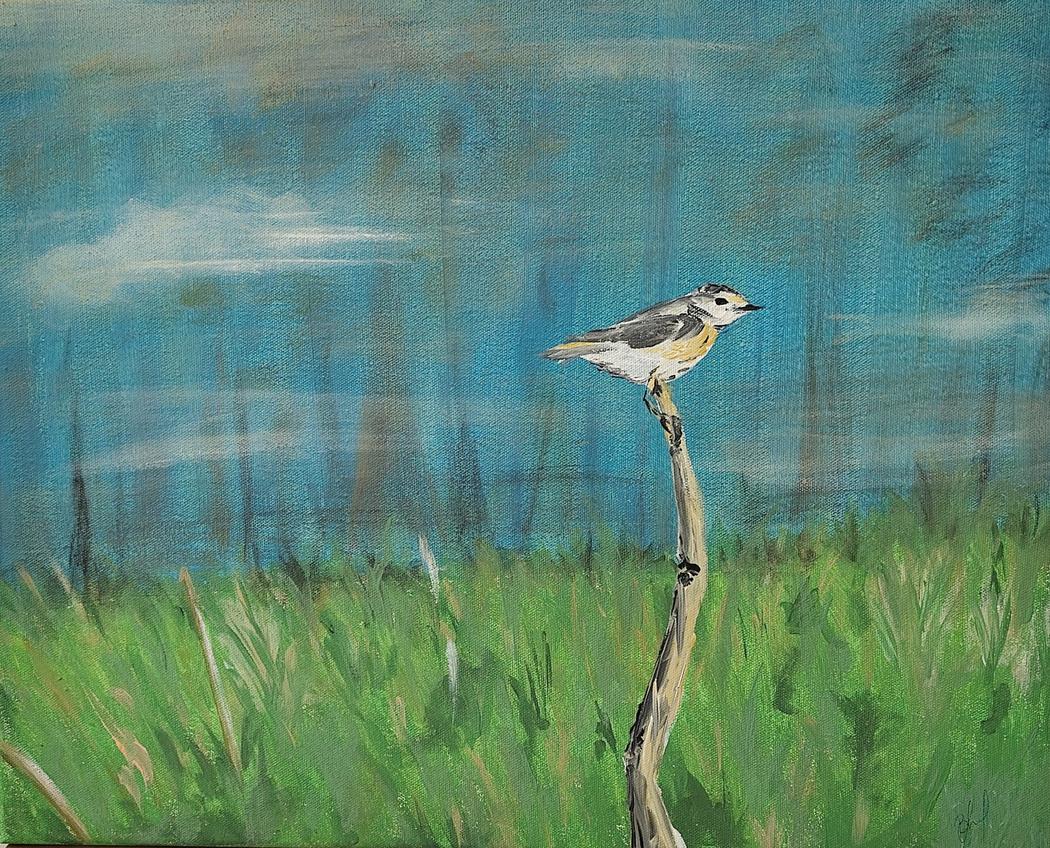
Birds appear repeatedly in your figurative works, including The Guard. What do they represent for you, and why do you find yourself returning to them?
I do feel drawn to birds, even thought I rarely have the courage to draw them. They are after all the universal symbol for freedom, or lack there of.
Nature is present throughout your work, sometimes as a peaceful landscape and sometimes as an intense field of colour and movement. What kind of relationship with nature do you hope to communicate?
We may all be a part of nature, but we are not equal to it. Nature nurtures, but just as effortlessly it can remind us how truly tiny we all are. People must learn to respect it and care for it. We seem to be the only species not grasping the idea.
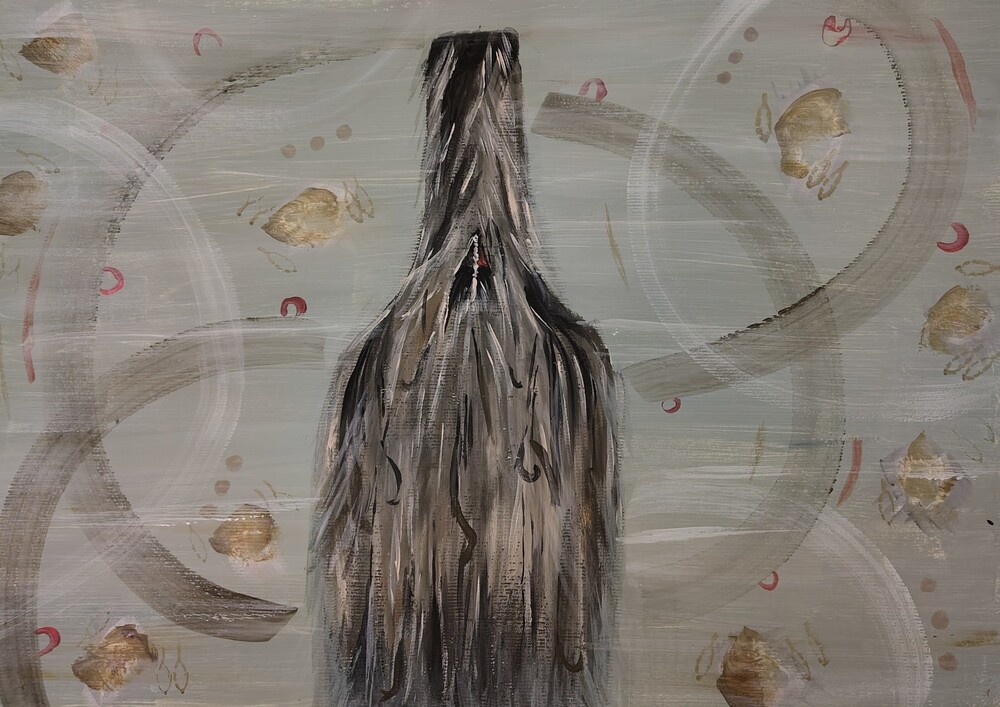
Your abstract paintings often combine sweeping black lines with vivid backgrounds and small accents of colour. How do you balance deliberate decisions with spontaneity during the painting process?
With the abstract paintings I usually start with a concept. Sometimes a colour pops up in my mind, others a feeling I would like to capture, but only after I have layed down the main colour, the actual shape of the painting starts to take form. For example, I have this set of paintings “Appetite for perfection” where one has a vivid yellow background. At the time I knew I wanted to portray the idea of perfection turning into destruction, and I was set on the yellow as a central colour, but all other elements of the painting came to be spontaneously as I immersed myself in the process. The other two pieces of this collection follow a similar pattern to fit the initial theme, so there is a bit more deliberation there.
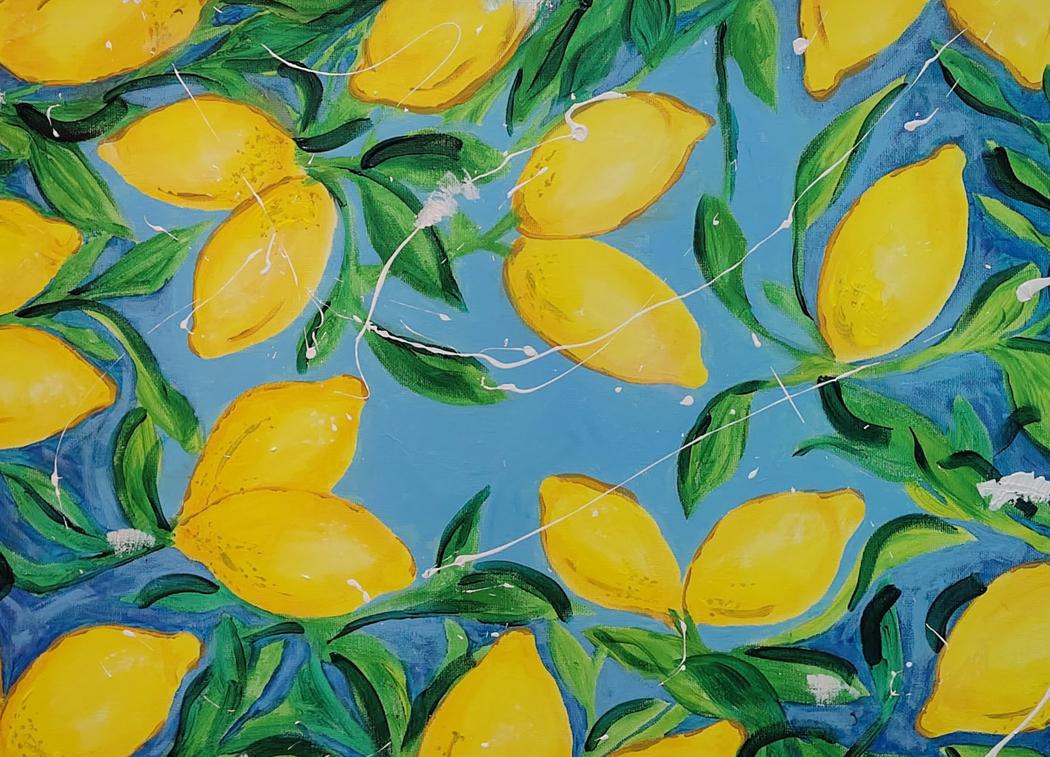
Verona Petkova-Harizanova | Lemons
Having been born and raised in Bulgaria, do its landscapes, culture, or visual traditions consciously or unconsciously enter your work?
Absolutely! The world is full of spectacular places, unbelievable landscapes, and it is so, so rich in cultures, history, and all things extraordinary…but as much as I like to think of myself as a cosmopolitan, there is a special magic I feel when I am at home. Bulgaria is also quite rich when it comes to mountains, the sea, its culture, history, and mythology. There are many aspects we, as bulgarians, should work on and improve for our homeland to be seen and appreciated for what it really is, but I have always drawn inspiration from it, sometimes consciousnesly, and others – perhaps, without realizing.