Pia Zabret Verbole
You studied at the Secondary School for Design and Photography in Ljubljana and later continued your education in industrial design at the Academy of Fine Arts and Design. How has this background influenced the way you approach drawing and illustration?
Throughout my education, I have explored and experimented with various techniques, gradually developing my own creative approach and discovering the ones that suit me best. My knowledge of graphic design allows me to create engaging compositions, find balance, and thoughtfully develop a visual concept. At school, we focused extensively on solving different problems and responding to given situations, which has influenced the way I approach comics and illustration. I treat each project as the creation of a new design, starting with research, exploring and developing different ideas, and ultimately selecting the strongest solution.
I think that combination of design thinking and experimentation has made my approach to illustration much more curious and open-ended. I am always looking for a solution that is not only visually interesting but also communicates something and invites the viewer to discover their own story within it.
You have already illustrated several books. How does working on a book illustration differ from creating an independent drawing or comic for yourself?
It should definitely connect to the story, while also presenting as much of the narrative as possible or highlighting a particular detail. Unlike a comic, an illustration does not tell its own story on its own, but rather complements and enhances the written text.
In my own work, I tend to work more intuitively and less systematically than I do when illustrating books, because in that case I have to immerse myself in an existing story and capture its most important element in a single image.
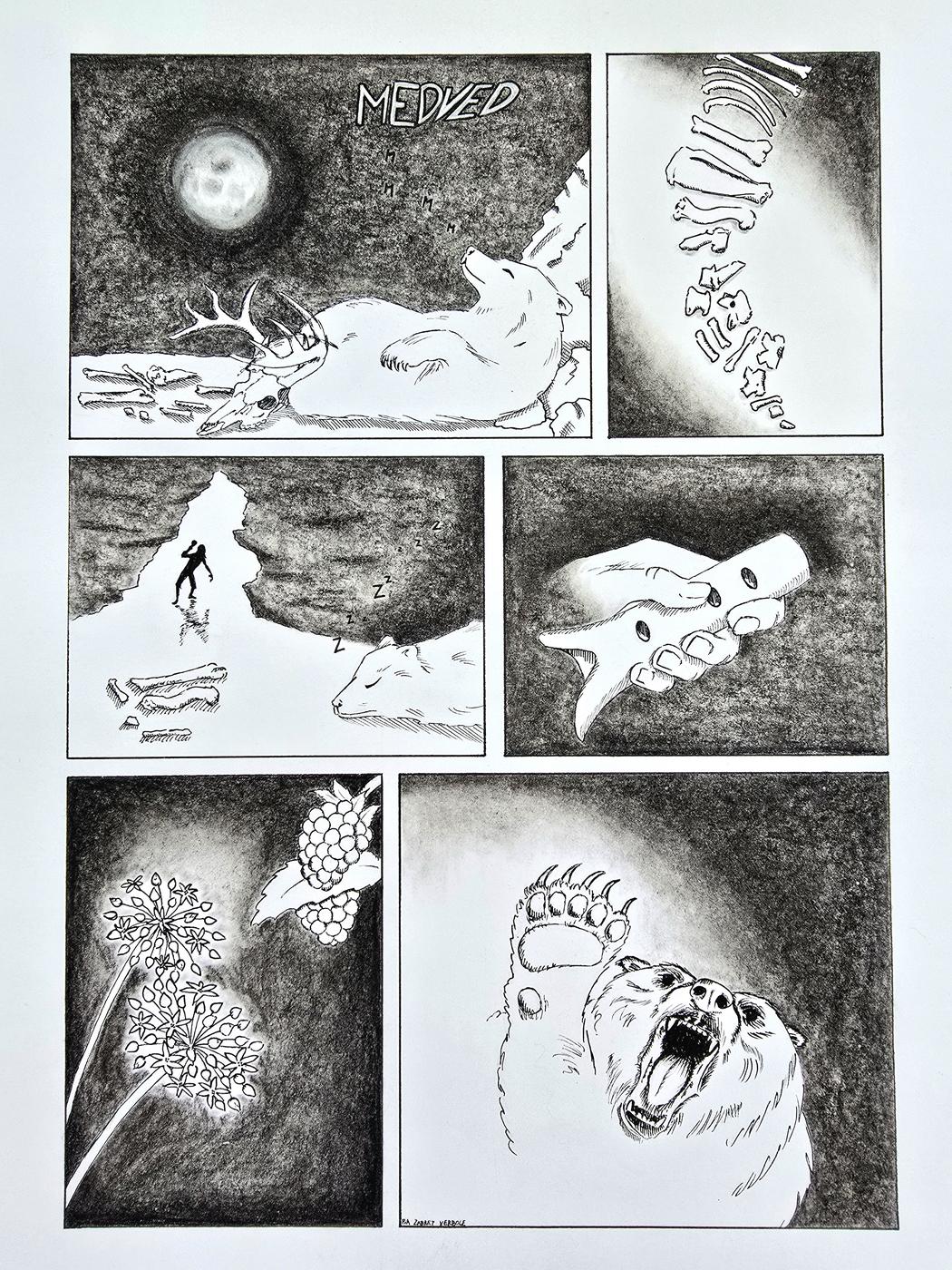 Pia Zabret Verbole | Bear | 2026
Storytelling seems to play an important role in your work. When you begin a new image, do you usually imagine a complete story behind it, or does the narrative develop while you are drawing?
It depends on the project. Often, I have a rough idea of the story in mind, which I then develop further as the work begins to take shape and move in a certain direction. Other projects start with just a few quick strokes, from which I gradually discover an image and a story that I then develop further. Of course, every story that already exists needs its own visual interpretation.
Your works often feature animals, imaginary beings, and unusual characters. What attracts you to creating characters that exist somewhere between the familiar and the fantastical?
I believe that if we have the ability to imagine anything we want, we should make the most of it and use our imagination to create new works that bring a little more magic into our lives.
I have always been fascinated by nature and the mysteries it holds, many of which remain hidden from us. In my everyday life, I often find myself imagining new magical creatures. I can also see a particular scene or different creatures in almost every song that finds its way onto my playlist. Sometimes, I simply draw something I have dreamed about.
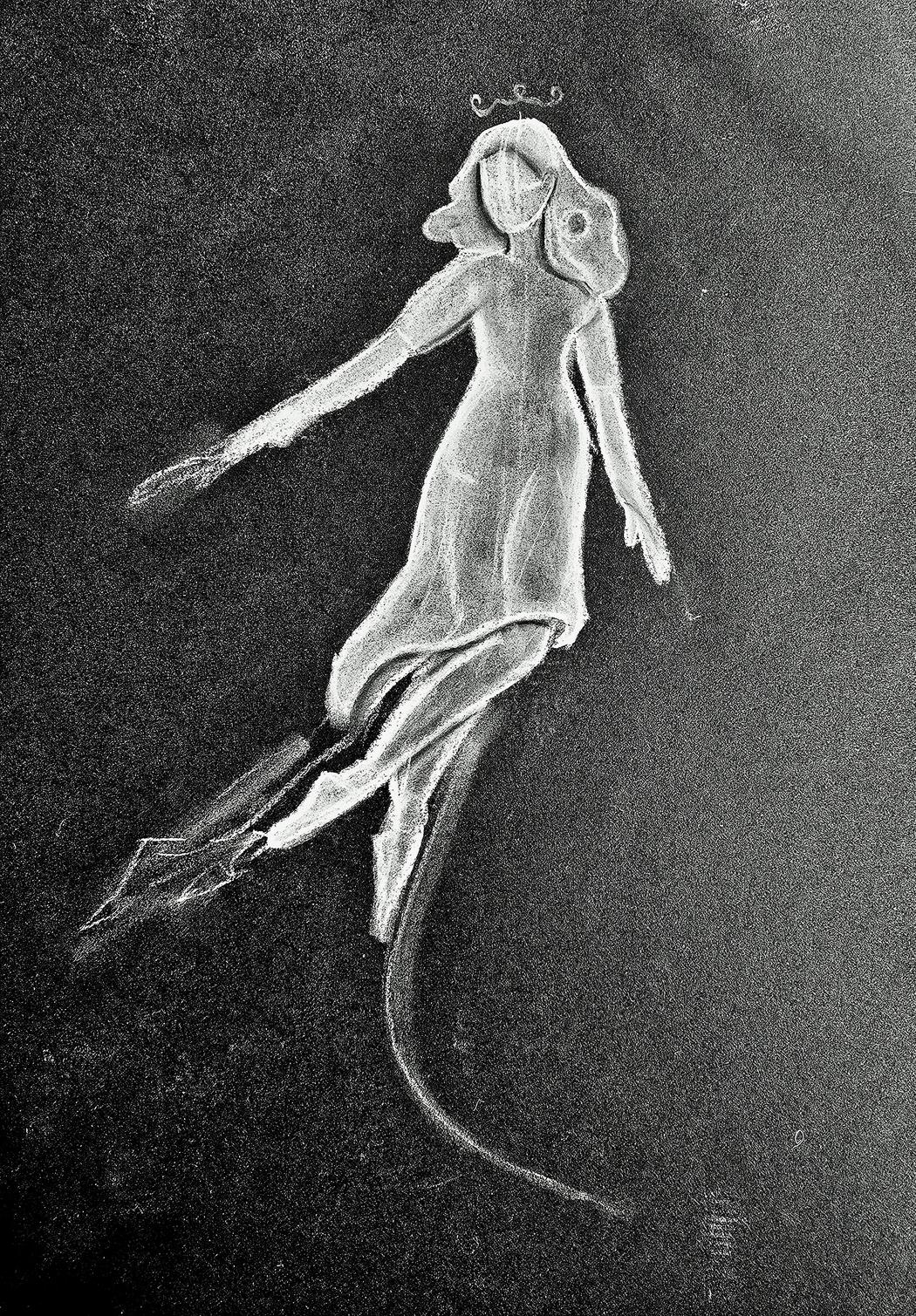 Pia Zabret Verbole | Day Dreaming | 2025
In works such as Bear, you use sequential imagery that strongly resembles the language of comics. What interests you most about comics as a form of visual storytelling?
What I find most interesting about comics is the way a story can unfold through simple images. A sequence of images can communicate a lot on its own, while still leaving space for the viewer to connect the images and discover the story for themselves. I like that not everything has to be shown or explained—the gaps between the images can become part of the storytelling. I think comics are an interesting form of storytelling because they exist somewhere between books and films. I am especially drawn to creating a mysterious and magical atmosphere, where not everything has to be explained.
Bear, for example, was inspired by a piece of music by a Slovenian composer. Each part of the comic reflects a different element of the music, allowing the story to unfold visually alongside the composition.
Many of your images are dominated by black, white, and subtle tonal variations. What attracts you to working with such a restricted palette, and how does it affect the mood of your drawings?
I simply love working with chalk and charcoal, especially the contrasts they create and the way sharp and soft edges can exist side by side. Although I am fascinated by colour, I feel more relaxed and happy when working in black and white. I think these tones make my work more mysterious. I do not see them as sad or filled with negative emotions, but rather as a kind of magic captured in time.
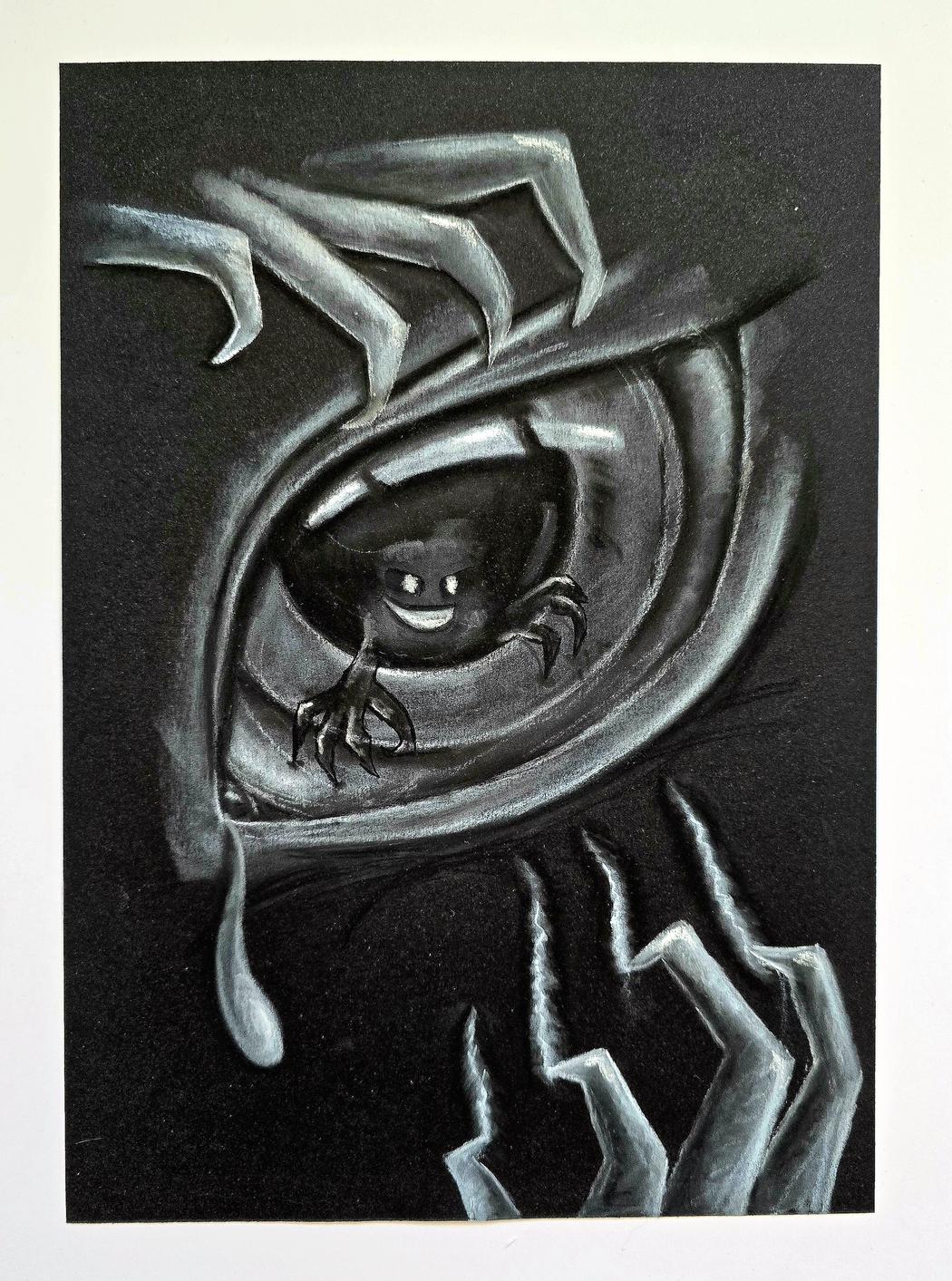 Pia Zabret Verbole | Fear | 2026
You are studying industrial design while also developing a practice in illustration and comics. Do you see these fields as separate, or do design thinking and artistic storytelling influence each other in your work?
I think they are two very different fields, but they complement each other very well. The process of creating a product is quite similar to the process of developing an illustration or comic. In both, the story and the idea behind the work are very important, as they give the final piece meaning and direction.I start with an idea or a problem, explore different possibilities, experiment with solutions, and gradually develop the strongest direction.